 Скачать презентацию Lecture 5 Production Costs and Competitive Markets October
6e71d121349e1a32a6fda0e714530f80.ppt
- Количество слайдов: 41



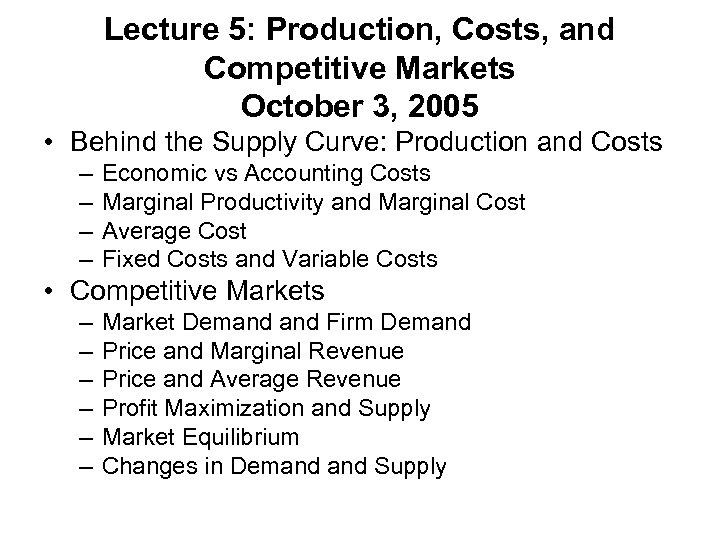
Lecture 5: Production, Costs, and Competitive Markets October 3, 2005 • Behind the Supply Curve: Production and Costs – – Economic vs Accounting Costs Marginal Productivity and Marginal Cost Average Cost Fixed Costs and Variable Costs • Competitive Markets – – – Market Demand Firm Demand Price and Marginal Revenue Price and Average Revenue Profit Maximization and Supply Market Equilibrium Changes in Demand Supply
The Firm’s Objective • The economic goal of the firm is to maximize profits. • Why do firms maximize profits? Copyright © 2004 South-Western/
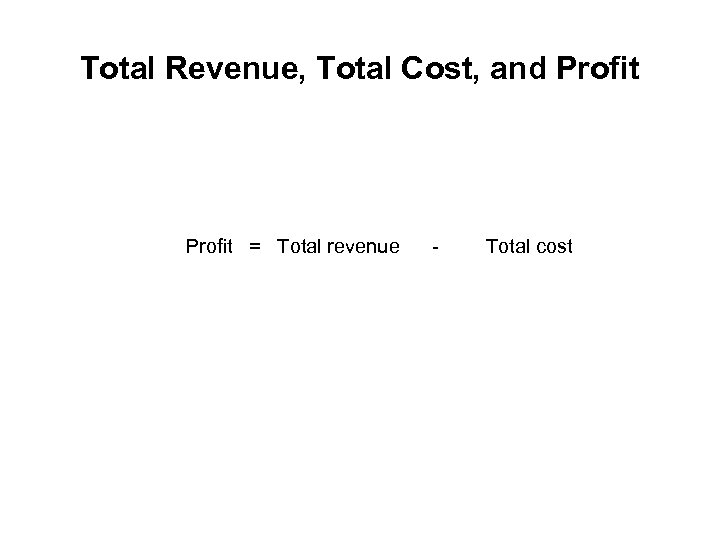
Total Revenue, Total Cost, and Profit = Total revenue - Total cost Copyright © 2004 South-Western/
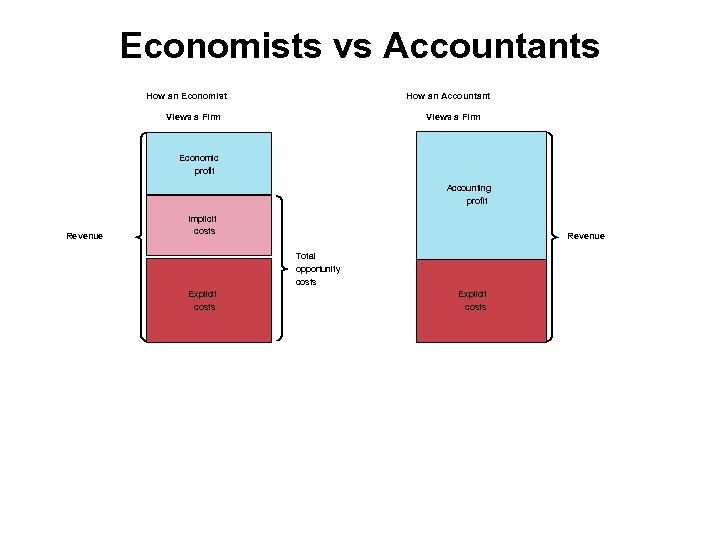
Economists vs Accountants How an Economist How an Accountant Views a Firm Economic profit Accounting profit Revenue Implicit costs Revenue Total opportunity costs Explicit costs Copyright © 2004 South-Western
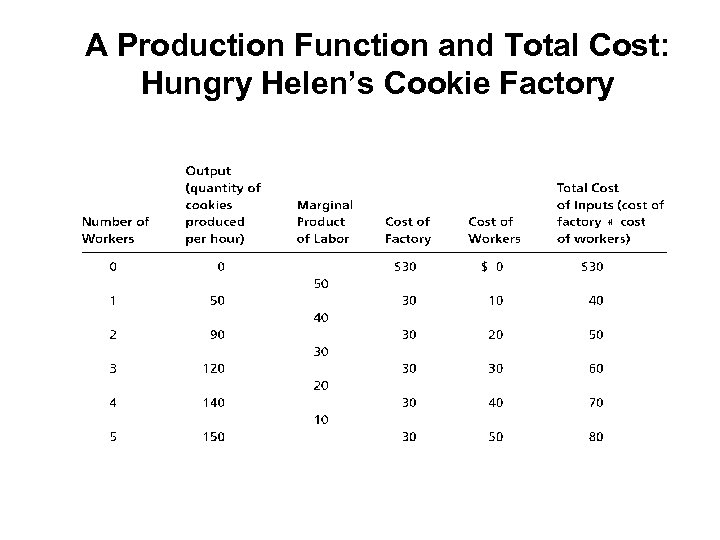
A Production Function and Total Cost: Hungry Helen’s Cookie Factory + Copyright© 2004 South-Western
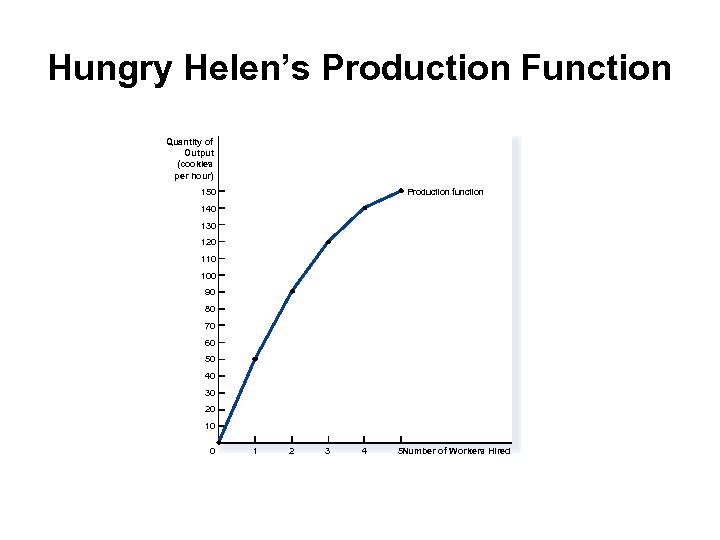
Hungry Helen’s Production Function Quantity of Output (cookies per hour) Production function 150 140 130 120 110 100 90 80 70 60 50 40 30 20 10 0 1 2 3 4 5 Number of Workers Hired Copyright © 2004 South -Western
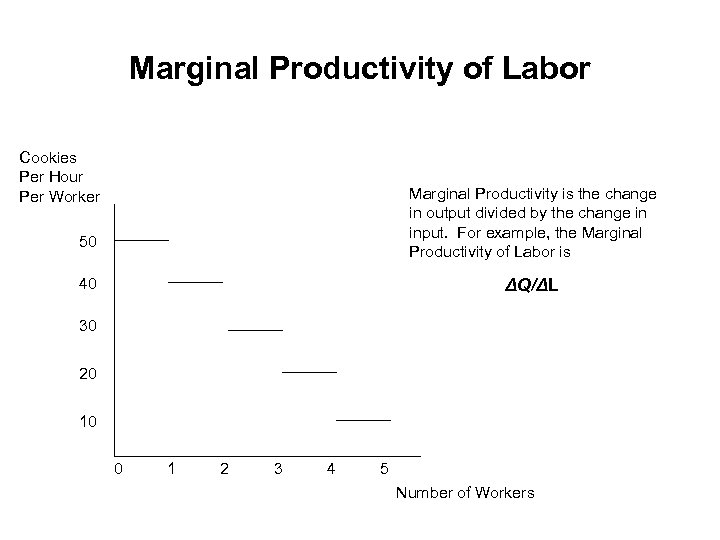
Marginal Productivity of Labor Cookies Per Hour Per Worker Marginal Productivity is the change in output divided by the change in input. For example, the Marginal Productivity of Labor is 50 40 ΔQ/ΔL 30 20 10 0 1 2 3 4 5 Number of Workers
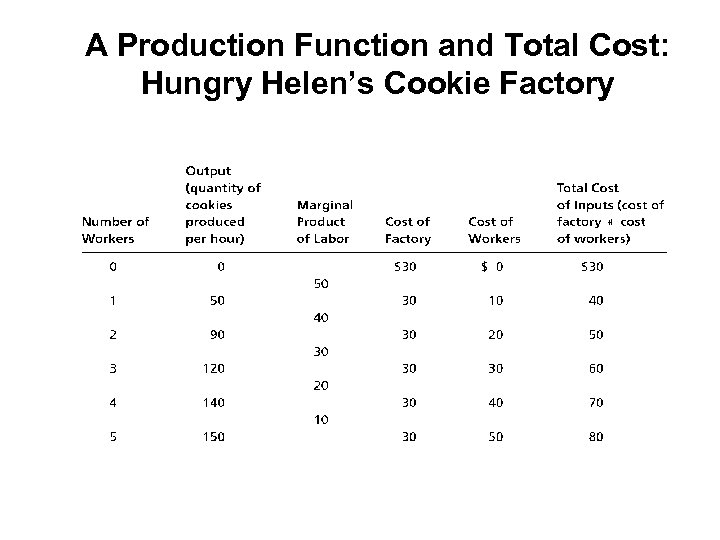
A Production Function and Total Cost: Hungry Helen’s Cookie Factory + Copyright© 2004 South-Western
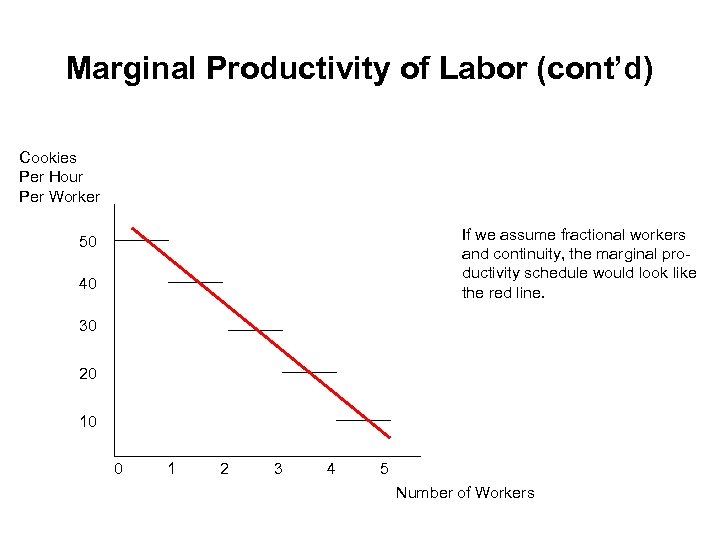
Marginal Productivity of Labor (cont’d) Cookies Per Hour Per Worker If we assume fractional workers and continuity, the marginal productivity schedule would look like the red line. 50 40 30 20 10 0 1 2 3 4 5 Number of Workers
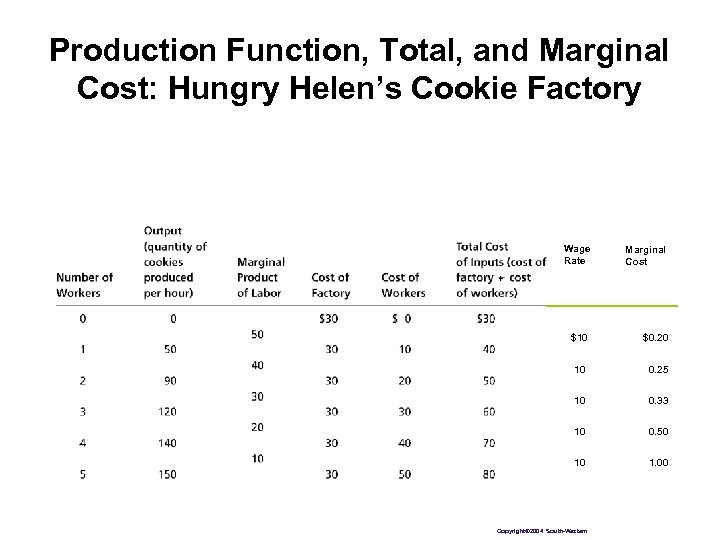
Production Function, Total, and Marginal Cost: Hungry Helen’s Cookie Factory Wage Rate Marginal Cost $10 $0. 20 10 0. 25 10 0. 33 10 0. 50 10 1. 00 + Copyright© 2004 South-Western
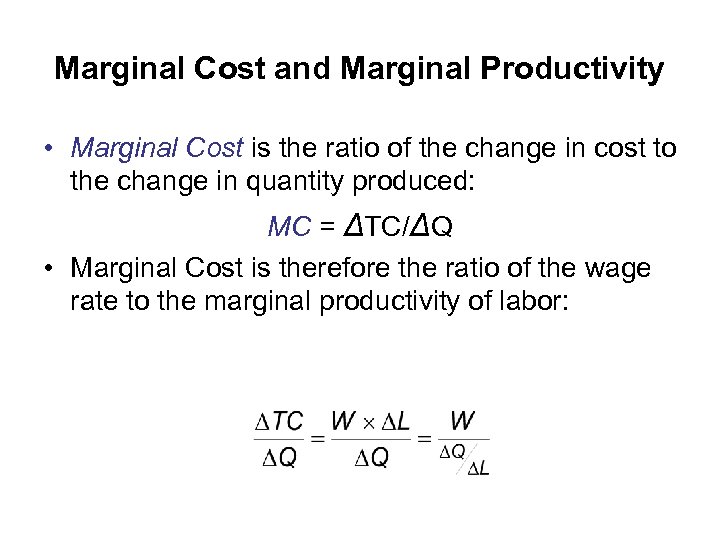
Marginal Cost and Marginal Productivity • Marginal Cost is the ratio of the change in cost to the change in quantity produced: MC = ΔTC/ΔQ • Marginal Cost is therefore the ratio of the wage rate to the marginal productivity of labor:
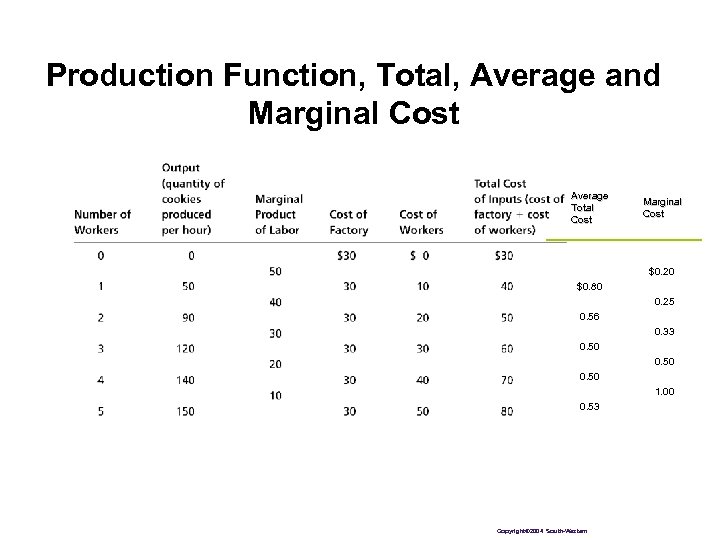
Production Function, Total, Average and Marginal Cost Average Total Cost Marginal Cost $0. 20 $0. 80 0. 25 0. 56 0. 33 0. 50 1. 00 0. 53 Copyright© 2004 South-Western
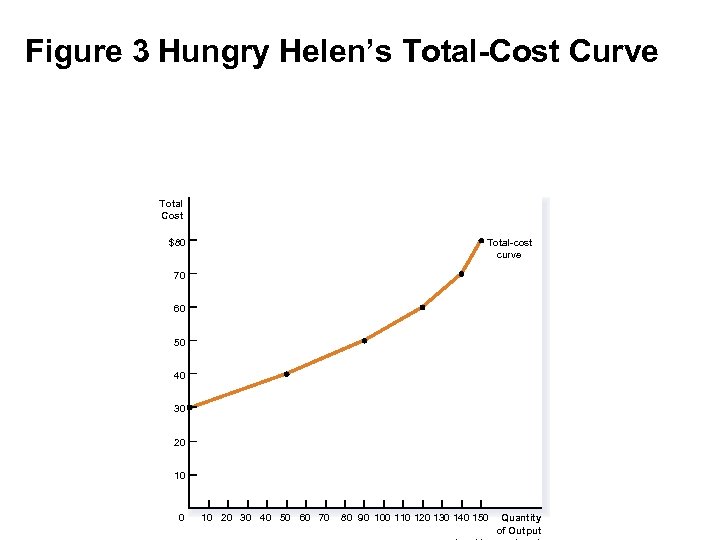
Figure 3 Hungry Helen’s Total-Cost Curve Total Cost Total-cost curve $80 70 60 50 40 30 20 10 20 30 40 50 60 70 80 90 100 110 120 130 140 150 Quantity of Output
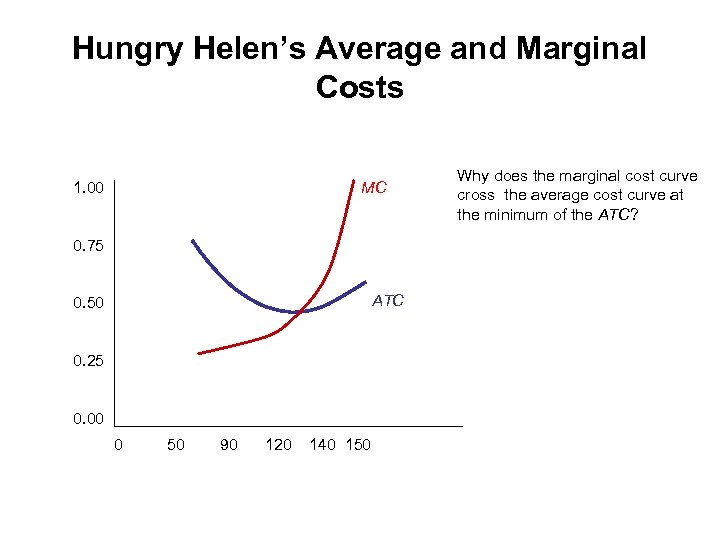
Hungry Helen’s Average and Marginal Costs 1. 00 MC 0. 75 ATC 0. 50 0. 25 0. 00 0 50 90 120 140 150 Why does the marginal cost curve cross the average cost curve at the minimum of the ATC?
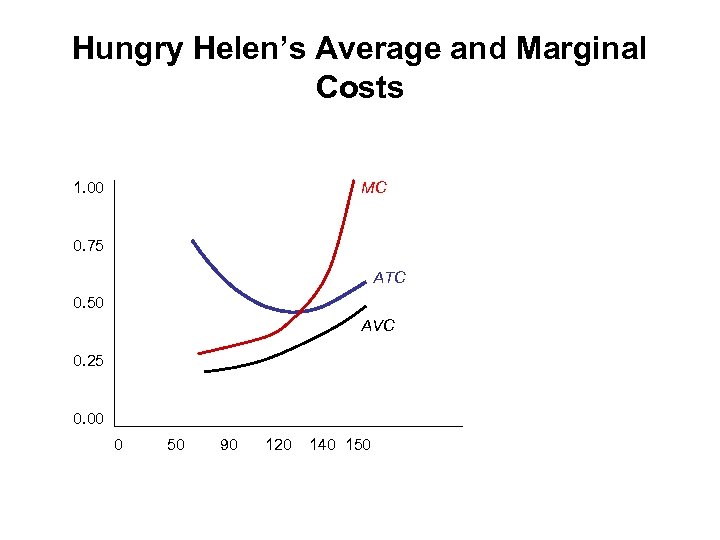
Hungry Helen’s Average and Marginal Costs 1. 00 MC 0. 75 ATC 0. 50 AVC 0. 25 0. 00 0 50 90 120 140 150
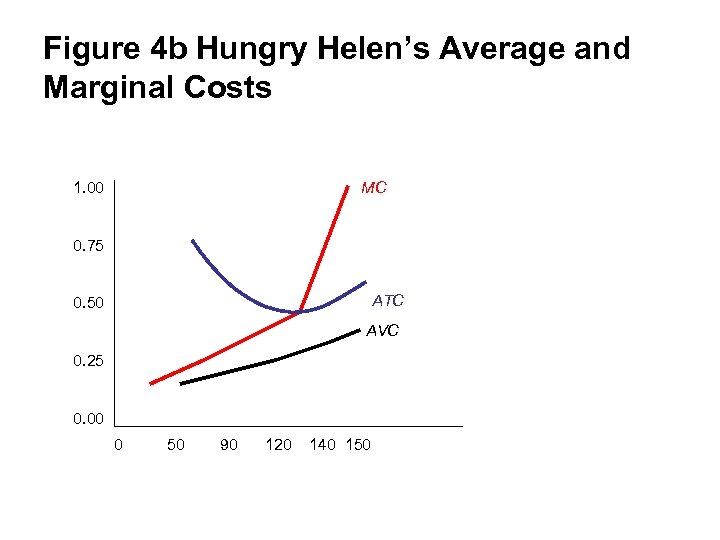
Figure 4 b Hungry Helen’s Average and Marginal Costs 1. 00 MC 0. 75 ATC 0. 50 AVC 0. 25 0. 00 0 50 90 120 140 150
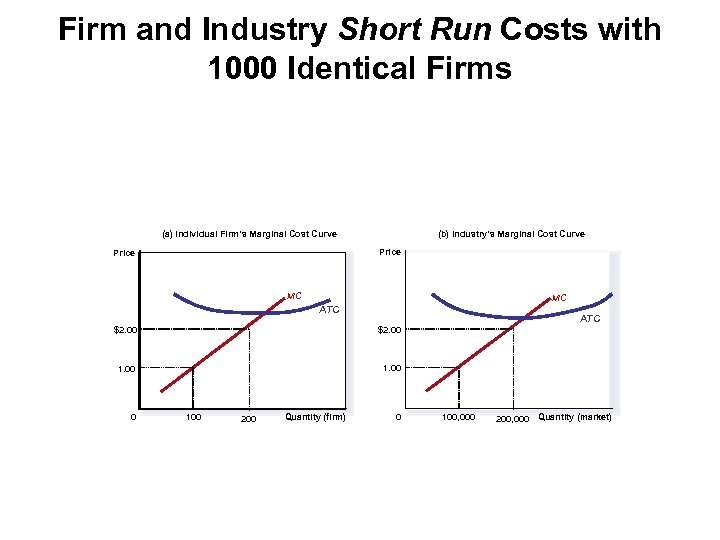
Firm and Industry Short Run Costs with 1000 Identical Firms (a) Individual Firm’s Marginal Cost Curve (b) Industry’s Marginal Cost Curve Price MC MC ATC $2. 00 1. 00 0 100 200 Quantity (firm) 0 100, 000 200, 000 Quantity (market) Copyright © 2004 South-Western
Costs in the Short Run and in the Long Run • For many firms, the division of total costs between fixed and variable costs depends on the time horizon being considered. – In the short run, some costs are fixed. In the long run all fixed costs become variable costs. Indeed, the definition of the long run in economics is the period over which all costs become variable. • Because many costs are fixed in the short run but variable in the long run, a firm’s long-run cost curves differ from its short-run cost curves
Economies and Diseconomies of Scale • Economies of scale refer to the property whereby long-run average total cost falls as the quantity of output increases. • Diseconomies of scale refer to the property whereby long-run average total cost rises as the quantity of output increases. • Constant returns to scale refers to the property whereby long-run average total cost stays the same as the quantity of output increases
The Idea of Competition • How is (perfect) competition different in economics from its ordinary, everyday meaning? – In the everyday sense of the term, the competitor is active in the marketplace, indeed, aggressive in trying to beat out other competitors, as in sports or games. – In economics, the perfect competitor has no need to be aggressive. Rather she is absolutely passive, accepting the ruling price and demanding or supplying whatever she wishes at that price. As a consumer in the supermarket, or a farmer who grows a standard variety of wheat.
What is a Competitive Market? • In a perfectly competitive market agents are price takers, meaning they take prices as given and assume they can buy and sell as much as they want at the going price. • How do economists justify this assumption? Competitive markets are assumed to have the following characteristics: – There are many buyers and sellers in the market. – The goods offered by the various sellers are largely the same. – Firms can freely enter or exit the market.
What is a Competitive Market? (cont’d) • As a result of these characteristics, the perfectly competitive market has the following outcomes: – The actions of any single buyer or seller in the market have a negligible impact on the market price. – Each buyer and seller takes the market price as given. • We could start with the idea of many buyers and sellers offering identical goods and assume free entry and exit, and deduce price-taking behavior, or we can just start with price-taking behavior without justifying this assumption.
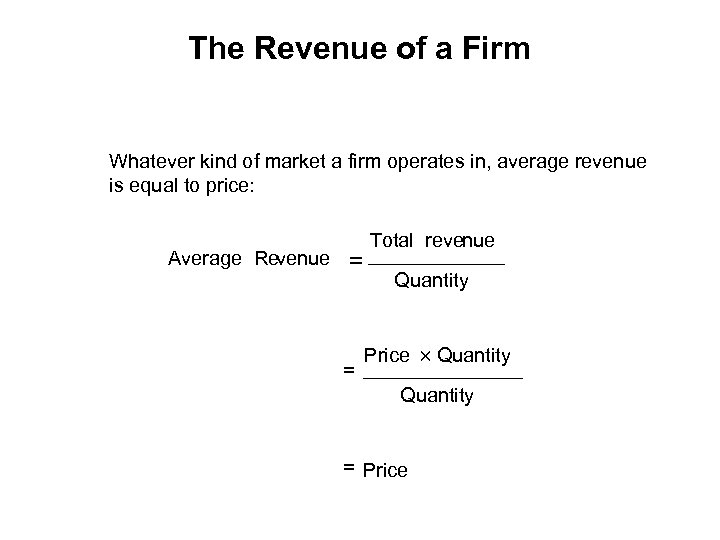
The Revenue of a Firm Whatever kind of market a firm operates in, average revenue is equal to price: Average Revenue = = Total revenue Quantity Price ´ Quantity = Price Copyright © 2004 South -Western
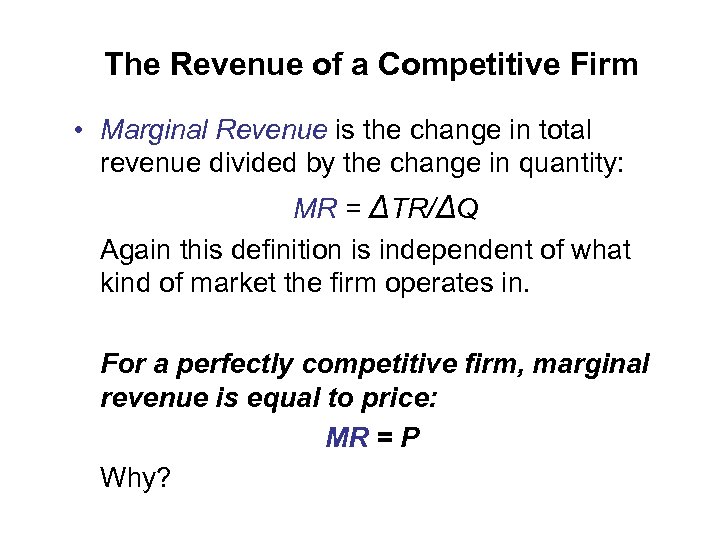
The Revenue of a Competitive Firm • Marginal Revenue is the change in total revenue divided by the change in quantity: MR = ΔTR/ΔQ Again this definition is independent of what kind of market the firm operates in. For a perfectly competitive firm, marginal revenue is equal to price: MR = P Why?
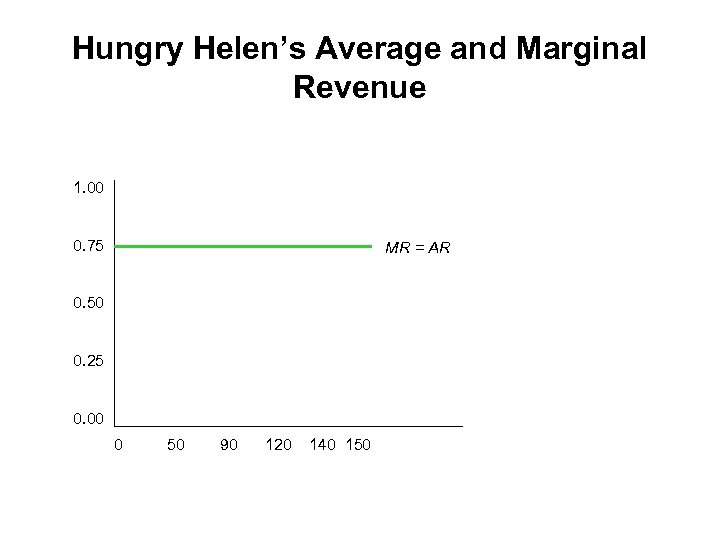
Hungry Helen’s Average and Marginal Revenue 1. 00 0. 75 MR = AR 0. 50 0. 25 0. 00 0 50 90 120 140 150
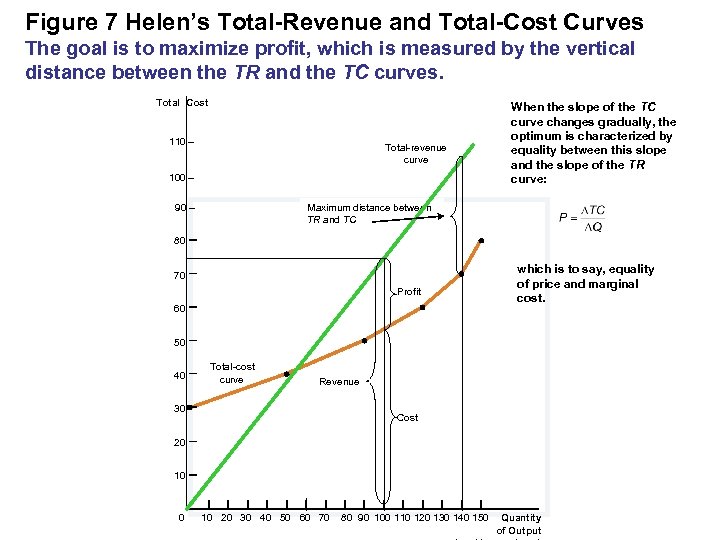
Figure 7 Helen’s Total-Revenue and Total-Cost Curves The goal is to maximize profit, which is measured by the vertical distance between the TR and the TC curves. Total Cost 110 – Total-revenue curve 100 – 90 – When the slope of the TC curve changes gradually, the optimum is characterized by equality between this slope and the slope of the TR curve: Maximum distance between TR and TC 80 70 Profit 60 which is to say, equality of price and marginal cost. 50 40 Total-cost curve Revenue 30 Cost 20 10 20 30 40 50 60 70 80 90 100 110 120 130 140 150 Quantity of Output
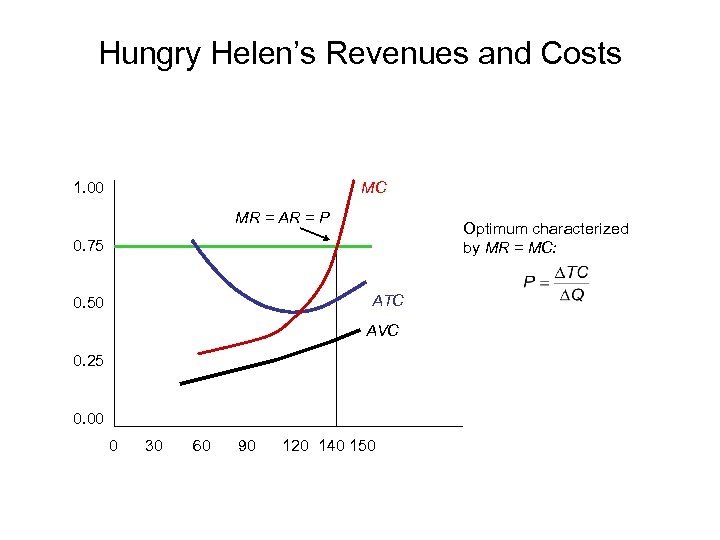
Hungry Helen’s Revenues and Costs 1. 00 MC MR = AR = P Optimum characterized by MR = MC: 0. 75 ATC 0. 50 AVC 0. 25 0. 00 0 30 60 90 120 140 150
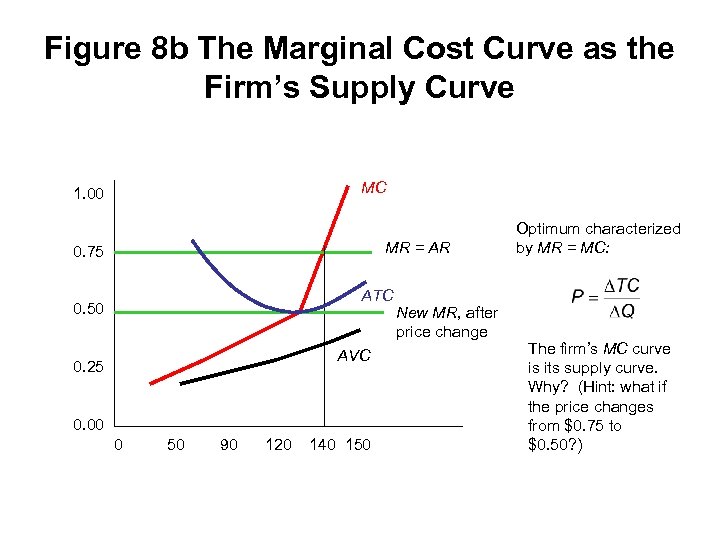
Figure 8 b The Marginal Cost Curve as the Firm’s Supply Curve MC 1. 00 MR = AR 0. 75 ATC 0. 50 AVC 0. 25 0. 00 0 50 90 120 140 150 New MR, after price change Optimum characterized by MR = MC: The firm’s MC curve is its supply curve. Why? (Hint: what if the price changes from $0. 75 to $0. 50? )
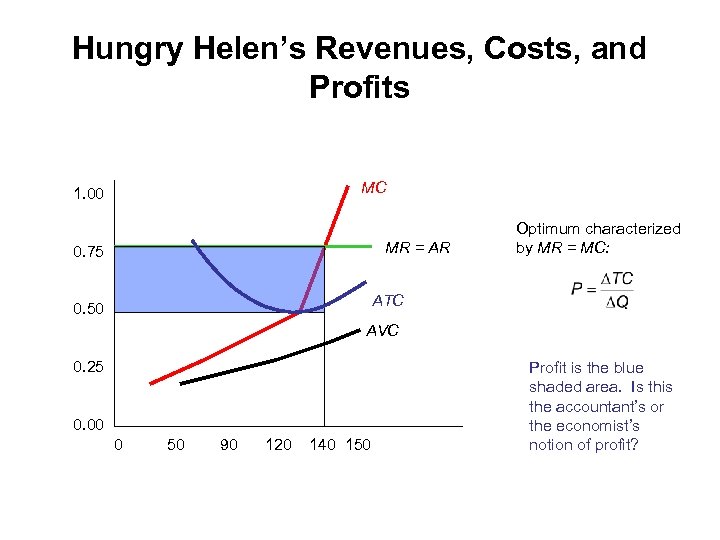
Hungry Helen’s Revenues, Costs, and Profits MC 1. 00 MR = AR 0. 75 Optimum characterized by MR = MC: ATC 0. 50 AVC 0. 25 0. 00 0 50 90 120 140 150 Profit is the blue shaded area. Is this the accountant’s or the economist’s notion of profit?
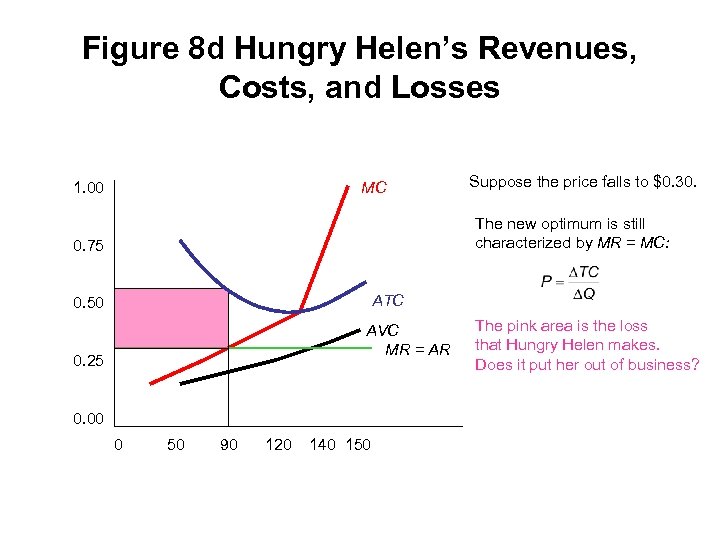
Figure 8 d Hungry Helen’s Revenues, Costs, and Losses 1. 00 MC Suppose the price falls to $0. 30. The new optimum is still characterized by MR = MC: 0. 75 ATC 0. 50 AVC MR = AR 0. 25 0. 00 0 50 90 120 140 150 The pink area is the loss that Hungry Helen makes. Does it put her out of business?
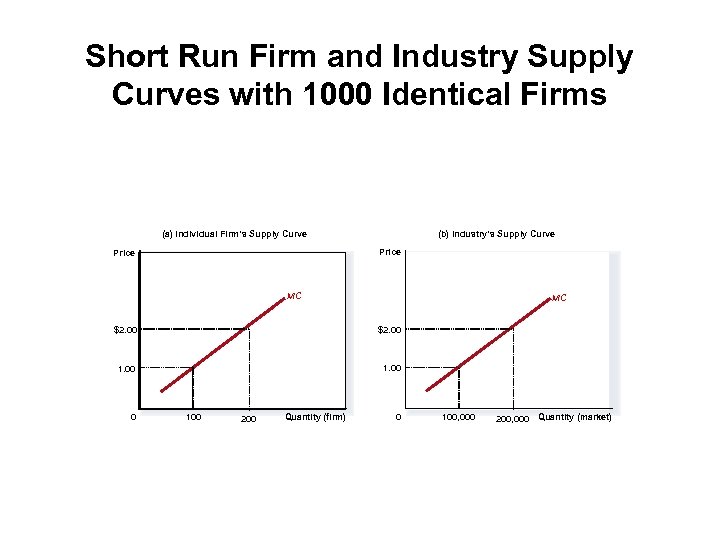
Short Run Firm and Industry Supply Curves with 1000 Identical Firms (a) Individual Firm’s Supply Curve (b) Industry’s Supply Curve Price MC MC $2. 00 1. 00 0 100 200 Quantity (firm) 0 100, 000 200, 000 Quantity (market) Copyright © 2004 South-Western
The Short Run and the Long • There are in fact two short run tests for how much output to produce, : – the marginal test (MC = MR) and the total test (TR > TVC). – sunk costs and the decision to shut down. • By the same token, there are two long run tests that have to be met at the optimal output level: – MC = MR, and TR > TC. – Observe that in the long run, the second (total) test is necessary and sufficient for entry and the converse (TR < TC) necessary and sufficient for exit.
Supply in the Long Run What does this tell us about the long run supply schedule? Suppose that potential entrants can produce at the same costs as identical existing firms, that is, they all have the same cost curves. And suppose that the industry is small in the sense that its demands for factors do not affect factor prices.
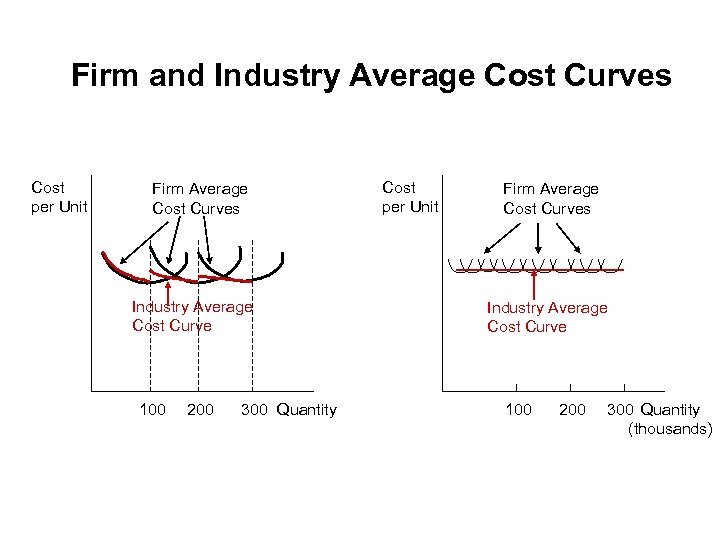
Firm and Industry Average Cost Curves Cost per Unit Firm Average Cost Curves Industry Average Cost Curve 100 200 300 Quantity (thousands)
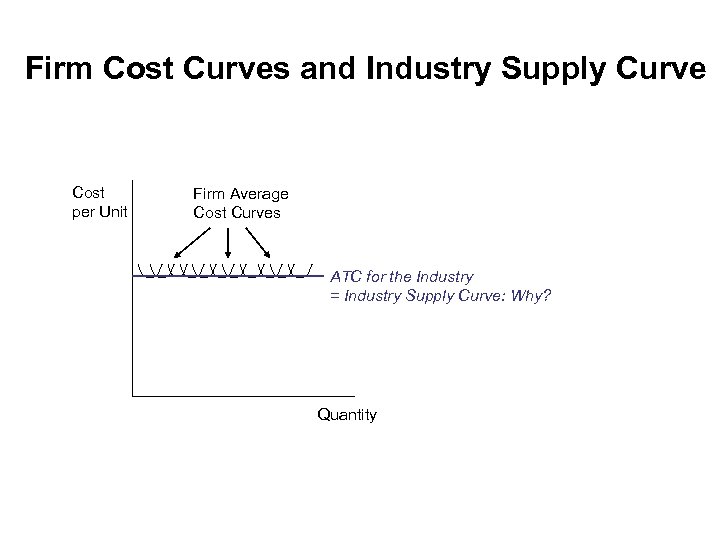
Firm Cost Curves and Industry Supply Curve Cost per Unit Firm Average Cost Curves ATC for the Industry = Industry Supply Curve: Why? Quantity
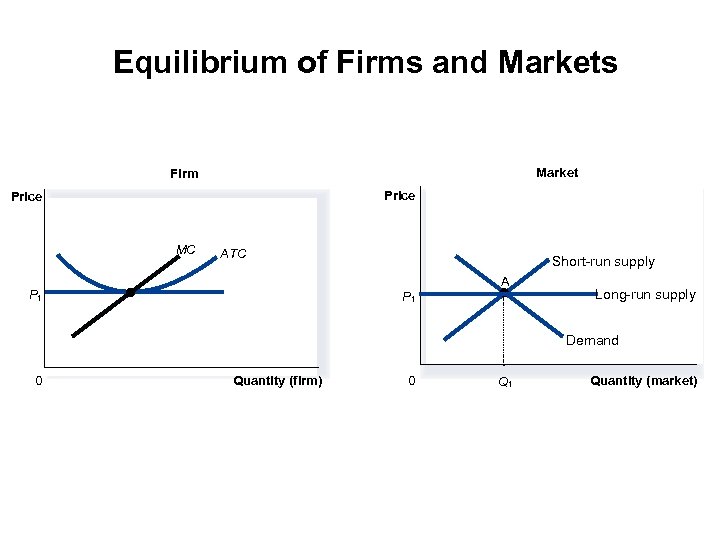
Equilibrium of Firms and Markets Market Firm Price MC ATC Short-run supply A P 1 Long-run supply Demand 0 Quantity (firm) 0 Q 1 Quantity (market)
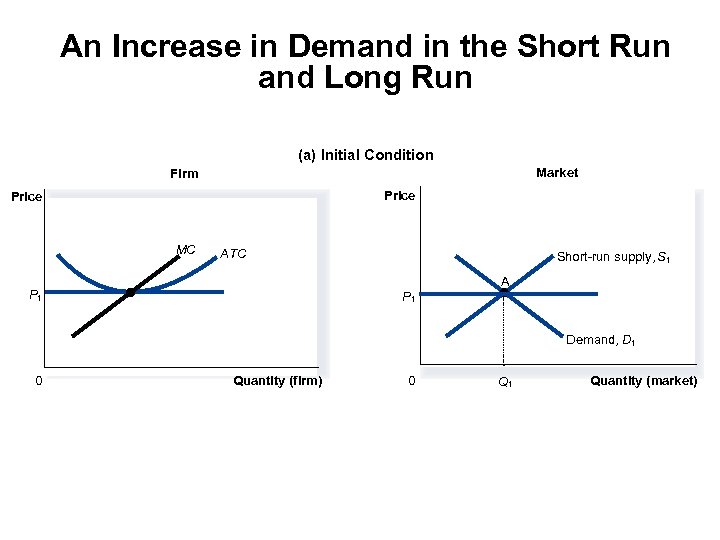
An Increase in Demand in the Short Run and Long Run (a) Initial Condition Market Firm Price MC ATC Short-run supply, S 1 A P 1 Demand, D 1 0 Quantity (firm) 0 Q 1 Quantity (market)
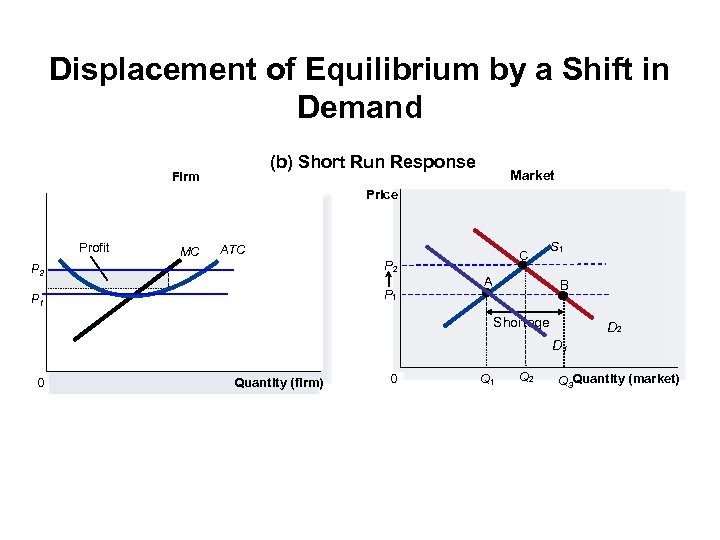
Displacement of Equilibrium by a Shift in Demand (b) Short Run Response Firm Market Price Profit MC ATC P 2 P 1 C A S 1 B Shortage D 2 D 1 0 Quantity (firm) 0 Q 1 Q 2 Q 3 Quantity (market)
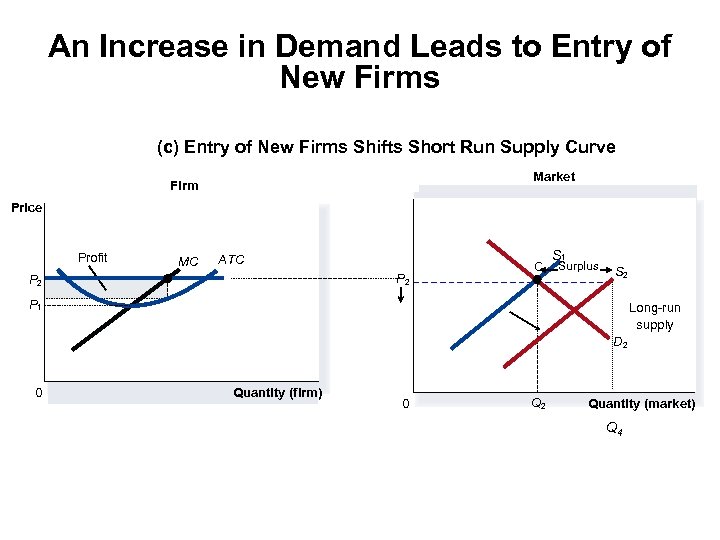
An Increase in Demand Leads to Entry of New Firms (c) Entry of New Firms Shifts Short Run Supply Curve Market Firm Price Profit MC ATC P 2 C S 1 Surplus S 2 P 1 Long-run supply D 2 0 Quantity (firm) 0 Q 2 Quantity (market) Q 4 Copyright © 2004 South-Western
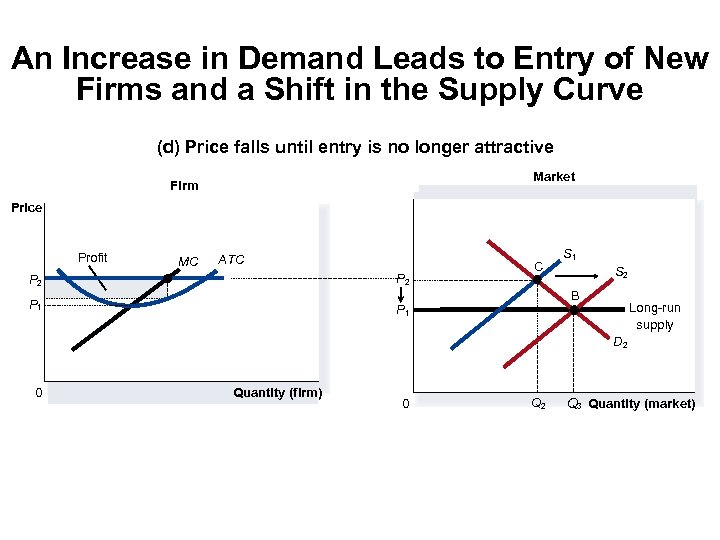
An Increase in Demand Leads to Entry of New Firms and a Shift in the Supply Curve (d) Price falls until entry is no longer attractive Market Firm Price Profit MC ATC P 2 P 1 C S 1 S 2 B P 1 Long-run supply D 2 0 Quantity (firm) 0 Q 2 Q 3 Quantity (market) Copyright © 2004 South-Western
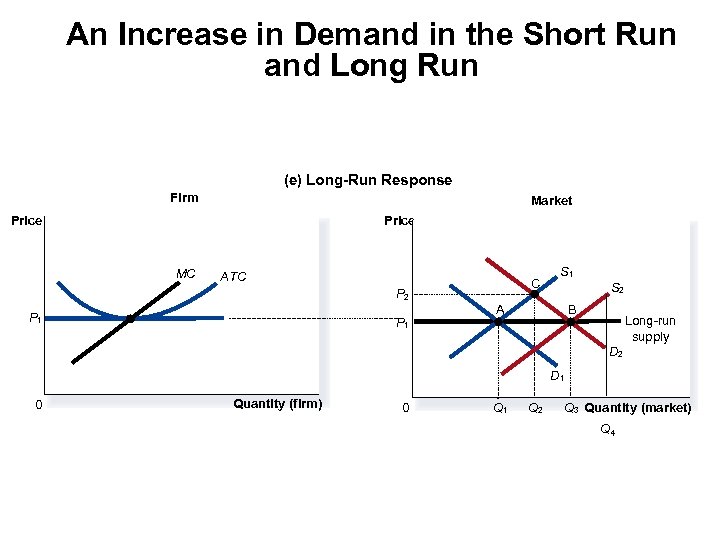
An Increase in Demand in the Short Run and Long Run (e) Long-Run Response Firm Market Price MC ATC C P 2 P 1 S 1 S 2 B A Long-run supply D 2 D 1 0 Quantity (firm) 0 Q 1 Q 2 Q 3 Quantity (market) Q 4 Copyright © 2004 South-Western
Скачать презентацию Lecture 5 Production Costs and Competitive Markets October
6e71d121349e1a32a6fda0e714530f80.ppt