


 Скачать презентацию Lecture 4 Cascading Style Sheet CSS Sarsenova Zh
SDP1_Lecture 4.pptx
- Количество слайдов: 51
 Lecture 4 Cascading Style Sheet (CSS) Sarsenova Zh. N.
 Cascading Style Sheet • When a browser reads a style sheet, it will format the HTML document according to the information in the style sheet. • CSS is a language that describes the style of an HTML document. • CSS describes how HTML elements should be displayed.
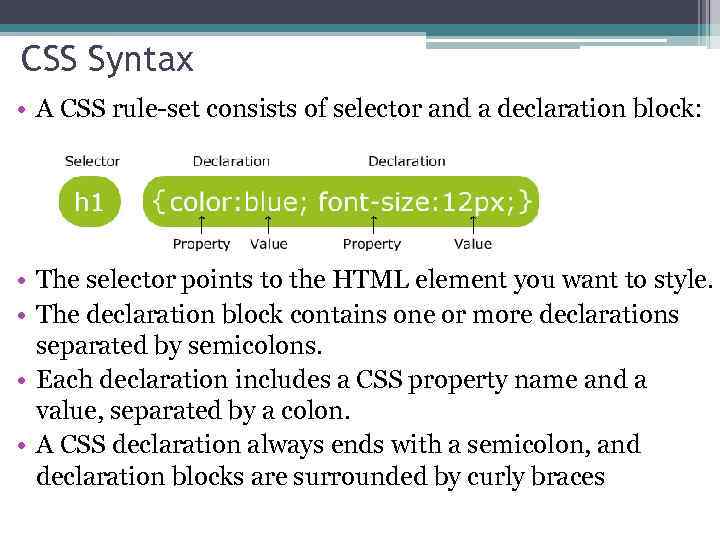 CSS Syntax • A CSS rule-set consists of selector and a declaration block: • The selector points to the HTML element you want to style. • The declaration block contains one or more declarations separated by semicolons. • Each declaration includes a CSS property name and a value, separated by a colon. • A CSS declaration always ends with a semicolon, and declaration blocks are surrounded by curly braces
 For several elements • First three heading levels have blue letters: h 1, h 2, h 3{color: blue}
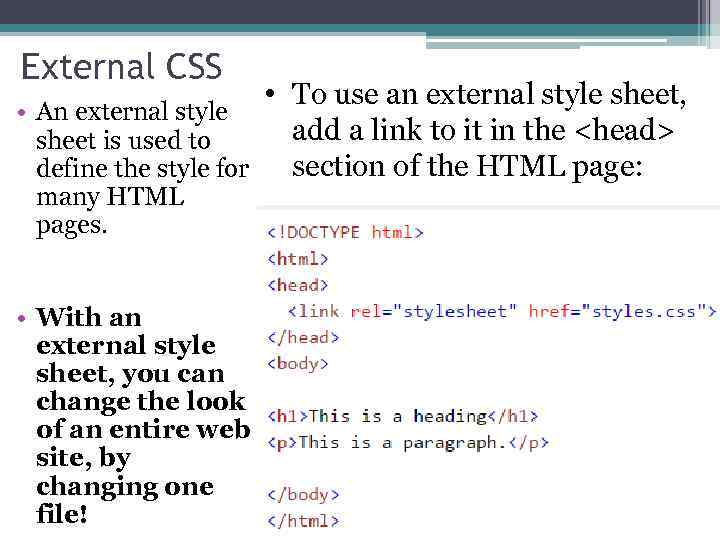
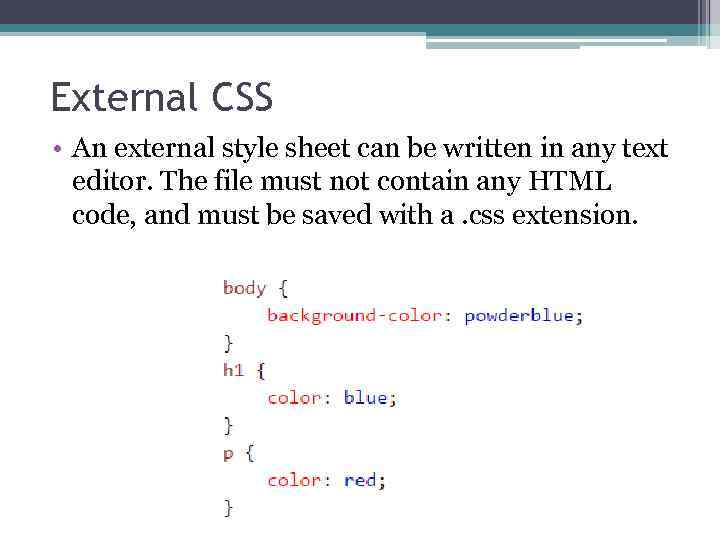
 Ways to insert CSS • Inline • Internal • External
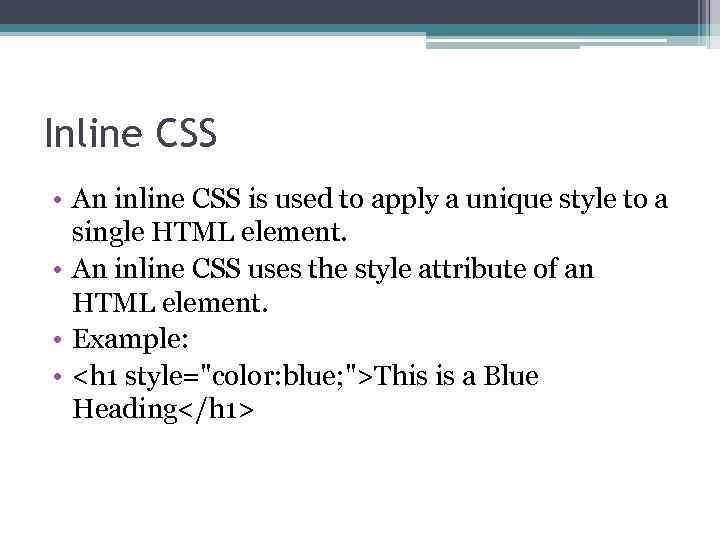 Inline CSS • An inline CSS is used to apply a unique style to a single HTML element. • An inline CSS uses the style attribute of an HTML element. • Example: •
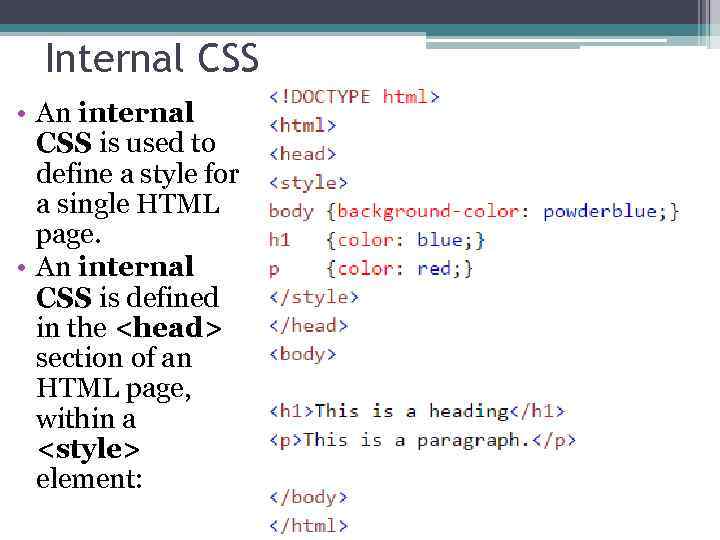 Internal CSS • An internal CSS is used to define a style for a single HTML page. • An internal CSS is defined in the