


 Скачать презентацию LECTURE 3 Revolution and Restoration The Metaphysical
lecture4_Revolution.pptx
- Количество слайдов: 62
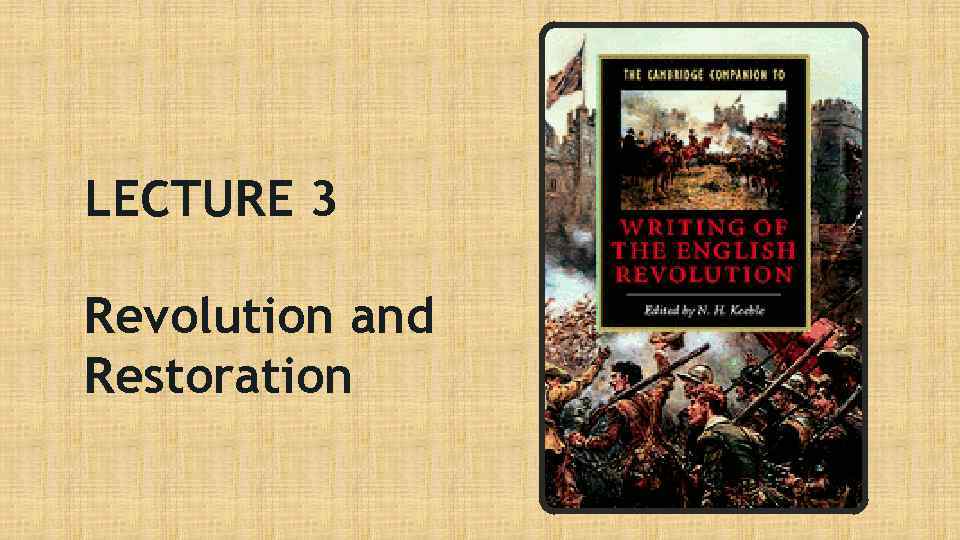 LECTURE 3 Revolution and Restoration
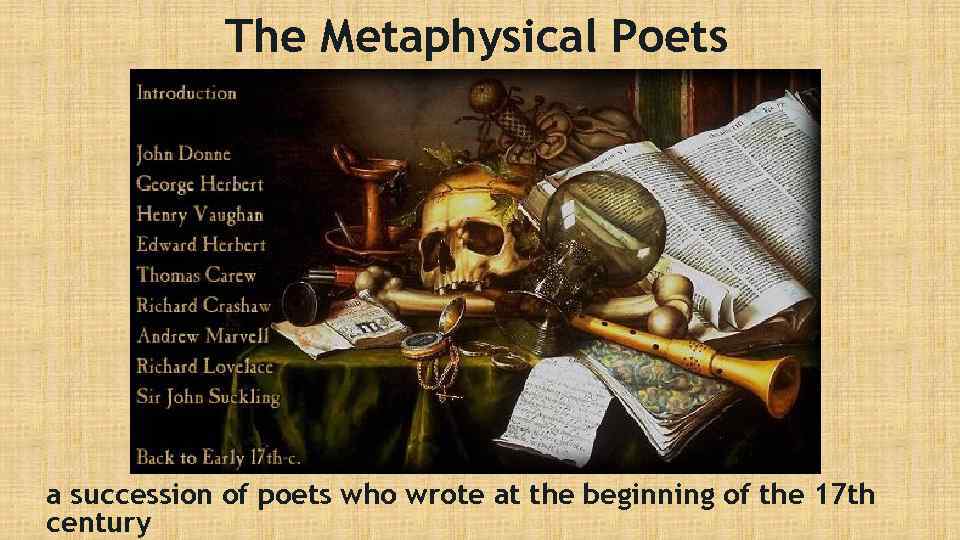 The Metaphysical Poets a succession of poets who wrote at the beginning of the 17 th century
 Their poetry is marked by: intense feeling combined with ingenious thought elaborate, witty images interest in mathematics, science and geography interest in the soul direct, colloquial expression even in sonnets and lyrics
 Common characteristics of Metaphysical poetry: argumentative structure dramatic and colloquial mode of utterance overriding interest in the soul acute realism metaphysical wit
 Metaphysical Poets include J. Donne H. King G. Herbert R. Crashaw H. Vaughan A. Marvell and others
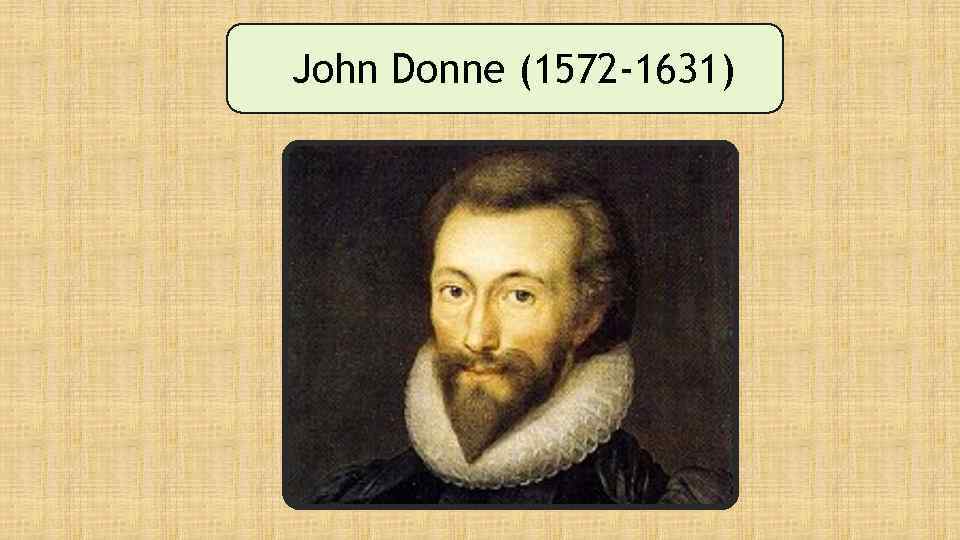 John Donne (1572 -1631)
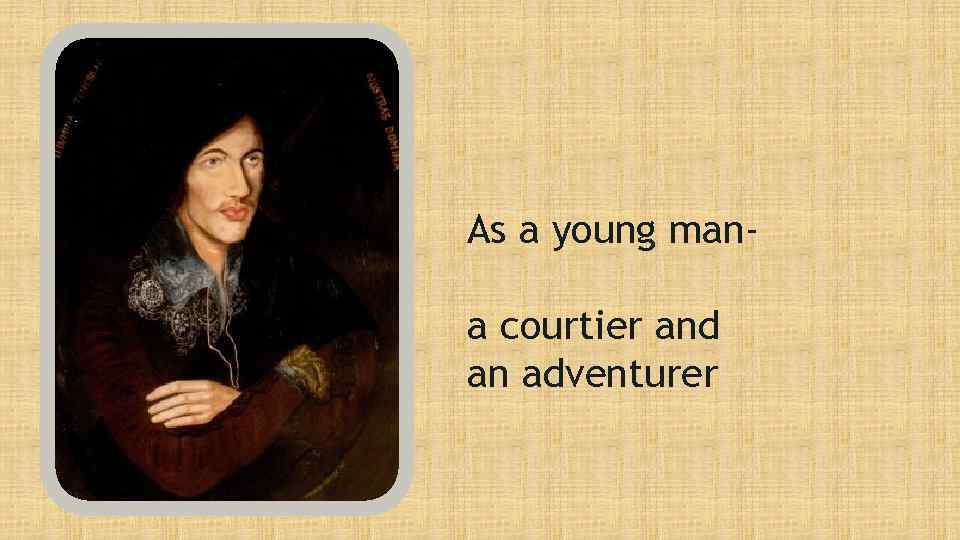 As a young mana courtier and an adventurer
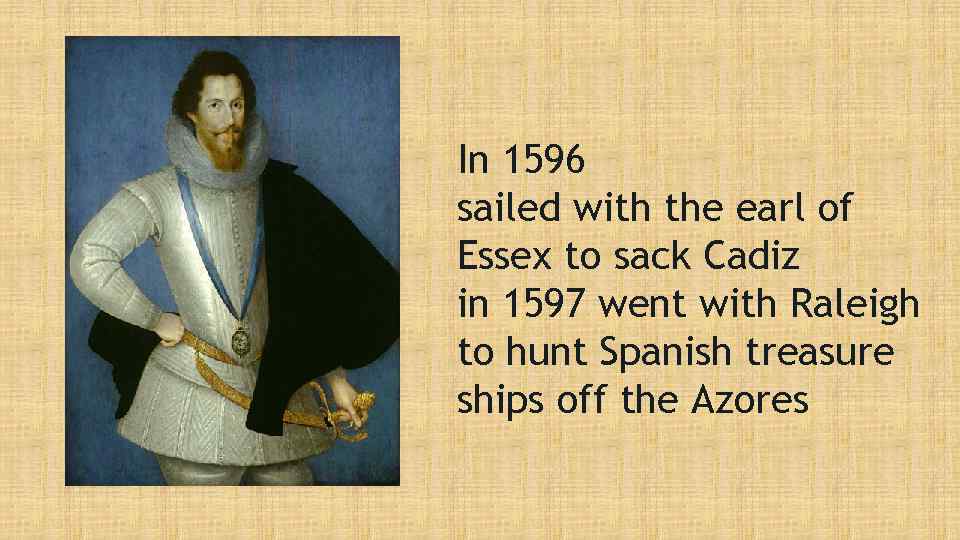 In 1596 sailed with the earl of Essex to sack Cadiz in 1597 went with Raleigh to hunt Spanish treasure ships off the Azores
 in 1601 - elected a member of Parliament was secretary to Sir Thomas Egerton, a minister of the queen he lost favour – and was briefly imprisoned
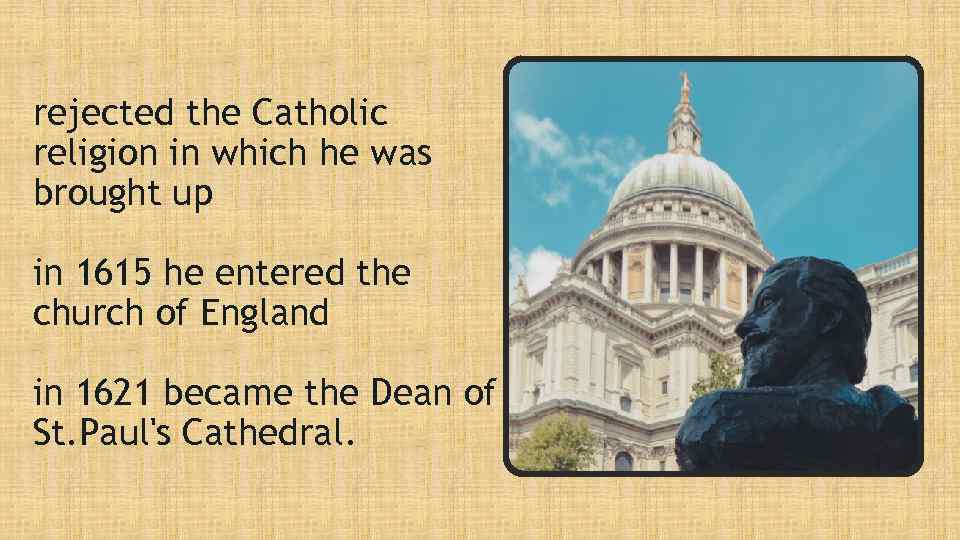 rejected the Catholic religion in which he was brought up in 1615 he entered the church of England in 1621 became the Dean of St. Paul's Cathedral.
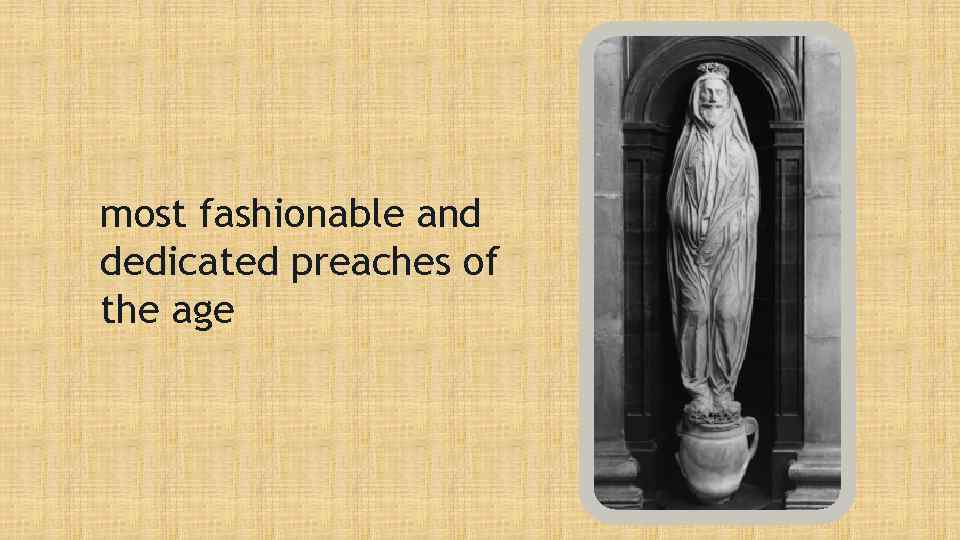 most fashionable and dedicated preaches of the age
 “A Valediction: of Weeping” A "valediction" is something said on parting from a loved one. In the poem J. Donne expresses to a woman his powerful but mixed feelings on leaving her to travel overseas. “Satires and Elegies” (1590 -written) “Songs and Sonnets” “Holy Sonnets” (1621)
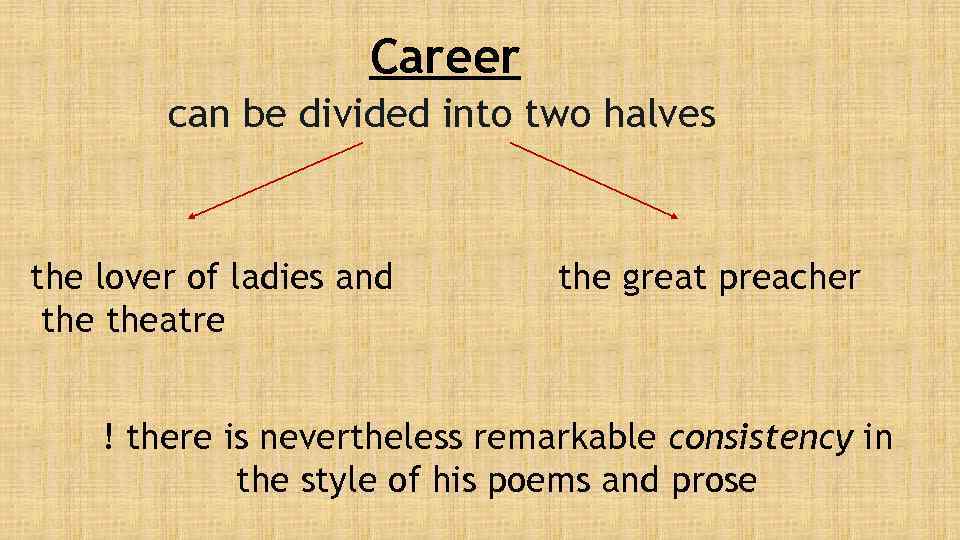 Career can be divided into two halves the lover of ladies and theatre the great preacher ! there is nevertheless remarkable consistency in the style of his poems and prose
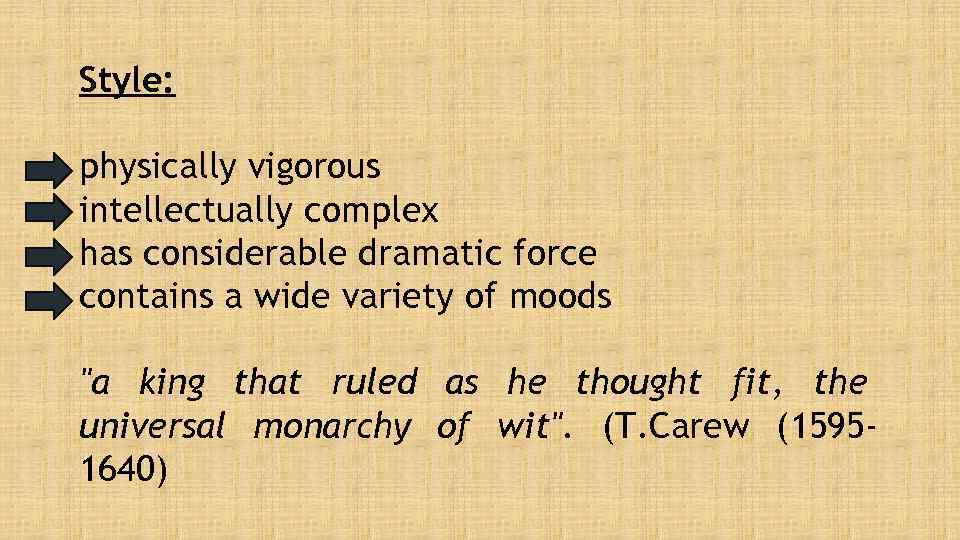 Style: physically vigorous intellectually complex has considerable dramatic force contains a wide variety of moods "a king that ruled as he thought fit, the universal monarchy of wit". (T. Carew (15951640)
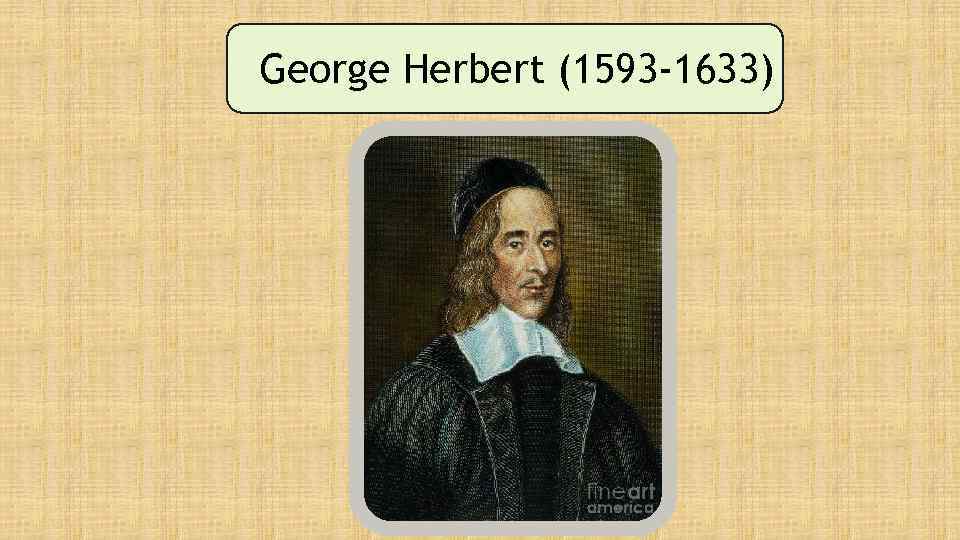 George Herbert (1593 -1633)
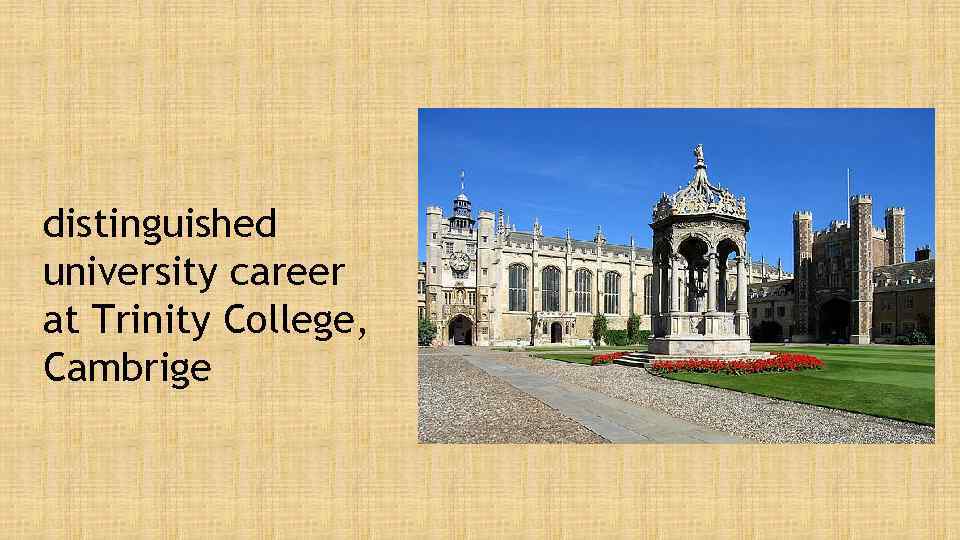 distinguished university career at Trinity College, Cambrige
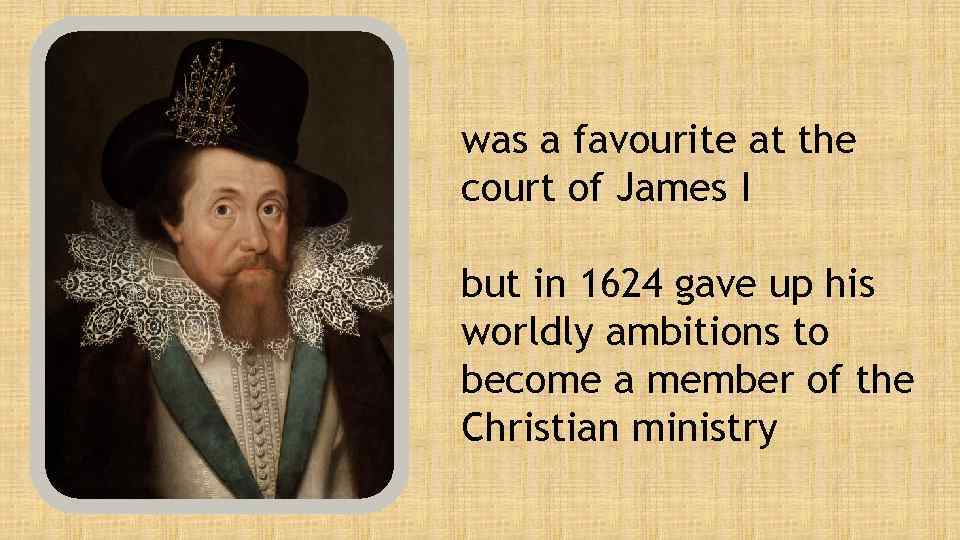 was a favourite at the court of James I but in 1624 gave up his worldly ambitions to become a member of the Christian ministry
 In 1630 - was appointed rector of a small parish near Salibury called Bemerton. There: preached and wrote poetry helped rebuild the church out of his own funds cared deeply for his parishoners.
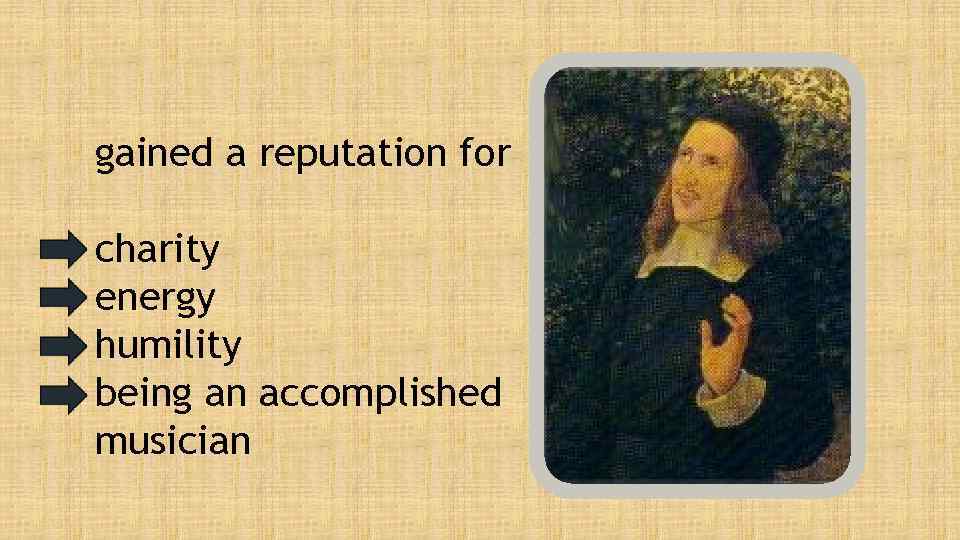 gained a reputation for charity energy humility being an accomplished musician
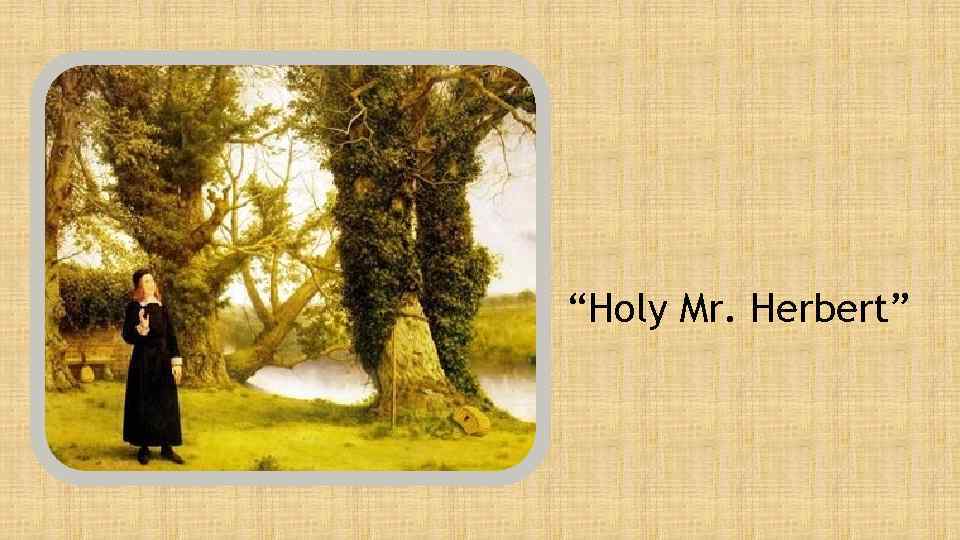 “Holy Mr. Herbert”
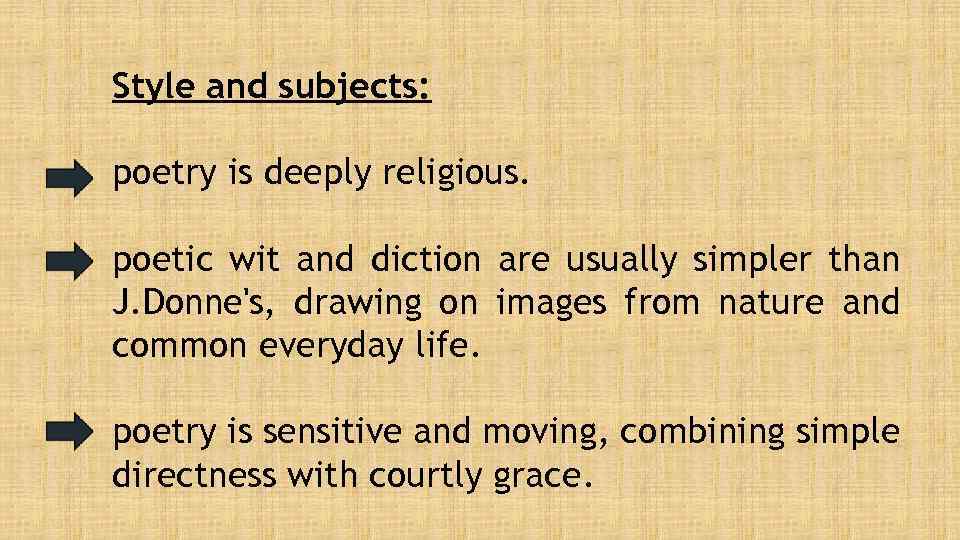 Style and subjects: poetry is deeply religious. poetic wit and diction are usually simpler than J. Donne's, drawing on images from nature and common everyday life. poetry is sensitive and moving, combining simple directness with courtly grace.
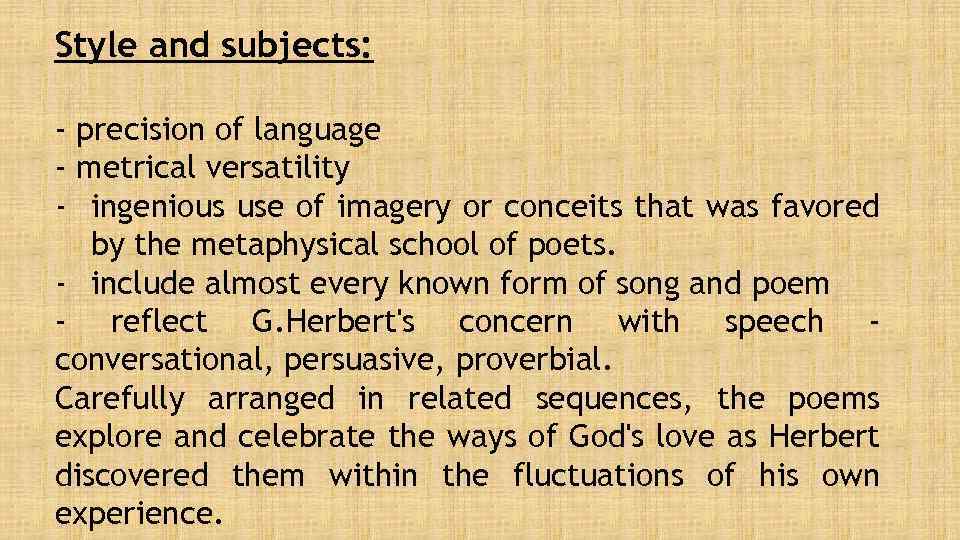 Style and subjects: - precision of language - metrical versatility - ingenious use of imagery or conceits that was favored by the metaphysical school of poets. - include almost every known form of song and poem - reflect G. Herbert's concern with speech conversational, persuasive, proverbial. Carefully arranged in related sequences, the poems explore and celebrate the ways of God's love as Herbert discovered them within the fluctuations of his own experience.
 “A Priest to the Temple” (1652)
 biographies
 Izaak Walton John Aubrey
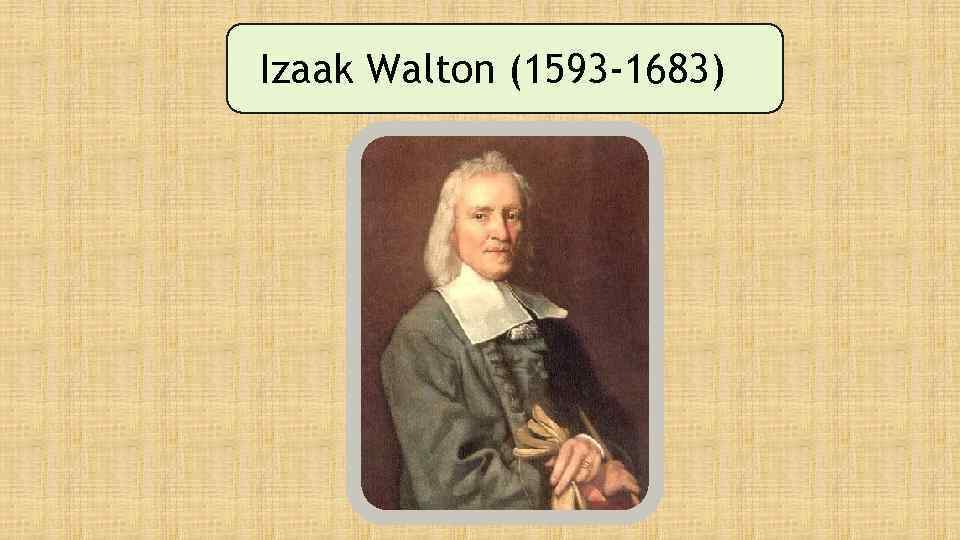 Izaak Walton (1593 -1683)
 was the first Englishman to write biographical portraits in the modern sense
 His portraits of eminent men humble enough to lead ordinary lives have been criticised for being inaccurate in details (some of the less holy aspects of their lives being conveniently forgotten out of a desire to present them as moral examples), but they are simple, clear, warm-hearted and full of interesting insights.
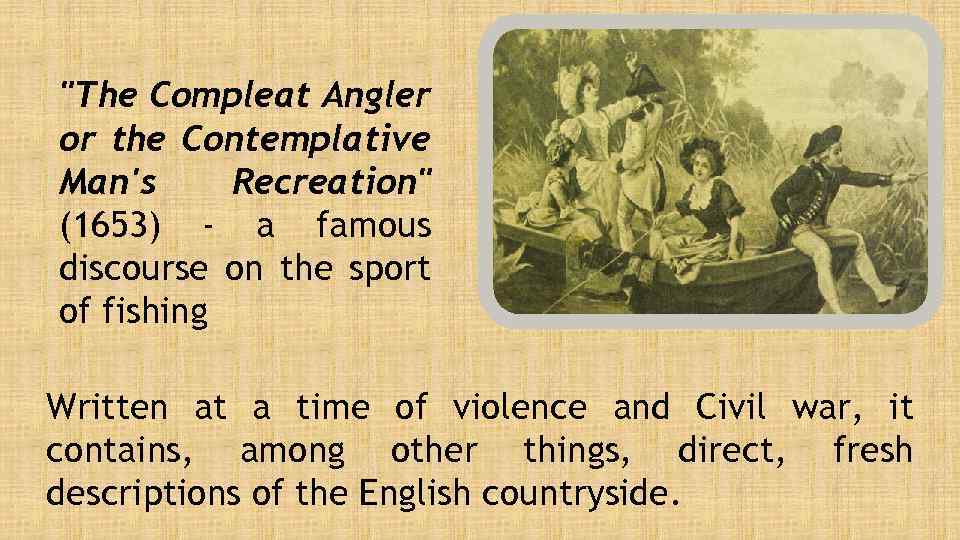 "The Compleat Angler or the Contemplative Man's Recreation" (1653) - a famous discourse on the sport of fishing Written at a time of violence and Civil war, it contains, among other things, direct, fresh descriptions of the English countryside.
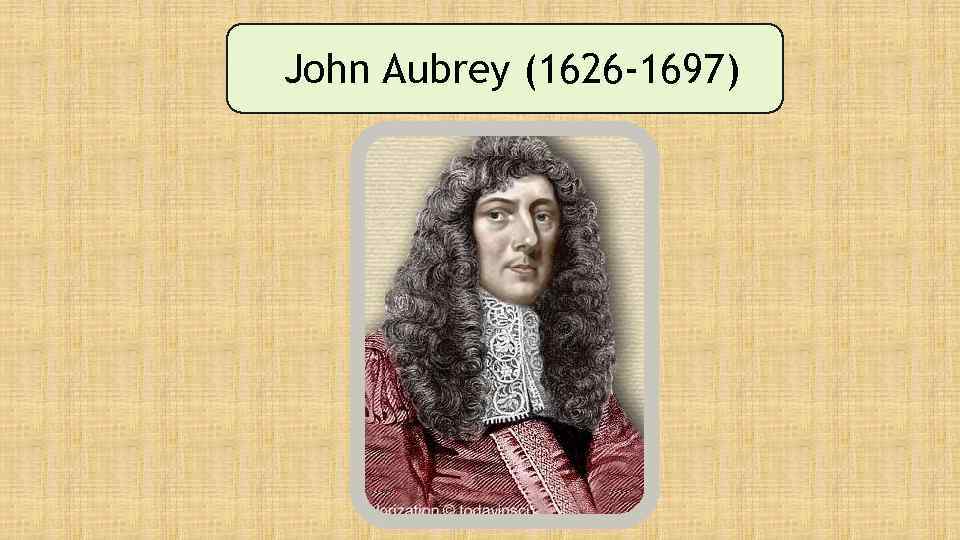 John Aubrey (1626 -1697)
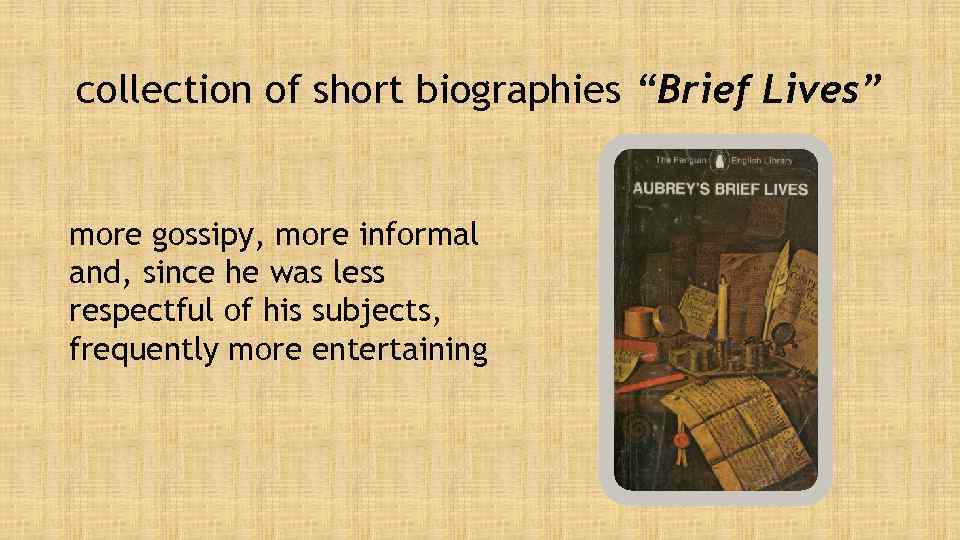 collection of short biographies “Brief Lives” more gossipy, more informal and, since he was less respectful of his subjects, frequently more entertaining
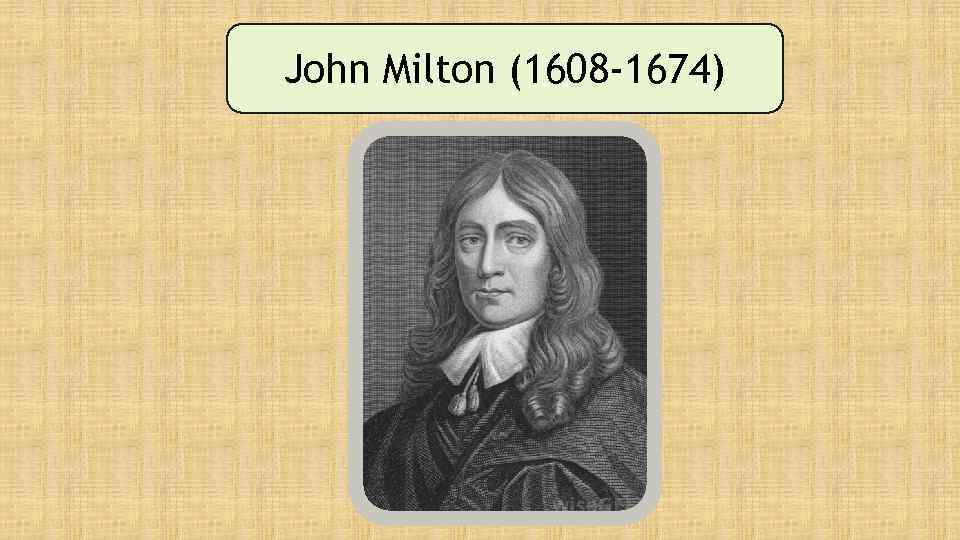 John Milton (1608 -1674)
 epic poem "Paradise Lost" (1667) a long poem in twelve books, written to "justify the ways of God to men" In concerns both the Fall of the Angels and the fall of Man (the story of Adam and Eve in the Garden of Eden). The poem is highly allegoric. ( God – a symbol of monarchy; Angels, Satan – the parliament). It is characterized by its duality (two independent views do together). J. Milton chose his themes from the Bible, but under his treatment they became revolutionary in spirit.
 The revolutionary poets of the 19 th century said that in "Paradise Lost" J. Milton refused to accept the conventional Bible story – blending of materialism and religious idealism.
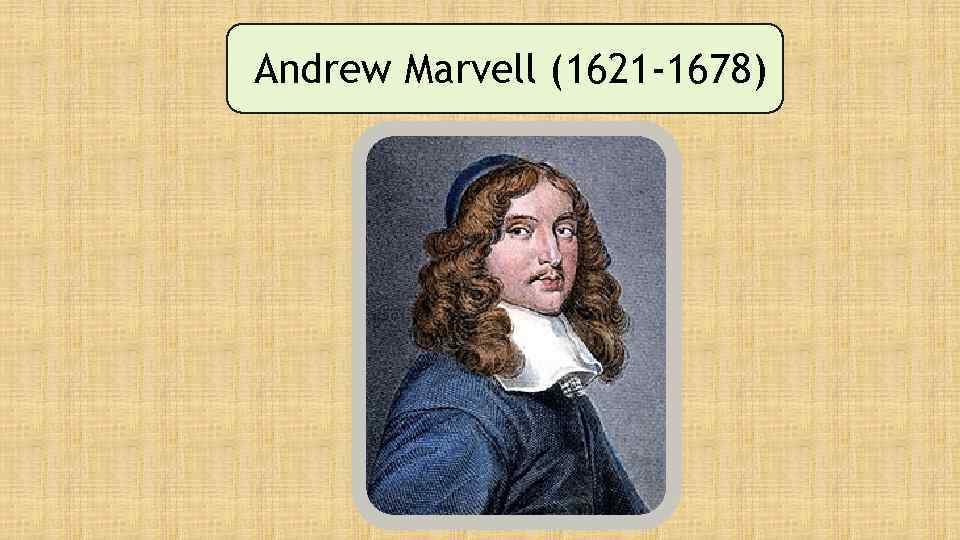 Andrew Marvell (1621 -1678)
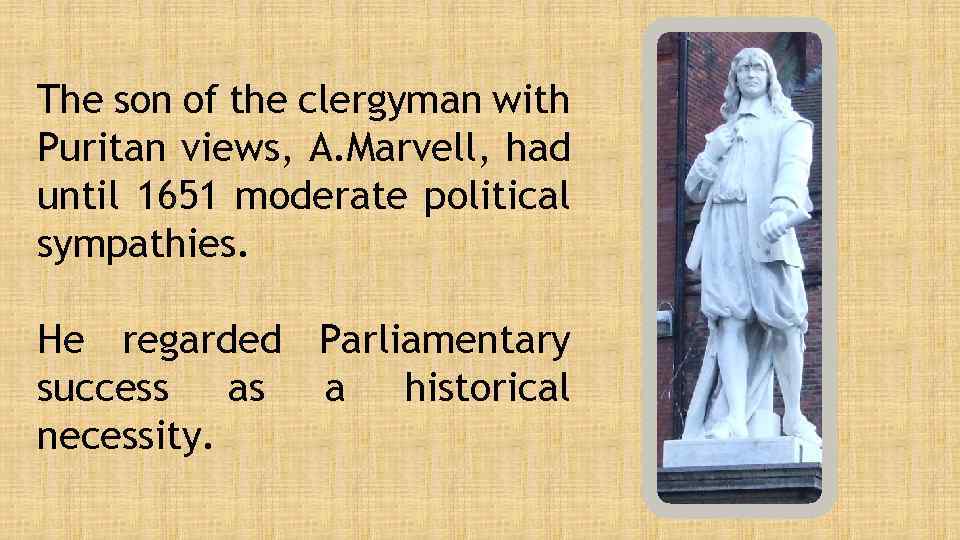 The son of the clergyman with Puritan views, A. Marvell, had until 1651 moderate political sympathies. He regarded Parliamentary success as a historical necessity.
 He travelled abroad in France, Holland, Switzerland, Spain, and Italy from 1642 -1646.
 In 1650, A. Marvell became the tutor of twelve-year-old Mary Fairfax (later Duchess of Buckingham), the daughter of the retired Lord General of the parliamentary forces. At the Yorkshire seat of the Fairfax family Marvell seems to have written, over a period of about three years, most of his non-satiric English poems.
 Style: intelectual subtlty of the Metaphysicals with a kind of sensuous immediacy. A. Marvell's wit had a "tough reasonableness beneath the slight lyric grace" which, playing over "the great traditional commonplaces of European literature", renews them (T. S. Eliot)
 "To His Coy Mistress“ "An Horation Ode upon Cromwell's Return from Ireland" !!!!! are often described as the greatest political poems in England
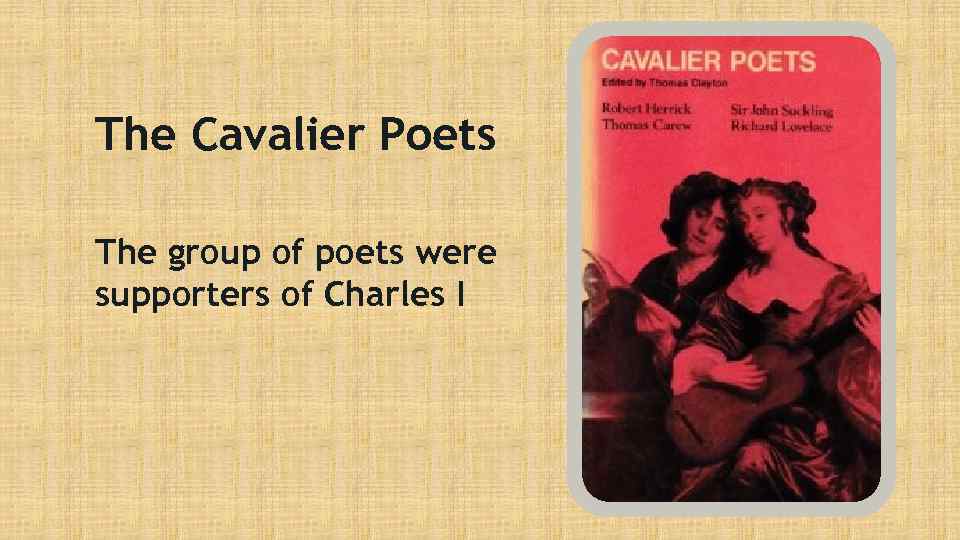 The Cavalier Poets The group of poets were supporters of Charles I
 Style: their verse is characterized by short firm lines, lively diction and graceful wit. The brightest representatives of the group were: T. Carew, Sir J. Suckling and R. Lovelace.
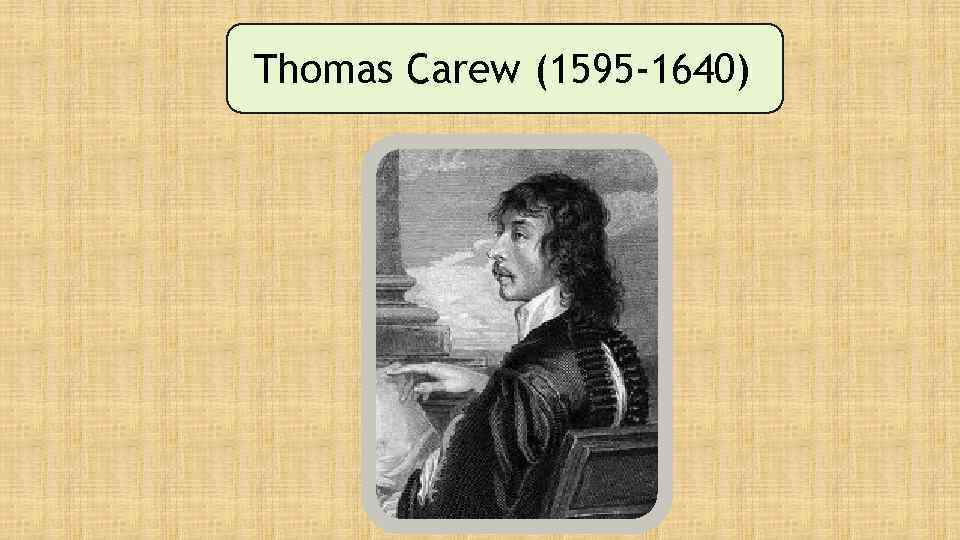 Thomas Carew (1595 -1640)
 Nothing is known of T. Carew's education before he matriculated at Merton College, Oxford, in 1608
 From 1613 to 1616 Carew served as secretary to Sir Dudley Carleton on embassies to Italy and the Netherlands. After being fired for making insulting remarks about Carleton and his wife, T. Carew returned to England for a futile search for employment.
 T. Carew had a reputation for mischief that stayed with him all of his adult life. This reputation did nothing to damage his career as a poet, soldier, and courtier.
 "A Divine Mistress" and "Disdain Returned", were prized for their wit. Much of T. Carew's poetry was sexually explicit far beyond the norms of his age, and he was a reputed libertine. Yet he translated nine of the Psalms and wrote one of the finest elegies of the period: "An Elegy on the Death of the Dean of St. Paul's Dr. John Donne. " It is a solemn tribute to J. Donne's contribution to English poetry and the English Language. Perhaps the most interesting of T. Carew's achievements is his verse criticism of his contemporaries. Formal criticism was in its infancy during the early 17 th century.
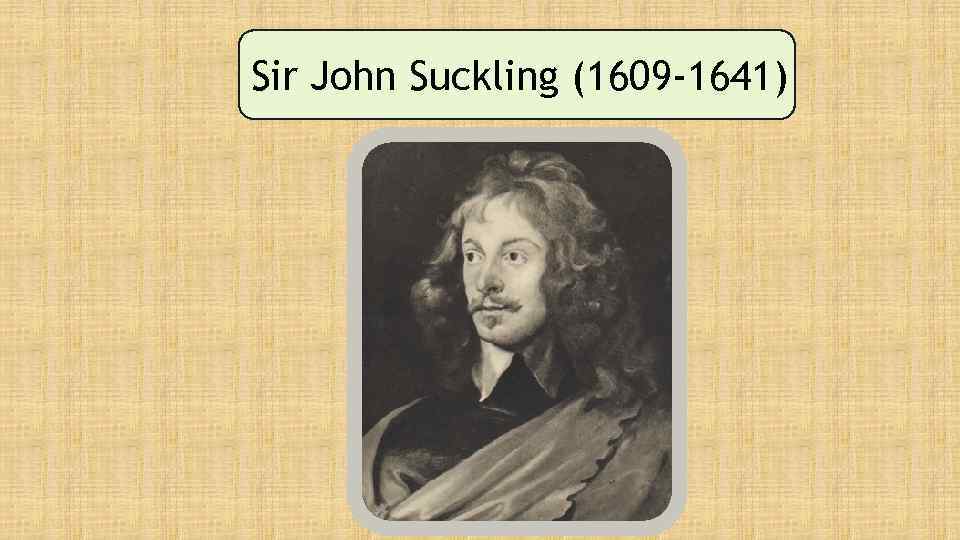 Sir John Suckling (1609 -1641)
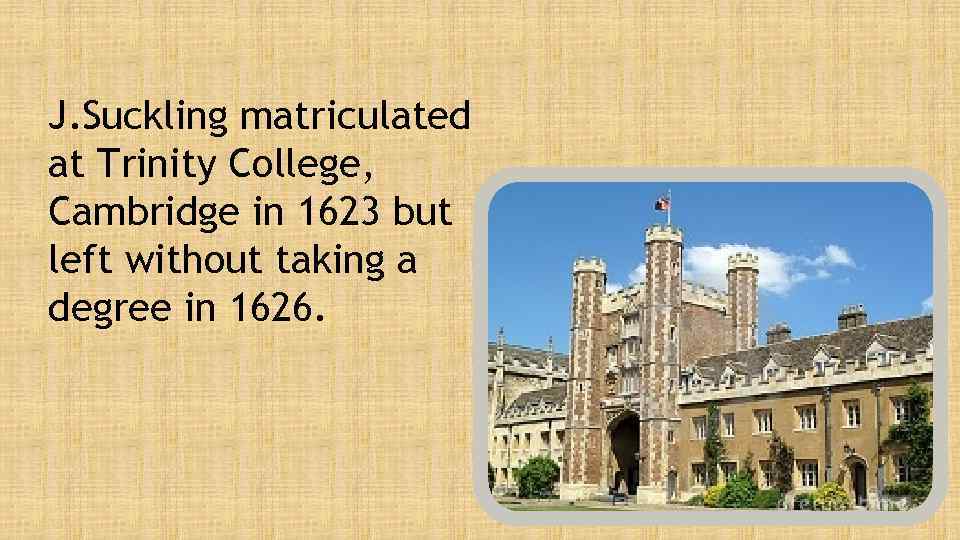 J. Suckling matriculated at Trinity College, Cambridge in 1623 but left without taking a degree in 1626.
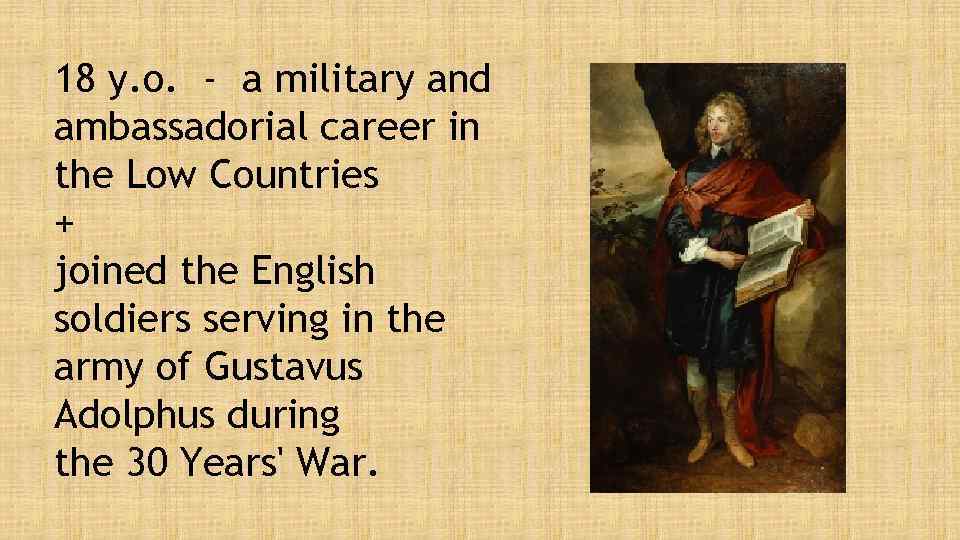 18 y. o. - a military and ambassadorial career in the Low Countries + joined the English soldiers serving in the army of Gustavus Adolphus during the 30 Years' War.
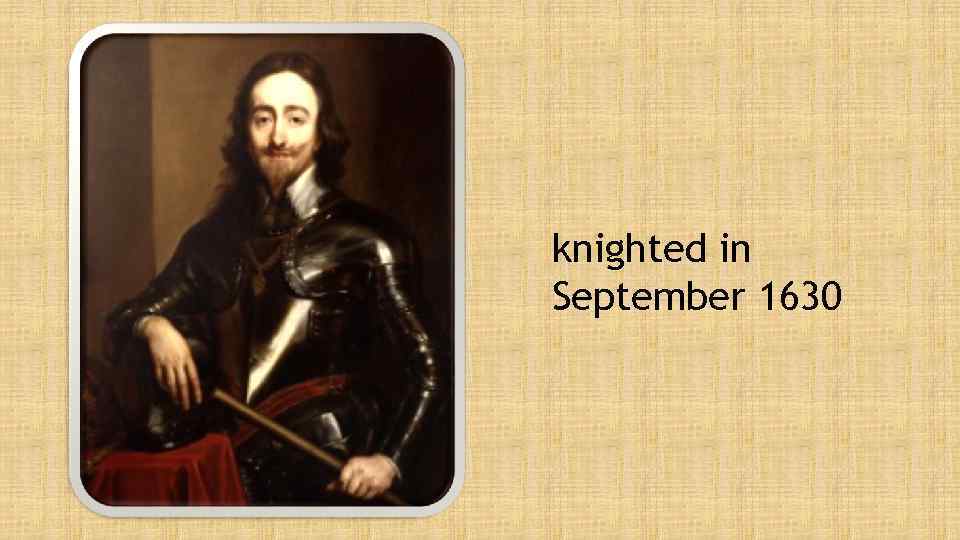 knighted in September 1630
 returned to the English court in May, 1632, where he became very popular through his wealth and charm
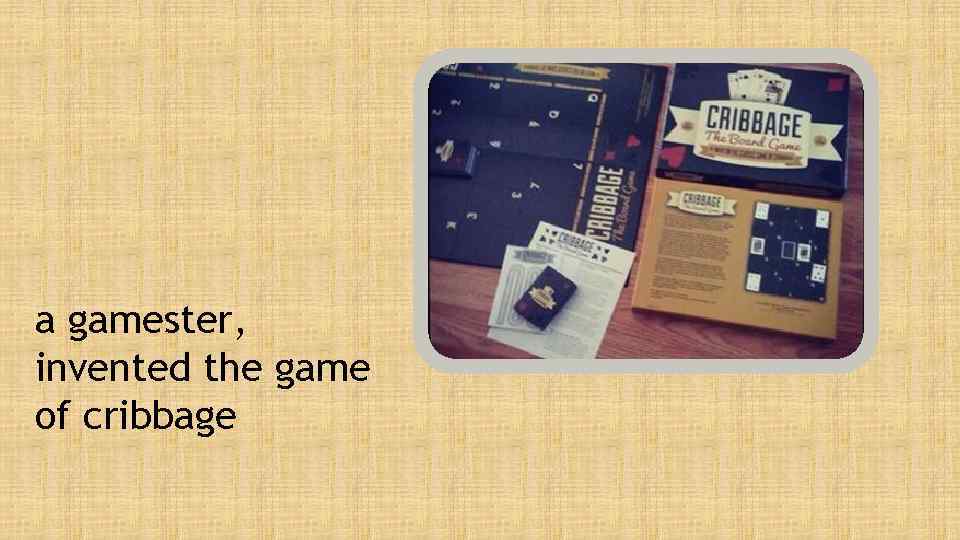 a gamester, invented the game of cribbage
 J. Suckling treated poetry casually, as a pastime, never committing himself to serious study of literature his poetry suffers from irregularity.
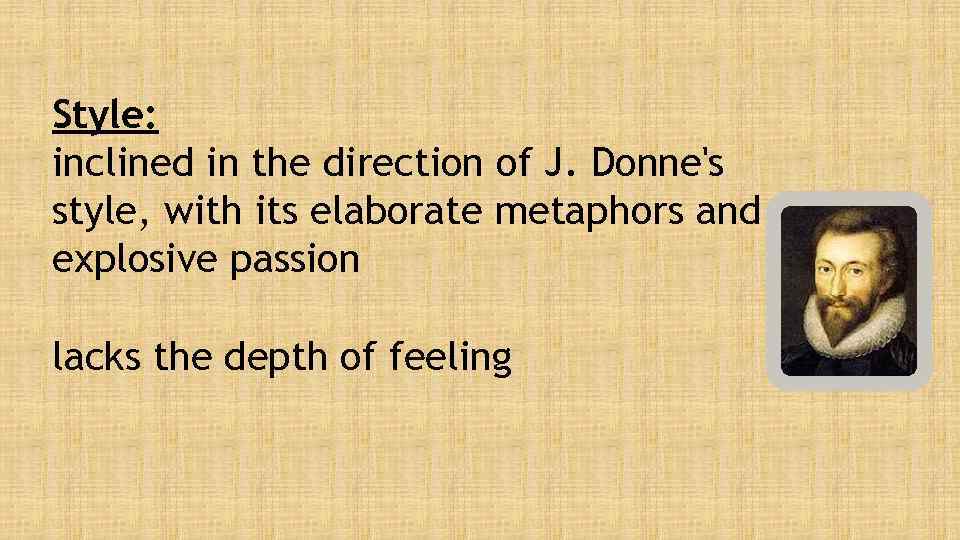 Style: inclined in the direction of J. Donne's style, with its elaborate metaphors and explosive passion lacks the depth of feeling
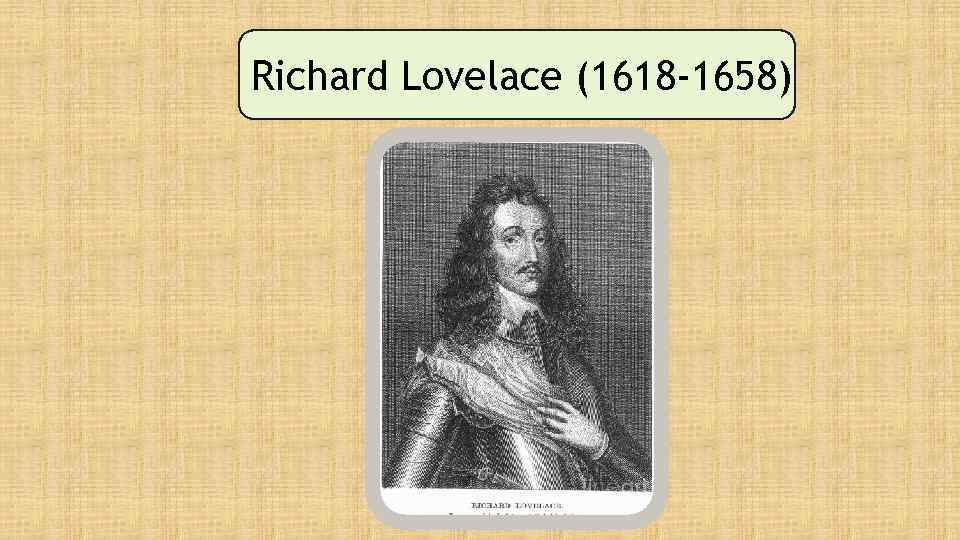 Richard Lovelace (1618 -1658)
 born into an old and wealthy Kentish family in 1618 in Woolwich
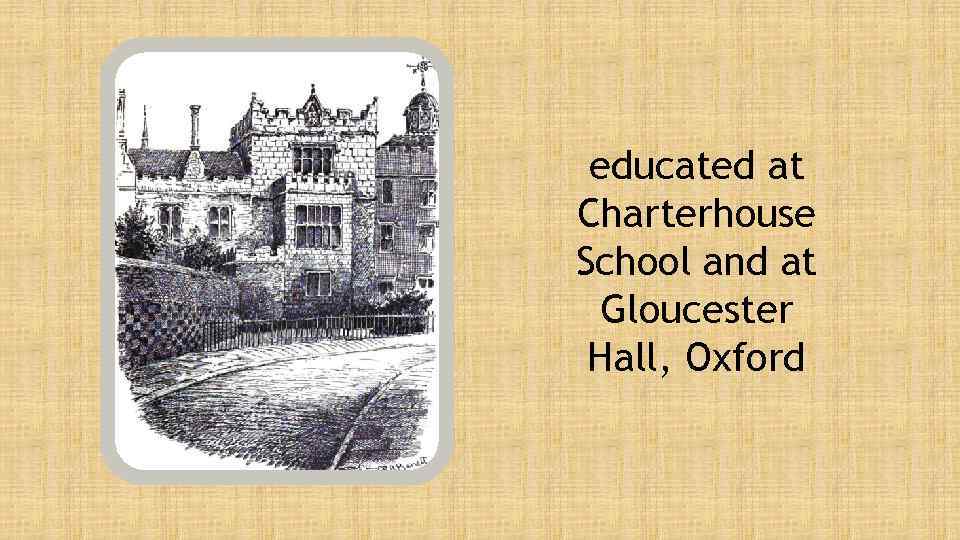 educated at Charterhouse School and at Gloucester Hall, Oxford
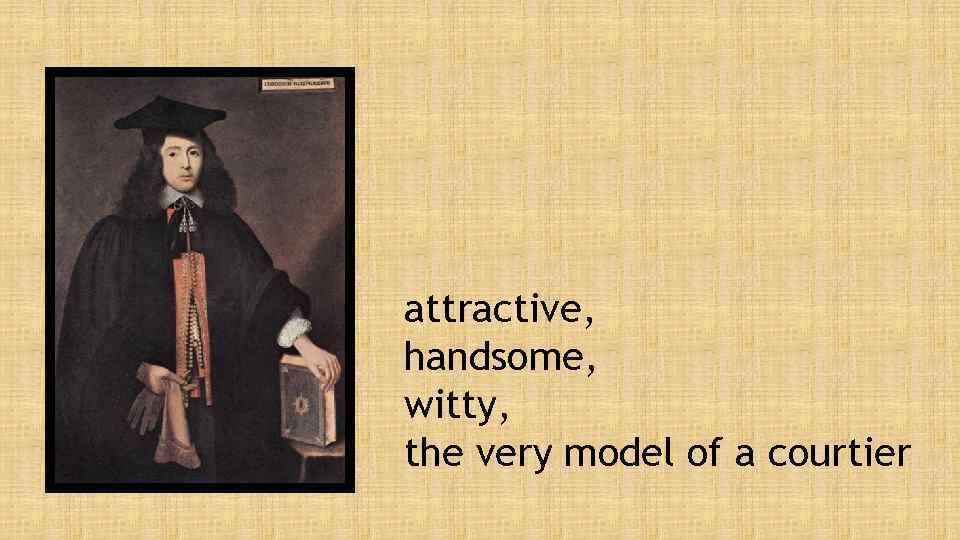 attractive, handsome, witty, the very model of a courtier
 a key figure at court close to the king took part in the King's military expeditions to Scotland in 1639 -1640
 imprisoned in Westminster Gatehouse from April 30 to June 21, 1642
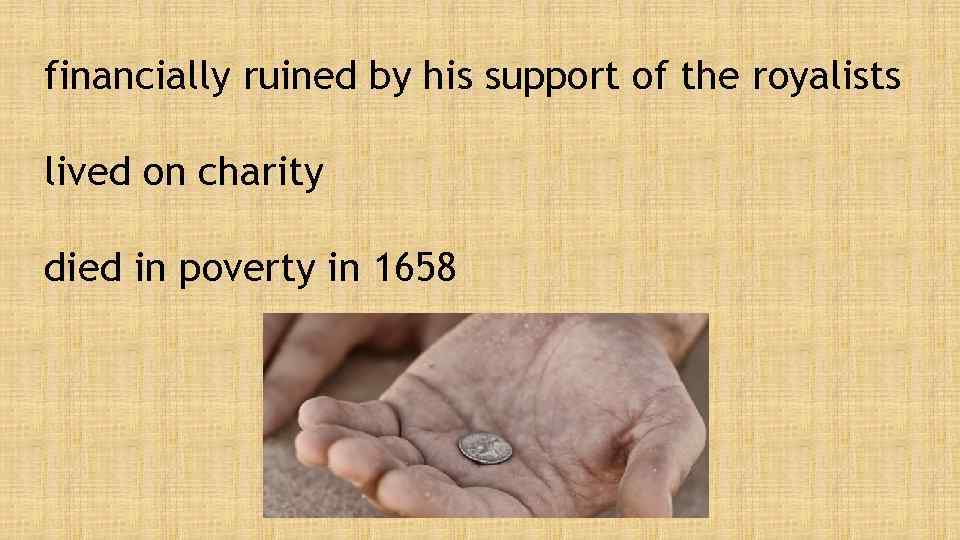 financially ruined by his support of the royalists lived on charity died in poverty in 1658