


 Скачать презентацию Lecture 3 Intrapsychic Domain Structure of Personality 1
Lecture 3 structure of personality.pptx
- Количество слайдов: 13
 Lecture 3. Intrapsychic Domain: Structure of Personality. 1. Id: Reservoir of Psychic Energy. 2. Ego: Executive of Personality. 3. Superego: Upholder of Social Values and Ideas. 4. Interaction of the Id, Ego, and Superego.
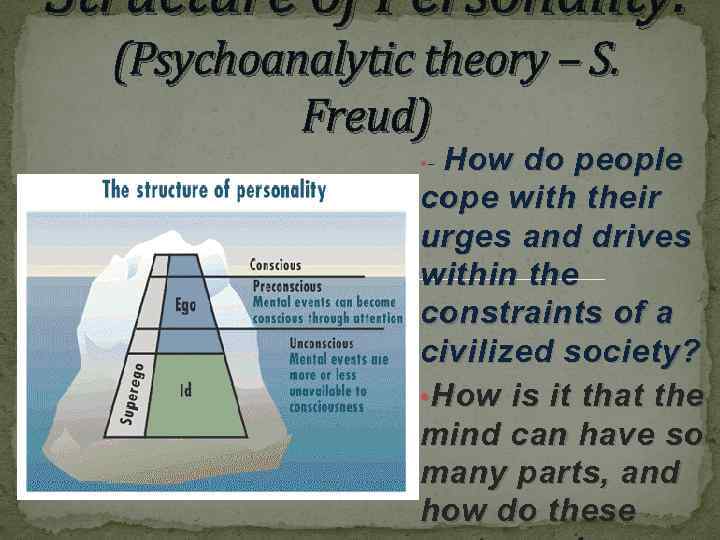 Structure of Personality. (Psychoanalytic theory – S. Freud) How do people cope with their urges and drives within the constraints of a civilized society? • How is it that the mind can have so many parts, and how do these • -
 Id: the Reservoir of Psychic Energy. - the most primitive part of the human mind - something we are born with - source of all drives and urges.
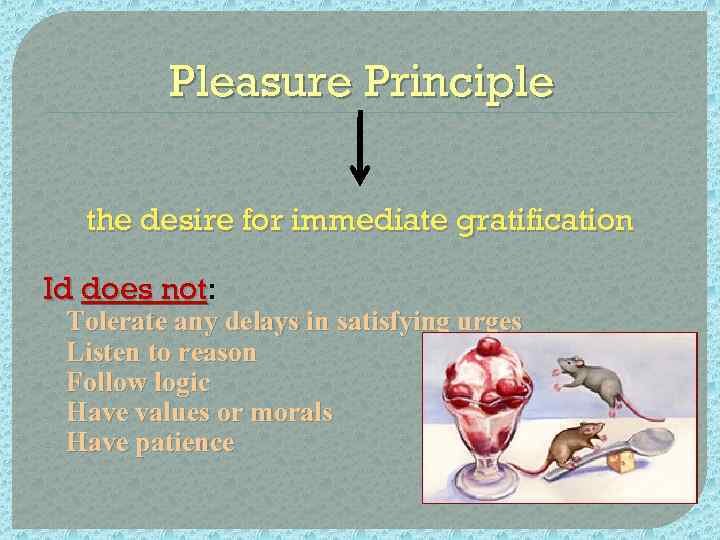 Pleasure Principle the desire for immediate gratification Id does not: not - Tolerate any delays in satisfying urges Listen to reason Follow logic Have values or morals Have patience
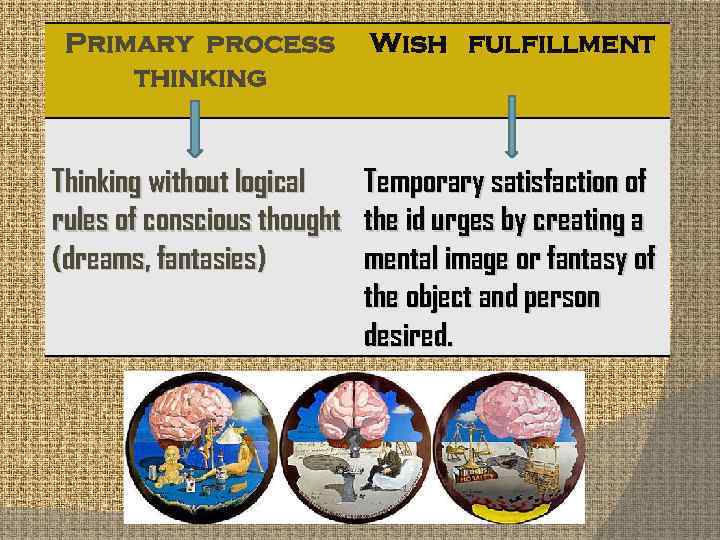 Primary process thinking Wish fulfillment Thinking without logical rules of conscious thought (dreams, fantasies) Temporary satisfaction of the id urges by creating a mental image or fantasy of the object and person desired.
 Ego: Executive of Personality A part of the mind that constrains the id to reality Develops within the first 2 -3 years of life
 Reality Principle: Desire to postpone the direct expression of id impulses until an appropriate situation arises. (Grabbing the candy off the shelf at the shop? Hitting my sister whenever she makes me angry? )
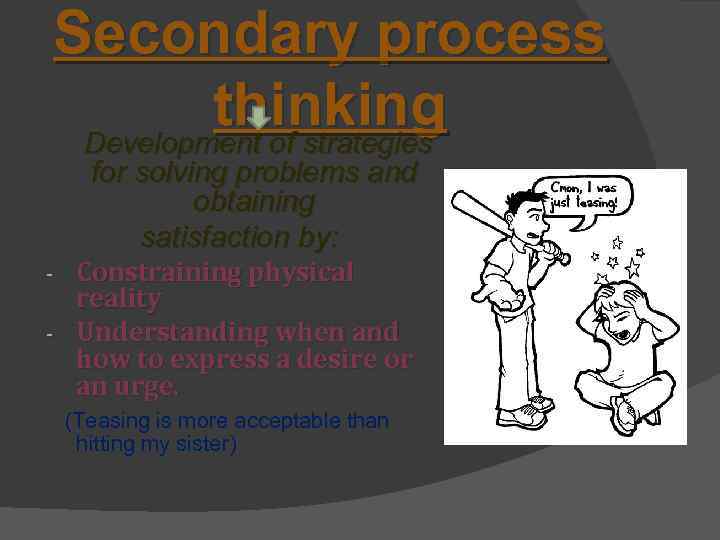 Secondary process thinking Development of strategies for solving problems and obtaining satisfaction by: Constraining physical reality - Understanding when and how to express a desire or an urge. - (Teasing is more acceptable than hitting my sister)
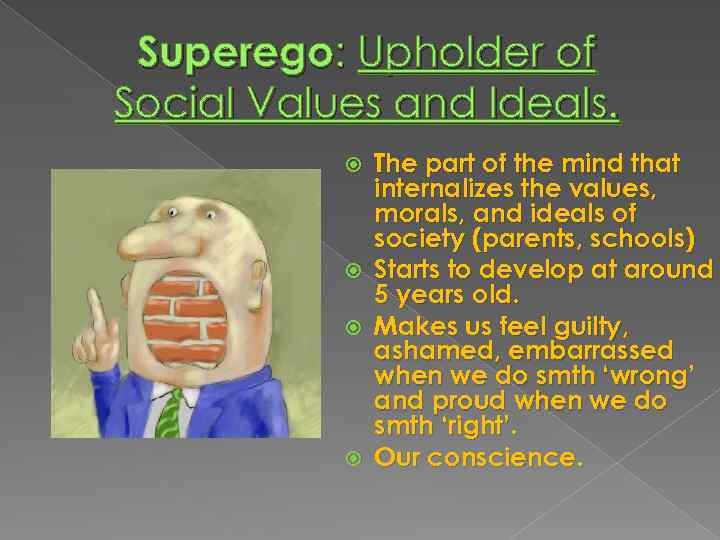 Superego: Upholder of Social Values and Ideals. The part of the mind that internalizes the values, morals, and ideals of society (parents, schools) Starts to develop at around 5 years old. Makes us feel guilty, ashamed, embarrassed when we do smth ‘wrong’ and proud when we do smth ‘right’. Our conscience.
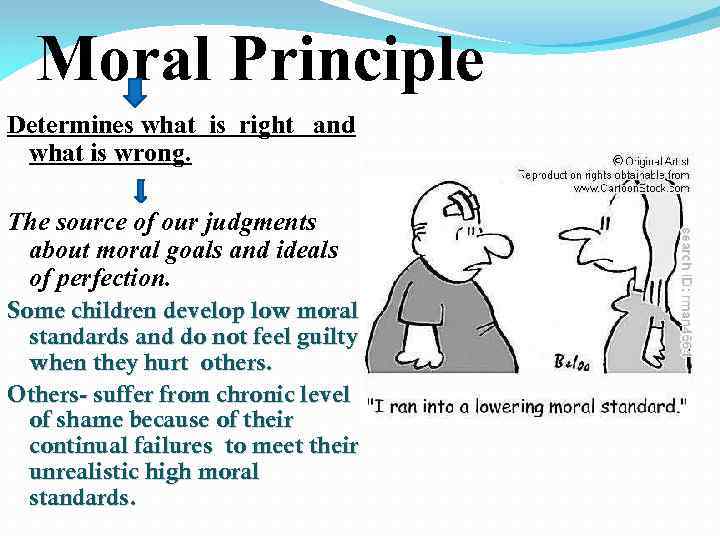 Moral Principle Determines what is right and what is wrong. The source of our judgments about moral goals and ideals of perfection. Some children develop low moral standards and do not feel guilty when they hurt others. Others- suffer from chronic level of shame because of their continual failures to meet their unrealistic high moral standards.
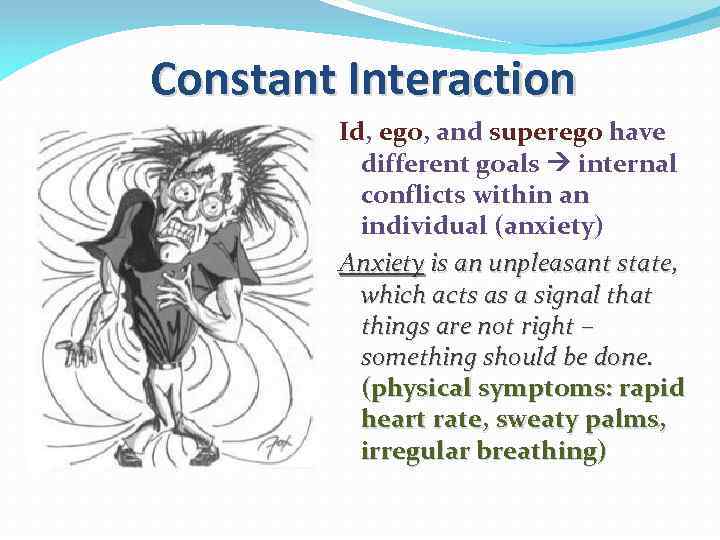 Constant Interaction Id, ego, and superego have different goals internal conflicts within an individual (anxiety) Anxiety is an unpleasant state, which acts as a signal that things are not right – something should be done. (physical symptoms: rapid heart rate, sweaty palms, irregular breathing)
 Strong Ego A well-balanced mind free from anxiety. The ego balances the competing forces of the id and the superego. If these forces overwhelm the ego, then anxiety is the result.
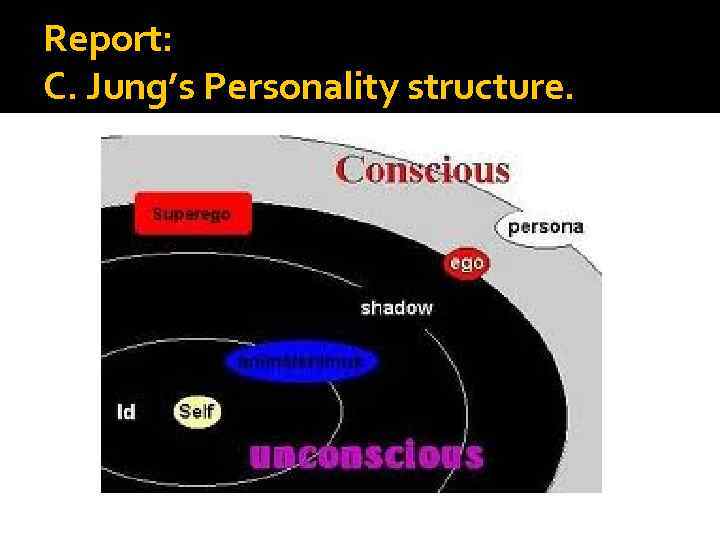 Report: C. Jung’s Personality structure.