 Lecture 3 Architecture of Kazakhstan in IV-IX c. BC Mobile dwelling Urbanism and memorial architecture of Hunnu Sanctuaries Elaphine (deer’s) stones Memorial-and-cult ensembles Steles with Runic inscriptions Balbals Strongholds Urbanism in Ancient Turkic states
 Mobile dwelling (prototypes of Kazakh kiiz-ui) Scythian and Sarmatian conical tent (square in plan) with walls like stockade; The Hunnu’s shelter with helmet-like form (circle in plan) with walls were made of interlaced willow wickers; Turkic dwelling with cylindric frame and spherical dome
 Urbanism and memorial architecture of Hunnu (II BC – IV AD) were discovered on the territory of Mongolia (Ivolgin site, Bayan-Unger, Gua-Dov, Tereljiyn. Dereveljiyn, Bars-hot) and Hakassia (Tashebine townlet under Abakan). Strongholds (including citadel) with rectangular and square plans Entombments (Noin-Ula and Golmod barrows) – wooden tombs (rectangular plan) with sarcophaguses and rich inventory
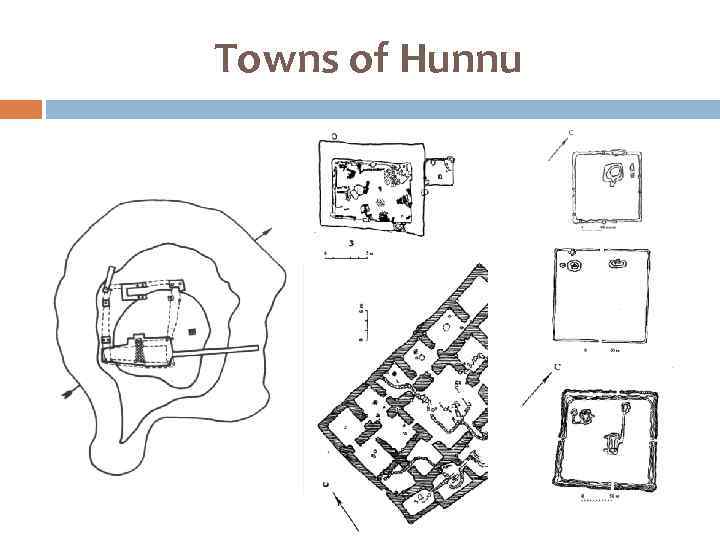 Towns of Hunnu
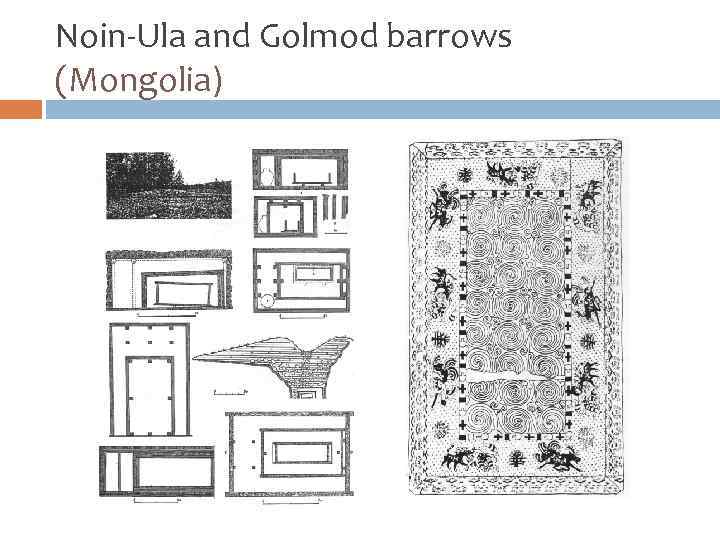 Noin-Ula and Golmod barrows (Mongolia)
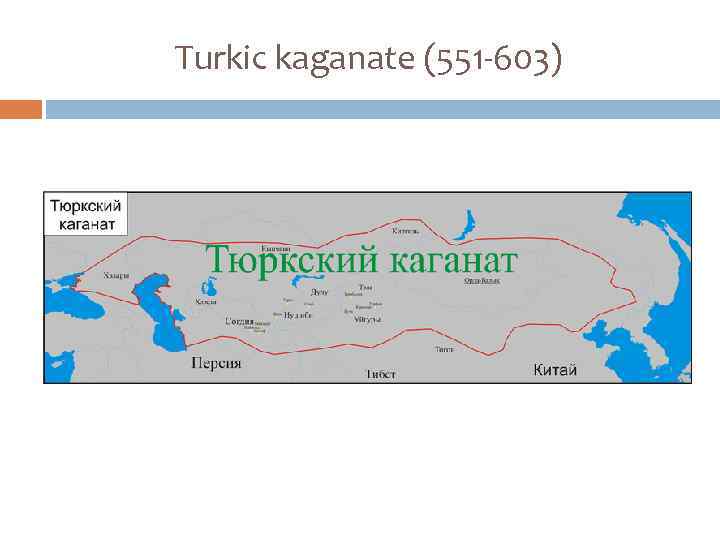 Turkic kaganate (551 -603)
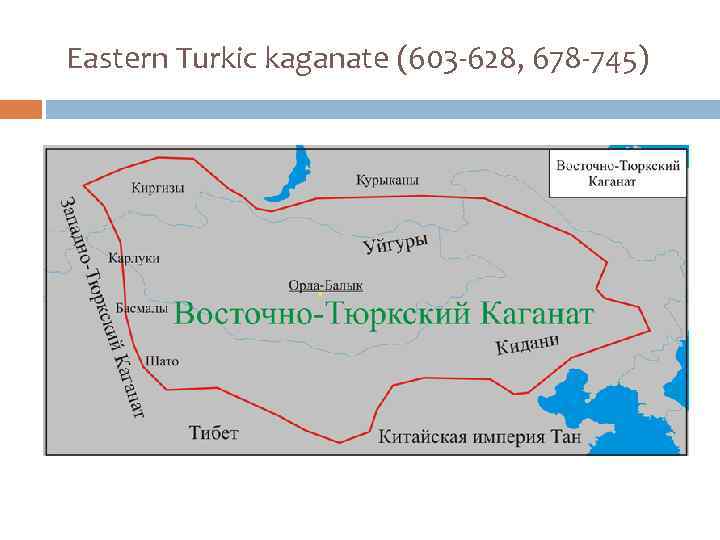 Eastern Turkic kaganate (603 -628, 678 -745)
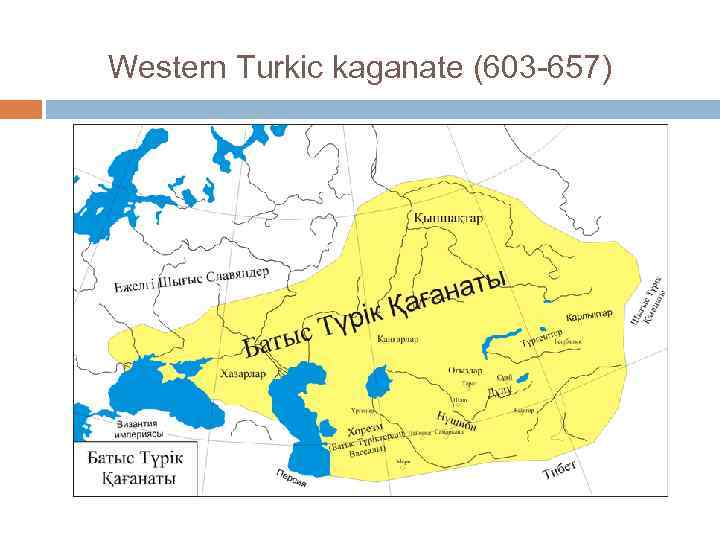 Western Turkic kaganate (603 -657)
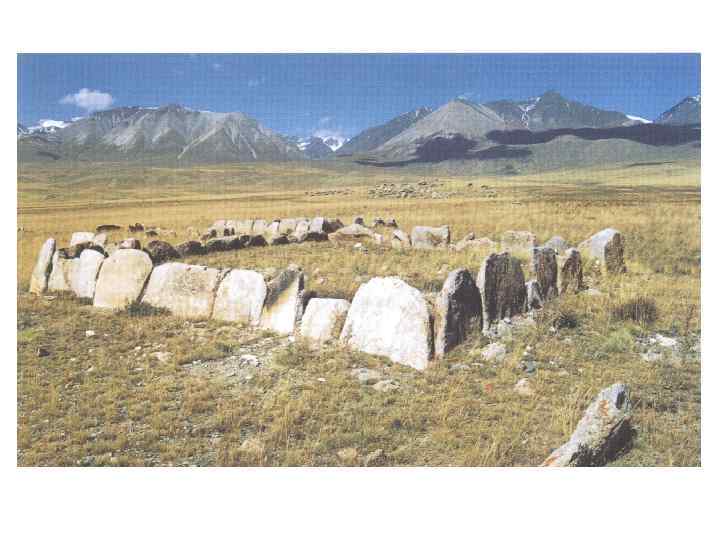
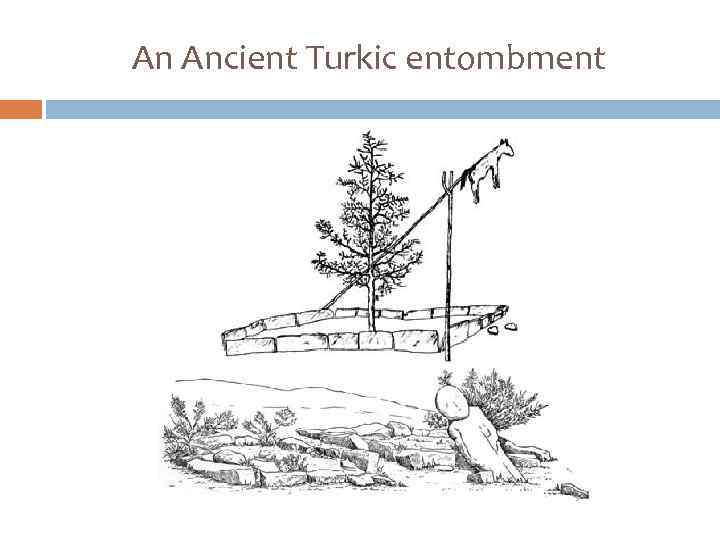 An Ancient Turkic entombment
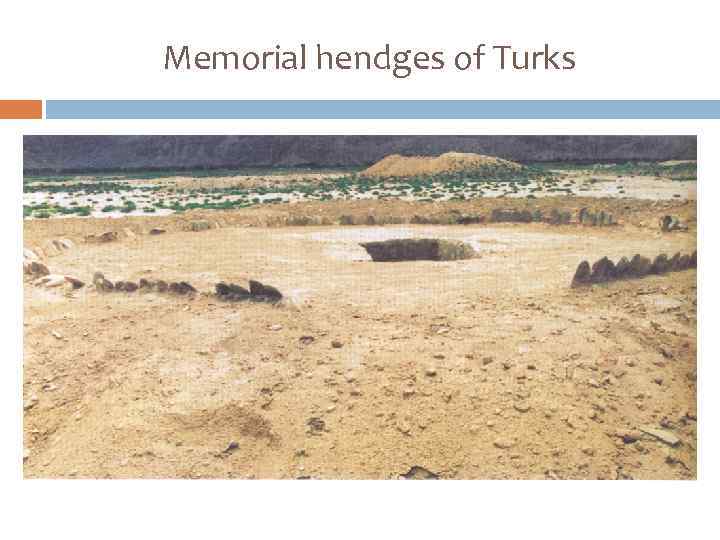 Memorial hendges of Turks
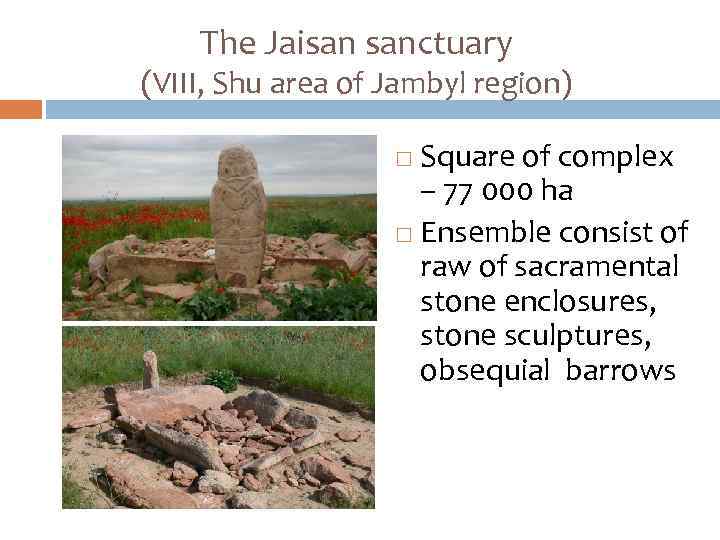 The Jaisan sanctuary (VIII, Shu area of Jambyl region) Square of complex – 77 000 ha Ensemble consist of raw of sacramental stone enclosures, stone sculptures, obsequial barrows
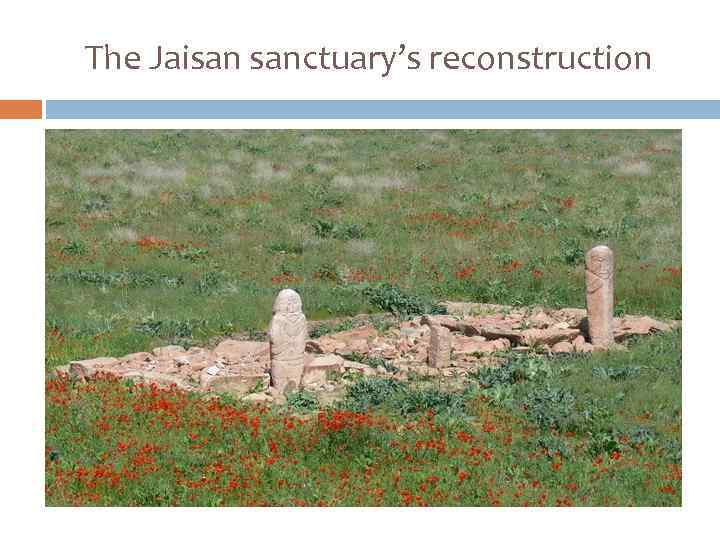 The Jaisan sanctuary’s reconstruction
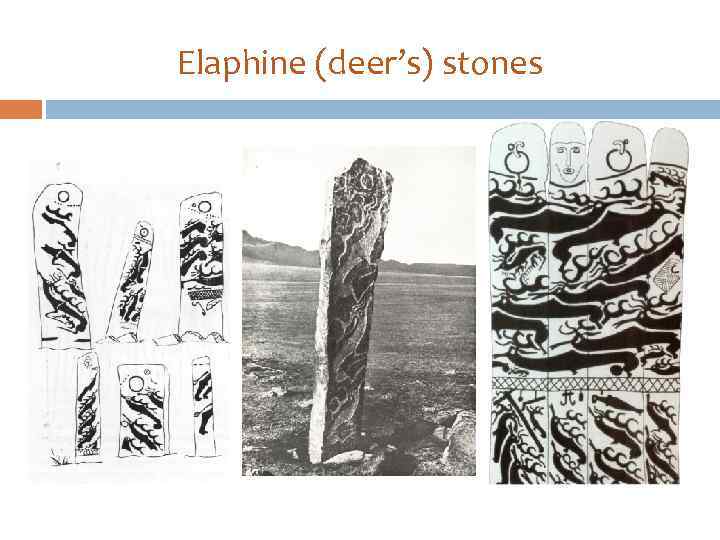 Elaphine (deer’s) stones
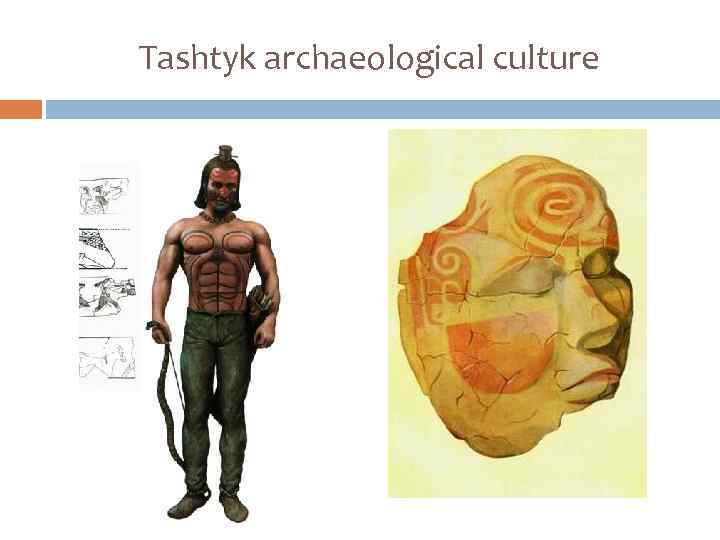 Tashtyk archaeological culture
 Memorial-and-cult ensembles of Ancient Turks Located on watershed of Orhon, Tola rivers (Mongolia), in Eastern Kazakhstan Have character of funeral memorial (without synchronous burials) Consists of Temples, Pile fields, Steles with inscriptions, anthropomorphous and zoomorphous sculptures, Balbals Steles with ancient Turkic, Sogdian, Uigurian, Chinese and Sanscrit inscriptions
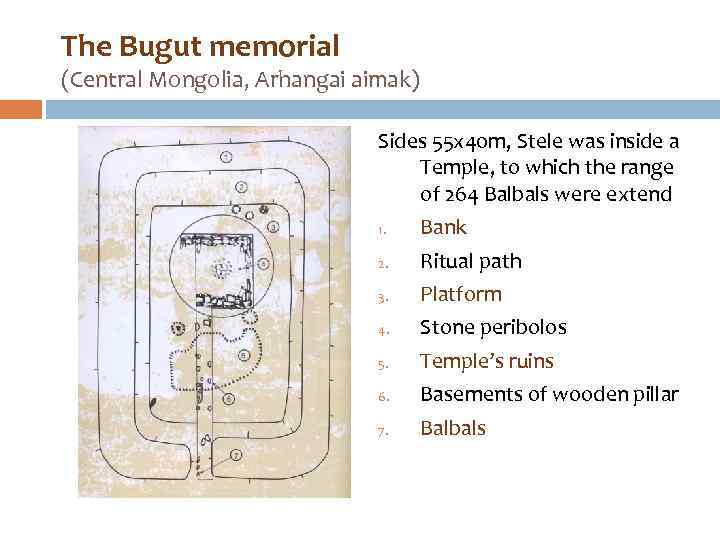 The Bugut memorial (Central Mongolia, Arhangai aimak) Sides 55 х40 m, Stele was inside a Temple, to which the range of 264 Balbals were extend 1. Bank 2. Ritual path 3. Platform 4. Stone peribolos 5. Temple’s ruins 6. Basements of wooden pillar 7. Balbals
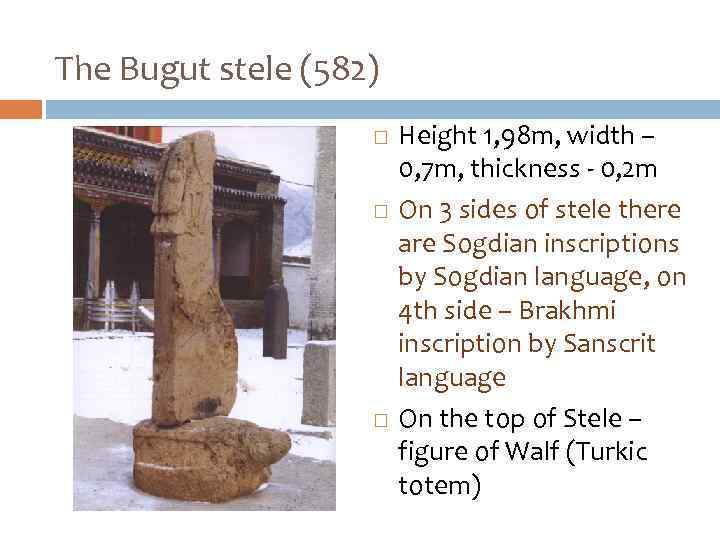 The Bugut stele (582) Height 1, 98 m, width – 0, 7 m, thickness - 0, 2 m On 3 sides of stele there are Sogdian inscriptions by Sogdian language, on 4 th side – Brakhmi inscription by Sanscrit language On the top of Stele – figure of Walf (Turkic totem)
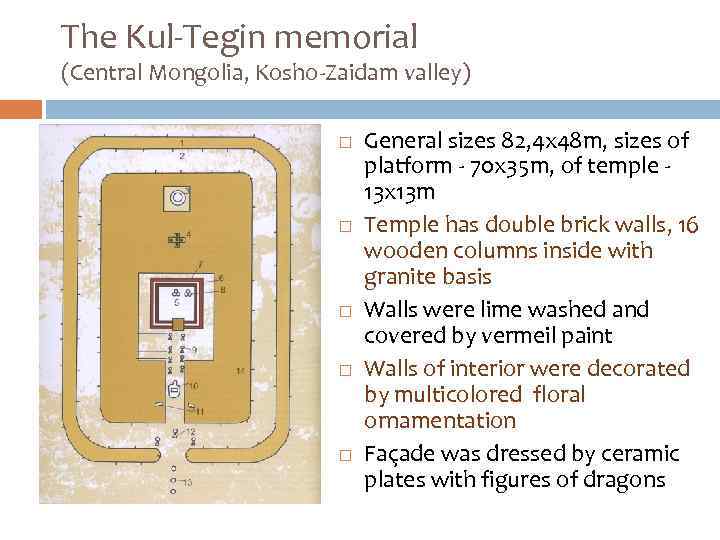 The Kul-Tegin memorial (Central Mongolia, Kosho-Zaidam valley) General sizes 82, 4 х48 m, sizes of platform - 70 х35 m, of temple 13 х13 m Temple has double brick walls, 16 wooden columns inside with granite basis Walls were lime washed and covered by vermeil paint Walls of interior were decorated by multicolored floral ornamentation Façade was dressed by ceramic plates with figures of dragons
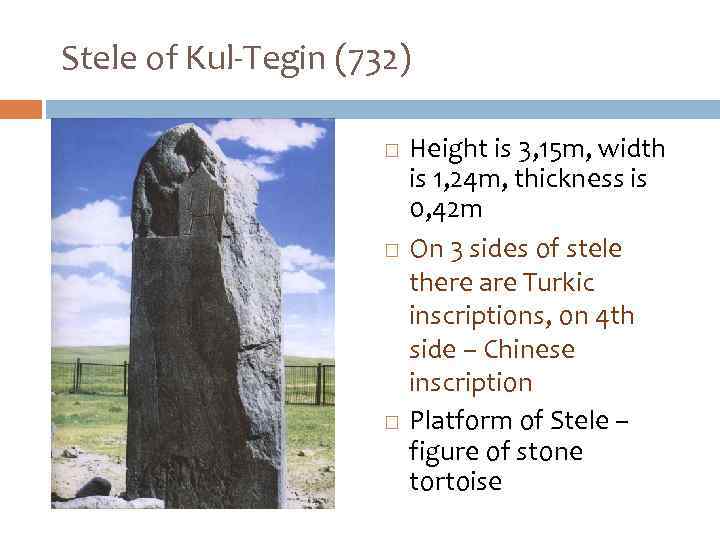 Stele of Kul-Tegin (732) Height is 3, 15 m, width is 1, 24 m, thickness is 0, 42 m On 3 sides of stele there are Turkic inscriptions, on 4 th side – Chinese inscription Platform of Stele – figure of stone tortoise
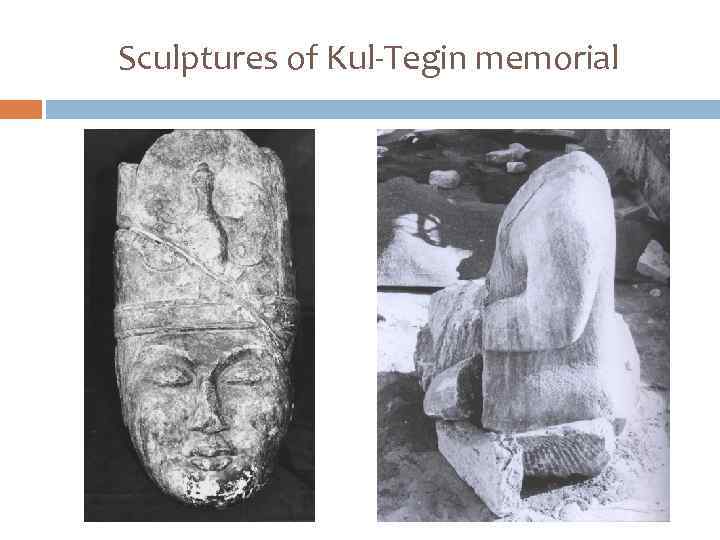 Sculptures of Kul-Tegin memorial
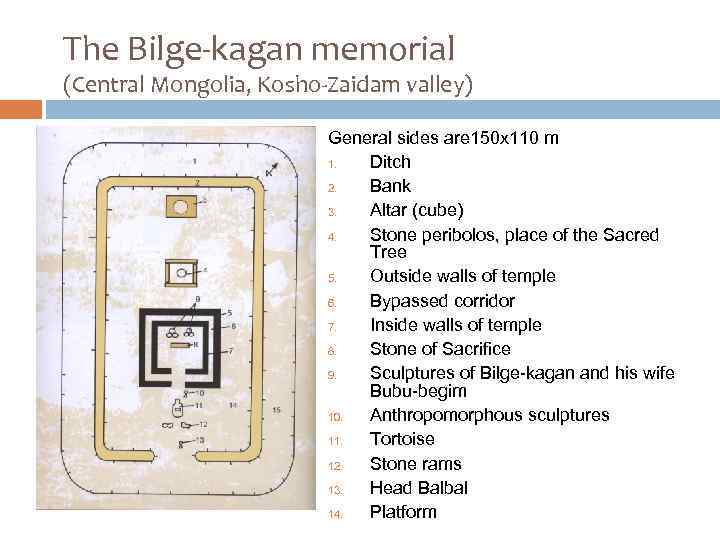 The Bilge-kagan memorial (Central Mongolia, Kosho-Zaidam valley) General sides are 150 х110 m 1. Ditch 2. Bank 3. Altar (cube) 4. Stone peribolos, place of the Sacred Tree 5. Outside walls of temple 6. Bypassed corridor 7. Inside walls of temple 8. Stone of Sacrifice 9. Sculptures of Bilge-kagan and his wife Bubu-begim 10. Anthropomorphous sculptures 11. Tortoise 12. Stone rams 13. Head Balbal 14. Platform
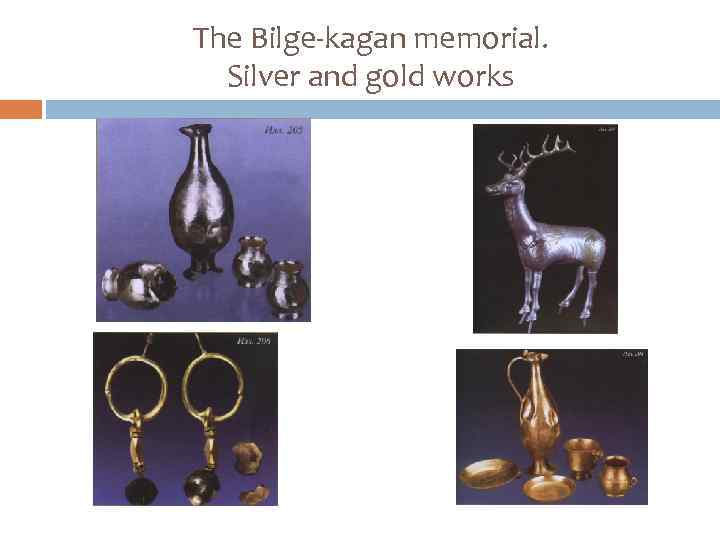 The Bilge-kagan memorial. Silver and gold works
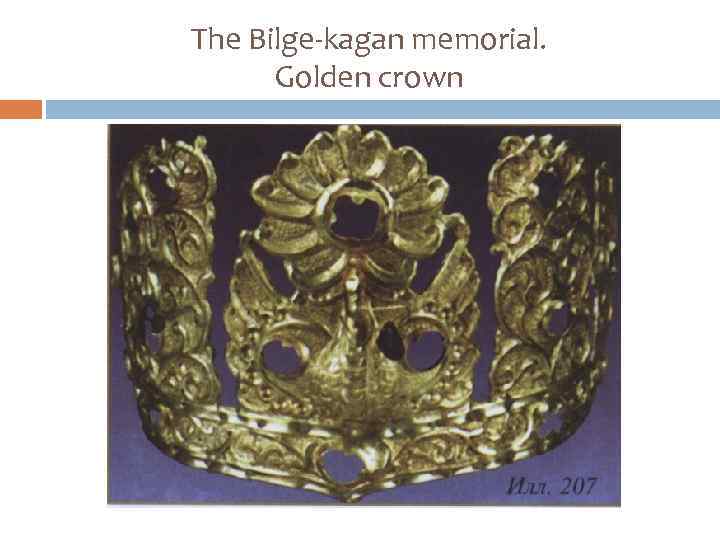 The Bilge-kagan memorial. Golden crown
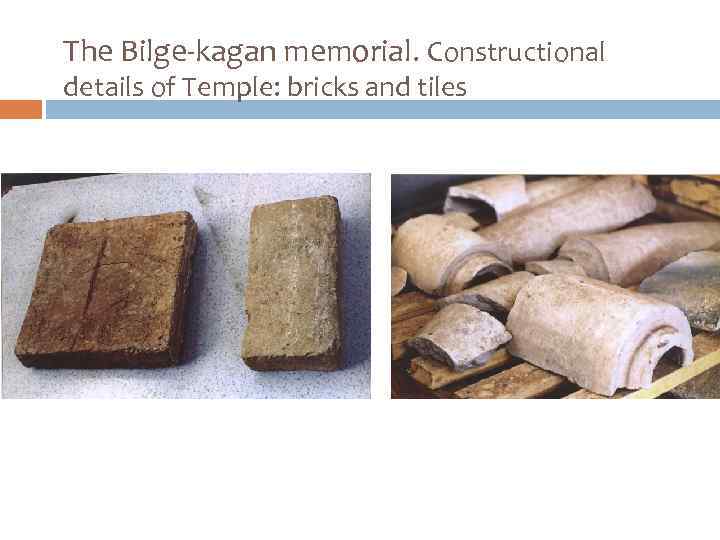 The Bilge-kagan memorial. Constructional details of Temple: bricks and tiles
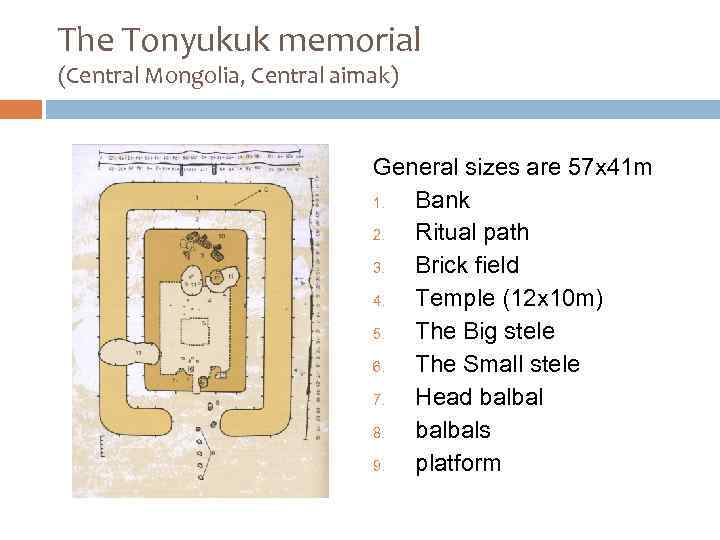 The Tonyukuk memorial (Central Mongolia, Central aimak) General sizes are 57 х41 m 1. Bank 2. Ritual path 3. Brick field 4. Temple (12 х10 m) 5. The Big stele 6. The Small stele 7. Head balbal 8. balbals 9. platform
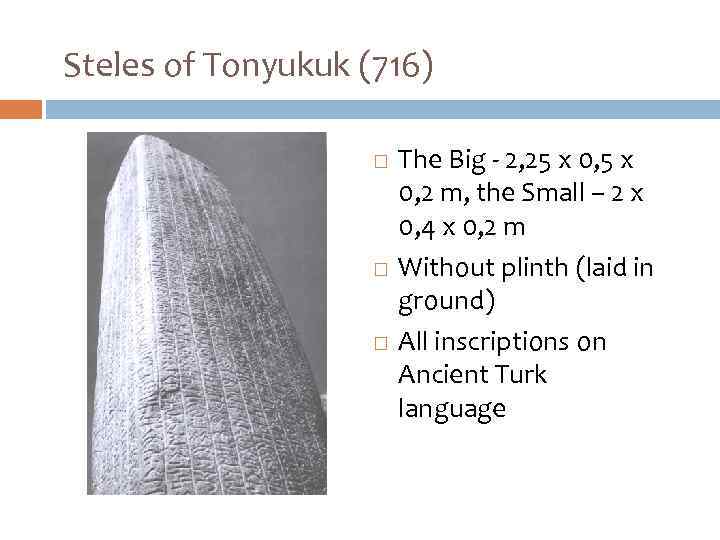 Steles of Tonyukuk (716) The Big - 2, 25 х 0, 2 m, the Small – 2 х 0, 4 х 0, 2 m Without plinth (laid in ground) All inscriptions on Ancient Turk language
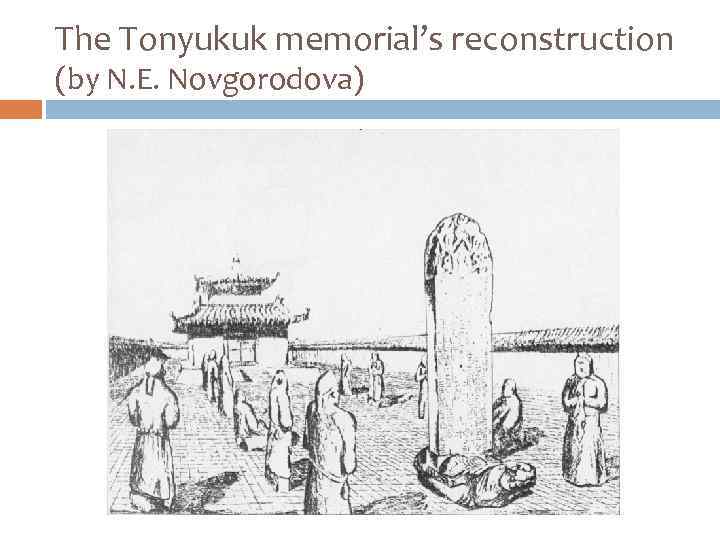 The Tonyukuk memorial’s reconstruction (by N. E. Novgorodova)
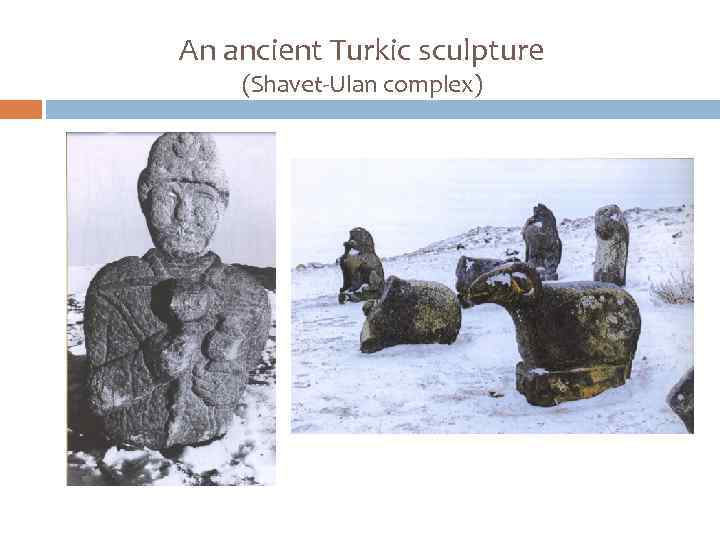 An ancient Turkic sculpture (Shavet-Ulan complex)
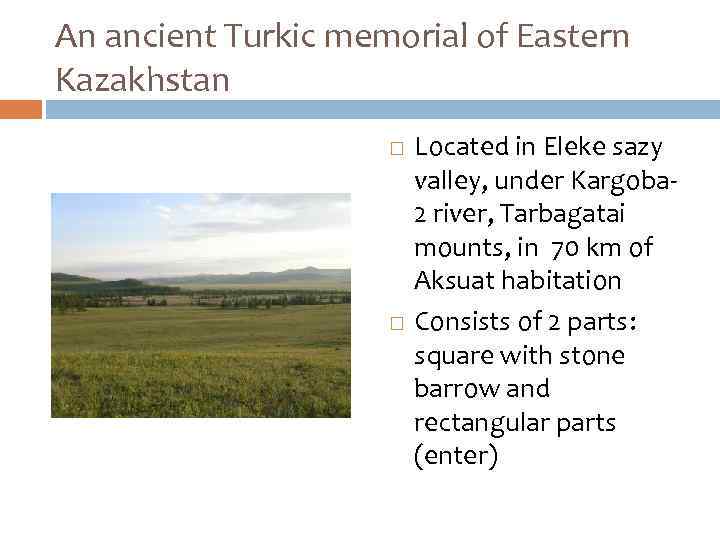 An ancient Turkic memorial of Eastern Kazakhstan Located in Eleke sazy valley, under Kargoba 2 river, Tarbagatai mounts, in 70 km of Aksuat habitation Consists of 2 parts: square with stone barrow and rectangular parts (enter)
 Towns of Kazakhstan in IV-IX c. AD Suyab, Isfidzhab (Sayram), Farab, Shavgar (Southern Kazakhstan), Taraz, Kulan (Southern Kazakhstan, Zhetysu) Three-part structure: Arc (a citadel with the palace of the governor), Shakhristan (the internal city), Rabat (suburb) Mud houses one - two-room (with the storeroom); in the center – the floor fireplace, along walls - sufa
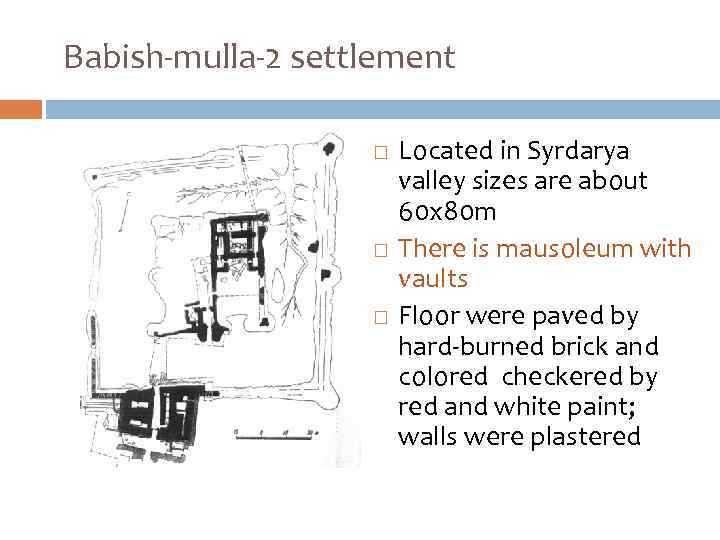 Babish-mulla-2 settlement Located in Syrdarya valley sizes are about 60 х80 m There is mausoleum with vaults Floor were paved by hard-burned brick and colored checkered by red and white paint; walls were plastered
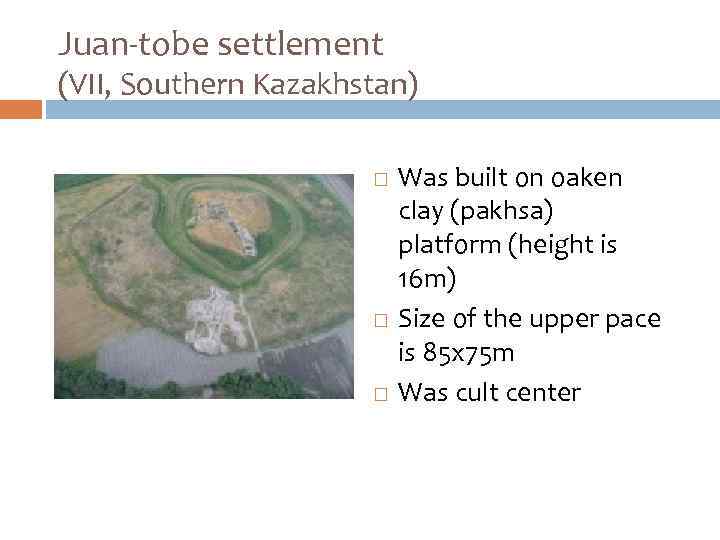 Juan-tobe settlement (VII, Southern Kazakhstan) Was built on oaken clay (pakhsa) platform (height is 16 m) Size of the upper pace is 85 х75 m Was cult center
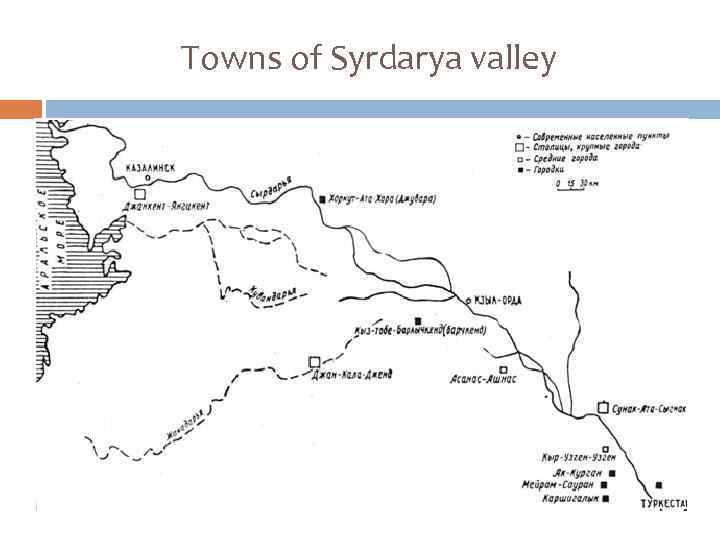 Towns of Syrdarya valley
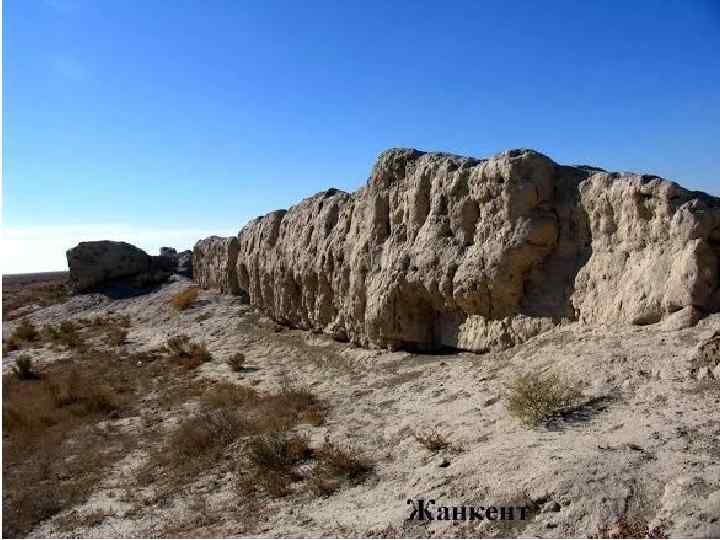
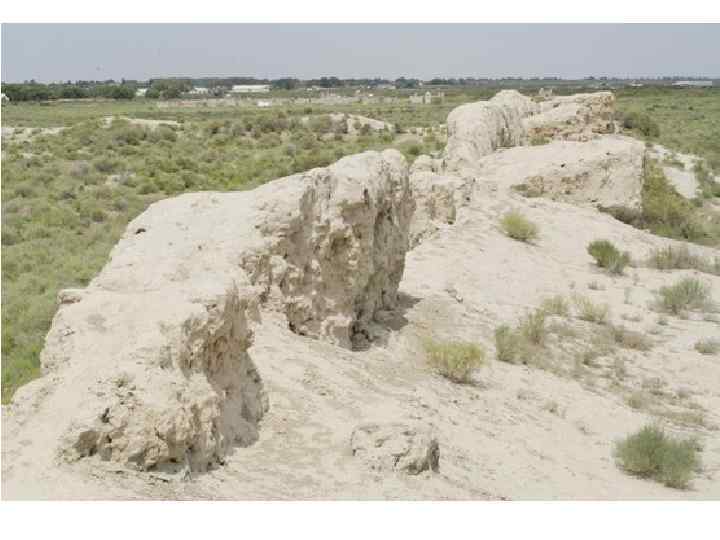
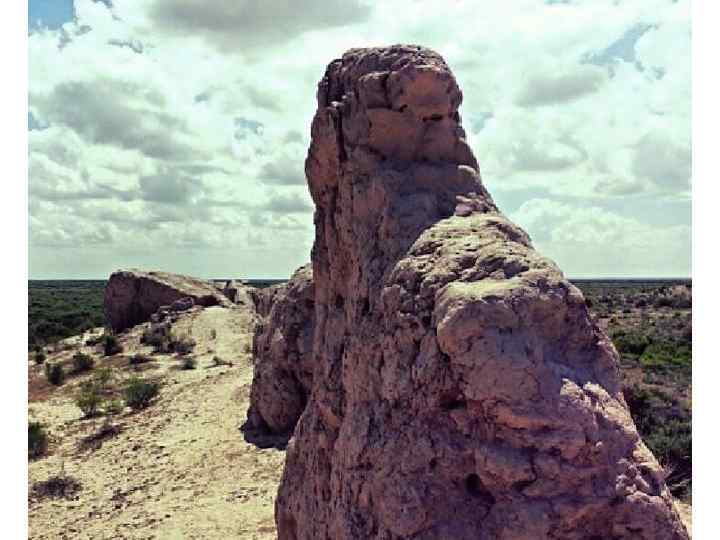
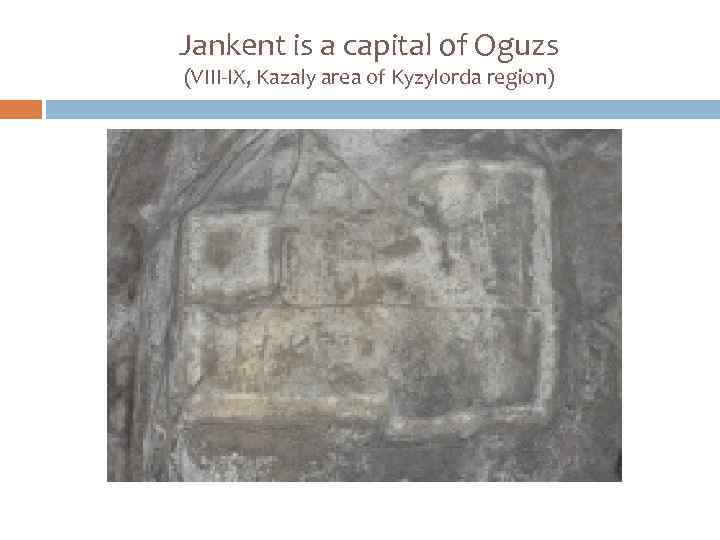 Jankent is a capital of Oguzs (VIII-IX, Kazaly area of Kyzylorda region)
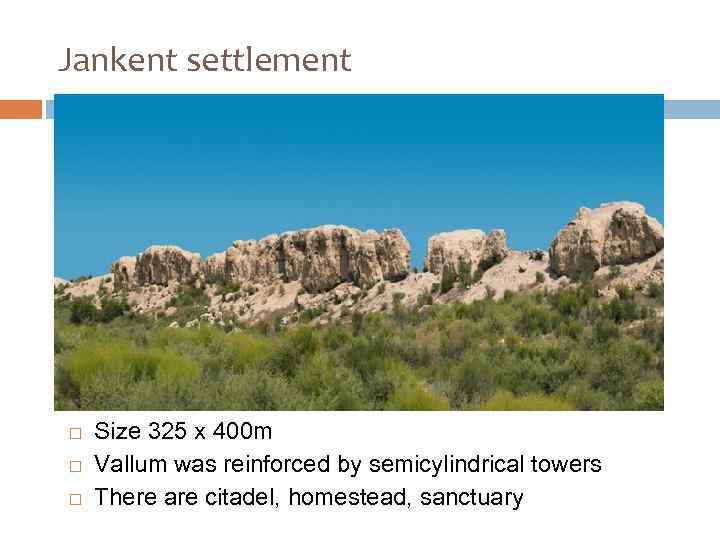 Jankent settlement Size 325 х 400 m Vallum was reinforced by semicylindrical towers There are citadel, homestead, sanctuary