


 Скачать презентацию Lecture 23 The Rise of China 1 Historical
6973dedd8d3fee65da67018bf3dd1310.ppt
- Количество слайдов: 23
 Lecture 23: The Rise of China 1. Historical Background 2. Power Transition Theory 3. Recent Chinese Growth 4. American-Chinese Relations: Sources of Conflict 5. Regional Stability in Asia 6. Will China Become a Democracy? 7. Student Questions
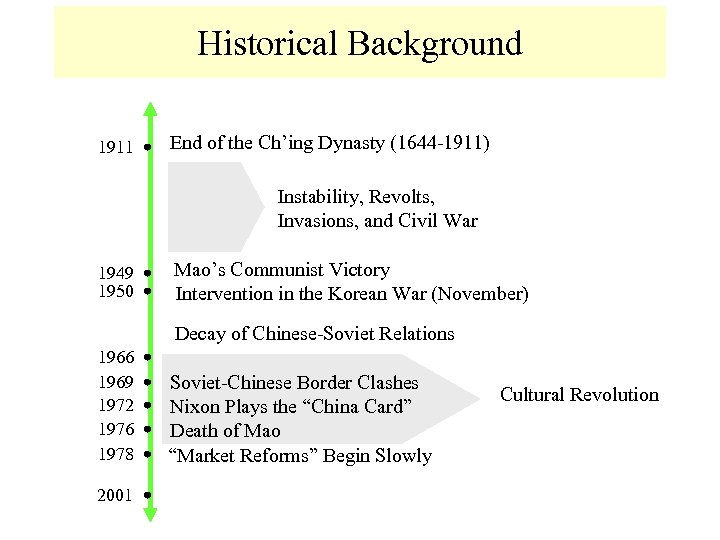 Historical Background 1911 End of the Ch’ing Dynasty (1644 -1911) Instability, Revolts, Invasions, and Civil War 1949 1950 Mao’s Communist Victory Intervention in the Korean War (November) Decay of Chinese-Soviet Relations 1966 1969 1972 1976 1978 2001 Soviet-Chinese Border Clashes Nixon Plays the “China Card” Death of Mao “Market Reforms” Begin Slowly Cultural Revolution
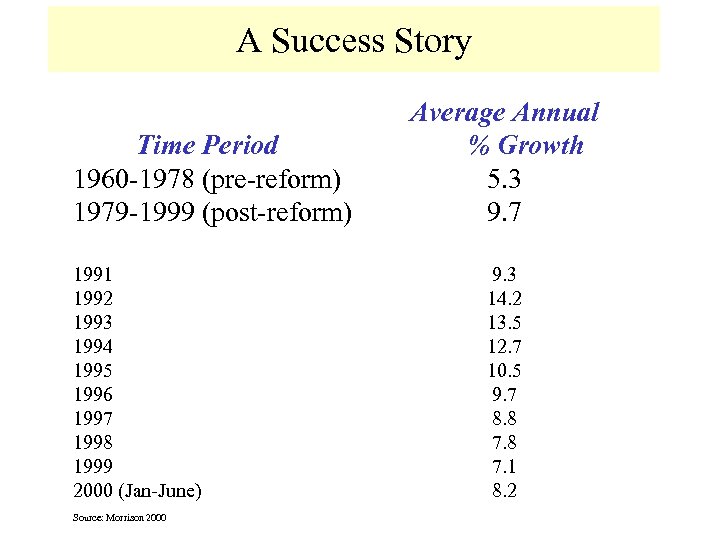 A Success Story Time Period 1960 -1978 (pre-reform) 1979 -1999 (post-reform) 1991 1992 1993 1994 1995 1996 1997 1998 1999 2000 (Jan-June) Source: Morrison 2000 Average Annual % Growth 5. 3 9. 7 9. 3 14. 2 13. 5 12. 7 10. 5 9. 7 8. 8 7. 1 8. 2
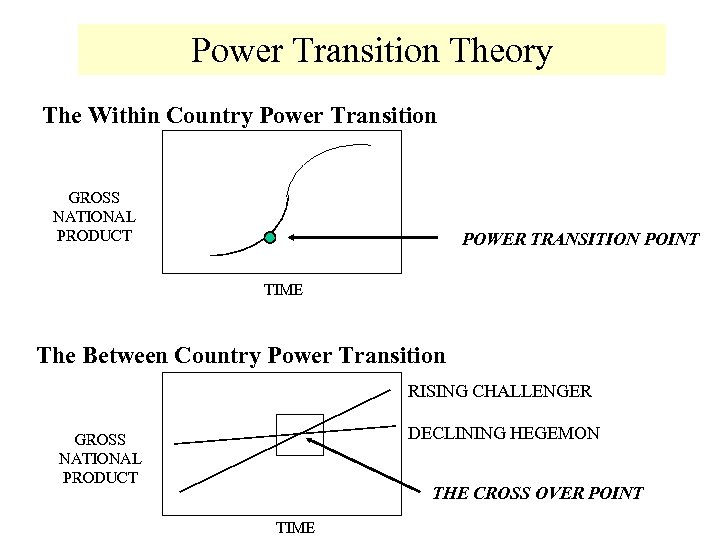 Power Transition Theory The Within Country Power Transition GROSS NATIONAL PRODUCT POWER TRANSITION POINT TIME The Between Country Power Transition RISING CHALLENGER DECLINING HEGEMON GROSS NATIONAL PRODUCT THE CROSS OVER POINT TIME
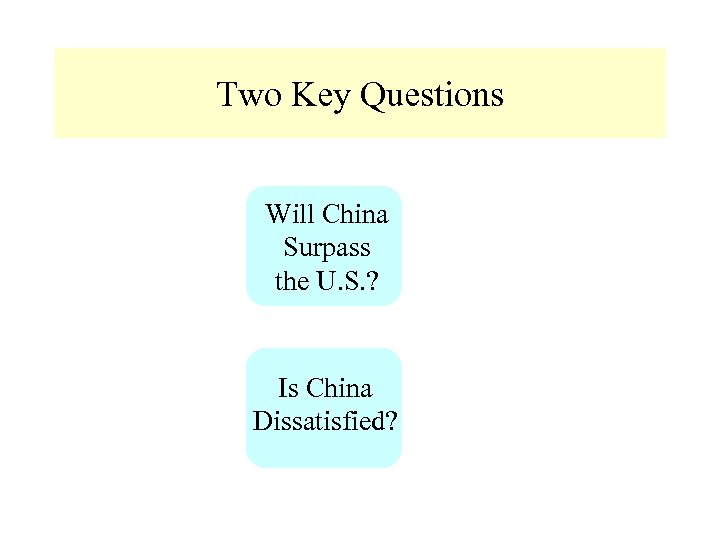 Two Key Questions Will China Surpass the U. S. ? Is China Dissatisfied?
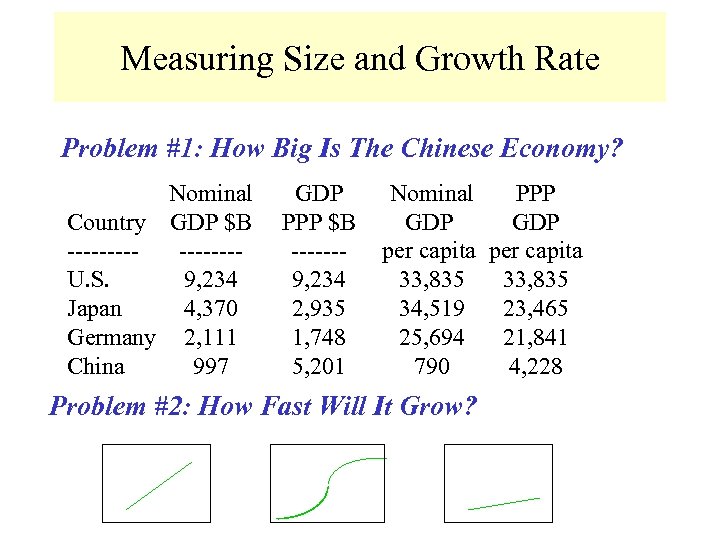 Measuring Size and Growth Rate Problem #1: How Big Is The Chinese Economy? Nominal Country GDP $B --------U. S. 9, 234 Japan 4, 370 Germany 2, 111 China 997 GDP PPP $B ------9, 234 2, 935 1, 748 5, 201 Nominal PPP GDP per capita 33, 835 34, 519 23, 465 25, 694 21, 841 790 4, 228 Problem #2: How Fast Will It Grow?
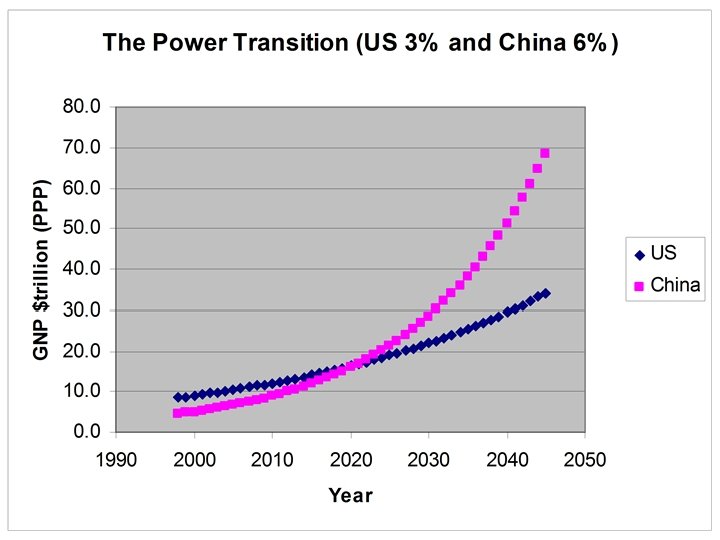
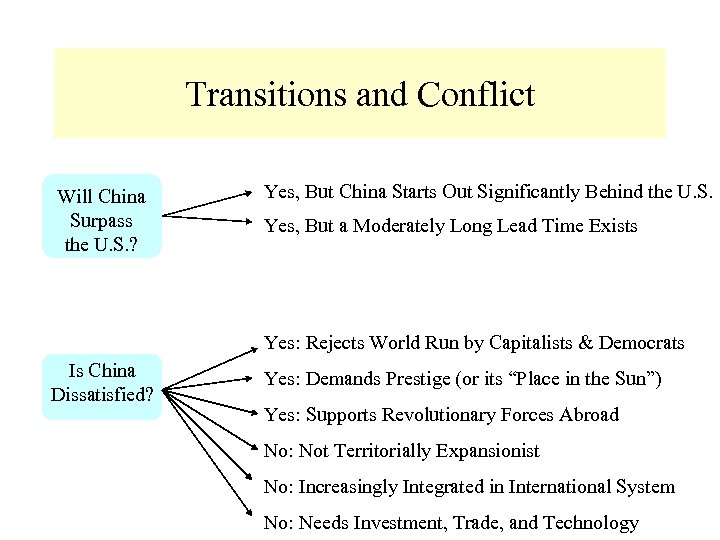 Transitions and Conflict Will China Surpass the U. S. ? Yes, But China Starts Out Significantly Behind the U. S. Yes, But a Moderately Long Lead Time Exists Yes: Rejects World Run by Capitalists & Democrats Is China Dissatisfied? Yes: Demands Prestige (or its “Place in the Sun”) Yes: Supports Revolutionary Forces Abroad No: Not Territorially Expansionist No: Increasingly Integrated in International System No: Needs Investment, Trade, and Technology
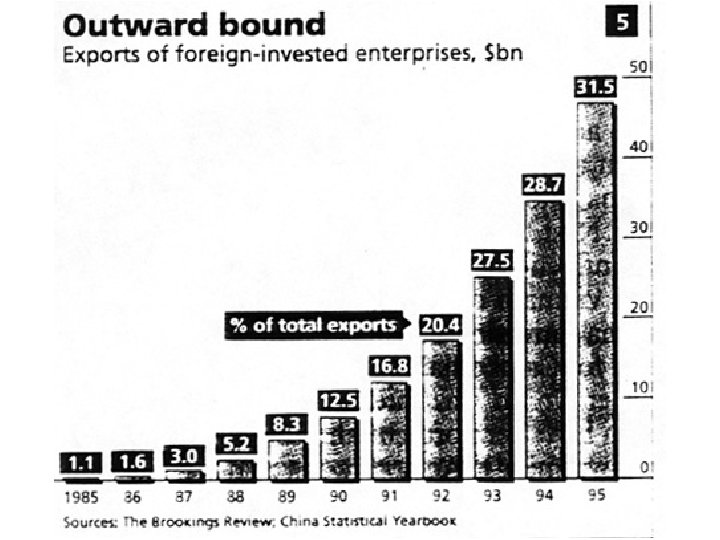
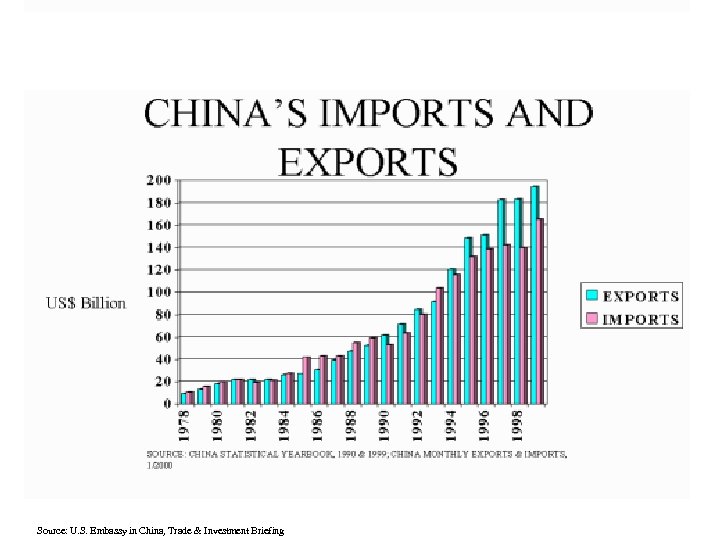 Source: U. S. Embassy in China, Trade & Investment Briefing
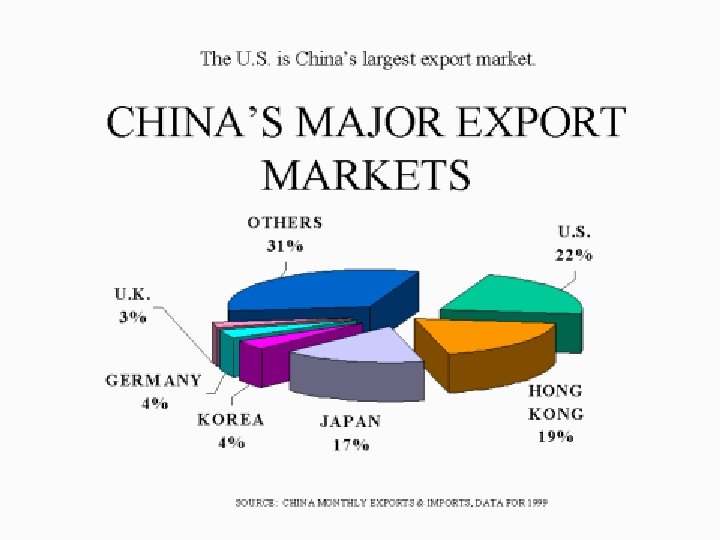
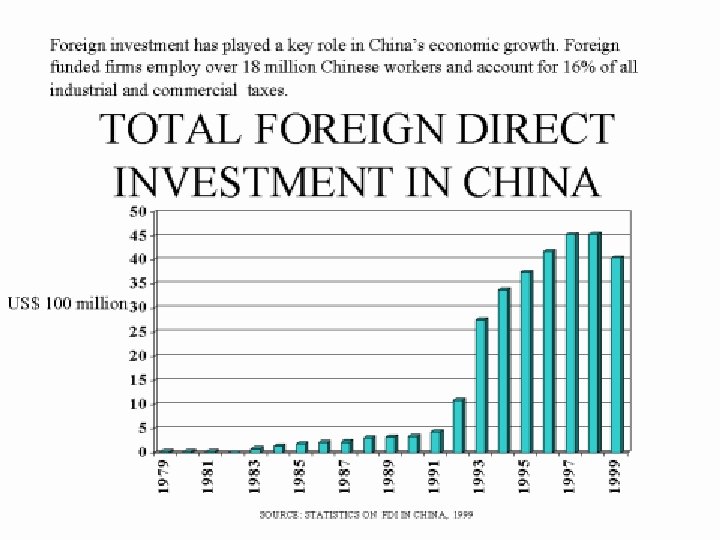
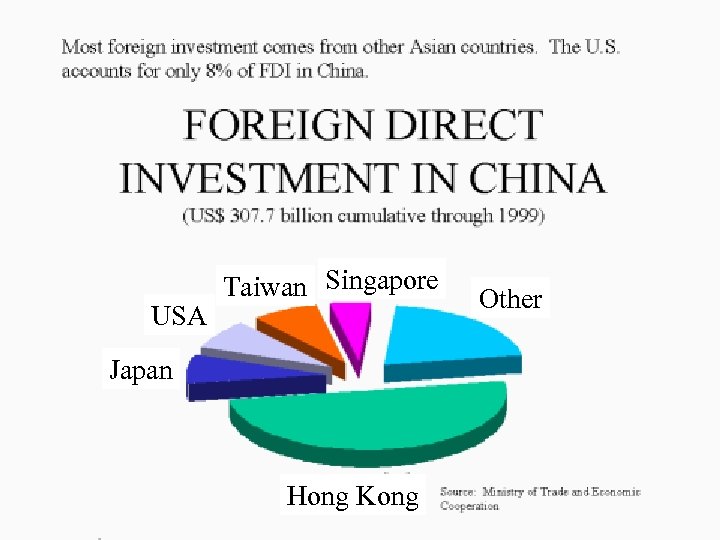 USA Taiwan Singapore Japan Hong Kong Other
 Sources of U. S. -China Conflict: • Trade • Human Rights • Taiwan
 Sources of U. S. -China Conflict: Trade • Growing U. S. Trade Deficit With China 1999: U. S. Exports to China: $13. 12 1999: U. S. Imports From China: $87. 78 • Will Chinese Membership in the WTO Lessen Conflict? a) Regime Will Encourage China to Cooperate b) WTO is Impartial Monitor c) Concessions are to a Third Party d) Keeps Conflict from Spreading
 Sources of U. S. -China Conflict: Human Rights • Tiananmen Square (June 1989) & Response • Chinese Perspective: Question of Sovereignty • American Perspective: Moral Obligation -- Idealism -- President Carter: Shift in U. S. Policy -- New International Norm: Protecting Human Rights
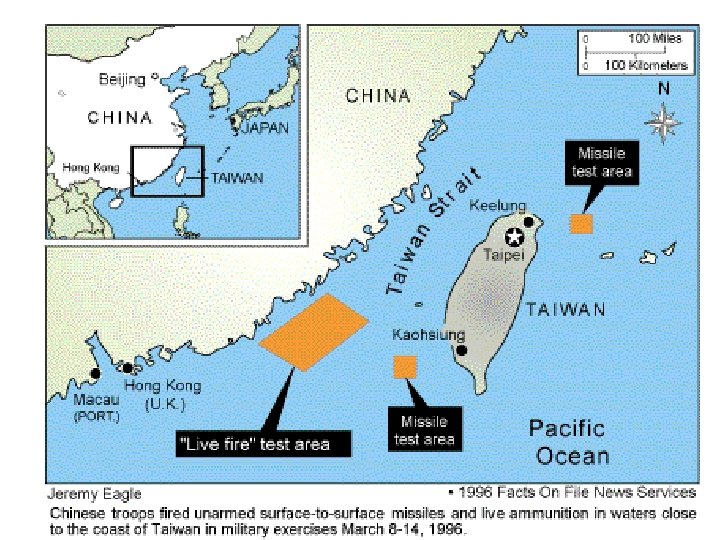
 Sources of U. S. -China Conflict: Taiwan • Legacy of Civil War & 1949 Communist Victory • Korean War Links U. S. to Defense of Taiwan • Series of “Taiwan Straits Crises” During the Cold War • U. S. Establishes Bi-Lateral Relations with PRC in 1979 • Recent Democratization of Taiwan • Military and Economic Costs of a Chinese Invasion • Can the U. S. Deter China in Any Way?
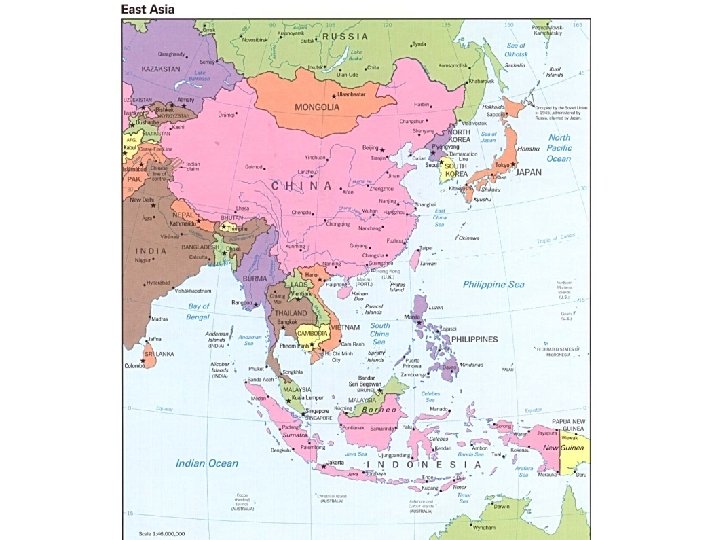
 Regional Stability: China’s Relations with its Neighbors • Long History of Conflict • 1980’s: Chinese Cuts in Defense Spending • 1990’s: Defense Build Up Begins a) Reorder Defense Focus b) Impact of the Persian Gulf War c) Typical Patter for a Developing Country d) Buy Off the Military • Response to Buildup: Private Alarm & Public Appeasement • China’s Biggest Fear: A Re-Armed Japan
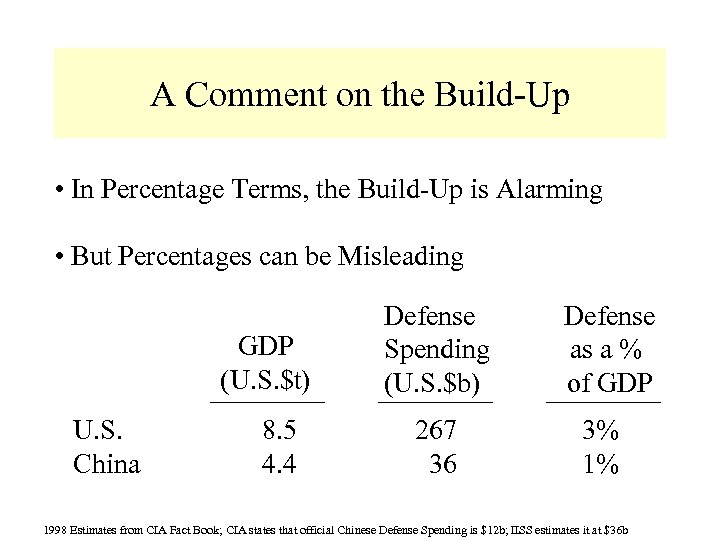 A Comment on the Build-Up • In Percentage Terms, the Build-Up is Alarming • But Percentages can be Misleading GDP (U. S. $t) U. S. China 8. 5 4. 4 Defense Spending (U. S. $b) 267 36 Defense as a % of GDP 3% 1% 1998 Estimates from CIA Fact Book; CIA states that official Chinese Defense Spending is $12 b; IISS estimates it at $36 b
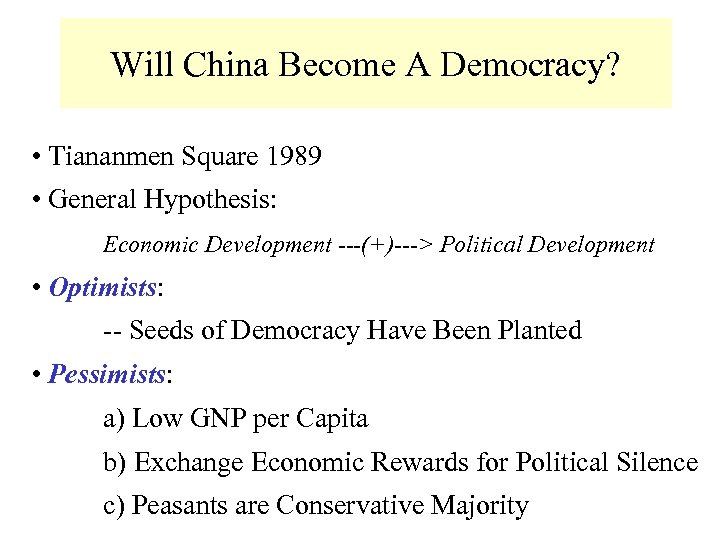 Will China Become A Democracy? • Tiananmen Square 1989 • General Hypothesis: Economic Development ---(+)---> Political Development • Optimists: -- Seeds of Democracy Have Been Planted • Pessimists: a) Low GNP per Capita b) Exchange Economic Rewards for Political Silence c) Peasants are Conservative Majority
 Conclusions • Tremendous Social & Economic Change in China • Important Implications for the Distribution of Power • Navigating Will Be Difficult But Not Impossible