


 Скачать презентацию Lecture 2 of Course Design and Materials Development
Needs Assessment for ESP and EFL.pptx
- Количество слайдов: 20
 Lecture 2 of Course Design and Materials Development
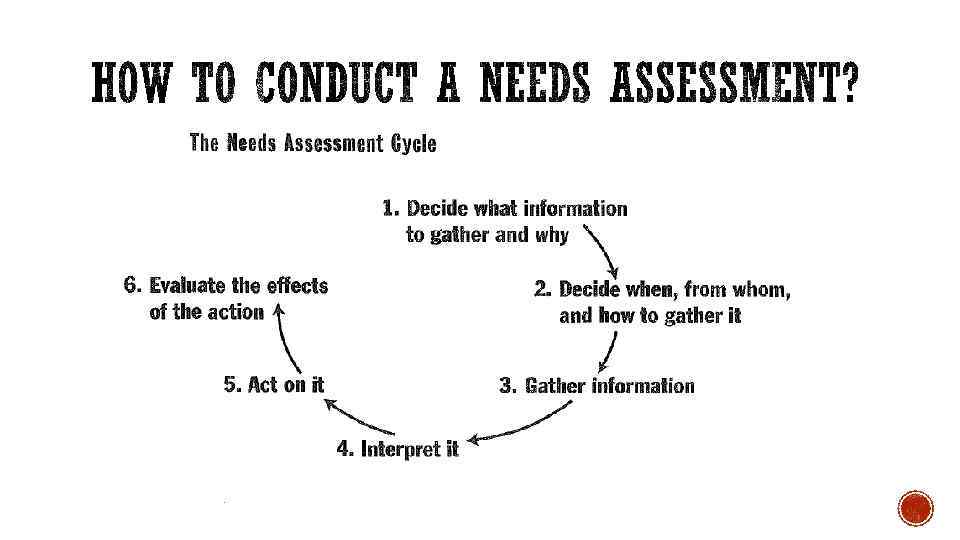
 § Role of needs assessment in course development § Areas of learning to be assessed § When to do needs assessment § Tools to conduct a needs assessment
 § A systematic (and ongoing )process of gathering information about students' needs and preferences, interpreting the information, and then making course decisions based on the interpretation in order to meet the needs § Originated in ESP and adult courses § ‘Needs analysis is also fundamental to the planning of General English courses’(Richards 2002)
 § To determine the current level of proficiency of your learners § To determine which students in the group are in need of training in particular language skills § To find out what language skills a learner needs in order to perform a particular role (or job duty), or contexts in which they are planning to use the language § To identify gaps between what students are able to do and what they want/need to be able to do § To collect information about problems particular learners are experiencing when learning the language § To help determine if a particular course meets the needs of potential students
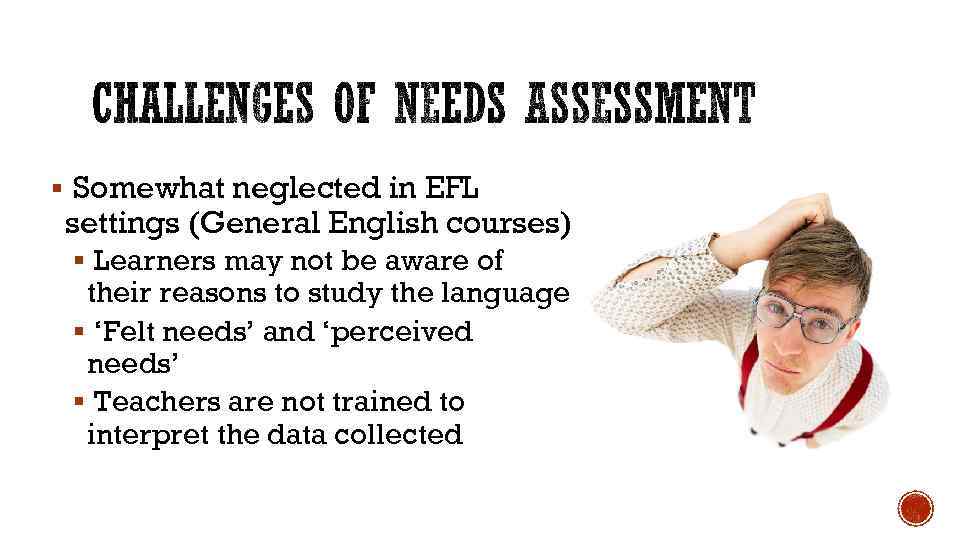 § Somewhat neglected in EFL settings (General English courses) § Learners may not be aware of their reasons to study the language § ‘Felt needs’ and ‘perceived needs’ § Teachers are not trained to interpret the data collected
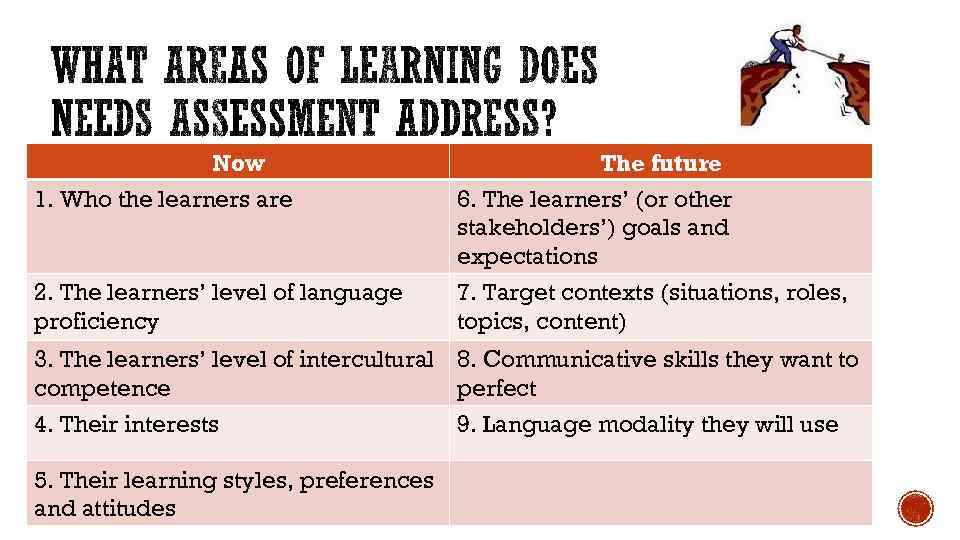 Now 1. Who the learners are The future 6. The learners’ (or other stakeholders’) goals and expectations 2. The learners’ level of language proficiency 7. Target contexts (situations, roles, topics, content) 3. The learners’ level of intercultural 8. Communicative skills they want to competence perfect 4. Their interests 5. Their learning styles, preferences and attitudes 9. Language modality they will use
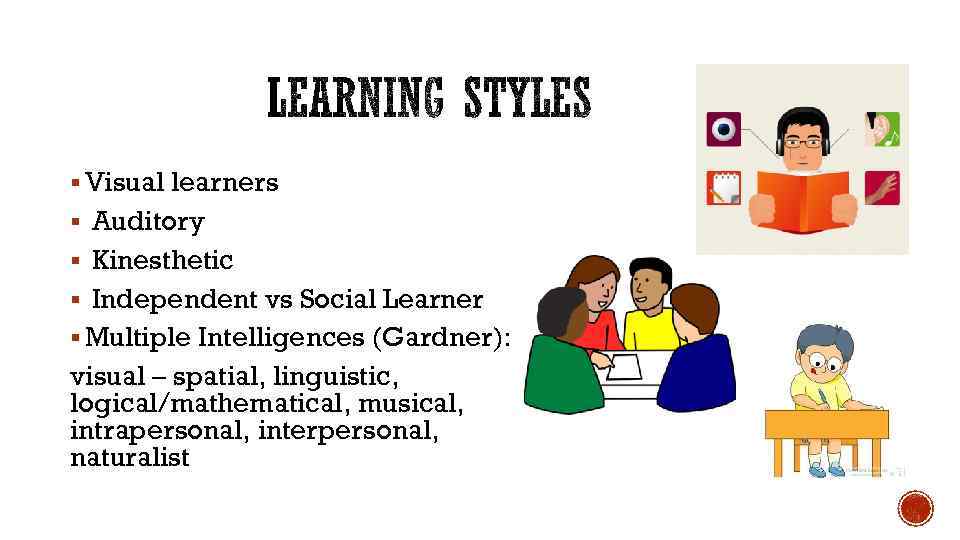 § Visual learners § Auditory § Kinesthetic § Independent vs Social Learner § Multiple Intelligences (Gardner): visual – spatial, linguistic, logical/mathematical, musical, intrapersonal, interpersonal, naturalist
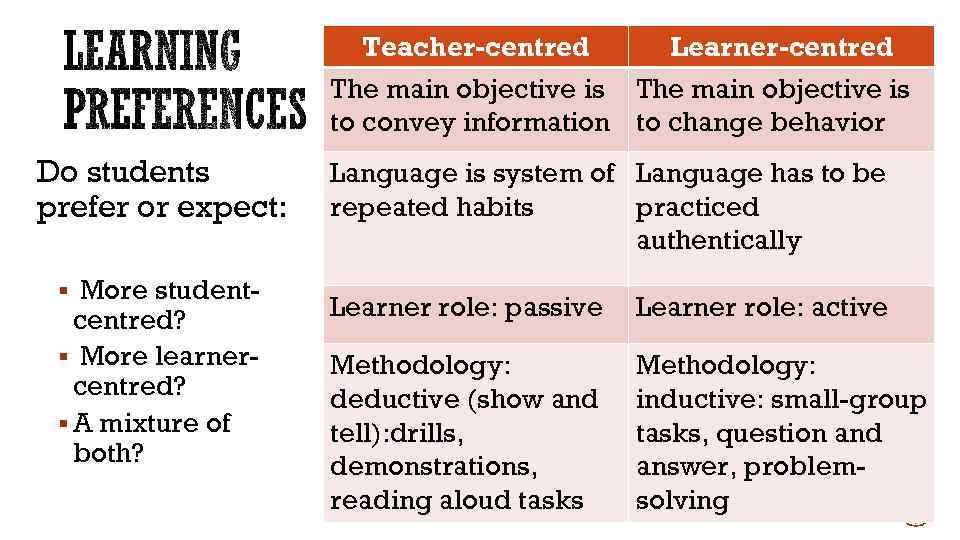 Teacher-centred Learner-centred The main objective is to convey information to change behavior Do students prefer or expect: § More student- centred? § More learnercentred? § A mixture of both? Language is system of Language has to be repeated habits practiced authentically Learner role: passive Learner role: active Methodology: deductive (show and tell): drills, demonstrations, reading aloud tasks Methodology: inductive: small-group tasks, question and answer, problemsolving
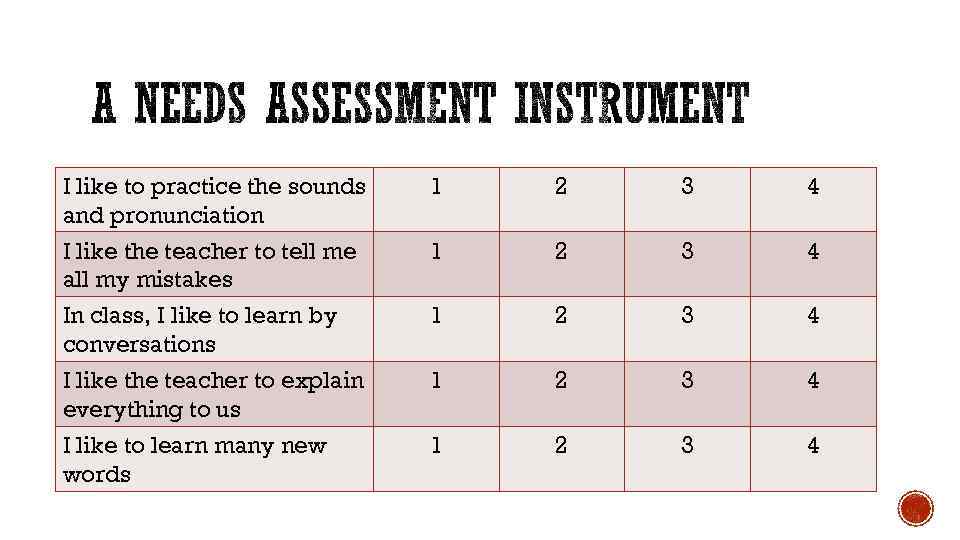 I like to practice the sounds and pronunciation 1 2 3 4 I like the teacher to tell me all my mistakes 1 2 3 4 In class, I like to learn by conversations I like the teacher to explain everything to us 1 2 3 4 I like to learn many new words 1 2 3 4
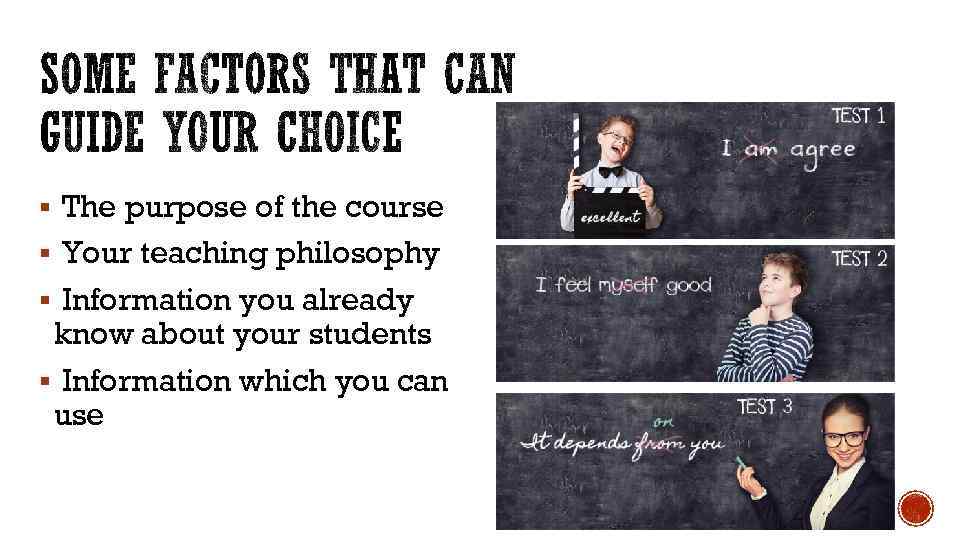 § The purpose of the course § Your teaching philosophy § Information you already know about your students § Information which you can use
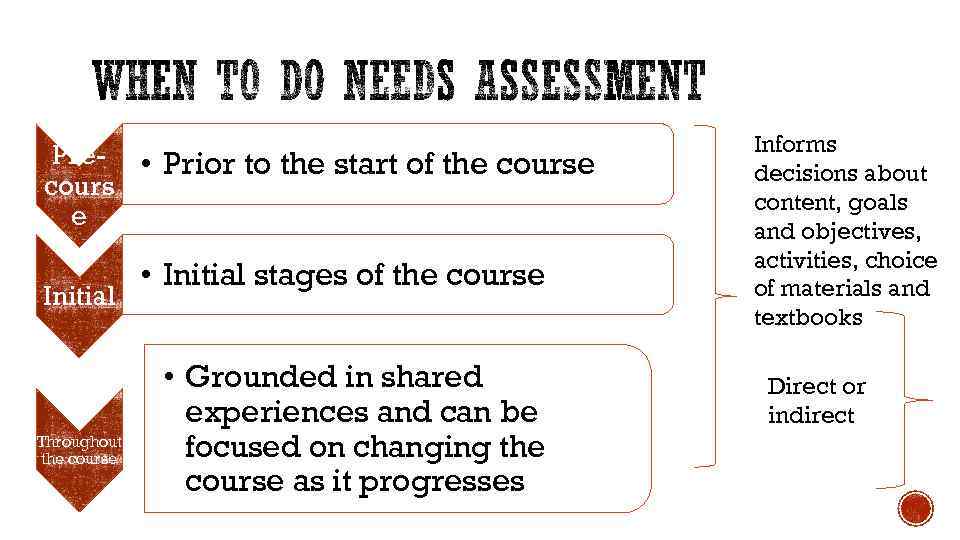 Pre- • Prior to the start of the cours e Initial Throughout the course • Initial stages of the course • Grounded in shared experiences and can be focused on changing the course as it progresses Informs decisions about content, goals and objectives, activities, choice of materials and textbooks Direct or indirect
 1. What information does it gather? 2. What skills are necessary to carry it out? Is preparation needed? 3. In other words, are the students familiar with this type of activity or do they have to be taught how to do it? 4. Is the activity feasible given the level and number of your students? How could you adapt it? 5. How will the teacher and learners use this information?
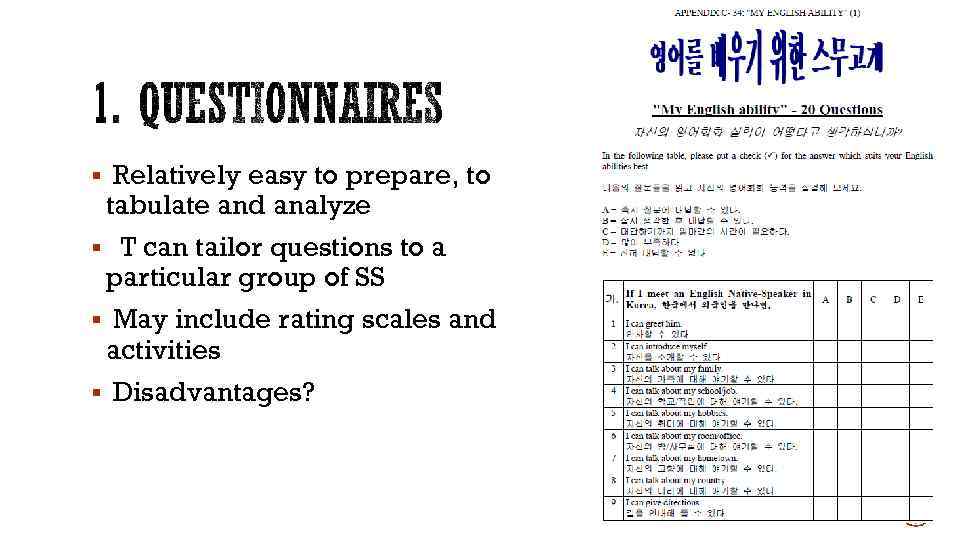 § Relatively easy to prepare, to tabulate and analyze § T can tailor questions to a particular group of SS § May include rating scales and activities § Disadvantages?
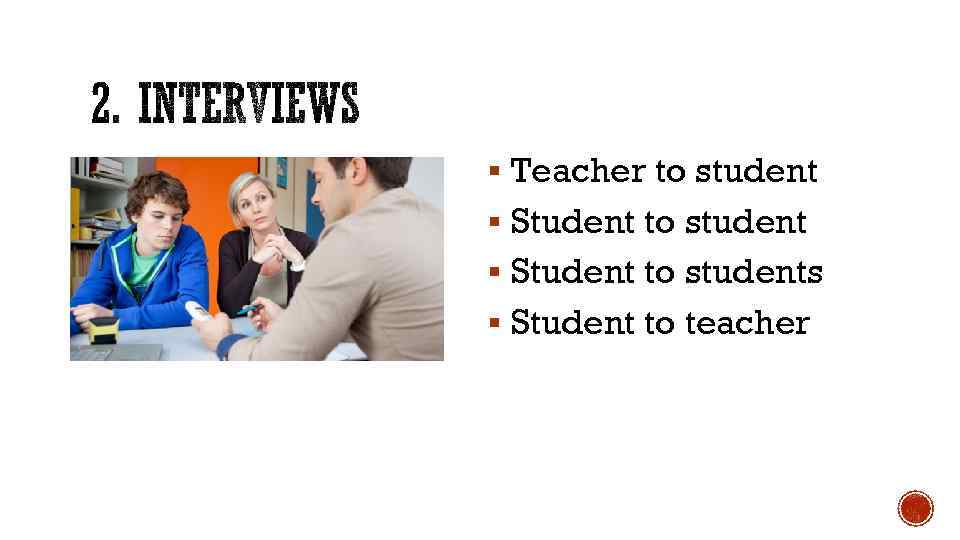 § Teacher to student § Student to students § Student to teacher
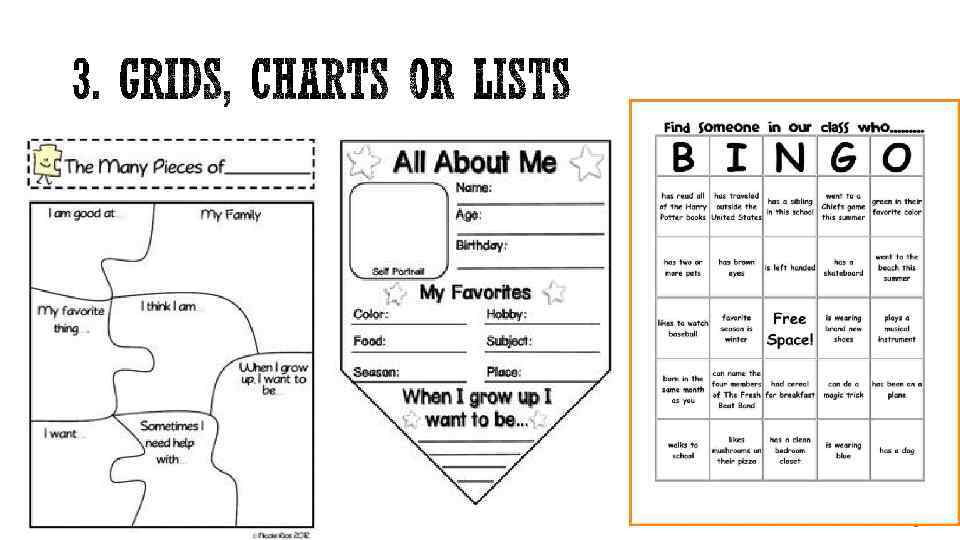

 § Regular feedback sessions § Dialogue journals § Learning logs or learning diaries § Portfolios All assessment instruments that you are using as part of the teaching and learning process
 Designing a needs assessment plan for your course, consider the following: § the kind of information you want to get and to do with it § the types of activities you can use § when you want to conduct these activities
 § Design a needs assessment plan § Think of the sources of information that you want to use, what information you would want to collect about your learners, and the instruments that you can use in your context § Report to class