


 Скачать презентацию Lecture 11 Monitoring and assessment Plan Definitions
Lecture 11 Curriculum.ppt
- Количество слайдов: 22
 Lecture 11 Monitoring and assessment
 Plan Definitions Purpose of control The main objects of assessment Functions of control Forms of control Ways of control Types of assessment Tasks for assessment Methods of assessment
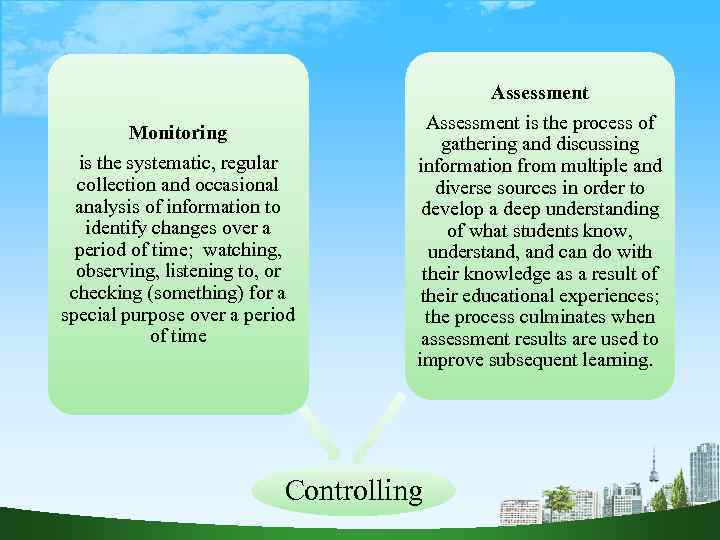 Assessment Monitoring is the systematic, regular collection and occasional analysis of information to identify changes over a period of time; watching, observing, listening to, or checking (something) for a special purpose over a period of time Assessment is the process of gathering and discussing information from multiple and diverse sources in order to develop a deep understanding of what students know, understand, and can do with their knowledge as a result of their educational experiences; the process culminates when assessment results are used to improve subsequent learning. Controlling
 Purpose The purpose of control is to identify the level of acquiring knowledge and developing competencies in the subject
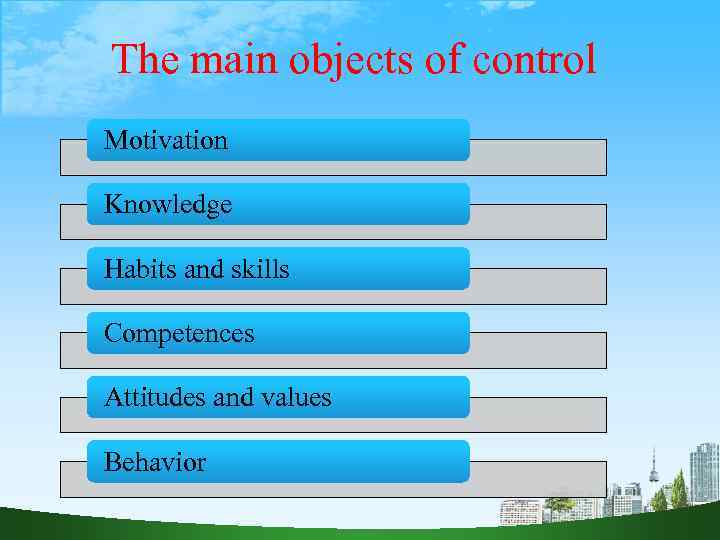 The main objects of control Motivation Knowledge Habits and skills Competences Attitudes and values Behavior
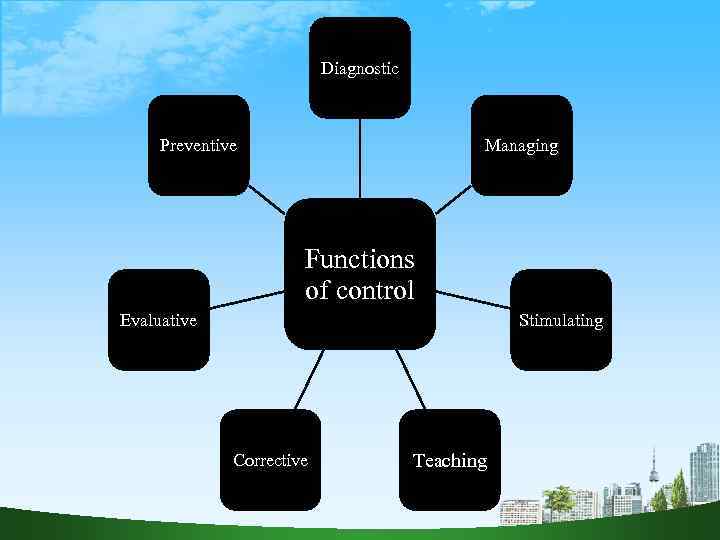 Diagnostic Preventive Managing Functions of control Evaluative Stimulating Corrective Teaching
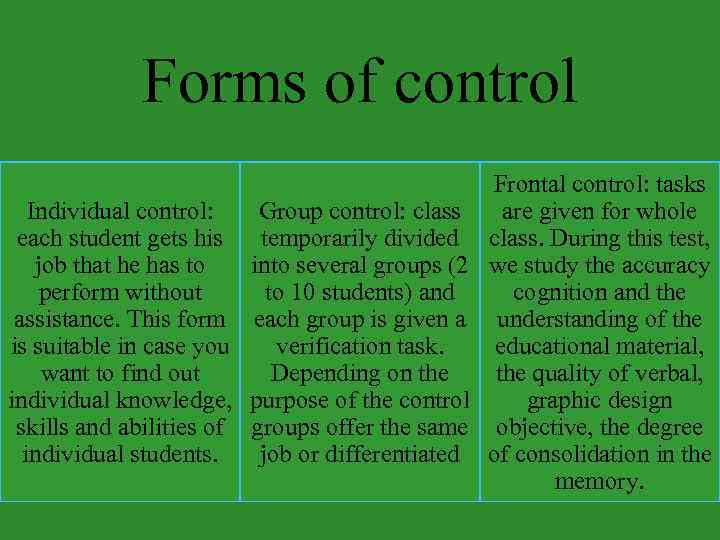 Forms of control Individual control: each student gets his job that he has to perform without assistance. This form is suitable in case you want to find out individual knowledge, skills and abilities of individual students. Group control: class temporarily divided into several groups (2 to 10 students) and each group is given a verification task. Depending on the purpose of the control groups offer the same job or differentiated Frontal control: tasks are given for whole class. During this test, we study the accuracy cognition and the understanding of the educational material, the quality of verbal, graphic design objective, the degree of consolidation in the memory.
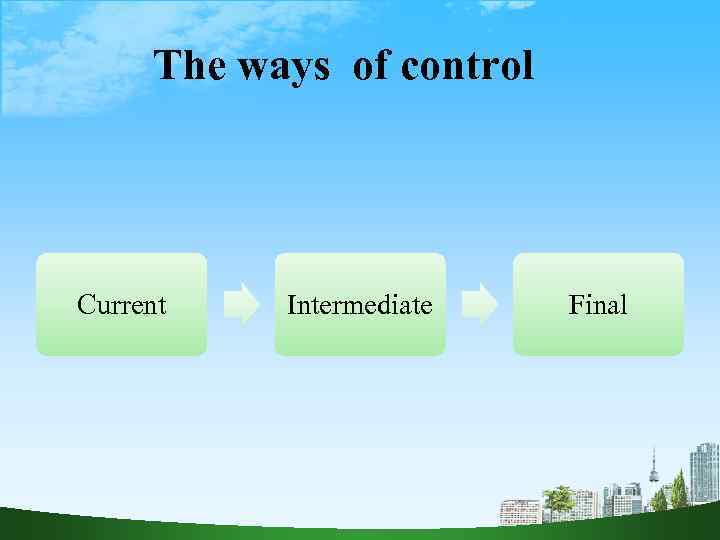 The ways of control Current Intermediate Final
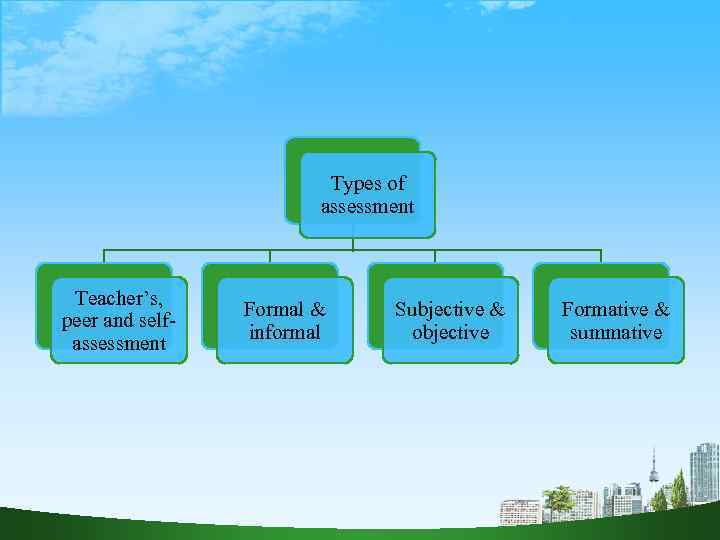 Types of assessment Teacher’s, peer and selfassessment Formal & informal Subjective & objective Formative & summative
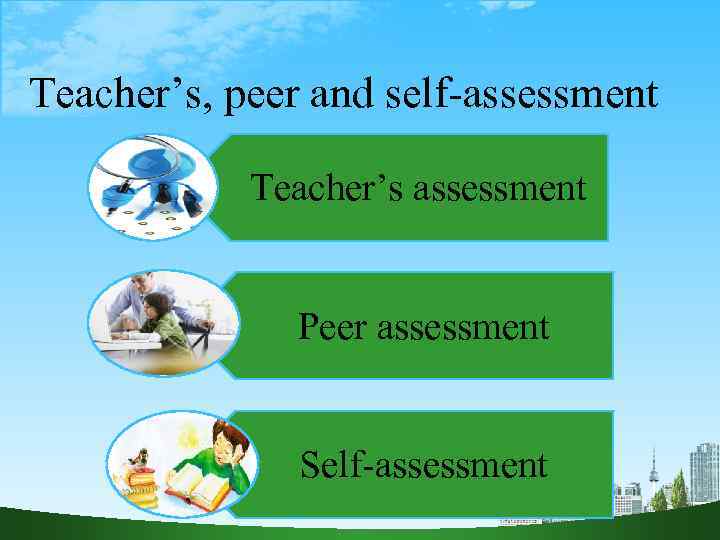 Teacher’s, peer and self-assessment Teacher’s assessment Peer assessment Self-assessment
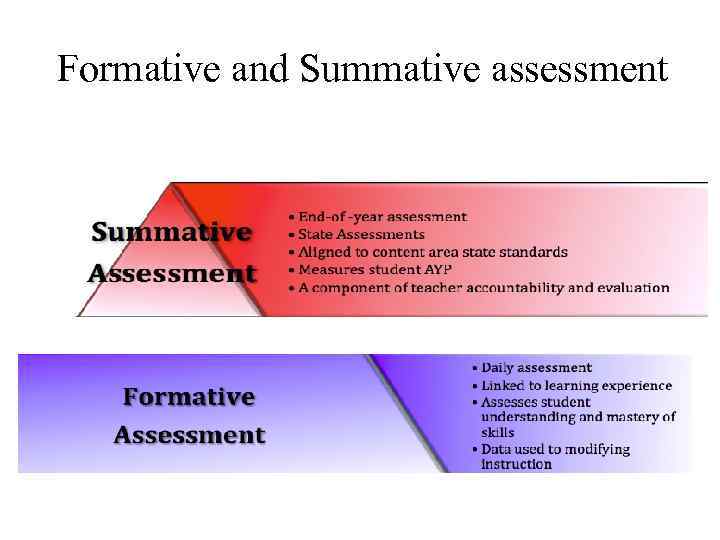 Formative and Summative assessment
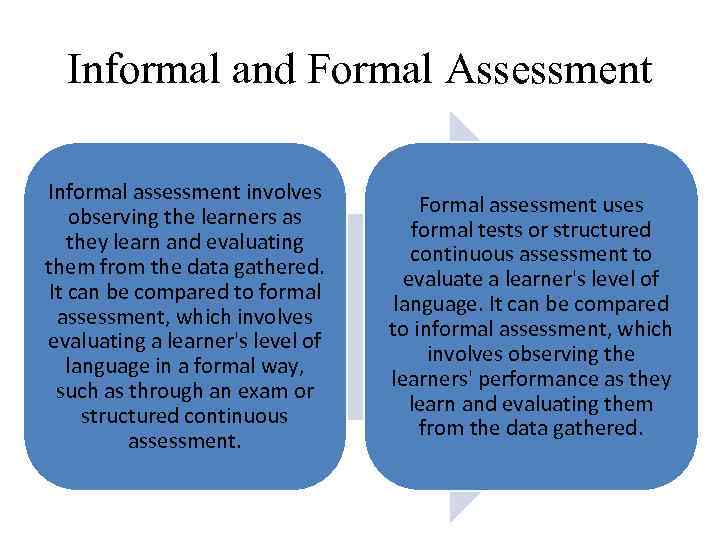 Informal and Formal Assessment Informal assessment involves observing the learners as they learn and evaluating them from the data gathered. It can be compared to formal assessment, which involves evaluating a learner's level of language in a formal way, such as through an exam or structured continuous assessment. Formal assessment uses formal tests or structured continuous assessment to evaluate a learner's level of language. It can be compared to informal assessment, which involves observing the learners' performance as they learn and evaluating them from the data gathered.
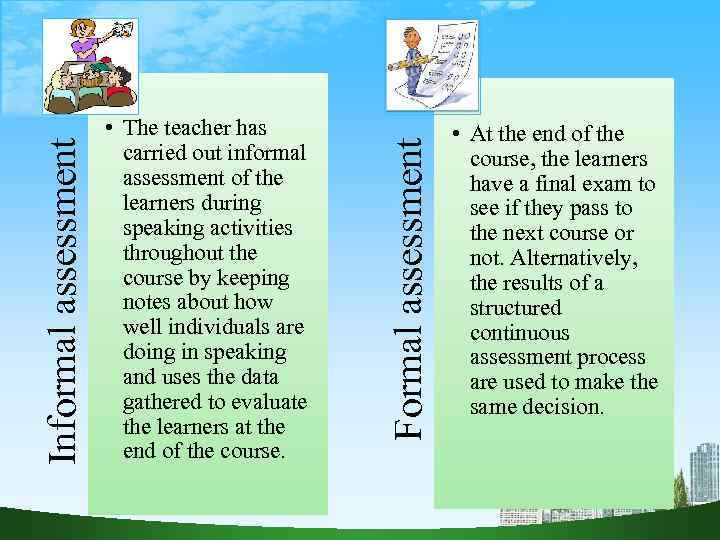 Formal assessment Informal assessment • The teacher has carried out informal assessment of the learners during speaking activities throughout the course by keeping notes about how well individuals are doing in speaking and uses the data gathered to evaluate the learners at the end of the course. • At the end of the course, the learners have a final exam to see if they pass to the next course or not. Alternatively, the results of a structured continuous assessment process are used to make the same decision.
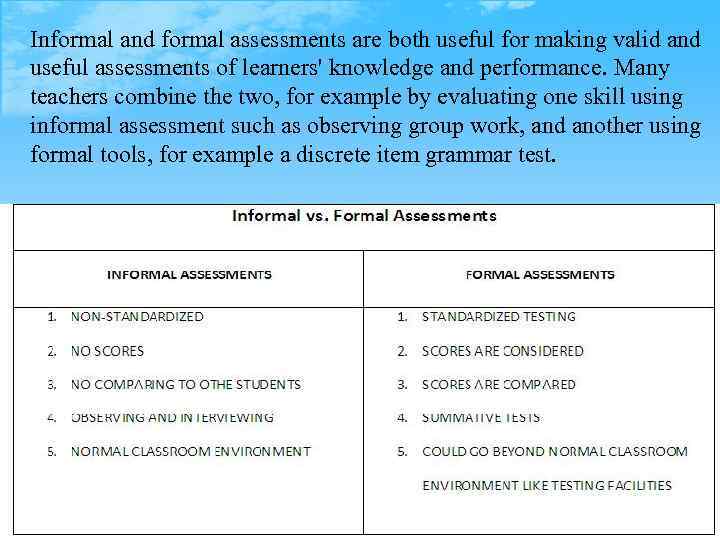 Informal and formal assessments are both useful for making valid and useful assessments of learners' knowledge and performance. Many teachers combine the two, for example by evaluating one skill using informal assessment such as observing group work, and another using formal tools, for example a discrete item grammar test.
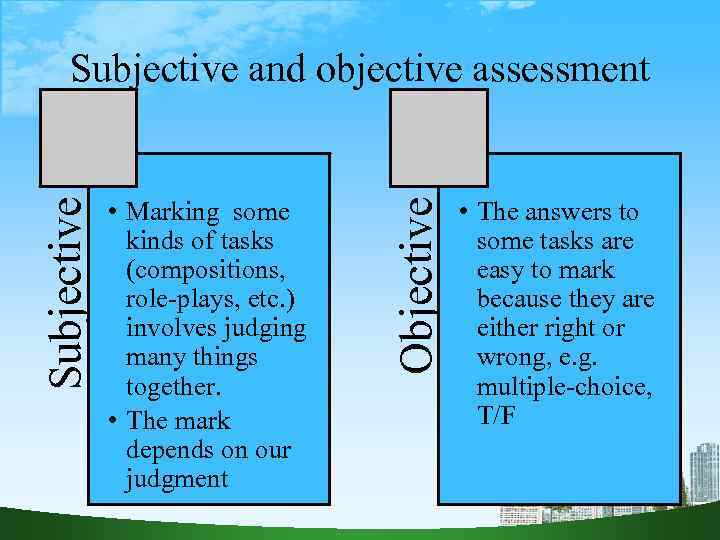 • Marking some kinds of tasks (compositions, role-plays, etc. ) involves judging many things together. • The mark depends on our judgment Objective Subjective and objective assessment • The answers to some tasks are easy to mark because they are either right or wrong, e. g. multiple-choice, T/F
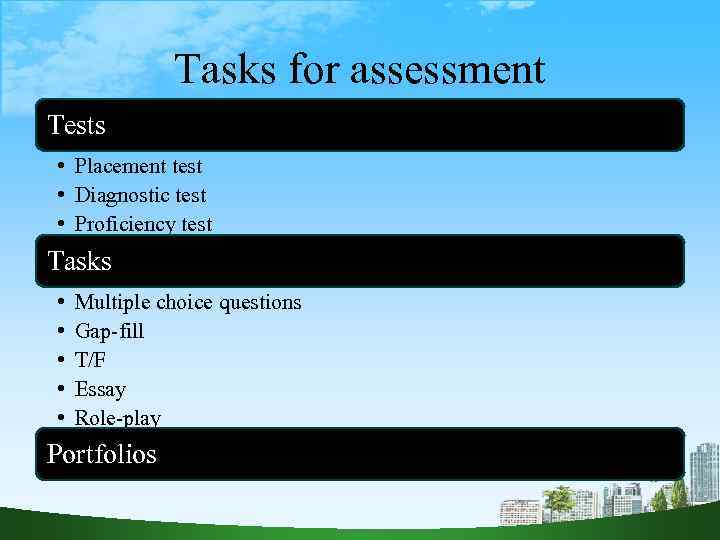 Tasks for assessment Tests • Placement test • Diagnostic test • Proficiency test Tasks • • • Multiple choice questions Gap-fill T/F Essay Role-play Portfolios
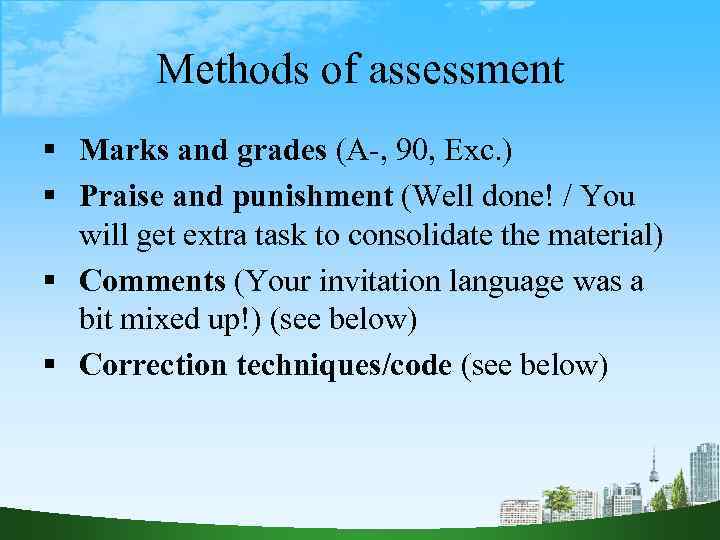 Methods of assessment Marks and grades (A-, 90, Exc. ) Praise and punishment (Well done! / You will get extra task to consolidate the material) Comments (Your invitation language was a bit mixed up!) (see below) Correction techniques/code (see below)
 Comments Constructive feedback Unconstructive feedback
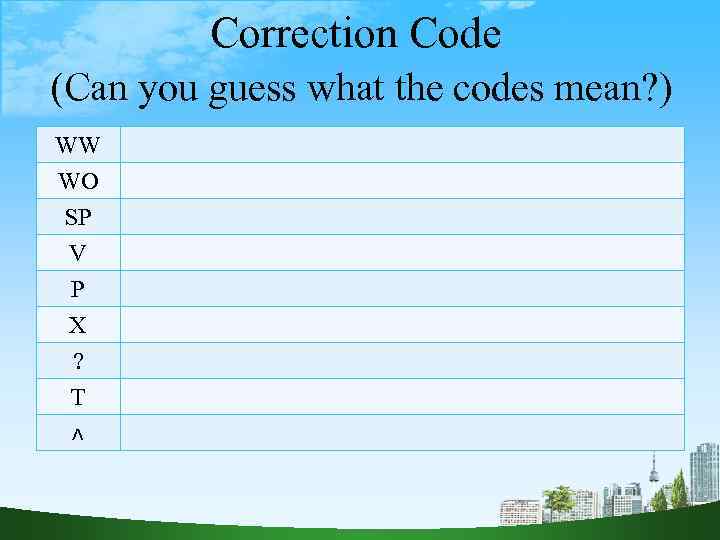 Correction Code (Can you guess what the codes mean? ) WW WO SP V P X ? T ᴧ
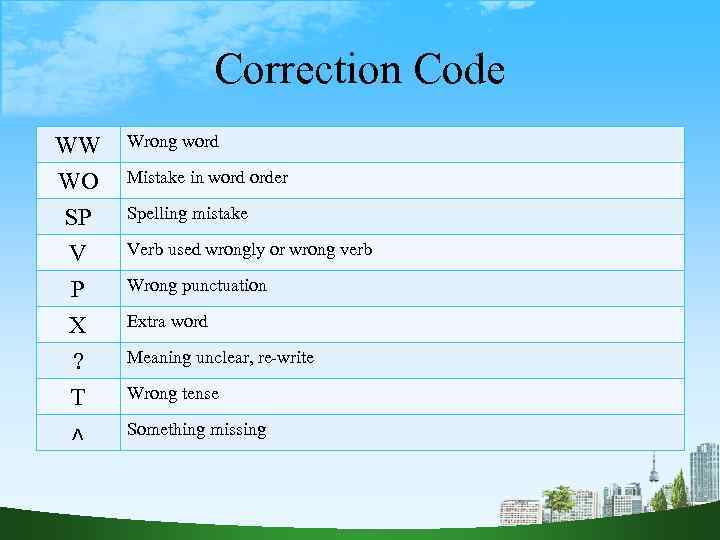 Correction Code WW WO SP V P X ? T ᴧ Wrong word Mistake in word order Spelling mistake Verb used wrongly or wrong verb Wrong punctuation Extra word Meaning unclear, re-write Wrong tense Something missing
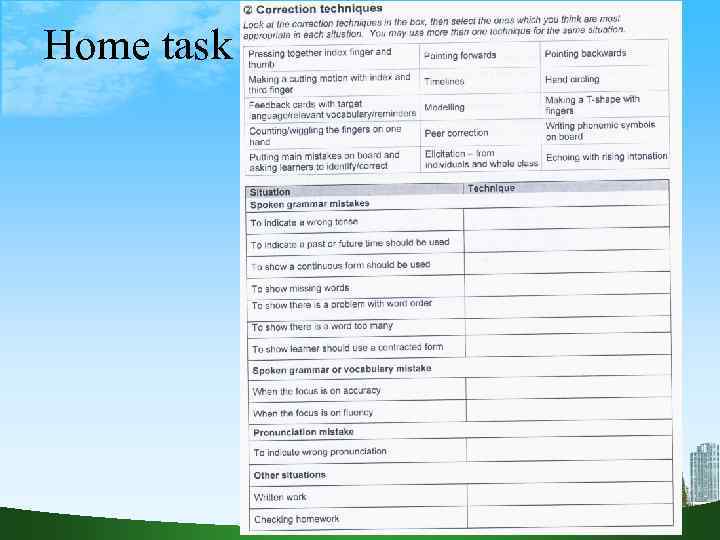 Home task
 Thank you!