


 Скачать презентацию LECTURE 1 Marketing Information and Research Analyzing the
marketing research process_int.ppt
- Количество слайдов: 19
 LECTURE 1 Marketing Information and Research: Analyzing the Business Environment
 Marketing Research l The process of collecting, analyzing, and interpreting data about customers, competitors, and the business environment, in order to improve marketing effectiveness.
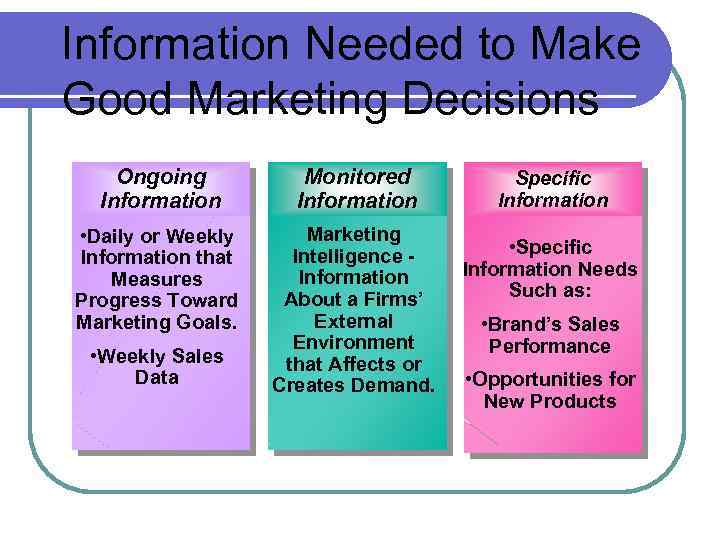 Information Needed to Make Good Marketing Decisions Ongoing Information Monitored Information • Daily or Weekly Information that Measures Progress Toward Marketing Goals. Marketing Intelligence Information About a Firms’ External Environment that Affects or Creates Demand. • Weekly Sales Data Specific Information • Specific Information Needs Such as: • Brand’s Sales Performance • Opportunities for New Products
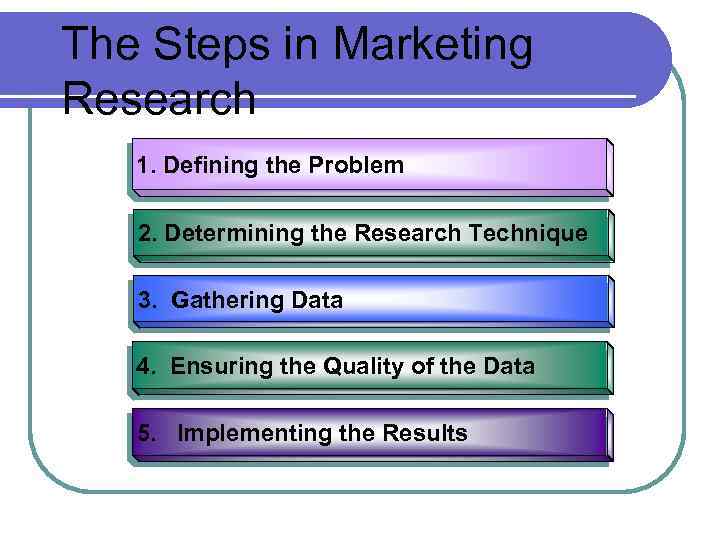 The Steps in Marketing Research 1. Defining the Problem 2. Determining the Research Technique 3. Gathering Data 4. Ensuring the Quality of the Data 5. Implementing the Results
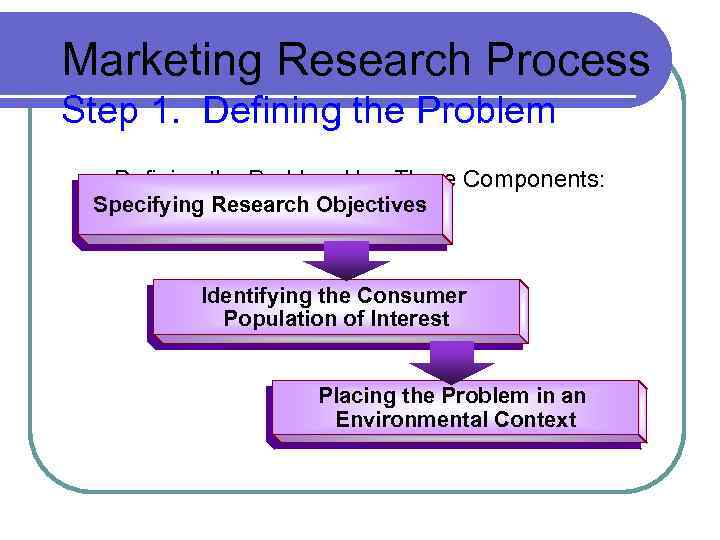 Marketing Research Process Step 1. Defining the Problem Has Three Components: Specifying Research Objectives Identifying the Consumer Population of Interest Placing the Problem in an Environmental Context
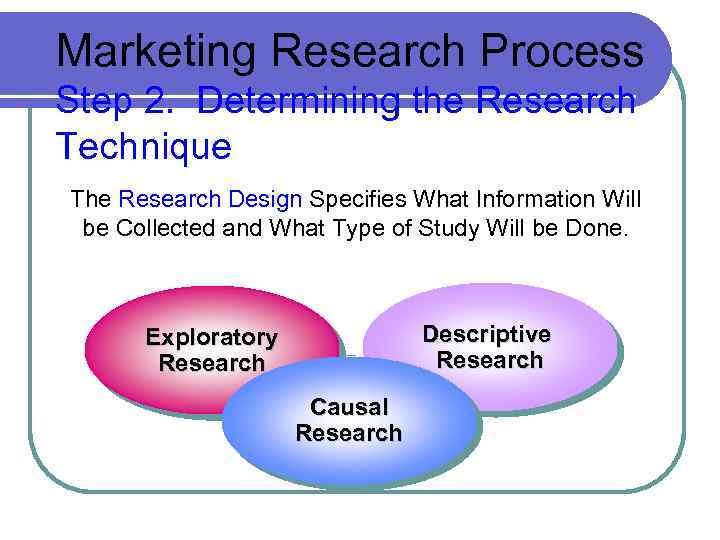 Marketing Research Process Step 2. Determining the Research Technique The Research Design Specifies What Information Will be Collected and What Type of Study Will be Done. Descriptive Research Exploratory Research Causal Research
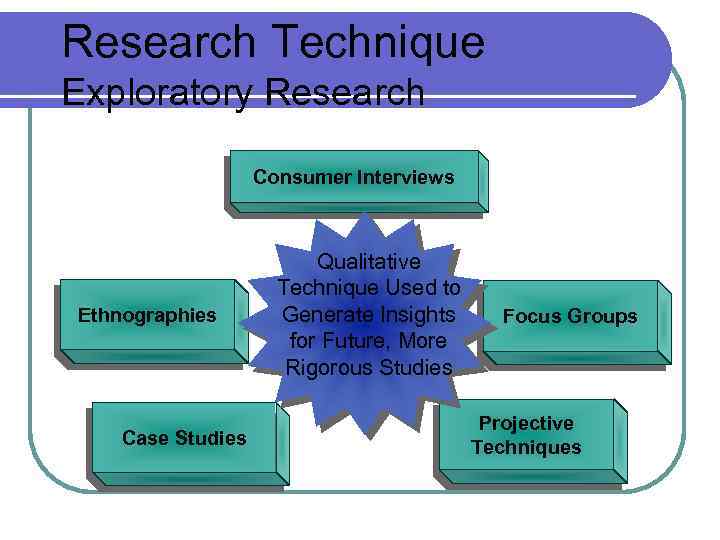 Research Technique Exploratory Research Consumer Interviews Ethnographies Case Studies Qualitative Technique Used to Generate Insights for Future, More Rigorous Studies Focus Groups Projective Techniques
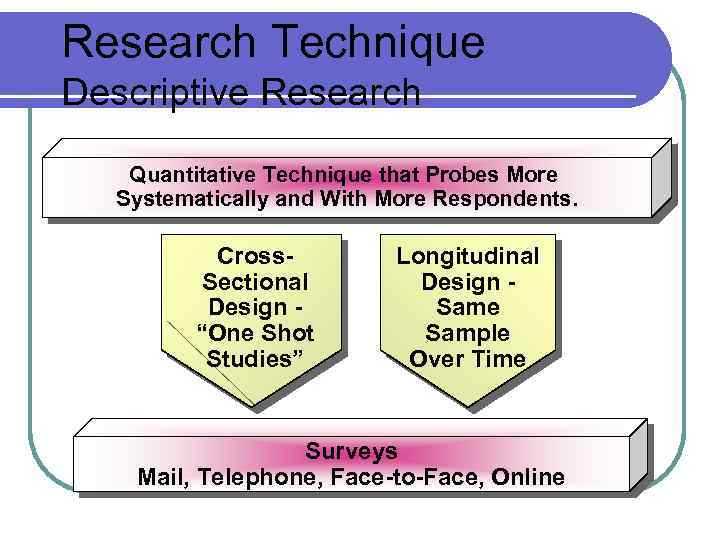 Research Technique Descriptive Research Quantitative Technique that Probes More Systematically and With More Respondents. Cross. Sectional Design “One Shot Studies” Longitudinal Design Same Sample Over Time Surveys Mail, Telephone, Face-to-Face, Online
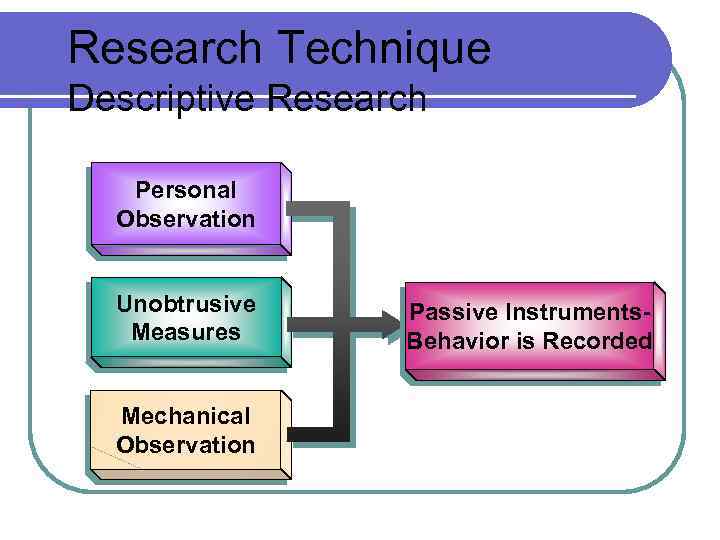 Research Technique Descriptive Research Personal Observation Unobtrusive Measures Mechanical Observation Passive Instruments. Behavior is Recorded
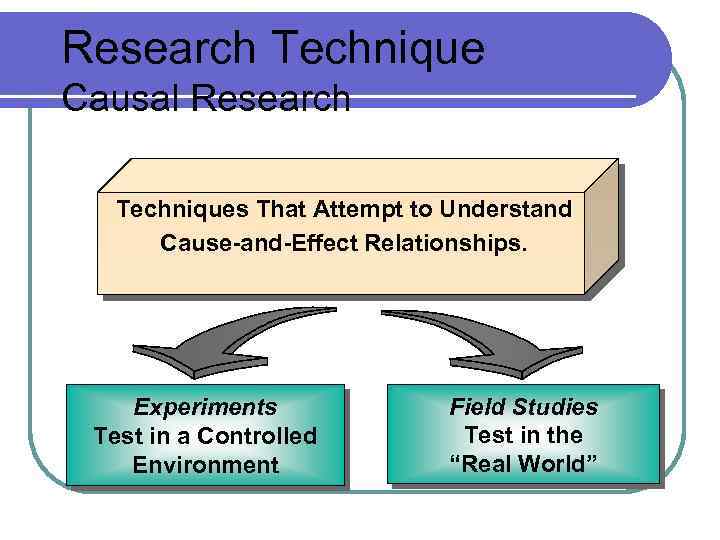 Research Technique Causal Research Techniques That Attempt to Understand Cause-and-Effect Relationships. Experiments Test in a Controlled Environment Field Studies Test in the “Real World”
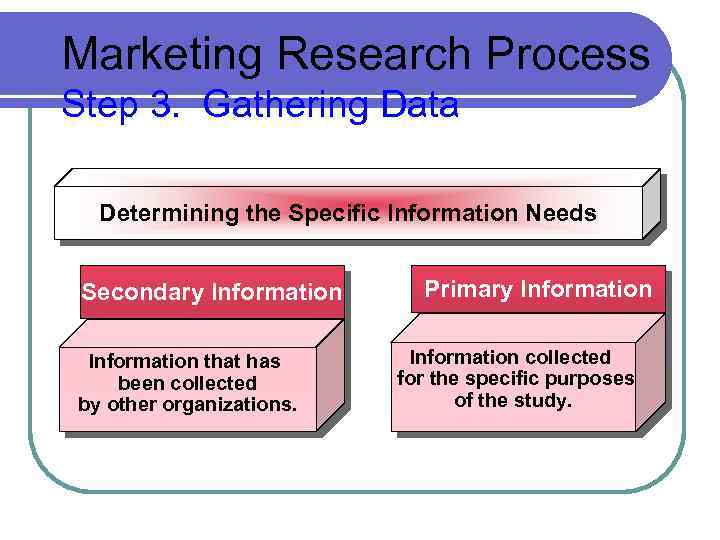 Marketing Research Process Step 3. Gathering Data Determining the Specific Information Needs Secondary Information that has been collected by other organizations. Primary Information collected for the specific purposes of the study.
 Gathering Data in Foreign Countries l Conducting market research globally can be difficult because: l Market conditions may vary widely, l Lack of phones l Low literacy rates Local customs, l Cultural differences, l Language differences which may be overcome through back-translation. l
 Single-Source Data Information that is integrated from multiple sources to monitor the impact of marketing communications on a particular customer group over time. l Multiple sources such as: l l in-store coupon redemption, sales data from checkout scanners, l household data, l l Up to 90% of apparel, electronics, and grocery purchases in the U. S. are scanned.
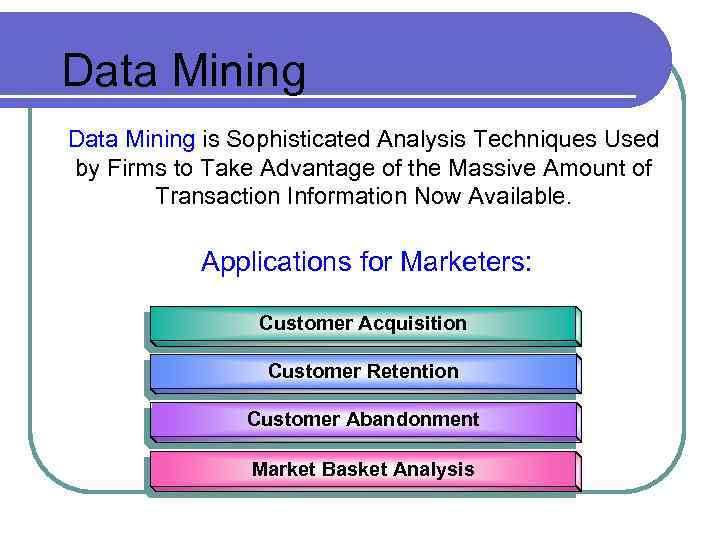 Data Mining is Sophisticated Analysis Techniques Used by Firms to Take Advantage of the Massive Amount of Transaction Information Now Available. Applications for Marketers: Customer Acquisition Customer Retention Customer Abandonment Market Basket Analysis
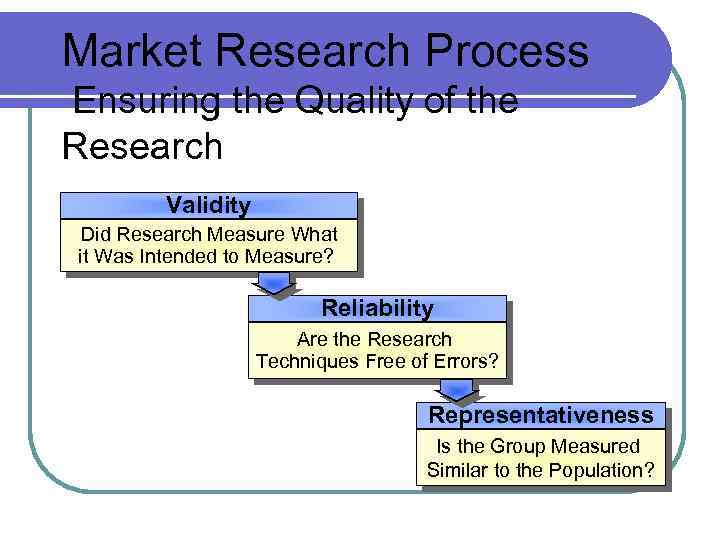 Market Research Process Ensuring the Quality of the Research Validity Did Research Measure What it Was Intended to Measure? Reliability Are the Research Techniques Free of Errors? Representativeness Is the Group Measured Similar to the Population?
 Market Research Plan Step 4. Implementing the Research Results Marketers must analyze and report the research to help solve problems and to plan. l The report should answer the following questions: l What was the problem being studied? l What were the limitations? l What are the important findings? l What are the recommendations for action based on the results? l
 Integrating Feedback into Long-Term Planning A Marketing Information System continuously gathers, sorts, analyzes, and distributes relevant and timely marketing information to its managers. l This marketing information includes: l internal data such as sales records, customer lists, inventories, costs, and l external data on competition and demographic, cultural and social trends. l
 Predicting the Future l Futurists specialize in predicting the future and anticipating marketplace conditions. l They try to imagine different scenarios, or possible situations, and assign a level of probability to each. l Marketers try to predict consumers’ preferences for a variety of products.
 Summary Describe the marketing research process. l Understand the differences among exploratory, problem-solving, and causal research, and describe the variety of research techniques available to marketers. l Understand the issues involved in making sense of the research results. l Discuss how marketers implement research results. l