


 Скачать презентацию Leaving Home Safely A Guide to Fire and
590174ec58eaa2c35eee67537caaabbf.ppt
- Количество слайдов: 61
 Leaving Home Safely A Guide to Fire and Burn Safety for College Students… …and other Young Adults now living on their own
 Leaving Home Safety Leaving Home Safely Developed by: American Burn Association Burn Prevention Committee Funded by: United States Fire Administration/ Federal Emergency Management Agency
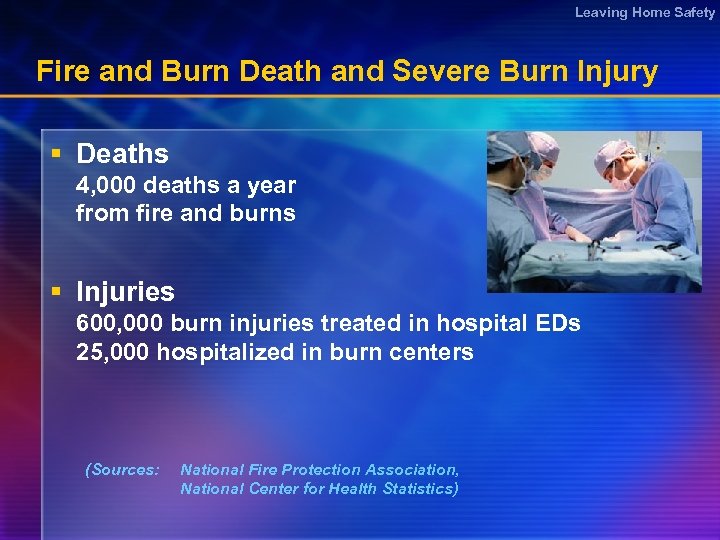 Leaving Home Safety Fire and Burn Death and Severe Burn Injury § Deaths 4, 000 deaths a year from fire and burns § Injuries 600, 000 burn injuries treated in hospital EDs 25, 000 hospitalized in burn centers (Sources: National Fire Protection Association, National Center for Health Statistics)
 Leaving Home Safety Did You Know That: § One of every 3 people will have a negative experience with fire during their lifetime § Young adults are the age group least likely to have an escape plan in case of a fire where they live § Almost all fires start out small
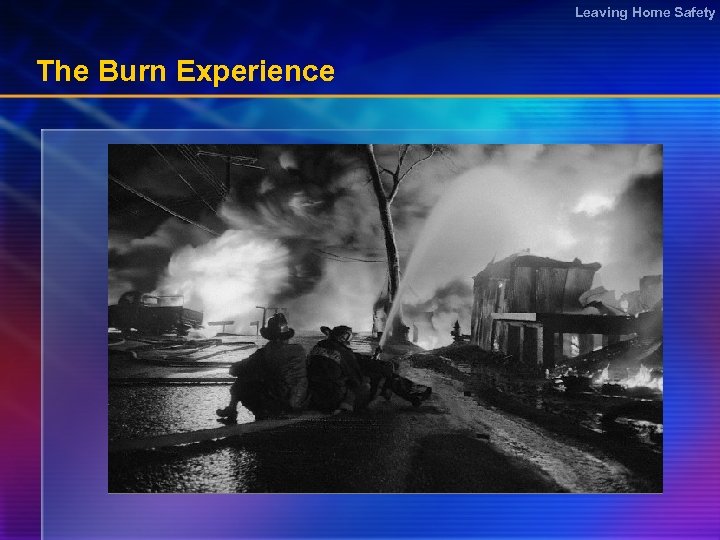 Leaving Home Safety The Burn Experience
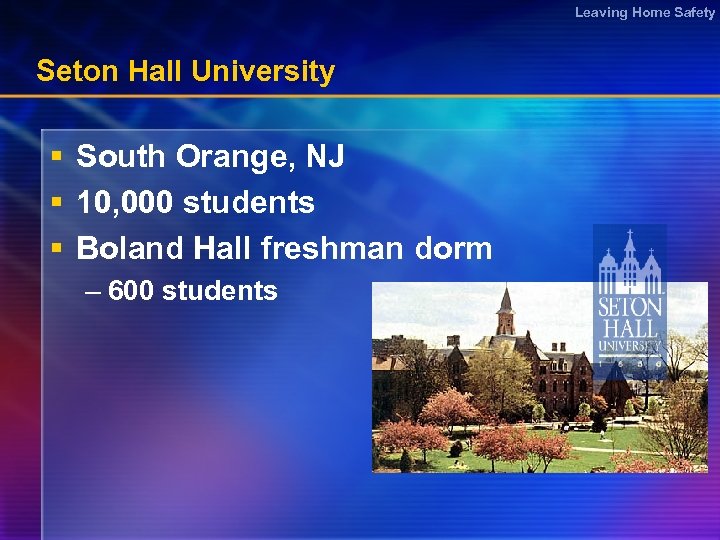 Leaving Home Safety Seton Hall University § South Orange, NJ § 10, 000 students § Boland Hall freshman dorm – 600 students
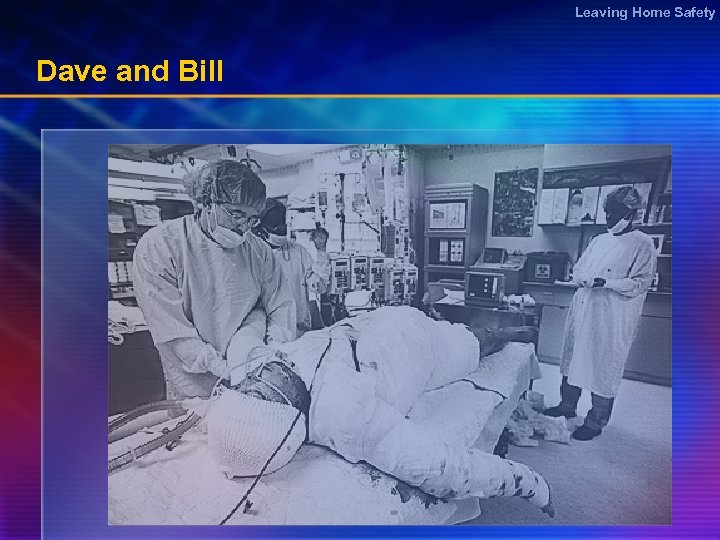
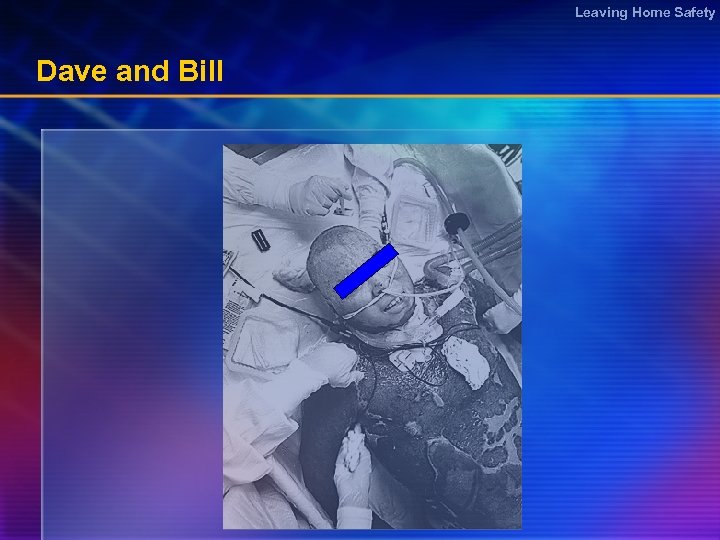
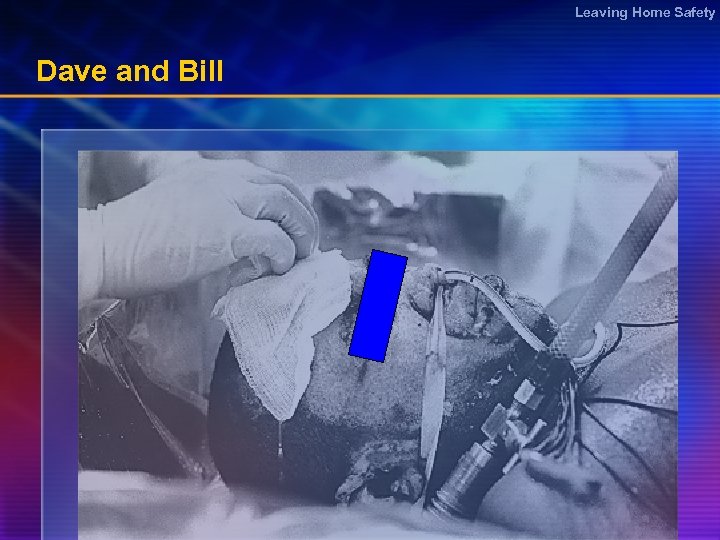
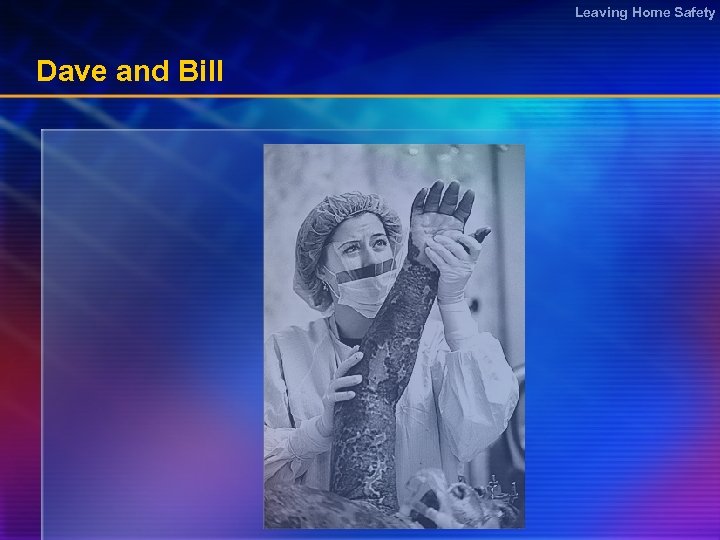
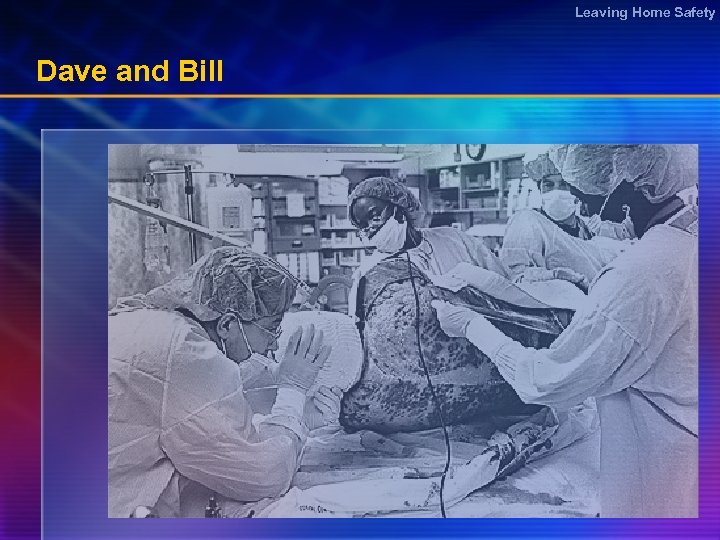
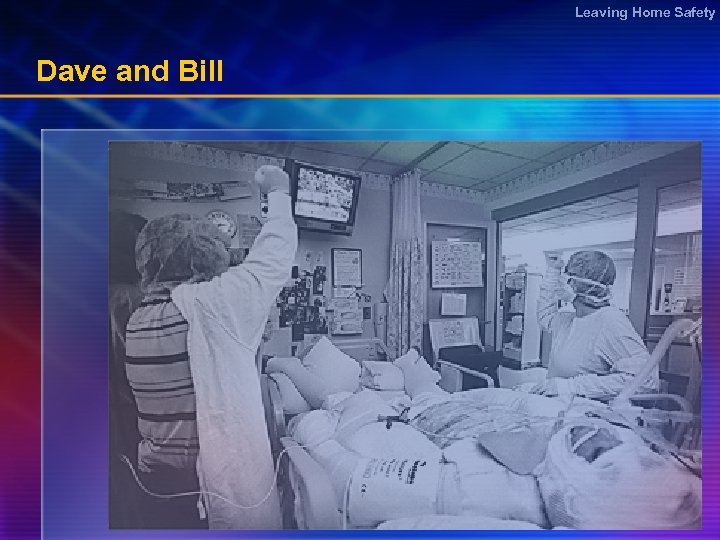
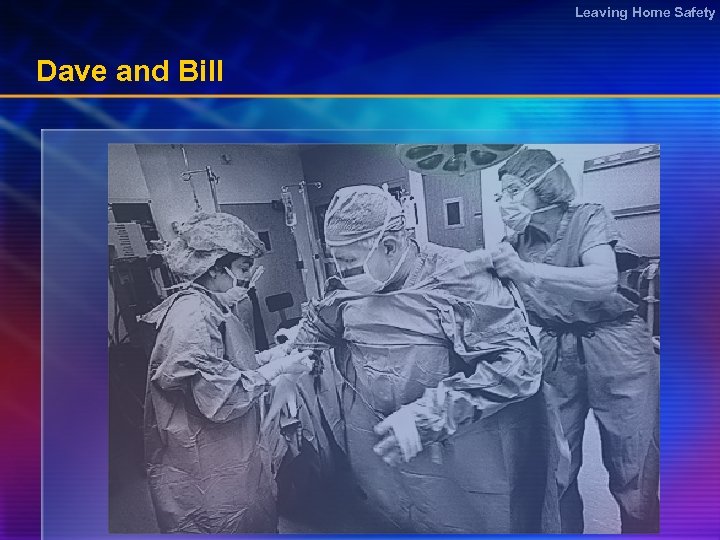
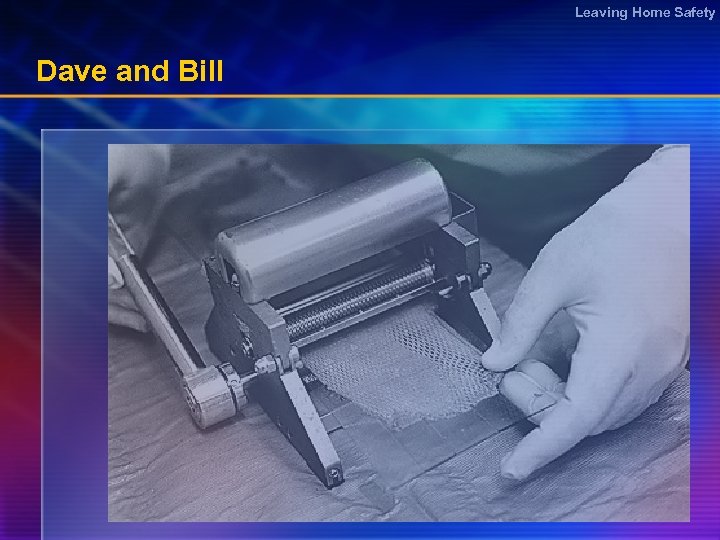
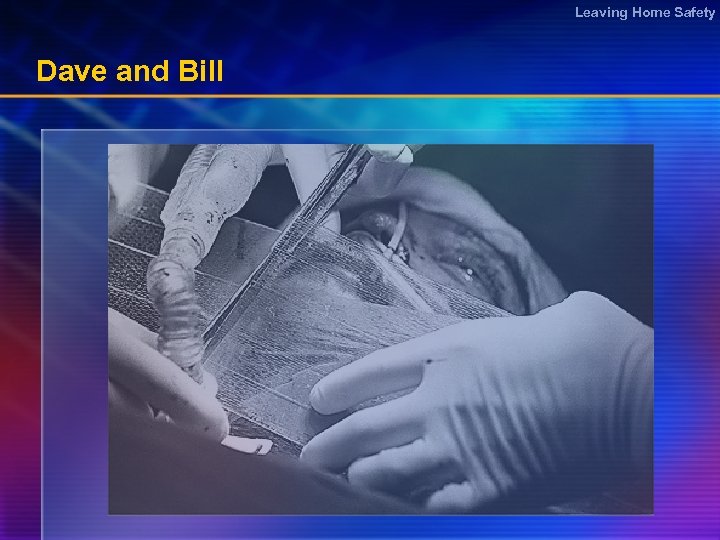
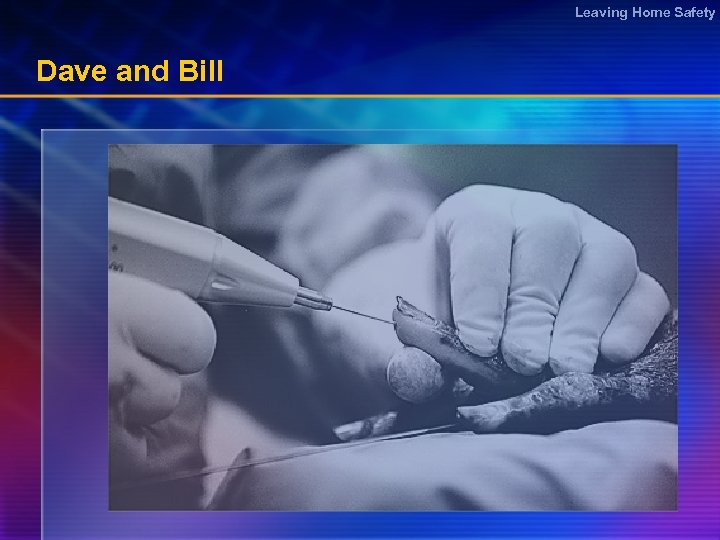
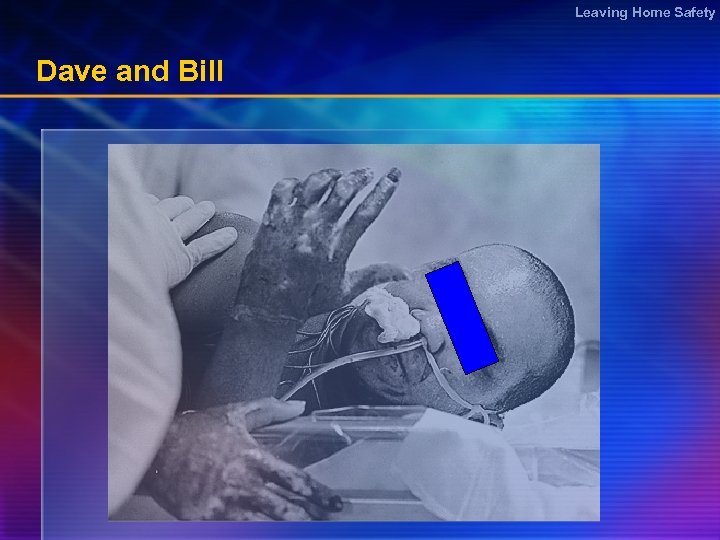
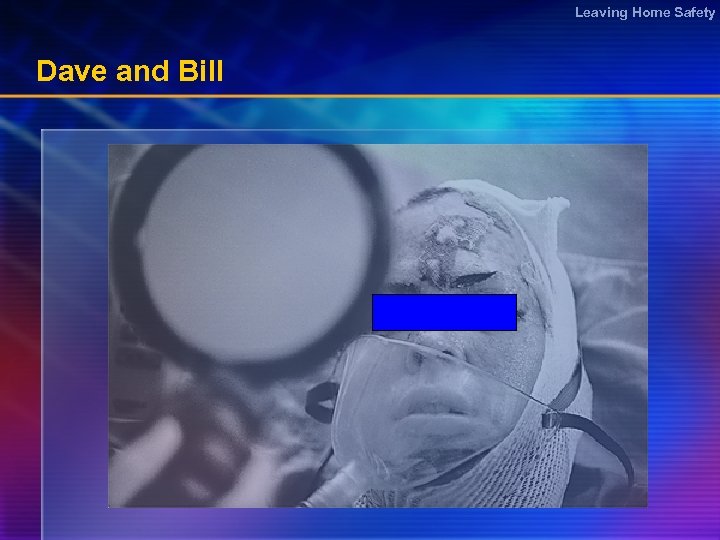
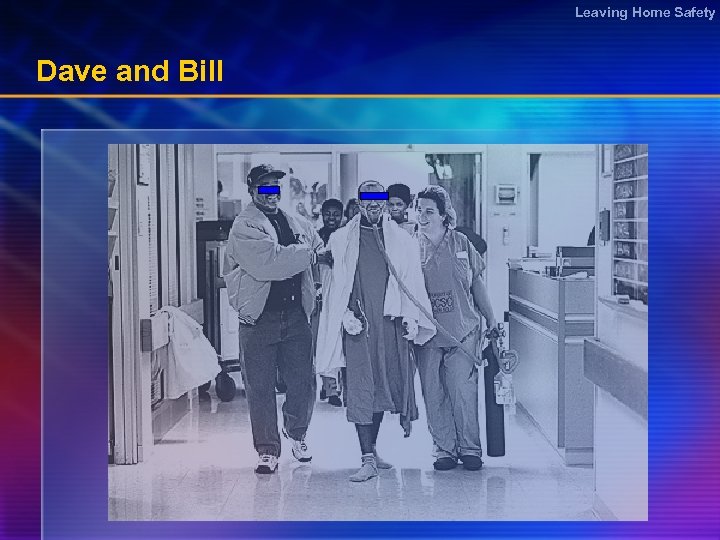
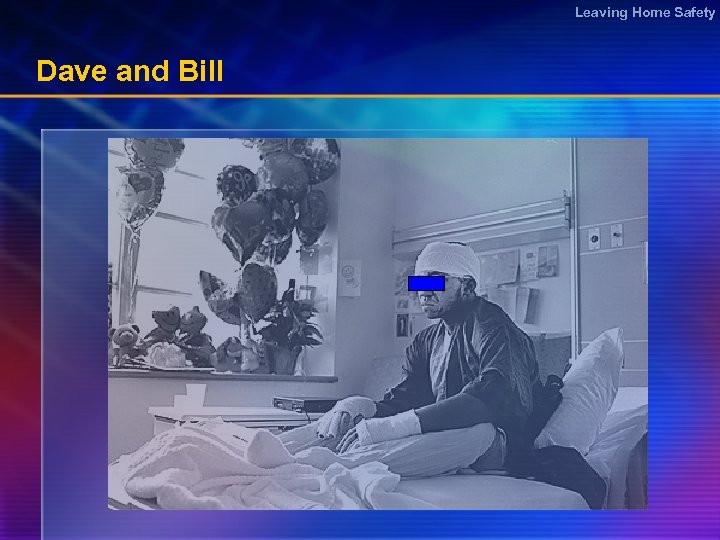
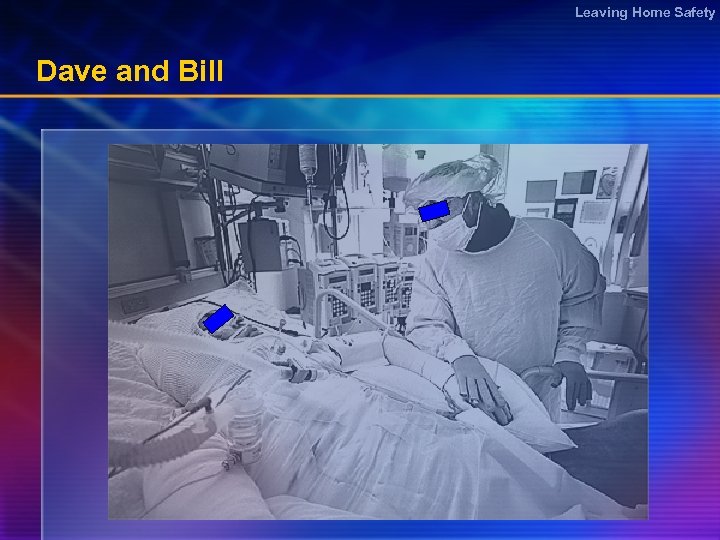
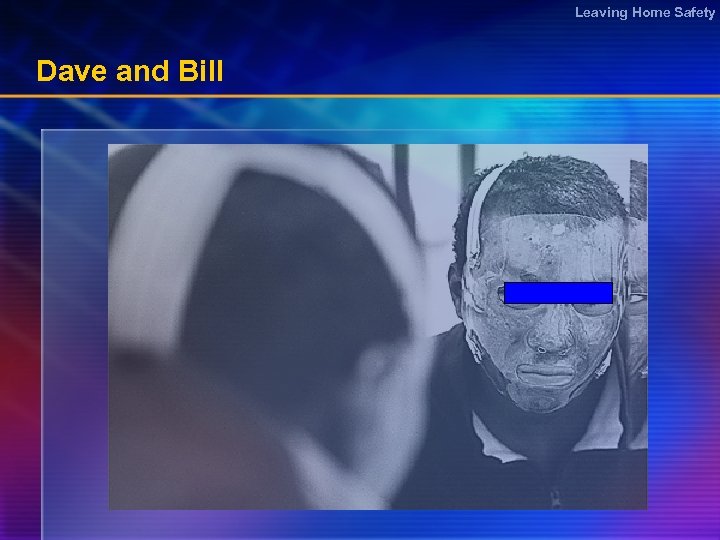
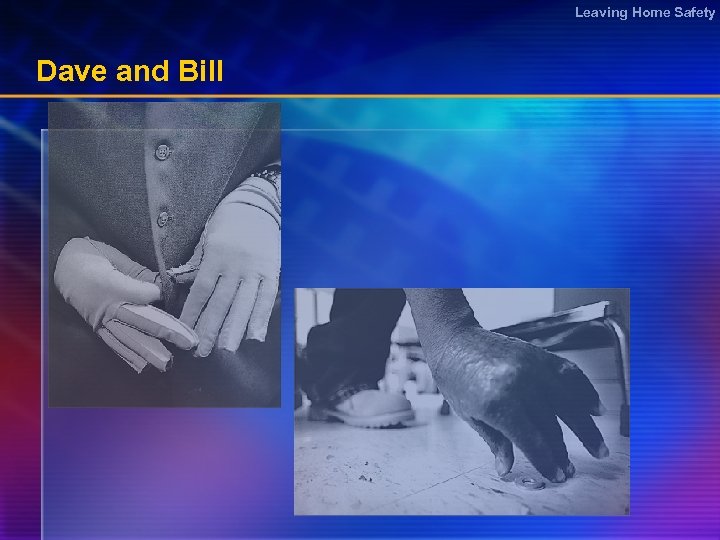
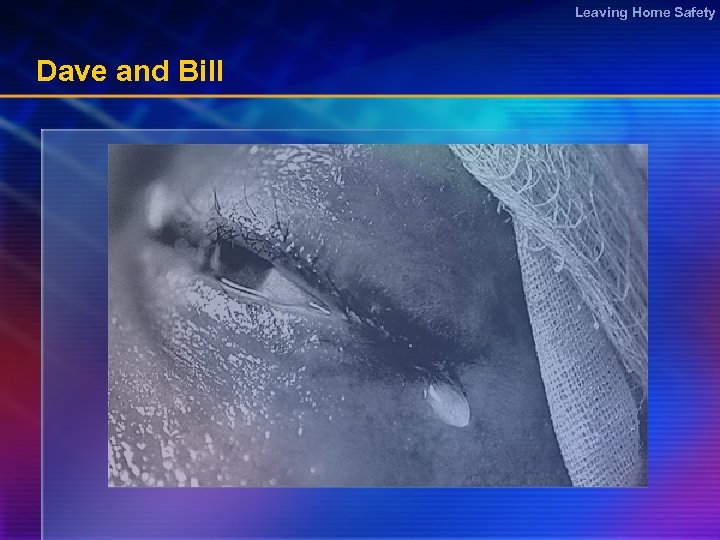
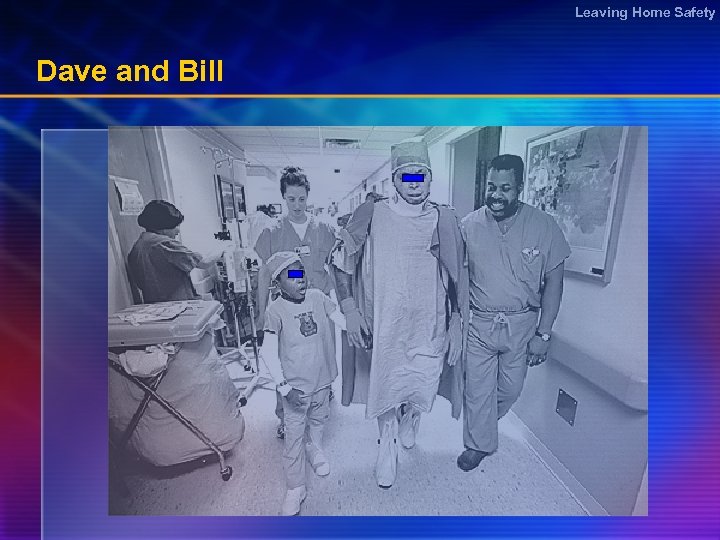
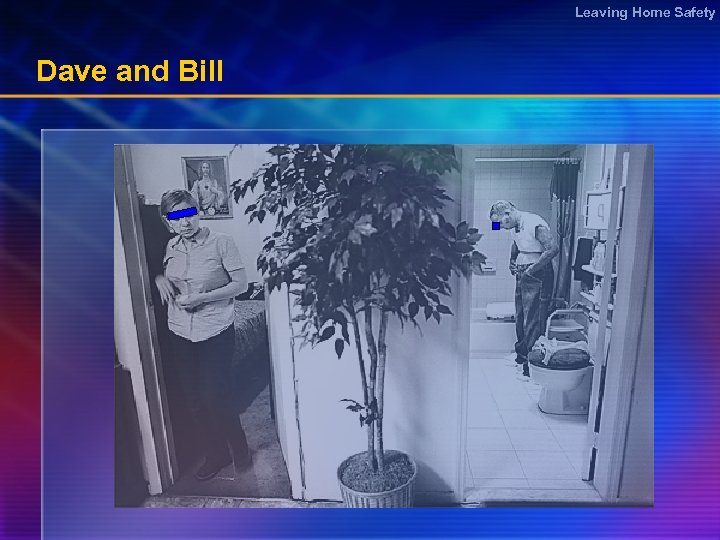
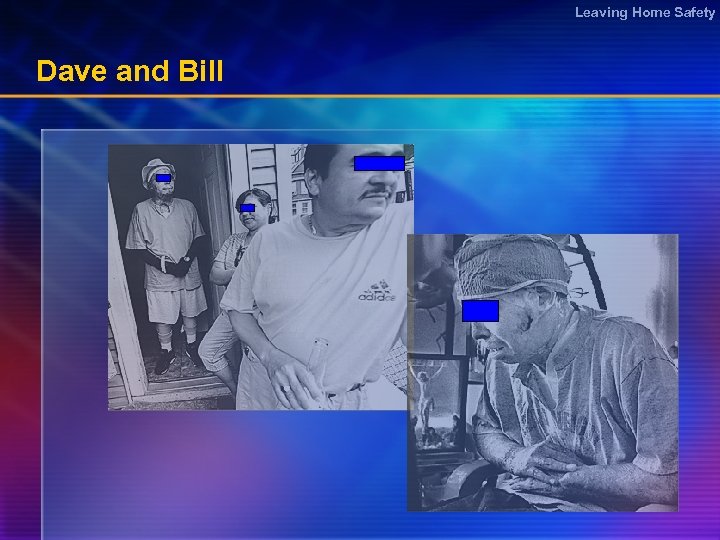
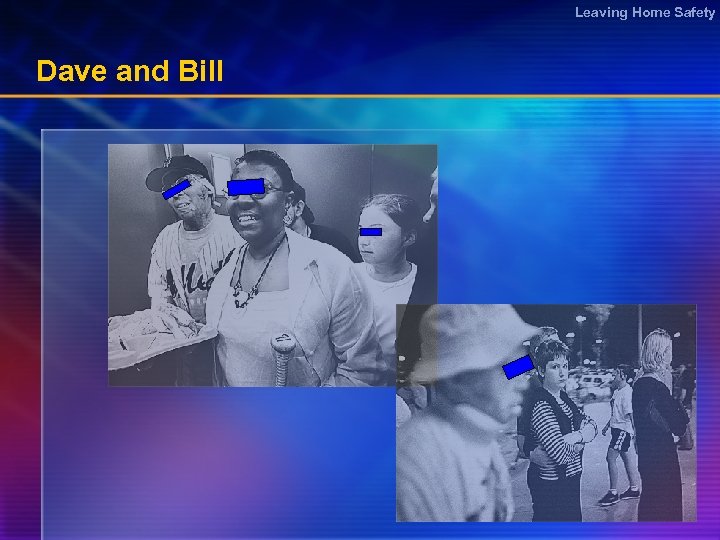
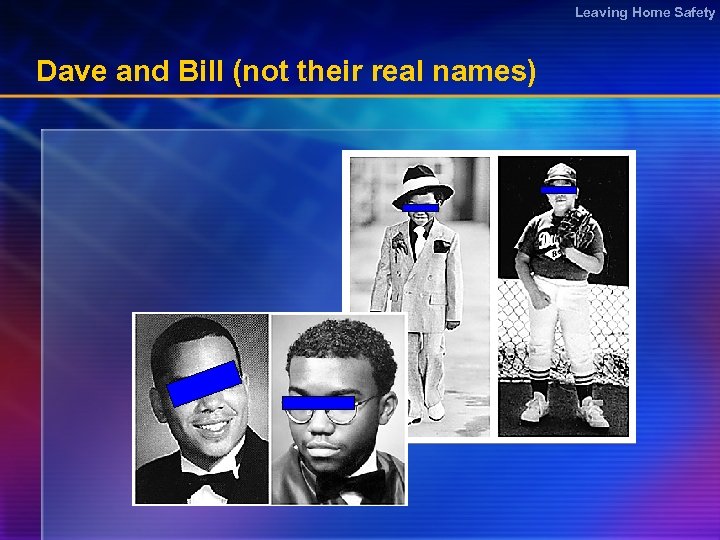 Leaving Home Safety Dave and Bill (not their real names)
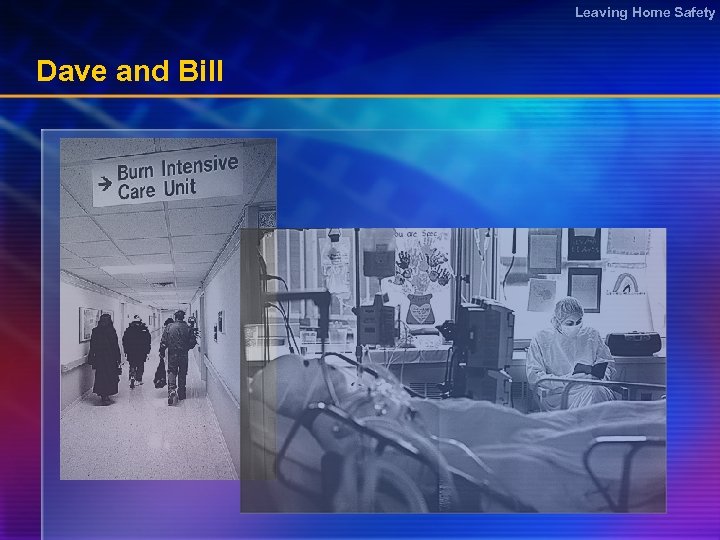 Leaving Home Safety Dave and Bill
 Leaving Home Safety Dave and Bill
 Leaving Home Safety Dave and Bill
 Leaving Home Safety Dave and Bill
 Leaving Home Safety Dave and Bill
 Leaving Home Safety Dave and Bill
 Leaving Home Safety Dave and Bill
 Leaving Home Safety Dave and Bill
 Leaving Home Safety Dave and Bill
 Leaving Home Safety Dave and Bill
 Leaving Home Safety Dave and Bill
 Leaving Home Safety Dave and Bill
 Leaving Home Safety Dave and Bill
 Leaving Home Safety Dave and Bill
 Leaving Home Safety Dave and Bill
 Leaving Home Safety Dave and Bill
 Leaving Home Safety Dave and Bill
 Leaving Home Safety Dave and Bill
 Leaving Home Safety Dave and Bill
 Leaving Home Safety Dave and Bill
 Leaving Home Safety Dave and Bill
 Leaving Home Safety Dave and Bill
 Leaving Home Safety Dave and Bill
 Leaving Home Safety Fires in Student Housing § On Campus – 1700 fires/year in dormitory and fraternity/sorority housing § Off Campus – 2/3 of full-time students attending four-year colleges live off-campus – 75% of student housing fires occur off-campus
 Leaving Home Safety Collegiate Housing Safety Concerns § Adequate space § Student “stuff” § Campus regulations, enforcement § Off-campus housing safety
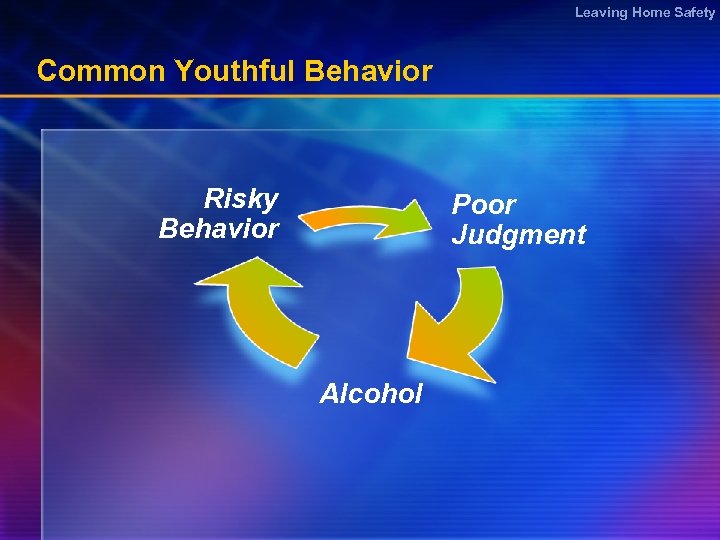 Leaving Home Safety Common Youthful Behavior Risky Behavior Poor Judgment Alcohol
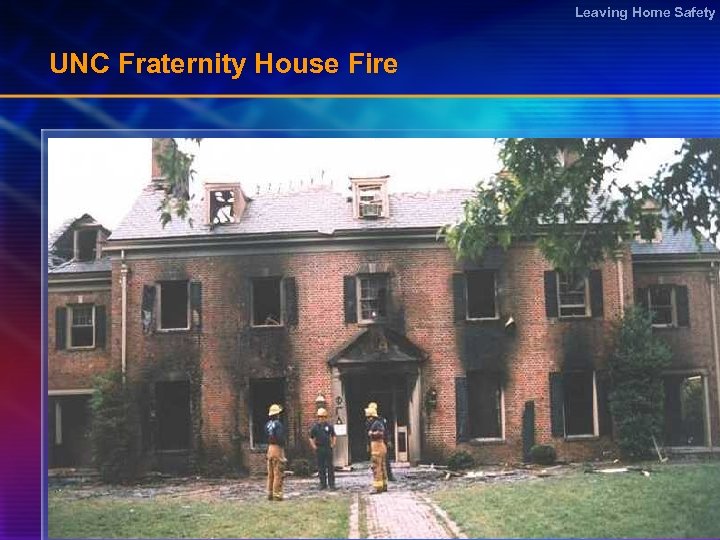 Leaving Home Safety UNC Fraternity House Fire
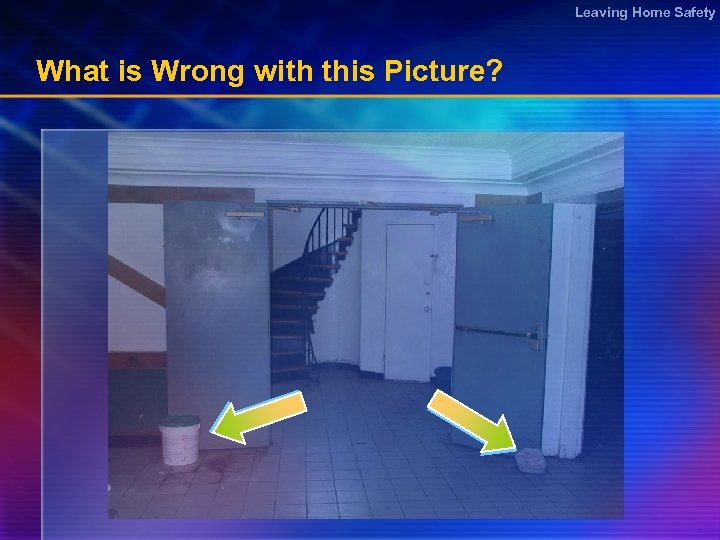 Leaving Home Safety What is Wrong with this Picture?
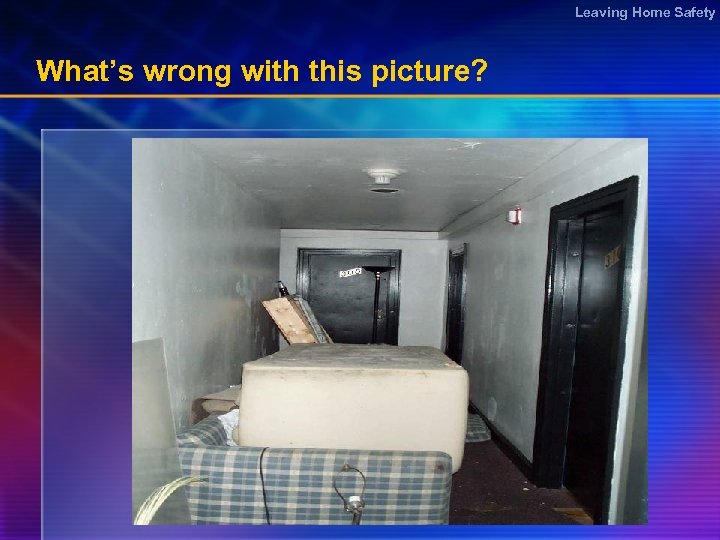 Leaving Home Safety What’s wrong with this picture?
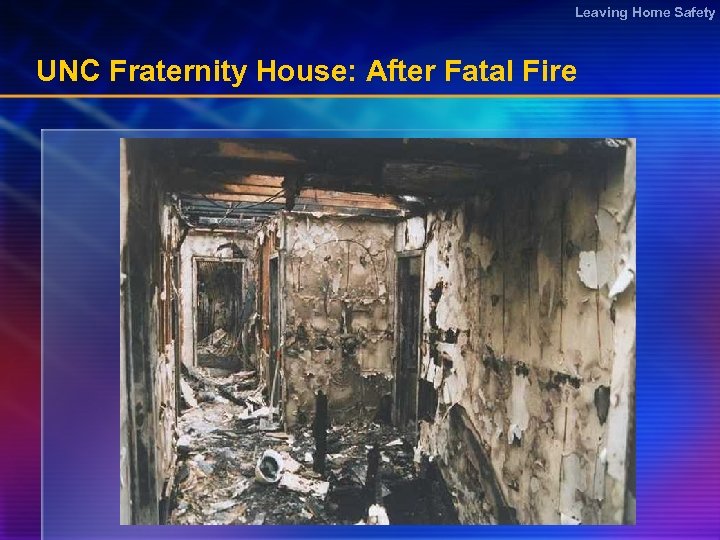 Leaving Home Safety UNC Fraternity House: After Fatal Fire
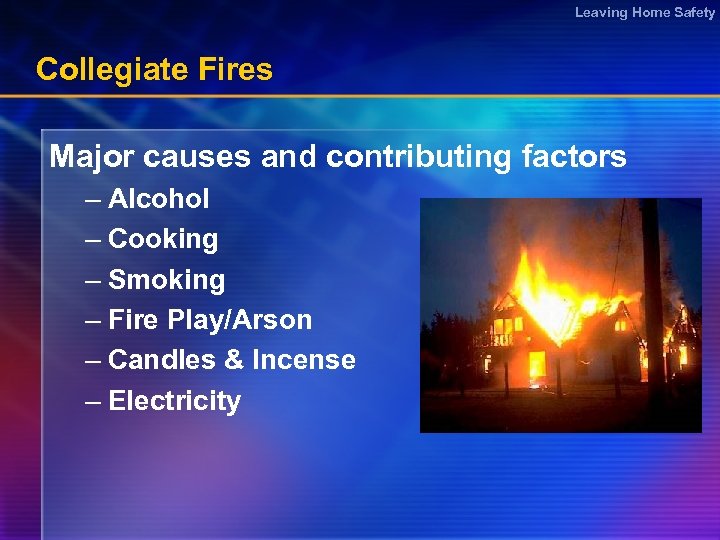 Leaving Home Safety Collegiate Fires Major causes and contributing factors – Alcohol – Cooking – Smoking – Fire Play/Arson – Candles & Incense – Electricity
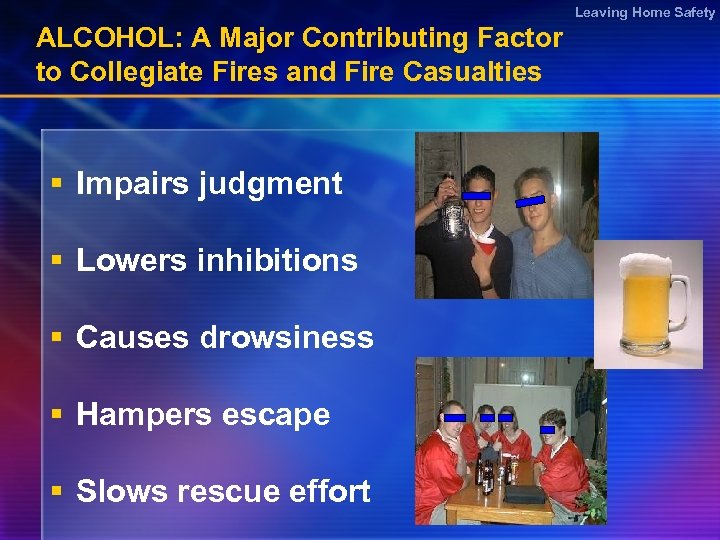 Leaving Home Safety ALCOHOL: A Major Contributing Factor to Collegiate Fires and Fire Casualties § Impairs judgment § Lowers inhibitions § Causes drowsiness § Hampers escape § Slows rescue effort
 Leaving Home Safety Alcohol and College Social Life § Recognize and avoid peer pressure § Know and observe your limits § Form alliances with others § If you’re a guest, learn the exits – If you arrived by car, designate a driver § If you’re a party host, stay sober – Check for dropped cigarettes
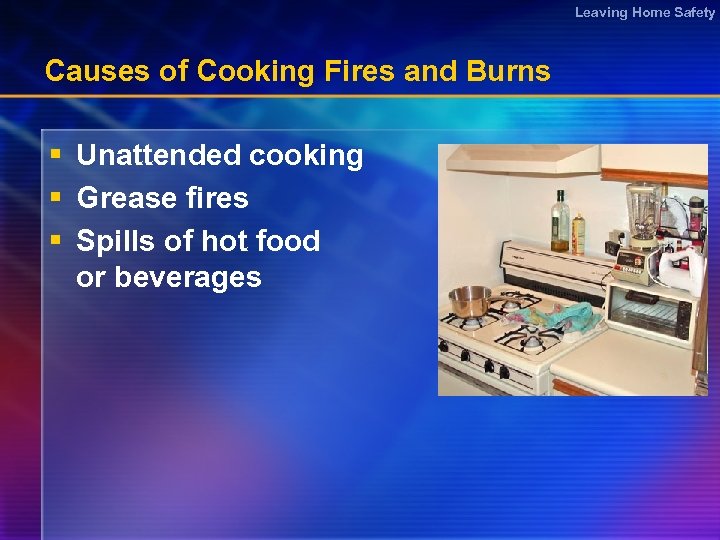 Leaving Home Safety Causes of Cooking Fires and Burns § Unattended cooking § Grease fires § Spills of hot food or beverages
 Leaving Home Safety “Stand By Your Pan!” § Stay nearby in kitchen to fry, broil or boil § Stay in the home to bake, simmer or roast Use timer as reminder to check frequently § For a grease fire, put on oven mitt and extinguish by smothering with matching pan lid, not by using a fire extinguisher § For an oven fire, turn off oven, close door and wait until oven has cooled down
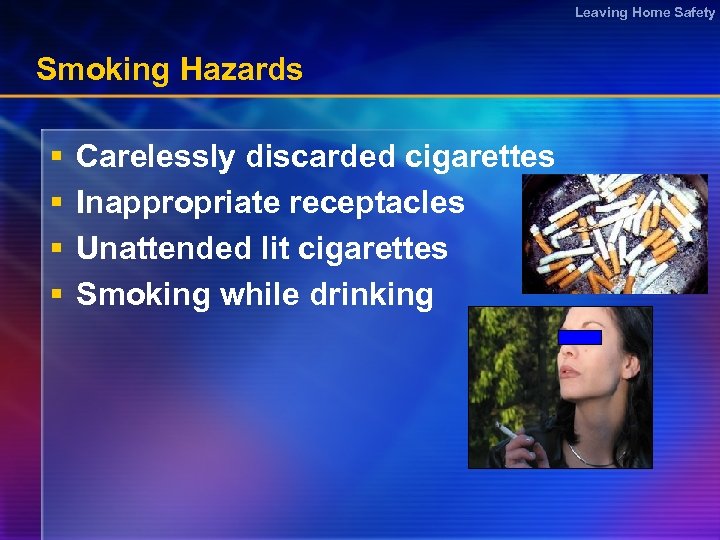 Leaving Home Safety Smoking Hazards § § Carelessly discarded cigarettes Inappropriate receptacles Unattended lit cigarettes Smoking while drinking
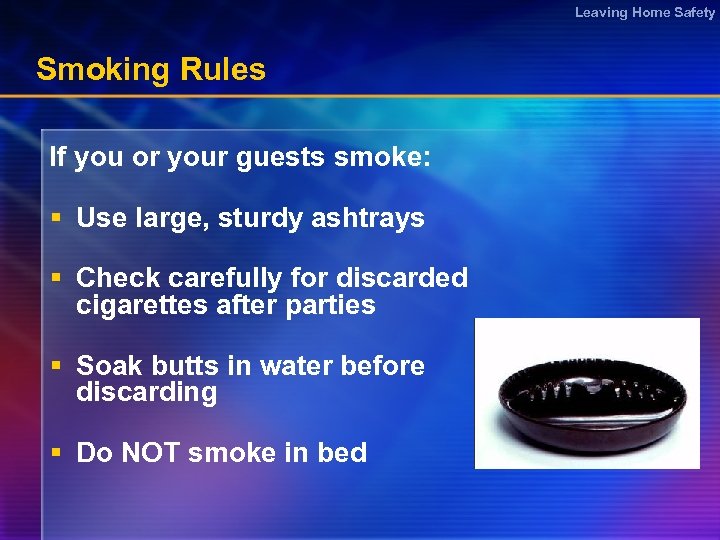 Leaving Home Safety Smoking Rules If you or your guests smoke: § Use large, sturdy ashtrays § Check carefully for discarded cigarettes after parties § Soak butts in water before discarding § Do NOT smoke in bed
 Leaving Home Safety Fire Play § May involve alcohol or drugs, poor judgment, risky behavior § Peer pressure/Imitative behavior § Uncontrolled exuberance § Prank behavior
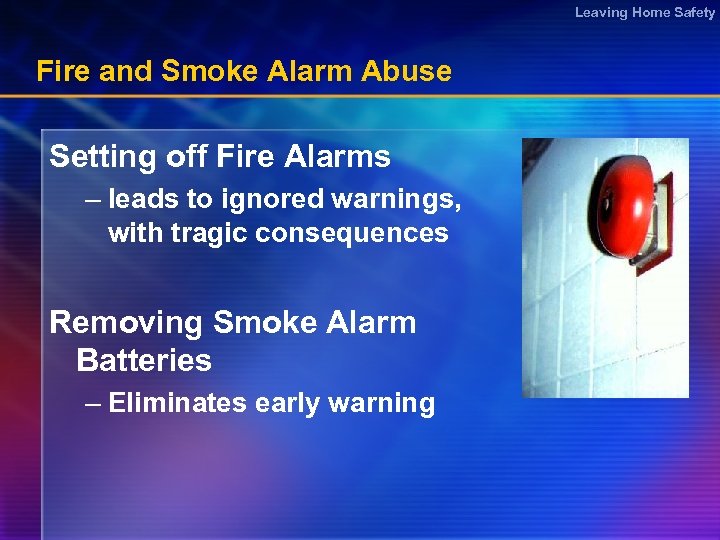 Leaving Home Safety Fire and Smoke Alarm Abuse Setting off Fire Alarms – leads to ignored warnings, with tragic consequences Removing Smoke Alarm Batteries – Eliminates early warning
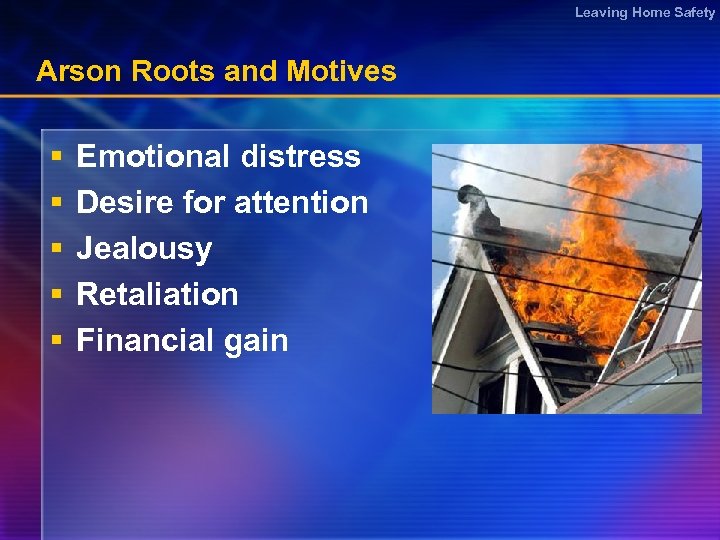 Leaving Home Safety Arson Roots and Motives § § § Emotional distress Desire for attention Jealousy Retaliation Financial gain
 Leaving Home Safety Arson: Curb the Urge! § Avoid and report risk-taking behavior involving fire § Avoid and report peer pressure to join in
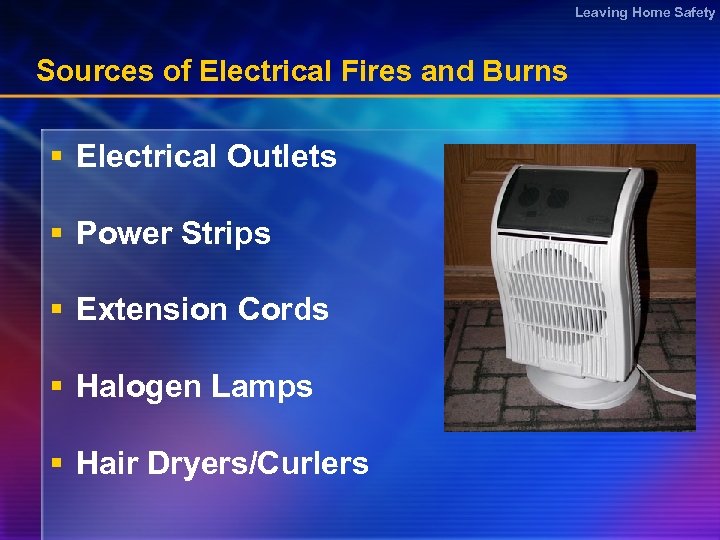 Leaving Home Safety Sources of Electrical Fires and Burns § Electrical Outlets § Power Strips § Extension Cords § Halogen Lamps § Hair Dryers/Curlers
 Leaving Home Safety Electricity-related Fire Hazards § Overloaded electrical outlets, power strips § Extension cords placed under rugs, secured with staples or nails § Clothing or towels hung on halogen lamps
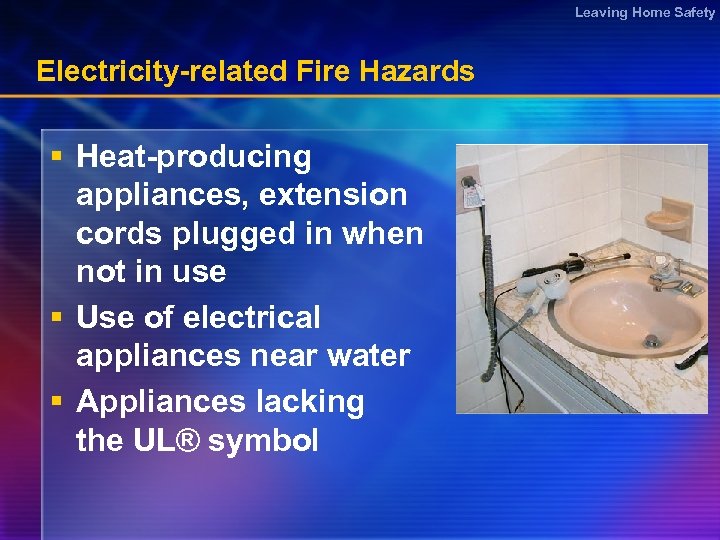 Leaving Home Safety Electricity-related Fire Hazards § Heat-producing appliances, extension cords plugged in when not in use § Use of electrical appliances near water § Appliances lacking the UL® symbol
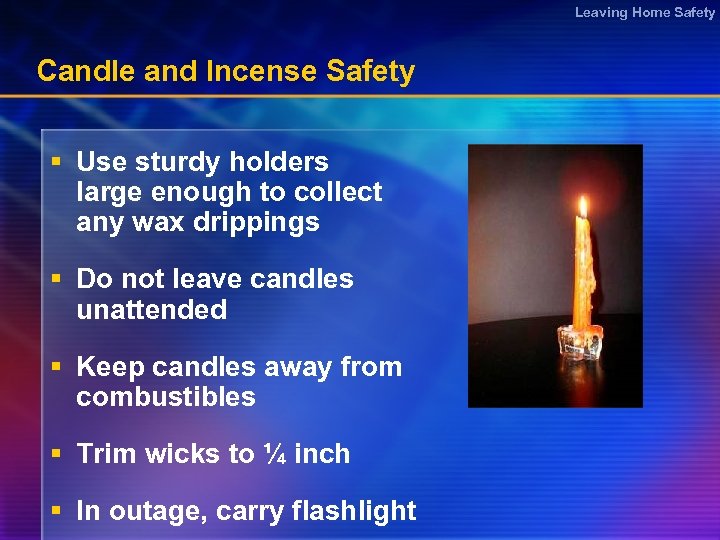 Leaving Home Safety Candle and Incense Safety § Use sturdy holders large enough to collect any wax drippings § Do not leave candles unattended § Keep candles away from combustibles § Trim wicks to ¼ inch § In outage, carry flashlight
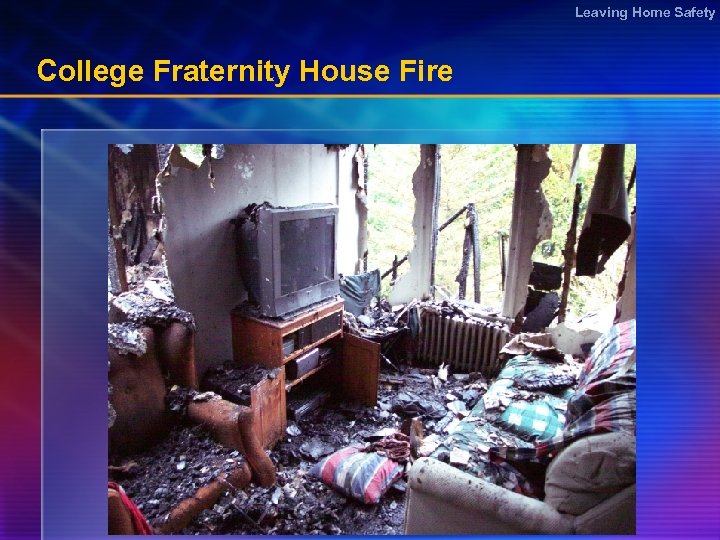 Leaving Home Safety College Fraternity House Fire
 Leaving Home Safety College Life § Freedom § Personal Responsibility – Safe choices – Protection from poor judgment by others
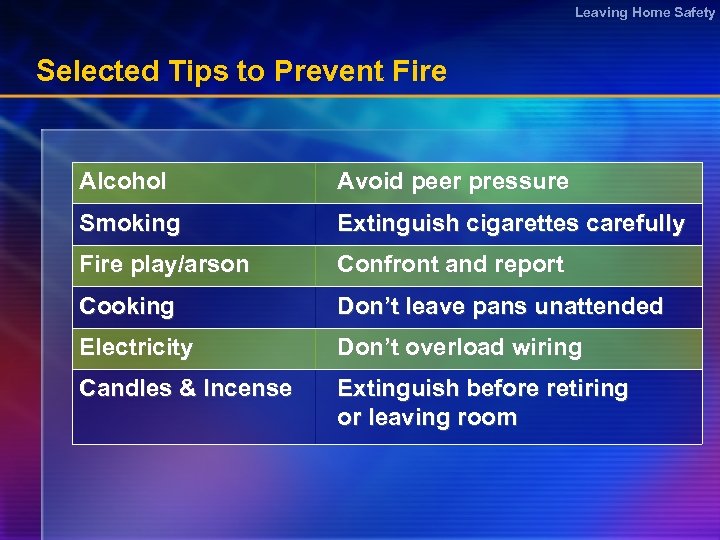 Leaving Home Safety Selected Tips to Prevent Fire Alcohol Avoid peer pressure Smoking Extinguish cigarettes carefully Fire play/arson Confront and report Cooking Don’t leave pans unattended Electricity Don’t overload wiring Candles & Incense Extinguish before retiring or leaving room
 Leaving Home Safety Tips to Be Prepared for Fire § NEVER ignore fire alarms § Know where fire exits are § Have an escape plan § Keep hallways/exits clear § Do not block hallway doors open § Maintain WORKING smoke alarms
 Leaving Home Safety Measures In Case of Fire § Stay calm § Feel all doors before opening -Don’t open if they’re hot § Close doors behind you § Take your keys § Sound alarm, alert hallmates § Get out and stay out § Leave all your other belongings behind!
 Leaving Home Safety Measures in Case of Fire § Stay low under smoke § Always use stairwells- Not elevators § After exiting, call 9 -1 -1
 Leaving Home Safety If You Are Trapped… § If all exits from the fire floor are blocked, go back to your room. § Keep door closed. § Seal cracks and vents. § Call 9 -1 -1 on cell phone or otherwise signal for help.
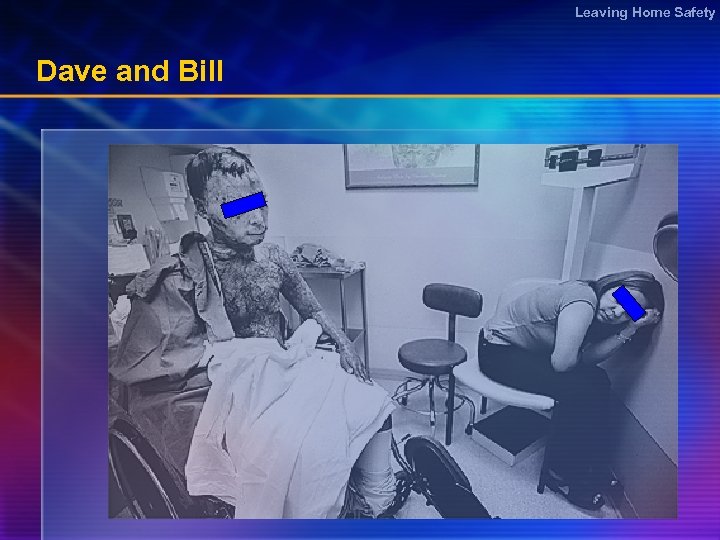 Leaving Home Safety Dave and Bill
 YOU ARE ULTIMATELY THE ONLY ONE RESPONSIBLE FOR YOUR PERSONAL SAFETY