Скачать презентацию Learning in an open world programme Update 13
053981fe7856eb243b28ee4193c1a8b7.ppt
- Количество слайдов: 17
 Learning in an open world programme Update, 13 th June 2011
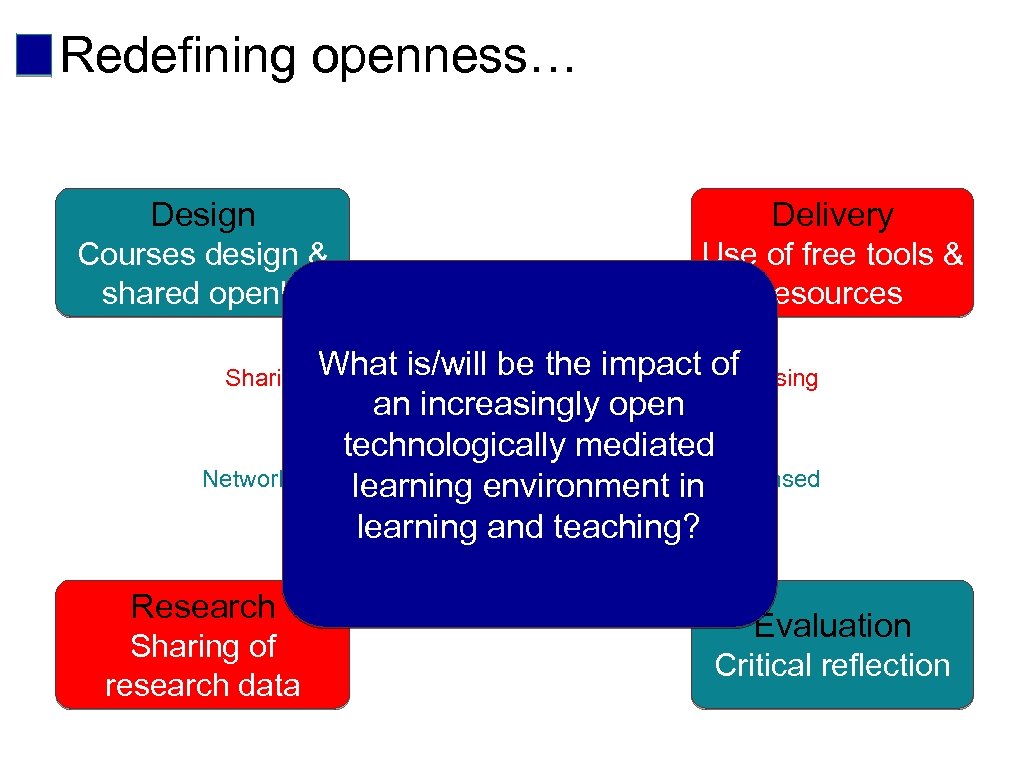 Redefining openness… Design Delivery Courses design & shared openly Use of free tools & resources Peer critiquing What is/will be the impact of Repurposing an increasingly open Open mediated technologically practices Networking learning environment Inquiry-based in learning and teaching? Sharing Research Sharing of research data Collective intelligence Evaluation Critical reflection
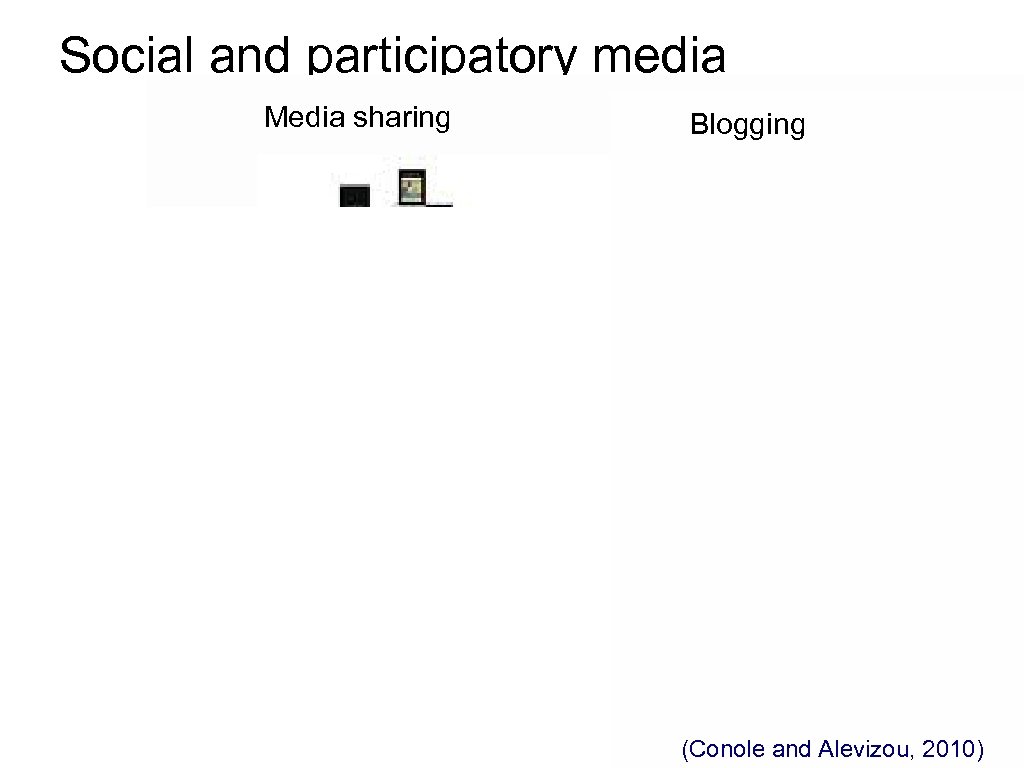 Social and participatory media Media sharing 3 Blogging Mash ups Messaging Collaborative editing Recommende r systems Social networking Virtual worlds and games Social bookmarking Syndication (Conole and Alevizou, 2010)
 • • • Projects JISC OULDI Design-Practice Olnet X-Delia OPAL Open. Ed Open. Se EU 4 ALL ISpot
 JISC OULDI • OULDI toolbox • Trials across OU and 4 other institutions • Design-Practice (Cyprus and Greece) • Learning and teaching guide
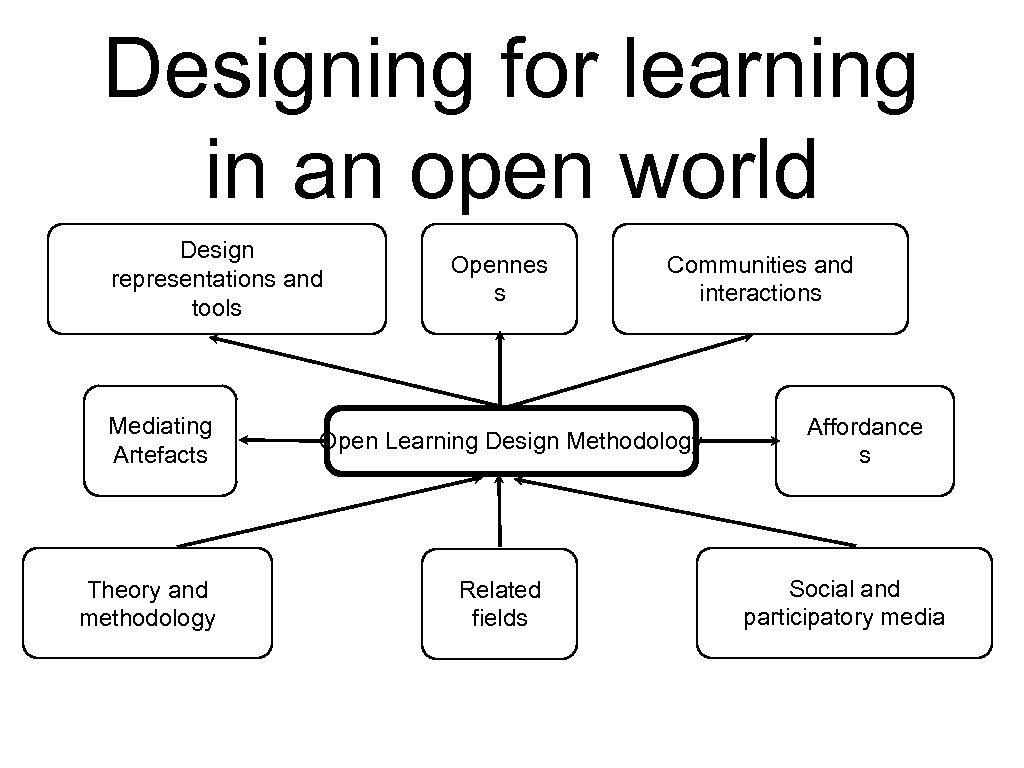 Designing for learning in an open world Design representations and tools Mediating Artefacts Theory and methodology Opennes s Communities and interactions Open Learning Design Methodology Related fields Affordance s Social and participatory media
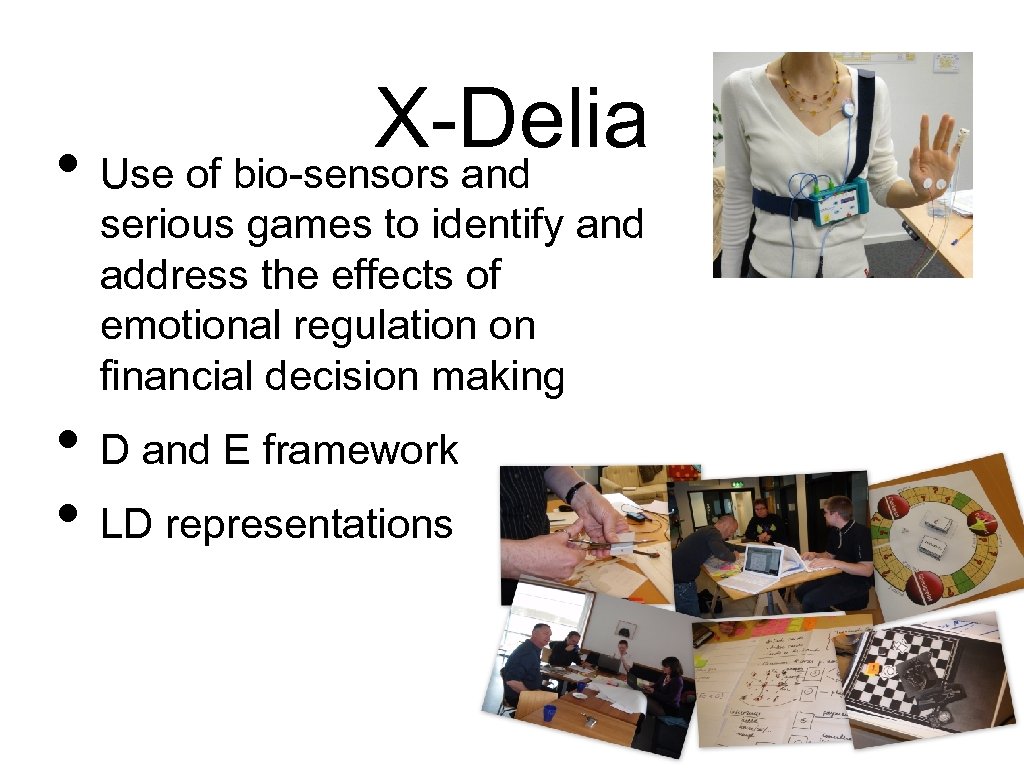 X-Delia • Use of bio-sensors and serious games to identify and address the effects of emotional regulation on financial decision making • D and E framework • LD representations 6
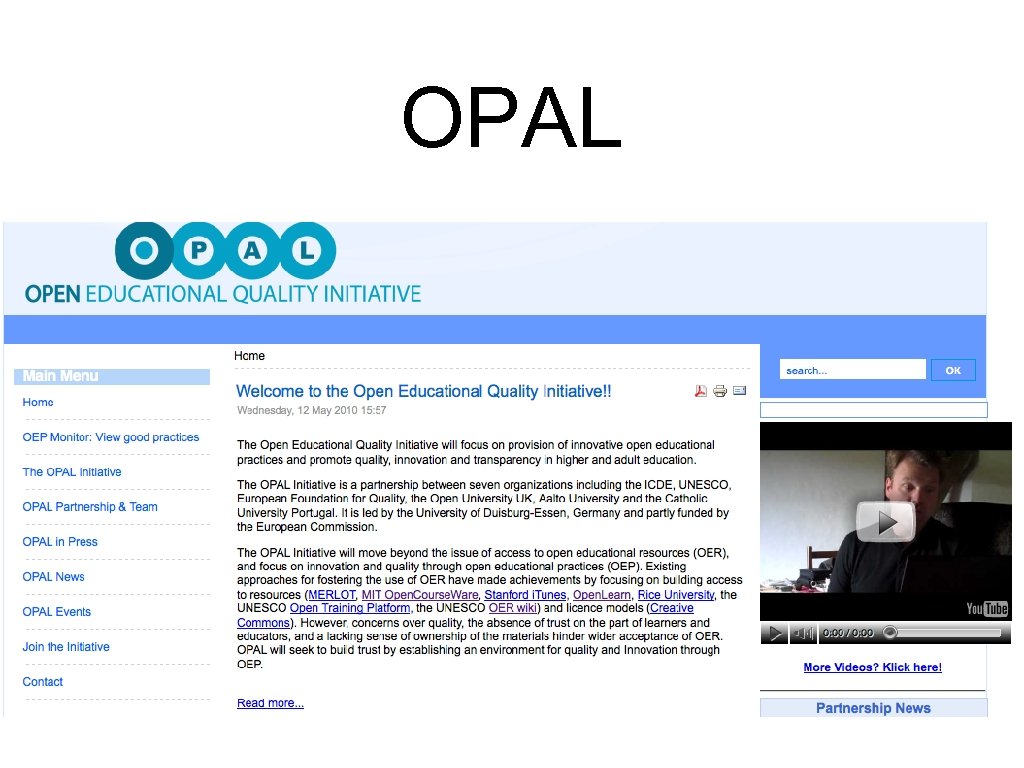 OPAL
OPAL
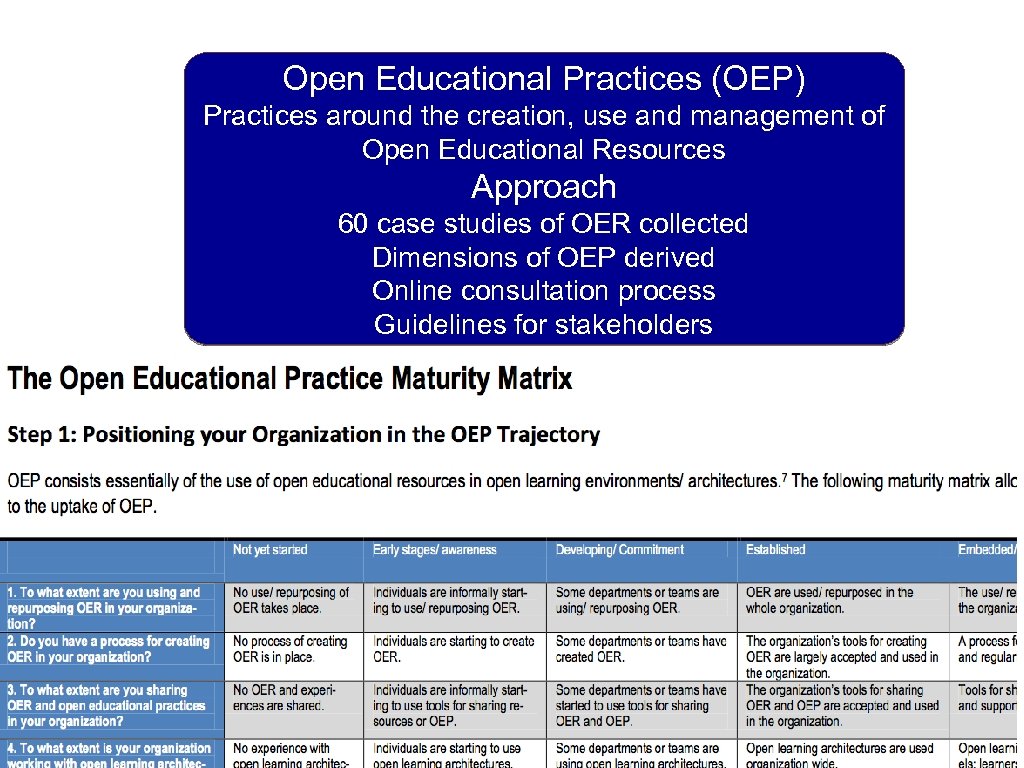 Open Educational Practices (OEP) Practices around the creation, use and management of Open Educational Resources Approach 60 case studies of OER collected Dimensions of OEP derived Online consultation process Guidelines for stakeholders
 Olnet • Vibrant fellowship programme • High visibility (papers and presentations) • Number of research projects • UNESCO study of non-english OER • Understanding of users use of OER (learners and teachers)
 EU 4 All • Accessibility awareness and planning • Link to roadmap acceleration programme • Contribution to British Standards
 Open. Se • Open Software Engineering • Design an open environment • Working with authentic projects • Trial of open course
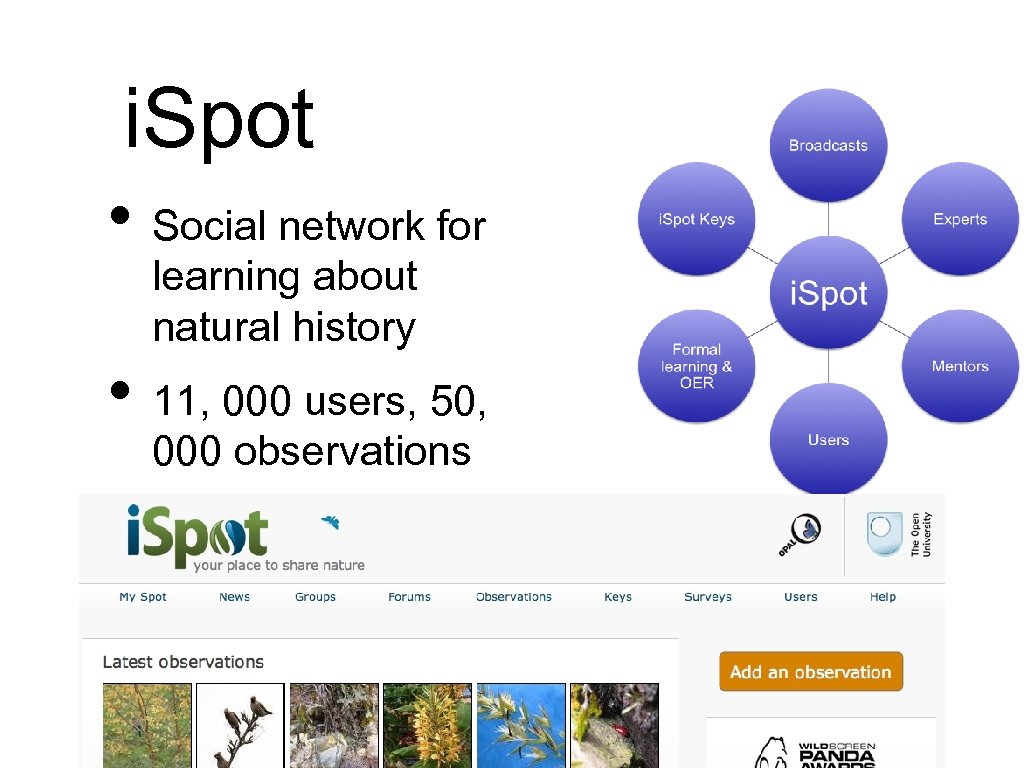 i. Spot • Social network for learning about natural history • 11, 000 users, 50, 000 observations
 Impact • Coherent programme on learning design and OER and the nature of openness • High visibility (papers and presentations) • Good track record of successful funding • Significant international collaboration
 Going forward • Consolidate current portfolio • Secure additional funding • Translate into tangible outputs • Synergies with other programmes • Transfer findings into university work