


 Скачать презентацию Learning Communities and Their Effect on Deep and
69dc24f5ff30b03873ba49e3e2ffe5af.ppt
- Количество слайдов: 47
 Learning Communities and Their Effect on Deep and Surface Approaches to Learning By Patti Dyjur
 About Me • Instructional Designer • Curriculum mapping • Worked for 9 years on course design, curriculum development, workshops, faculty development in higher education • Finished my Ph. D about a year and a half ago 2
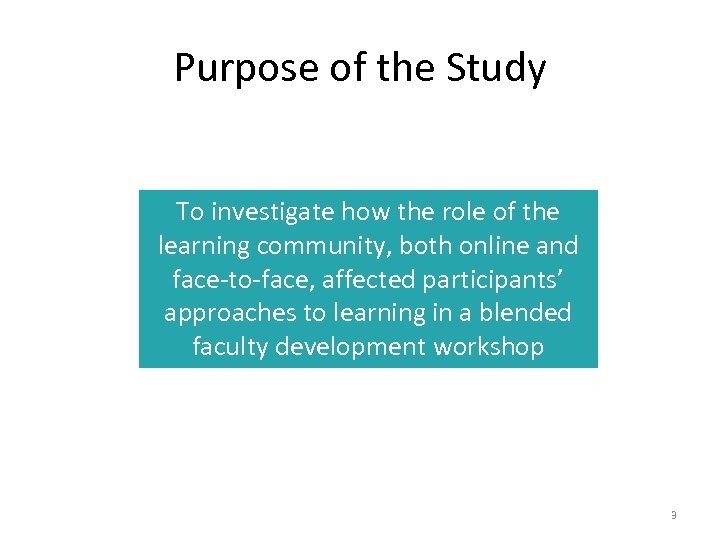 Purpose of the Study To investigate how the role of the learning community, both online and face-to-face, affected participants’ approaches to learning in a blended faculty development workshop 3
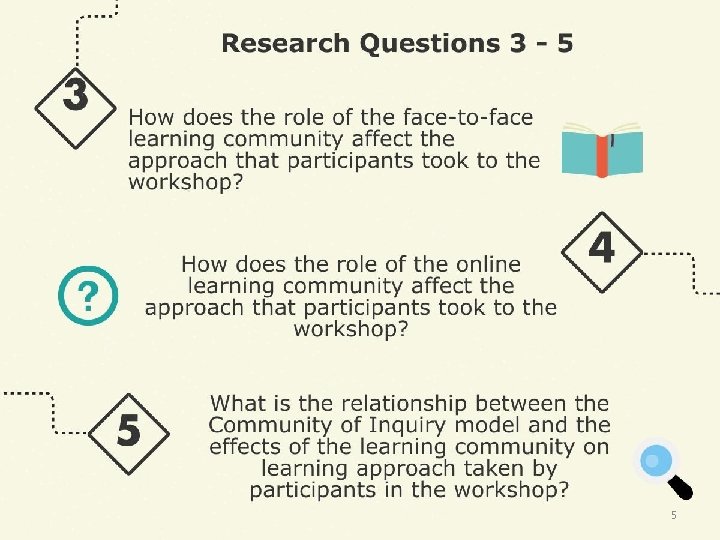
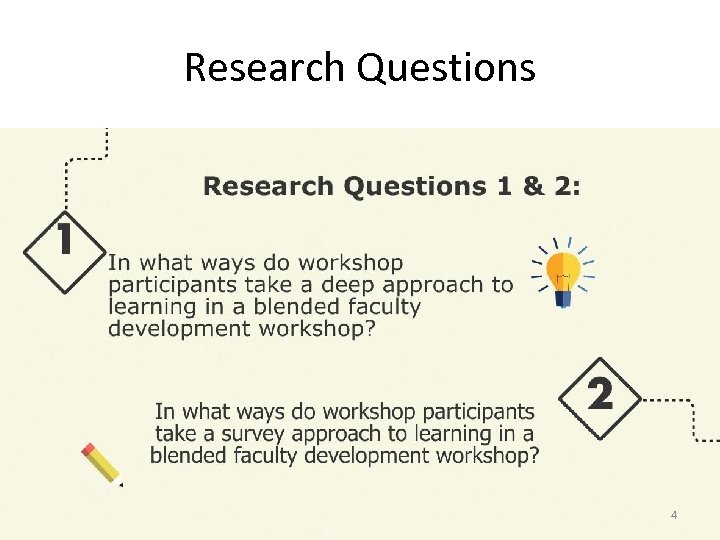 Research Questions 4
 5
5
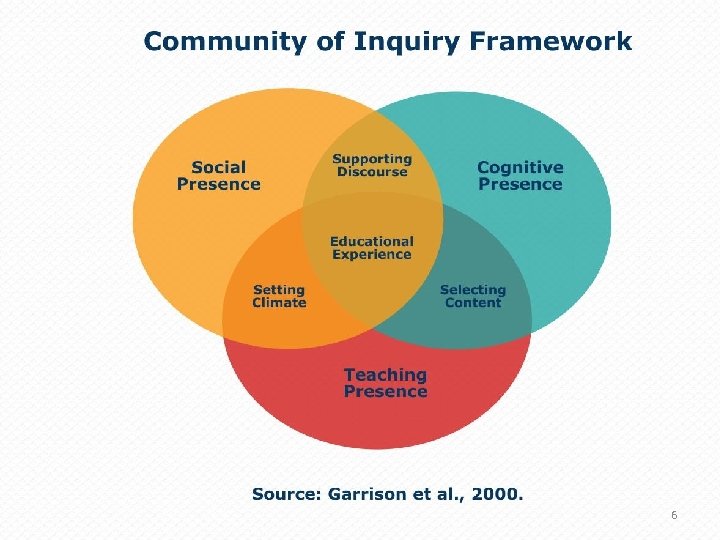 Theoretical Framework 6
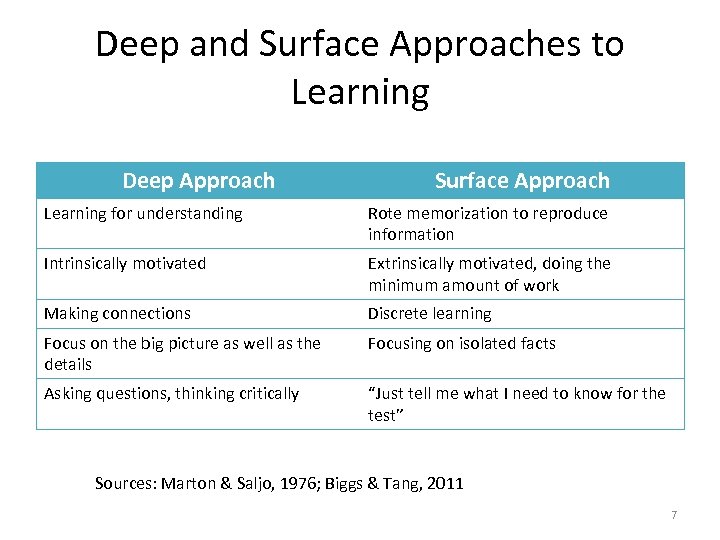 Deep and Surface Approaches to Learning Deep Approach Surface Approach Learning for understanding Rote memorization to reproduce information Intrinsically motivated Extrinsically motivated, doing the minimum amount of work Making connections Discrete learning Focus on the big picture as well as the details Focusing on isolated facts Asking questions, thinking critically “Just tell me what I need to know for the test” Sources: Marton & Saljo, 1976; Biggs & Tang, 2011 7
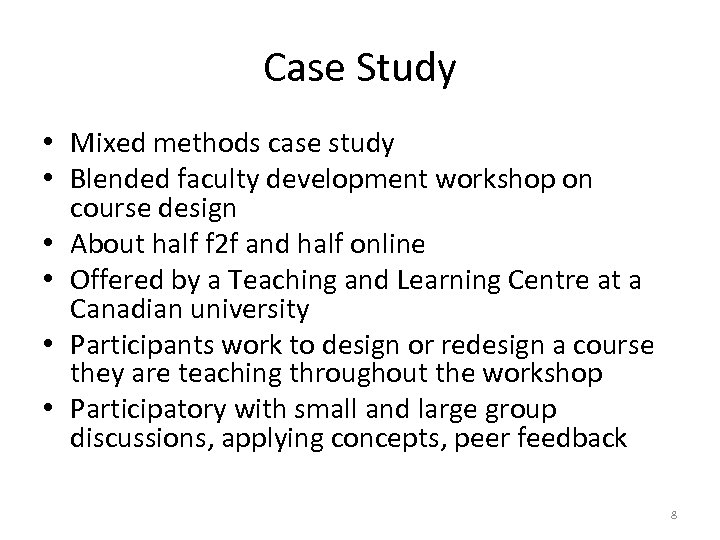 Case Study • Mixed methods case study • Blended faculty development workshop on course design • About half f 2 f and half online • Offered by a Teaching and Learning Centre at a Canadian university • Participants work to design or redesign a course they are teaching throughout the workshop • Participatory with small and large group discussions, applying concepts, peer feedback 8
 Participants • Faculty and grad students from all faculties • All had taught in higher education in the past • 34 participants in both the pre and post survey, 10 participants did both the first and second interviews 9
 Research Design • Case study approach • Mixed methods: – Surveys – Interviews – Online discussion transcripts – Observation • Methods of data analysis – Thematic coding – Community of Inquiry coding protocol (online transcripts) (Garrison, Anderson & Archer, 2000) – Descriptive statistics 10
 Findings – Research Question #1 11
 Considerable learning Longitudinal showed considerable learning over time Specific teaching and learning issues Learning theories Approaches and strategies such as large enrolment courses
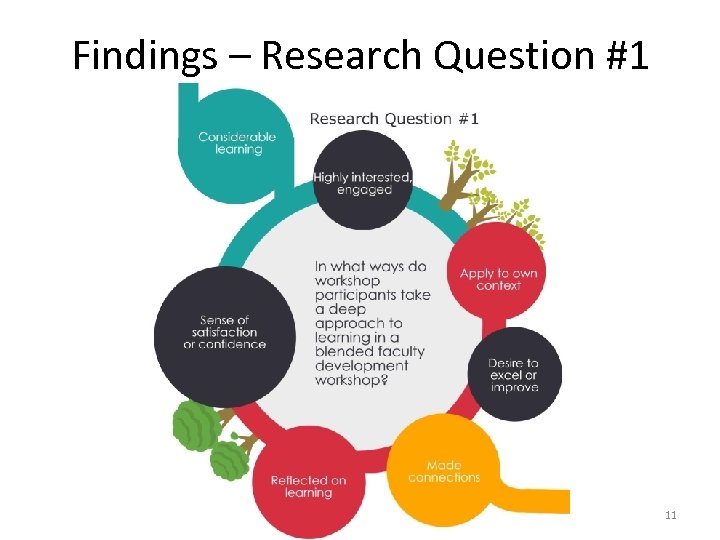
 Highly interested or engaged Demonstrated by doing further reading or activities after the workshop, such as how to implement an activity in their course, strategies to engage students, or having conversations with others 13
 Applied to own context Applied concepts and ideas from the workshop to their own practice For example, applied theories such as Bloom’s Taxonomy “Perspectives from other faculties allowed me to make connections and understand differences in my own discipline” (P 9, first interview)
 Desire to excel or improve Improve their courses Further their understanding of concepts Create a better learning experience for students Become better teachers
 Made connections Connections between new learning and prior learning Between their own course and other people’s courses Between their own discipline and other disciplines
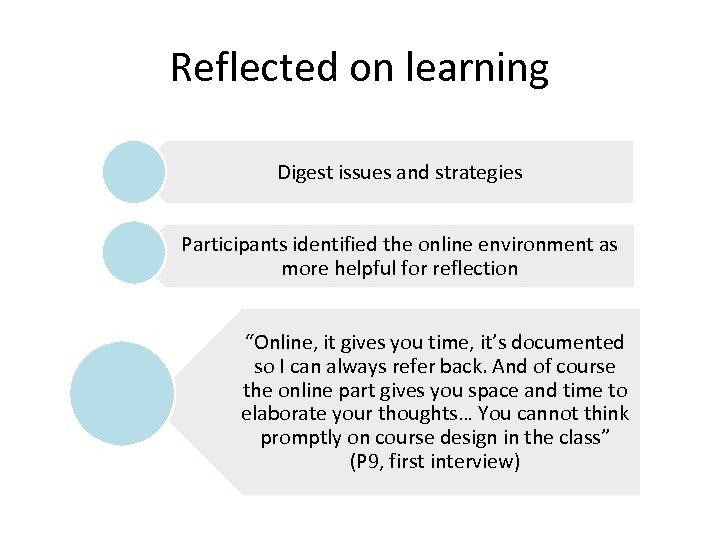 Reflected on learning Digest issues and strategies Participants identified the online environment as more helpful for reflection “Online, it gives you time, it’s documented so I can always refer back. And of course the online part gives you space and time to elaborate your thoughts… You cannot think promptly on course design in the class” (P 9, first interview)
 Sense of Satisfaction or Confidence About half of participants said they were either satisfied with what they got from the workshop, or felt more confident in their ability to design a good course 18
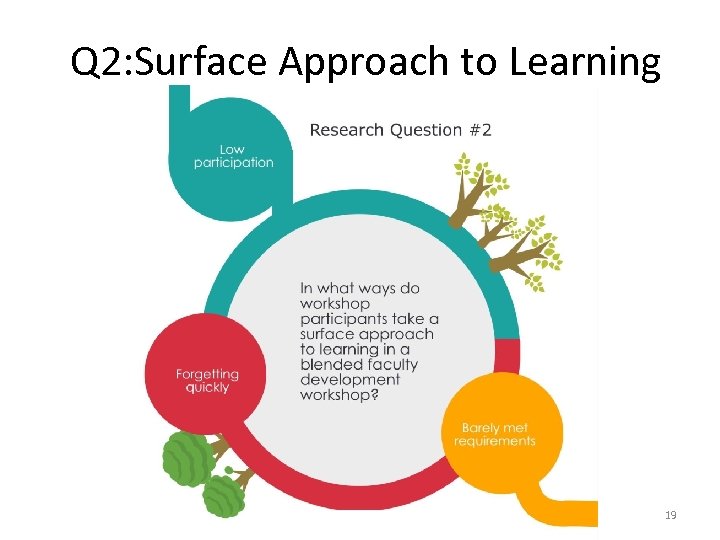 Q 2: Surface Approach to Learning 19
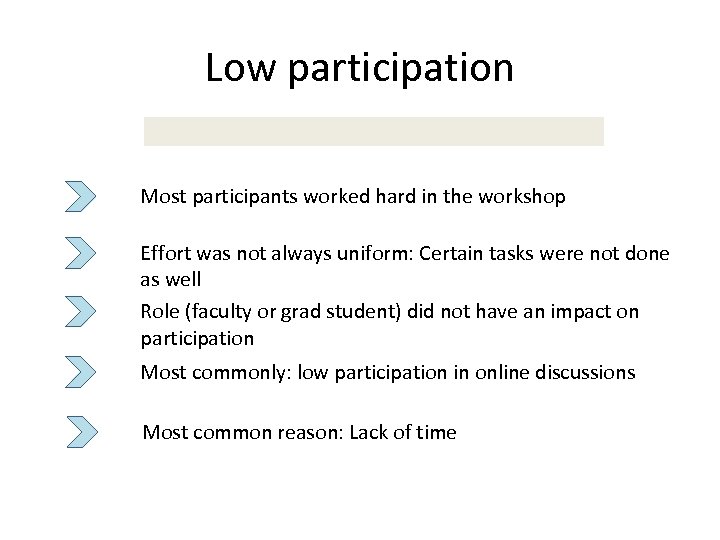 Low participation Most participants worked hard in the workshop Effort was not always uniform: Certain tasks were not done as well Role (faculty or grad student) did not have an impact on participation Most commonly: low participation in online discussions Most common reason: Lack of time
 Barely met requirements Theme emerged from documents submitted Some participants did not seem to invest much time or energy in completing course plan Some comments on the open-ended survey questions supported theme One participant noted he or she did the online discussions to receive the certificate, not out of interest
 Forgot quickly Most participants forgot some details However some could not remember essential concepts or stated they forgot many things
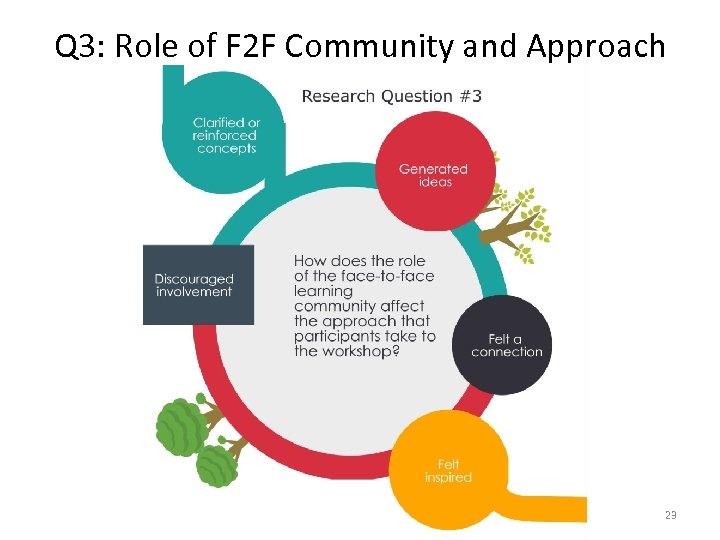 Q 3: Role of F 2 F Community and Approach 23
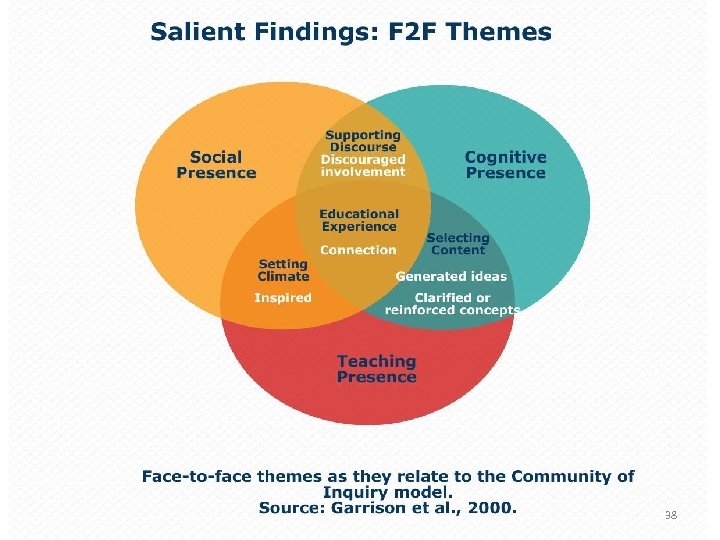
 Clarified or reinforced concepts ü Discussions helped to clarify concepts ü Looking at how other people approached tasks such as writing learning outcomes provided good examples ü Immediate clarification and feedback was helpful 24
 Generated Ideas ü Brainstorming ü Looking at other people’s examples of course design sparked their own ideas ü Diversity in disciplines was helpful – see other approaches 25
 Felt a Connection ü Most felt a sense of community in the workshop ü Felt comfortable suggesting strategies and that their ideas would be taken seriously ü Said they were treated with care and consideration ü A couple were surprised that they felt a connection with people from other disciplines 26
 Felt Inspired ü Community inspired them to do good work ü Creativity and innovation they saw in others was inspiring ü Reassured by positive comments from peers 27
 Surface: Discouraged Involvement Ø Two survey participants and one interview participant stated that in-class discussions were sometimes dominated by certain individuals, making it hard for everyone to contribute to discussions. Ø Resulted in lower participation, aligned with a surface approach 28
 Surface: Discouraged Involvement “At some points some participants were too loud. Even before the instructors were done they began talking. Almost taking over the whole thing. It was almost like the other voices were being drowned out. You know, we also have stuff to say and it’s not all about your discipline. . . I just feel like, oh come on, can you just let other people speak” (P 41, first interview) 29
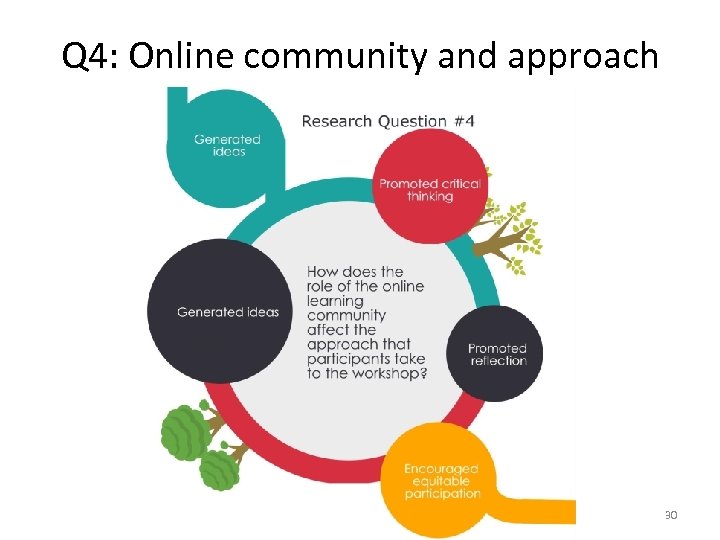 Q 4: Online community and approach 30
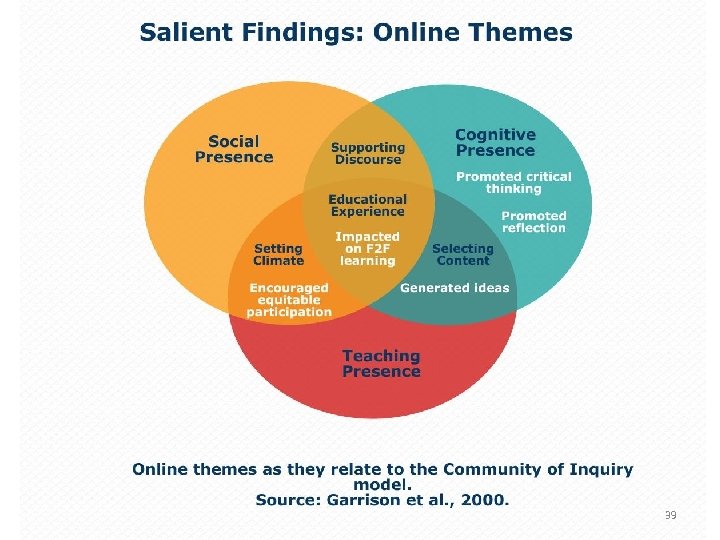
 Generated Ideas Gain strategies for course design Online allowed them to examine people’s ideas and examples in more depth Compare multiple approaches, whereas in f 2 f discussions held in small groups they always missed some of the discussion
 Promoted Critical Thinking Greater time to think through facets of a course More time to consider feedback from peers Comments could be accessed multiple times; more permanent than f 2 f discussions Wanted to give quality feedback to others, therefore put a lot of efforts into written discussion Some did research or further thinking before posting
 Promoted Reflection Participants took time to read through comments and feedback Compared their course design to that of others Some stated they got more feedback, and more thorough feedback, online
 Encouraged Equitable Participation Equal opportunity to participate, unlike f 2 f discussions “The online discussion board helped to even things out a bit because… there’s only so much you can say in writing, right? The online discussion diffuses the tension that builds up in class. It’s harder in writing to be overbearing, but in class I think that’s what it is” (P 41, first interview)
 Impacted on F 2 F Learning Promoted completion of work: Everyone can see if you completed the homework or not Foster richer in-class discussions: Kept up up the momentum with discussions started in class and uncovered new topics for discussion
 No surface themes: Online learning community • Why? Any thoughts? 36
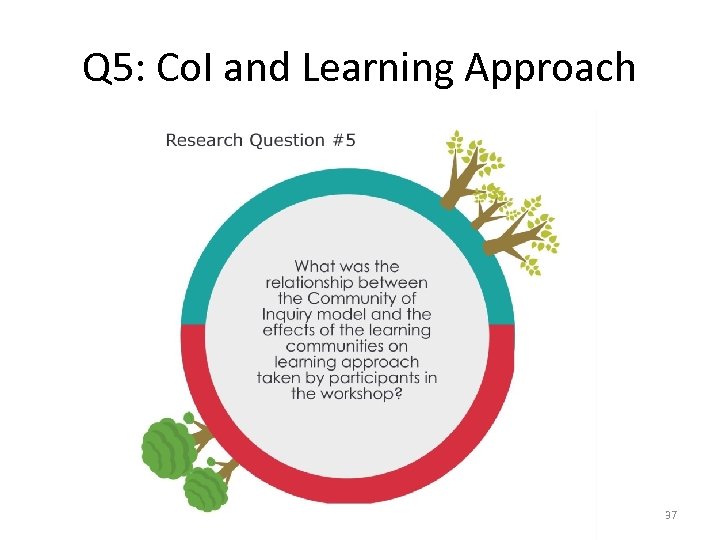 Q 5: Co. I and Learning Approach 37
 38
38
 39
39
 40
40
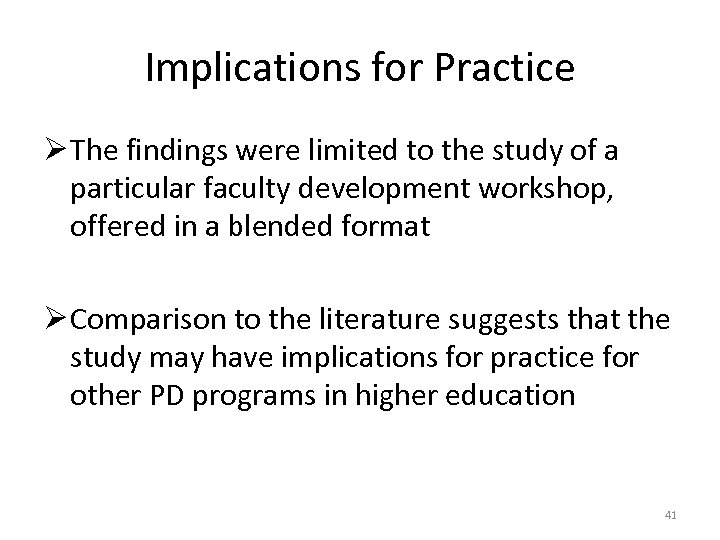 Implications for Practice Ø The findings were limited to the study of a particular faculty development workshop, offered in a blended format Ø Comparison to the literature suggests that the study may have implications for practice for other PD programs in higher education 41
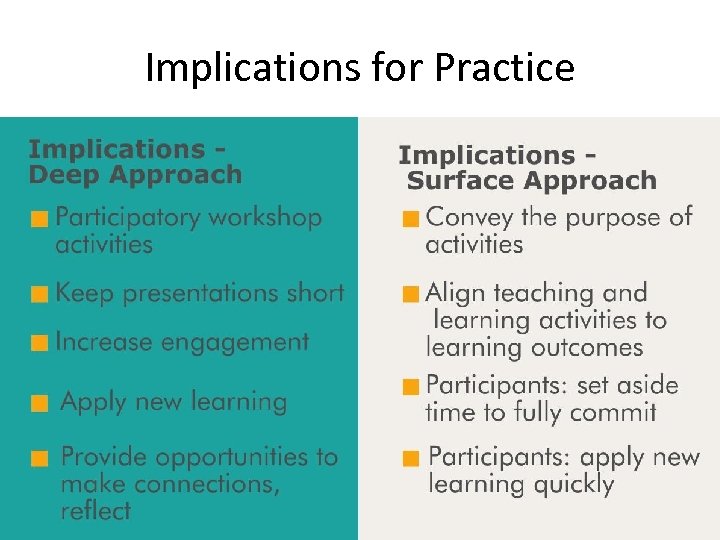 Implications for Practice 42
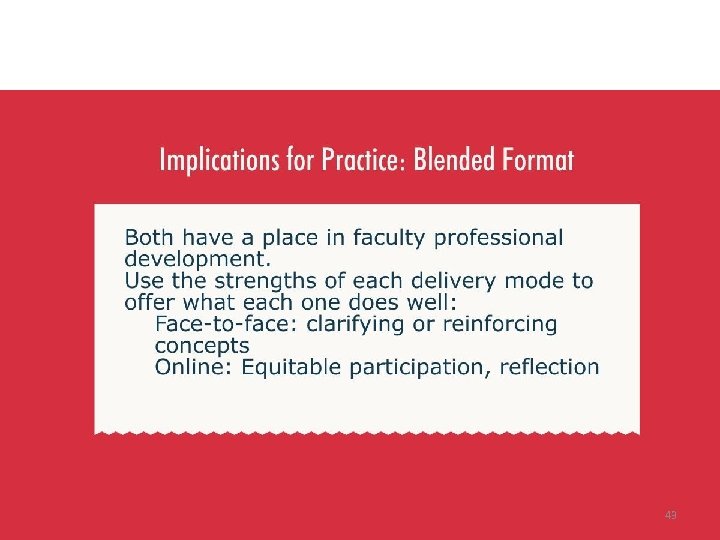 43
43
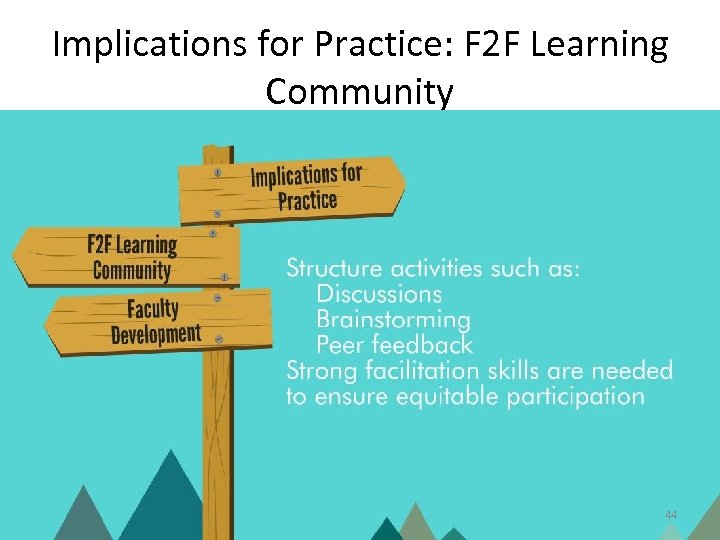 Implications for Practice: F 2 F Learning Community 44
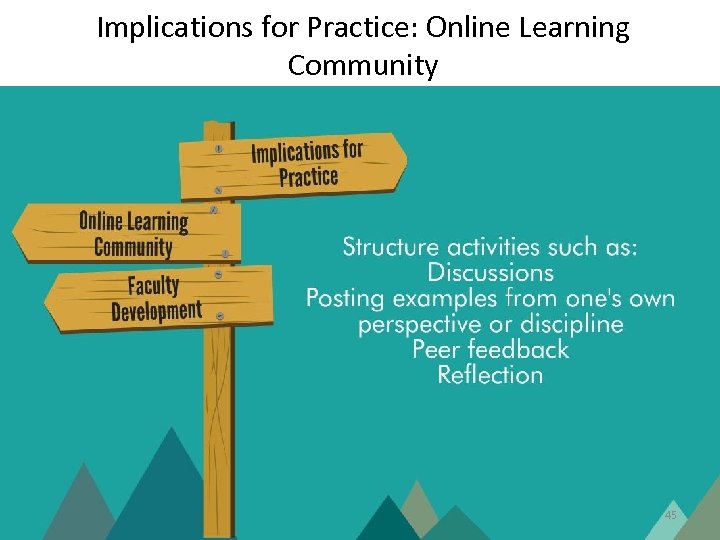 Implications for Practice: Online Learning Community 45
 46
46
 References Biggs, J, & Tang, C. (2011). Teaching for quality learning at university (4 th ed. ). Maidenhead: Society for Research into Higher Education & Open University Press. Garrison, D. R. , Anderson, T. , & Archer, W. (2000). Critical inquiry in a text-based environment: Computer conferencing in higher education. The Internet and Higher Education, 2(2 -3), 87 -105. Marton, F. , & Saljo, R. (1976 a). On qualitative differences in learning: I – outcome and process. British Journal of Educational Psychology, 46(1), 4 – 11. doi: 10. 1111/j. 2044 -8279. 1976. tb 02980. x 47