


 Скачать презентацию Leading Managing within a Digital Environment Presented
08091848a7073bcf7a0e7ca7c69ad3c0.ppt
- Количество слайдов: 69
 Leading & Managing within a Digital Environment Presented by Ina Smith Best Practices in Leading and Managing Exceptional Libraries & Information Centres, 4 December 2008, Sandton, South Africa
 Agenda Background • Strategic plan of the University of Pretoria • Role of the Library • Client Needs & Web 2. 0 Phenomenon • Library E-Strategy & sub-strategies • E-Service Unit • E-Products Managing within a digital environment • Digital Libraries • Institutional Repositories & Managing Institutional Repositories • Conclusion
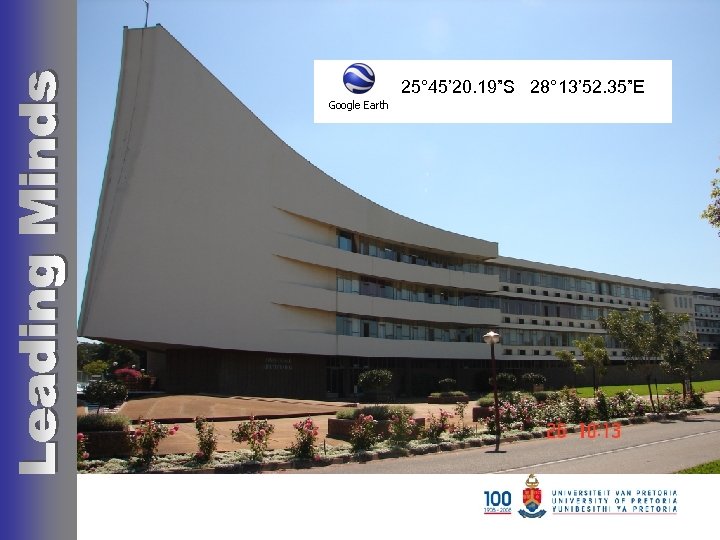 25° 45’ 20. 19”S 28° 13’ 52. 35”E
 University of Pretoria - Mission “The mission of the University of Pretoria is to be an internationally recognised South African teaching and research university and a member of the international community of scholarly institutions that promotes scholarship through the creation, advancement, application, transmission and preservation of knowledge …” Source: Strategic Plan of the University of Pretoria 2007 -2011
 University of Pretoria - Objective • Providing academics with the highest levels of support for their teaching and research activities • Ensuring that the University’s library and information services can give academics access to the information they need • Providing facilities that create a conducive and stimulating environment for scholarship Source: Strategic Plan of the University of Pretoria 2007 -2011
 Role of the Library Services “New technologies (e. g. Institutional Repositories) have made it possible to access academic information here and abroad more efficiently than in the past. We believe it to be essential that the opportunities afforded us by these developments should be fully exploited. We intend ensuring that this is the case. ” Source: Strategic Plan of the University of Pretoria 2007 -2011
 Mandate given to the Library “The Library Services is responsible for the management of academic information and knowledge, and for leading the University in information and knowledge innovation. ” Source: Pienaar 2008
 Client Needs (Net Generation) “The most common disconnect between many of today’s academic libraries and Net Gen students is students’ dependence on or similar search engines for discovery of information resources rather than consultation of library Web pages, catalogues, and databases as the main source of access. ” Source: http: //www. educause. edu/apps/er/erm 0523. asp
 Client Needs (Net Generation) (Cont. ) • “We use wiki’s, blogs and podcasts as a way to share info between lecturers and students, and fellow students. ” • “We want to be challenged and want to have access to technologies that will contribute towards creative solutions for research problems. ” • Cell phones, always-on, multi-tasking, expectation of fast delivery, self-service info, believe it’s all on the web, gaming, virtual realities, high transparency (Facebook, My. Space), online photo sharing, less TV more online news and blogs
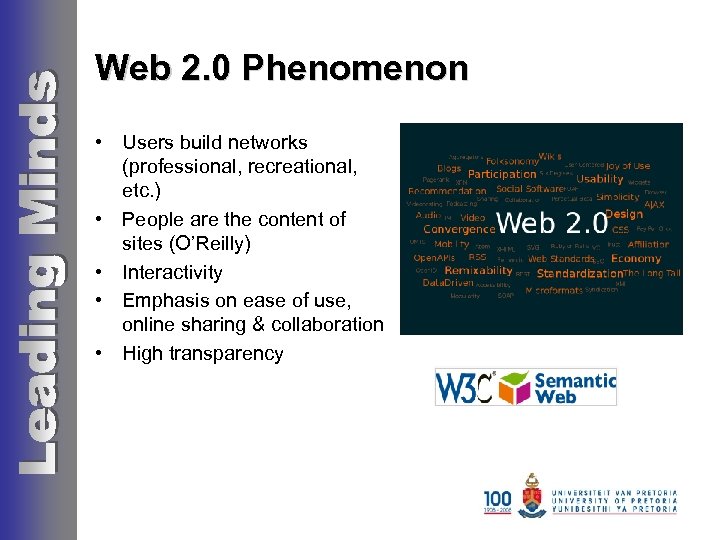 Web 2. 0 Phenomenon • Users build networks (professional, recreational, etc. ) • People are the content of sites (O’Reilly) • Interactivity • Emphasis on ease of use, online sharing & collaboration • High transparency
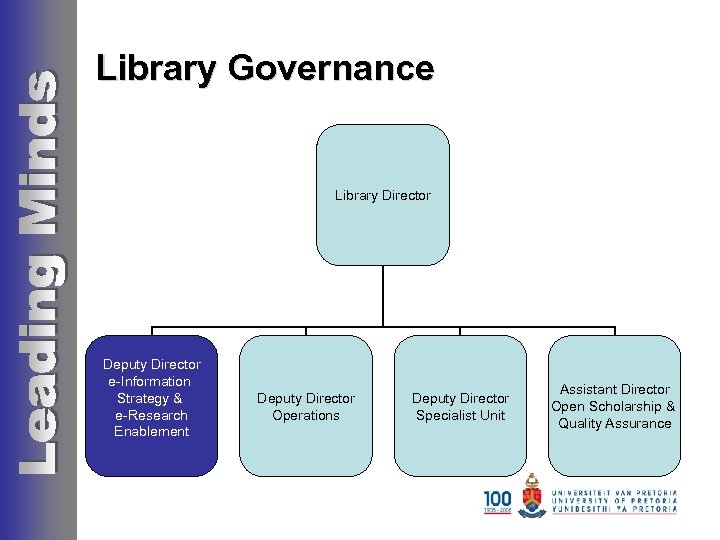 Library Governance Library Director Deputy Director e-Information Strategy & e-Research Enablement Deputy Director Operations Deputy Director Specialist Unit Assistant Director Open Scholarship & Quality Assurance
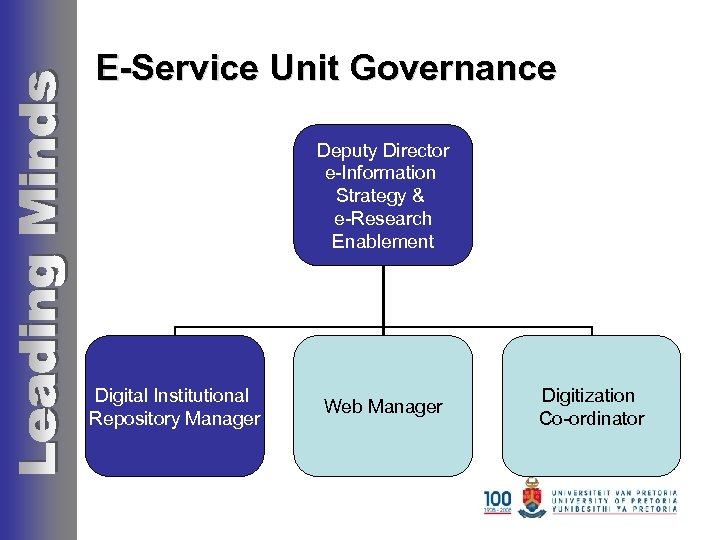 E-Service Unit Governance Deputy Director e-Information Strategy & e-Research Enablement Digital Institutional Repository Manager Web Manager Digitization Co-ordinator
 Library E-Strategy The aim of this strategy is the creation of an integrated seamless e. Service for the University of Pretoria Objectives • To take part in and make a contribution to international and national e -information phenomena, e. g. open access, digital preservation, e. Science, content management Key sub strategies in order to meet these objectives • The e-information environment sub-strategy consists of the following projects: integrated systems, integrated interface, academic tools, digital reference, ICT infrastructure, e-sources, e-dissertations, academic digital repositories, e-publication and digital preservation Source: Pienaar 2008
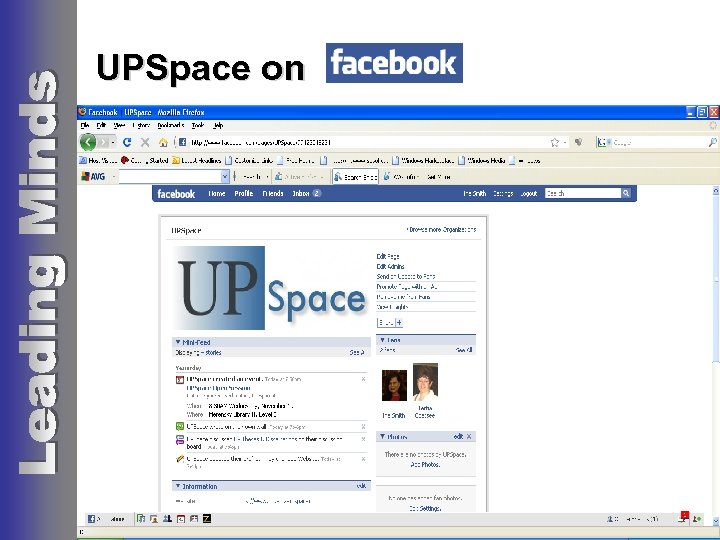
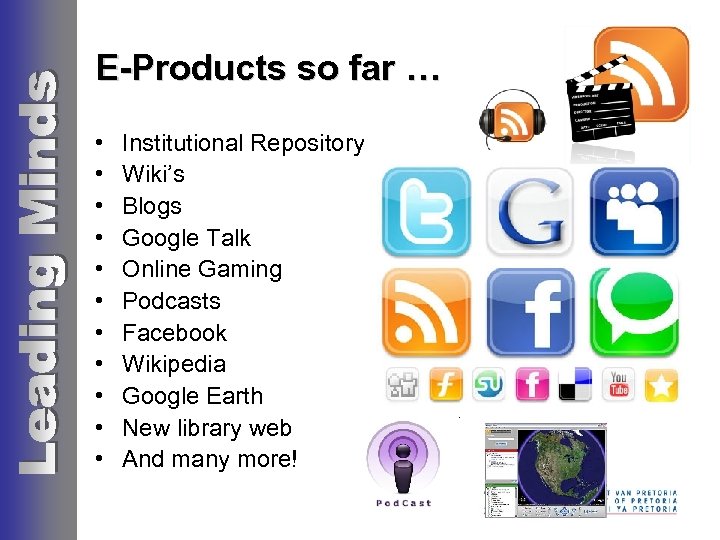 E-Products so far … • • • Institutional Repository Wiki’s Blogs Google Talk Online Gaming Podcasts Facebook Wikipedia Google Earth New library web And many more!
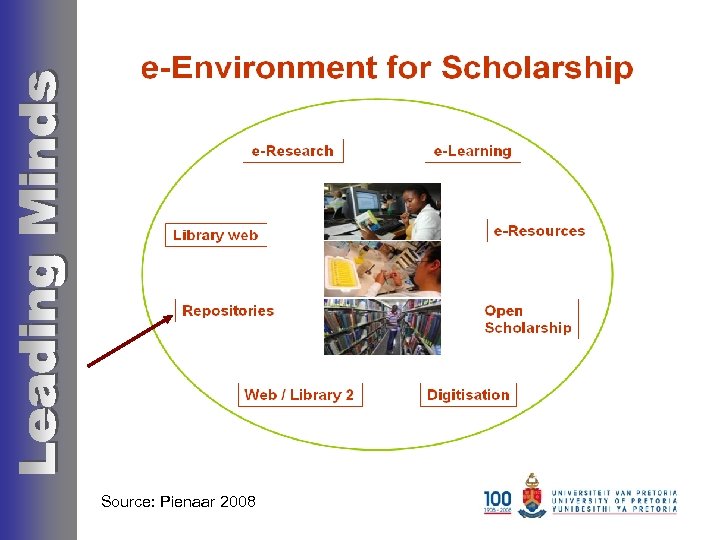 Source: Pienaar 2008
 Roles & Responsibilities of Steering Committees • Chairs are responsible for the establishment of their steering committees • Steering committees are responsible for their own strategic & implementation plans • Steering committees to co-ordinate with one another • Steering committees to discuss progress etc with the e-Service steering committee on a regular basis • Steering committees are responsible for good communication and interfaces between line and project perspectives • Each committee responsible for own marketing Source: Pienaar 2008
 Leading & Managing a Digital Institutional Repository From the perspective of an Institutional Repository Manager
 What is an Institutional Repository? “An institutional repository is a set of services that an institution offers to the members of its community for the management and dissemination of digital materials created by the institution and its community members. It is most essentially an organizational commitment to the stewardship of these digital materials, including long-term preservation where appropriate, as well as organization and access or distribution. ” Clifford A. Lynch, "Institutional Repositories: Essential Infrastructure for Scholarship in the Digital Age" ARL, no. 226 (February 2003): 1 -7.
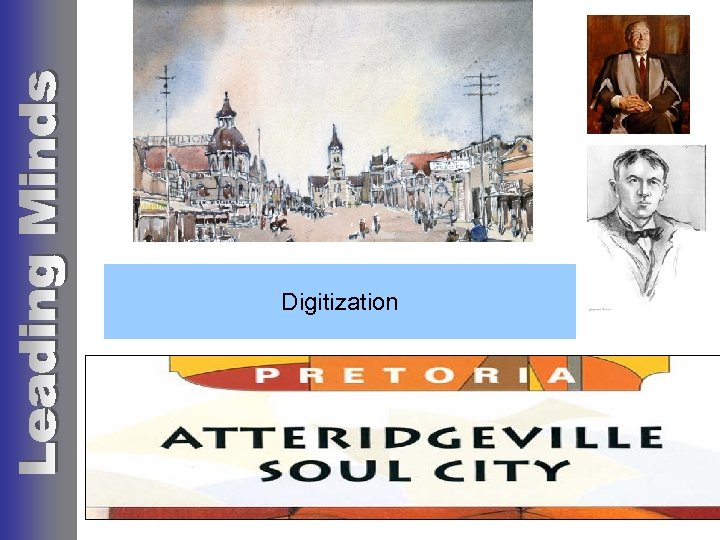
 What is a Digital Library? • Managed collection of digital objects • Digital objects are created/ collected according to the principles of collection development • Digital objects are made available in a cohesive manner, supported by [digital] services necessary to allow users to retrieve, exploit the resources just as they would any other library materials • Digital objects are treated as long term, stable resources and appropriate processes are applied to them to ensure their quality & survivability (Deegan & Tanner 2002, p. 22) • Digital Library of Congress
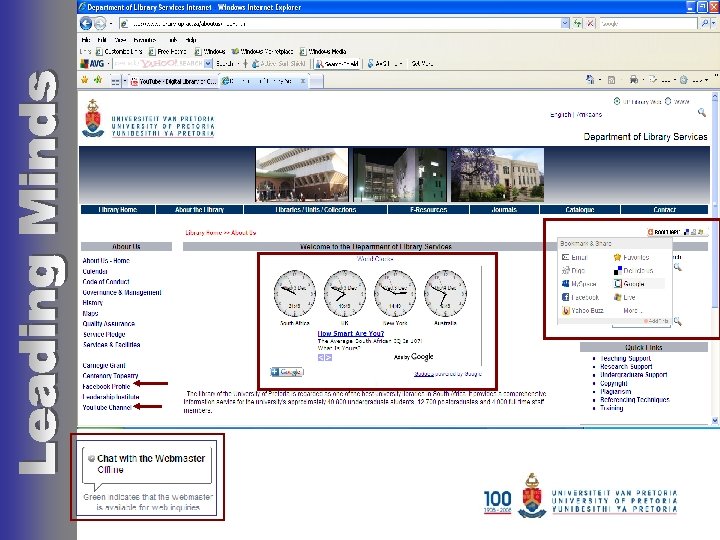
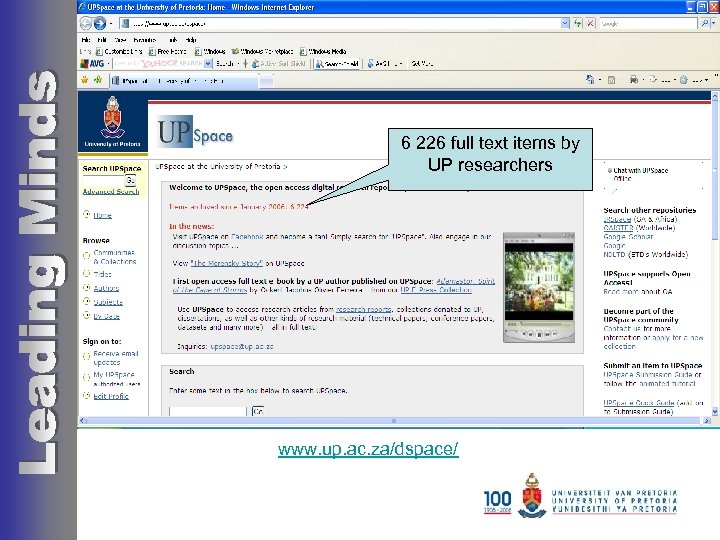 6 226 full text items by UP researchers www. up. ac. za/dspace/
 Ways to use Institutional Repositories • • Scholarly communication Electronic publishing Managing collections of research documents Preserving digital materials for the long term Housing digitized collections Knowledge management Encouraging open access to scholarly research Adding to the university’s prestige by showcasing its academic research
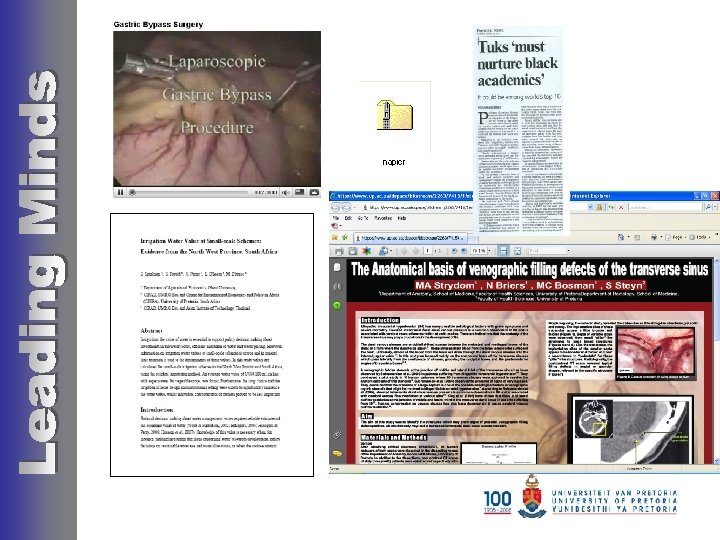
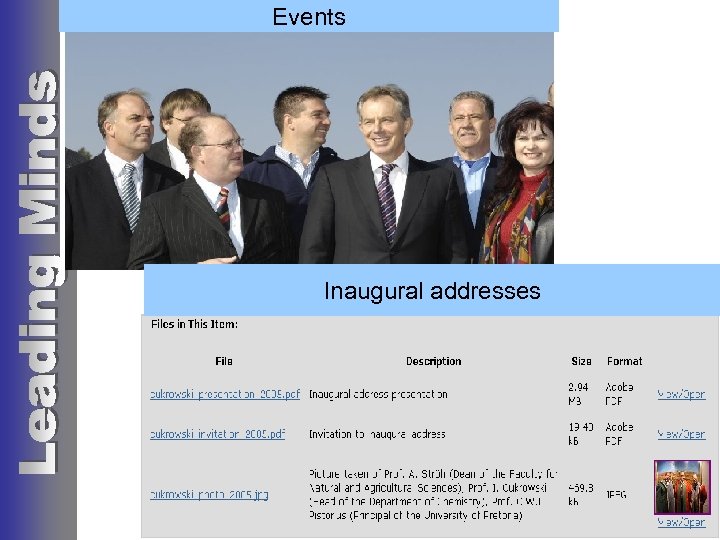
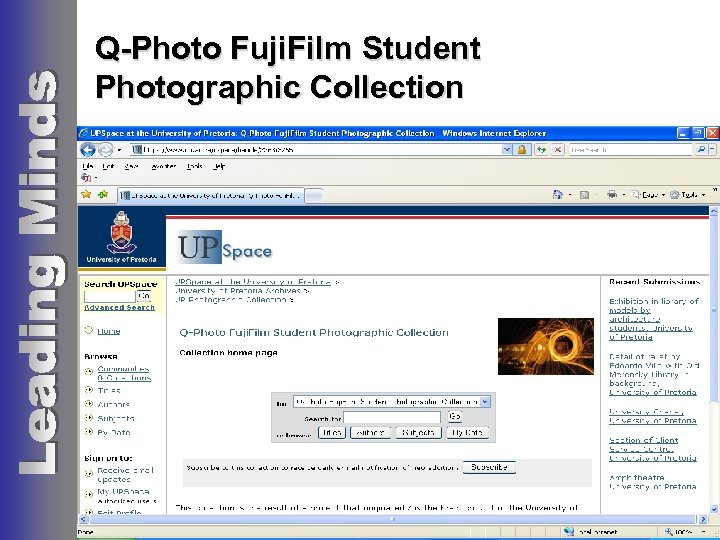
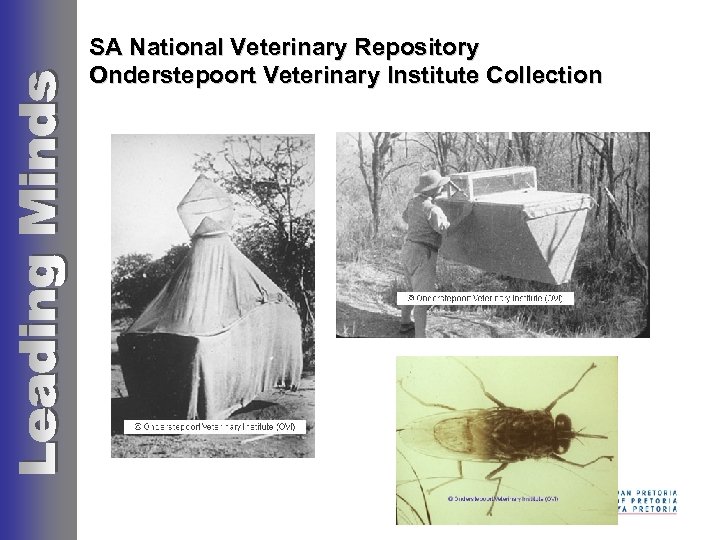
 Types of Material • • • • Research (scholarly) articles (published peer-reviewed & pre-prints) Open lectures Conference papers & proceedings Image collections Audio and audio-visual material Digitized special collections which contain very unique material Technical reports Inaugural addresses Mini-dissertations (Theses & Dissertations – currently on UPe. TD) Data sets Newspaper clippings Web pages, e-mails E-Journals & E-Books And many more. . .
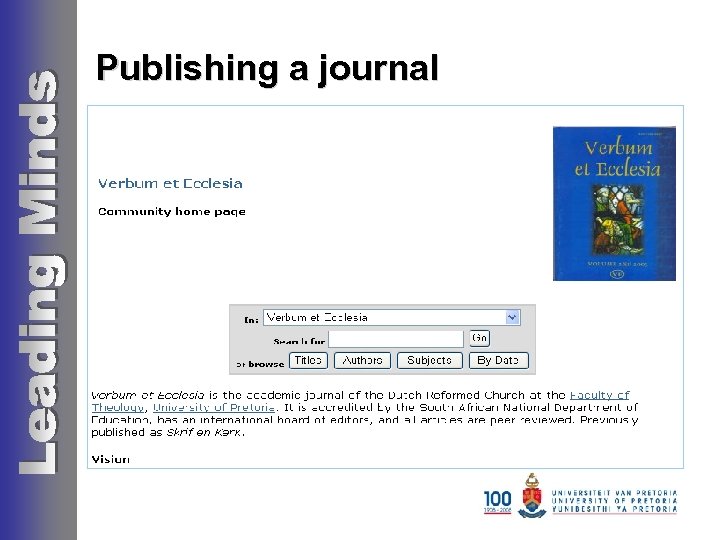 Publishing a journal
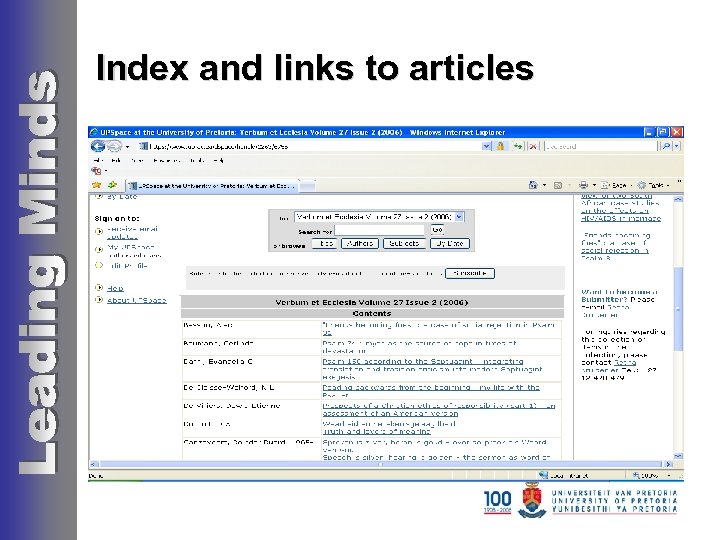 Index and links to articles
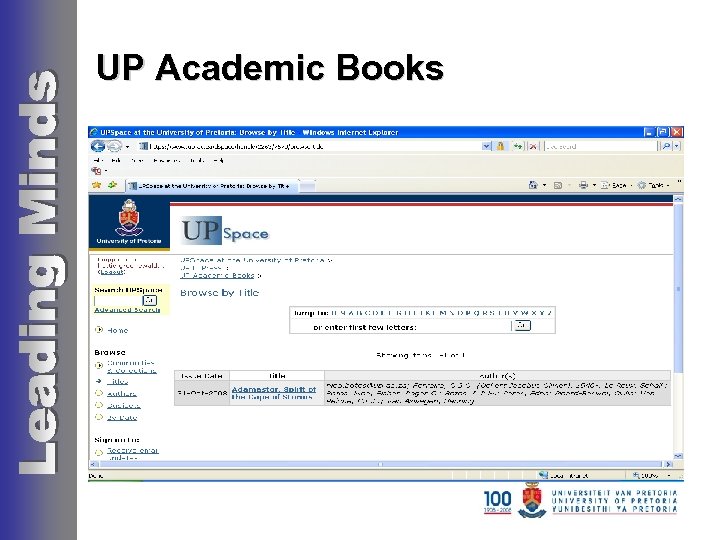 UP Academic Books
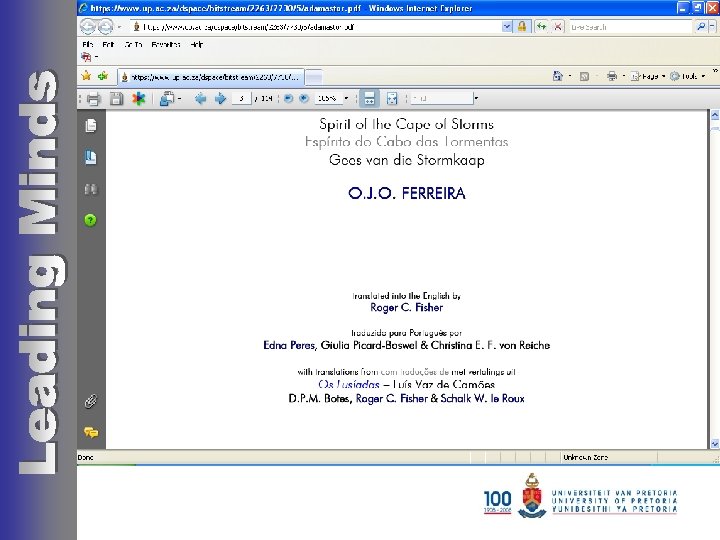
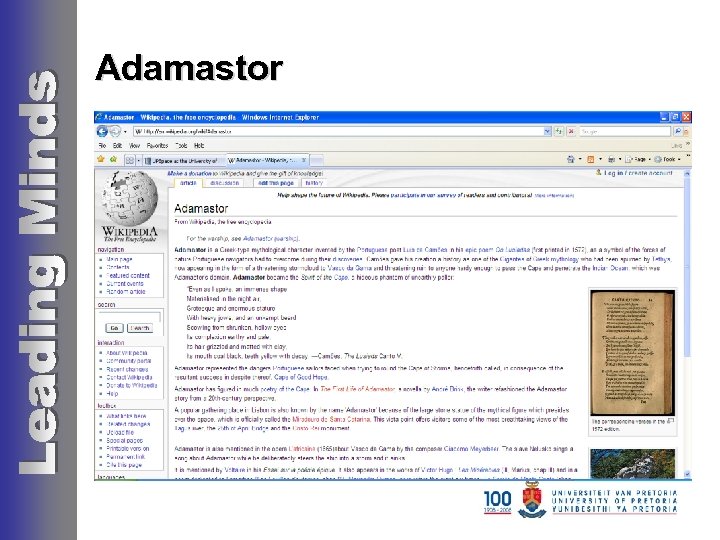 Adamastor
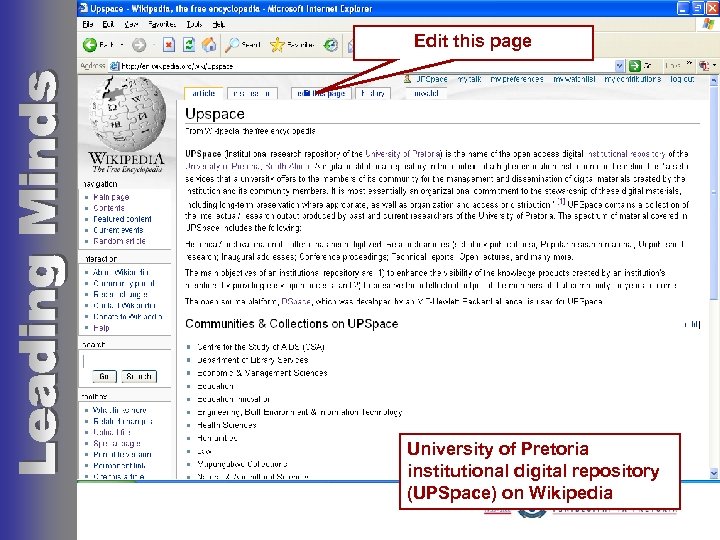
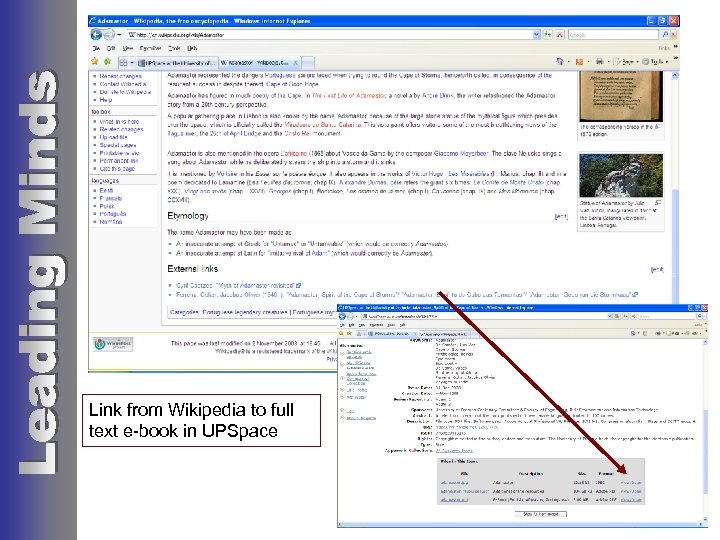 Link from Wikipedia to full text e-book in UPSpace
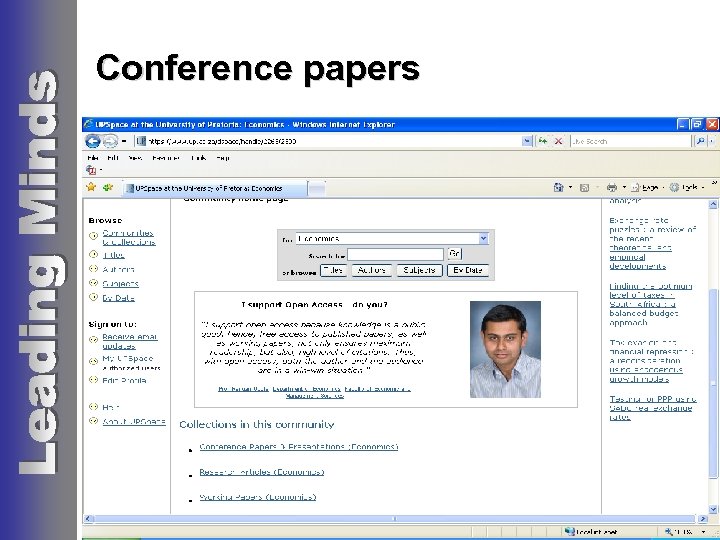 Conference papers
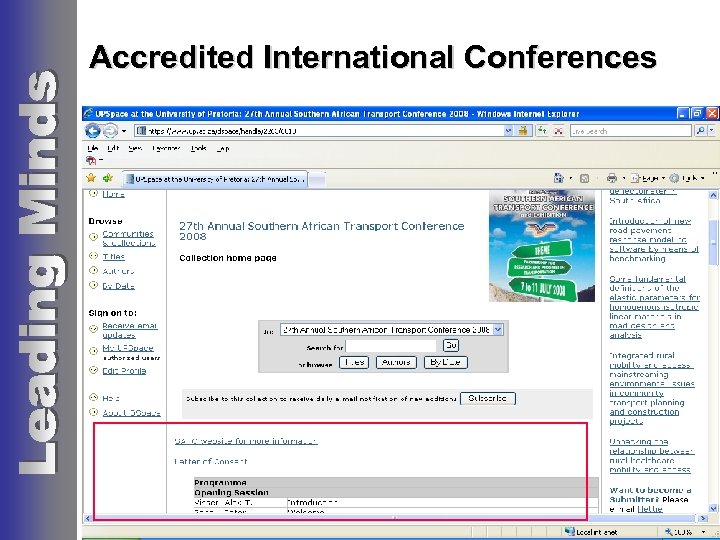 Accredited International Conferences
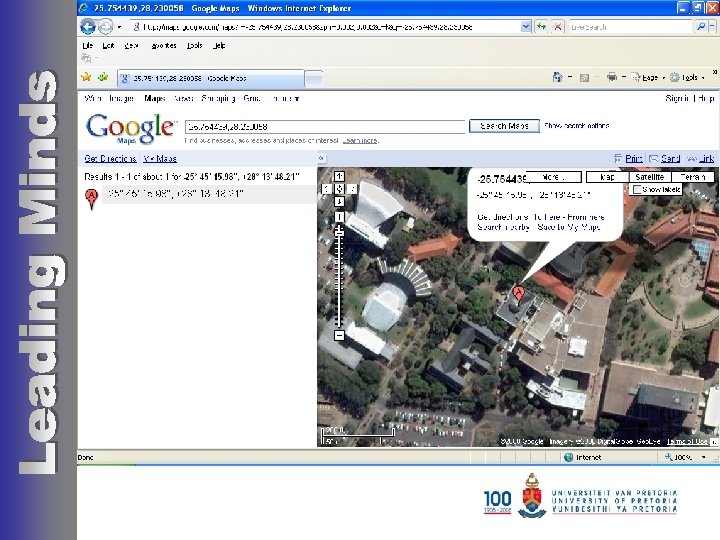
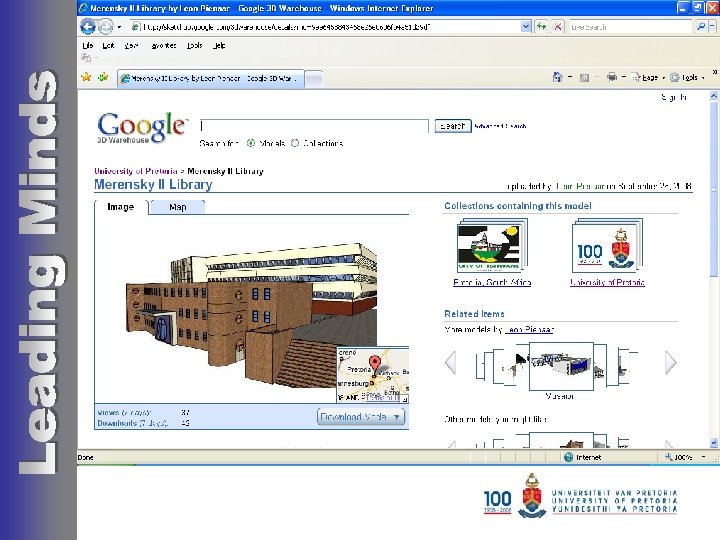
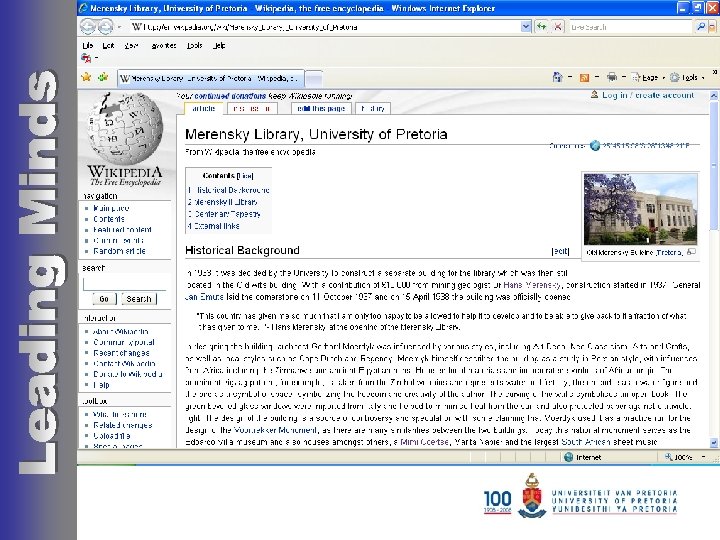
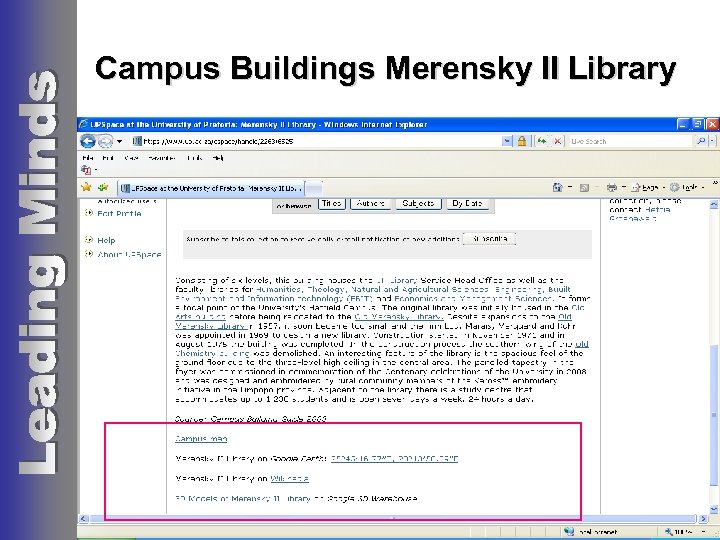 Campus Buildings Merensky II Library
 Events Inaugural addresses
 Q-Photo Fuji. Film Student Photographic Collection
 Digitization
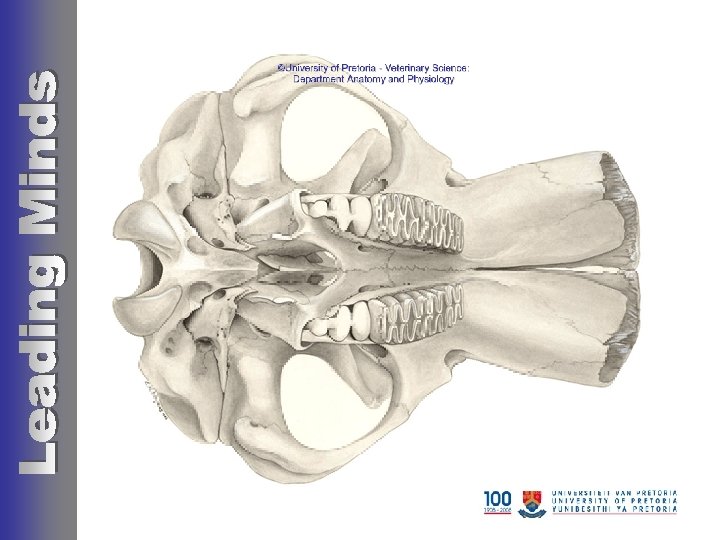
 SA National Veterinary Repository Onderstepoort Veterinary Institute Collection
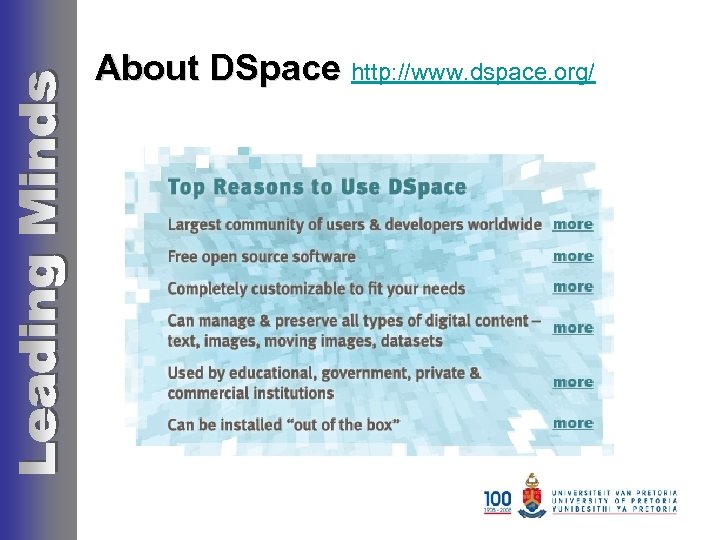 About DSpace http: //www. dspace. org/
 Benefits of an Institutional Repository • Research out quickly, worldwide • Increases visibility, usage, impact of research “open access papers are read more widely, and, therefore, cited more frequently. The consequence of this is that they have greater impact” (Jones, Andrew and Mac. Coll 2006) • Open access to all – also those who cannot afford subscribing • Central archive of research • Persistent URL • Preservation function
 Benefits (cont. ) • • • Full text searchable E-workflow for quality control Distributed/ de-centralised input Limit access on various levels High level of security Each dept. has its own repository with collections, within the bigger UPSpace repository Can handle ALL types of characters (Unicode encoding scheme) Mapping Statistics for each item Information Model (Communities & Collections)
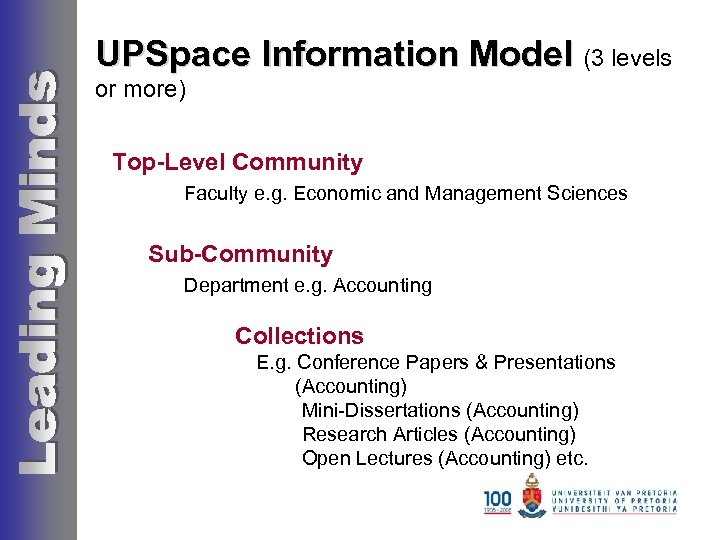 UPSpace Information Model (3 levels or more) Top-Level Community Faculty e. g. Economic and Management Sciences Sub-Community Department e. g. Accounting Collections E. g. Conference Papers & Presentations (Accounting) Mini-Dissertations (Accounting) Research Articles (Accounting) Open Lectures (Accounting) etc.
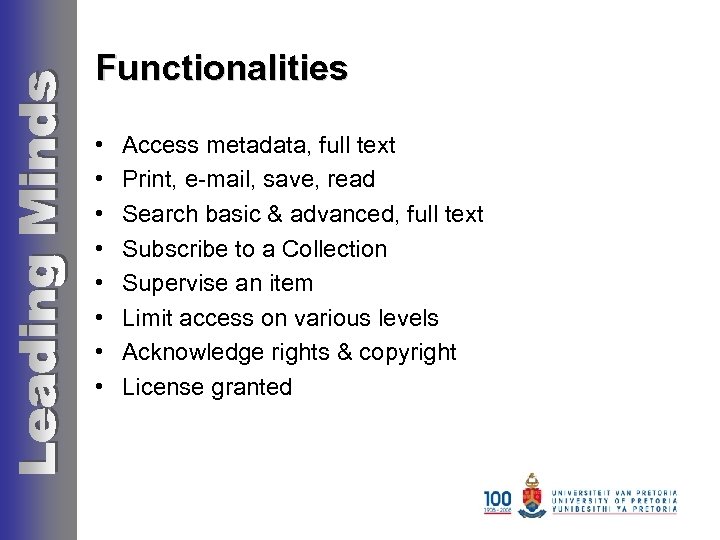 Functionalities • • Access metadata, full text Print, e-mail, save, read Search basic & advanced, full text Subscribe to a Collection Supervise an item Limit access on various levels Acknowledge rights & copyright License granted
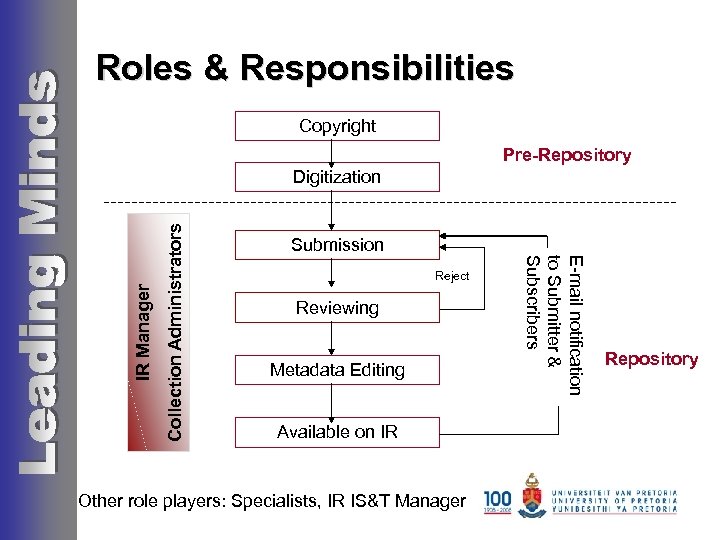 Roles & Responsibilities Copyright Pre-Repository Collection Administrators Submission Reject Reviewing Metadata Editing Available on IR Other role players: Specialists, IR IS&T Manager E-mail notification to Submitter & Subscribers IR Manager Digitization Repository
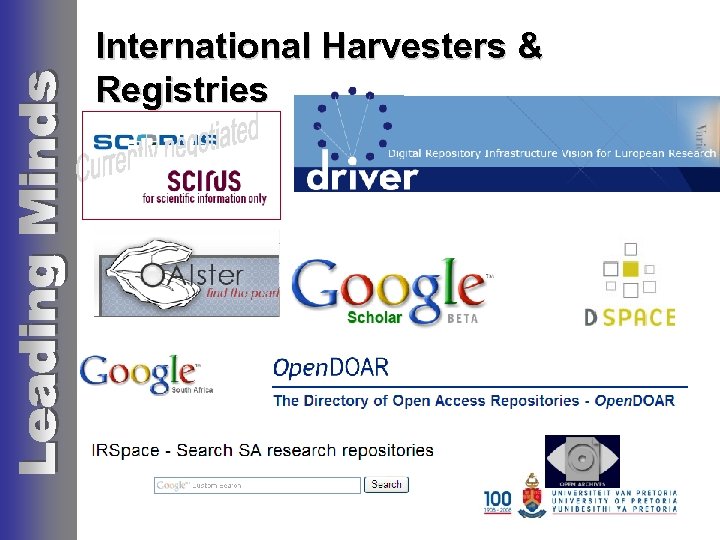 International Harvesters & Registries
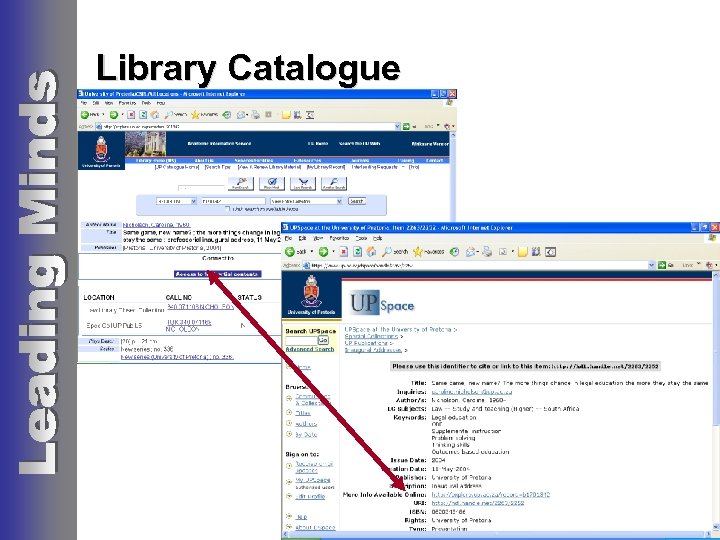 Library Catalogue
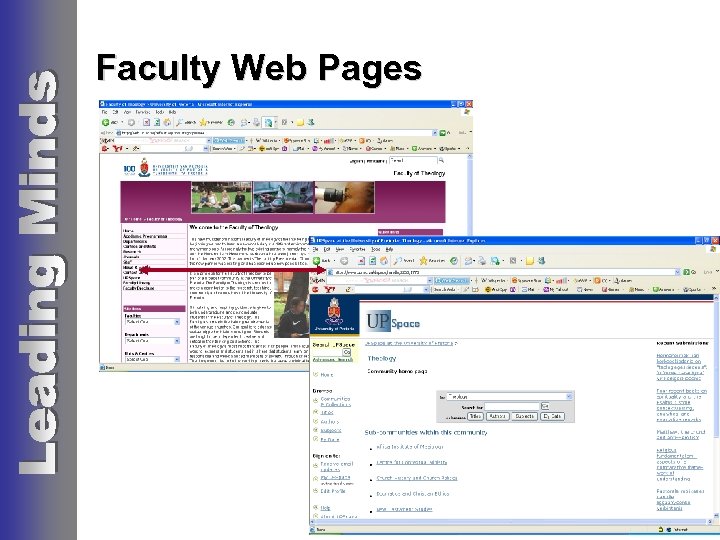 Faculty Web Pages
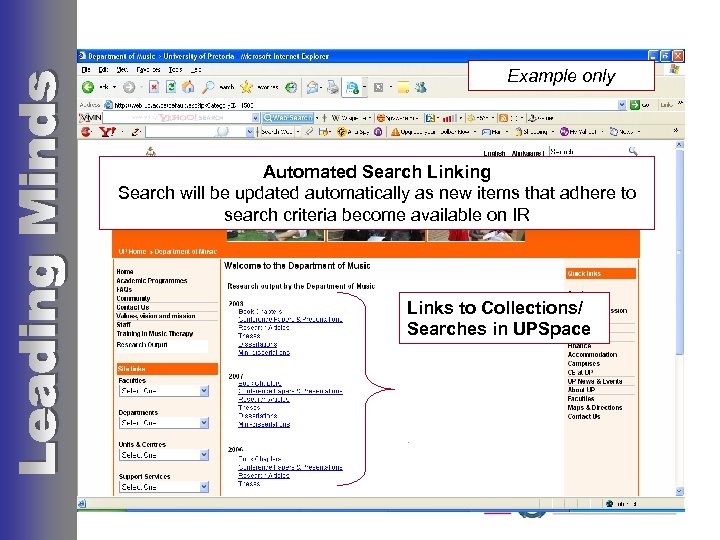 Example only Automated Search Linking Search will be updated automatically as new items that adhere to search criteria become available on IR Links to Collections/ Searches in UPSpace
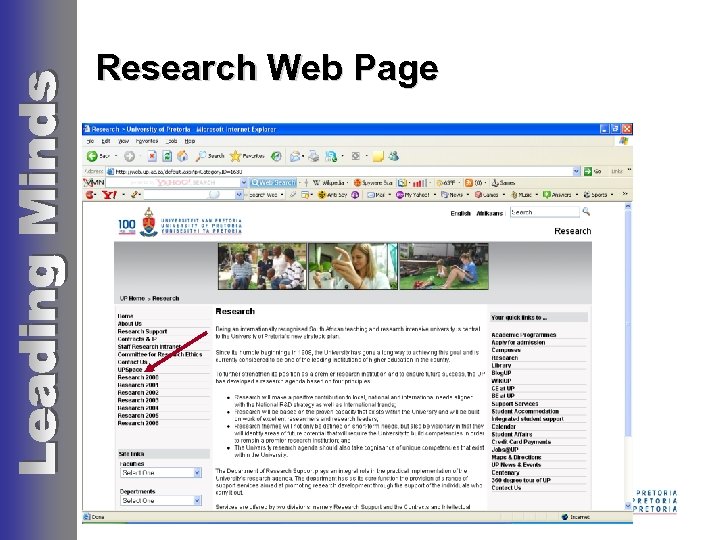 Research Web Page
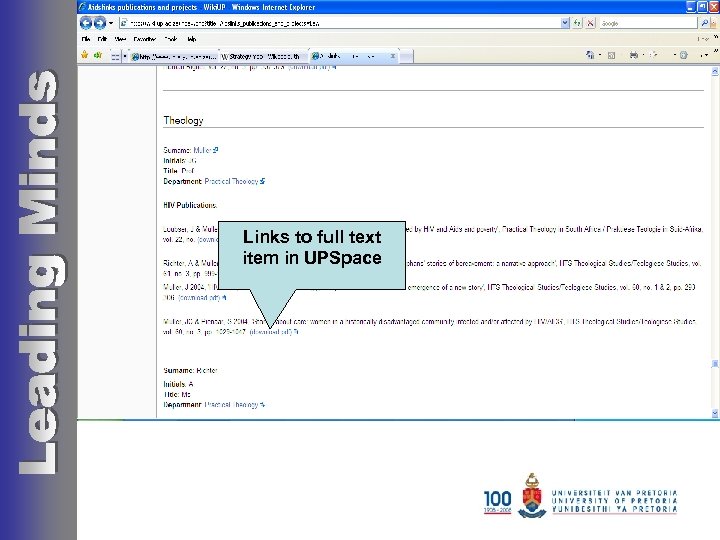
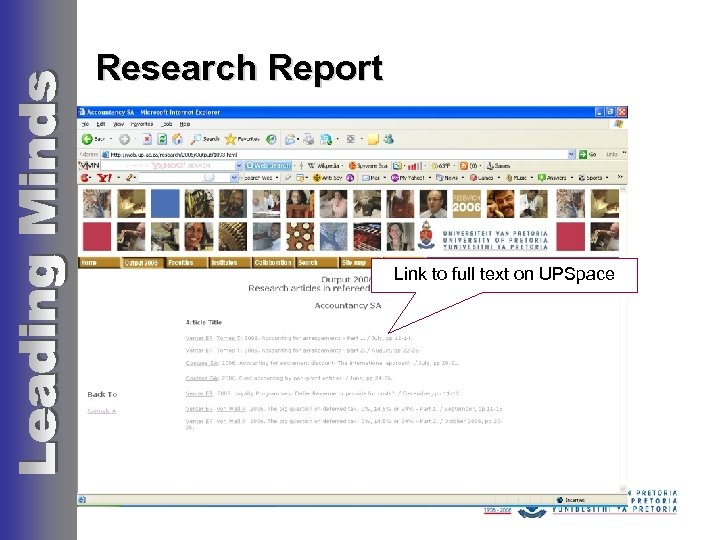 Research Report Link to full text on UPSpace
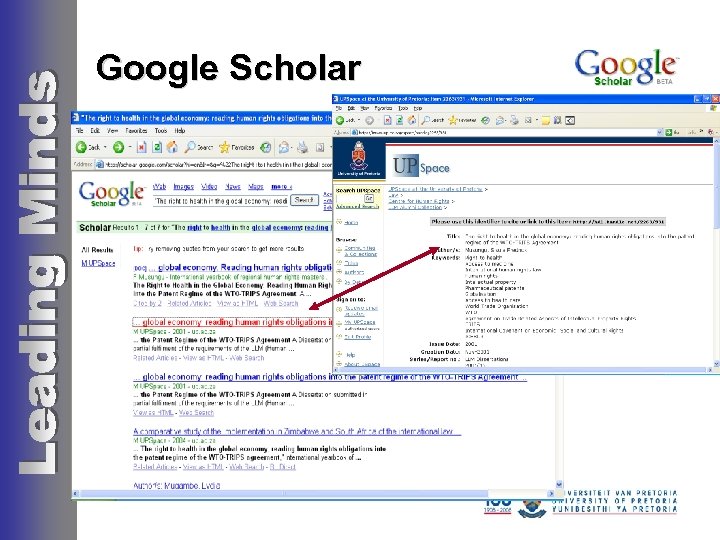 Google Scholar
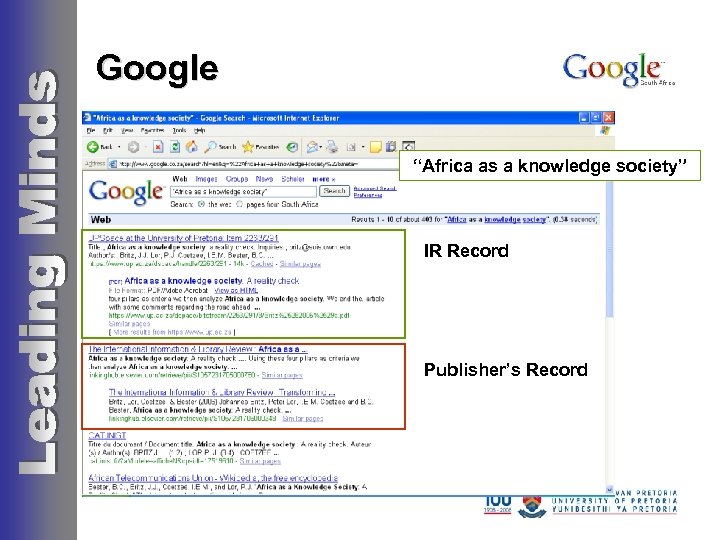 Google “Africa as a knowledge society” IR Record Publisher’s Record
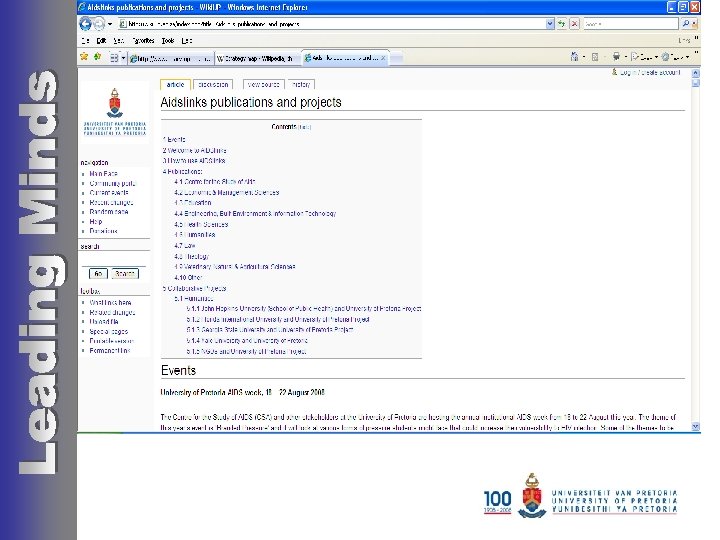
 Links to full text item in UPSpace
 Edit this page University of Pretoria institutional digital repository (UPSpace) on Wikipedia
 UPSpace on
 Managing a Digital Repository • • Manage repository structure Manage e-workflow & roles Training & Support Copyright Marketing (Advocacy) Develop policies & procedures Identify opportunities Frequently communicate!!!
 … (cont. ) • • • Monitor activity Strategize Budget Evaluation Manage conflict Conduct research For a complete role description: http: //www. sherpa. ac. uk/documents/sherpaplusdocs/notts. Repository%20 Staff%20 and%20 Skills. pdf http: //www. dspace. up. ac. za/policies. htm
 In a nutshell …Characteristics • • Enthusiastic Highly self-motivated Innovative & Creative & Strategic Independent thinker & worker Motivate others Organizational skills Work under pressure Excellent communicator
 Managers vs Leaders • Get the work done vs Innovative & Creative perspective • Structured vs People Oriented, Visionary • Planning, organising vs Innovative • Stabiliser, problem-solver vs Agitator • Leads by command vs Influence and inspire, encourage, communicate Source: Calitz 2008
 The ideal … Management + Leadership = Managerial Leader “There is a fine line between leadership and management, a line that is often shifting according to circumstance. If you are going to maximize growth and profitability in your organisation [library]. . . every manager must become an effective leader. ” – Dr. Rick Iphnson, Business Net` Become a leader on local, national and international level
 African Digital Scholarship & Curation Conference 12 – 14 May 2009 http: //www. ais. up. ac. za/digitalscholarship. htm Institutional Repository Workshop 1 – 3 April 2009 http: //www. library. up. ac. za/irtoolbox/workshop. htm
 Thank you! This presentation is online available on our open access IR Visit: https: //www. up. ac. za/dspace/
 Bibliography • Calitz, J. 2008. Manager? Leader? The modern workplace needs both. http: //www. careers 24. com/mweb/Career. Seeker/Article. aspx? A rticle=358 • Pienaar, H. 2008. Development and implementation of an e. Information Strategy for an academic library. http: //hdl. handle. net/2263/6721
 Acknowledgements Heila Pienaar Christelle Steyn Hettie Groenewald