


 Скачать презентацию Leadership What is leadership Leading people Influencing
Leadership.ppt
- Количество слайдов: 22
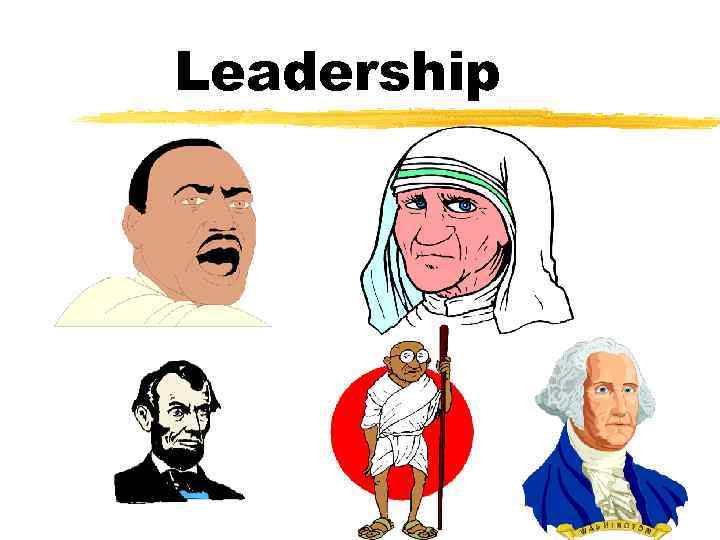 Leadership
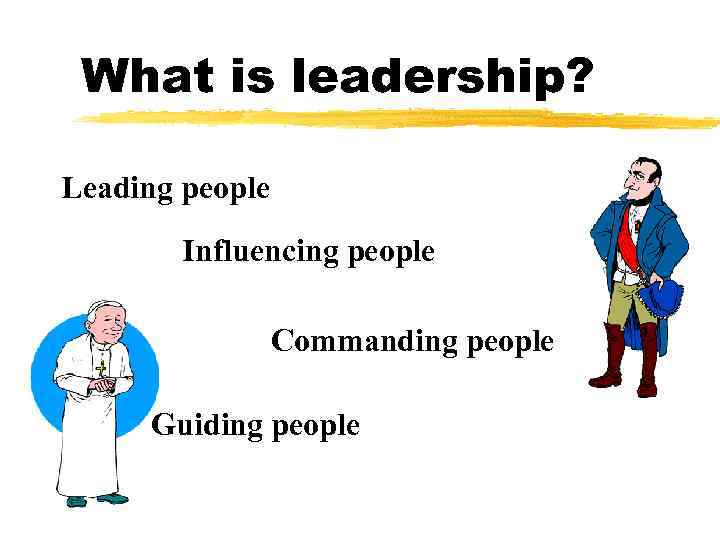 What is leadership? Leading people Influencing people Commanding people Guiding people
 Types of Leaders z. Leader by the position achieved z. Leader by personality, charisma z. Leader by moral example z. Leader by power held z. Intellectual leader z. Leader because of ability to accomplish things
 Managers vs. Leaders Managers z. Focus on things z. Do things right z. Plan z. Organize z. Direct z. Control z. Follows the rules Leaders z. Focus on people z. Do the right things z. Inspire z. Influence z. Motivate z. Build z. Shape entities
 Common Activities z. Planning z. Organizing z. Directing z. Controlling
 Planning Manager z. Planning z. Budgeting z. Sets targets z. Establishes detailed steps z. Allocates resources Leader z. Devises strategy z. Sets direction z. Creates vision
 Organizing Manager z. Creates structure z. Job descriptions z. Staffing z. Hierarchy z. Delegates z. Training Leader z. Gets people on board for strategy z. Communication z. Networks
 Directing Work Manager z. Solves problems z. Negotiates z. Brings to consensus Leader z. Empowers people z. Cheerleader
 Controlling Manager z. Implements control systems z Performance measures z. Identifies variances z. Fixes variances Leader z Motivate z. Inspire z. Gives sense of accomplishment
 Leadership Traits z. Intelligence y. More intelligent than non-leaders y. Scholarship y. Knowledge y. Being able to get things done z. Physical y. Doesn’t see to be correlated z. Personality y. Verbal facility y. Honesty y. Initiative y. Aggressive y. Self-confident y. Ambitious y. Originality y. Sociability y. Adaptability
 Leadership Styles z. Delegating y. Low relationship/ low task y. Responsibility y. Willing employees z. Participating y. High relationship/ low task y. Facilitate decisions y. Able but unwilling z. Selling y. High task/high relationship y. Explain decisions y. Willing but unable z. Telling y. High Task/Low relationship y. Provide instruction y. Closely supervise
 New Leaders Take Note z. General Advice y. Take advantage of the transition period y. Get advice and counsel y. Show empathy to predecessor y. Learn leadership z. Challenges y. Need knowledge quickly y. Establish new relationships y. Expectations y. Personal equilibrium
 New Leader Traps z. Not learning z. Captured by quickly wrong people z. Isolation z. Successor syndrome z. Know-it-all z. Keeping existing team z. Taking on too much
 Seven Basic Principles z. Have two to three years to make measurable financial and cultural progress z. Come in knowing current strategy, goals, and challenges. Form hypothesis on operating priorities z. Balance intense focus on priorities with flexibility on implementation….
 Seven Basic Principles, con’t z. Decide about new organization architecture z. Build personal credibility and momentum z. Earn right to transform entity z. Remember there is no “one” way to manage a transition
 Core Tasks z. Create Momentum z. Master technologies of learning, visioning, and coalition building z. Manage oneself
 Create Momentum z. Learn and know about company z. Securing early wins y. First set short term goals y. When achieved make a big deal y. Should fit long term strategy z. Foundation for change y. Vision of how the organization will look y. Build political base to support change y. Modify culture to fit vision
 Create Momentum z. Build credibility y. Demanding but can be satisfied y. Accessible but not too familiar y. Focused but flexible y. Active y. Can make tough calls but humane
 Master Technologies z. Learn from internal and external sources z. Visioning - develop strategy y. Push vs. pull tools y. What values does the strategy embrace? y. What behaviors are needed? z. Communicate the vision y. Simple text - Best channels y. Clear meaning - Do it yourself!
 Enabling Technologies, con’t z. Coalition building y. Don’t ignore politics y. Technical change not enough y. Political management isn’t same as being political y. Prevent blocking coalitions y. Build political capital
 Manage Oneself z. Be self-aware z. Define your leadership style z. Get advice and counsel y. Advice is from expert to leader y. Counsel is insight z. Types of help y. Technical y. Political y. Personal z. Advisor traits y. Competent y Trustworthy y. Enhance your status
 How Far Can You Go?