


 Скачать презентацию Leadership and Monitoring of Phonics learning and teaching
a4c3b815c245a10880f59d37b1255aa3.ppt
- Количество слайдов: 50
 Leadership and Monitoring of Phonics learning and teaching Kingsgate Conference Centre, 20 th March 2015
 Leadership and Monitoring of Phonics learning and teaching Sue Howard Learning and Teaching Adviser (Literacy)
 Aims To support leaders in developing and embedding the following: - closing the attainment gap for specific groups - phonic subject knowledge and progression in phonics - What does good teaching and learning look like? - tracking progress in phonics and using effective intervention programmes - administering and monitoring the phonics screening check
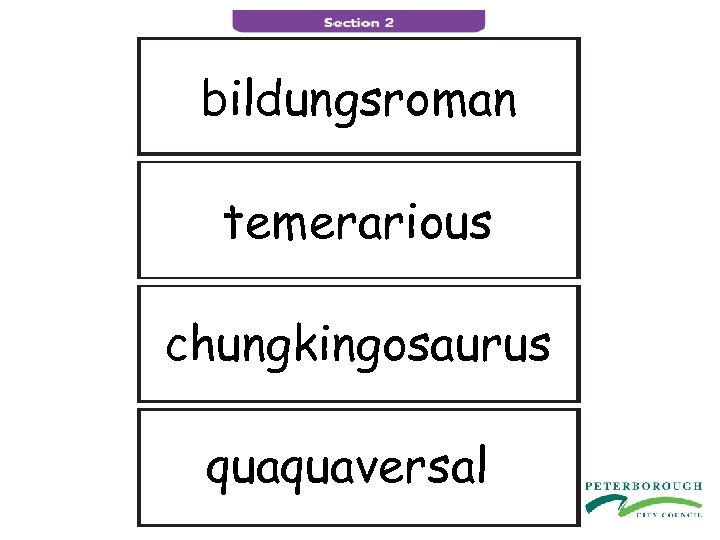 bildungsroman temerarious chungkingosaurus quaquaversal
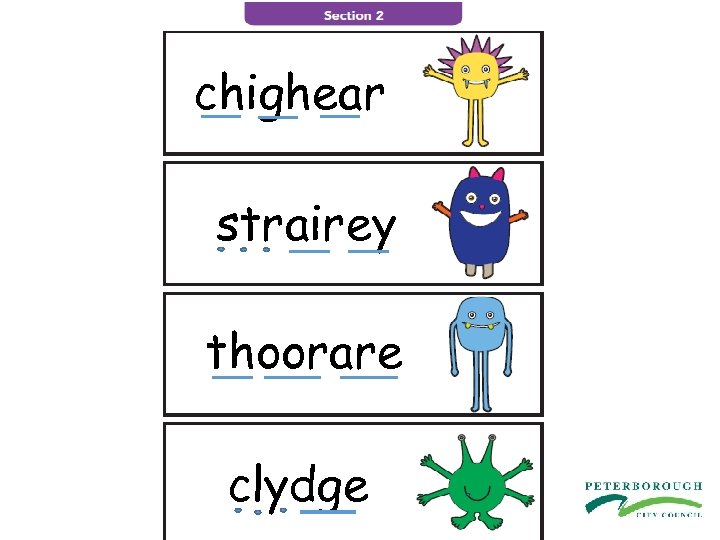 chighear strairey thoorare clydge
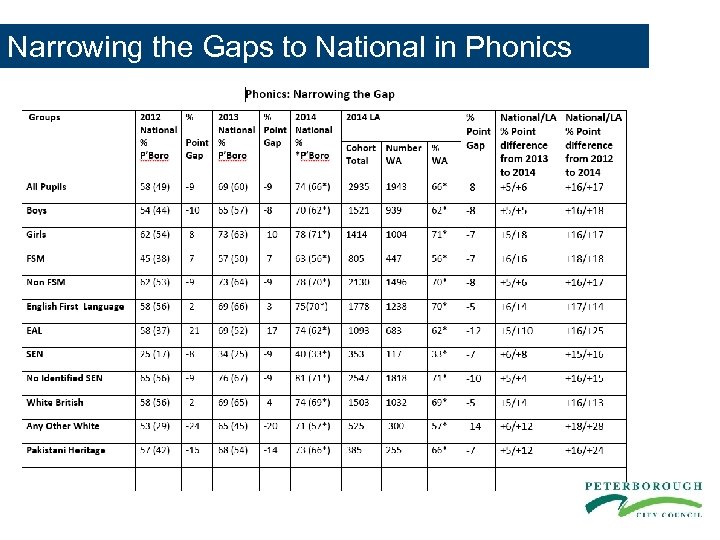 Narrowing the Gaps to National in Phonics
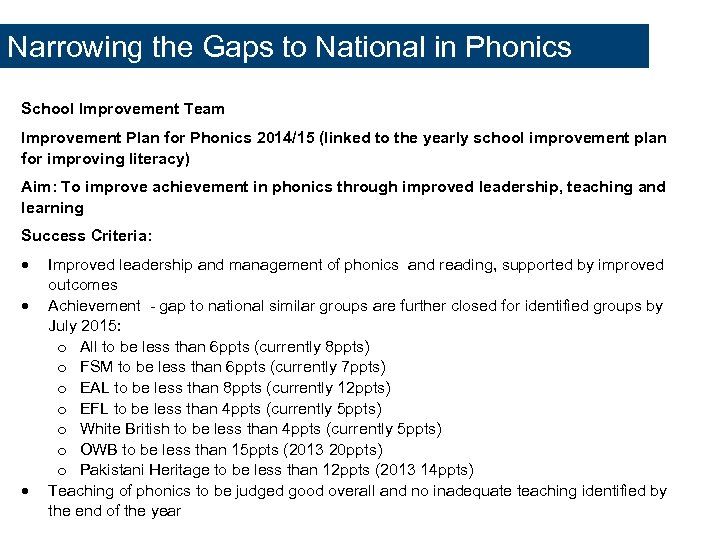 Narrowing the Gaps to National in Phonics School Improvement Team Improvement Plan for Phonics 2014/15 (linked to the yearly school improvement plan for improving literacy) Aim: To improve achievement in phonics through improved leadership, teaching and learning Success Criteria: Improved leadership and management of phonics and reading, supported by improved outcomes Achievement - gap to national similar groups are further closed for identified groups by July 2015: o All to be less than 6 ppts (currently 8 ppts) o FSM to be less than 6 ppts (currently 7 ppts) o EAL to be less than 8 ppts (currently 12 ppts) o EFL to be less than 4 ppts (currently 5 ppts) o White British to be less than 4 ppts (currently 5 ppts) o OWB to be less than 15 ppts (2013 20 ppts) o Pakistani Heritage to be less than 12 ppts (2013 14 ppts) Teaching of phonics to be judged good overall and no inadequate teaching identified by the end of the year
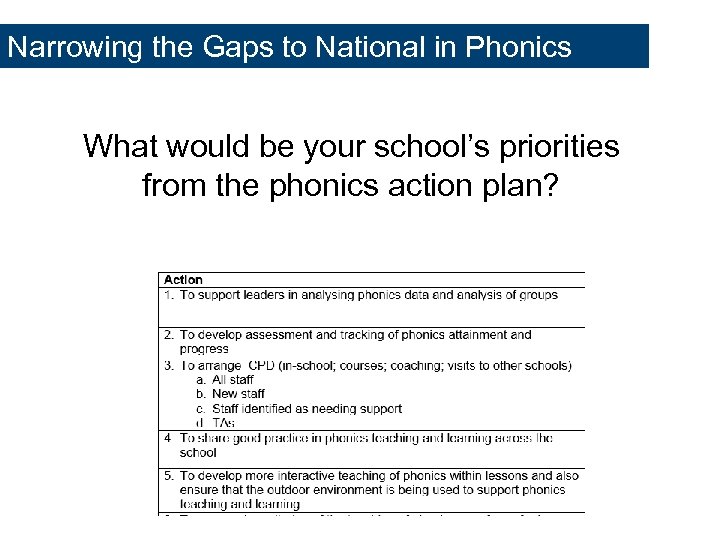 Narrowing the Gaps to National in Phonics What would be your school’s priorities from the phonics action plan?
 Phonics Subject Knowledge and Progression
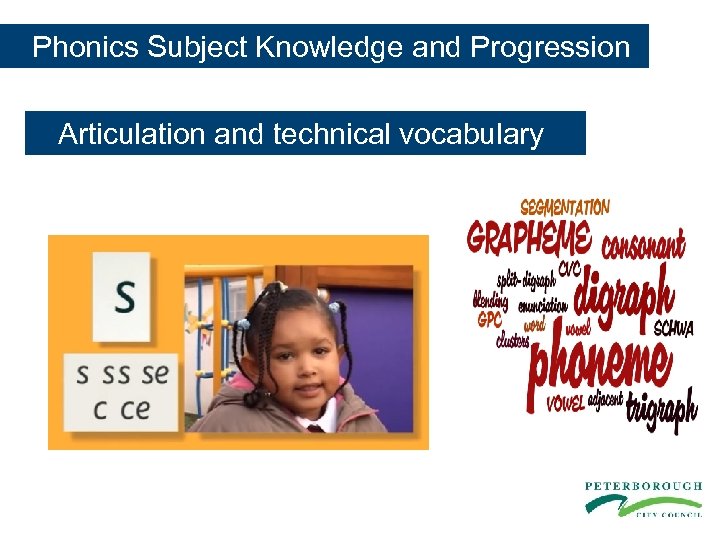 Phonics Subject Knowledge and Progression Articulation and technical vocabulary
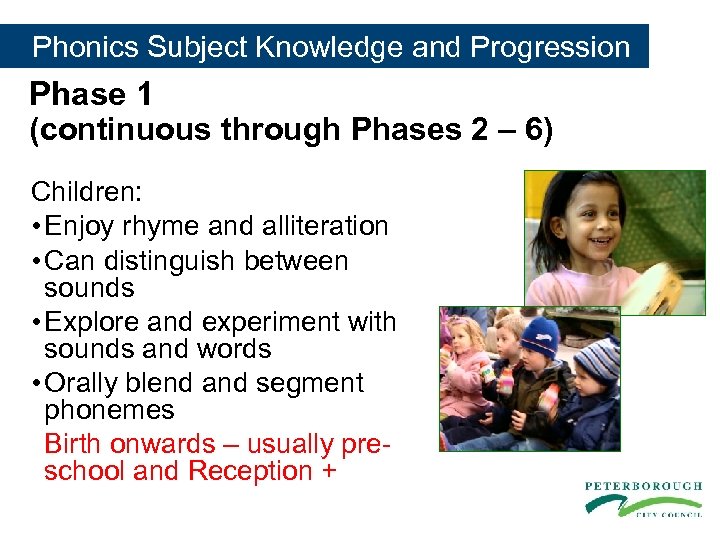 Phonics Subject Knowledge and Progression Phase 1 (continuous through Phases 2 – 6) Children: • Enjoy rhyme and alliteration • Can distinguish between sounds • Explore and experiment with sounds and words • Orally blend and segment phonemes Birth onwards – usually preschool and Reception +
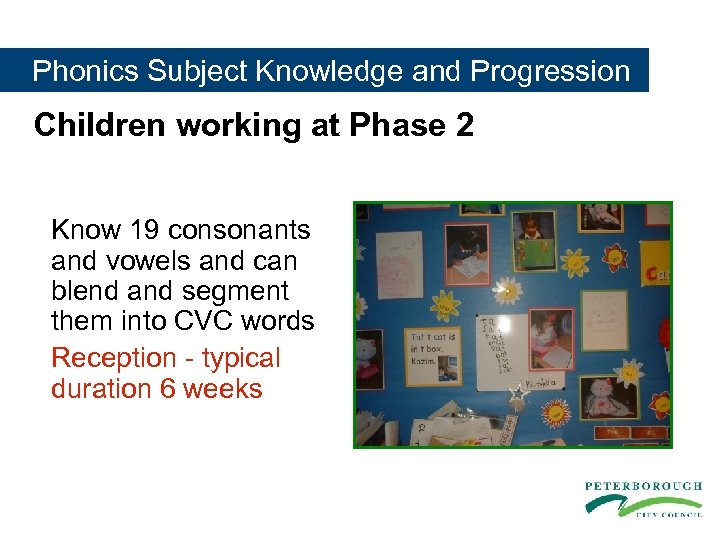 Phonics Subject Knowledge and Progression Children working at Phase 2 Know 19 consonants and vowels and can blend and segment them into CVC words Reception - typical duration 6 weeks
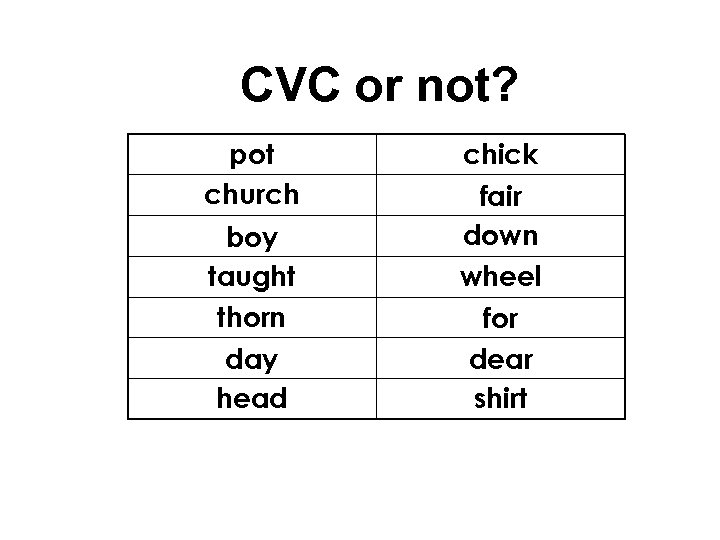 CVC or not? pot church boy taught thorn day head chick fair down wheel for dear shirt
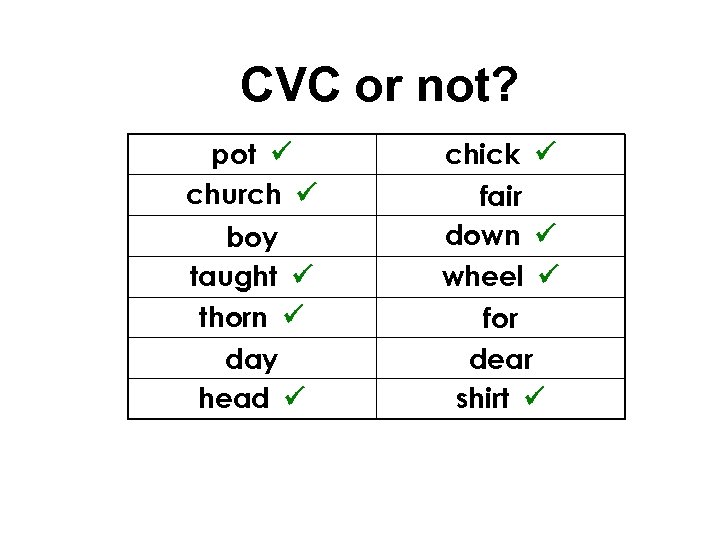 CVC or not? pot church boy taught thorn day head chick fair down wheel for dear shirt
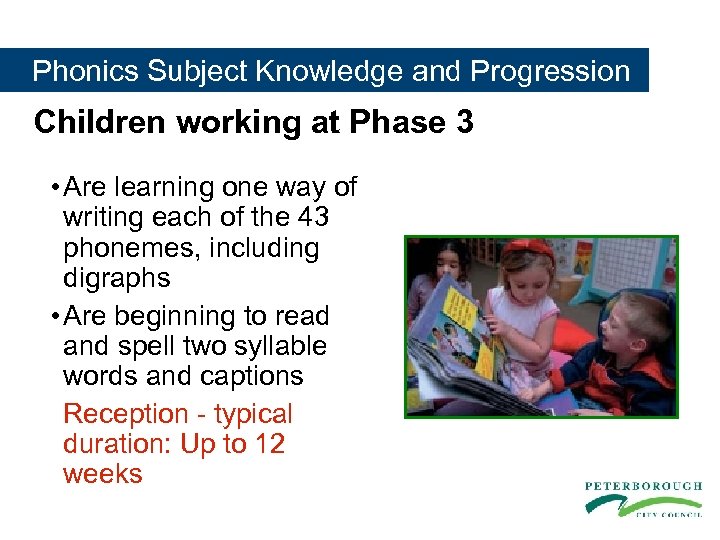 Phonics Subject Knowledge and Progression Children working at Phase 3 • Are learning one way of writing each of the 43 phonemes, including digraphs • Are beginning to read and spell two syllable words and captions Reception - typical duration: Up to 12 weeks
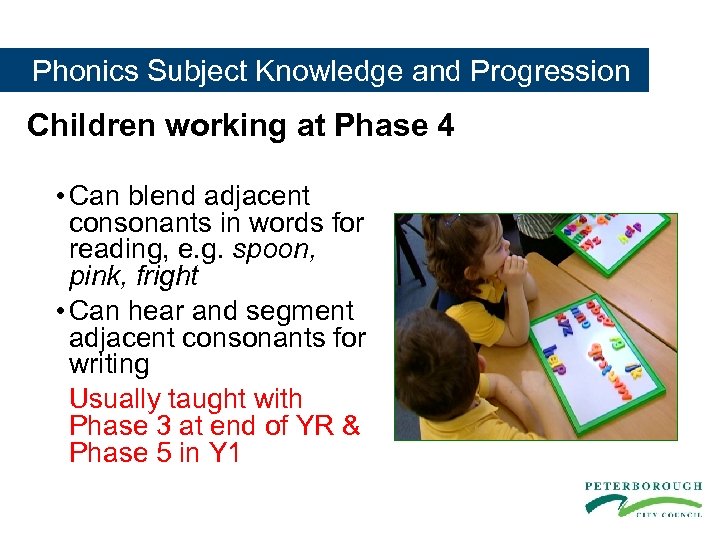 Phonics Subject Knowledge and Progression Children working at Phase 4 • Can blend adjacent consonants in words for reading, e. g. spoon, pink, fright • Can hear and segment adjacent consonants for writing Usually taught with Phase 3 at end of YR & Phase 5 in Y 1
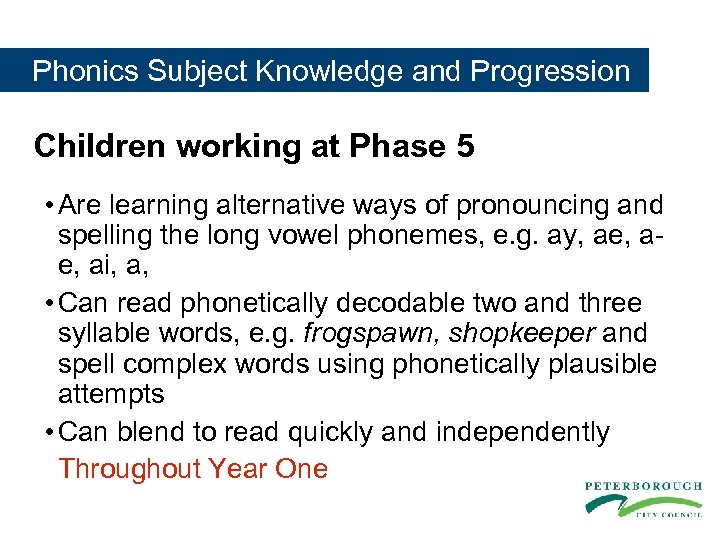 Phonics Subject Knowledge and Progression Children working at Phase 5 • Are learning alternative ways of pronouncing and spelling the long vowel phonemes, e. g. ay, ae, ai, a, • Can read phonetically decodable two and three syllable words, e. g. frogspawn, shopkeeper and spell complex words using phonetically plausible attempts • Can blend to read quickly and independently Throughout Year One
 Long and Short Vowels Activity: Sort the body parts into words with long and short vowels
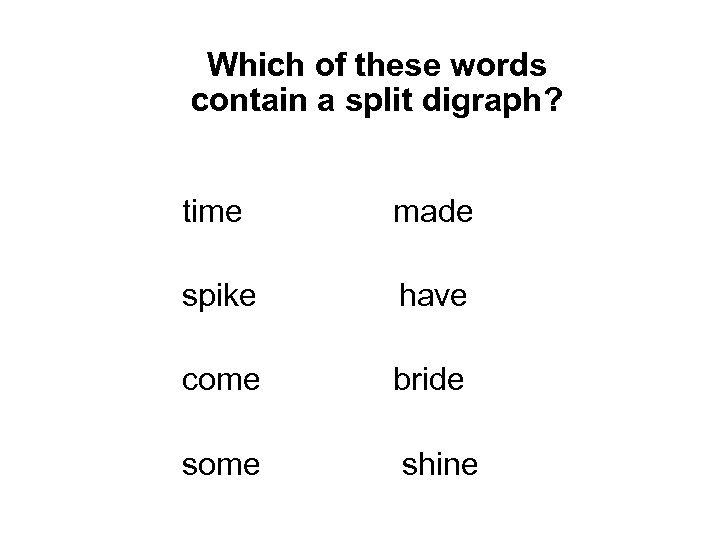 Which of these words contain a split digraph? time made spike have come bride some shine
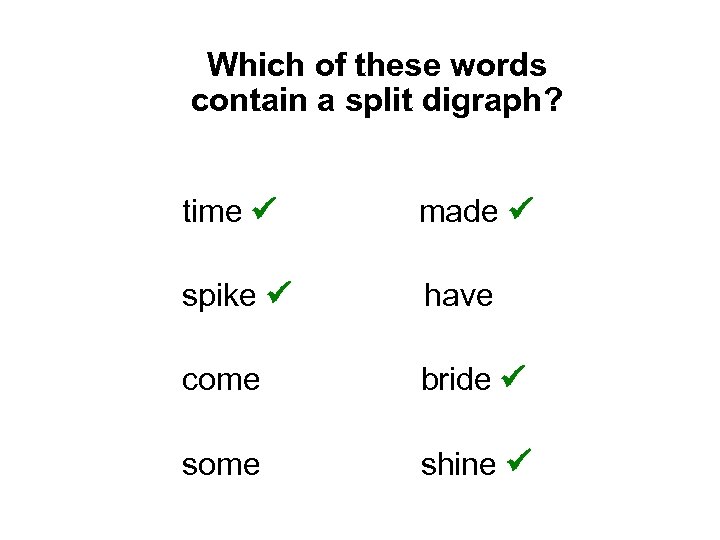 Which of these words contain a split digraph? time made spike have come bride some shine
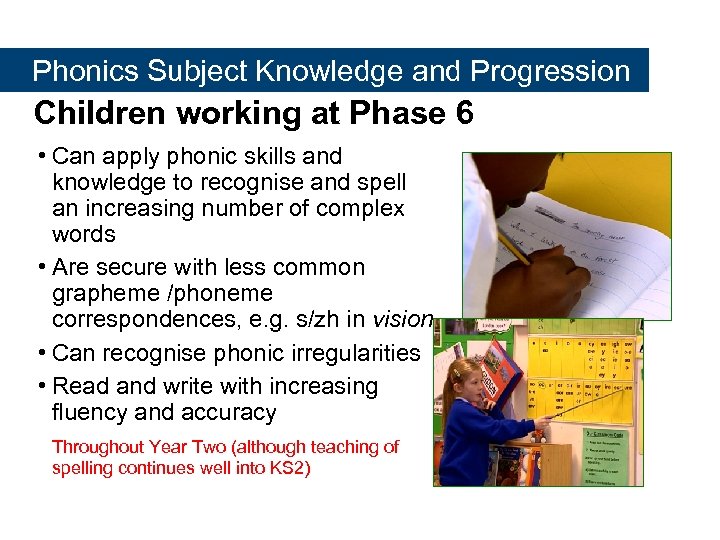 Phonics Subject Knowledge and Progression Children working at Phase 6 • Can apply phonic skills and knowledge to recognise and spell an increasing number of complex words • Are secure with less common grapheme /phoneme correspondences, e. g. s/zh in vision • Can recognise phonic irregularities • Read and write with increasing fluency and accuracy Throughout Year Two (although teaching of spelling continues well into KS 2)
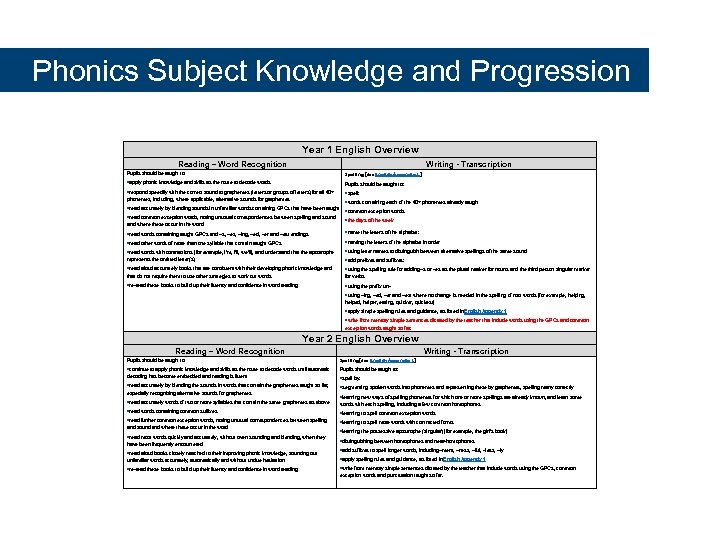 Phonics Subject Knowledge and Progression Year 1 English Overview Reading – Word Recognition Writing - Transcription Pupils should be taught to: Spelling (see English Appendix 1) apply phonic knowledge and skills as the route to decode words Pupils should be taught to: respond speedily with the correct sound to graphemes (letters or groups of letters) for all 40+ spell: phonemes, including, where applicable, alternative sounds for graphemes words containing each of the 40+ phonemes already taught read accurately by blending sounds in unfamiliar words containing GPCs that have been taught read common exception words, noting unusual correspondences between spelling and sound and where these occur in the word common exception words the days of the week read words containing taught GPCs and –s, –es, –ing, –ed, –er and –est endings name the letters of the alphabet: read other words of more than one syllable that contain taught GPCs naming the letters of the alphabet in order read words with contractions [for example, I’m, I’ll, we’ll], and understand that the apostrophe using letter names to distinguish between alternative spellings of the same sound represents the omitted letter(s) add prefixes and suffixes: read aloud accurately books that are consistent with their developing phonic knowledge and using the spelling rule for adding –s or –es as the plural marker for nouns and the third person singular marker that do not require them to use other strategies to work out words for verbs re-read these books to build up their fluency and confidence in word reading. using the prefix un– using –ing, –ed, –er and –est where no change is needed in the spelling of root words [for example, helping, helped, helper, eating, quicker, quickest] apply simple spelling rules and guidance, as listed in English Appendix 1 write from memory simple sentences dictated by the teacher that include words using the GPCs and common exception words taught so far. Year 2 English Overview Reading – Word Recognition Writing - Transcription Pupils should be taught to: Spelling (see English Appendix 1) continue to apply phonic knowledge and skills as the route to decode words until automatic Pupils should be taught to: decoding has become embedded and reading is fluent spell by: read accurately by blending the sounds in words that contain the graphemes taught so far, segmenting spoken words into phonemes and representing these by graphemes, spelling many correctly especially recognising alternative sounds for graphemes read accurately words of two or more syllables that contain the same graphemes as above learning new ways of spelling phonemes for which one or more spellings are already known, and learn some words with each spelling, including a few common homophones read words containing common suffixes learning to spell common exception words read further common exception words, noting unusual correspondences between spelling learning to spell more words with contracted forms and sound and where these occur in the word read most words quickly and accurately, without overt sounding and blending, when they have been frequently encountered read aloud books closely matched to their improving phonic knowledge, sounding out learning the possessive apostrophe (singular) [for example, the girl’s book] distinguishing between homophones and near-homophones add suffixes to spell longer words, including –ment, –ness, –ful, –less, –ly unfamiliar words accurately, automatically and without undue hesitation apply spelling rules and guidance, as listed in English Appendix 1 re-read these books to build up their fluency and confidence in word reading. write from memory simple sentences dictated by the teacher that include words using the GPCs, common exception words and punctuation taught so far.
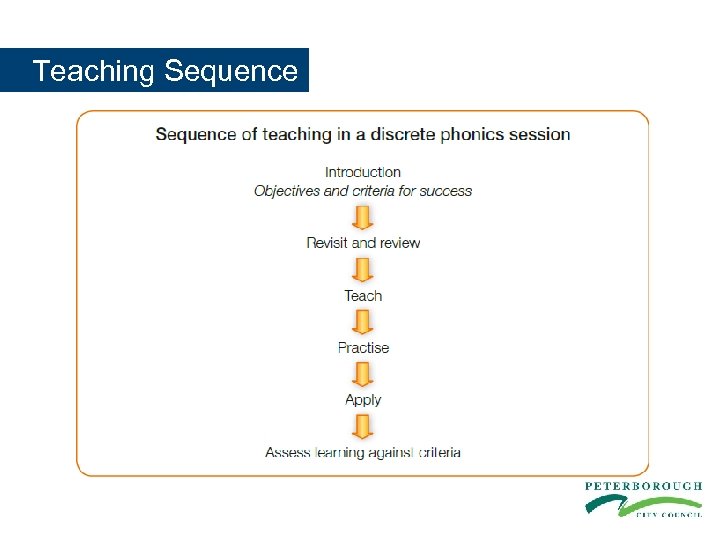 Teaching Sequence
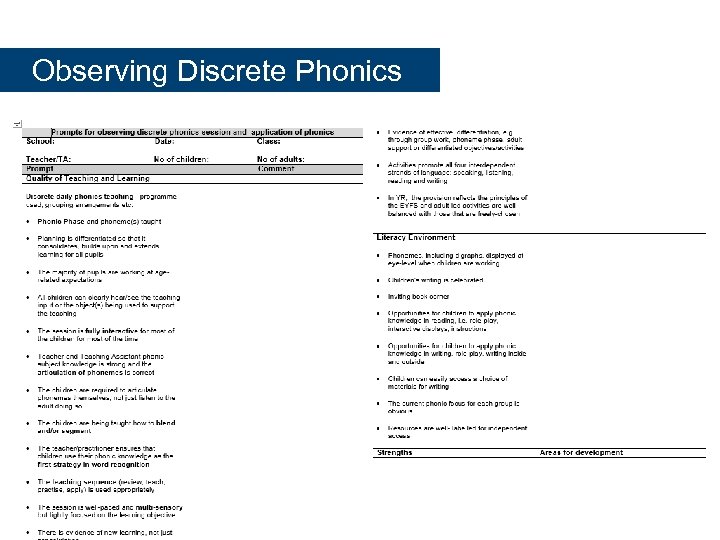 Observing Discrete Phonics
 Phonics – a non-negotiable
 Tracking Progress
 Tracking Progress
 Intervention
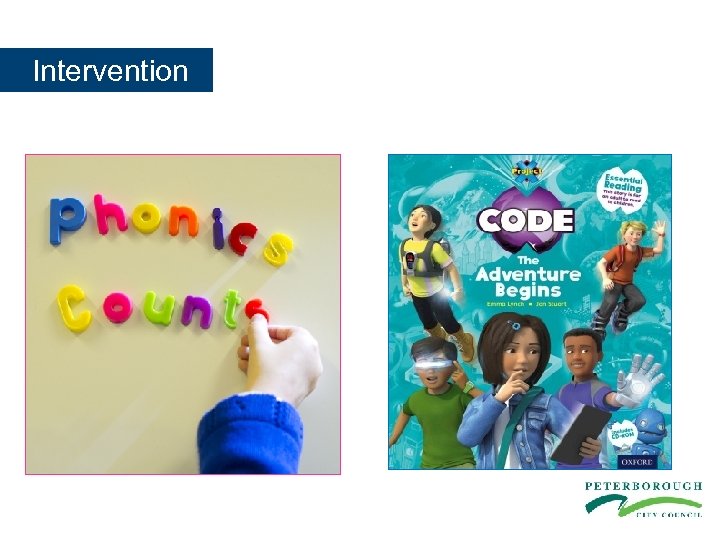
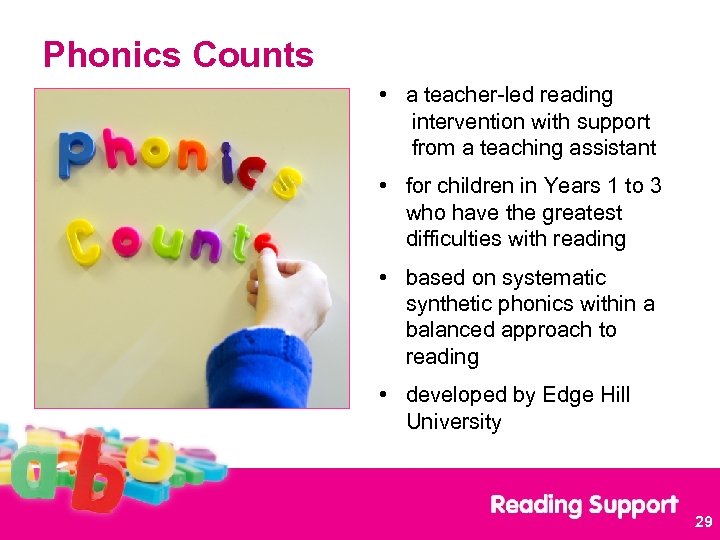 Phonics Counts • a teacher-led reading intervention with support from a teaching assistant • for children in Years 1 to 3 who have the greatest difficulties with reading • based on systematic synthetic phonics within a balanced approach to reading • developed by Edge Hill University 29
 Phonics Counts outcomes 2013 /14 Impact on children • 78 children in Years 1 – 3 took part in Phonics Counts in 24 schools in 7 local authorities. They received an average of 42 lessons from a teacher and 20 support sessions from a TA over 4. 7 months. • Standardised reading tests showed that: ü they made an average Reading Age gain of 14 months – over 3 times the expected rate of progress ü this gain was consistent across both phonics and the reading of whole sentences ü their comprehension scores more than doubled ü they gained an estimated 4. 2 National Curriculum points ü class teachers said that every child showed more confidence and interest in reading at the end of the programme
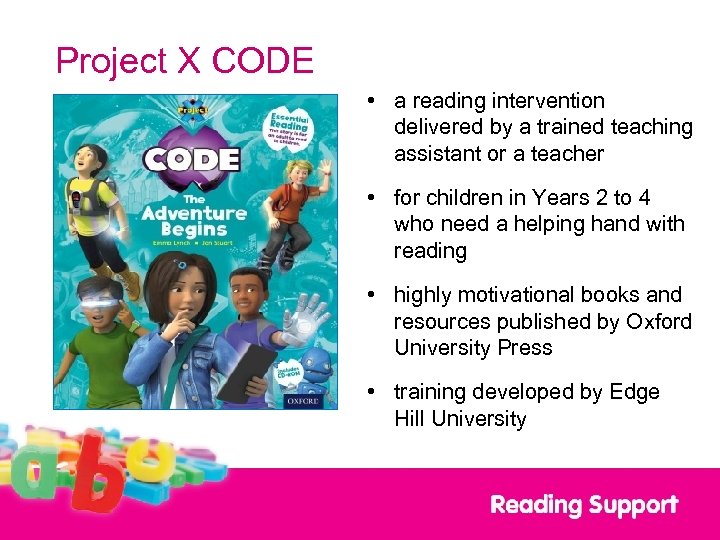 Project X CODE • a reading intervention delivered by a trained teaching assistant or a teacher • for children in Years 2 to 4 who need a helping hand with reading • highly motivational books and resources published by Oxford University Press • training developed by Edge Hill University
 Project X CODE outcomes 2013 158 children in 31 schools that received training had an average of 39 sessions over 4 months. • they made an average Reading Age gain of 13. 4 months - over 70% more than the gain achieved without training • their comprehension scores doubled - over three times the gain achieved without training • they gained an estimated 2 National Curriculum sublevels “It was noticeable how children began to change their foremost strategy in solving unknown words – from guessing, using the initial letter to blending right through the word. ” Primary School
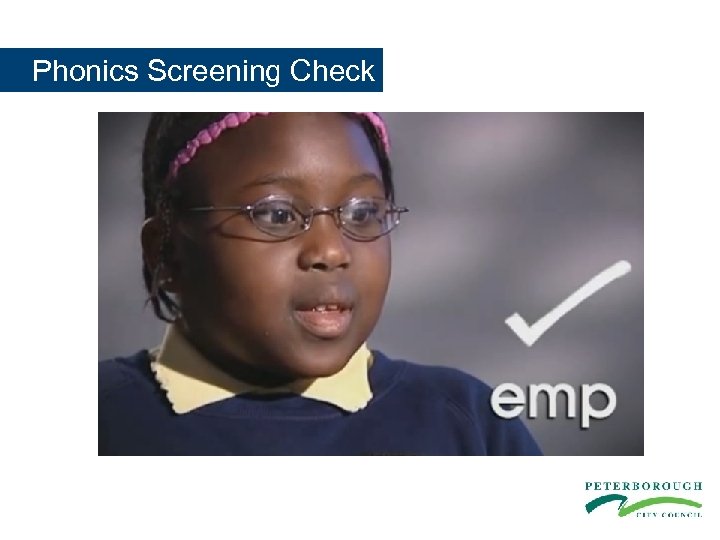 Phonics Screening Check
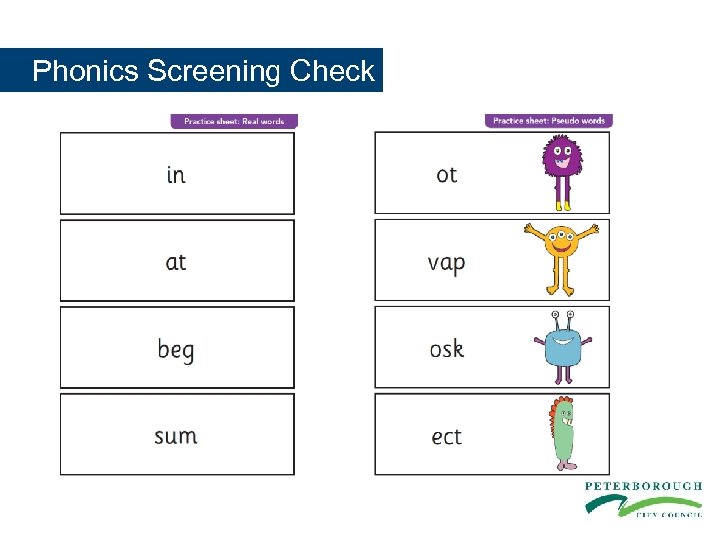 Phonics Screening Check
 Phonics Screening Check
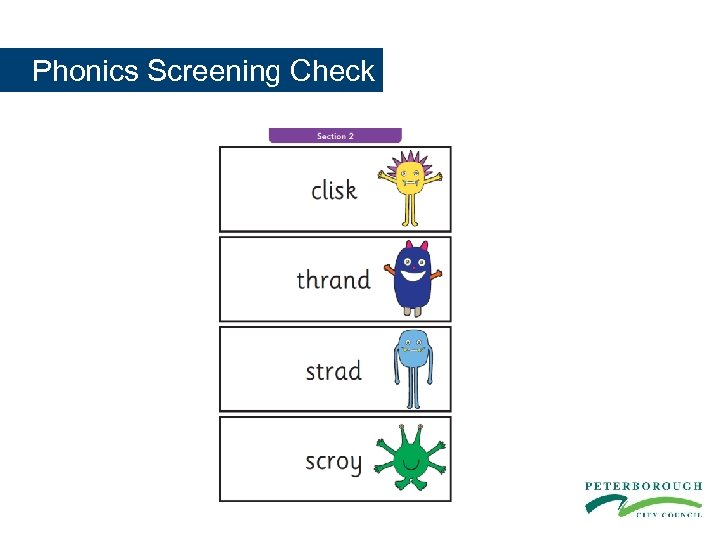 Phonics Screening Check
 Phonics Screening Check
 Phonics Screening Check
 Phonics Screening Check
 Phonics Screening Check
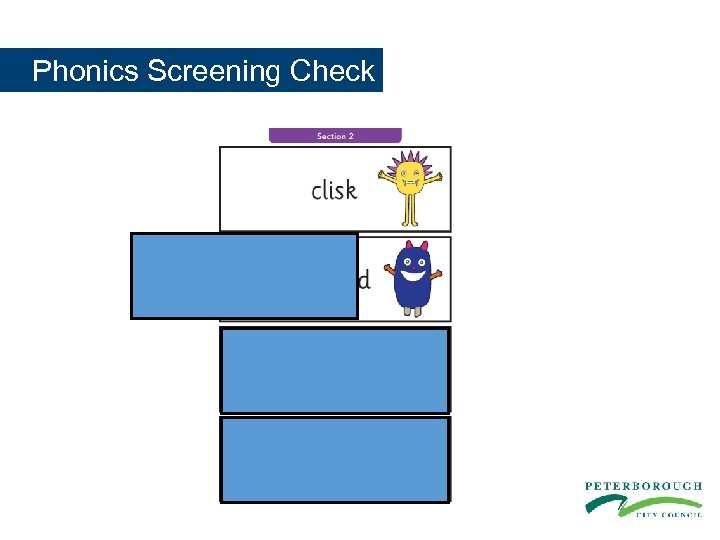
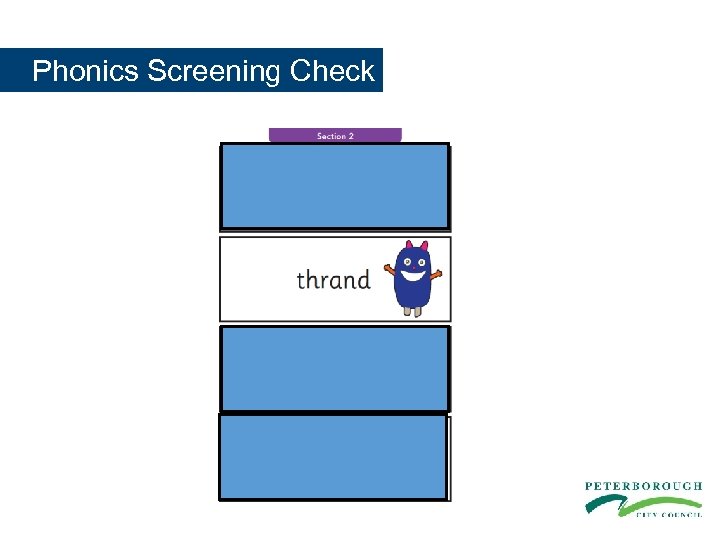
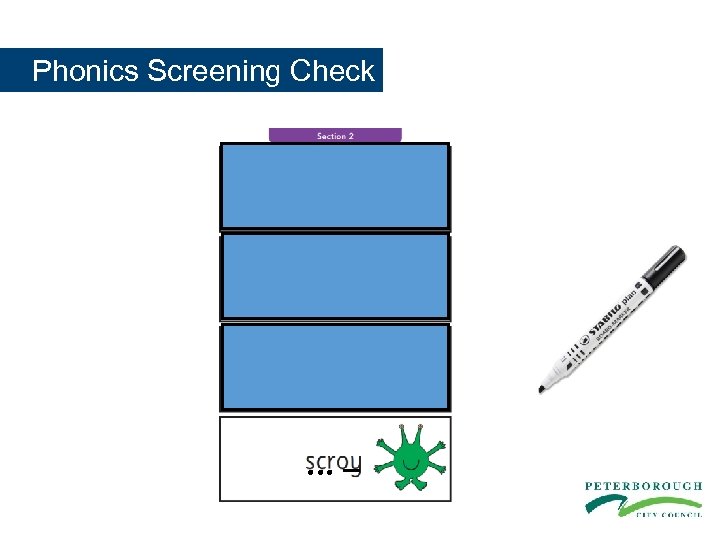
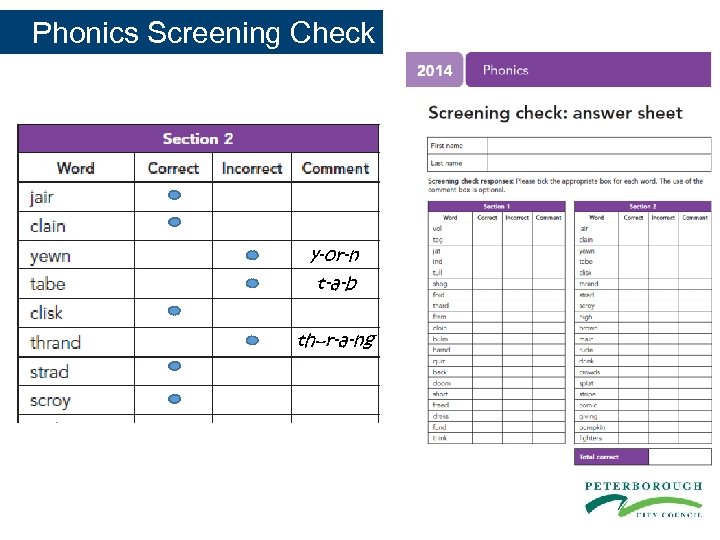 Phonics Screening Check y-or-n t-a-b th–r-a-ng
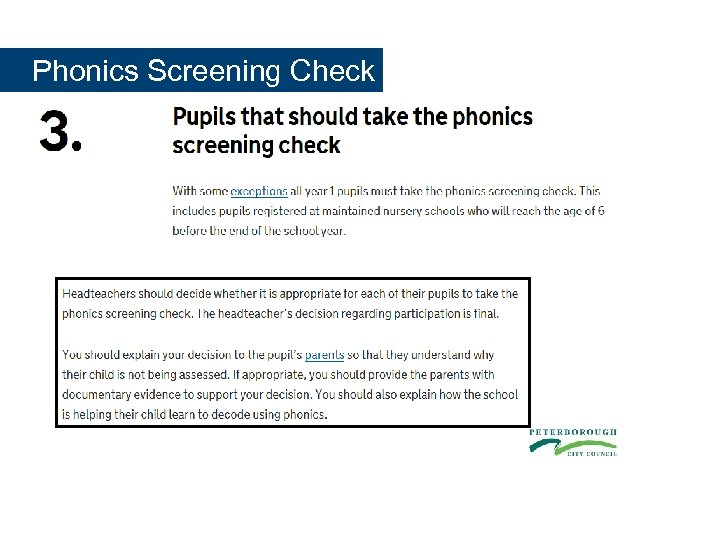 Phonics Screening Check
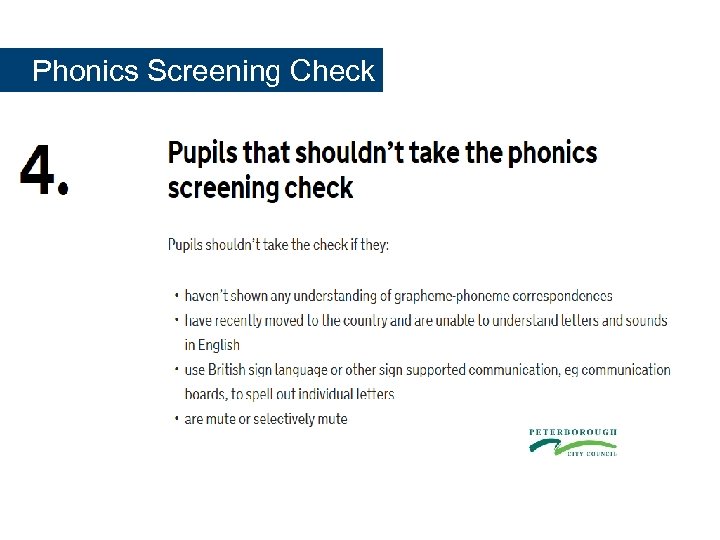 Phonics Screening Check
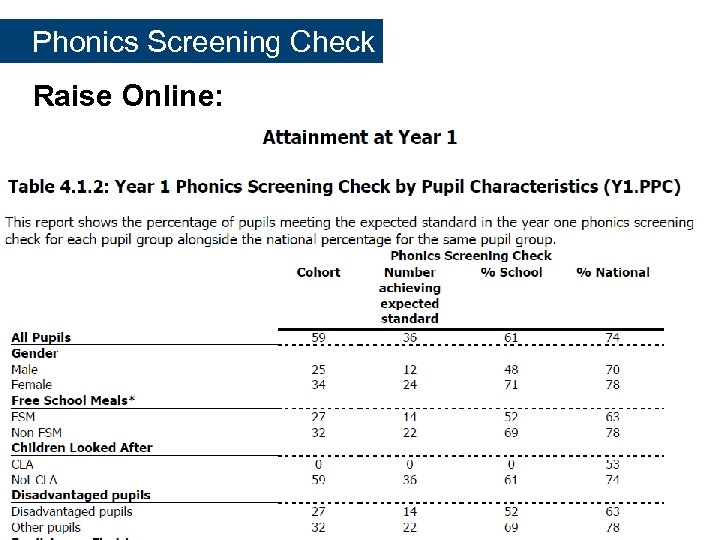 Phonics Screening Check Raise Online:
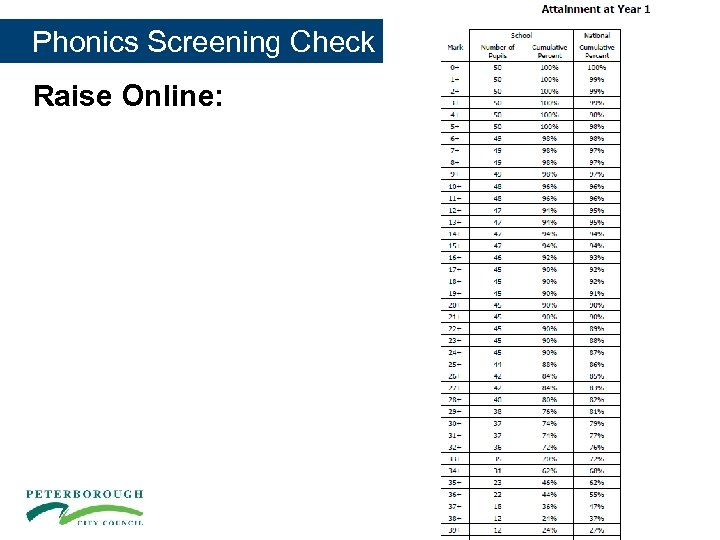 Phonics Screening Check Raise Online:
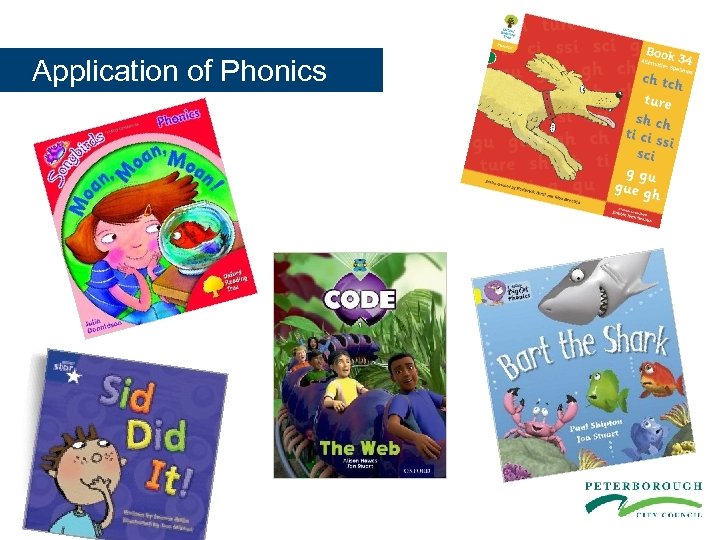 Application of Phonics
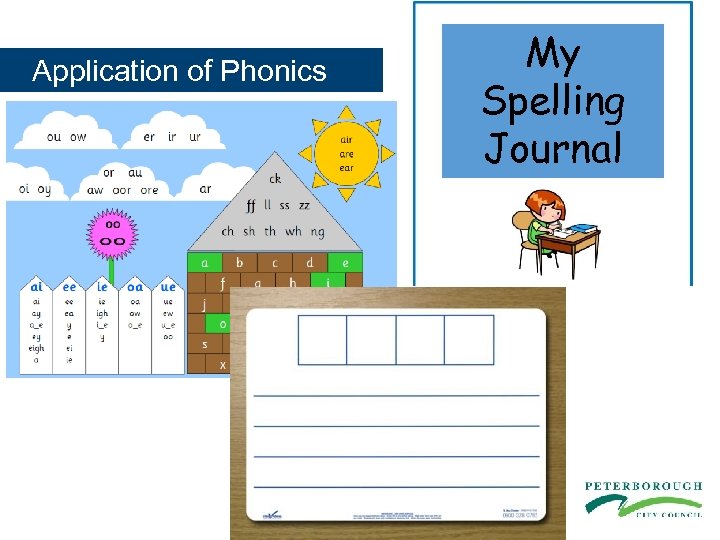 Application of Phonics My Spelling Journal
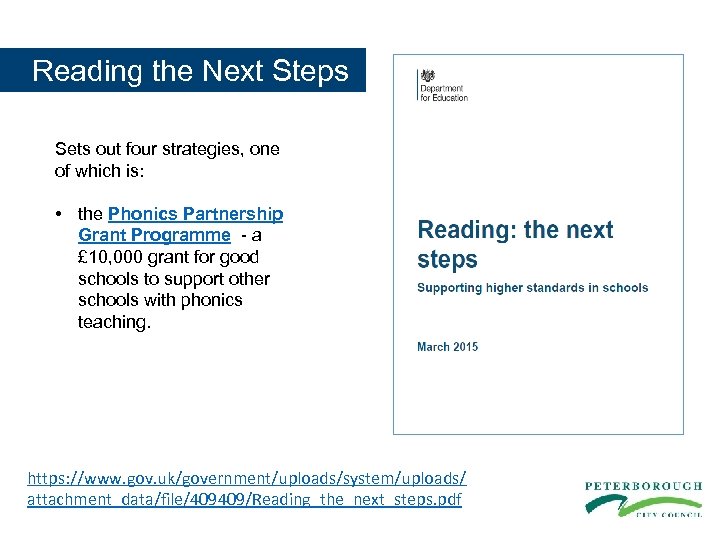 Reading the Next Steps Sets out four strategies, one of which is: • the Phonics Partnership Grant Programme - a £ 10, 000 grant for good schools to support other schools with phonics teaching. https: //www. gov. uk/government/uploads/system/uploads/ attachment_data/file/409409/Reading_the_next_steps. pdf
 CPD Opportunities Year 1 Phonic Screening Check Workshops: Wednesday 22 nd April 4. 00 – 5. 30 pm Thursday 23 rd April 4. 00 – 5. 30 pm Northminster House
 Contact Details Sue Howard: 01733 863717 Lesley Kelly: 01733 863723 sue. howard@Peterborough. gov. uk lesley. kelly@peterborough. gov. uk