 Скачать презентацию Leadership and MBTI Prof Bill De Marco Chair
0c8149a7231d68505bd6243b22289bdb.ppt
- Количество слайдов: 59




Leadership and MBTI® Prof. Bill De. Marco Chair, ACSC Leadership Department ® MBTI Certified Practitioner


Who Am I? Why is this question important?
The WHY “We cannot safely assume that other people's minds work on the same principles as our own. All too often, others with whom we come in contact do not reason as we reason, or do not value things we value, or are not interested in what interests us. ” Isabel Briggs Myers
Who Are YOU? What are your strengths? What are your blind spots? What areas do you need to improve to lead with greater effectiveness?
About the MBTI Instrument ® • • An indicator—not a test Looks only at normal behavior Forced-choice questions No right or wrong answers—no better or worse types ® USERS OF THE MBTI INSTRUMENT Most Fortune 100 companies use it The most widely used personality assessment in the world—more than 2 million people worldwide each year Translated into two dozen+ languages Used in 70+ different countries
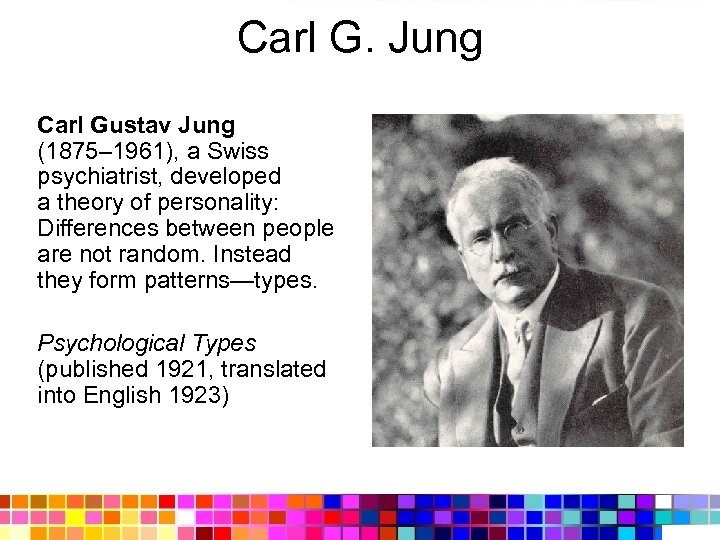
Carl G. Jung Carl Gustav Jung (1875– 1961), a Swiss psychiatrist, developed a theory of personality: Differences between people are not random. Instead they form patterns—types. Psychological Types (published 1921, translated into English 1923)
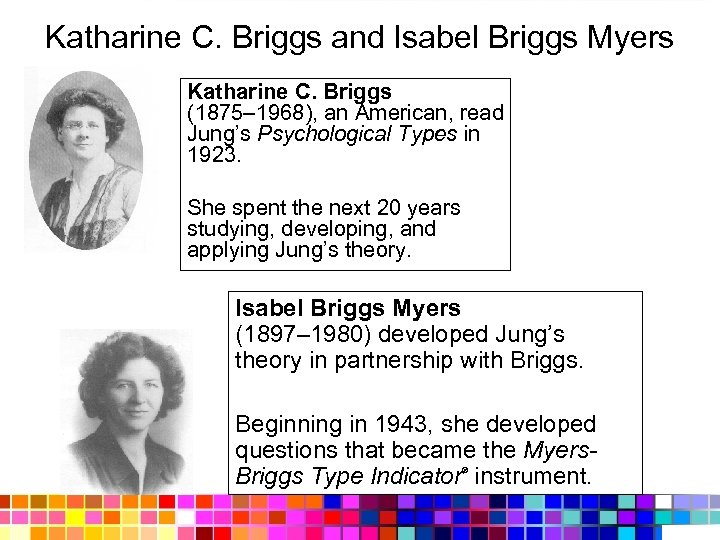
Katharine C. Briggs and Isabel Briggs Myers Katharine C. Briggs (1875– 1968), an American, read Jung’s Psychological Types in 1923. She spent the next 20 years studying, developing, and applying Jung’s theory. Isabel Briggs Myers (1897– 1980) developed Jung’s theory in partnership with Briggs. Beginning in 1943, she developed questions that became the Myers. Briggs Type Indicator instrument. ®
Jung’s Personality Theory • Jung believed that preferences are innate— “inborn predispositions” • He also recognized that they are shaped by environmental influences, such as family, culture, and education Nature Nurture vs. MBTI® instrument Environment
Activity Write your name with your preferred hand. ______________________ Write your name with your least preferred hand. _______________________
“Handedness” Activity • What words describe the experience of writing the first signature. • Describe writing the second signature. • Where do we get our preference for using one hand over the other? • How does the environment influence our preference for using one hand over the other? We all can and do use both hands; for writing, one is natural, comfortable, automatic
® MBTI Theory § Four pairs of opposites—like our right and left hands. We all use both sides of each pair, but one is our natural preference. § The MBTI® instrument is designed to indicate those inborn preferences. § The MBTI® instrument is not designed to measure skills or effects of environment.
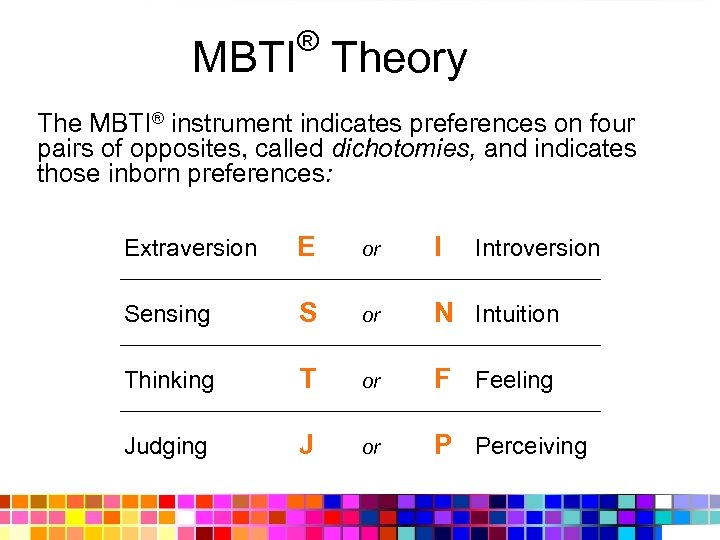
® MBTI Theory The MBTI® instrument indicates preferences on four pairs of opposites, called dichotomies, and indicates those inborn preferences: Extraversion E or I Sensing S or N Intuition Thinking T or F Feeling Judging J or P Perceiving Introversion

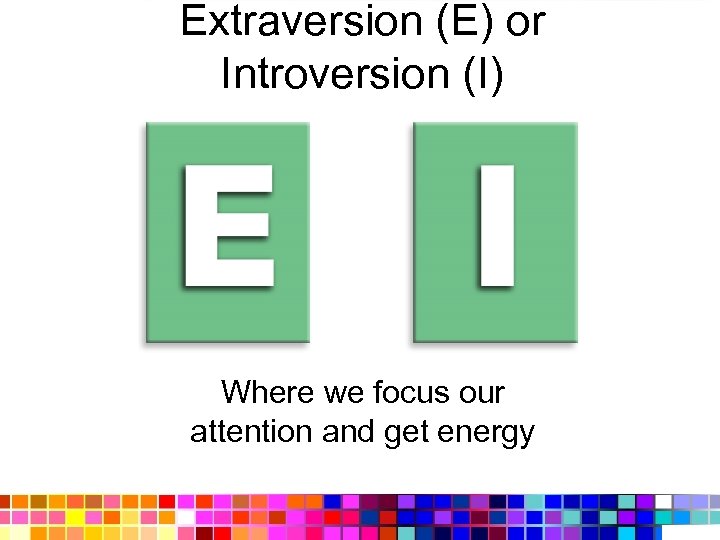
Extraversion (E) or Introversion (I) Where we focus our attention and get energy
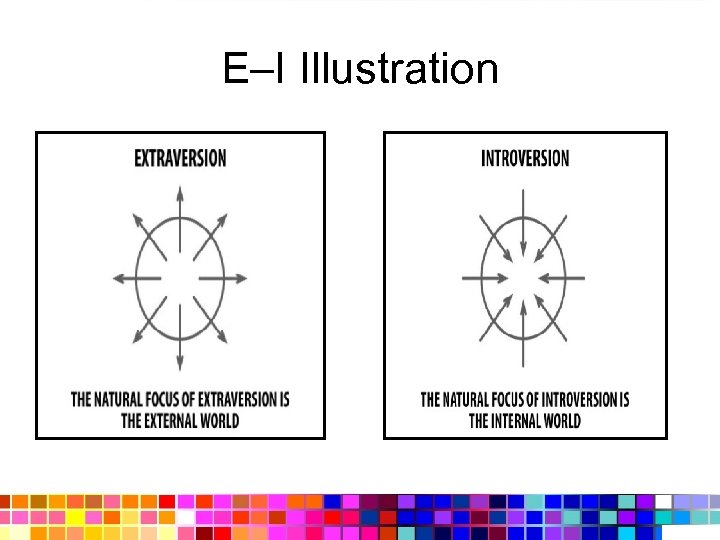
E–I Illustration
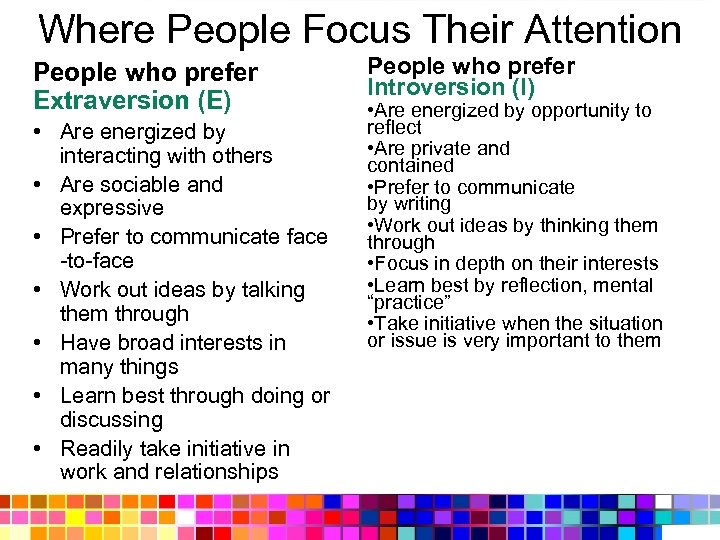
Where People Focus Their Attention People who prefer Extraversion (E) • Are energized by interacting with others • Are sociable and expressive • Prefer to communicate face -to-face • Work out ideas by talking them through • Have broad interests in many things • Learn best through doing or discussing • Readily take initiative in work and relationships People who prefer Introversion (I) • Are energized by opportunity to reflect • Are private and contained • Prefer to communicate by writing • Work out ideas by thinking them through • Focus in depth on their interests • Learn best by reflection, mental “practice” • Take initiative when the situation or issue is very important to them
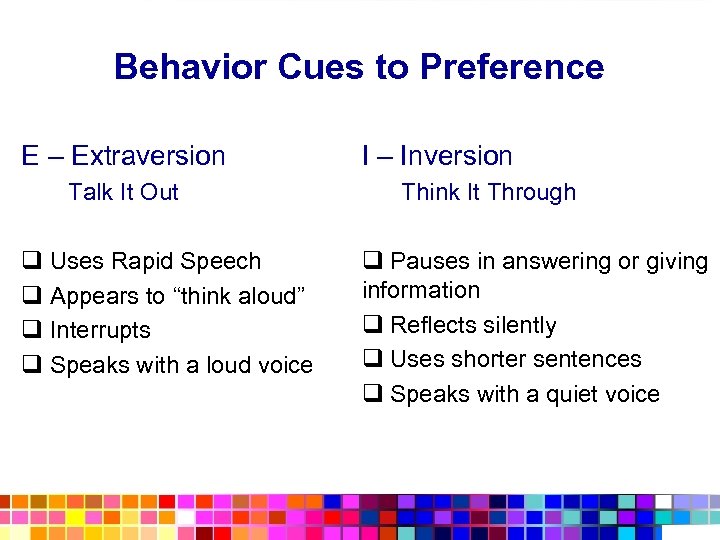
Behavior Cues to Preference E – Extraversion Talk It Out q Uses Rapid Speech q Appears to “think aloud” q Interrupts q Speaks with a loud voice I – Inversion Think It Through q Pauses in answering or giving information q Reflects silently q Uses shorter sentences q Speaks with a quiet voice
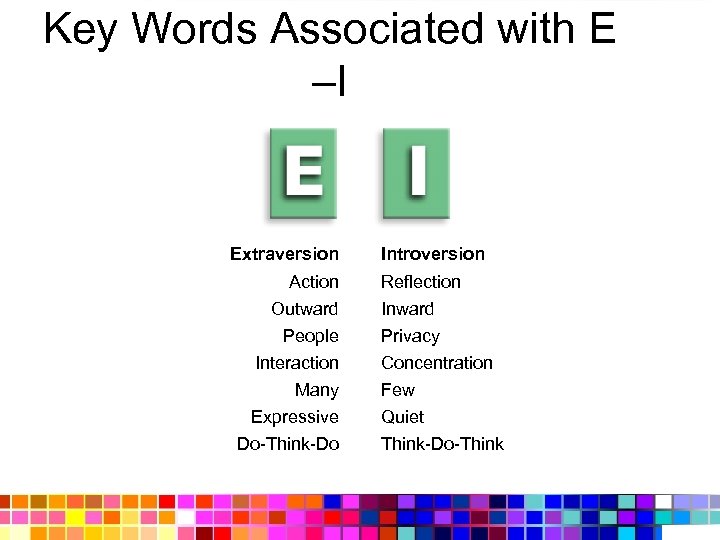
Key Words Associated with E –I Extraversion Action Outward People Interaction Many Expressive Do-Think-Do Introversion Reflection Inward Privacy Concentration Few Quiet Think-Do-Think
We Have a Preference We all do Extraverted and Introverted things. But we usually do not do them with equal comfort. Most of us have a preference for one or the other.
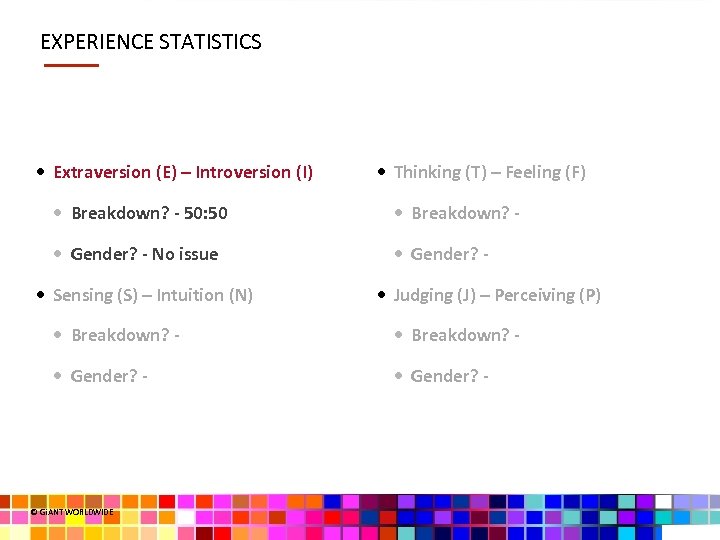
EXPERIENCE STATISTICS • Extraversion (E) – Introversion (I) • Thinking (T) – Feeling (F) • Breakdown? - 50: 50 • Breakdown? - • Gender? - No issue • Gender? - • Sensing (S) – Intuition (N) • Judging (J) – Perceiving (P) • Breakdown? - • Gender? - © Gi. ANT WORLDWIDE
Sensing (S) or Intuition (N) The way we take in information and the kind of information we like and trust
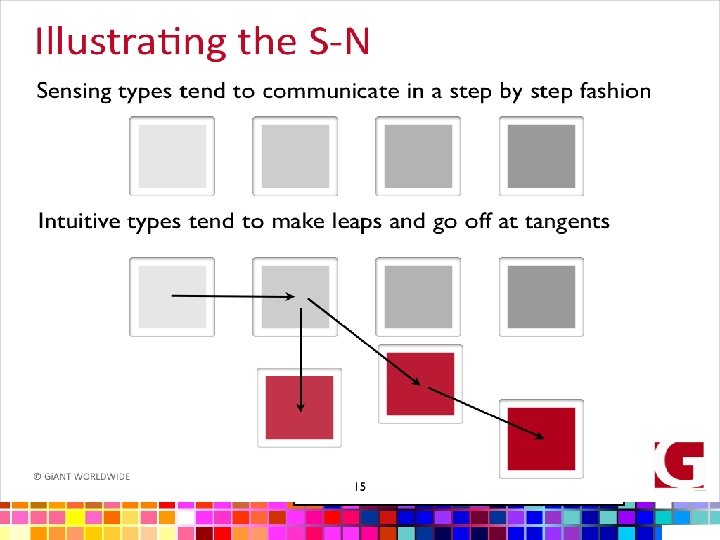
S–N Illustration
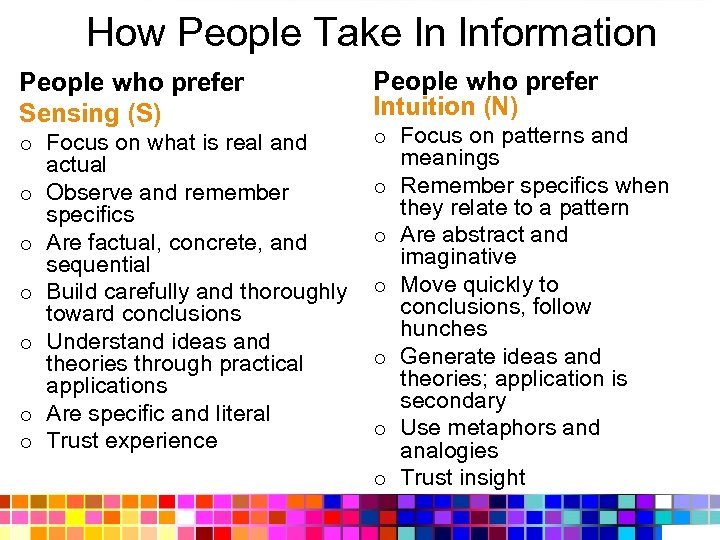
How People Take In Information People who prefer Sensing (S) o Focus on what is real and actual o Observe and remember specifics o Are factual, concrete, and sequential o Build carefully and thoroughly toward conclusions o Understand ideas and theories through practical applications o Are specific and literal o Trust experience People who prefer Intuition (N) o Focus on patterns and meanings o Remember specifics when they relate to a pattern o Are abstract and imaginative o Move quickly to conclusions, follow hunches o Generate ideas and theories; application is secondary o Use metaphors and analogies o Trust insight
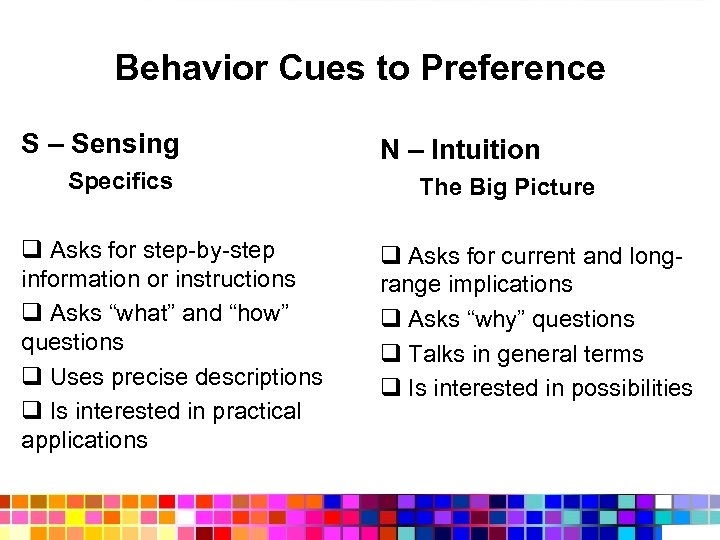
Behavior Cues to Preference S – Sensing Specifics q Asks for step-by-step information or instructions q Asks “what” and “how” questions q Uses precise descriptions q Is interested in practical applications N – Intuition The Big Picture q Asks for current and longrange implications q Asks “why” questions q Talks in general terms q Is interested in possibilities
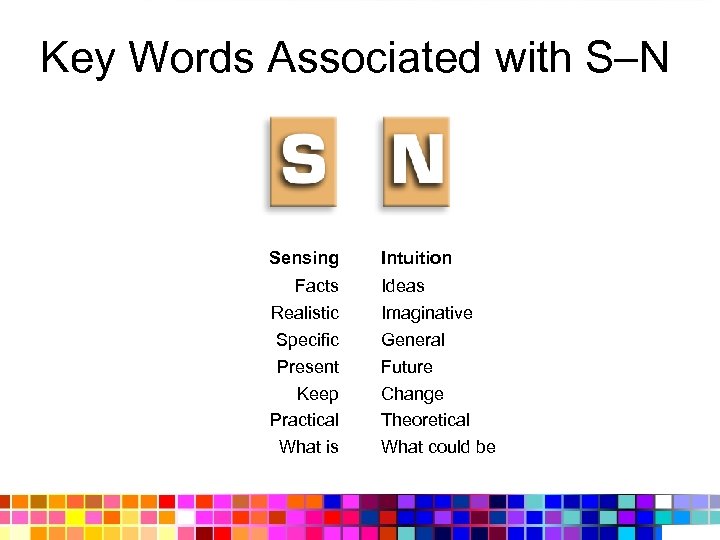
Key Words Associated with S–N Sensing Intuition Facts Realistic Specific Present Keep Practical What is Ideas Imaginative General Future Change Theoretical What could be
We Have a Preference We all use Sensing and Intuition when making our observations about the world. But we usually do not use them with equal trust. Most of us have a preference for one or the other.
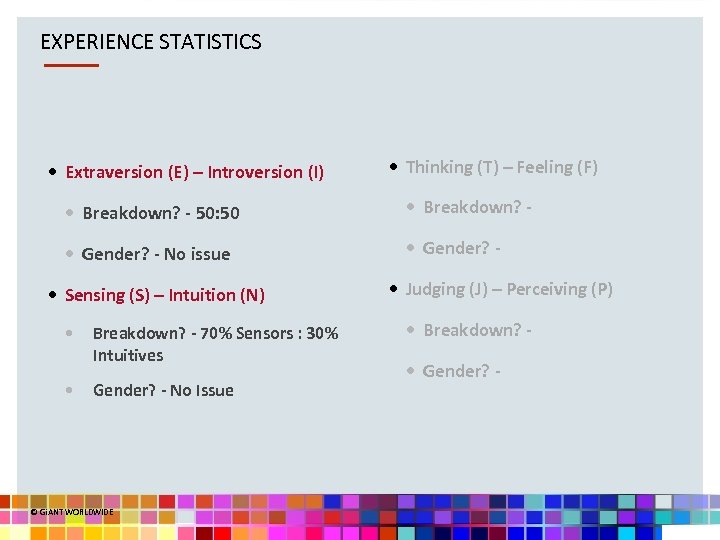
EXPERIENCE STATISTICS • Extraversion (E) – Introversion (I) • Thinking (T) – Feeling (F) • Breakdown? - 50: 50 • Breakdown? - • Gender? - No issue • Gender? - • Sensing (S) – Intuition (N) • • Breakdown? - 70% Sensors : 30% Intuitives Gender? - No Issue © Gi. ANT WORLDWIDE • Judging (J) – Perceiving (P) • Breakdown? • Gender? -
Thinking (T) or Feeling (F) The way we make decisions
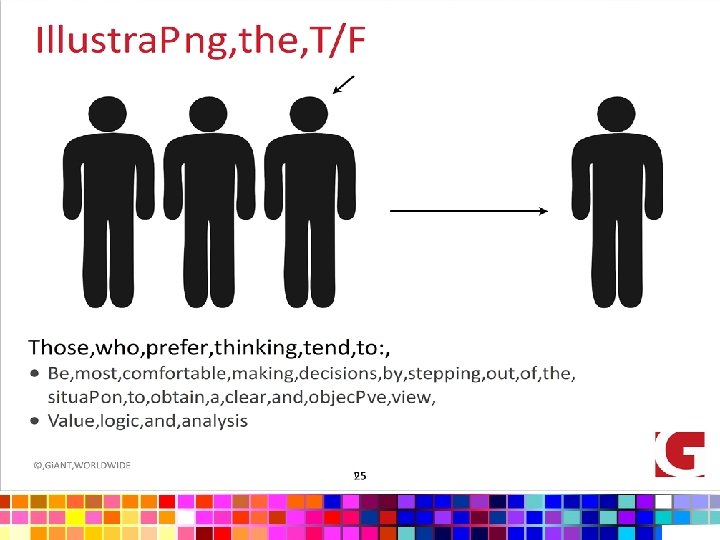
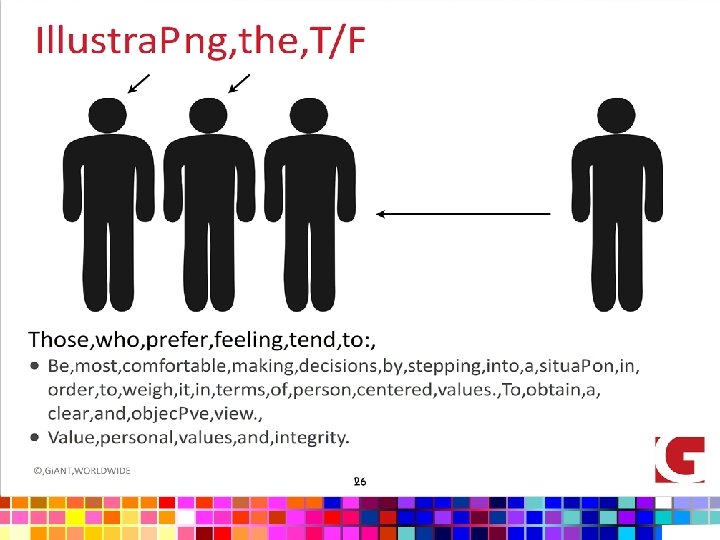
T–F Illustration
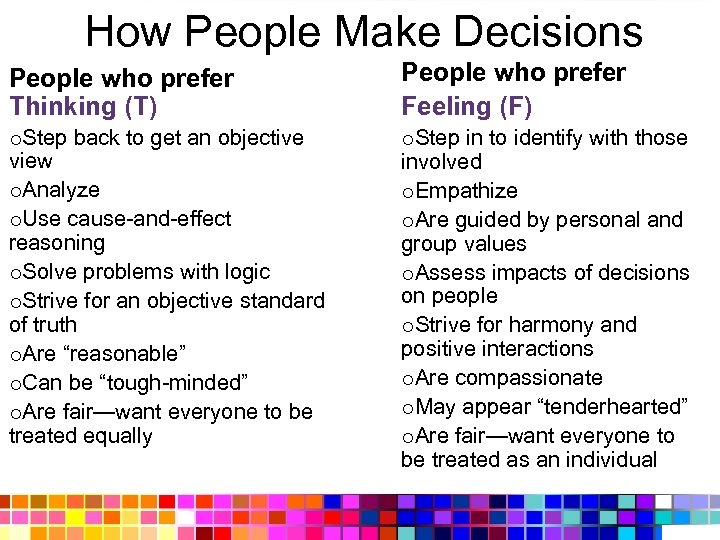
How People Make Decisions People who prefer Thinking (T) People who prefer Feeling (F) o. Step back to get an objective view o. Analyze o. Use cause-and-effect reasoning o. Solve problems with logic o. Strive for an objective standard of truth o. Are “reasonable” o. Can be “tough-minded” o. Are fair—want everyone to be treated equally o. Step in to identify with those involved o. Empathize o. Are guided by personal and group values o. Assess impacts of decisions on people o. Strive for harmony and positive interactions o. Are compassionate o. May appear “tenderhearted” o. Are fair—want everyone to be treated as an individual
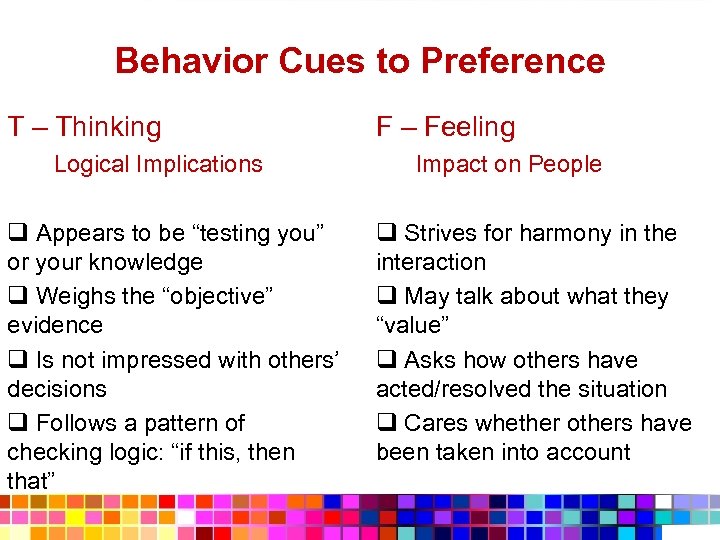
Behavior Cues to Preference T – Thinking Logical Implications q Appears to be “testing you” or your knowledge q Weighs the “objective” evidence q Is not impressed with others’ decisions q Follows a pattern of checking logic: “if this, then that” F – Feeling Impact on People q Strives for harmony in the interaction q May talk about what they “value” q Asks how others have acted/resolved the situation q Cares whether others have been taken into account
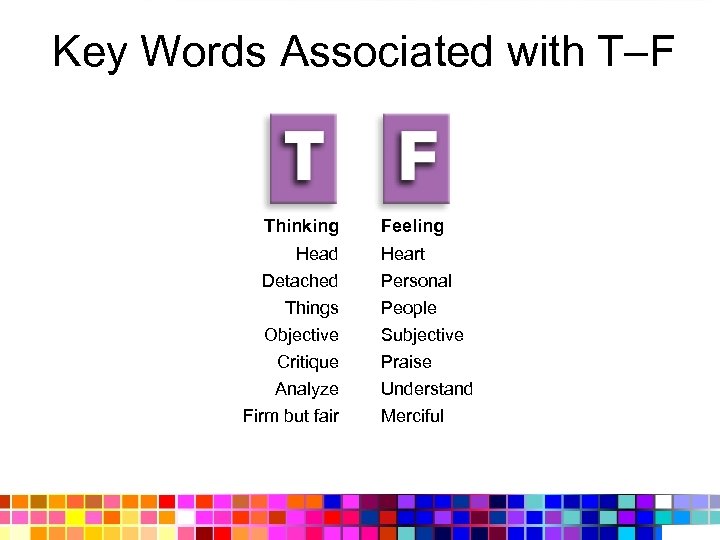
Key Words Associated with T–F Thinking Head Detached Things Objective Critique Analyze Firm but fair Feeling Heart Personal People Subjective Praise Understand Merciful
We Have a Preference We all use both Thinking and Feeling when making decisions. But we usually do not use them with equal ease. Most of us have a preference for one or the other.
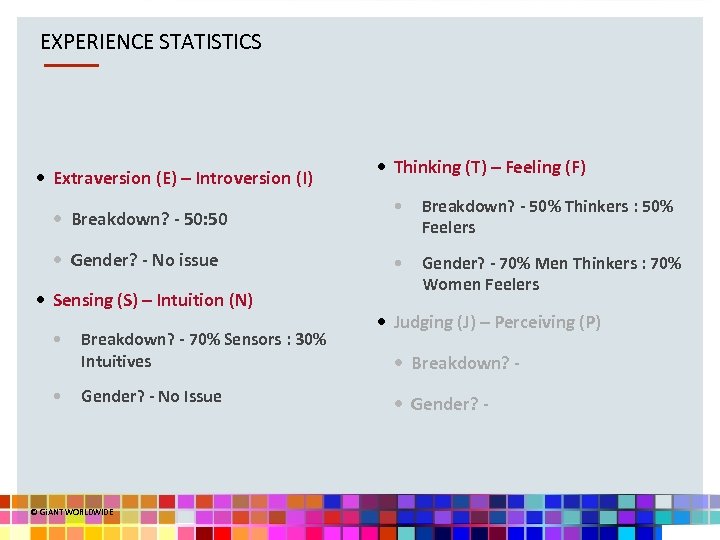
EXPERIENCE STATISTICS • Extraversion (E) – Introversion (I) • Breakdown? - 50: 50 • Gender? - No issue • Sensing (S) – Intuition (N) • • Breakdown? - 70% Sensors : 30% Intuitives Gender? - No Issue © Gi. ANT WORLDWIDE • Thinking (T) – Feeling (F) • Breakdown? - 50% Thinkers : 50% Feelers • Gender? - 70% Men Thinkers : 70% Women Feelers • Judging (J) – Perceiving (P) • Breakdown? • Gender? -
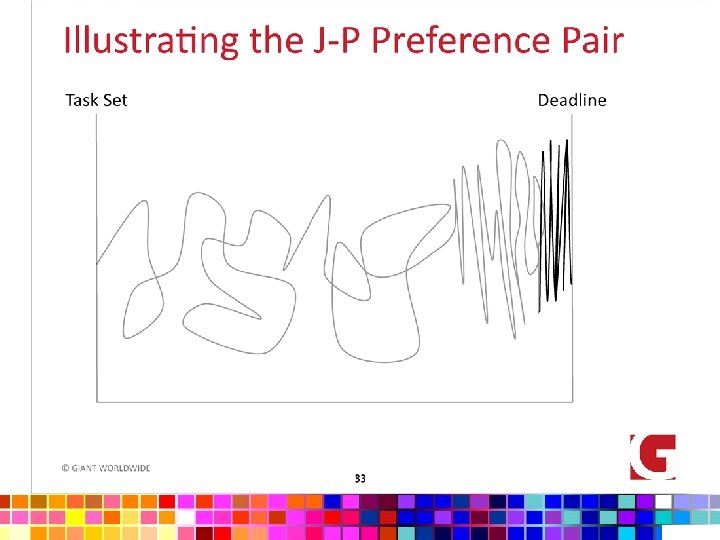
Judging (J) or Perceiving (P) Our attitude toward the external world and how we orient ourselves to it
J–P Illustration
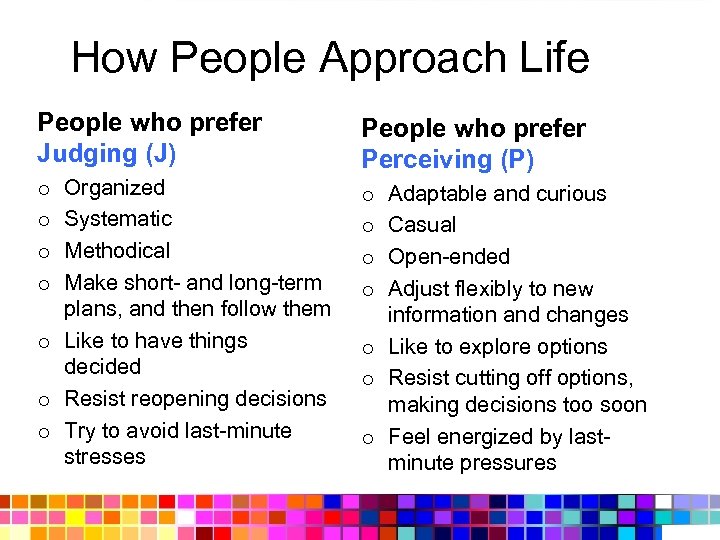
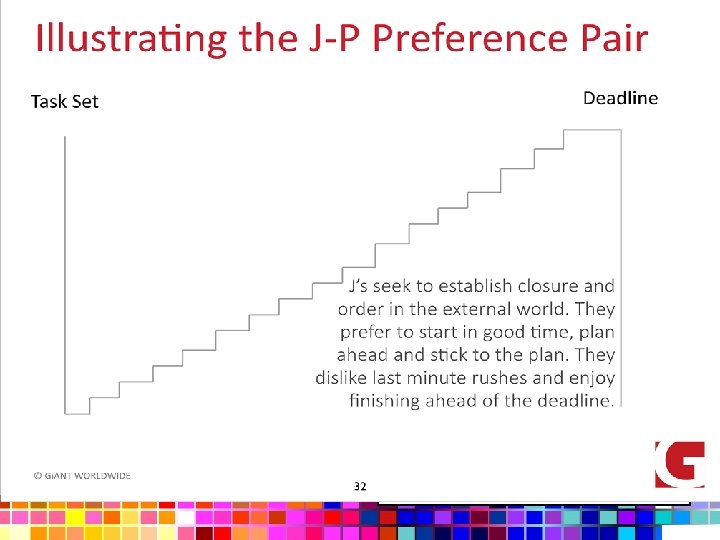
How People Approach Life People who prefer Judging (J) People who prefer Perceiving (P) Organized Systematic Methodical Make short- and long-term plans, and then follow them o Like to have things decided o Resist reopening decisions o Try to avoid last-minute stresses o o o o Adaptable and curious Casual Open-ended Adjust flexibly to new information and changes o Like to explore options o Resist cutting off options, making decisions too soon o Feel energized by lastminute pressures
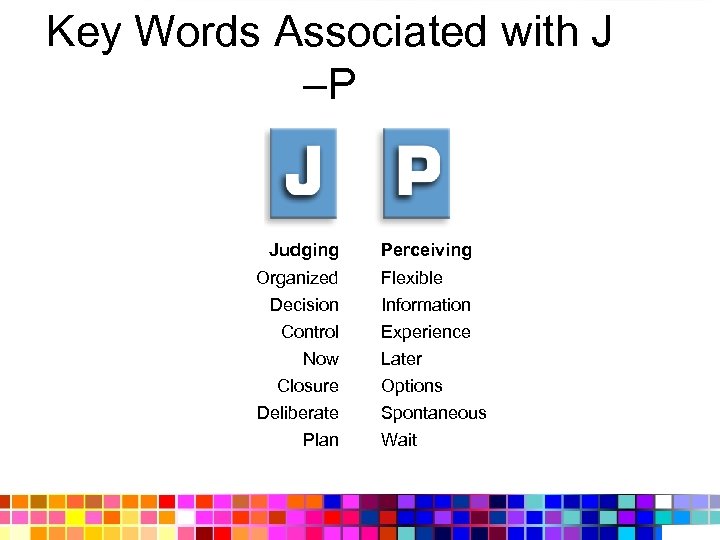
Key Words Associated with J –P Judging Organized Decision Control Now Closure Deliberate Plan Perceiving Flexible Information Experience Later Options Spontaneous Wait
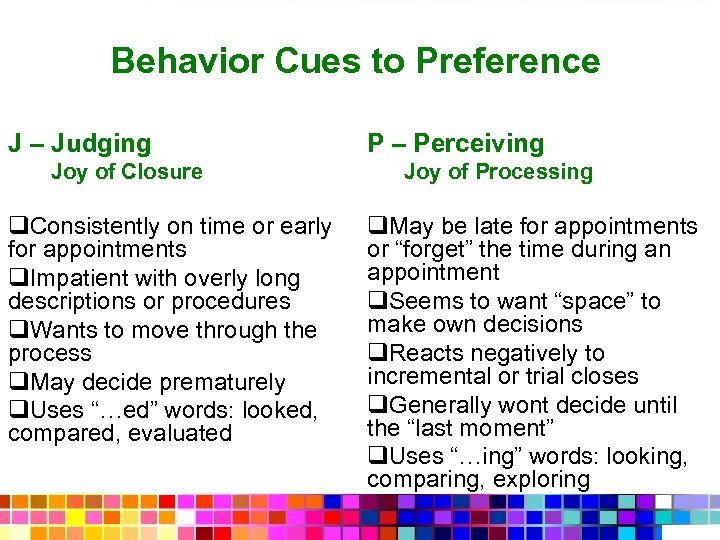
Behavior Cues to Preference J – Judging Joy of Closure q. Consistently on time or early for appointments q. Impatient with overly long descriptions or procedures q. Wants to move through the process q. May decide prematurely q. Uses “…ed” words: looked, compared, evaluated P – Perceiving Joy of Processing q. May be late for appointments or “forget” the time during an appointment q. Seems to want “space” to make own decisions q. Reacts negatively to incremental or trial closes q. Generally wont decide until the “last moment” q. Uses “…ing” words: looking, comparing, exploring
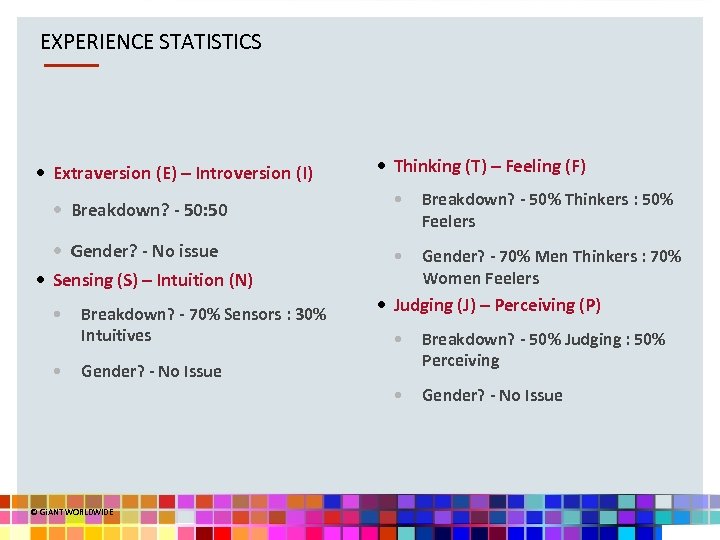
EXPERIENCE STATISTICS • Extraversion (E) – Introversion (I) • Breakdown? - 50: 50 • Gender? - No issue • Thinking (T) – Feeling (F) • Breakdown? - 50% Thinkers : 50% Feelers • Gender? - 70% Men Thinkers : 70% Women Feelers • Sensing (S) – Intuition (N) • Breakdown? - 70% Sensors : 30% Intuitives • Judging (J) – Perceiving (P) Breakdown? - 50% Judging : 50% Perceiving • • • Gender? - No Issue © Gi. ANT WORLDWIDE
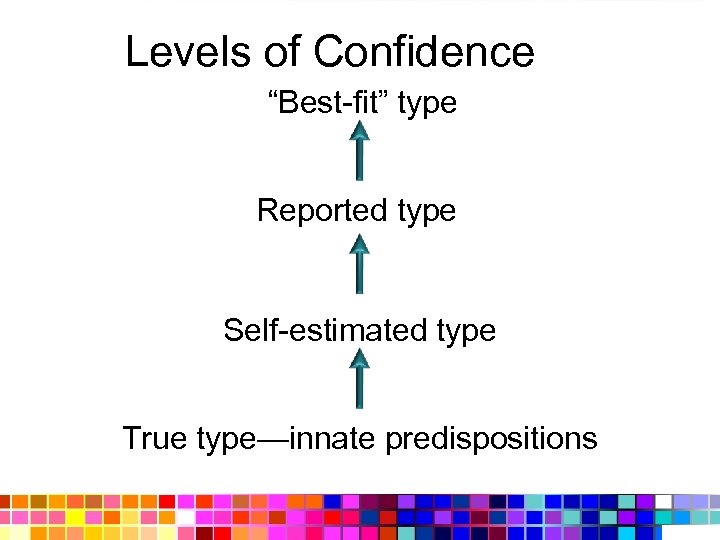
Levels of Confidence “Best-fit” type Reported type Self-estimated type True type—innate predispositions
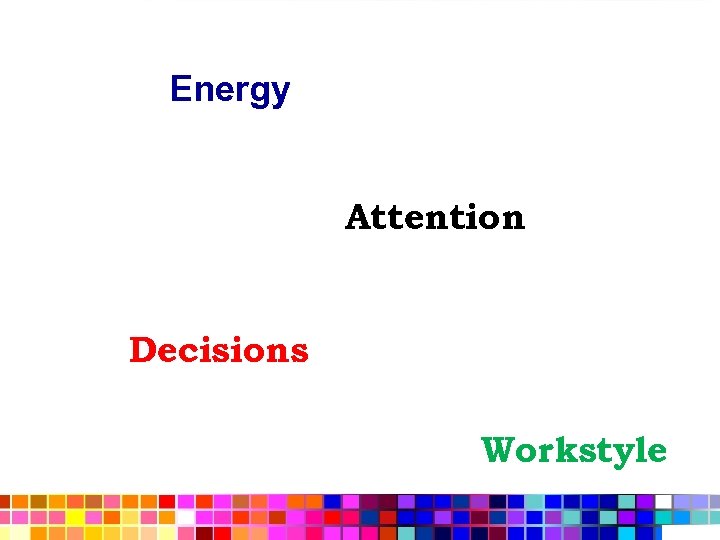
Energy Attention Decisions Workstyle
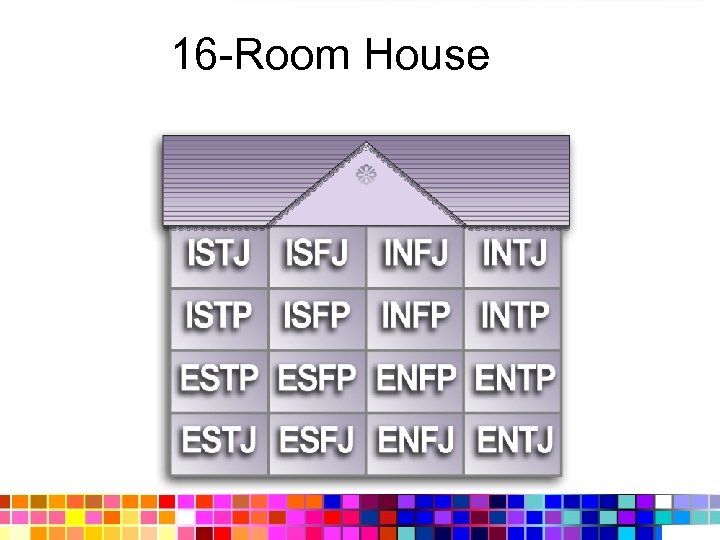
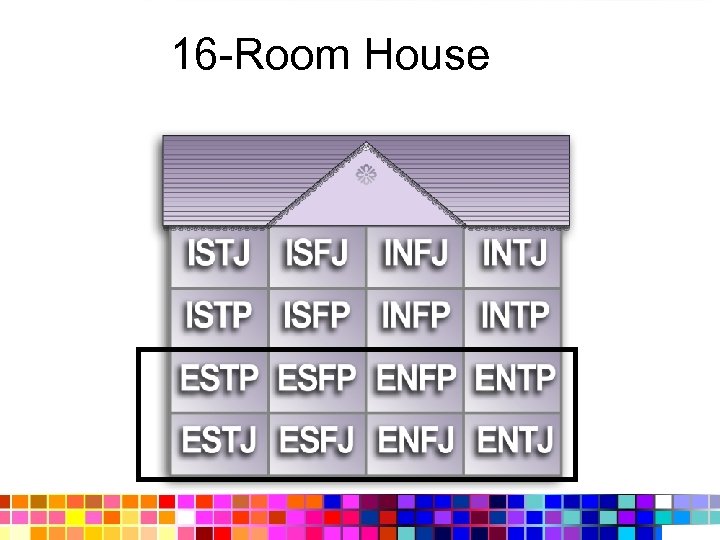
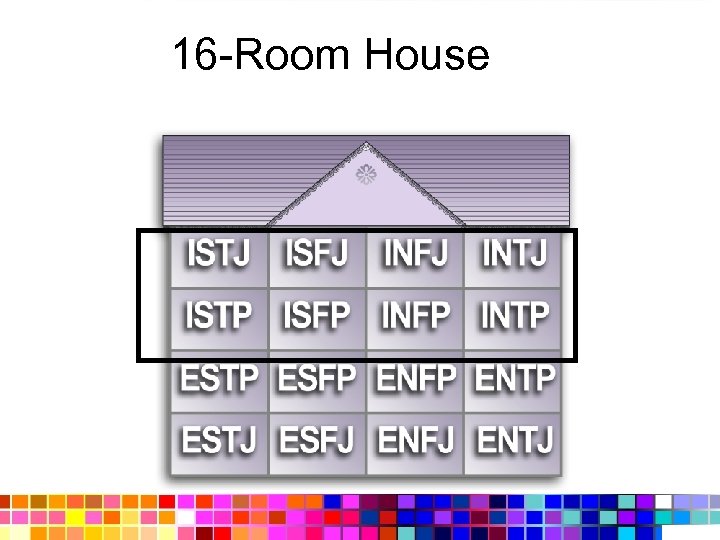
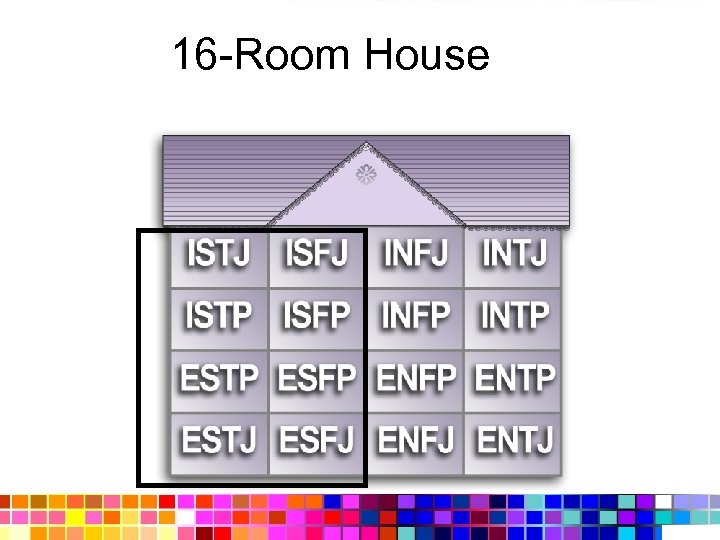
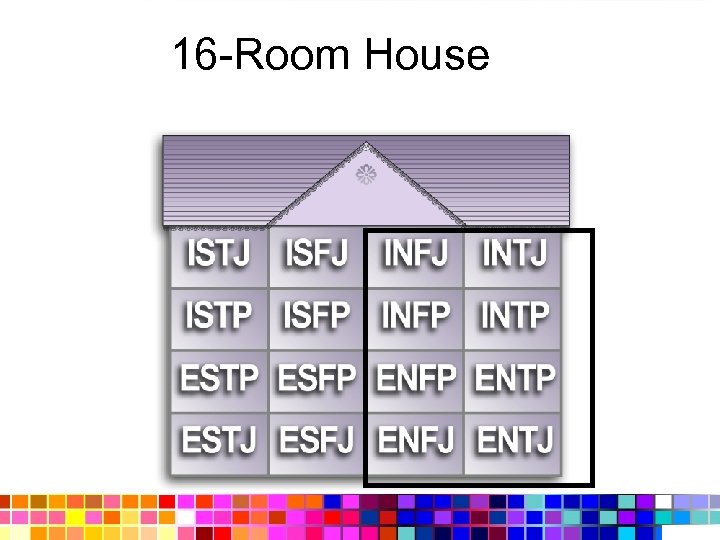
16 -Room House
16 -Room House
16 -Room House
16 -Room House
16 -Room House
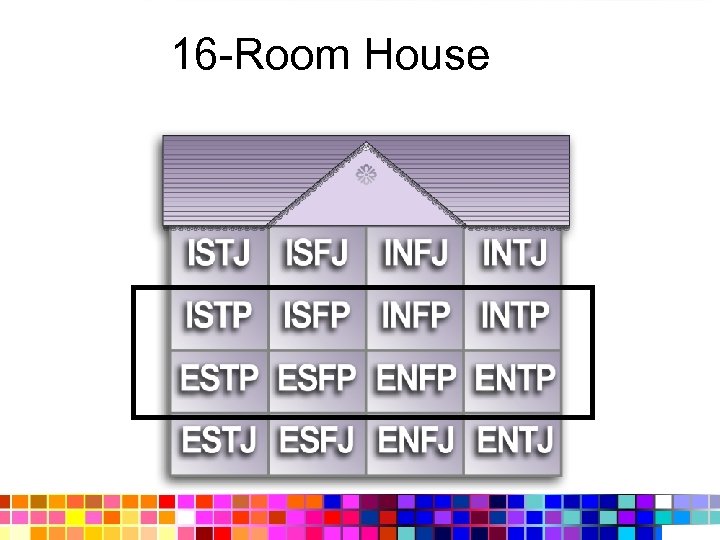
16 -Room House
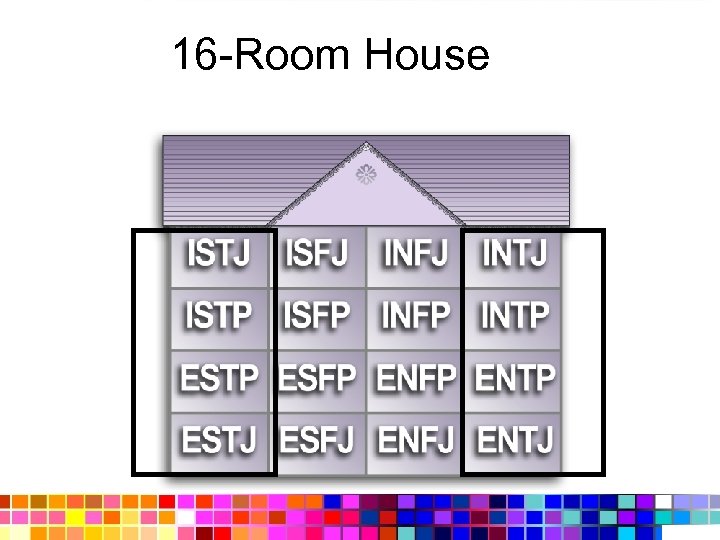
16 -Room House
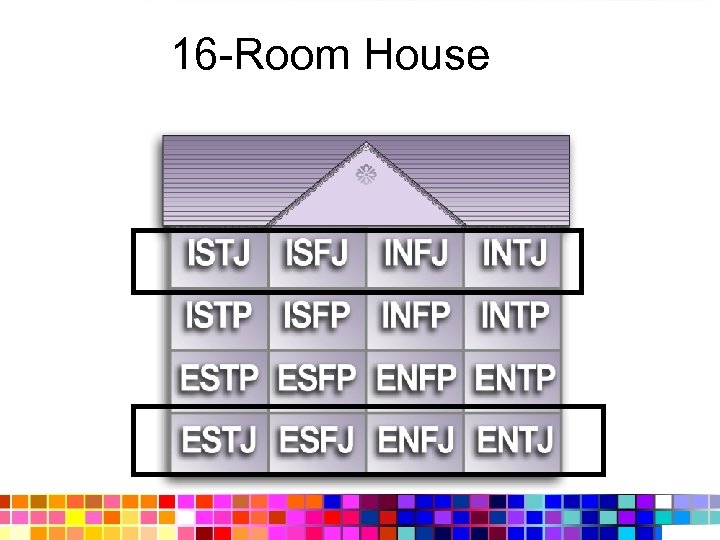
16 -Room House
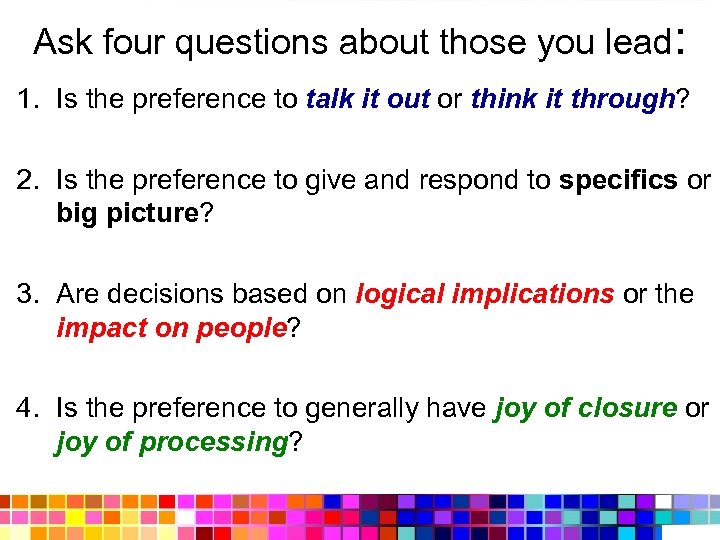
Ask four questions about those you lead: 1. Is the preference to talk it out or think it through? 2. Is the preference to give and respond to specifics or big picture? 3. Are decisions based on logical implications or the impact on people? 4. Is the preference to generally have joy of closure or joy of processing?
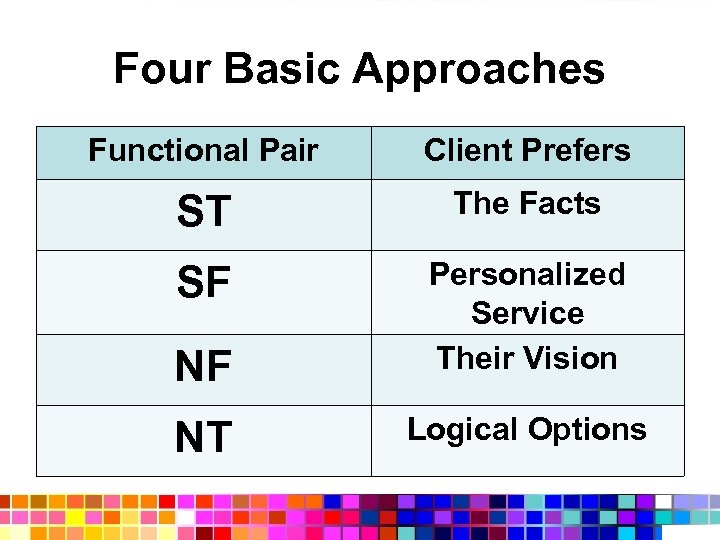
Four Basic Approaches Functional Pair Client Prefers ST The Facts SF NF Personalized Service Their Vision NT Logical Options
Personality Types in Meetings
“Leadership and learning are indispensable to each other. ” John F. Kennedy
Скачать презентацию Leadership and MBTI Prof Bill De Marco Chair
0c8149a7231d68505bd6243b22289bdb.ppt