


 Скачать презентацию LEAD 21 Unit 2 Week 4 Day 1
a824cf02c5fcd9c80de35f52ce7d4da3.ppt
- Количество слайдов: 43
 LEAD 21 Unit 2 Week 4 Day 1
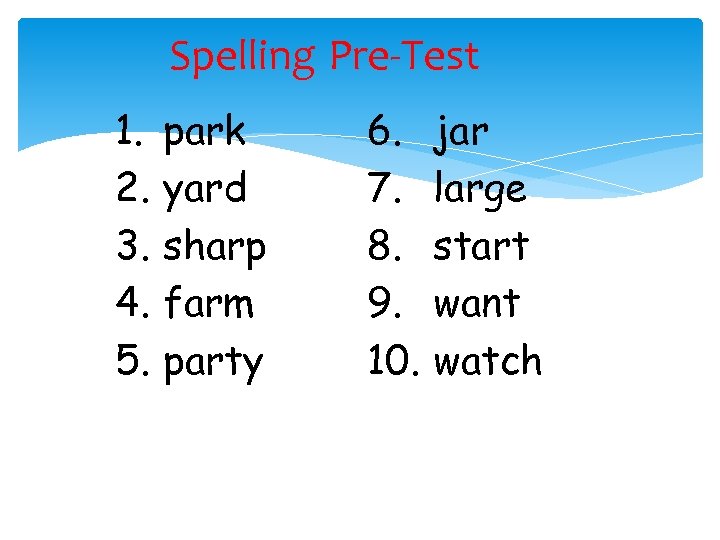 Spelling Pre-Test 1. 2. 3. 4. 5. park yard sharp farm party 6. 7. 8. 9. 10. jar large start want watch
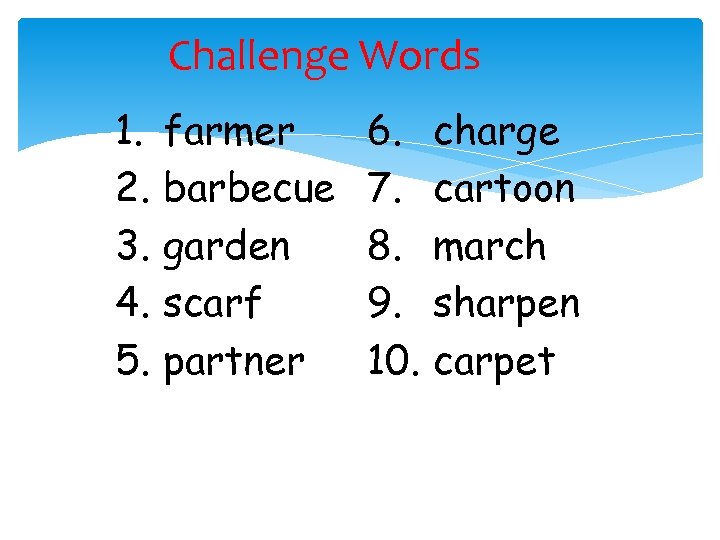 Challenge Words 1. 2. 3. 4. 5. farmer barbecue garden scarf partner 6. 7. 8. 9. 10. charge cartoon march sharpen carpet
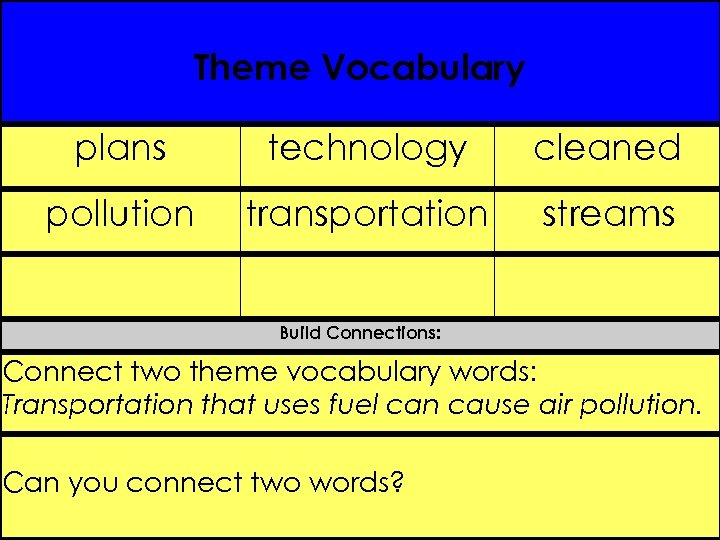 Theme Vocabulary plans technology pollution transportation cleaned streams Build Connections: Connect two theme vocabulary words: Transportation that uses fuel can cause air pollution. Can you connect two words?
 Prepare to Read Use Text Evidence: Find and record evidence that answers Focus Question #1, How are communities built? (Use T-chart) Read Science All Around pages 6 -9 Read Drip! Drop! pages 16 - 28
 Phonics Review Long /o/ spelled: o o_e ow oa /f/ spelled ph 1. Rose and Joe saw a show about boats. 2. The shy doe did not let me take its photo. (Circle the letters that stand for /o/ and /f/. ) oe
 Word Study: Review Plural Nouns · For most nouns, add –s · Add –es to nouns ending with ch, tch, s, x, or z · When a noun ends with a consonant + y, change the y to i and then add –es · When a noun ends in a vowel + y, simply add –s · We change the spellings of some nouns that end in –f or –fe. The f becomes a v and we then add –es box peach Thief dish watch boy loaf ranch pony
 High Frequency Words coming, oh, their, water Fluency: “Bus or Train” Practice Companion p. 124
 Writing: Choose A Topic High-speed trains Electric cars Bicycles Solar power
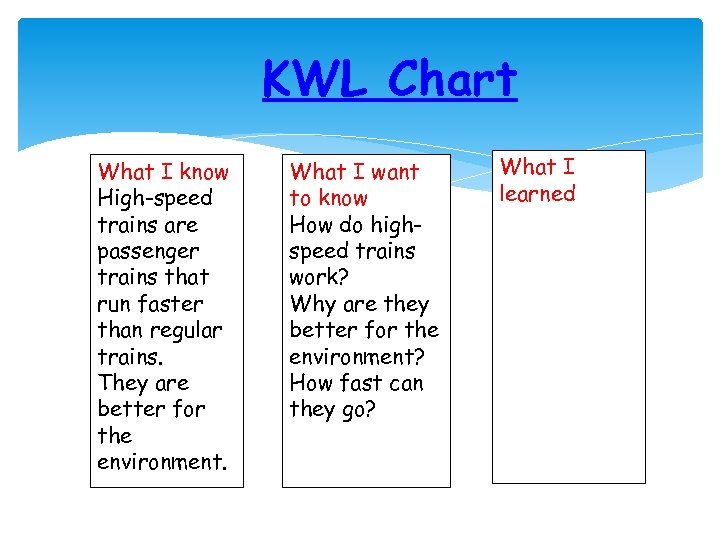 KWL Chart What I know High-speed trains are passenger trains that run faster than regular trains. They are better for the environment. What I want to know How do highspeed trains work? Why are they better for the environment? How fast can they go? What I learned

 LEAD 21 Unit 2 Week 4 Day 2
 Summarize Model using Science All Around p. 24 - The author says that some cities have loud traffic, blocked roads, and air pollution. Science and technology can help people solve these problems. Read pages 18 -19 -From looking at the photos, what might a reader predict is the main idea of this selection? -Look at the diagram on page 18. What inference can you make about planning a garden?
 Prepare to Read Which selection provides more facts? Which selection has a glossary and index? Which has science experiments? Use Text Evidence: Find and record evidence that answers Focus Question #2: How do people in the community use tools and technology? Read Science All Around pages 12 -15
 Phonics Long /u/ spelled: u u_e ew /j/: ge, gi gem, huge, page, cage, giant, giraffe ue
 Word Study Review words with Double Medial Consonants (VCCV) If a word has two consonants between two vowels, we divide the word between the consonants. puppy yellow mitten funny pillow hello kitten bottom
 High Frequency Word: give Fluency: “Bus or Train? ” Practice Page 124 (phrasing)
 Grammar Nouns that Show Ownership We used that girl’s soccer ball. (One girl owns the soccer ball, apostrophe + s. ) The girls’ soccer team won the game. (Many girls belong to the soccer team, s + apostrophe. ) Practice: Sams bike many boys books a few trees branches
 Report What will transportation look like in the future? Will we have cars that fly or airplanes that go to the moon? While we do not know for sure what the future holds, we do know that high-speed trains will probably be an important part of the way people get around.

 LEAD 21 Unit 2 Week 4 Day 3
 Use Multiple Vocabulary Strategies * Picture Clues * Context Clues * Dictionary Read aloud pages 5 -6 Drip! Drop! Model strategies using the word vapor.
 Identify Main Idea and Details Main idea is the most important idea and details tell more about the main idea. * Read page 9 of Drip! Drop! Model identifying main idea and details. * Read pages 10 -11, identify main idea and supporting details.
 Prepare to Read Author’s Purpose § Entertain § Persuade § Inform Read pages 4 -5 in Drip! Drop! § What is the author’s purpose? § The girl and her dog sometimes say funny things that don’t really help the author’s purpose of informing. Do you think the author had another purpose for these characters? Read pages 8 -9 of Science All Around. § What is the author’s purpose?
 Set Purpose Find text evidence that answers Focus Question 3: How is nature a part of our community? Read Science All Around pages 16 -21 Read Drip! Drop! pages 4 -25
 Phonics List words with the sound /ar/: ar car, Use the following letters to build words with /ar/. t j c st p st tar
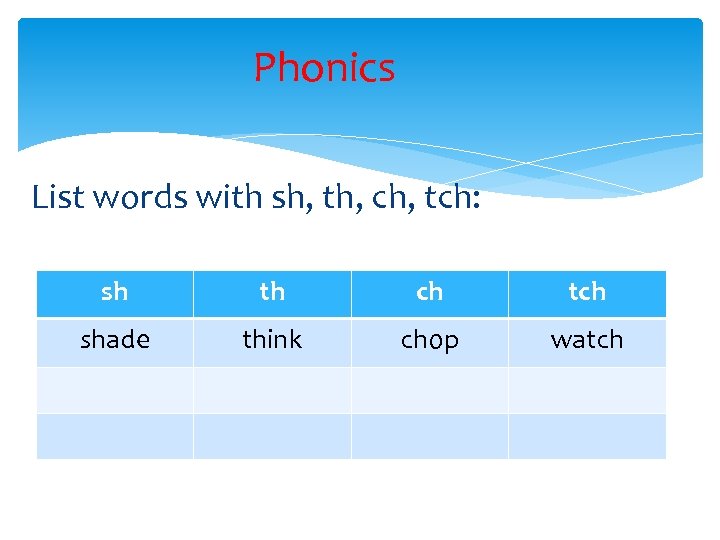 Phonics List words with sh, th, ch, tch: sh th ch tch shade think chop watch
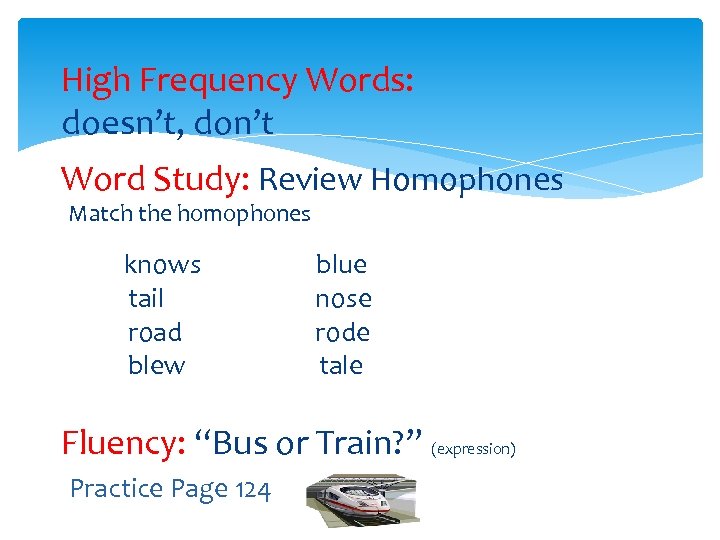 High Frequency Words: doesn’t, don’t Word Study: Review Homophones Match the homophones knows tail road blew blue nose rode tale Fluency: “Bus or Train? ” (expression) Practice Page 124
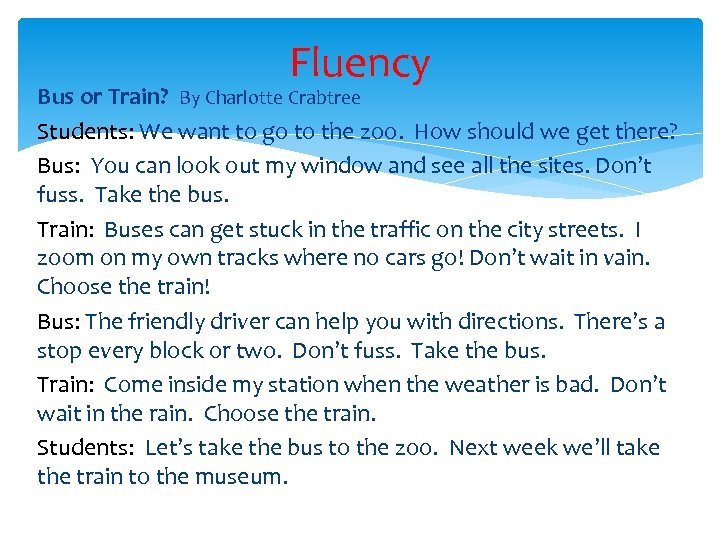 Fluency Bus or Train? By Charlotte Crabtree Students: We want to go to the zoo. How should we get there? Bus: You can look out my window and see all the sites. Don’t fuss. Take the bus. Train: Buses can get stuck in the traffic on the city streets. I zoom on my own tracks where no cars go! Don’t wait in vain. Choose the train! Bus: The friendly driver can help you with directions. There’s a stop every block or two. Don’t fuss. Take the bus. Train: Come inside my station when the weather is bad. Don’t wait in the rain. Choose the train. Students: Let’s take the bus to the zoo. Next week we’ll take the train to the museum.
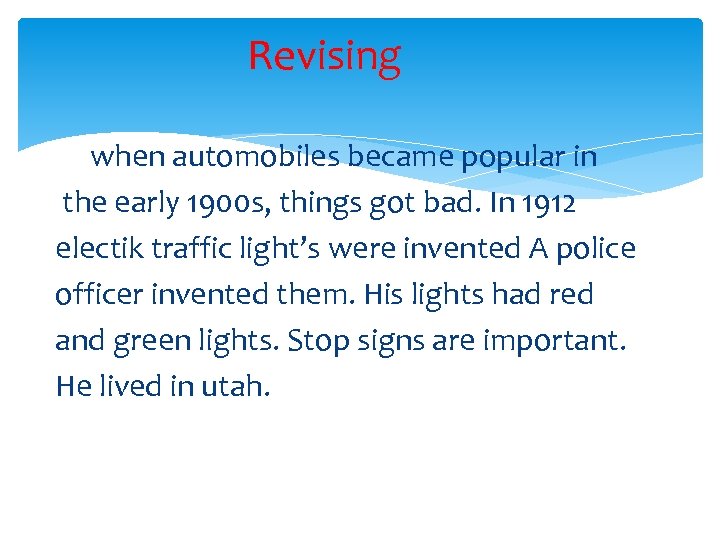 Revising when automobiles became popular in the early 1900 s, things got bad. In 1912 electik traffic light’s were invented A police officer invented them. His lights had red and green lights. Stop signs are important. He lived in utah.
 Edit when automobiles became popular in the early 1900 s, traffic got worse. In 1912, electric traffic light’s were invented A police officer named Lester Wire invented them. He lived in utah. Wire’s lights had red and green lights.
 LEAD 21 Unit 2 Week 4 Day 4
 Build Theme Connections How does science help us get around our community? Children in my neighborhood use skateboards and bikes to travel to places. Skateboards and bikes are science because they’re tools and technology people invented. They are two ways science helps us get around. What kinds of transportation have you seen, heard, or read about?
 Build Vocabulary Connections plans pollution technology transportation cleaned streams Think of your differentiated vocabulary words, how might you use these words together? The workers use machines and other technology to build a house.
 Summarize -give the most important ideas of what you’ve read Read pages 5 -9 of Drip! Drop! and model summarizing. Read pages 10 -14 and have partners summarize.
 Prepare to Read Text Structure: The way a text is organized and the ways in which the author has decided to communicate information. Read page 16 in Science All Around- the author makes a statement about nature being right under your nose and then supports it with several sentences of description about what kind of nature they may see. Read page 24 of Drip! Drop!- the author makes a statement that pipes carry water to the city and then describes the different kinds of pipes in order to help readers understand the statement.
 Set Purpose: Record text evidence to help answer Focus Question #4: How does science help us get around our community? Read Science All Around pages 22 -27.
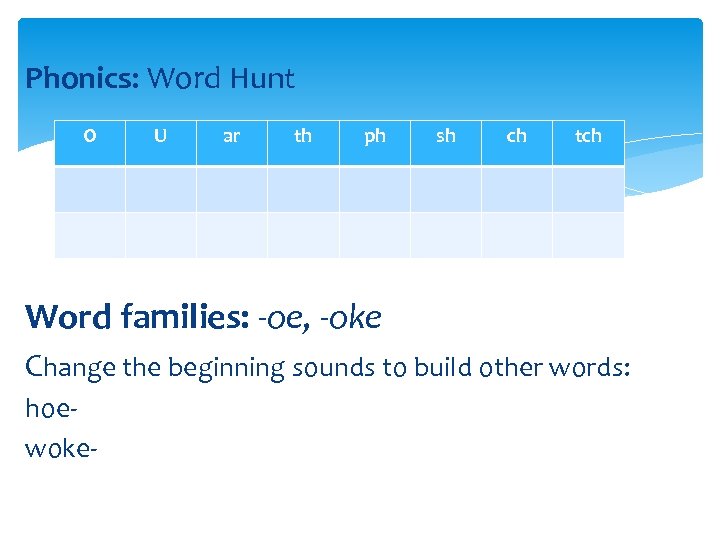 Phonics: Word Hunt O U ar th ph sh ch tch Word families: -oe, -oke Change the beginning sounds to build other words: hoewoke-
 Word Study Review Double Medial Consonants (VCCV) mitten yellow cotton ladder rabbit bottom bunny sudden Fluency: “Bus or Train? ” happen kitten
 Presentation -Prepare writing for publishing by making a neat copy that includes all of revisions and edits. - Include a title - Some published reports include pictures that provide additional information about the topic. - Presentation Format- gather final reports into a book - Present
 LEAD 21 Unit 1 Week 3 Day 5
 Inquiry Project - Collage Cross-Text Sharing 1. Generate Ideas and Questions – who, what, when, where, why, how) 2. Make a Conjecture – I think or maybe (draw pictures) 3. Collect Information 4. Confirm or Revise Your Conjecture
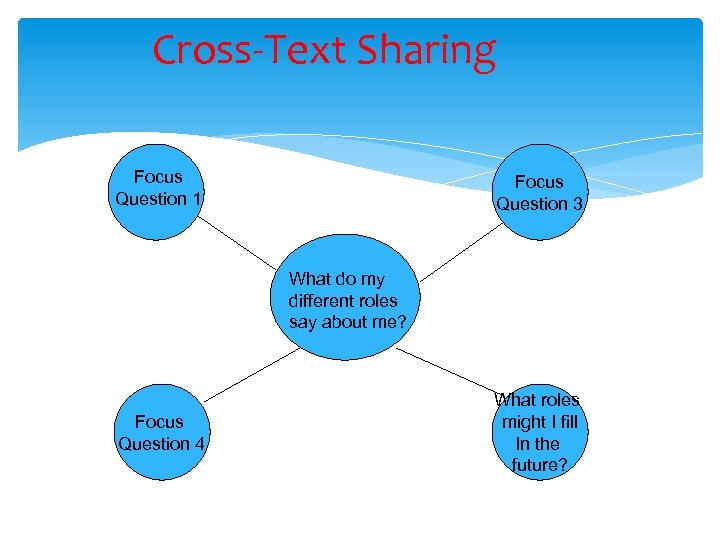 Cross-Text Sharing Focus Question 1 Focus Question 3 What do my different roles say about me? Focus Question 4 What roles might I fill In the future?