


 Скачать презентацию Le comparatif sert à comparer Il y
9cf5232c5fb5d97e48e94080d9204813.ppt
- Количество слайдов: 13
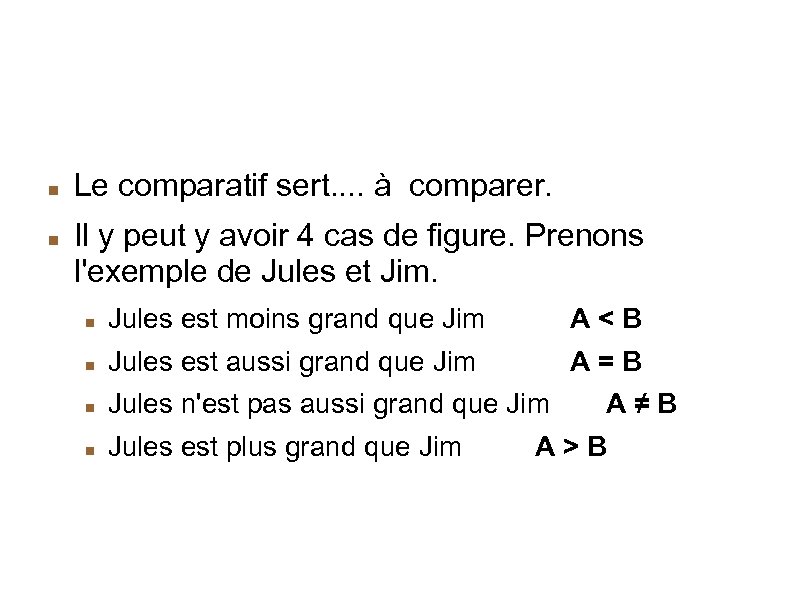 Le comparatif sert. . à comparer. Il y peut y avoir 4 cas de figure. Prenons l'exemple de Jules et Jim. Jules est moins grand que Jim AB
 A
A
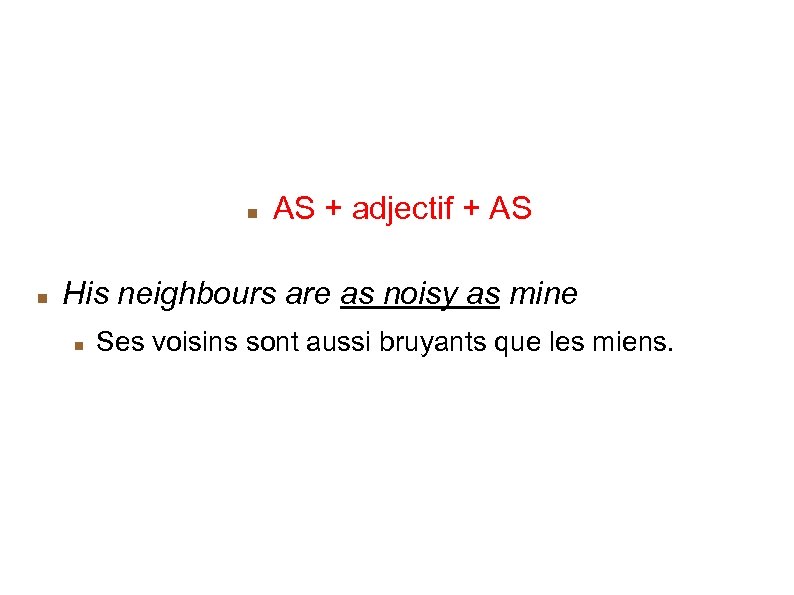 A = B Le comparatif d'égalité AS + adjectif + AS His neighbours are as noisy as mine Ses voisins sont aussi bruyants que les miens.
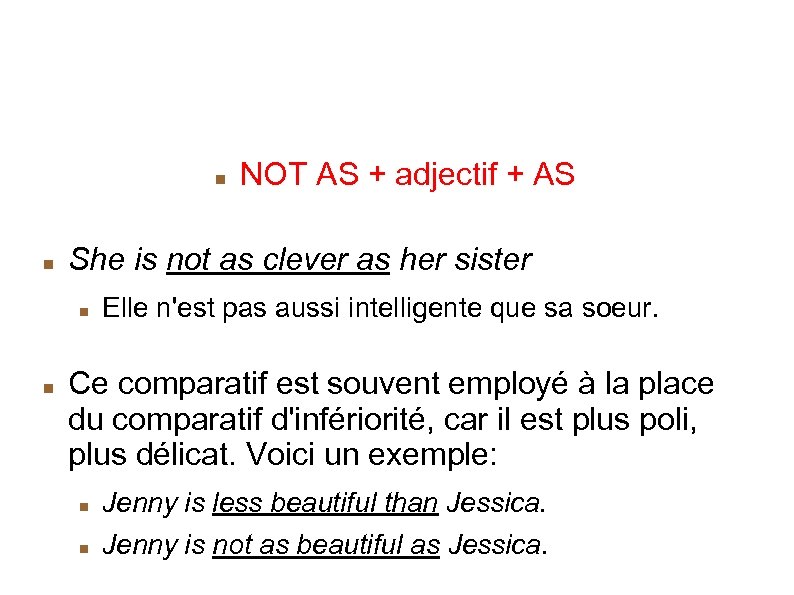 A ≠ B Le comparatif d’inégalité She is not as clever as her sister NOT AS + adjectif + AS Elle n'est pas aussi intelligente que sa soeur. Ce comparatif est souvent employé à la place du comparatif d'infériorité, car il est plus poli, plus délicat. Voici un exemple: Jenny is less beautiful than Jessica. Jenny is not as beautiful as Jessica.
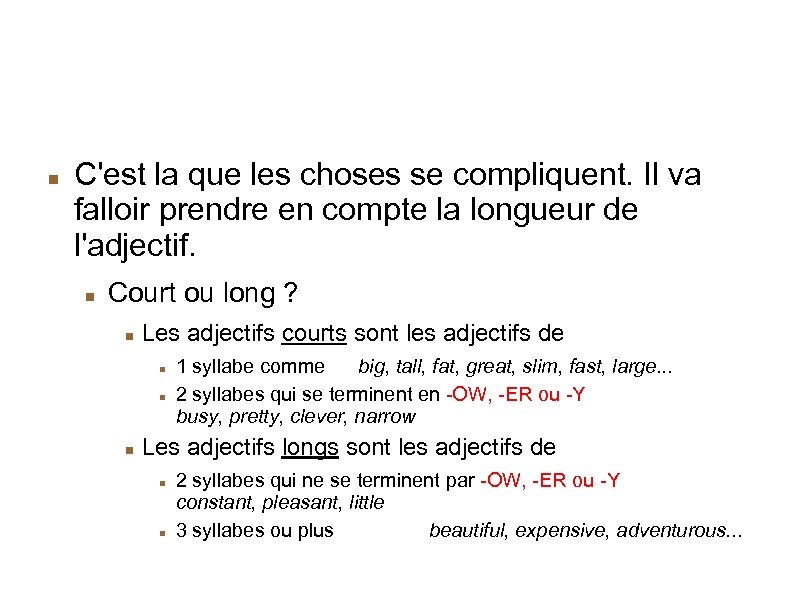 A>B Le comparatif de supériorité C'est la que les choses se compliquent. Il va falloir prendre en compte la longueur de l'adjectif. Court ou long ? Les adjectifs courts sont les adjectifs de 1 syllabe comme big, tall, fat, great, slim, fast, large. . . 2 syllabes qui se terminent en -OW, -ER ou -Y busy, pretty, clever, narrow Les adjectifs longs sont les adjectifs de 2 syllabes qui ne se terminent par -OW, -ER ou -Y constant, pleasant, little 3 syllabes ou plus beautiful, expensive, adventurous. . .
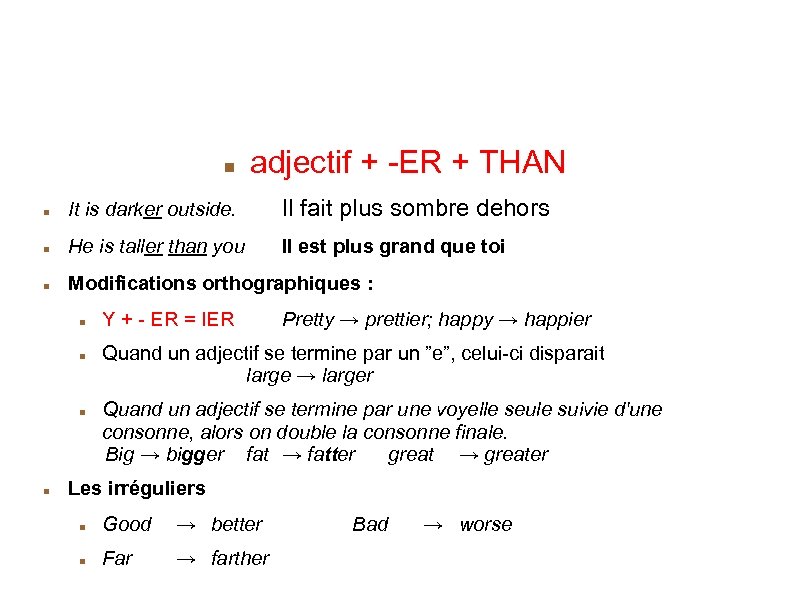 A>B les adjectifs courts adjectif + -ER + THAN It is darker outside. Il fait plus sombre dehors He is taller than you Il est plus grand que toi Modifications orthographiques : Y + - ER = IER Pretty → prettier; happy → happier Quand un adjectif se termine par un ”e”, celui-ci disparait large → larger Quand un adjectif se termine par une voyelle seule suivie d'une consonne, alors on double la consonne finale. Big → bigger fat → fatter great → greater Les irréguliers Good → better Far → farther Bad → worse
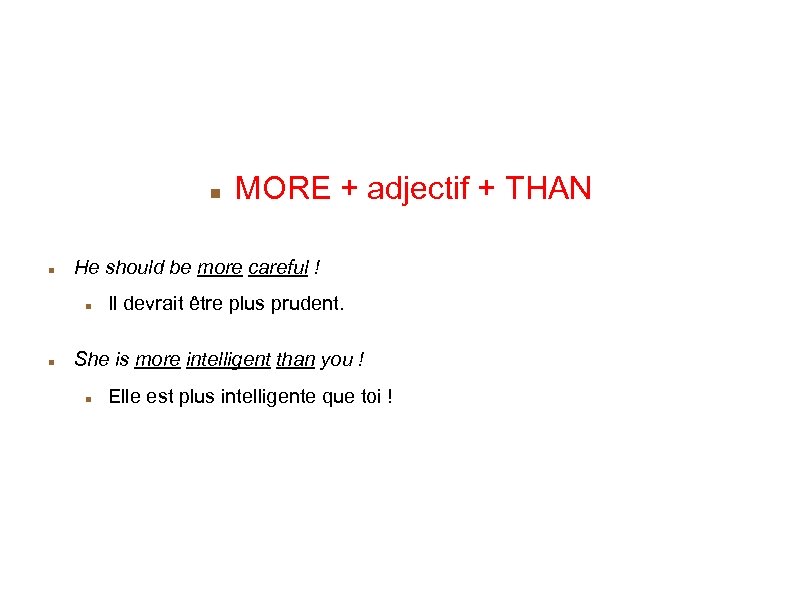 A>B MORE + adjectif + THAN He should be more careful ! Les adjectifs longs Il devrait être plus prudent. She is more intelligent than you ! Elle est plus intelligente que toi !
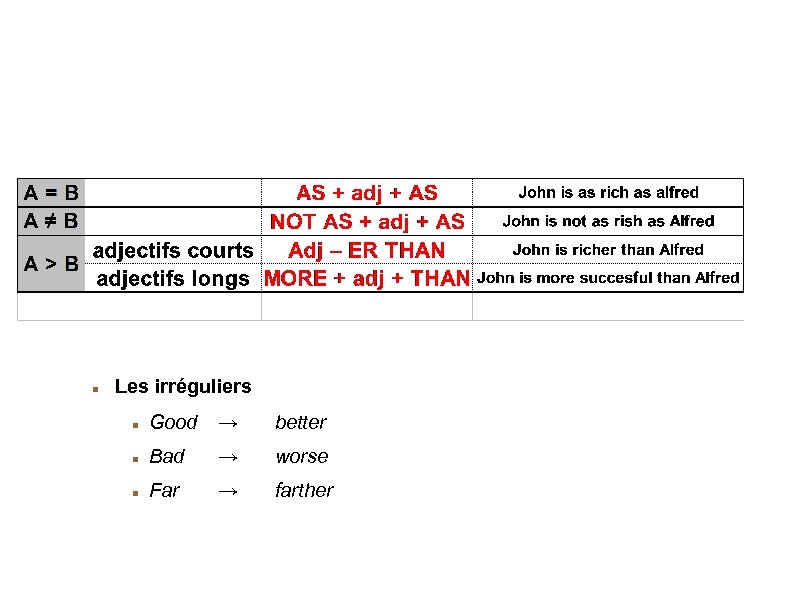 Récapitulatif Les irréguliers Good → better Bad → worse Far → farther
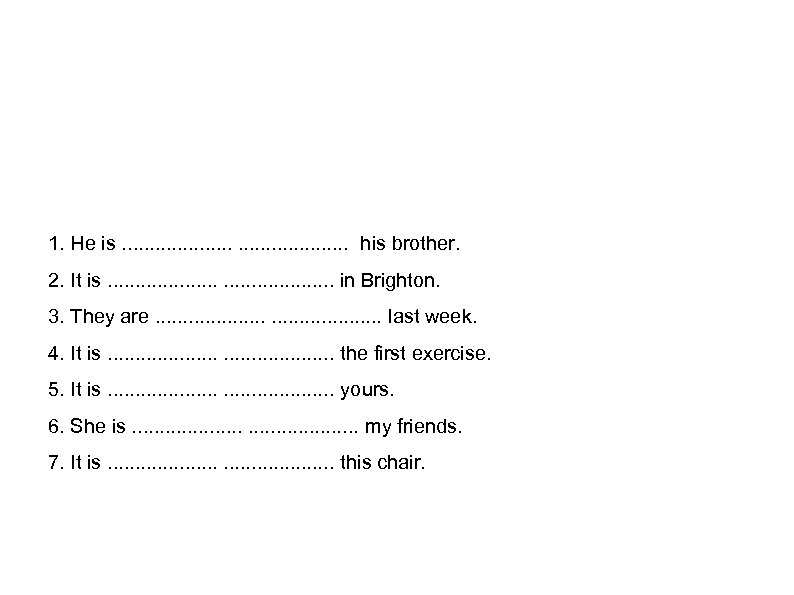 Exercices (inégalité) 1. He is. . . . . his brother. 2. It is. . . . . in Brighton. 3. They are. . . . . last week. 4. It is. . . . . the first exercise. 5. It is. . . . . yours. 6. She is. . . . . my friends. 7. It is. . . . . this chair.
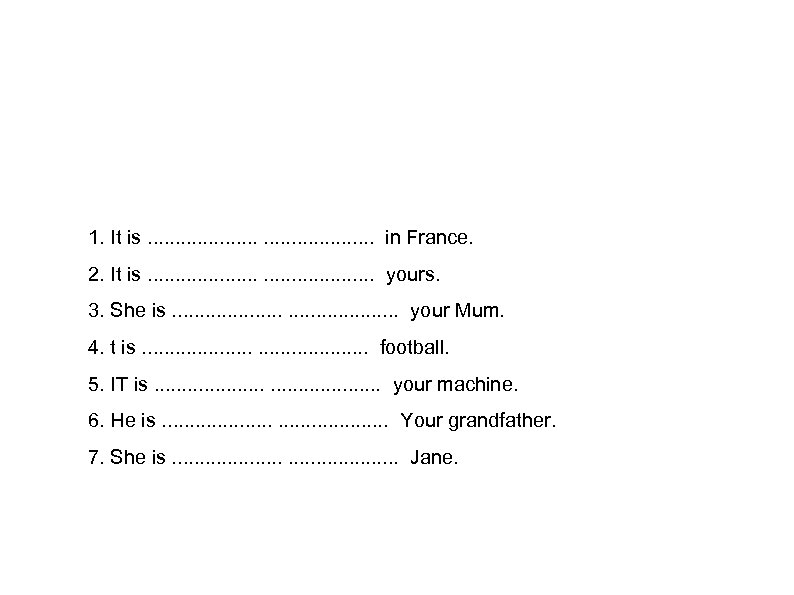 Exercice supériorité 1. It is. . . . . in France. 2. It is. . . . . yours. 3. She is. . . . . your Mum. 4. t is. . . . . football. 5. IT is. . . . . your machine. 6. He is. . . . . Your grandfather. 7. She is. . . . . Jane.
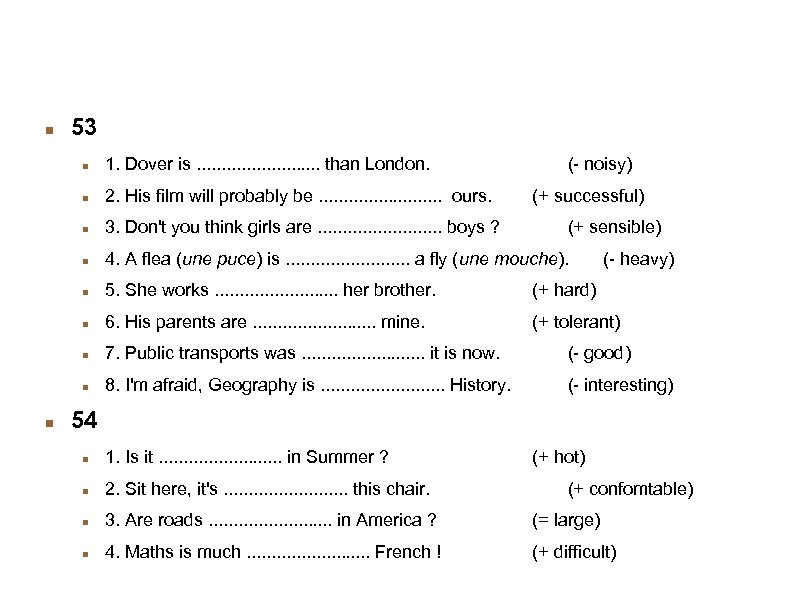 Exercices 53 2. His film will probably be. . . ours. 3. Don't you think girls are. . . boys ? 4. A flea (une puce) is. . . a fly (une mouche). 5. She works. . . her brother. (+ hard) 6. His parents are. . . mine. (+ tolerant) 7. Public transports was. . . it is now. (- good) 1. Dover is. . . than London. (- noisy) 8. I'm afraid, Geography is. . . History. (- interesting) (+ successful) (+ sensible) (- heavy) 54 1. Is it. . . in Summer ? (+ hot) 2. Sit here, it's. . . this chair. 3. Are roads. . . in America ? (= large) 4. Maths is much. . . French ! (+ difficult) (+ confomtable)
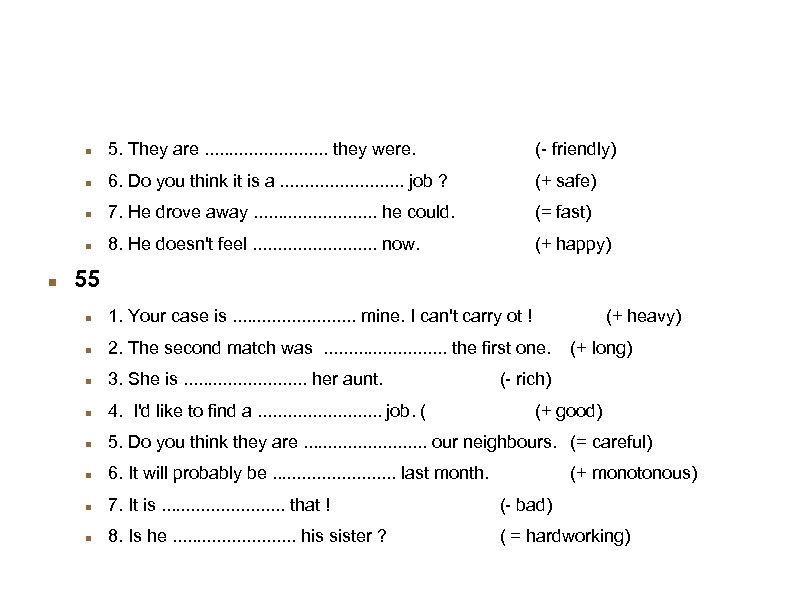 Exercices (suite) (- friendly) 6. Do you think it is a. . . job ? (+ safe) 7. He drove away. . . he could. (= fast) 5. They are. . . they were. 8. He doesn't feel. . . now. (+ happy) 55 1. Your case is. . . mine. I can't carry ot ! (+ heavy) 2. The second match was. . . the first one. 3. She is. . . her aunt. 4. I'd like to find a. . . job. ( 5. Do you think they are. . . our neighbours. (= careful) 6. It will probably be. . . last month. 7. It is. . . that ! (- bad) 8. Is he. . . his sister ? ( = hardworking) (+ long) (- rich) (+ good) (+ monotonous)
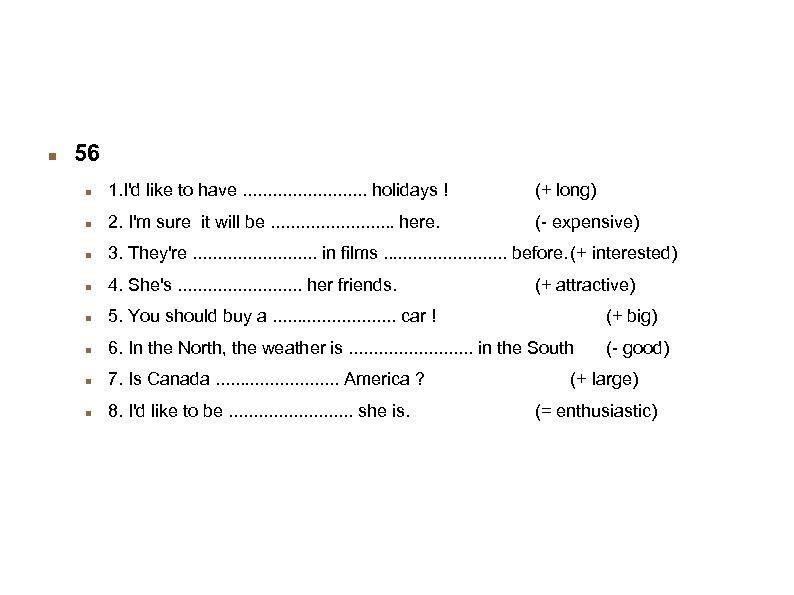 Exercices (fin) 56 1. I'd like to have. . . holidays ! (+ long) 2. I'm sure it will be. . . here. (- expensive) 3. They're. . . in films. . . before. (+ interested) 4. She's. . . her friends. 5. You should buy a. . . car ! (+ big) 6. In the North, the weather is. . . in the South (- good) 7. Is Canada. . . America ? 8. I'd like to be. . . she is. (+ attractive) (+ large) (= enthusiastic)