


 Скачать презентацию Lawrence F Katz Claudia Goldin KEY POINTS
Career and Marriage in the Age of the pILL.pptx
- Количество слайдов: 5
 Lawrence F. Katz Claudia Goldin
 KEY POINTS Since 1960 s life for females has changed More women obtain degrees and have careers in proportion to men First-marriage has soared Men and non-participating women were also impacted Legal reforms also took place during the time
 LEGAL REFORMS 1960 – FDA Approval. By 1965 – 40% of married women used it By 1974 twenty-seven states allowed women younger than 17 to obtain contraceptives 1971 – ratification of the 26 th Amendment
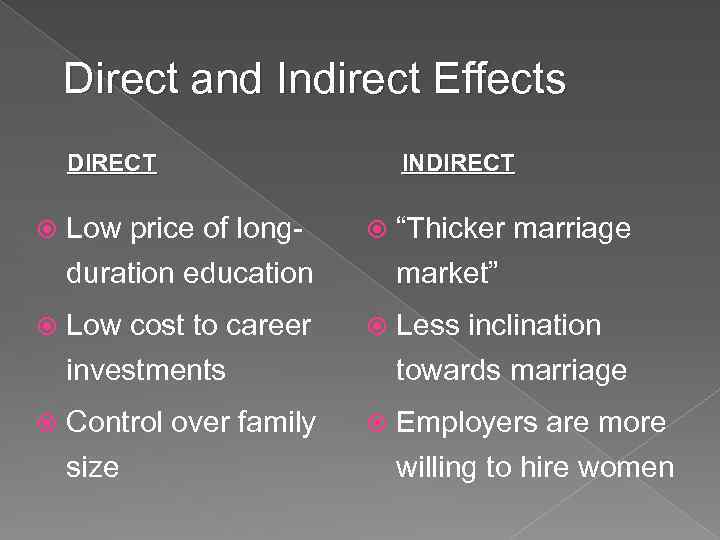 Direct and Indirect Effects DIRECT INDIRECT Low price of longduration education “Thicker marriage market” Low cost to career investments Less inclination towards marriage Control over family Employers are more size willing to hire women
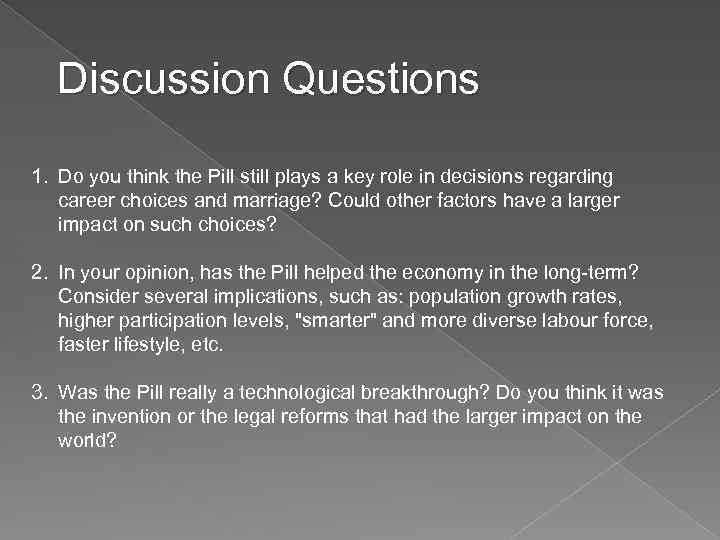 Discussion Questions 1. Do you think the Pill still plays a key role in decisions regarding career choices and marriage? Could other factors have a larger impact on such choices? 2. In your opinion, has the Pill helped the economy in the long-term? Consider several implications, such as: population growth rates, higher participation levels, "smarter" and more diverse labour force, faster lifestyle, etc. 3. Was the Pill really a technological breakthrough? Do you think it was the invention or the legal reforms that had the larger impact on the world?