 Скачать презентацию LASER-PLASMA ACCELERATORS PRODUCTION OF HIGH-CURRENT ULTRA-SHORT e—BEAMS BEAM
cb60ed6dca35817415ef9fe11f4341c5.ppt
- Количество слайдов: 43



LASER-PLASMA ACCELERATORS: PRODUCTION OF HIGH-CURRENT ULTRA-SHORT e--BEAMS, BEAM CONTROL AND RADIATION GENERATION I. Yu. Kostyukov, E. N. Nerush (IAP RAS, Russia) A. Pukhov, S. Kiselev (Düsseldorf University, Germany)
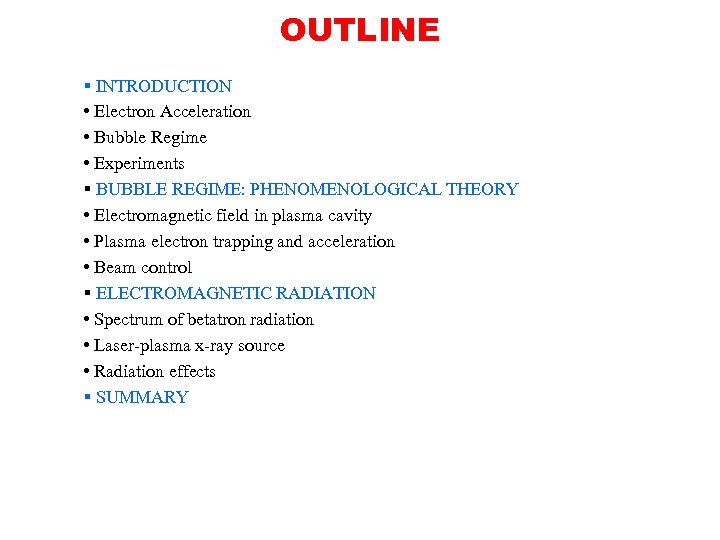
OUTLINE § INTRODUCTION • Electron Acceleration • Bubble Regime • Experiments § BUBBLE REGIME: PHENOMENOLOGICAL THEORY • Electromagnetic field in plasma cavity • Plasma electron trapping and acceleration • Beam control § ELECTROMAGNETIC RADIATION • Spectrum of betatron radiation • Laser-plasma x-ray source • Radiation effects § SUMMARY
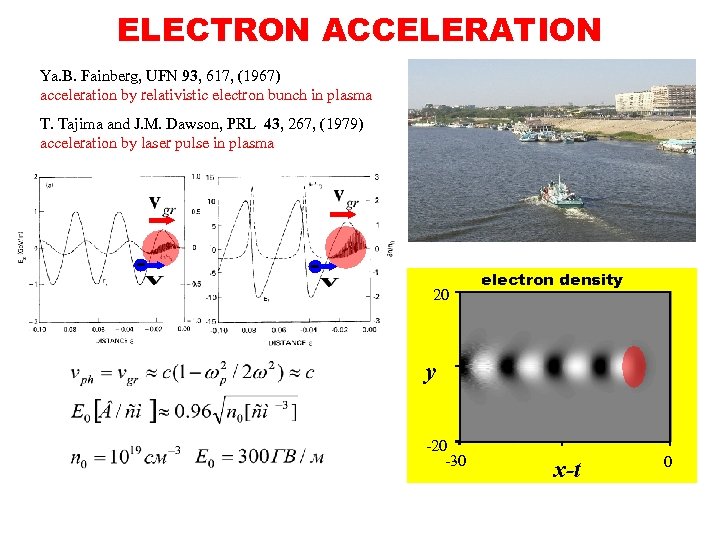
ELECTRON ACCELERATION Ya. B. Fainberg, UFN 93, 617, (1967) acceleration by relativistic electron bunch in plasma T. Tajima and J. M. Dawson, PRL 43, 267, (1979) acceleration by laser pulse in plasma 20 electron density y -20 -30 x-t 0
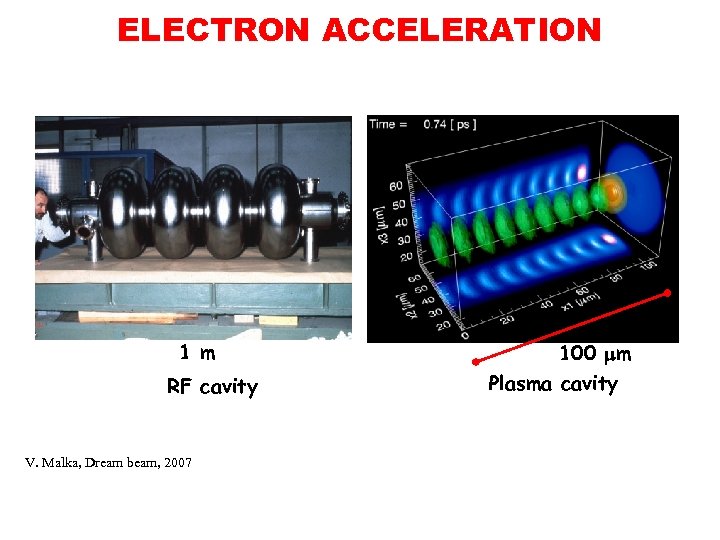
ELECTRON ACCELERATION 1 m RF cavity V. Malka, Dream beam, 2007 100 mm Plasma cavity
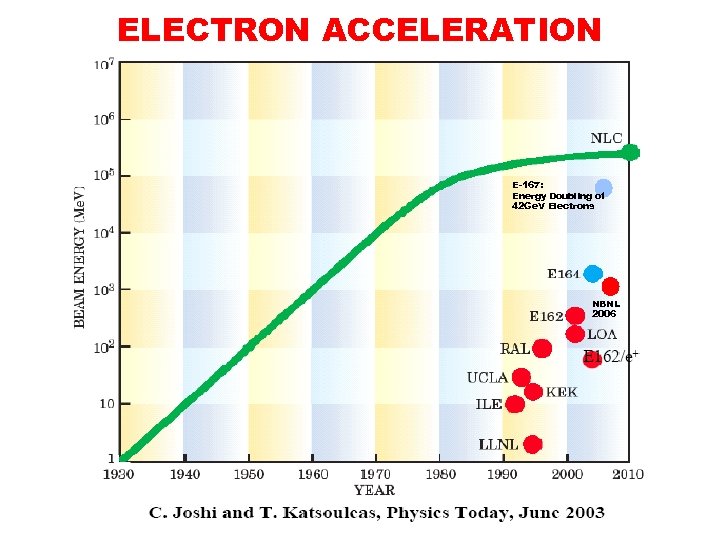
ELECTRON ACCELERATION E-167: Energy Doubling of 42 Ge. V Electrons NBNL 2006
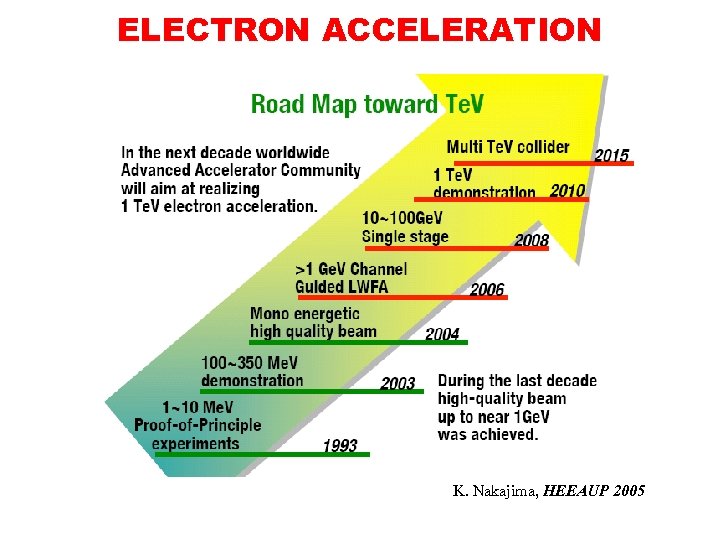
ELECTRON ACCELERATION K. Nakajima, HEEAUP 2005
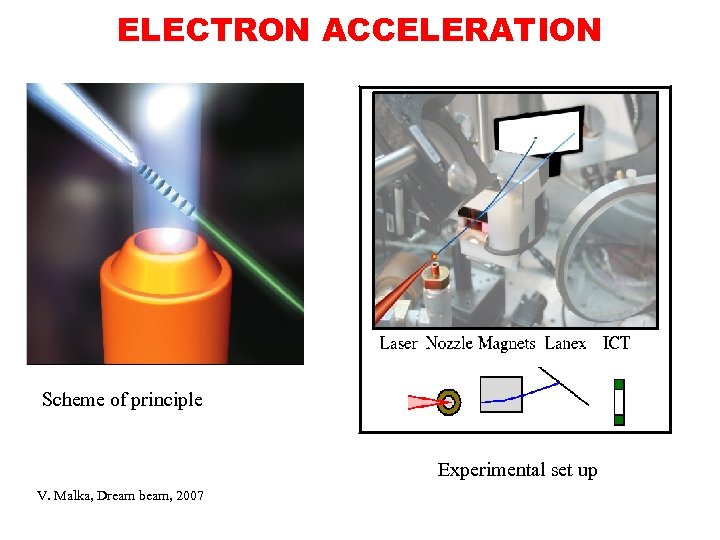
ELECTRON ACCELERATION Scheme of principle Experimental set up V. Malka, Dream beam, 2007
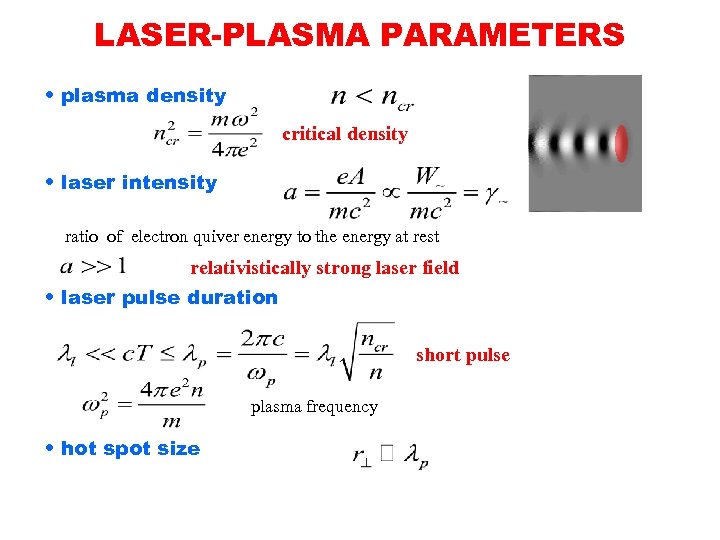
LASER-PLASMA PARAMETERS • plasma density critical density • laser intensity ratio of electron quiver energy to the energy at rest relativistically strong laser field • laser pulse duration short pulse plasma frequency • hot spot size
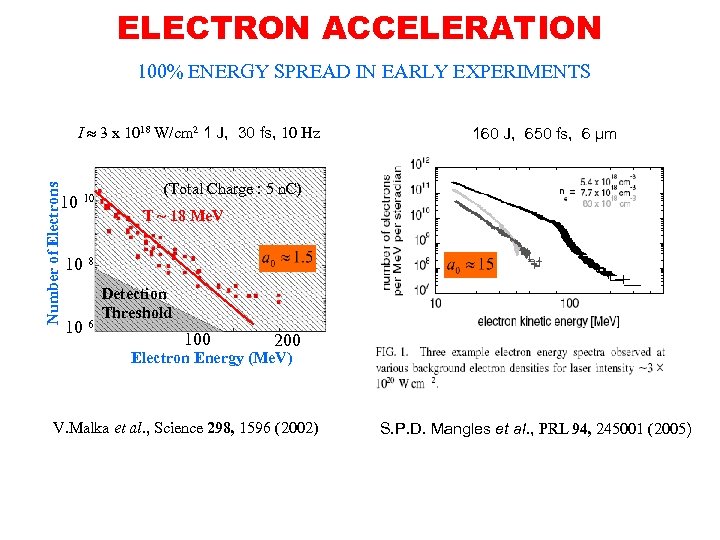
ELECTRON ACCELERATION 100% ENERGY SPREAD IN EARLY EXPERIMENTS Number of Electrons I 3 x 10¹⁸ W/cm 2 1 J, 30 fs, 10 Hz 10 10 160 J, 650 fs, 6 μm (Total Charge : 5 n. C) T ~ 18 Me. V 10 8 10 6 Detection Threshold 100 200 Electron Energy (Me. V) V. Malka et al. , Science 298, 1596 (2002) S. P. D. Mangles et al. , PRL 94, 245001 (2005)
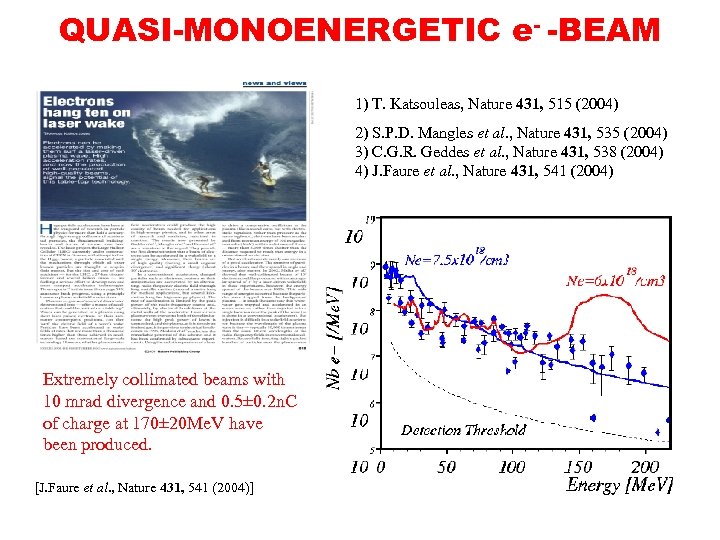
QUASI-MONOENERGETIC e- -BEAM 1) T. Katsouleas, Nature 431, 515 (2004) 2) S. P. D. Mangles et al. , Nature 431, 535 (2004) 3) C. G. R. Geddes et al. , Nature 431, 538 (2004) 4) J. Faure et al. , Nature 431, 541 (2004) Extremely collimated beams with 10 mrad divergence and 0. 5± 0. 2 n. C of charge at 170± 20 Me. V have been produced. [J. Faure et al. , Nature 431, 541 (2004)]
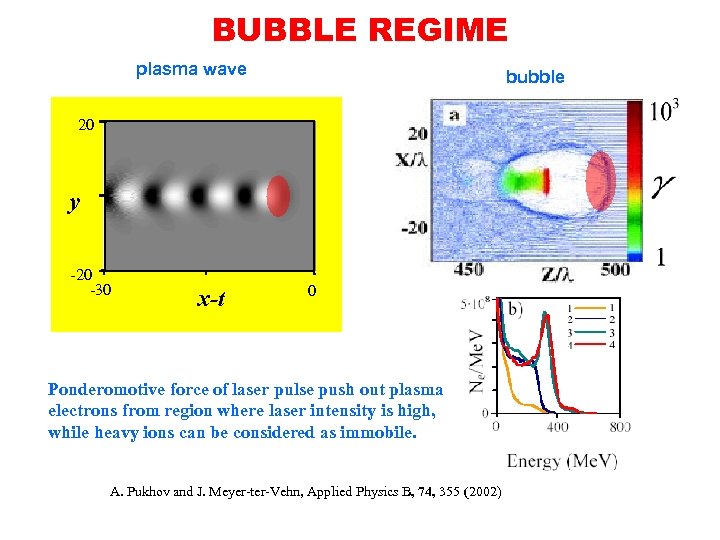
BUBBLE REGIME plasma wave bubble 20 y -20 -30 x-t 0 Ponderomotive force of laser pulse push out plasma electrons from region where laser intensity is high, while heavy ions can be considered as immobile. A. Pukhov and J. Meyer-ter-Vehn, Applied Physics B, 74, 355 (2002)
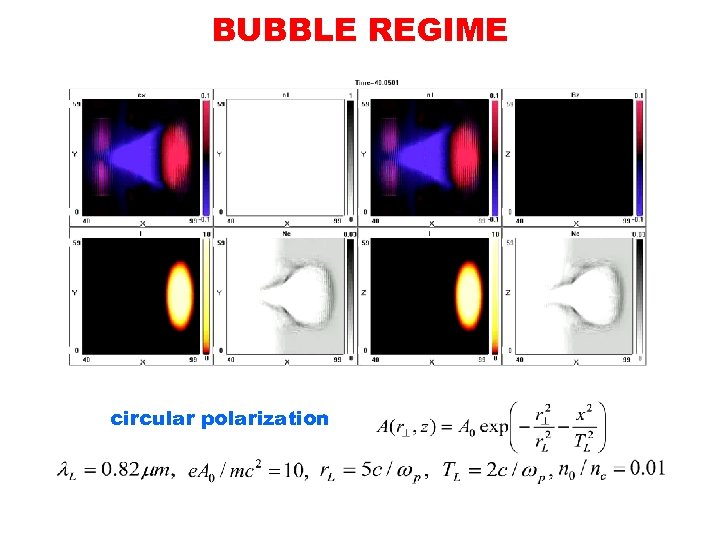
BUBBLE REGIME circular polarization
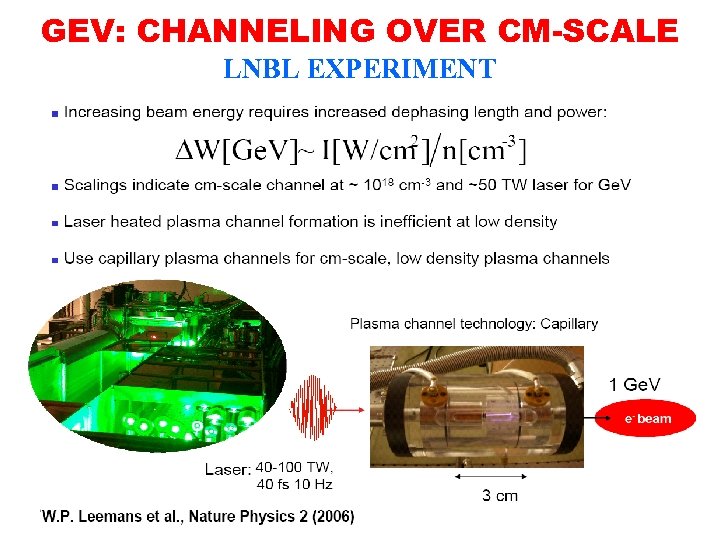
GEV: CHANNELING OVER CM-SCALE LNBL EXPERIMENT
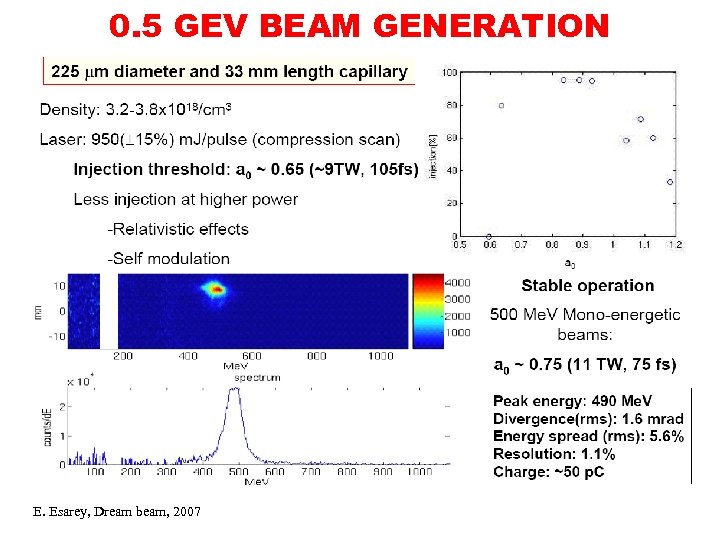
0. 5 GEV BEAM GENERATION E. Esarey, Dream beam, 2007
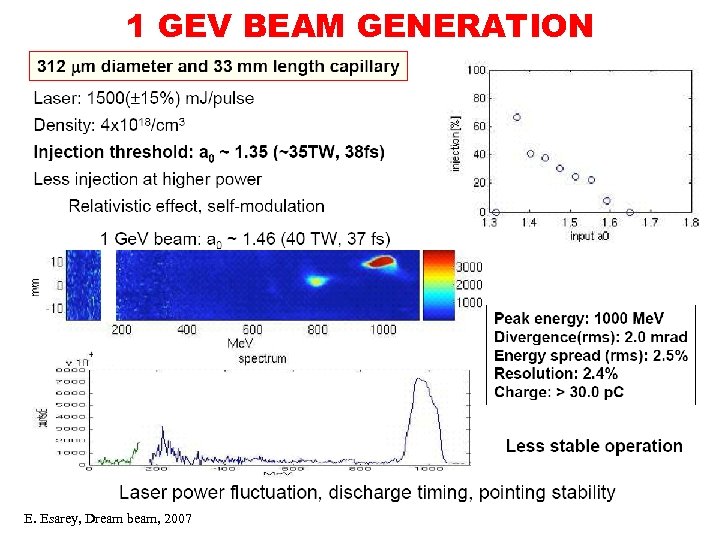
1 GEV BEAM GENERATION E. Esarey, Dream beam, 2007
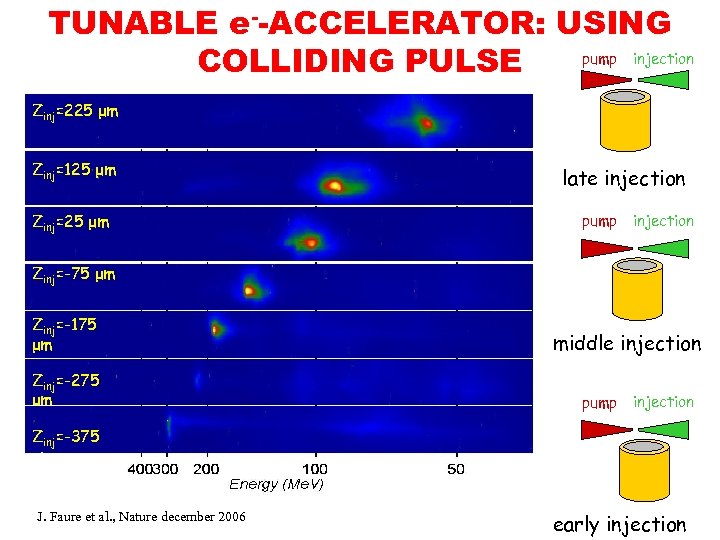
TUNABLE e--ACCELERATOR: USING pump injection COLLIDING PULSE Zinj=225 μm Zinj=125 μm Zinj=25 μm late injection pump injection Zinj=-75 μm Zinj=-175 μm Zinj=-275 μm middle injection pump injection Zinj=-375 μm J. Faure et al. , Nature december 2006 early injection
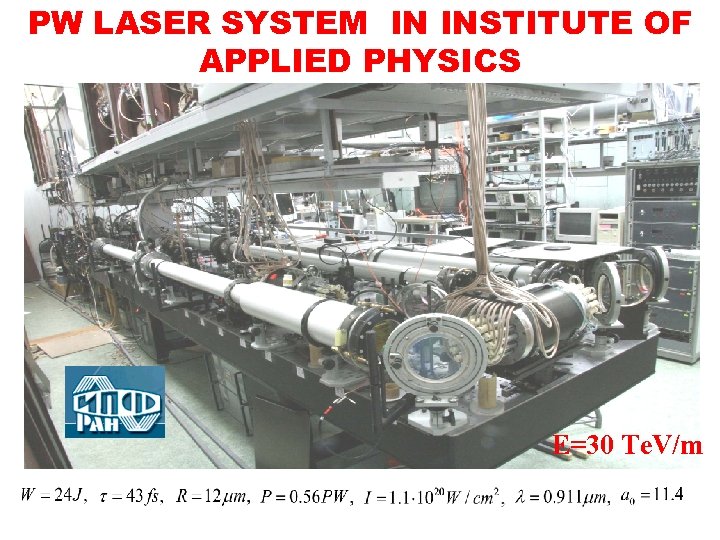
PW LASER SYSTEM IN INSTITUTE OF APPLIED PHYSICS E=30 Te. V/m
CONCLUSIONS Rapid progress in laser-plasma acceleration: GEV in 3 cm, tunable quasi-monoenergetic e--bunches
BUBBLE REGIME: PHENOMENOLOGICAL THEORY
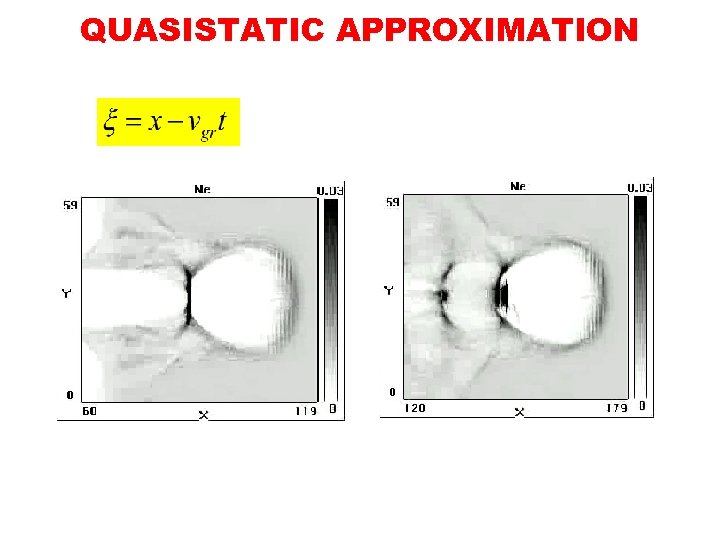
QUASISTATIC APPROXIMATION
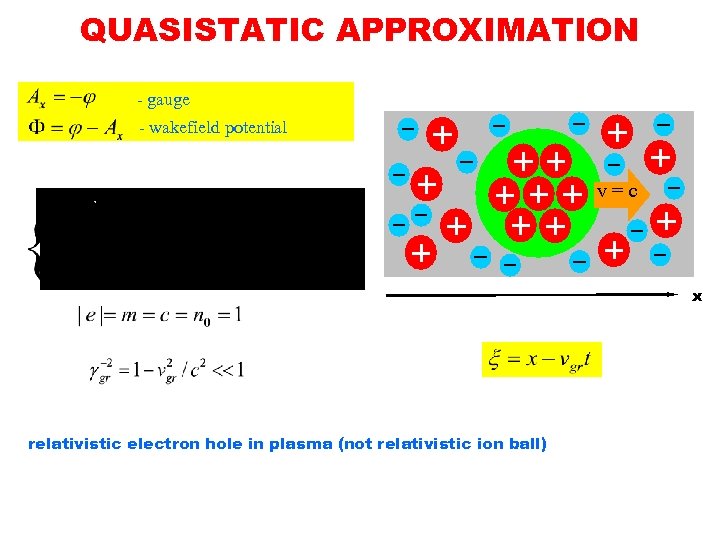
QUASISTATIC APPROXIMATION - gauge - wakefield potential v = c x relativistic electron hole in plasma (not relativistic ion ball)
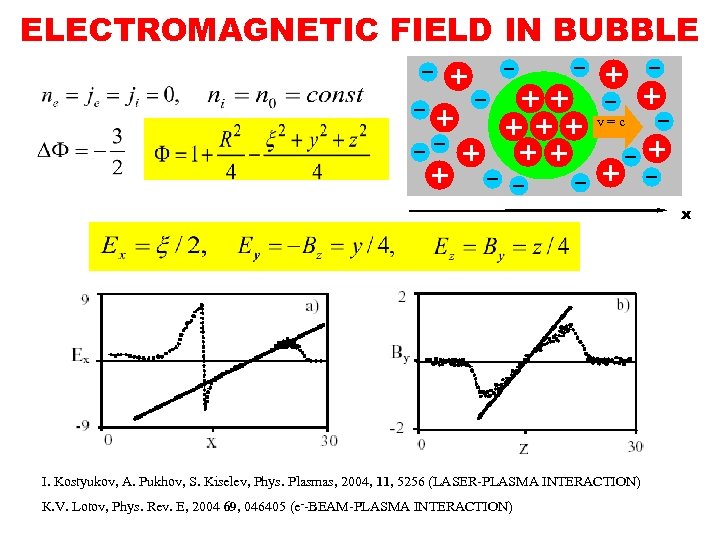
ELECTROMAGNETIC FIELD IN BUBBLE v = c x I. Kostyukov, A. Pukhov, S. Kiselev, Phys. Plasmas, 2004, 11, 5256 (LASER-PLASMA INTERACTION) К. V. Lotov, Phys. Rev. E, 2004 69, 046405 (e--BEAM-PLASMA INTERACTION)
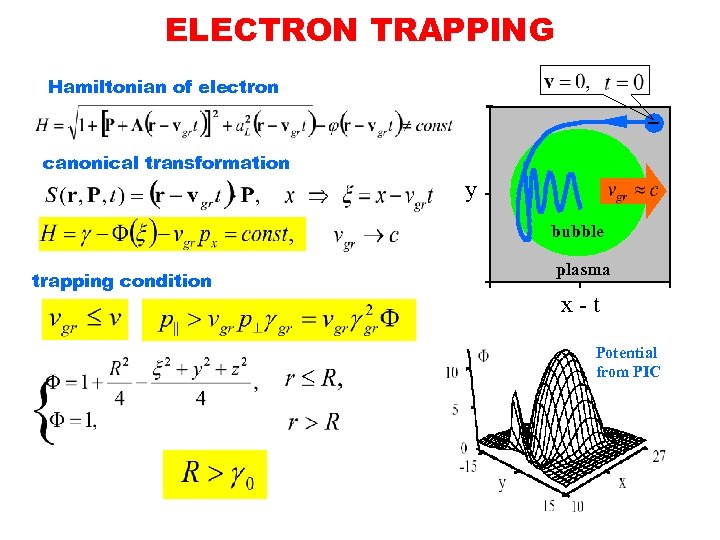
ELECTRON TRAPPING Hamiltonian of electron canonical transformation y bubble trapping condition plasma x - t Potential from PIC
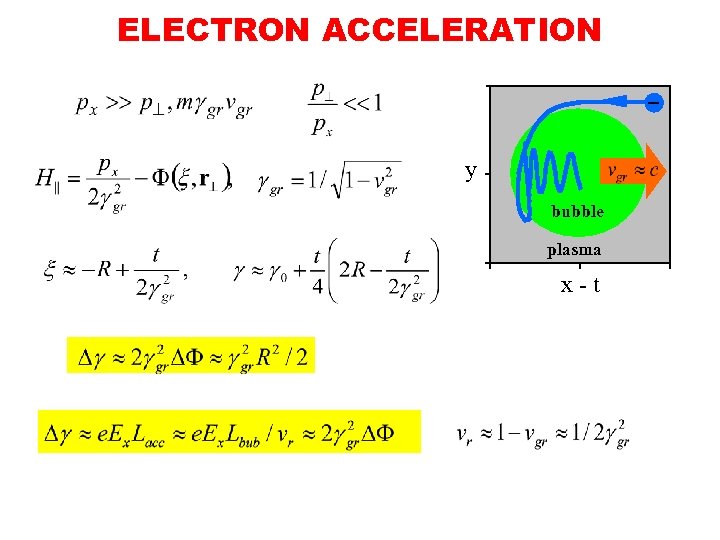
ELECTRON ACCELERATION y bubble plasma x - t
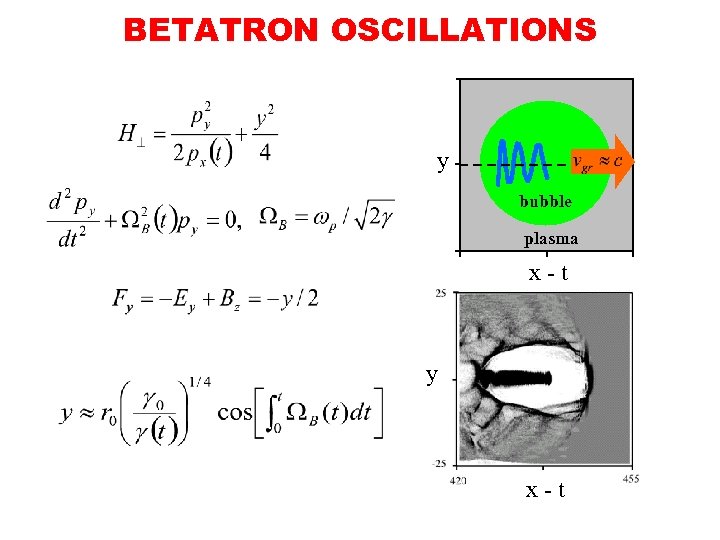
BETATRON OSCILLATIONS y bubble plasma x - t y x - t
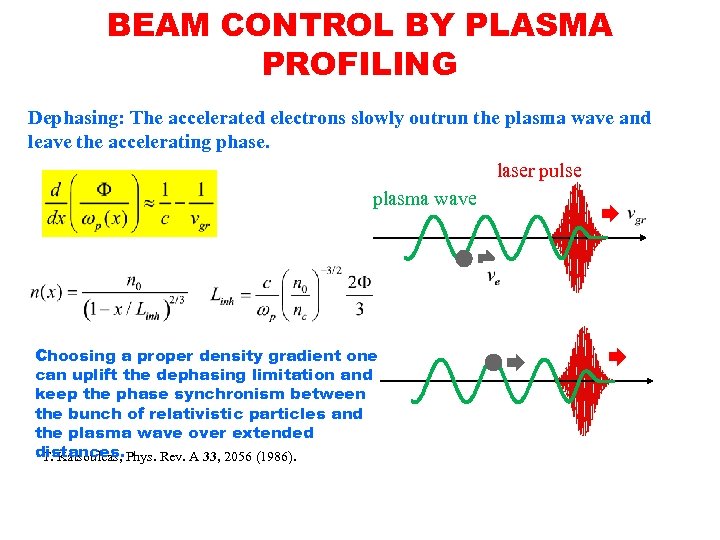
BEAM CONTROL BY PLASMA PROFILING Dephasing: The accelerated electrons slowly outrun the plasma wave and leave the accelerating phase. laser pulse plasma wave Choosing a proper density gradient one can uplift the dephasing limitation and keep the phase synchronism between the bunch of relativistic particles and the plasma wave over extended distances. T. Katsouleas, Phys. Rev. A 33, 2056 (1986).
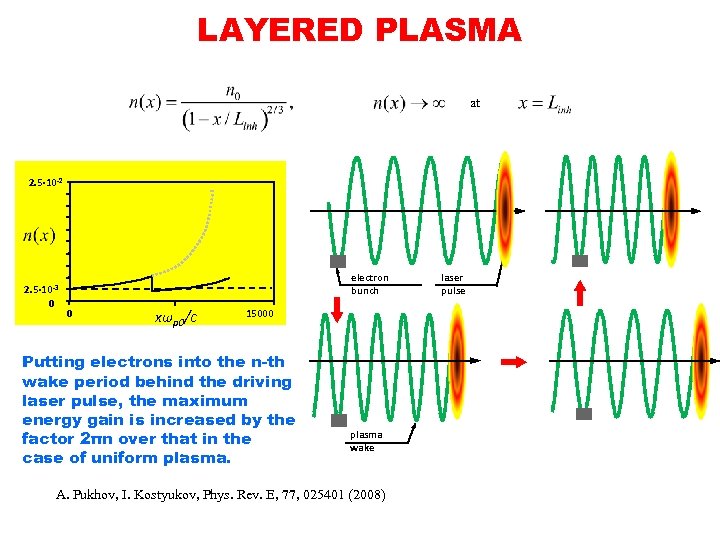
LAYERED PLASMA at 2. 5∙ 10 -2 2. 5∙ 10 -3 0 electron bunch 0 xωp 0/c 15000 Putting electrons into the n-th wake period behind the driving laser pulse, the maximum energy gain is increased by the factor 2πn over that in the case of uniform plasma wake A. Pukhov, I. Kostyukov, Phys. Rev. E, 77, 025401 (2008) laser pulse
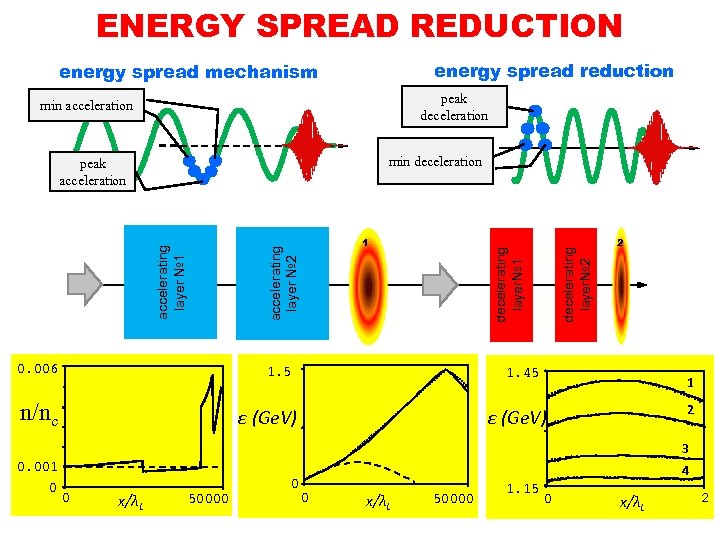
ENERGY SPREAD REDUCTION energy spread reduction energy spread mechanism peak deceleration min acceleration 0. 006 decelerating layer№ 1 accelerating layer № 2 accelerating layer № 1 1 1. 5 n/nc decelerating layer№ 2 min deceleration peak acceleration 2 1. 45 ε (Ge. V) 1 2 ε (Ge. V) 3 0. 001 0 0 x/λL 50000 0 4 0 x/λL 50000 1. 15 0 x/λL 2
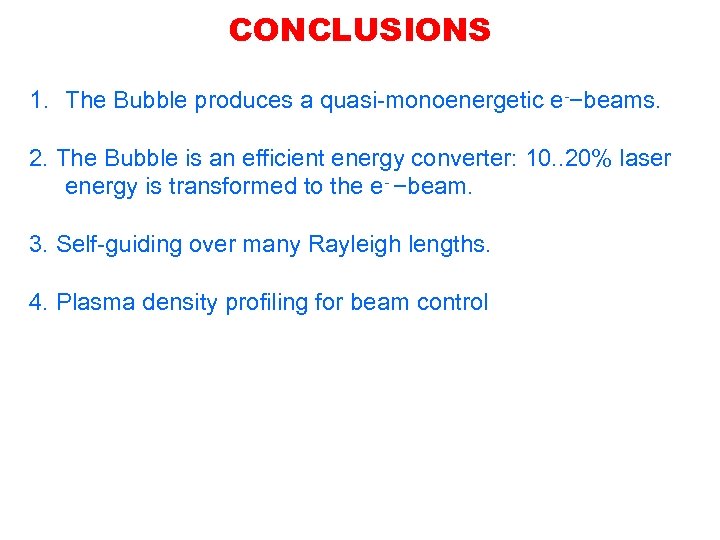
CONCLUSIONS 1. The Bubble produces a quasi-monoenergetic e-−beams. 2. The Bubble is an efficient energy converter: 10. . 20% laser energy is transformed to the e- −beam. 3. Self-guiding over many Rayleigh lengths. 4. Plasma density profiling for beam control
BETATRON RADIATION
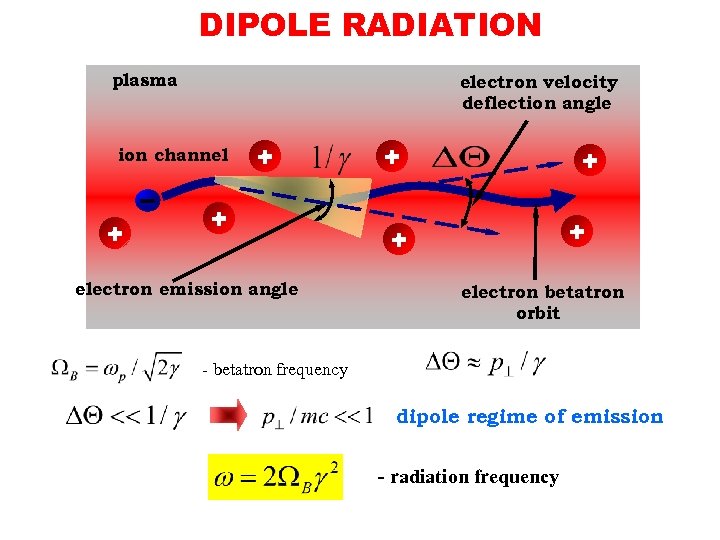
DIPOLE RADIATION plasma electron velocity deflection angle ion channel electron emission angle electron betatron orbit - betatron frequency dipole regime of emission - radiation frequency
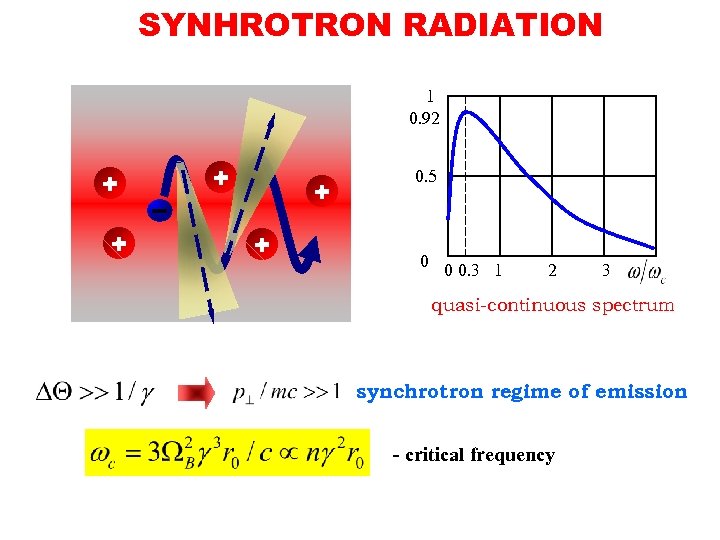
SYNHROTRON RADIATION 1 0. 92 0. 5 0 0. 3 1 2 3 0 quasi-continuous spectrum synchrotron regime of emission - critical frequency
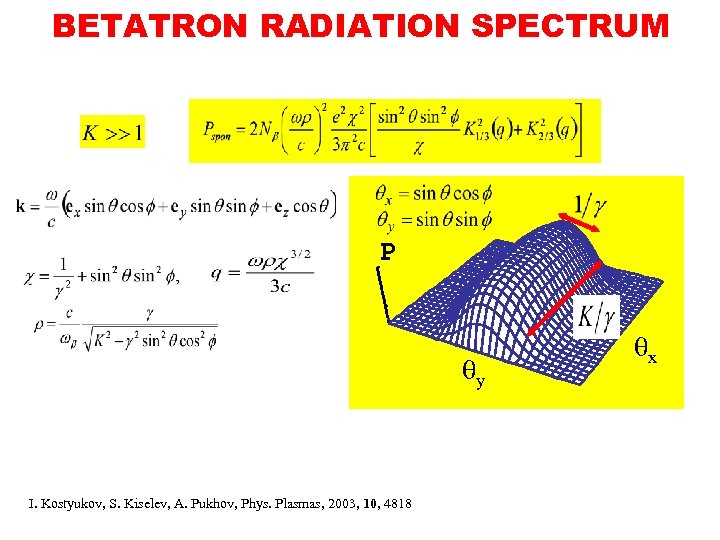
BETATRON RADIATION SPECTRUM P qy I. Kostyukov, S. Kiselev, A. Pukhov, Phys. Plasmas, 2003, 10, 4818 qx
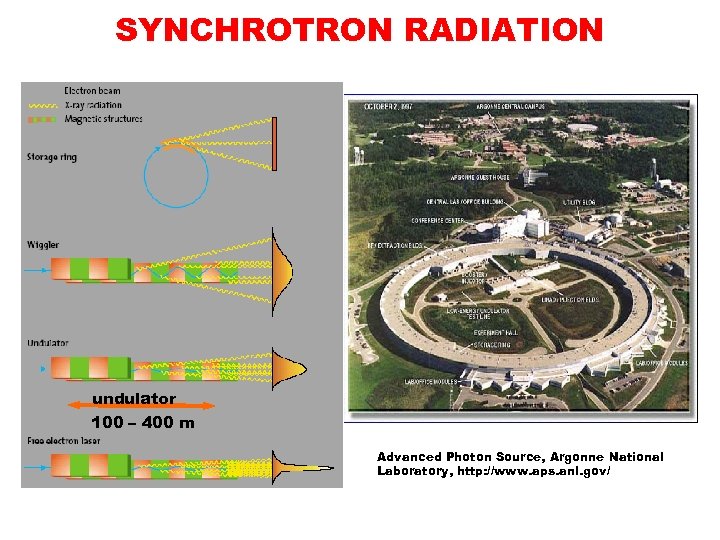
SYNCHROTRON RADIATION undulator 100 – 400 m Advanced Photon Source, Argonne National Laboratory, http: //www. aps. anl. gov/
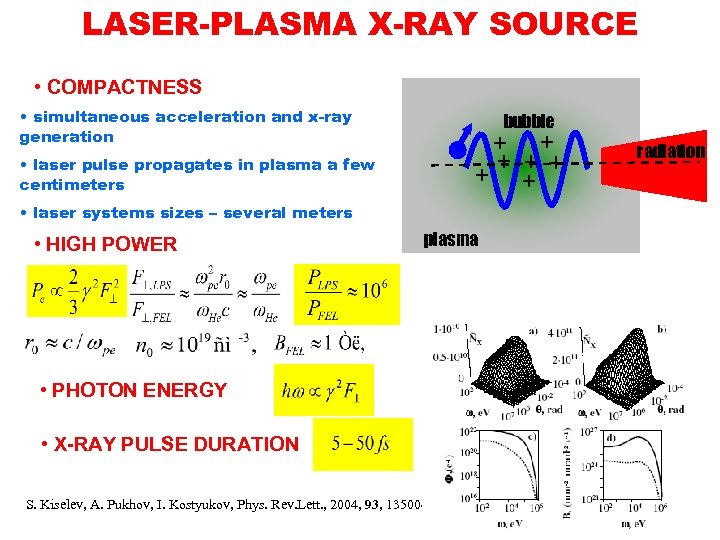
LASER-PLASMA X-RAY SOURCE • COMPACTNESS • simultaneous acceleration and x-ray generation bubble radiation • laser pulse propagates in plasma a few centimeters • laser systems sizes – several meters • HIGH POWER plasma • PHOTON ENERGY • X-RAY PULSE DURATION S. Kiselev, A. Pukhov, I. Kostyukov, Phys. Rev. Lett. , 2004, 93, 135004
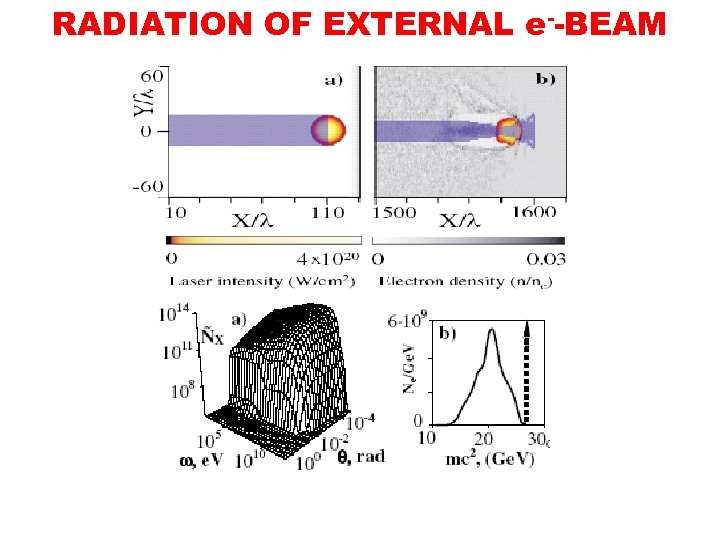
RADIATION OF EXTERNAL e--BEAM
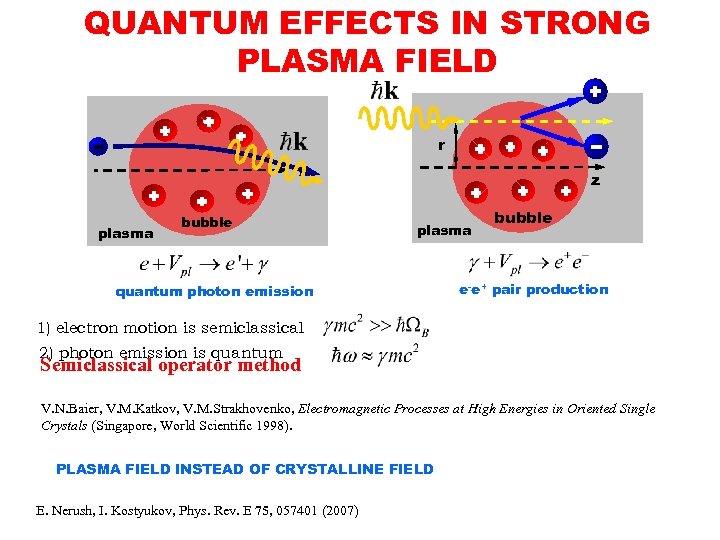
QUANTUM EFFECTS IN STRONG PLASMA FIELD r z plasma bubble plasma quantum photon emission bubble e-e+ pair production 1) electron motion is semiclassical 2) photon emission is quantum Semiclassical operator method V. N. Baier, V. M. Katkov, V. M. Strakhovenko, Electromagnetic Processes at High Energies in Oriented Single Crystals (Singapore, World Scientific 1998). PLASMA FIELD INSTEAD OF CRYSTALLINE FIELD E. Nerush, I. Kostyukov, Phys. Rev. E 75, 057401 (2007)
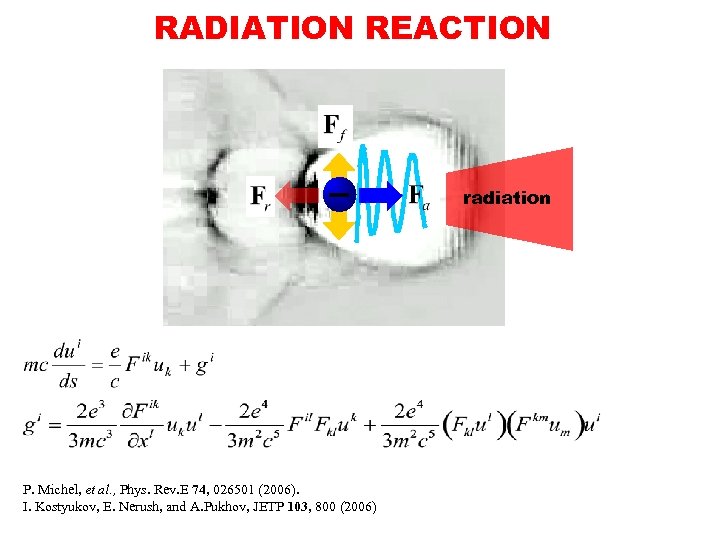
RADIATION REACTION radiation P. Michel, et al. , Phys. Rev. E 74, 026501 (2006). I. Kostyukov, E. Nerush, and A. Pukhov, JETP 103, 800 (2006)
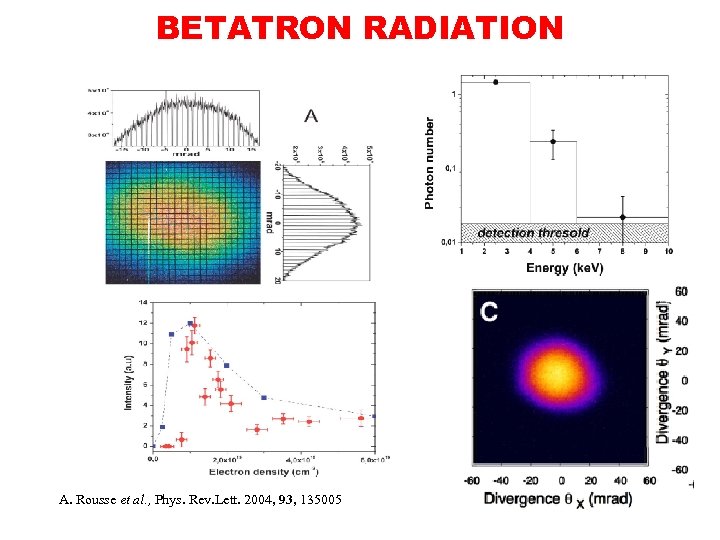
BETATRON RADIATION A. Rousse et al. , Phys. Rev. Lett. 2004, 93, 135005
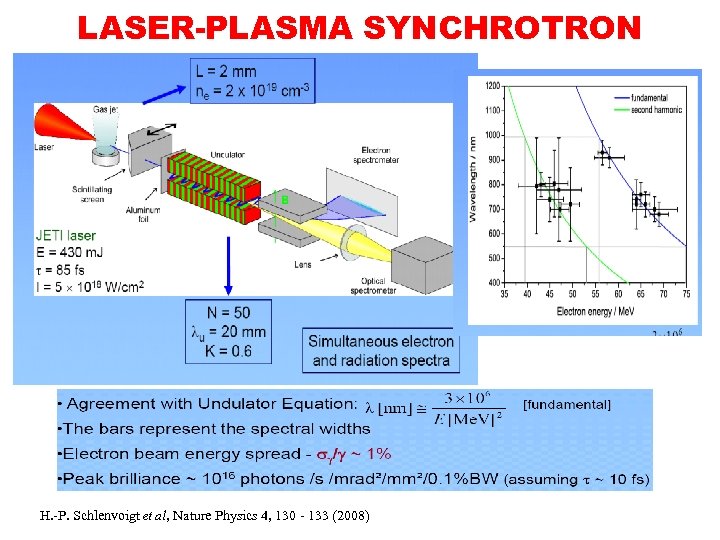
LASER-PLASMA SYNCHROTRON H. -P. Schlenvoigt et al, Nature Physics 4, 130 - 133 (2008)
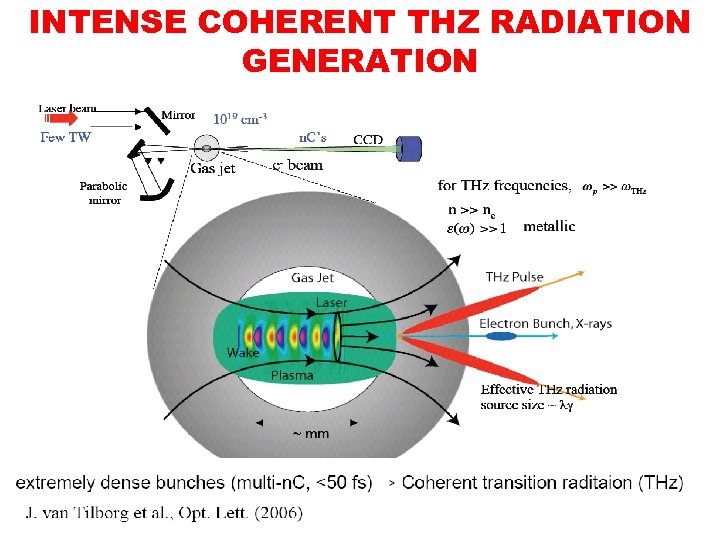
INTENSE COHERENT THZ RADIATION GENERATION
CONCLUSIONS Compact and powerful laser-plasma radiation sources: X-ray, optical and THz radiation
SUMMARY • Laser-plasma accelerators: GEV in 3 cm, tunable quasimonoenergetic e--bunches • The Bubble produces a quasi-monoenergetic e--beams with efficiency conversion 10. . 20% • Laser plasma can be a compact and powerful source of Xrays, optical radiation and THz pulses.
Скачать презентацию LASER-PLASMA ACCELERATORS PRODUCTION OF HIGH-CURRENT ULTRA-SHORT e—BEAMS BEAM
cb60ed6dca35817415ef9fe11f4341c5.ppt