 Скачать презентацию LANGUAGE Denotation Connotation Mise-en-scene Lighting and Colour black
75ab5837a85a6739c33259c3193a0e8e.ppt
- Количество слайдов: 7



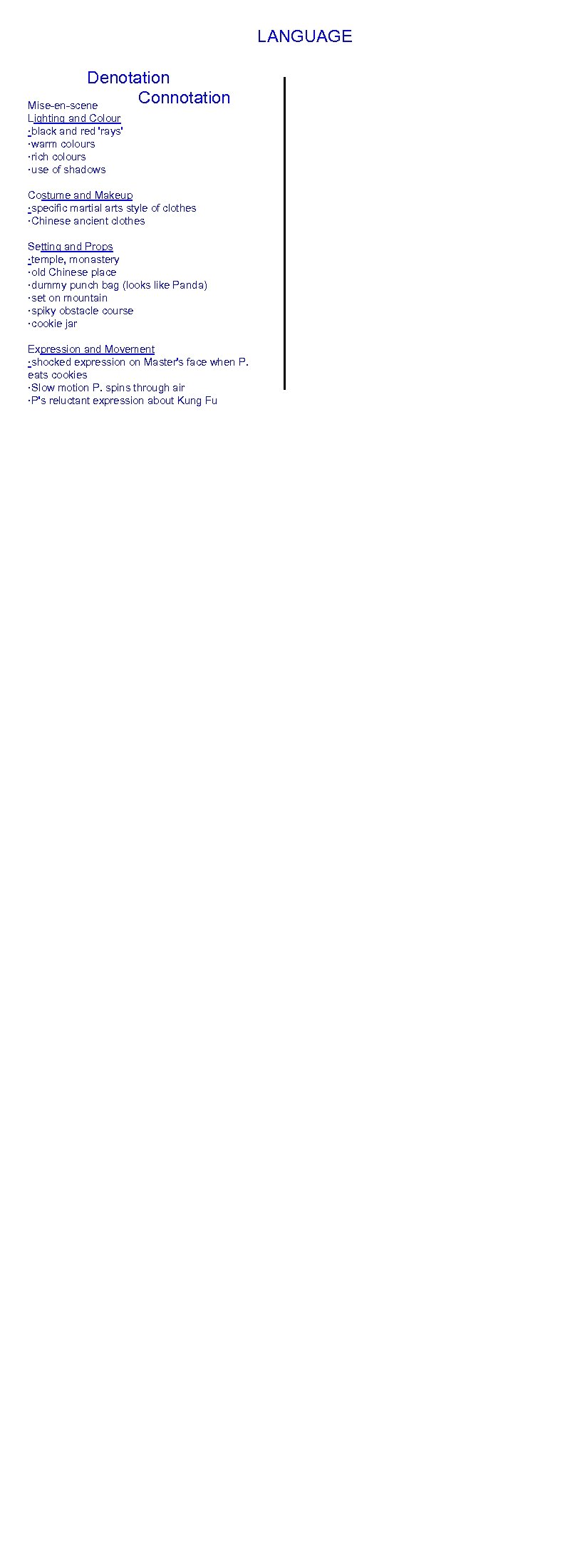
LANGUAGE Denotation Connotation Mise-en-scene Lighting and Colour ·black and red 'rays' ·warm colours ·rich colours ·use of shadows Costume and Makeup ·specific martial arts style of clothes ·Chinese ancient clothes Setting and Props ·temple, monastery ·old Chinese place ·dummy punch bag (looks like Panda) ·set on mountain ·spiky obstacle course ·cookie jar Expression and Movement ·shocked expression on Master's face when P. eats cookies ·Slow motion P. spins through air ·P's reluctant expression about Kung Fu
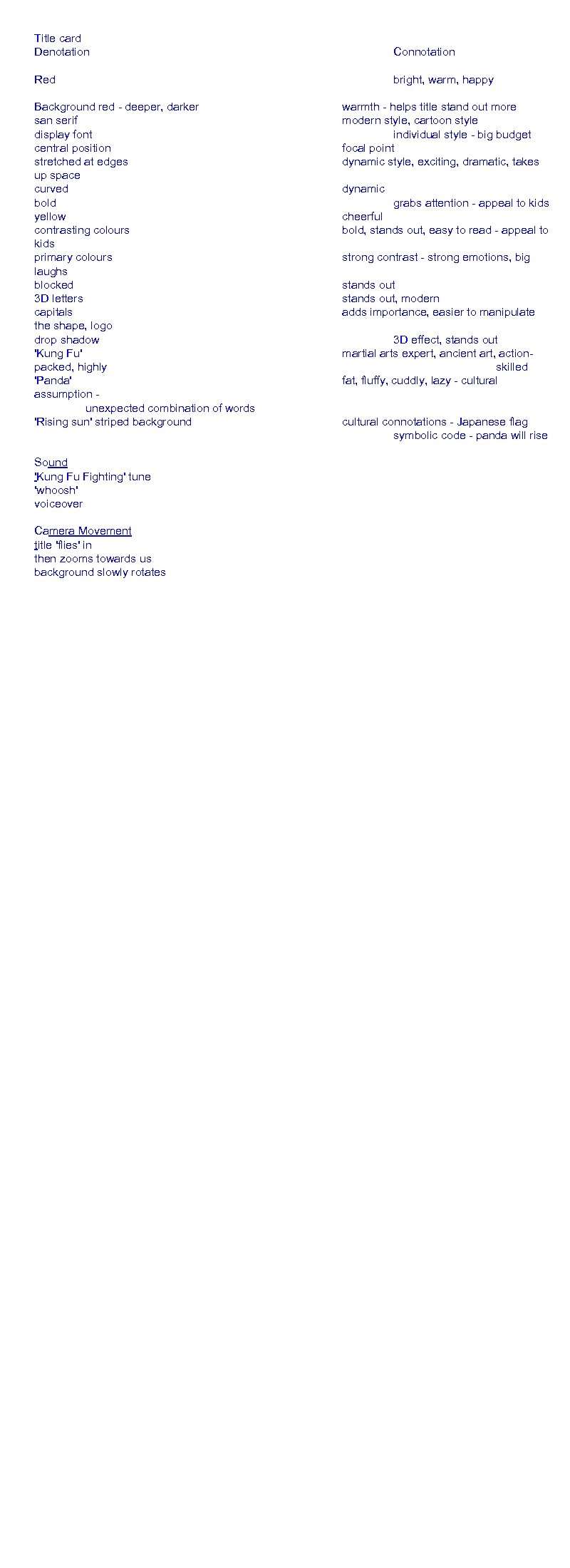
Title card Denotation Connotation Red bright, warm, happy Background red - deeper, darker san serif display font central position stretched at edges up space curved bold yellow contrasting colours kids primary colours laughs blocked 3 D letters capitals the shape, logo drop shadow 'Kung Fu' packed, highly 'Panda' assumption unexpected combination of words 'Rising sun' striped background Sound 'Kung Fu Fighting' tune 'whoosh' voiceover Camera Movement title 'flies' in then zooms towards us background slowly rotates warmth - helps title stand out more modern style, cartoon style individual style - big budget focal point dynamic style, exciting, dramatic, takes dynamic grabs attention - appeal to kids cheerful bold, stands out, easy to read - appeal to strong contrast - strong emotions, big stands out, modern adds importance, easier to manipulate 3 D effect, stands out martial arts expert, ancient art, actionskilled fat, fluffy, cuddly, lazy - cultural connotations - Japanese flag symbolic code - panda will rise
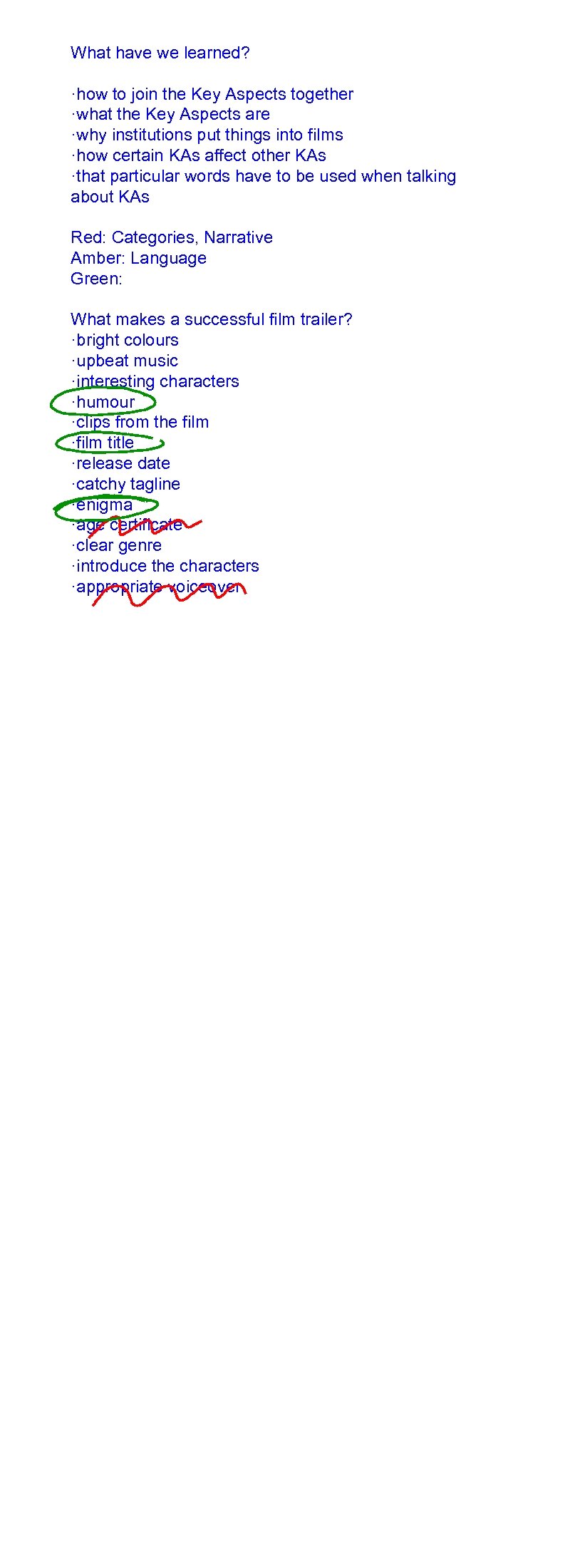
What have we learned? ·how to join the Key Aspects together ·what the Key Aspects are ·why institutions put things into films ·how certain KAs affect other KAs ·that particular words have to be used when talking about KAs Red: Categories, Narrative Amber: Language Green: What makes a successful film trailer? ·bright colours ·upbeat music ·interesting characters ·humour ·clips from the film ·film title ·release date ·catchy tagline ·enigma ·age certificate ·clear genre ·introduce the characters ·appropriate voiceover
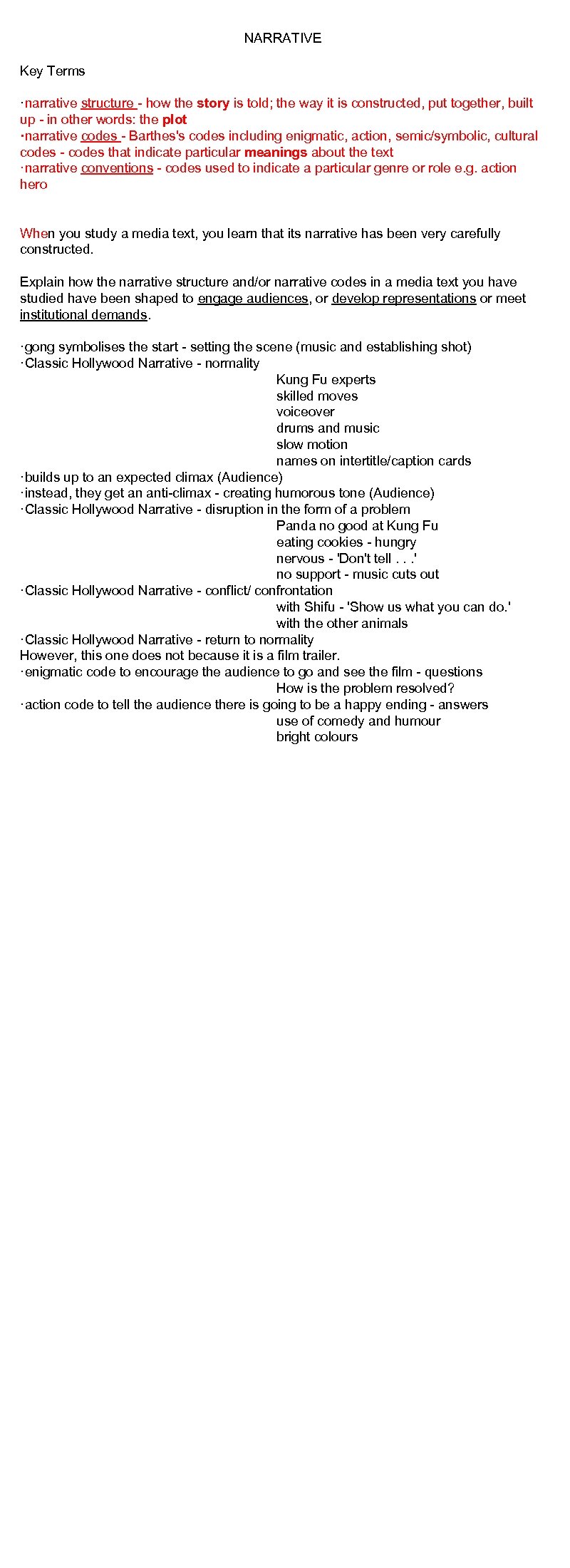
NARRATIVE Key Terms ·narrative structure - how the story is told; the way it is constructed, put together, built up - in other words: the plot ·narrative codes - Barthes's codes including enigmatic, action, semic/symbolic, cultural codes - codes that indicate particular meanings about the text ·narrative conventions - codes used to indicate a particular genre or role e. g. action hero When you study a media text, you learn that its narrative has been very carefully constructed. Explain how the narrative structure and/or narrative codes in a media text you have studied have been shaped to engage audiences, or develop representations or meet institutional demands. ·gong symbolises the start - setting the scene (music and establishing shot) ·Classic Hollywood Narrative - normality Kung Fu experts skilled moves voiceover drums and music slow motion names on intertitle/caption cards ·builds up to an expected climax (Audience) ·instead, they get an anti-climax - creating humorous tone (Audience) ·Classic Hollywood Narrative - disruption in the form of a problem Panda no good at Kung Fu eating cookies - hungry nervous - 'Don't tell. . . ' no support - music cuts out ·Classic Hollywood Narrative - conflict/ confrontation with Shifu - 'Show us what you can do. ' with the other animals ·Classic Hollywood Narrative - return to normality However, this one does not because it is a film trailer. ·enigmatic code to encourage the audience to go and see the film - questions How is the problem resolved? ·action code to tell the audience there is going to be a happy ending - answers use of comedy and humour bright colours
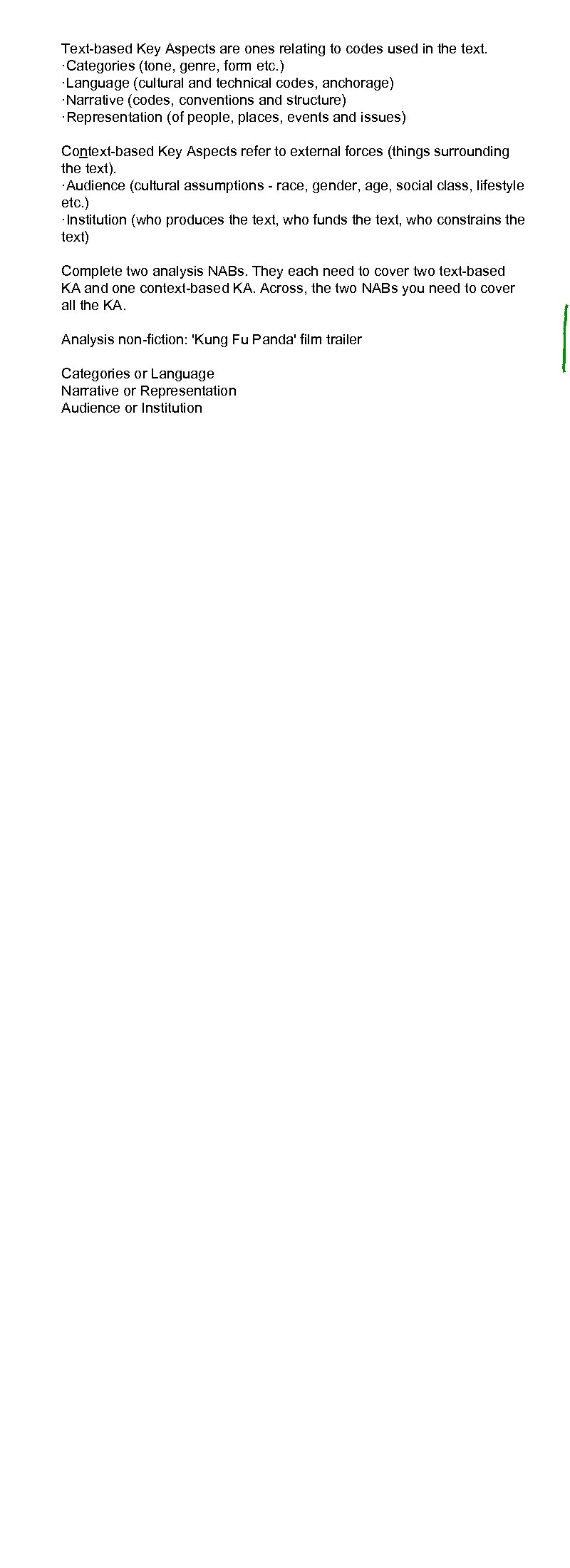
Text-based Key Aspects are ones relating to codes used in the text. ·Categories (tone, genre, form etc. ) ·Language (cultural and technical codes, anchorage) ·Narrative (codes, conventions and structure) ·Representation (of people, places, events and issues) Context-based Key Aspects refer to external forces (things surrounding the text). ·Audience (cultural assumptions - race, gender, age, social class, lifestyle etc. ) ·Institution (who produces the text, who funds the text, who constrains the text) Complete two analysis NABs. They each need to cover two text-based KA and one context-based KA. Across, the two NABs you need to cover all the KA. Analysis non-fiction: 'Kung Fu Panda' film trailer Categories or Language Narrative or Representation Audience or Institution
Скачать презентацию LANGUAGE Denotation Connotation Mise-en-scene Lighting and Colour black
75ab5837a85a6739c33259c3193a0e8e.ppt