


 Скачать презентацию Landscape Planning for Fuel Reduction and Forest Restoration
f64804f4851e5a359414b8b7bf6d07b4.ppt
- Количество слайдов: 44
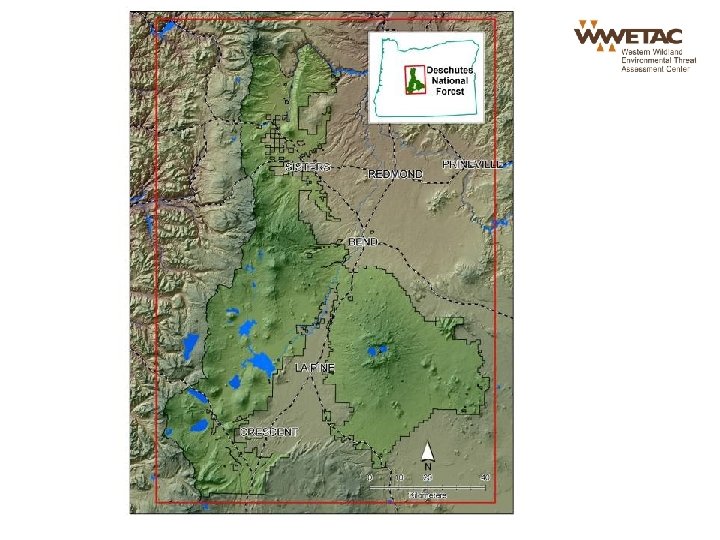
 Landscape Planning for Fuel Reduction and Forest Restoration Alan Ager, PNW Research Station, Western Wildlands Environmental Threat Assessment Center, Prineville Oregon, OR USA aager@fs. fed. us Nicole Vaillant, Adaptive Management Services Enterprise Team Reno NV Mark Finney, Missoula Fire Lab, Rocky Mountain Research Station
 Landscape Planning Process 1. Define restoration and protection framework and goals 2. Quantify wildfire risk and prioritize landscapes for management activities 3. Design projects and specific treatment alternatives 4. Examine treatment effectiveness
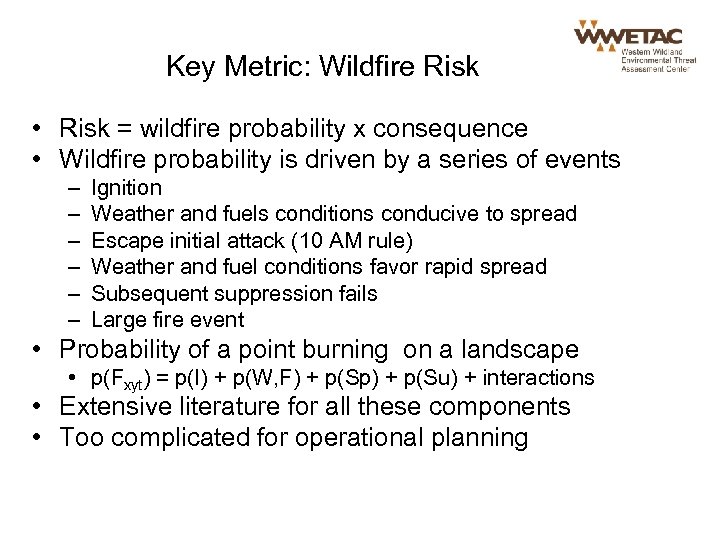 Key Metric: Wildfire Risk • Risk = wildfire probability x consequence • Wildfire probability is driven by a series of events – – – Ignition Weather and fuels conditions conducive to spread Escape initial attack (10 AM rule) Weather and fuel conditions favor rapid spread Subsequent suppression fails Large fire event • Probability of a point burning on a landscape • p(Fxyt) = p(I) + p(W, F) + p(Sp) + p(Su) + interactions • Extensive literature for all these components • Too complicated for operational planning
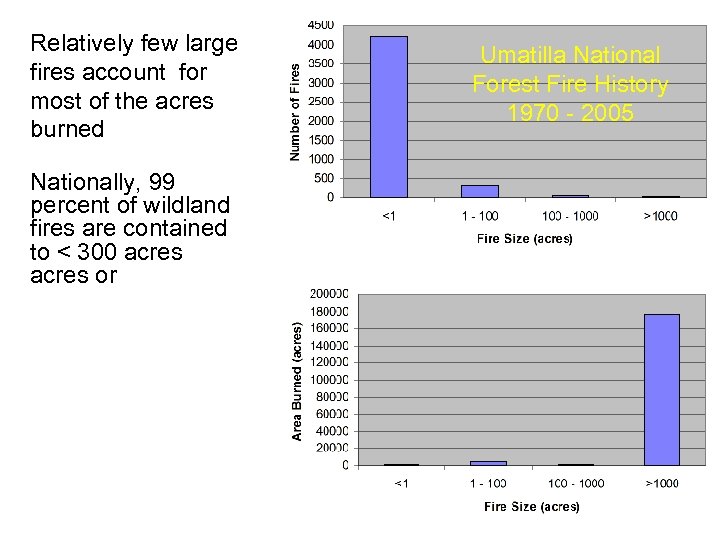 Relatively few large fires account for most of the acres burned Nationally, 99 percent of wildland fires are contained to < 300 acres or Umatilla National Forest Fire History 1970 - 2005
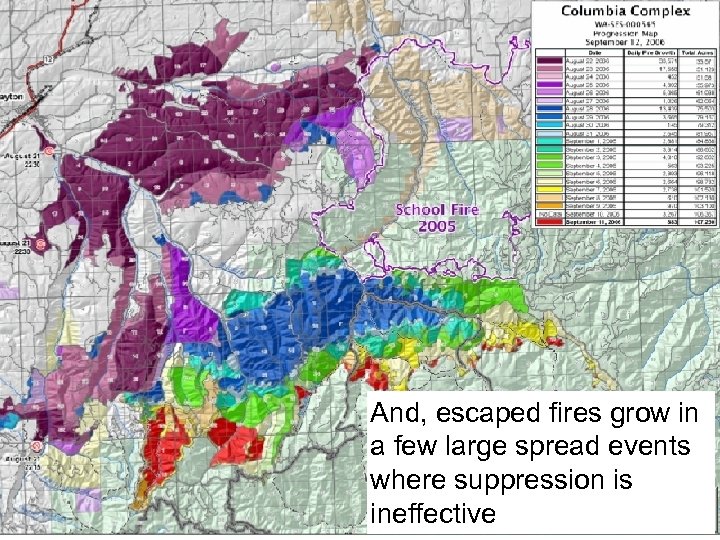 And, escaped fires grow in a few large spread events where suppression is ineffective
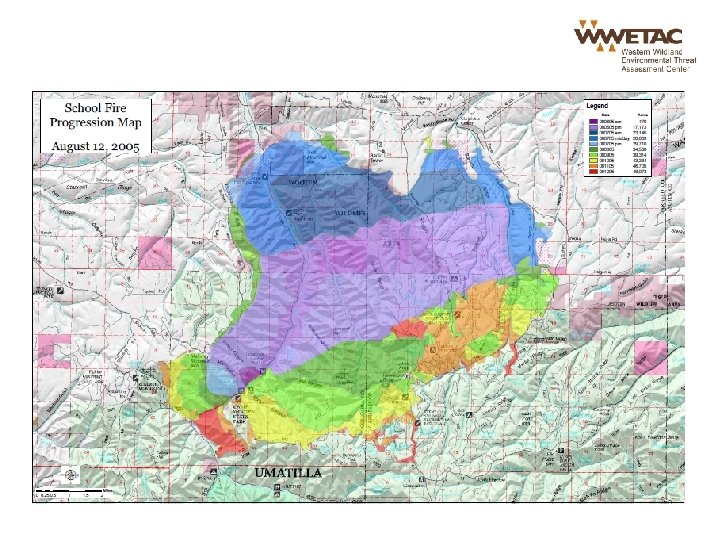
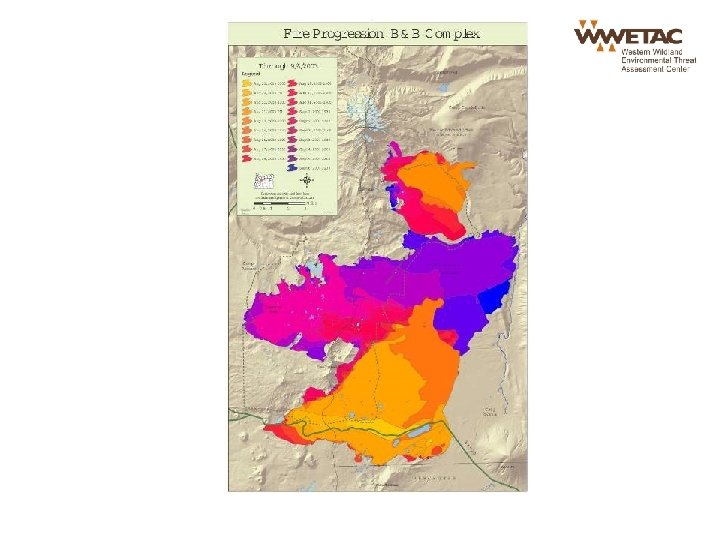
 Several inferences from wildfire statistics – Wildfire spread during large fire events is the primary contributor to wildfire risk – We can model wildfire risk by just considering the burn events, i. e. we do not need to simulate complex multi-day wildfire events with ignition grids, suppression, changing weather etc. – By simulating lots of burn events we can estimate conditional burn probabilities for risk analyses
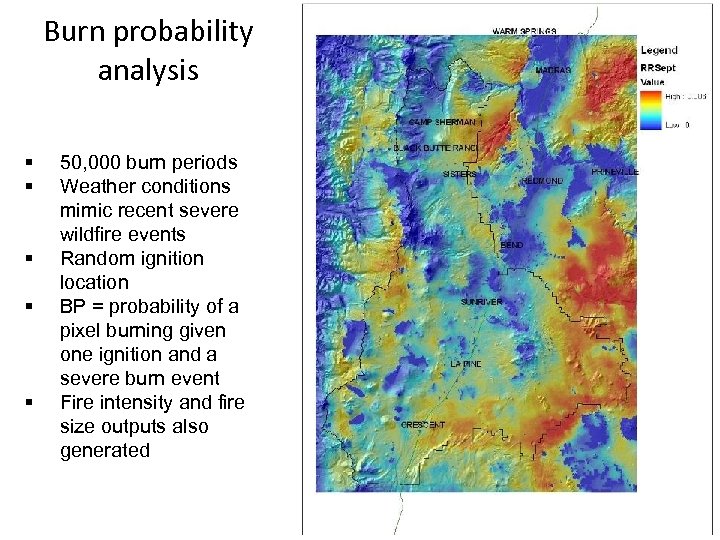 Burn probability analysis § § § 50, 000 burn periods Weather conditions mimic recent severe wildfire events Random ignition location BP = probability of a pixel burning given one ignition and a severe burn event Fire intensity and fire size outputs also generated
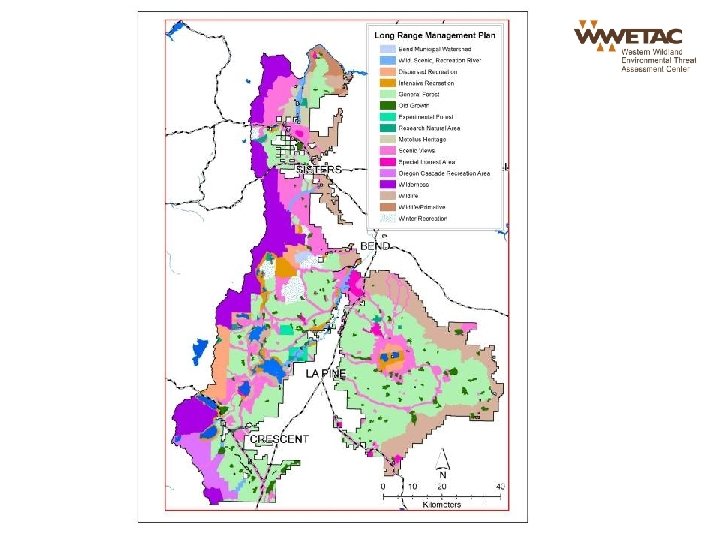
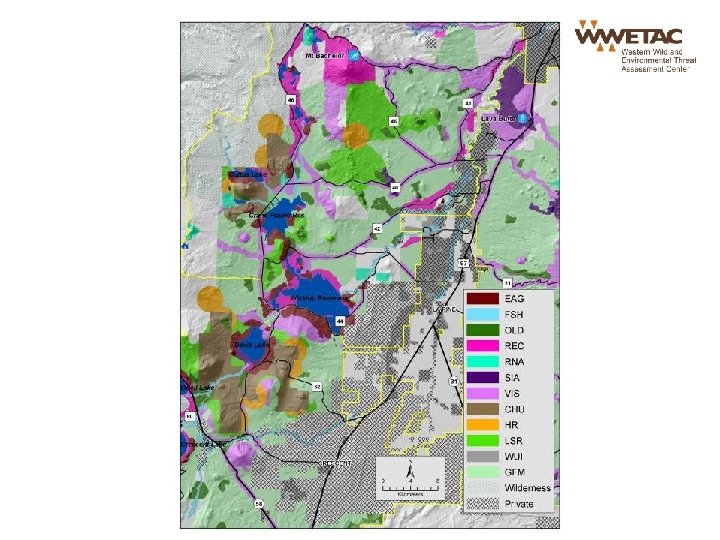
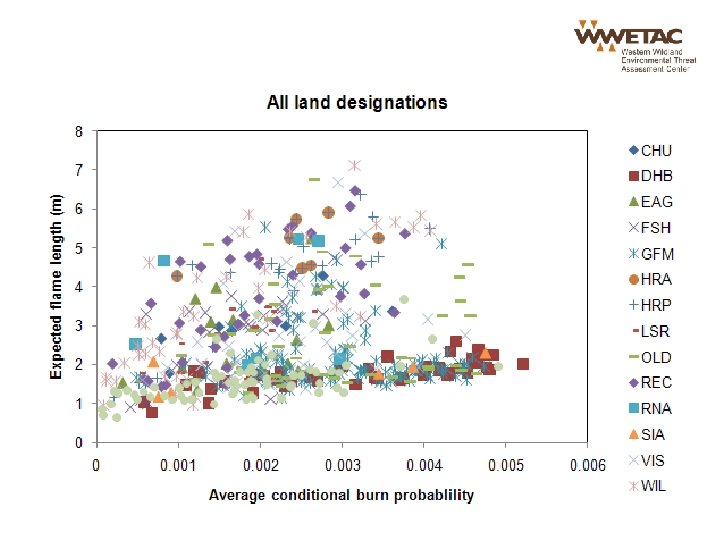
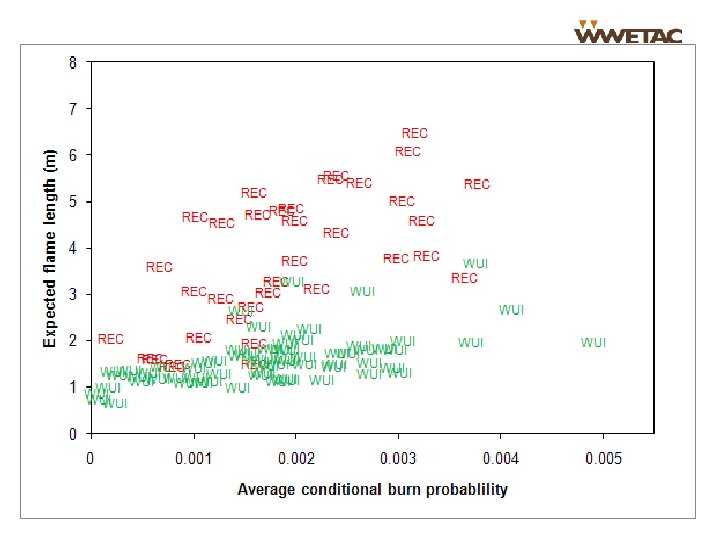
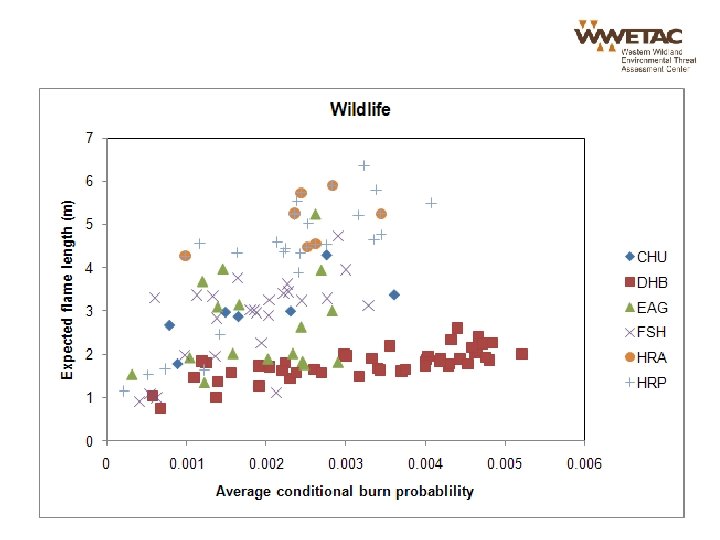
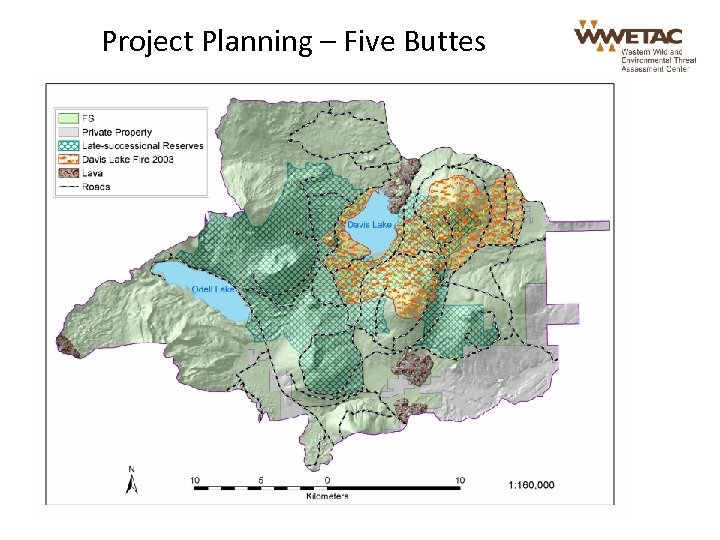 Project Planning – Five Buttes
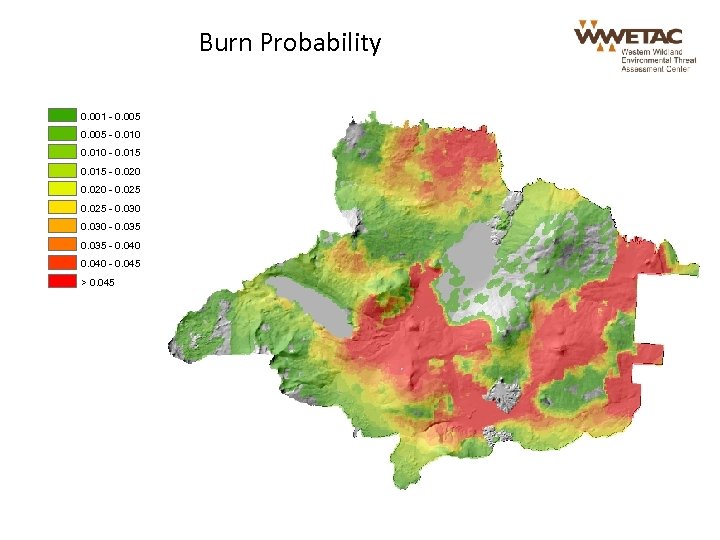 Burn Probability 0. 001 - 0. 005 - 0. 010 - 0. 015 - 0. 020 - 0. 025 - 0. 030 - 0. 035 - 0. 040 - 0. 045 > 0. 045
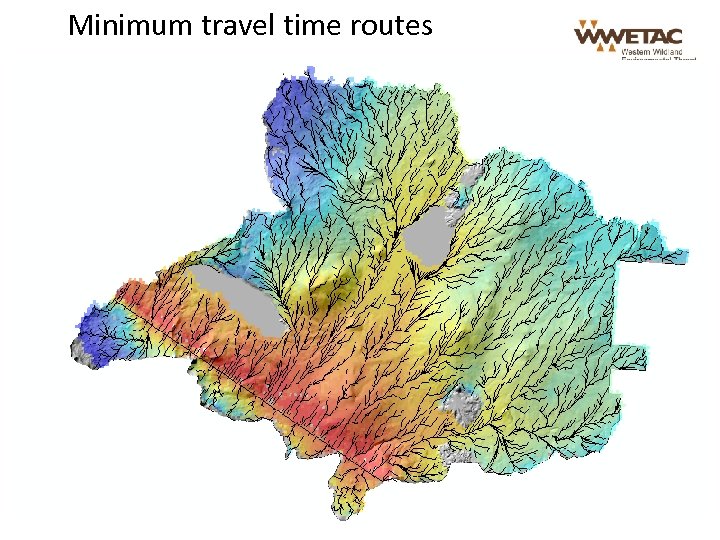 Minimum travel time routes
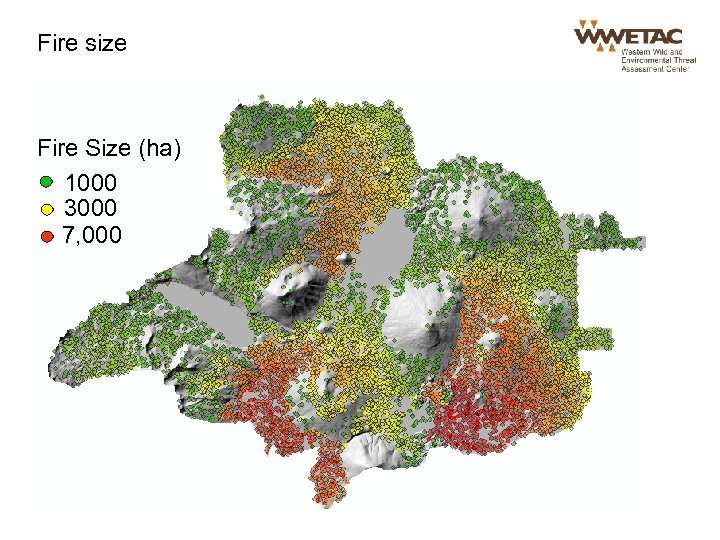 Fire size Fire Size (ha) 1000 3000 7, 000
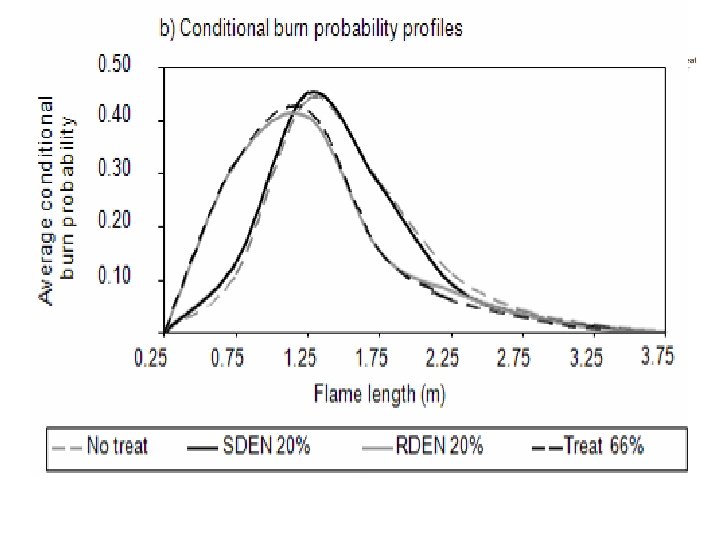
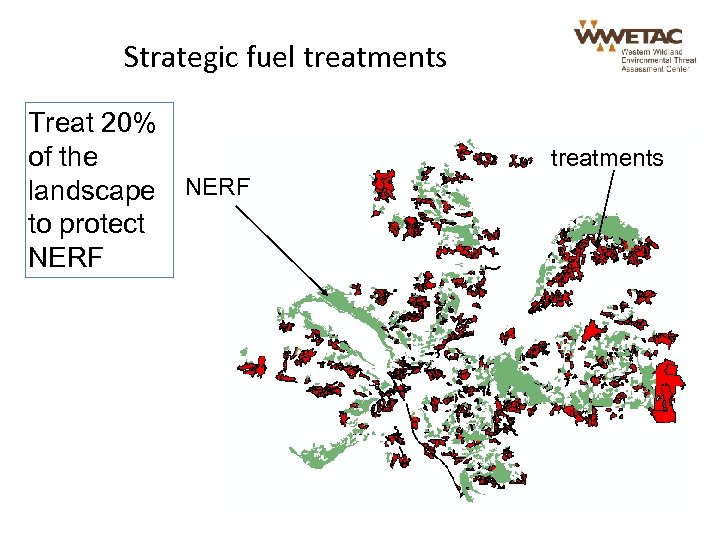 Strategic fuel treatments Treat 20% of the landscape NERF to protect NERF treatments
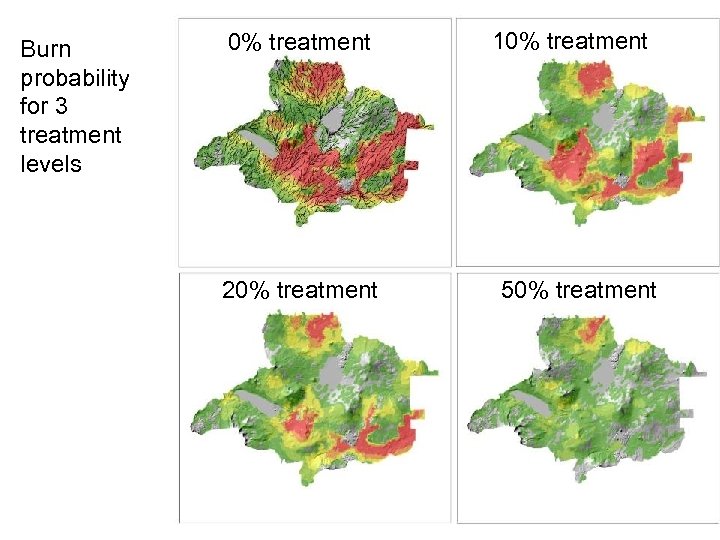 Burn probability for 3 treatment levels 0% treatment 20% treatment 10% treatment 50% treatment
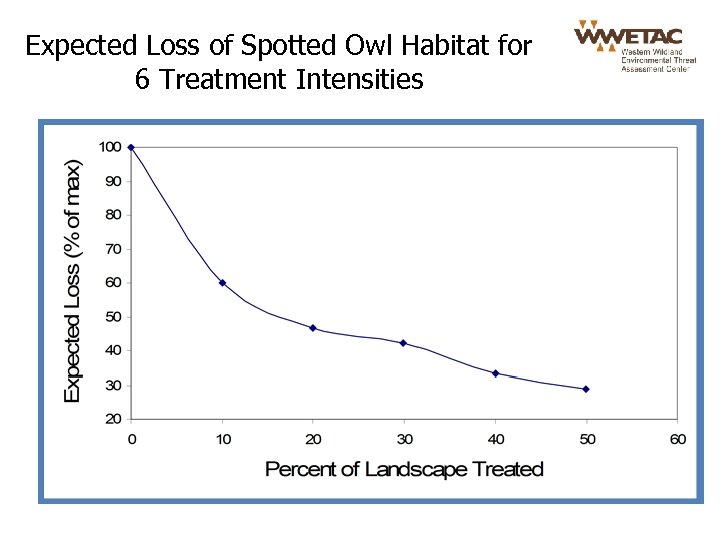 Expected Loss of Spotted Owl Habitat for 6 Treatment Intensities
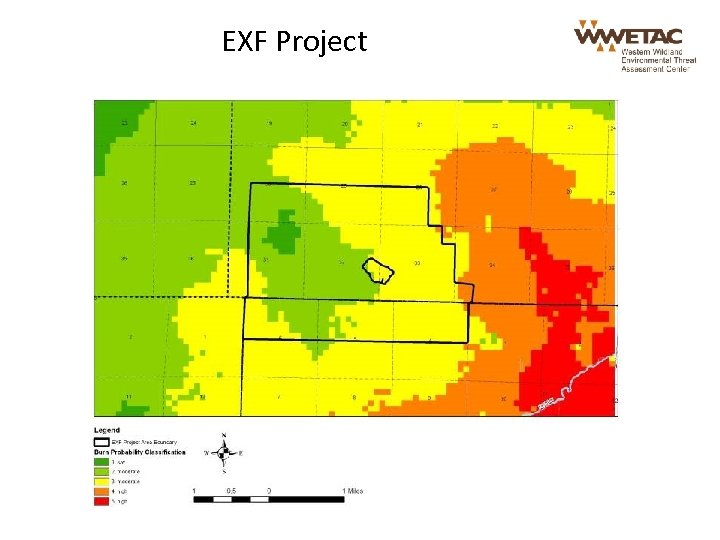 EXF Project
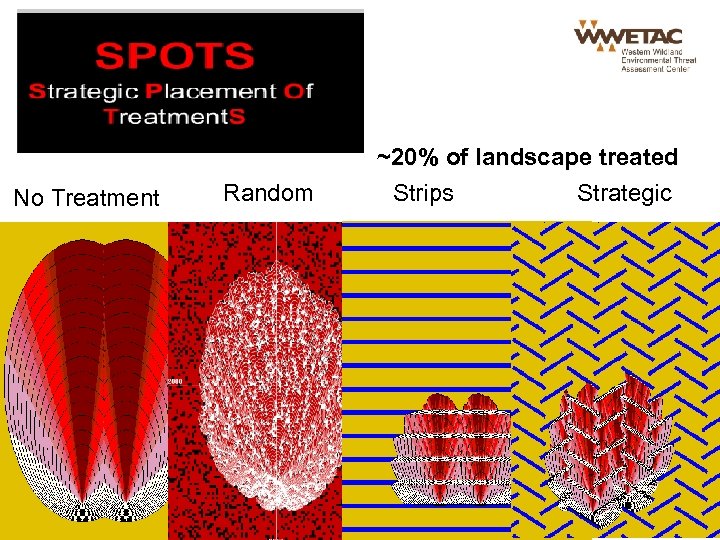 No Treatment Random ~20% of landscape treated Strips Strategic
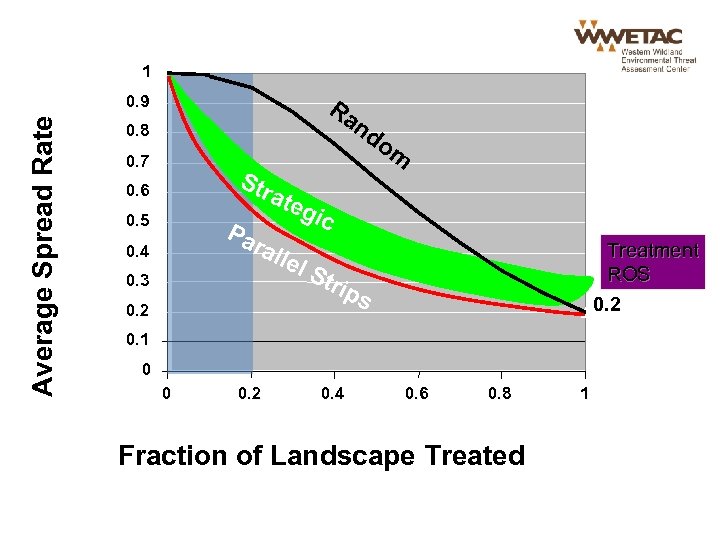 1 Ra nd o Average Spread Rate 0. 9 0. 8 m 0. 7 Str ate 0. 6 0. 5 Pa ral gic 0. 4 0. 3 lel Treatment ROS 0. 2 Str ip s 0. 2 0. 1 0 0 0. 2 0. 4 0. 6 0. 8 Fraction of Landscape Treated 1
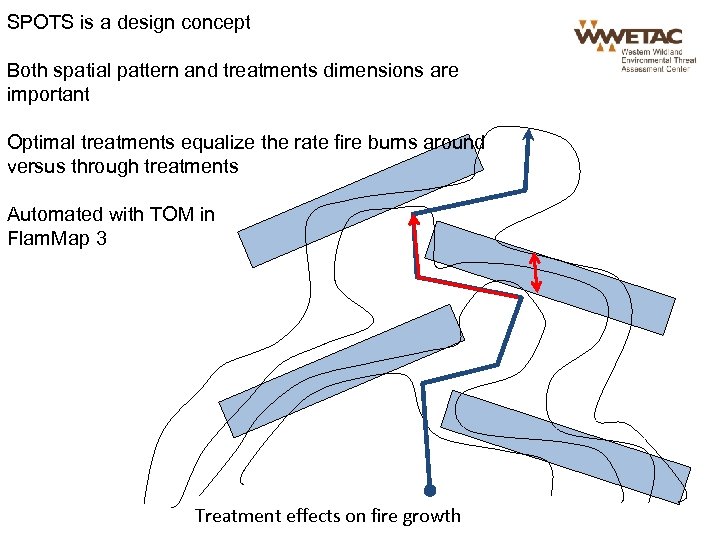 SPOTS is a design concept Both spatial pattern and treatments dimensions are important Optimal treatments equalize the rate fire burns around versus through treatments Automated with TOM in Flam. Map 3 Treatment effects on fire growth
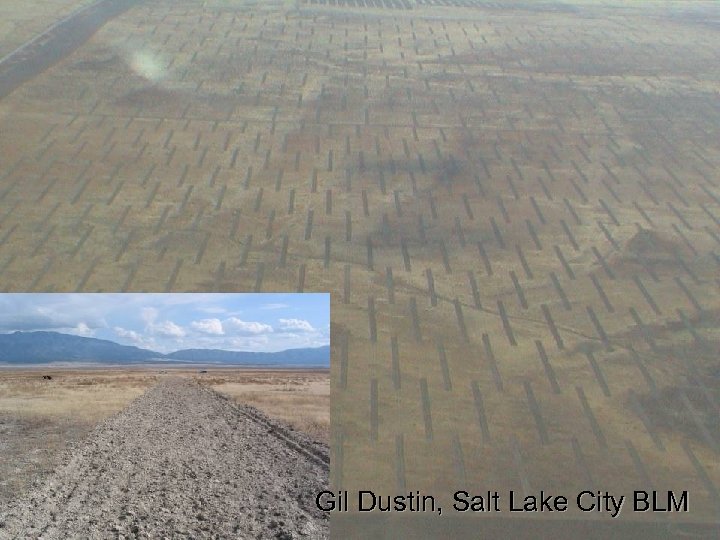 Gil Dustin, Salt Lake City BLM
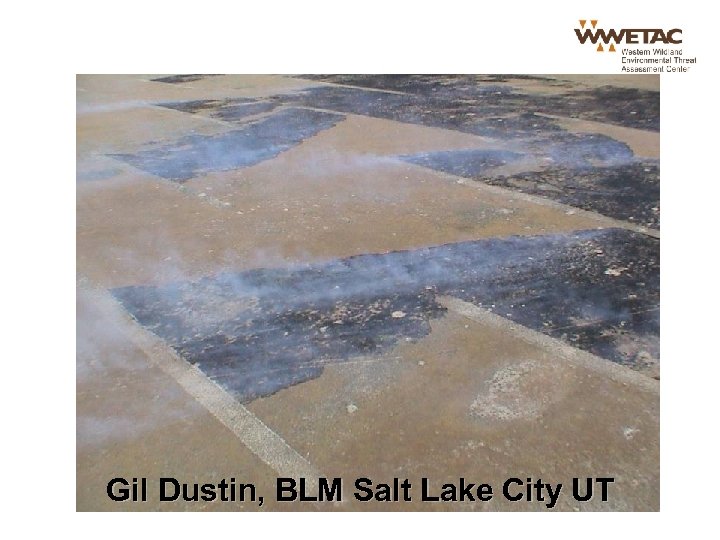
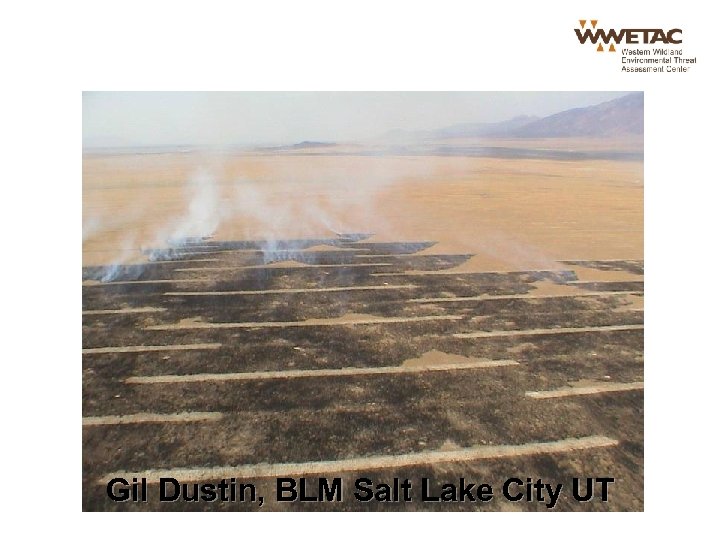 Gil Dustin, BLM Salt Lake City UT
 Gil Dustin, BLM Salt Lake City UT
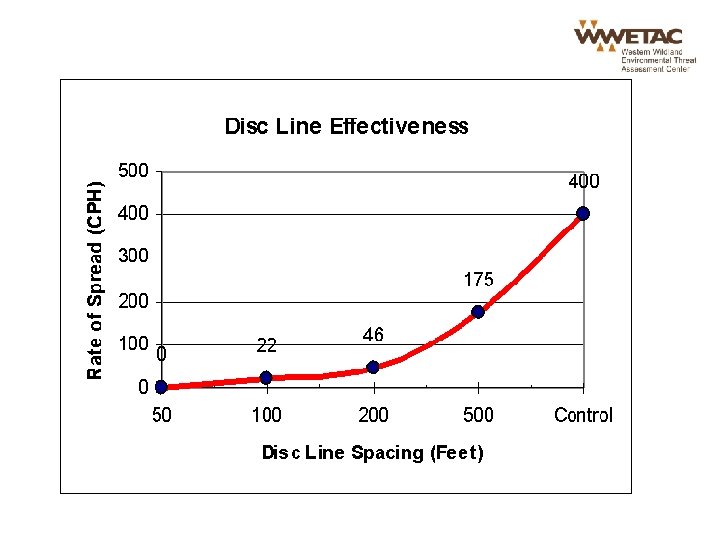 Gil Dustin, BLM Salt Lake City UT
 SPOTS = Strategic fuel treatment strategy – SPOTS is an optimized strategic fuel treatment strategy – Most effective when < 30% of the landscape is treated. – Not effective when more than 40% - 60% of the project area is not available for locating treatments – options too limited – Be based on a problem fire – Leverage natural fire breaks and other expected fire behaviors – Can be applied at multiple scales
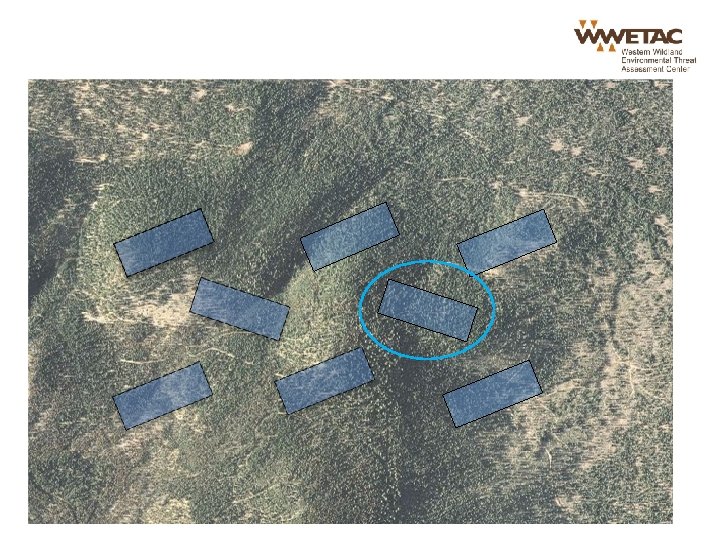
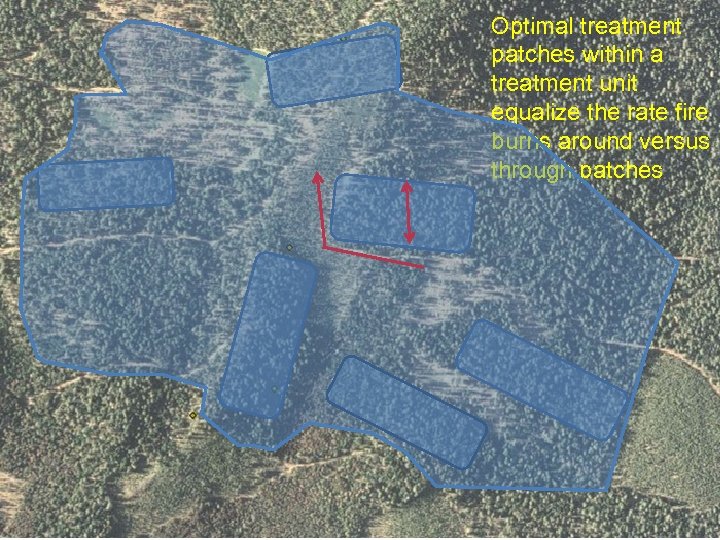 Optimal treatment patches within a treatment unit equalize the rate fire burns around versus through patches
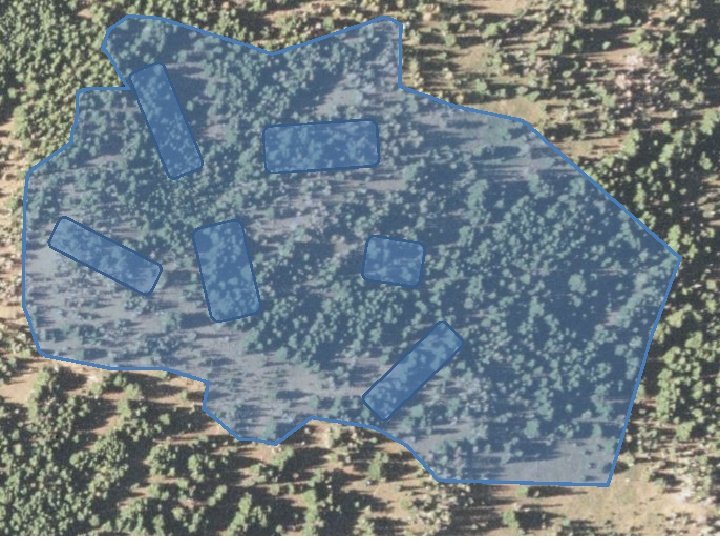
 Strategic fuel treatments and restoration projects • The original SPOTS concept is not applicable to landscape restoration projects where landscapes are being managed to resume natural fire regimes. • Landscape restoration needs to create contiguous areas with acceptable fuel loads and fire behavior (not block the spread of a large fire) so that fires are not suppressed
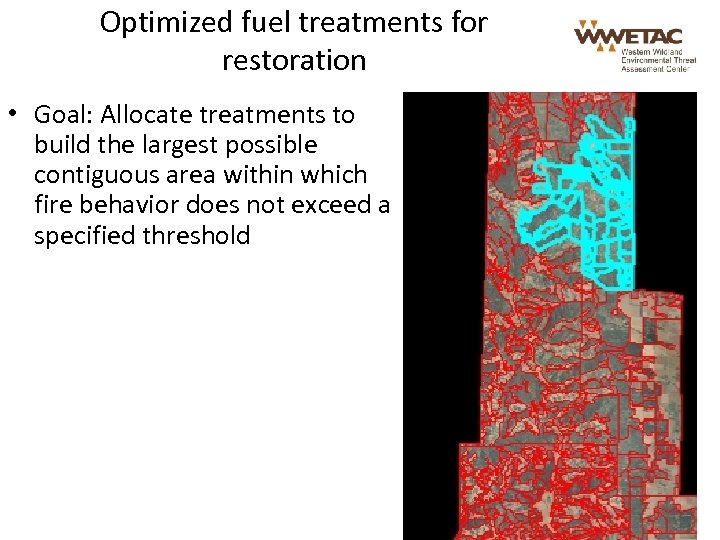 Optimized fuel treatments for restoration • Goal: Allocate treatments to build the largest possible contiguous area within which fire behavior does not exceed a specified threshold
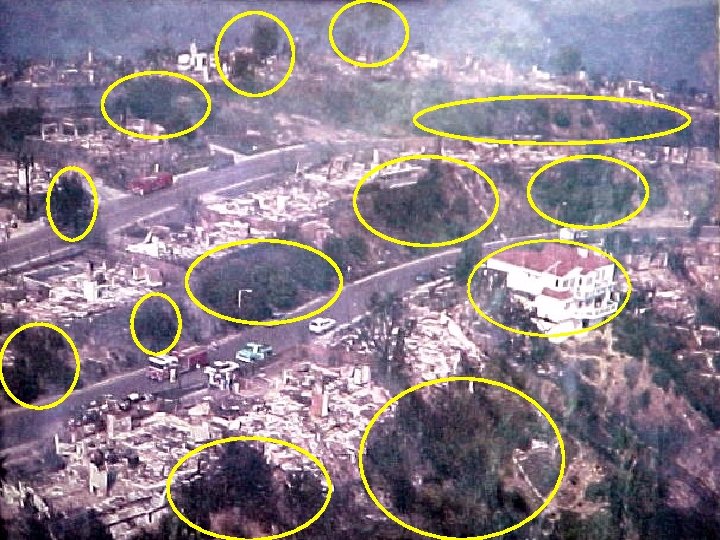
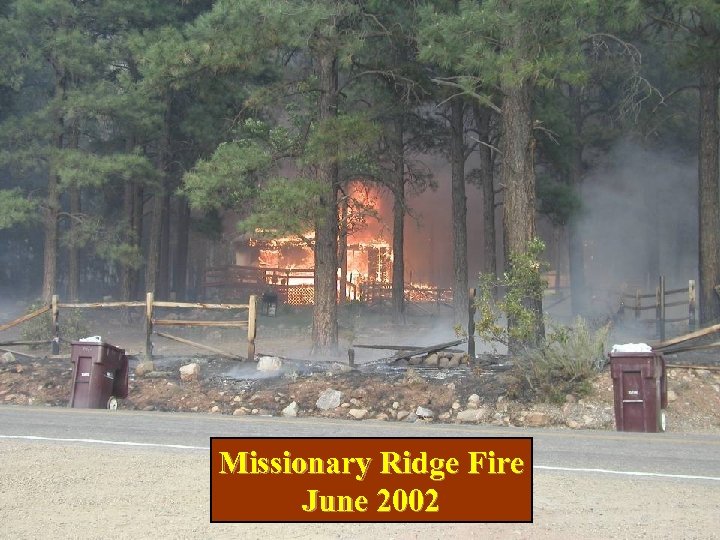
 The WUI Problem • Dynamics of home ignition are not incorporated into landscape fire spread models • Home ignition dependent on microfuels around the home and building materials • Other than ignition, landscape fire spread contributes little to home ignition event
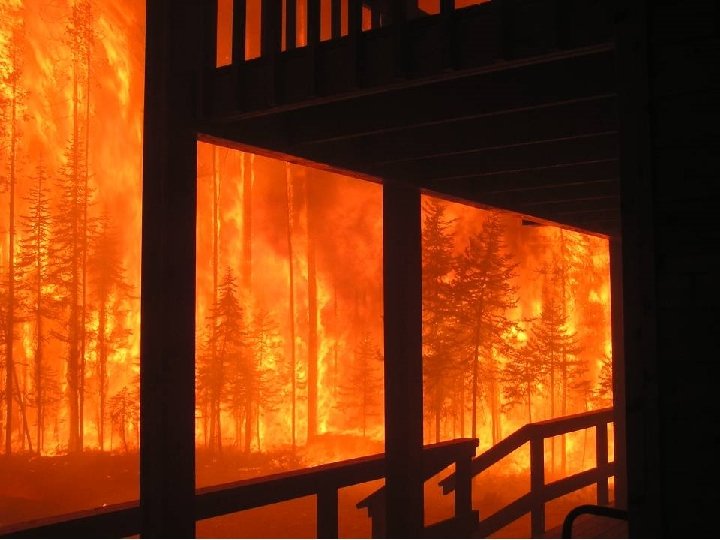
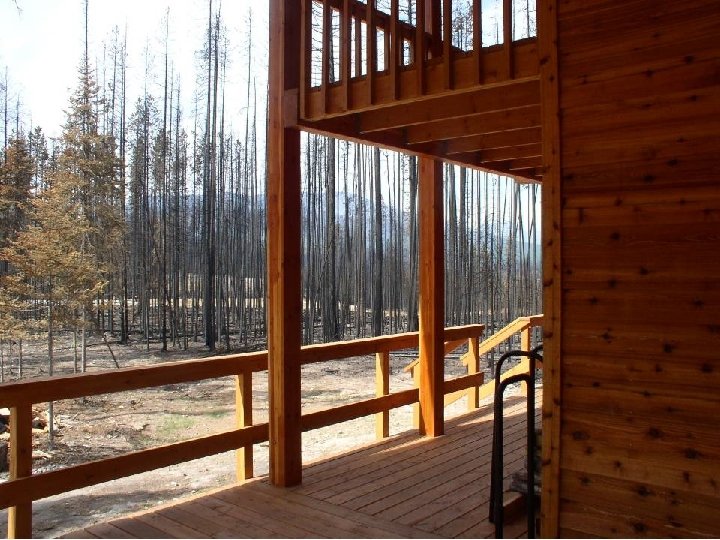
 Missionary Ridge Fire June 2002
 Arc. Fuels www. wwetac. org/arcfuels
 Thanks……………. Dave Owens Deana Wall Geoff Babb Dana Simon Lauren Miller Leo Yanez Helen Maffei Amy Walz Chris Zanger