


 Скачать презентацию Landscape livelihoods and risk A study of community
a3522213f254c781dc2e1ef2c6a7e4b3.ppt
- Количество слайдов: 17
 Landscape, livelihoods and risk: A study of community vulnerability to landslide events in a dynamic mountain environment Katie Oven, D. Petley, J. Rigg, C. Dunn and N. Rosser
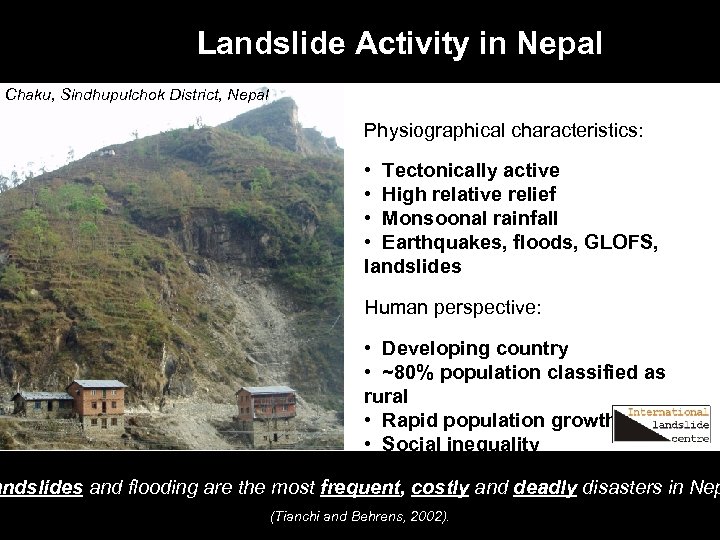 Landslide Activity in Nepal Chaku, Sindhupulchok District, Nepal Physiographical characteristics: • Tectonically active • High relative relief • Monsoonal rainfall • Earthquakes, floods, GLOFS, landslides Human perspective: • Developing country • ~80% population classified as rural • Rapid population growth • Social inequality andslides and flooding are the most frequent, costly and deadly disasters in Nep (Tianchi and Behrens, 2002).
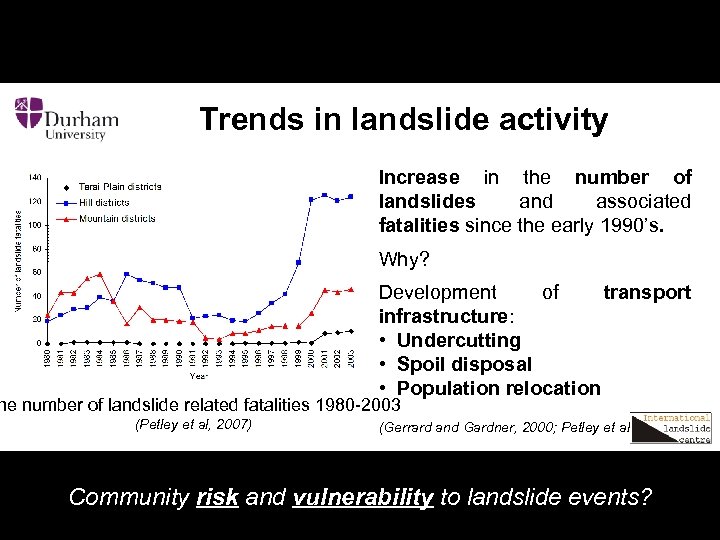 Trends in landslide activity Increase in the number of landslides and associated fatalities since the early 1990’s. Why? Development of transport infrastructure: • Undercutting • Spoil disposal • Population relocation he number of landslide related fatalities 1980 -2003 (Petley et al, 2007) (Gerrard and Gardner, 2000; Petley et al, 2007) Community risk and vulnerability to landslide events?
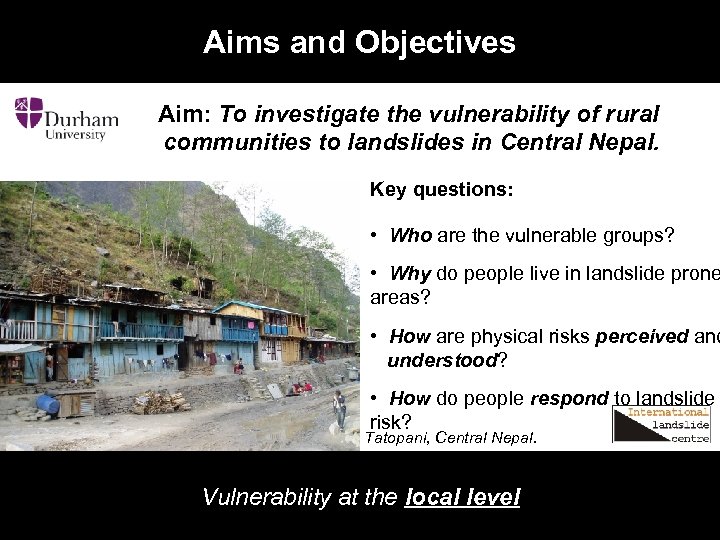 Aims and Objectives Aim: To investigate the vulnerability of rural communities to landslides in Central Nepal. Key questions: • Who are the vulnerable groups? • Why do people live in landslide prone areas? • How are physical risks perceived and understood? • How do people respond to landslide risk? Tatopani, Central Nepal. Vulnerability at the local level
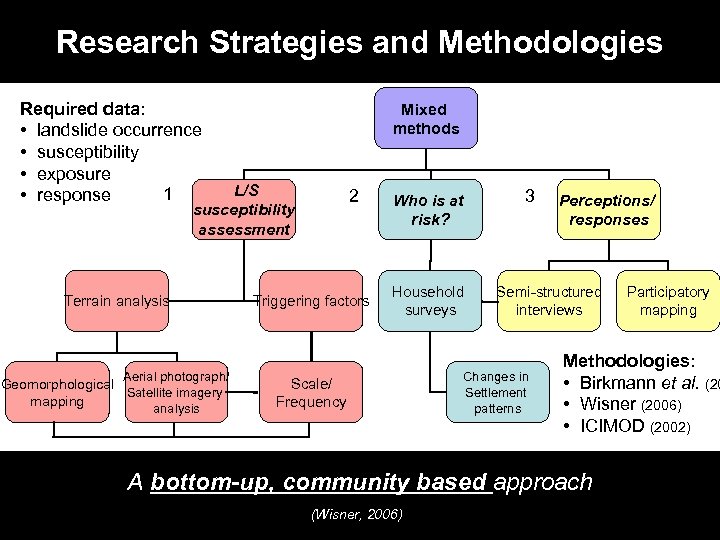 Research Strategies and Methodologies Required data: • landslide occurrence • susceptibility • exposure 1 • response Mixed methods L/S susceptibility assessment Terrain analysis Aerial photograph/ Geomorphological Satellite imagery mapping analysis 2 Triggering factors Who is at risk? Household surveys Scale/ Frequency 3 Perceptions/ responses Semi-structured interviews Changes in Settlement patterns Methodologies: • Birkmann et al. (20 • Wisner (2006) • ICIMOD (2002) A bottom-up, community based approach (Wisner, 2006) Participatory mapping
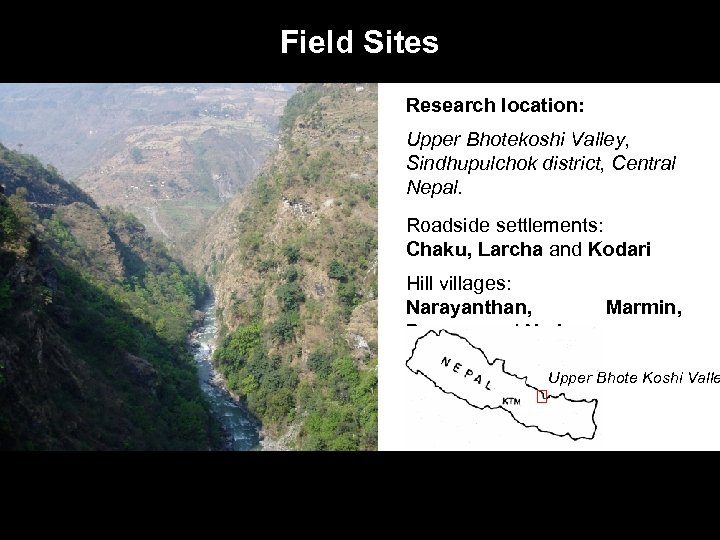 Field Sites Research location: Upper Bhotekoshi Valley, Sindhupulchok district, Central Nepal. Roadside settlements: Chaku, Larcha and Kodari Hill villages: Narayanthan, Marmin, Duguna and Nadung Upper Bhote Koshi Valle
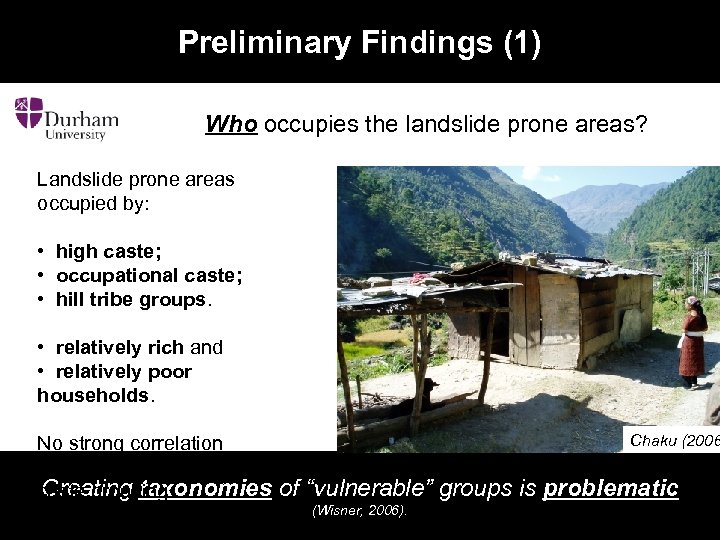 Preliminary Findings (1) Who occupies the landslide prone areas? Landslide prone areas occupied by: • high caste; • occupational caste; • hill tribe groups. • relatively rich and • relatively poor households. No strong correlation between poverty level and Creating taxonomies caste grouping. Chaku (2006 of “vulnerable” groups is problematic (Wisner, 2006).
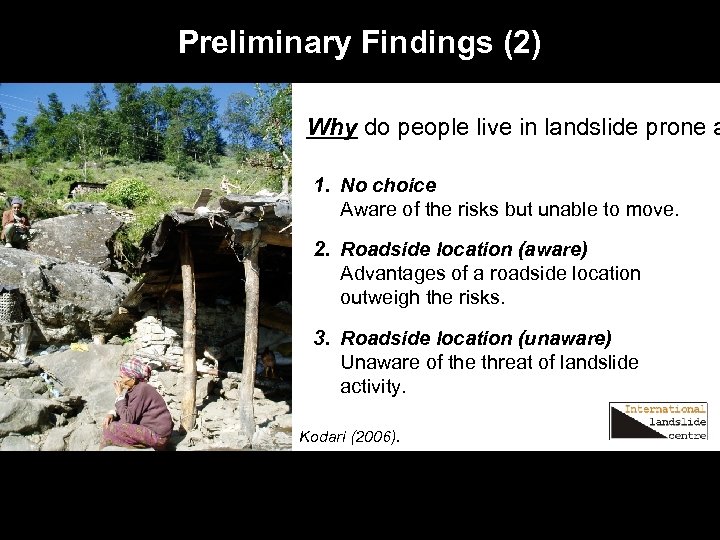 Preliminary Findings (2) Why do people live in landslide prone a 1. No choice Aware of the risks but unable to move. 2. Roadside location (aware) Advantages of a roadside location outweigh the risks. 3. Roadside location (unaware) Unaware of the threat of landslide activity. Kodari (2006).
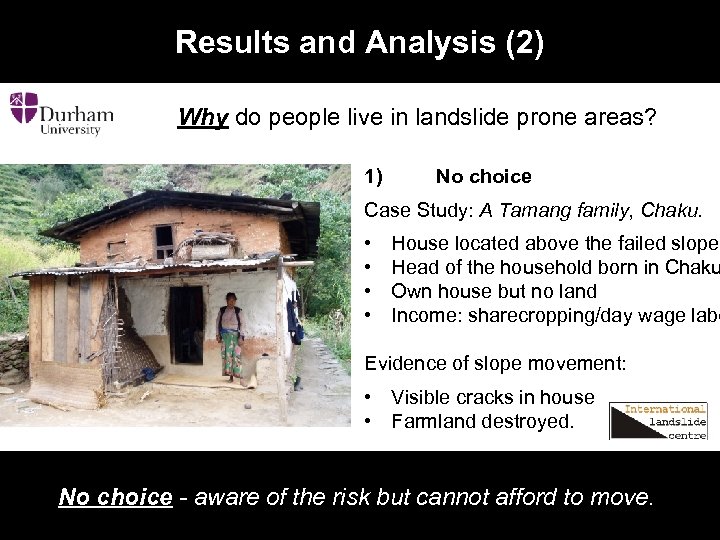 Results and Analysis (2) Why do people live in landslide prone areas? 1) No choice Case Study: A Tamang family, Chaku. • • House located above the failed slope Head of the household born in Chaku Own house but no land Income: sharecropping/day wage labo Evidence of slope movement: • Visible cracks in house • Farmland destroyed. No choice - aware of the risk but cannot afford to move.
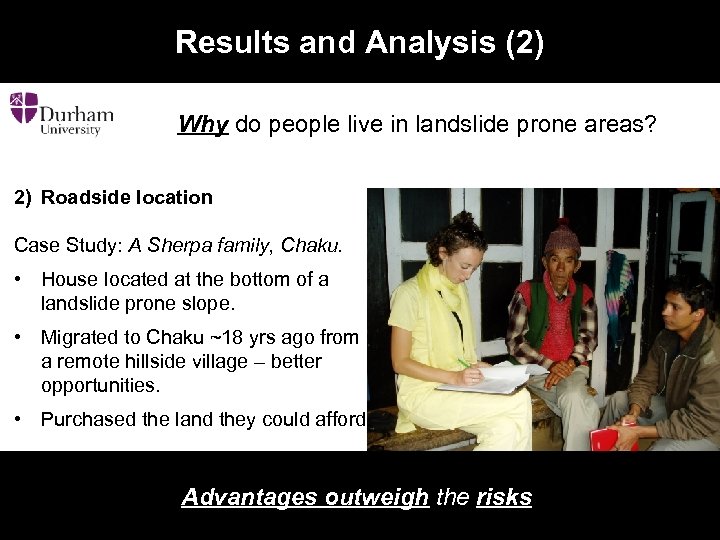 Results and Analysis (2) Why do people live in landslide prone areas? 2) Roadside location Case Study: A Sherpa family, Chaku. • House located at the bottom of a landslide prone slope. • Migrated to Chaku ~18 yrs ago from a remote hillside village – better opportunities. • Purchased the land they could afford. Advantages outweigh the risks
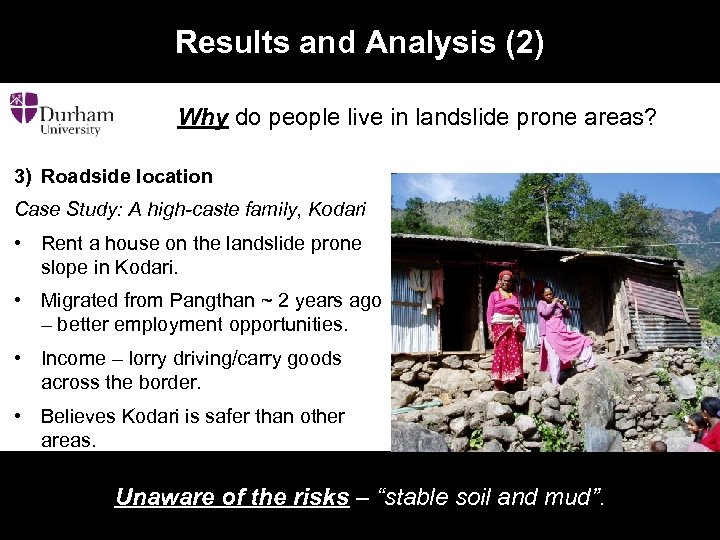 Results and Analysis (2) Why do people live in landslide prone areas? 3) Roadside location Case Study: A high-caste family, Kodari • Rent a house on the landslide prone slope in Kodari. • Migrated from Pangthan ~ 2 years ago – better employment opportunities. • Income – lorry driving/carry goods across the border. • Believes Kodari is safer than other areas. Unaware of the risks – “stable soil and mud”.
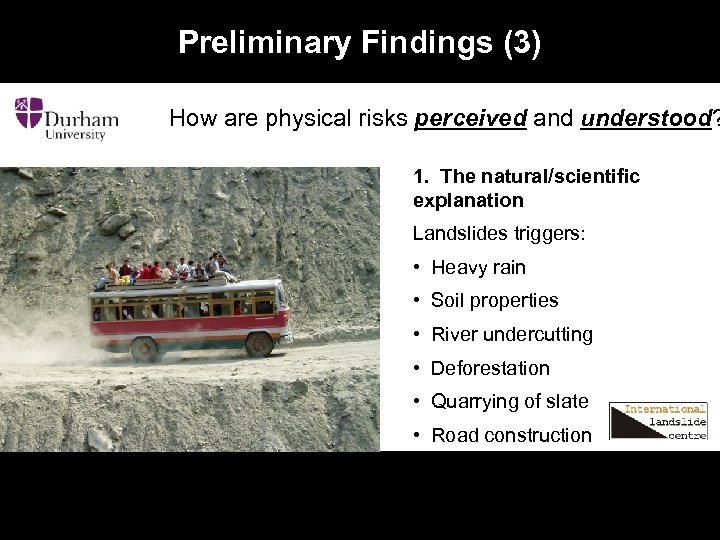 Preliminary Findings (3) How are physical risks perceived and understood? 1. The natural/scientific explanation Landslides triggers: • Heavy rain • Soil properties • River undercutting • Deforestation • Quarrying of slate • Road construction
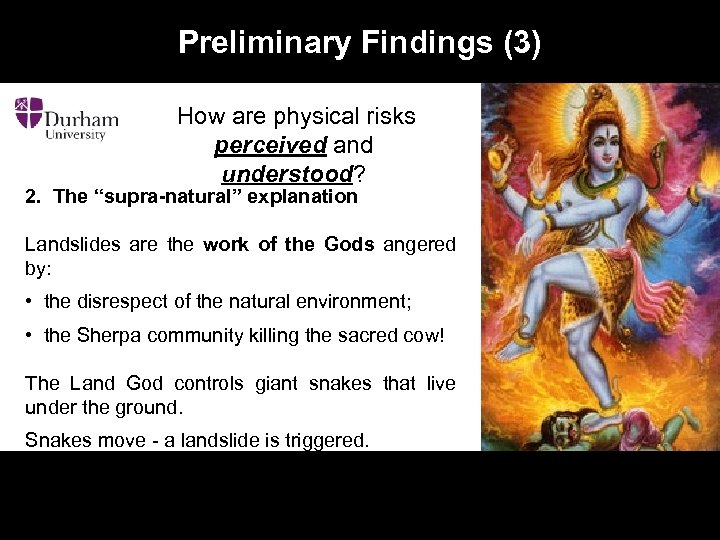 Preliminary Findings (3) How are physical risks perceived and understood? 2. The “supra-natural” explanation Landslides are the work of the Gods angered by: • the disrespect of the natural environment; • the Sherpa community killing the sacred cow! The Land God controls giant snakes that live under the ground. Snakes move - a landslide is triggered.
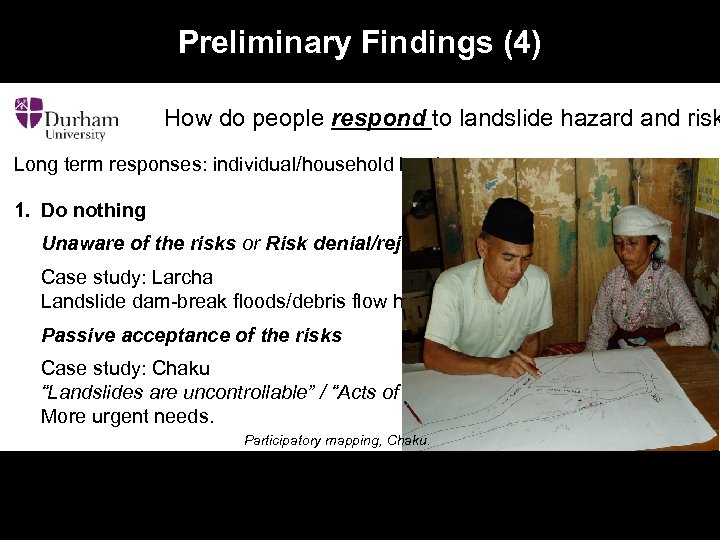 Preliminary Findings (4) How do people respond to landslide hazard and risk Long term responses: individual/household level: 1. Do nothing Unaware of the risks or Risk denial/rejection Case study: Larcha Landslide dam-break floods/debris flow hazards. Passive acceptance of the risks Case study: Chaku “Landslides are uncontrollable” / “Acts of God” More urgent needs. Participatory mapping, Chaku.
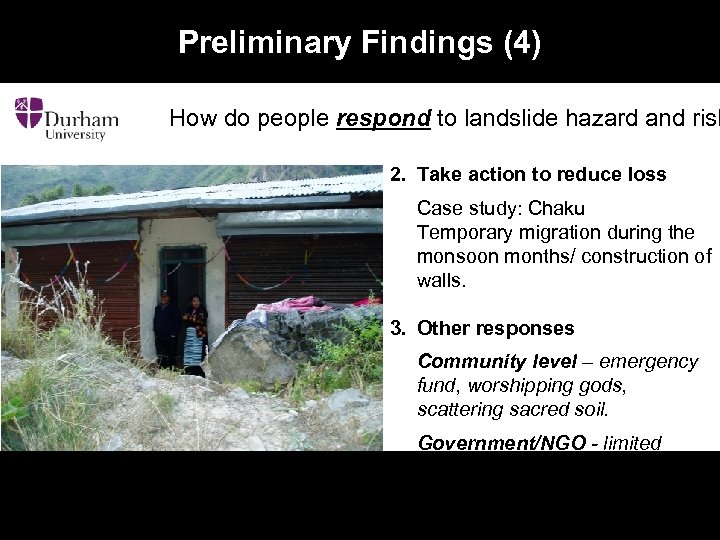 Preliminary Findings (4) How do people respond to landslide hazard and risk 2. Take action to reduce loss Case study: Chaku Temporary migration during the monsoon months/ construction of walls. 3. Other responses Community level – emergency fund, worshipping gods, scattering sacred soil. Government/NGO - limited involvement Road maintenance.
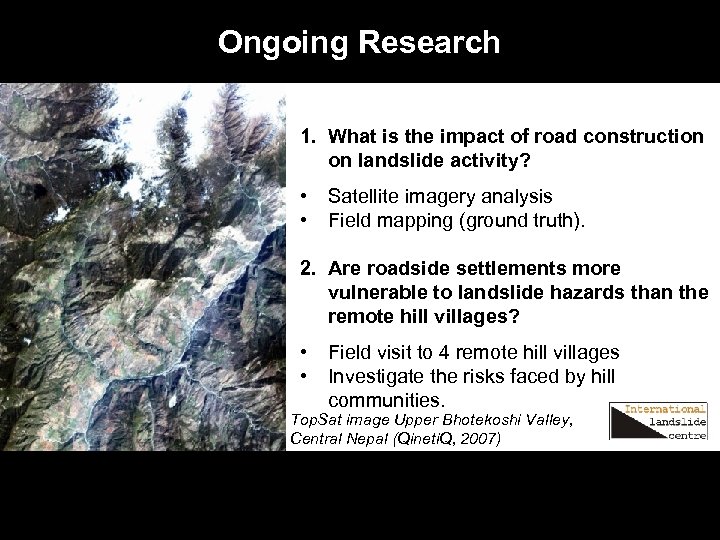 Ongoing Research 1. What is the impact of road construction on landslide activity? • • Satellite imagery analysis Field mapping (ground truth). 2. Are roadside settlements more vulnerable to landslide hazards than the remote hill villages? • • Field visit to 4 remote hill villages Investigate the risks faced by hill communities. Top. Sat image Upper Bhotekoshi Valley, Central Nepal (Qineti. Q, 2007)
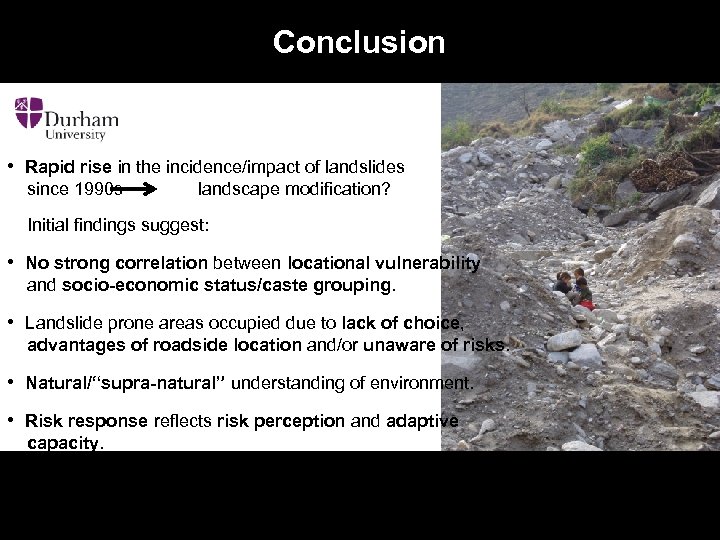 Conclusion • Rapid rise in the incidence/impact of landslides since 1990 s landscape modification? Initial findings suggest: • No strong correlation between locational vulnerability and socio-economic status/caste grouping. • Landslide prone areas occupied due to lack of choice, advantages of roadside location and/or unaware of risks. • Natural/“supra-natural” understanding of environment. • Risk response reflects risk perception and adaptive capacity.