 Скачать презентацию Lamb Hair Mc Daniel MKTG 2008 -2009 3
78d9af6a42565f5108e48b2ecfe9882f.ppt
- Количество слайдов: 52



Lamb, Hair, Mc. Daniel MKTG 2008 -2009 3 Social Responsibility, Ethics, and the Marketing Environment CHAPTER Designed by Amy Mc. Guire, B-books, Ltd. Chapter 3 Prepared by Deborah Baker, Texas Christian University Copyright © 2009 Cengage Learning Inc. All rights reserved. 1
Learning Outcomes LO 1 Discuss corporate social responsibility LO 2 Describe the role of ethics and ethical decisions in business LO 3 Discuss the external environment of marketing, and explain how it affects a firm Chapter 3 Copyright © 2009 Cengage Learning Inc. All rights reserved. 2
Learning Outcomes LO 4 Describe the social factors that affect marketing LO 5 Explain the importance to marketing managers of current demographic trends LO 6 Explain the importance to marketing managers of multiculturalism and growing ethnic markets Chapter 3 Copyright © 2009 Cengage Learning Inc. All rights reserved. 3
Learning Outcomes LO 7 Identify consumer and market reactions to the state of the economy LO 8 Identify the impact of technology on a firm LO 9 Discuss the political and legal environment of marketing LO 10 Explain the basics of foreign and domestic competition Chapter 3 Copyright © 2009 Cengage Learning Inc. All rights reserved. 4
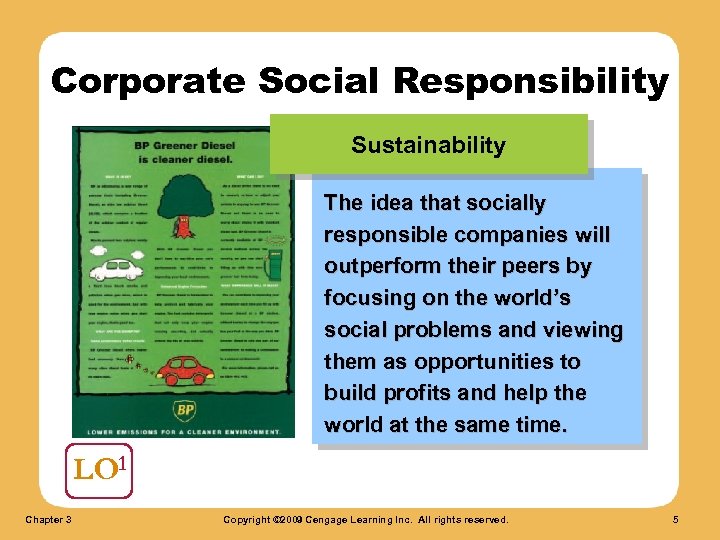
Corporate Social Responsibility Sustainability The idea that socially responsible companies will outperform their peers by focusing on the world’s social problems and viewing them as opportunities to build profits and help the world at the same time. LO 1 Chapter 3 Copyright © 2009 Cengage Learning Inc. All rights reserved. 5
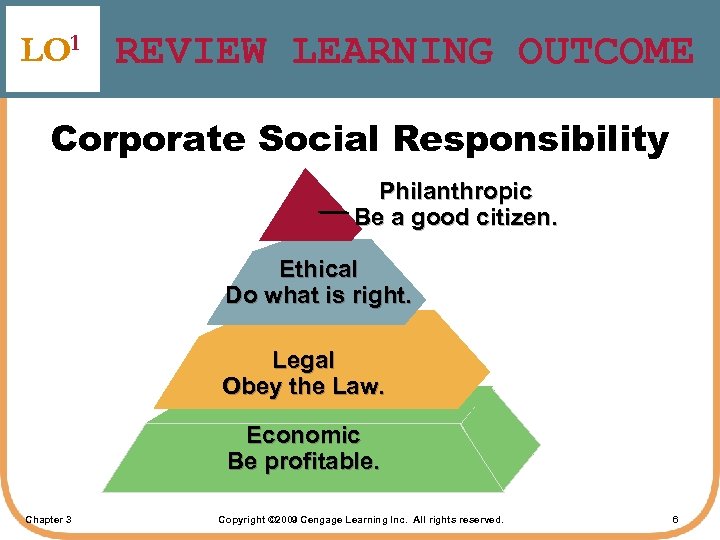
LO 1 REVIEW LEARNING OUTCOME Corporate Social Responsibility Philanthropic Be a good citizen. Ethical Do what is right. Legal Obey the Law. Economic Be profitable. Chapter 3 Copyright © 2009 Cengage Learning Inc. All rights reserved. 6
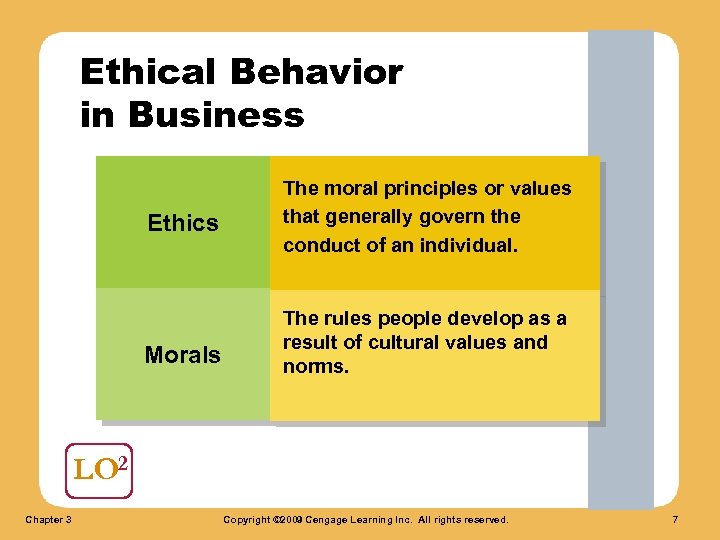
Ethical Behavior in Business Ethics Morals The moral principles or values that generally govern the conduct of an individual. The rules people develop as a result of cultural values and norms. LO 2 Chapter 3 Copyright © 2009 Cengage Learning Inc. All rights reserved. 7
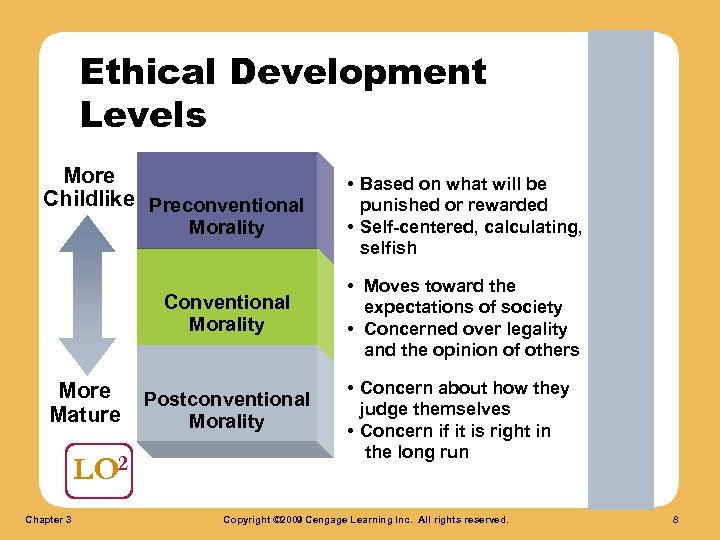
Ethical Development Levels More Childlike Preconventional Morality Conventional Morality More Mature LO 2 Chapter 3 Postconventional Morality • Based on what will be punished or rewarded • Self-centered, calculating, selfish • Moves toward the expectations of society • Concerned over legality and the opinion of others • Concern about how they judge themselves • Concern if it is right in the long run Copyright © 2009 Cengage Learning Inc. All rights reserved. 8
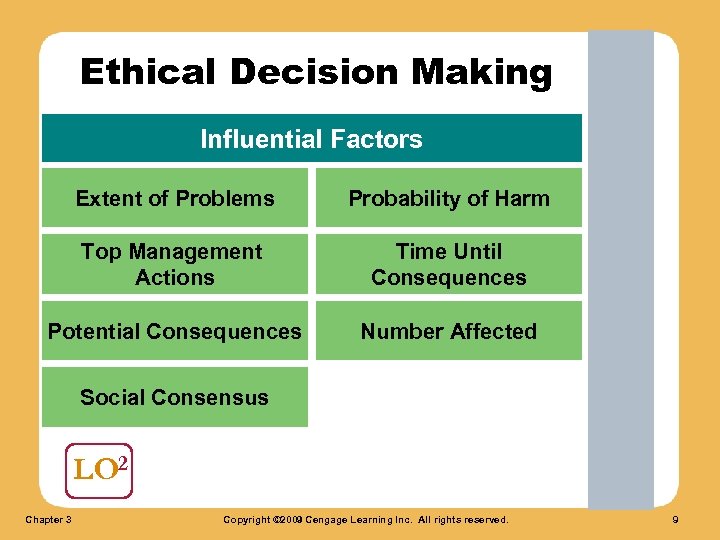
Ethical Decision Making Influential Factors Extent of Problems Probability of Harm Top Management Actions Time Until Consequences Potential Consequences Number Affected Social Consensus LO 2 Chapter 3 Copyright © 2009 Cengage Learning Inc. All rights reserved. 9
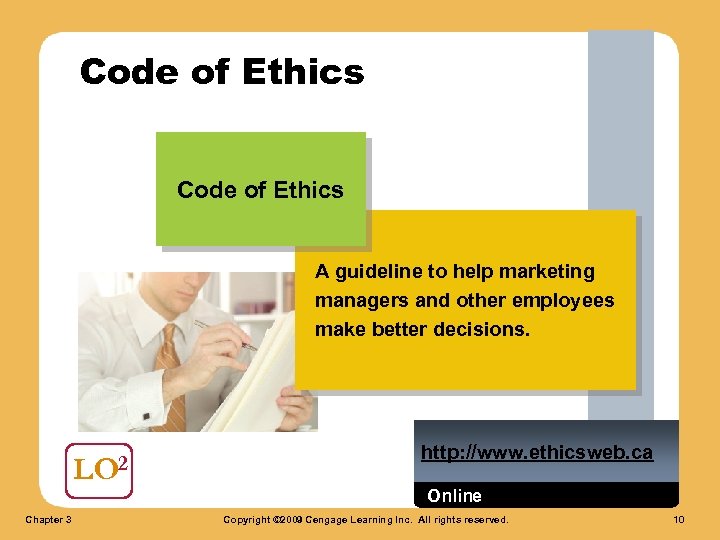
Code of Ethics A guideline to help marketing managers and other employees make better decisions. LO 2 Chapter 3 http: //www. ethicsweb. ca Online Copyright © 2009 Cengage Learning Inc. All rights reserved. 10
Creating Ethical Guidelines u Helps identify acceptable business practices u Helps control behavior internally u Avoids confusion in decision making u Facilitates discussion about right and wrong LO 2 Chapter 3 Copyright © 2009 Cengage Learning Inc. All rights reserved. 11
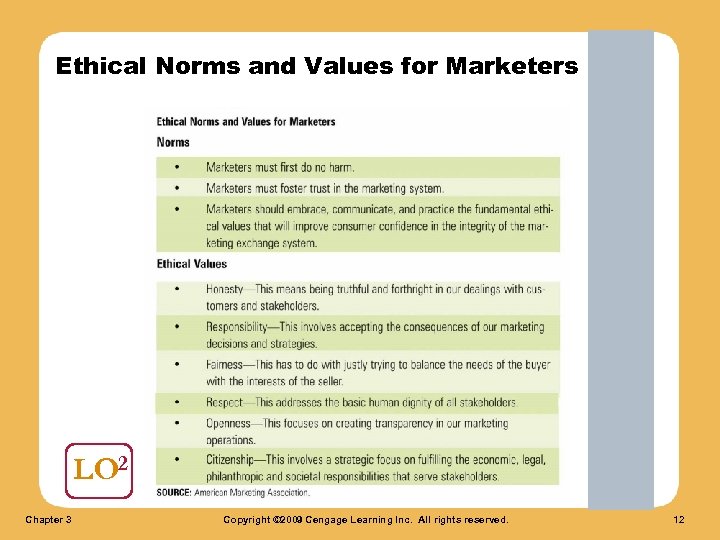
Ethical Norms and Values for Marketers LO 2 Chapter 3 Copyright © 2009 Cengage Learning Inc. All rights reserved. 12
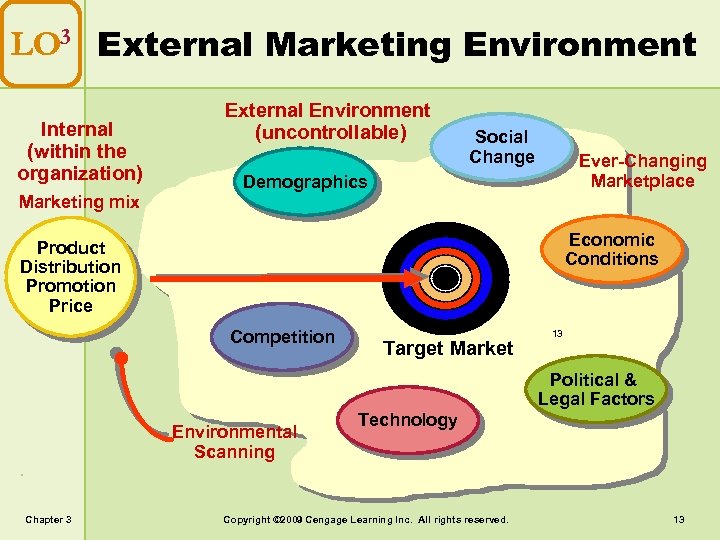
LO 3 External Marketing Environment Internal (within the organization) External Environment (uncontrollable) Social Change Ever-Changing Marketplace Demographics Marketing mix Economic Conditions Product Distribution Promotion Price Competition Target Market 13 Political & Legal Factors Environmental Scanning Chapter 3 Technology Copyright © 2009 Cengage Learning Inc. All rights reserved. 13
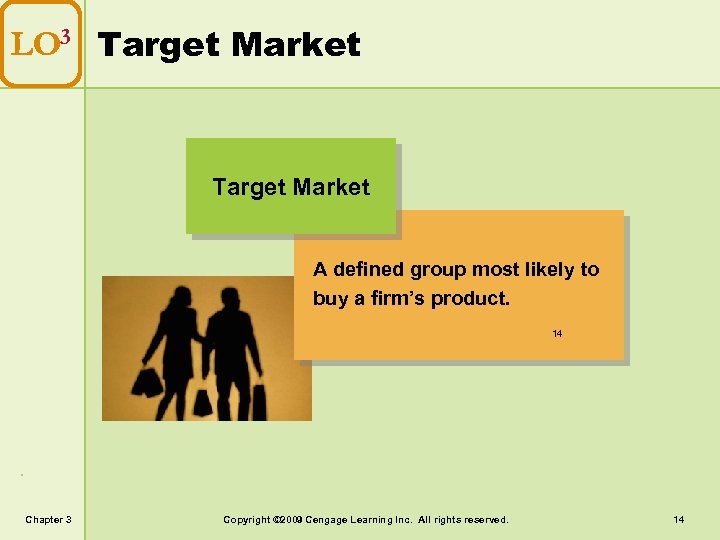
LO 3 Target Market A defined group most likely to buy a firm’s product. 14 Chapter 3 Copyright © 2009 Cengage Learning Inc. All rights reserved. 14
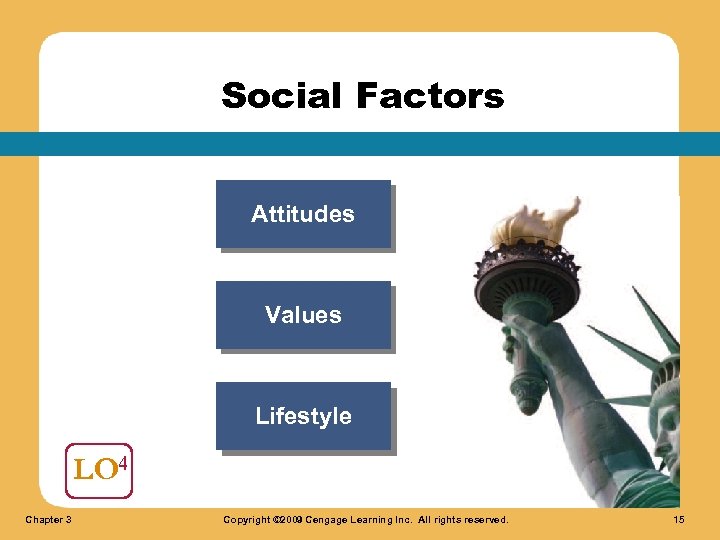
Social Factors Attitudes Values Lifestyle LO 4 Chapter 3 Copyright © 2009 Cengage Learning Inc. All rights reserved. 15
Social Factors Influence: Products purchased Prices paid for products Effectiveness of promotions LO 4 Chapter 3 How, where, and when people purchase Copyright © 2009 Cengage Learning Inc. All rights reserved. 16
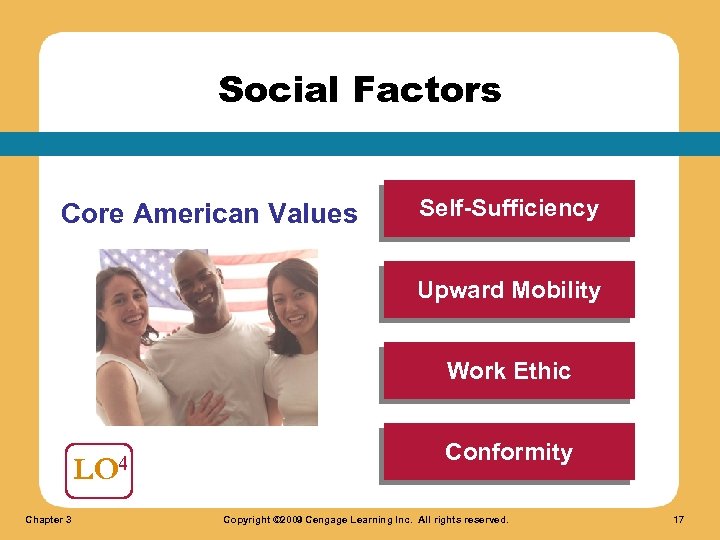
Social Factors Core American Values Self-Sufficiency Upward Mobility Work Ethic LO 4 Chapter 3 Conformity Copyright © 2009 Cengage Learning Inc. All rights reserved. 17
The Influence of Values on Buying Habits Ranked Characteristics of Product Quality Reliability Durability Easy maintenance Ease of use Trusted brand name LO 4 Chapter 3 Low price Copyright © 2009 Cengage Learning Inc. All rights reserved. 18
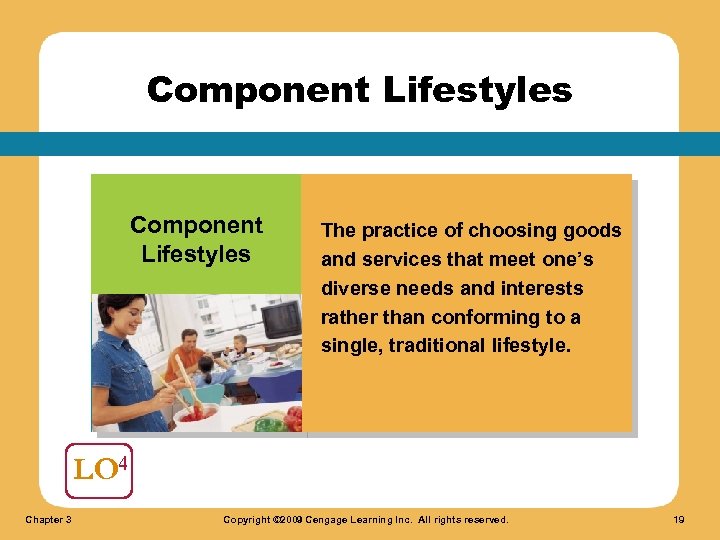
Component Lifestyles The practice of choosing goods and services that meet one’s diverse needs and interests rather than conforming to a single, traditional lifestyle. LO 4 Chapter 3 Copyright © 2009 Cengage Learning Inc. All rights reserved. 19
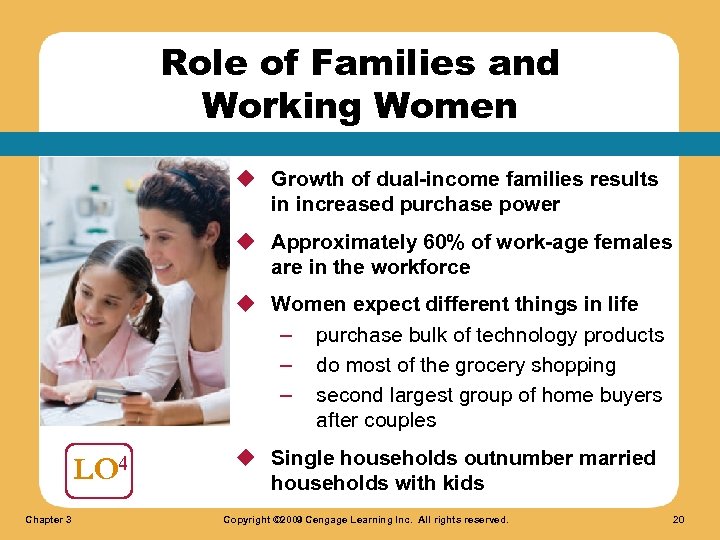
Role of Families and Working Women u Growth of dual-income families results in increased purchase power u Approximately 60% of work-age females are in the workforce u Women expect different things in life – purchase bulk of technology products – do most of the grocery shopping – second largest group of home buyers after couples LO 4 Chapter 3 u Single households outnumber married households with kids Copyright © 2009 Cengage Learning Inc. All rights reserved. 20
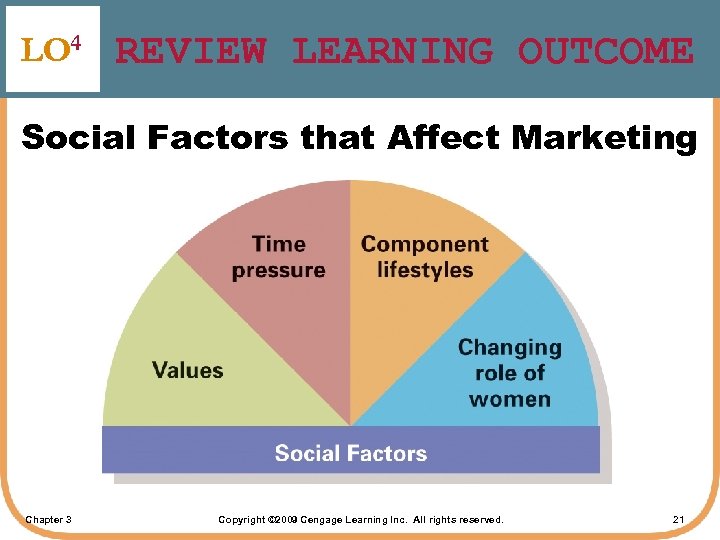
LO 4 REVIEW LEARNING OUTCOME Social Factors that Affect Marketing Chapter 3 Copyright © 2009 Cengage Learning Inc. All rights reserved. 21
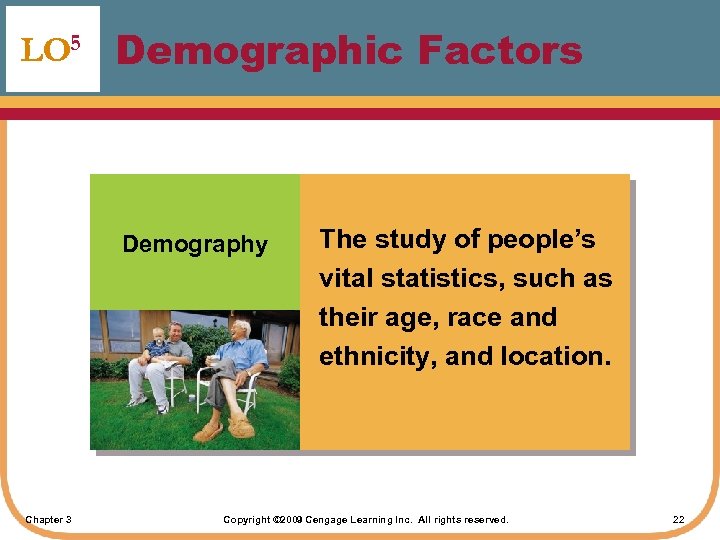
LO 5 Demographic Factors Demography Chapter 3 The study of people’s vital statistics, such as their age, race and ethnicity, and location. Copyright © 2009 Cengage Learning Inc. All rights reserved. 22
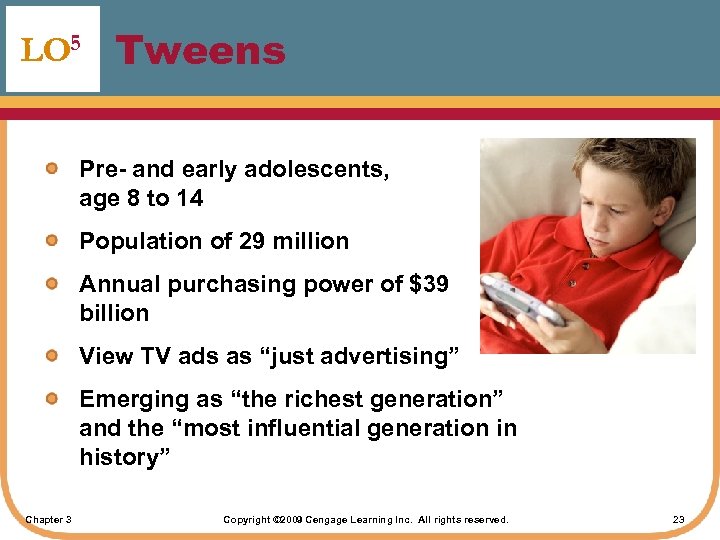
LO 5 Tweens Pre- and early adolescents, age 8 to 14 Population of 29 million Annual purchasing power of $39 billion View TV ads as “just advertising” Emerging as “the richest generation” and the “most influential generation in history” Chapter 3 Copyright © 2009 Cengage Learning Inc. All rights reserved. 23
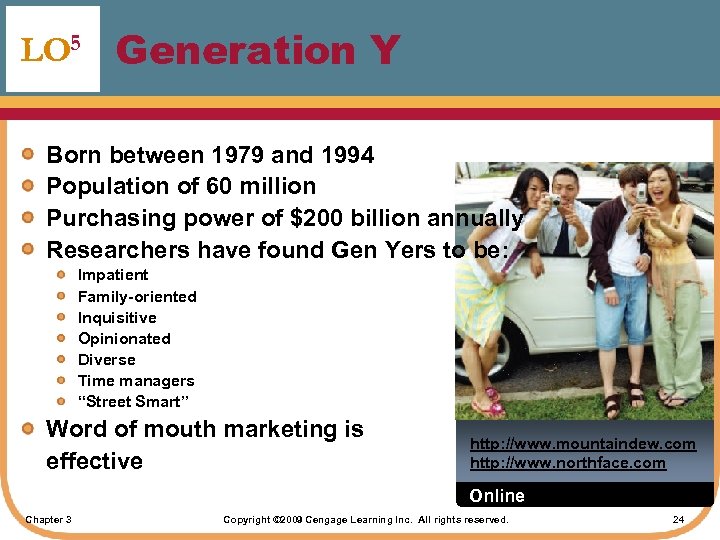
LO 5 Generation Y Born between 1979 and 1994 Population of 60 million Purchasing power of $200 billion annually Researchers have found Gen Yers to be: Impatient Family-oriented Inquisitive Opinionated Diverse Time managers “Street Smart” Word of mouth marketing is effective http: //www. mountaindew. com http: //www. northface. com Online Chapter 3 Copyright © 2009 Cengage Learning Inc. All rights reserved. 24
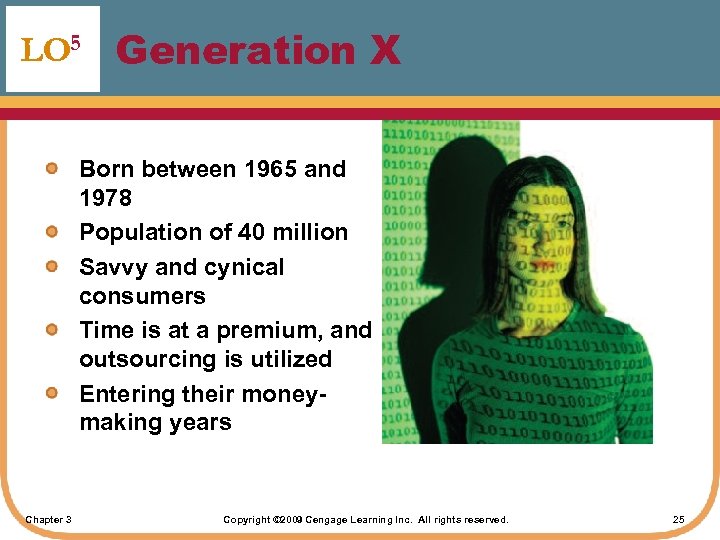
LO 5 Generation X Born between 1965 and 1978 Population of 40 million Savvy and cynical consumers Time is at a premium, and outsourcing is utilized Entering their moneymaking years Chapter 3 Copyright © 2009 Cengage Learning Inc. All rights reserved. 25
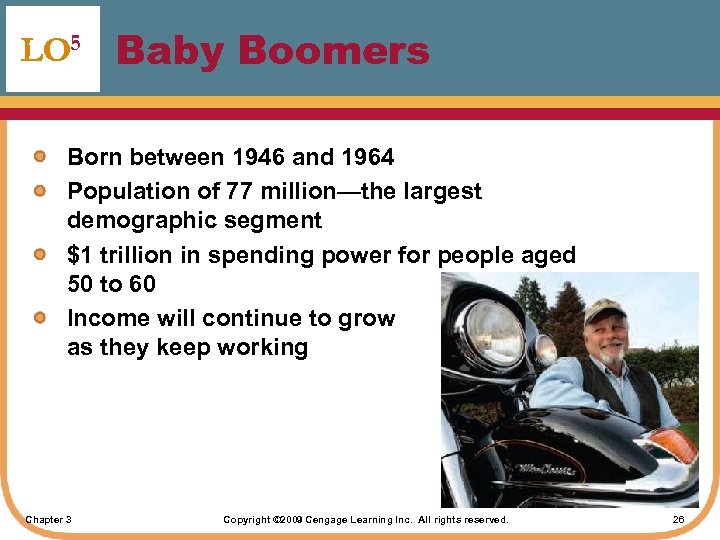
LO 5 Baby Boomers Born between 1946 and 1964 Population of 77 million—the largest demographic segment $1 trillion in spending power for people aged 50 to 60 Income will continue to grow as they keep working Chapter 3 Copyright © 2009 Cengage Learning Inc. All rights reserved. 26
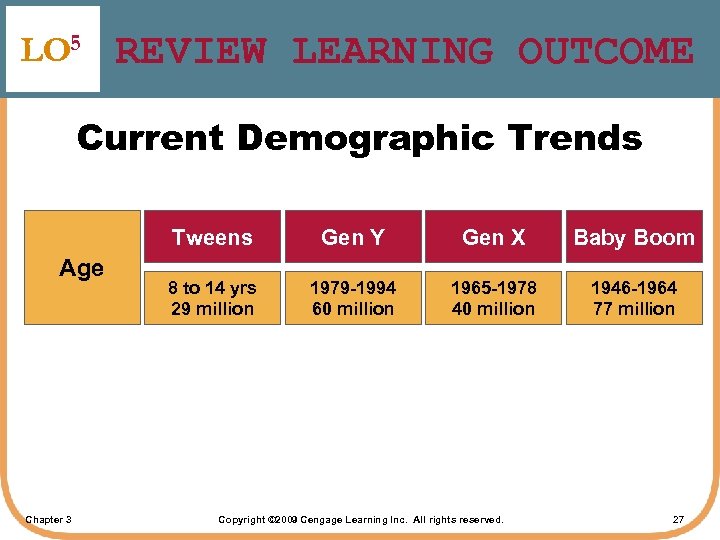
LO 5 REVIEW LEARNING OUTCOME Current Demographic Trends Tweens Age Chapter 3 Gen Y Gen X Baby Boom 8 to 14 yrs 29 million 1979 -1994 60 million 1965 -1978 40 million 1946 -1964 77 million Copyright © 2009 Cengage Learning Inc. All rights reserved. 27
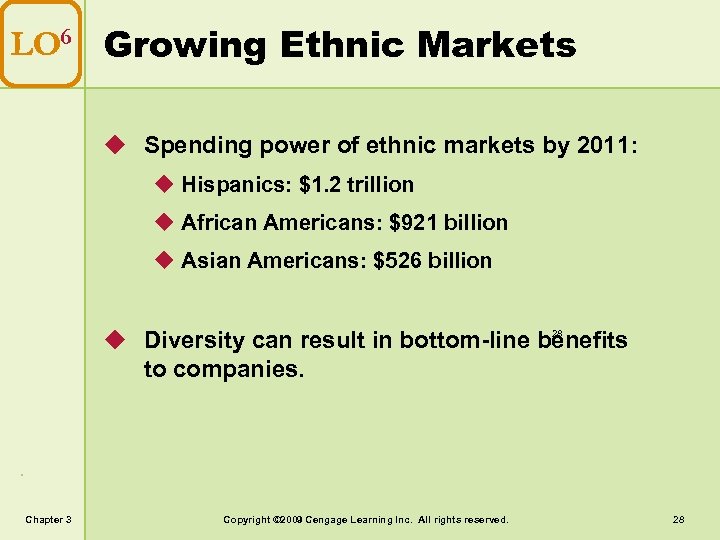
LO 6 Growing Ethnic Markets u Spending power of ethnic markets by 2011: u Hispanics: $1. 2 trillion u African Americans: $921 billion u Asian Americans: $526 billion 28 u Diversity can result in bottom-line benefits to companies. Chapter 3 Copyright © 2009 Cengage Learning Inc. All rights reserved. 28
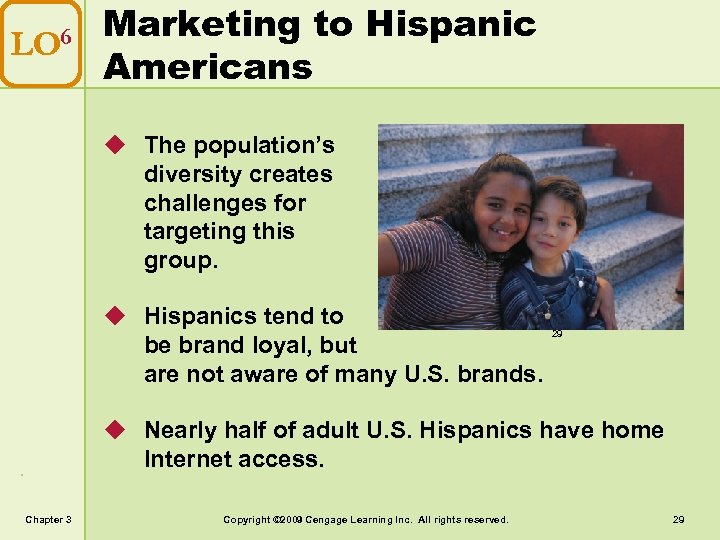
LO 6 Marketing to Hispanic Americans u The population’s diversity creates challenges for targeting this group. u Hispanics tend to be brand loyal, but are not aware of many U. S. brands. 29 u Nearly half of adult U. S. Hispanics have home Internet access. Chapter 3 Copyright © 2009 Cengage Learning Inc. All rights reserved. 29
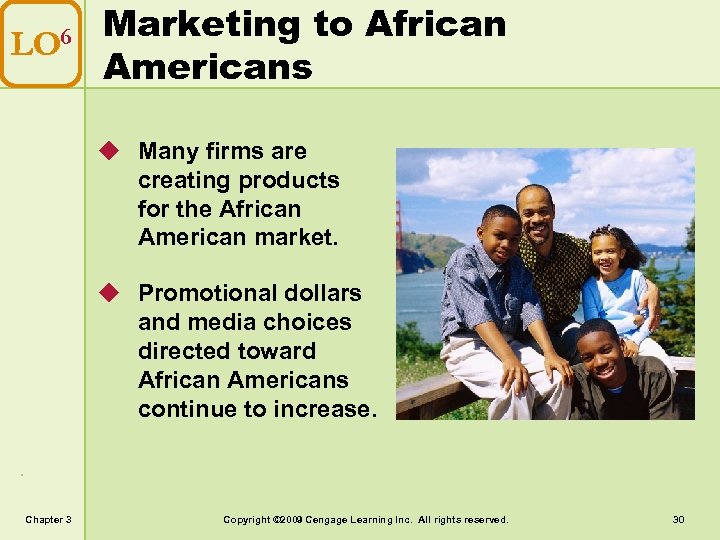
LO 6 Marketing to African Americans u Many firms are creating products for the African American market. u Promotional dollars and media choices directed toward African Americans continue to increase. Chapter 3 Copyright © 2009 Cengage Learning Inc. All rights reserved. 30 30
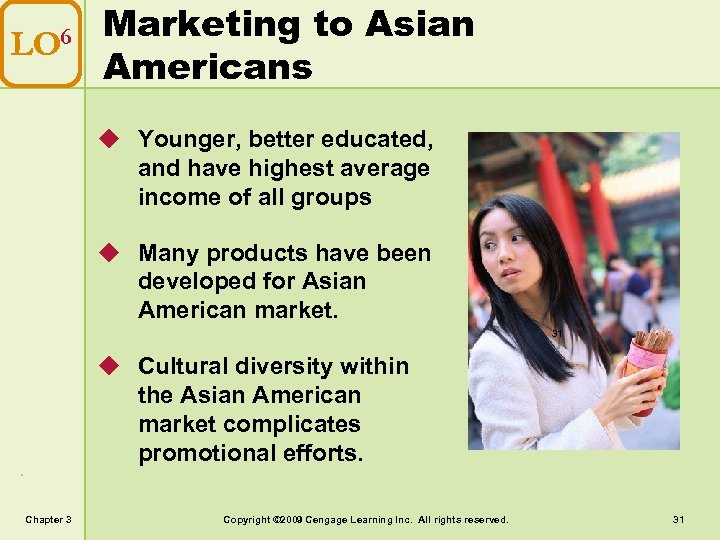
LO 6 Marketing to Asian Americans u Younger, better educated, and have highest average income of all groups u Many products have been developed for Asian American market. 31 u Cultural diversity within the Asian American market complicates promotional efforts. Chapter 3 Copyright © 2009 Cengage Learning Inc. All rights reserved. 31
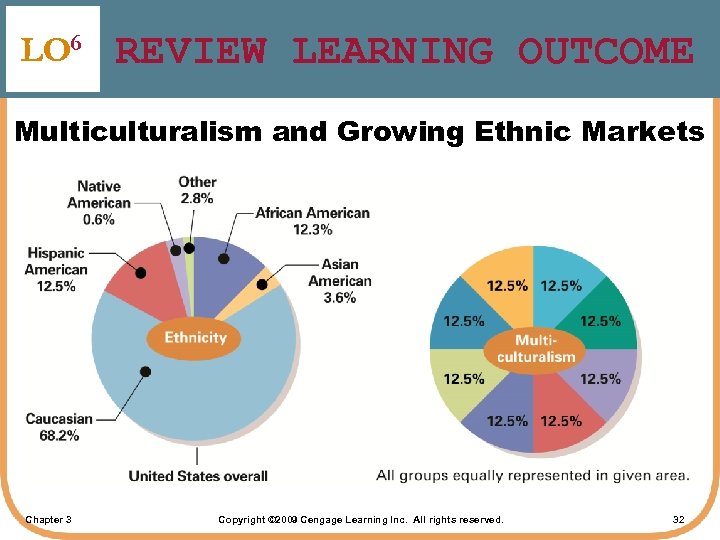
LO 6 REVIEW LEARNING OUTCOME Multiculturalism and Growing Ethnic Markets Chapter 3 Copyright © 2009 Cengage Learning Inc. All rights reserved. 32
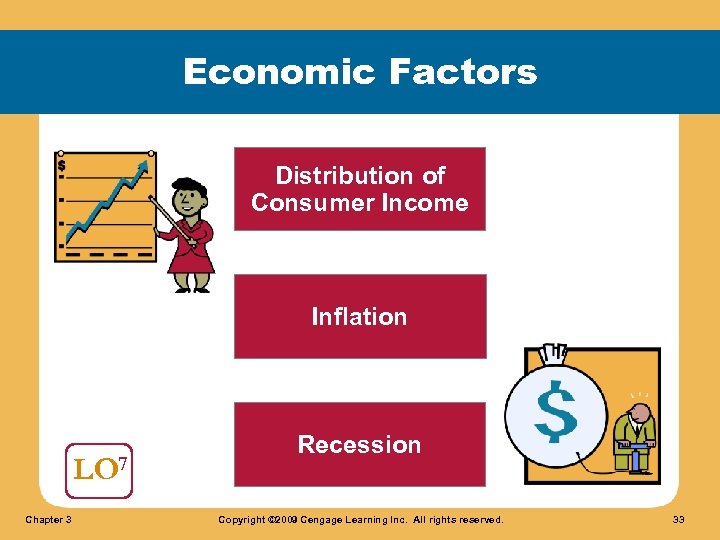
Economic Factors Distribution of Consumer Income Inflation LO 7 Chapter 3 Recession Copyright © 2009 Cengage Learning Inc. All rights reserved. 33
Consumers’ Incomes u Median U. S. household income in 2007 was $45, 000 u Incomes have risen at a slow pace. u Education is the primary determinant of earning potential. u Consumers are strapped for cash. LO 7 Chapter 3 Copyright © 2009 Cengage Learning Inc. All rights reserved. 34
The Financial Power of Women u Women bring in half of the household income. u Women control 51. 3 percent of the private wealth in the U. S. u Women control 80 percent of household spending. u Women are now the primary buyers in male -dominated categories: u u LO 7 u Chapter 3 68% of new cars 66% of computers 60% of home improvements 53% of investments 51% of consumer electronics Copyright © 2009 Cengage Learning Inc. All rights reserved. 35
Purchasing Power A comparison of the relative cost of a set standard of goods and services in different geographic areas. LO 7 Chapter 3 Copyright © 2009 Cengage Learning Inc. All rights reserved. 36
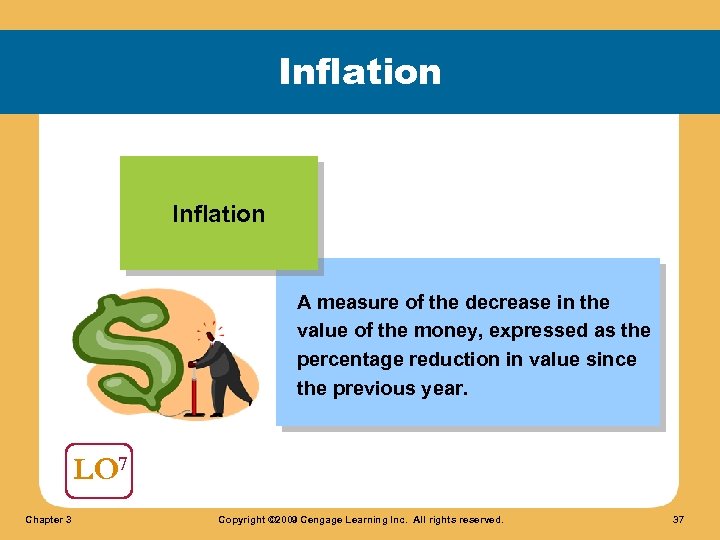
Inflation A measure of the decrease in the value of the money, expressed as the percentage reduction in value since the previous year. LO 7 Chapter 3 Copyright © 2009 Cengage Learning Inc. All rights reserved. 37
Recession A period of economic activity characterized by negative growth, which reduces demand for goods and services. LO 7 Chapter 3 Copyright © 2009 Cengage Learning Inc. All rights reserved. 38
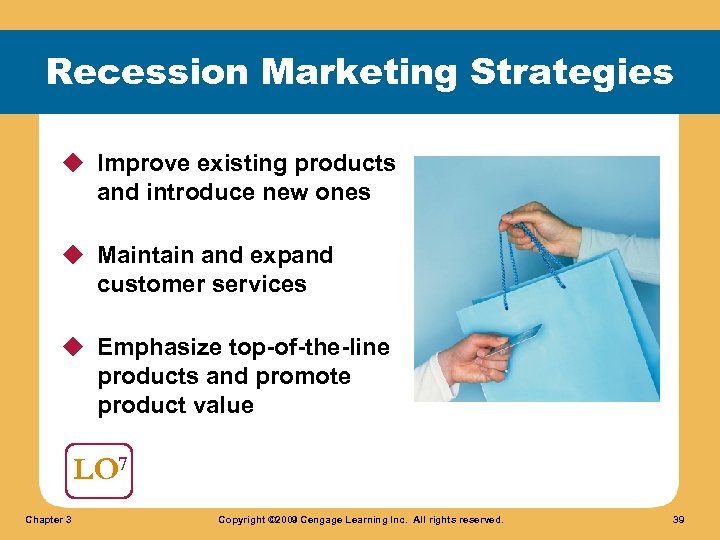
Recession Marketing Strategies u Improve existing products and introduce new ones u Maintain and expand customer services u Emphasize top-of-the-line products and promote product value LO 7 Chapter 3 Copyright © 2009 Cengage Learning Inc. All rights reserved. 39
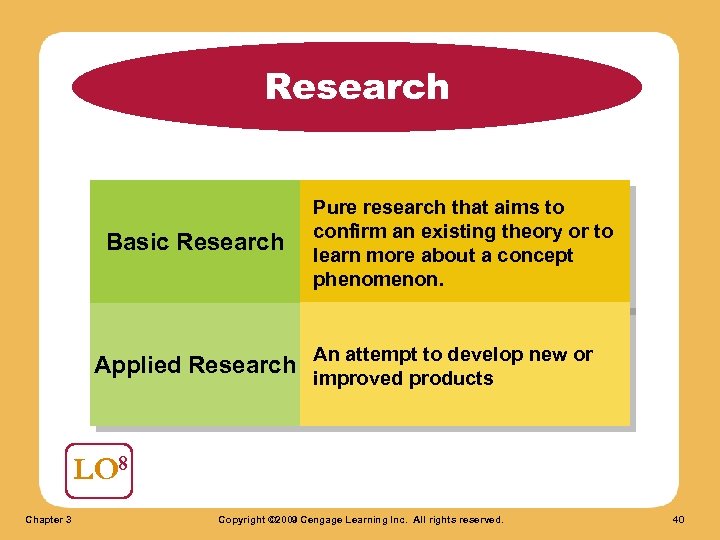
Research Basic Research Pure research that aims to confirm an existing theory or to learn more about a concept phenomenon. An attempt to develop new or Applied Research improved products LO 8 Chapter 3 Copyright © 2009 Cengage Learning Inc. All rights reserved. 40
Technological Factors u U. S. excels at basic and applied research. u Many firms use the market concept to guide research. u New technology internally creates a long-term competitive advantage. u External technology u Creates more efficient operation or better products u May render existing products obsolete LO 8 Chapter 3 Copyright © 2009 Cengage Learning Inc. All rights reserved. 41
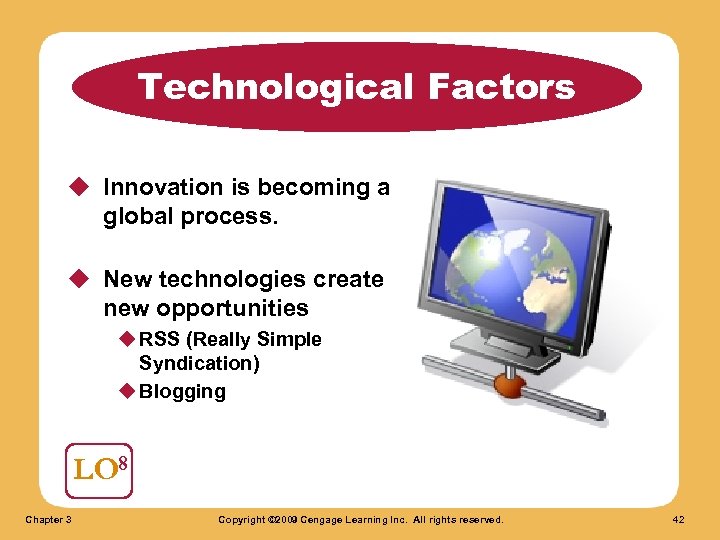
Technological Factors u Innovation is becoming a global process. u New technologies create new opportunities u RSS (Really Simple Syndication) u Blogging LO 8 Chapter 3 Copyright © 2009 Cengage Learning Inc. All rights reserved. 42
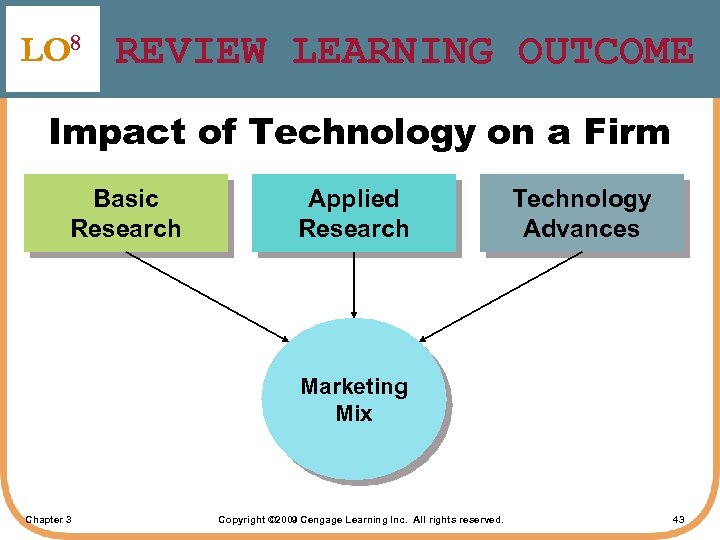
LO 8 REVIEW LEARNING OUTCOME Impact of Technology on a Firm Basic Research Applied Research Technology Advances Marketing Mix Chapter 3 Copyright © 2009 Cengage Learning Inc. All rights reserved. 43
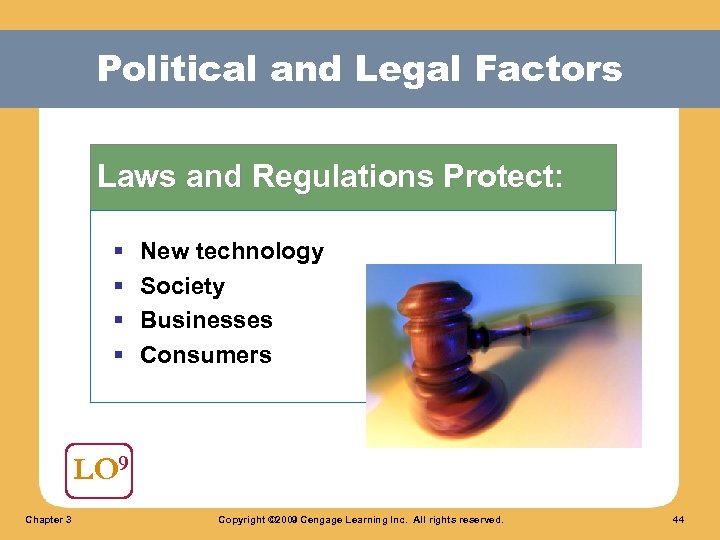
Political and Legal Factors Laws and Regulations Protect: § § New technology Society Businesses Consumers LO 9 Chapter 3 Copyright © 2009 Cengage Learning Inc. All rights reserved. 44
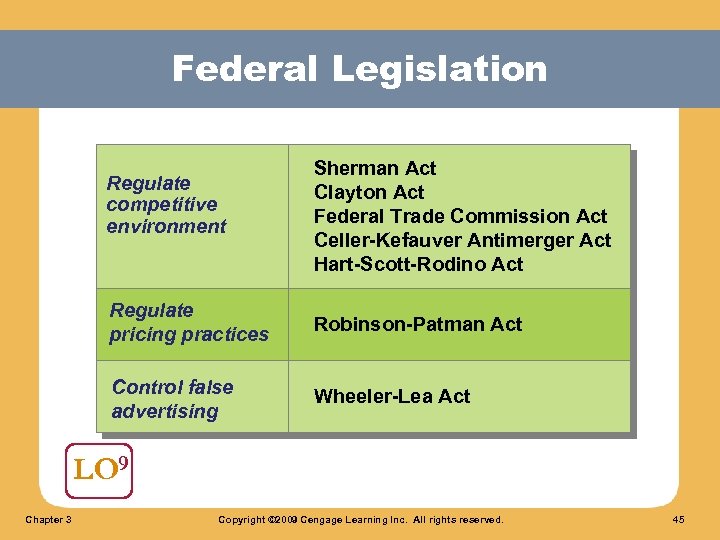
Federal Legislation Regulate competitive environment Sherman Act Clayton Act Federal Trade Commission Act Celler-Kefauver Antimerger Act Hart-Scott-Rodino Act Regulate pricing practices Robinson-Patman Act Control false advertising Wheeler-Lea Act LO 9 Chapter 3 Copyright © 2009 Cengage Learning Inc. All rights reserved. 45
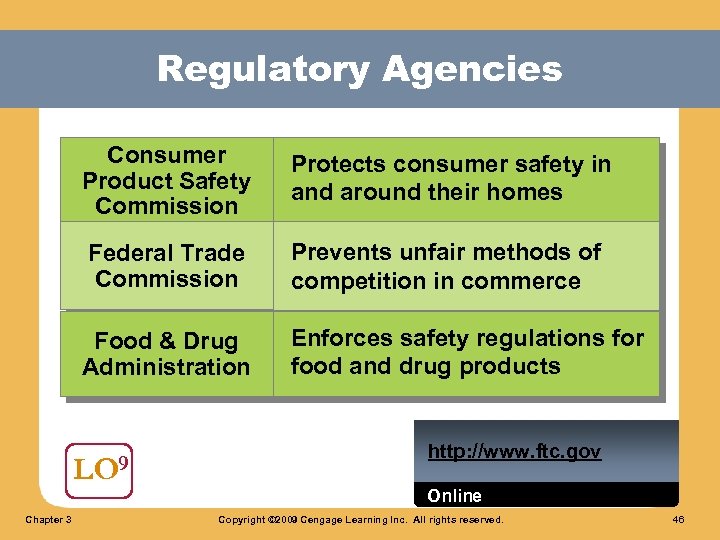
Regulatory Agencies Consumer Product Safety Commission Protects consumer safety in and around their homes Federal Trade Commission Prevents unfair methods of competition in commerce Food & Drug Administration Enforces safety regulations for food and drug products LO 9 Chapter 3 http: //www. ftc. gov Online Copyright © 2009 Cengage Learning Inc. All rights reserved. 46
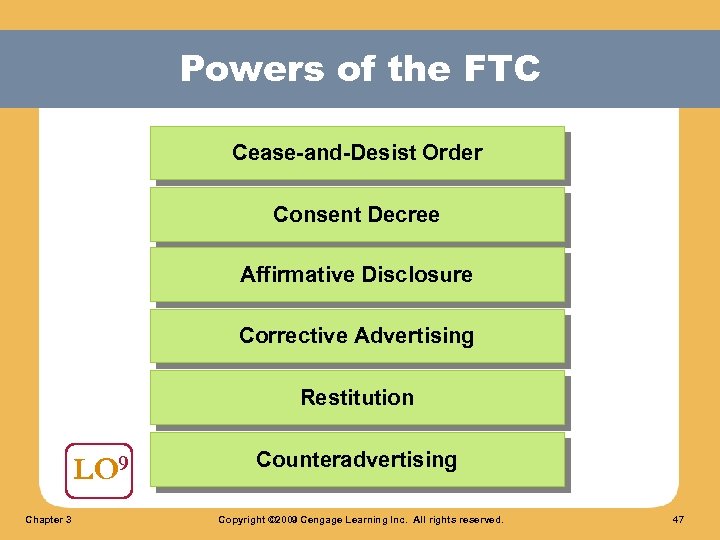
Powers of the FTC Cease-and-Desist Order Consent Decree Affirmative Disclosure Corrective Advertising Restitution LO 9 Chapter 3 Counteradvertising Copyright © 2009 Cengage Learning Inc. All rights reserved. 47
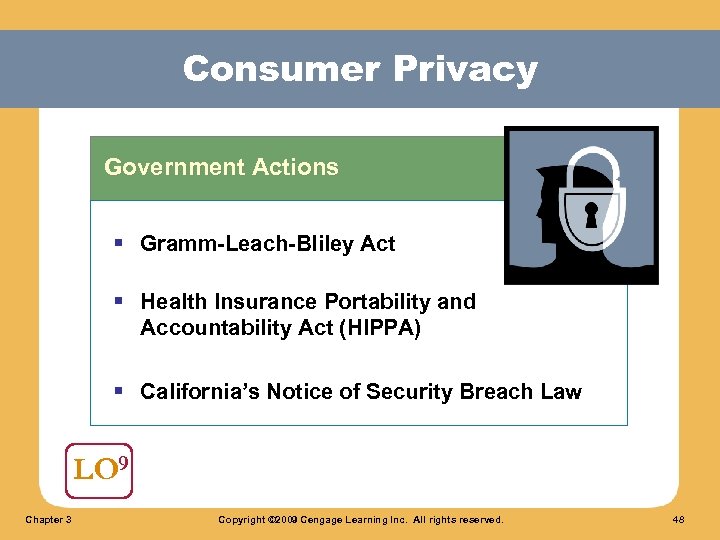
Consumer Privacy Government Actions § Gramm-Leach-Bliley Act § Health Insurance Portability and Accountability Act (HIPPA) § California’s Notice of Security Breach Law LO 9 Chapter 3 Copyright © 2009 Cengage Learning Inc. All rights reserved. 48
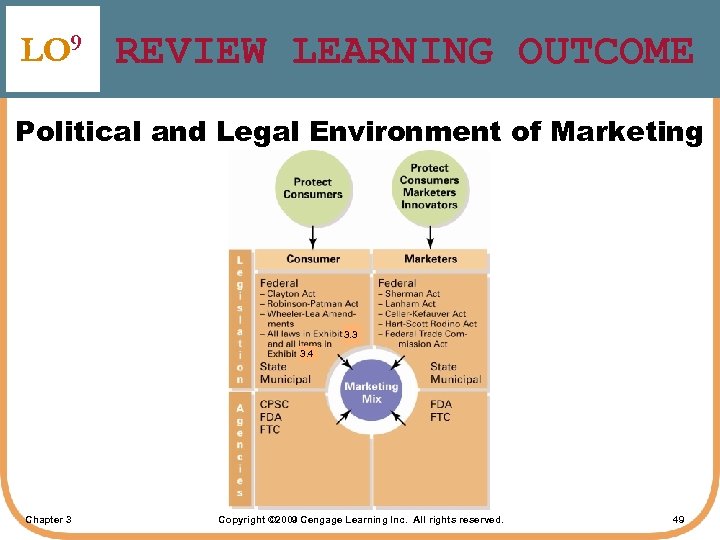
LO 9 REVIEW LEARNING OUTCOME Political and Legal Environment of Marketing 3. 3 3. 4 Chapter 3 Copyright © 2009 Cengage Learning Inc. All rights reserved. 49
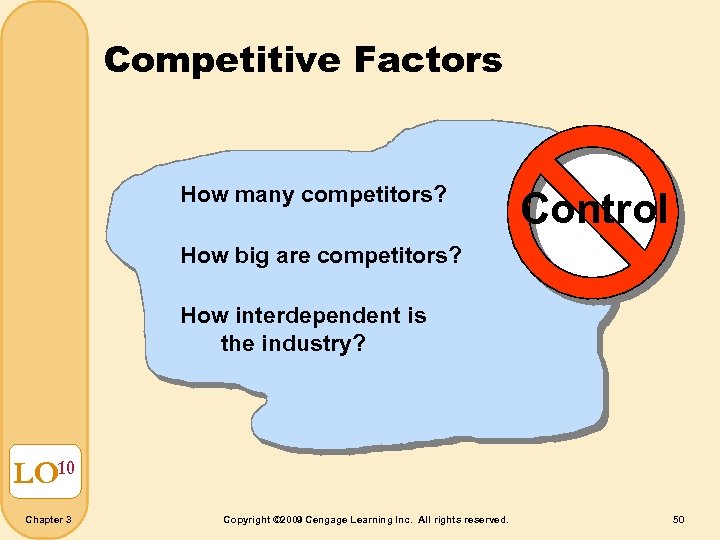
Competitive Factors How many competitors? Control How big are competitors? How interdependent is the industry? LO 10 Chapter 3 Copyright © 2009 Cengage Learning Inc. All rights reserved. 50
Competitive Factors Competition for Market Share and Profits u Firms must work harder to maintain profits and market share. Global Competition u More foreign firms are entering U. S. market. u Foreign firms in U. S. now compete on product quality. LO 10 Chapter 3 Copyright © 2009 Cengage Learning Inc. All rights reserved. 51
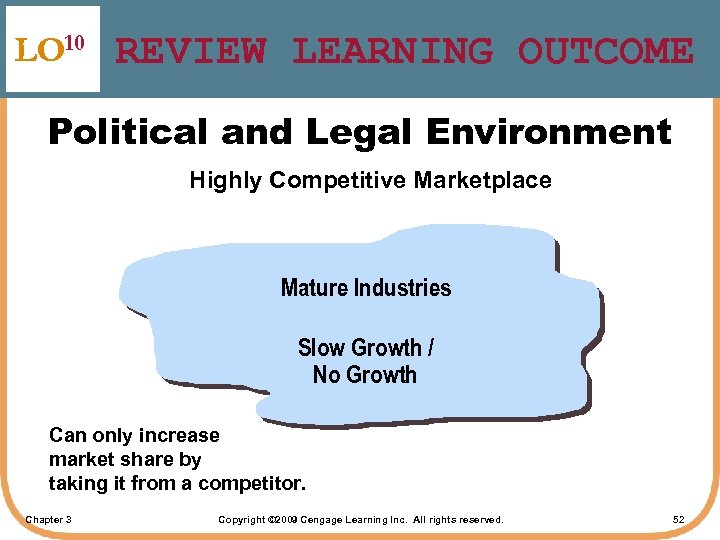
LO 10 REVIEW LEARNING OUTCOME Political and Legal Environment Highly Competitive Marketplace Mature Industries Slow Growth / No Growth Can only increase market share by taking it from a competitor. Chapter 3 Copyright © 2009 Cengage Learning Inc. All rights reserved. 52
Скачать презентацию Lamb Hair Mc Daniel MKTG 2008 -2009 3
78d9af6a42565f5108e48b2ecfe9882f.ppt