 Скачать презентацию Lamb Hair Mc Daniel 2010 -2011 CHAPTER 4
3e88df5c92917d6e4ebd90a42dc3a075.ppt
- Количество слайдов: 49



Lamb, Hair, Mc. Daniel 2010 -2011 CHAPTER 4 The Marketing Environment 1
Learning Outcomes LO 1 Discuss the external environment of marketing, and explain how it affects a firm LO 2 Describe the social factors that affect marketing LO 3 Explain the importance to marketing managers of current demographic trends LO 4 Explain the importance to marketing managers of multiculturalism and growing ethnic markets 2
Learning Outcomes LO 5 Identify consumer and marketer reactions to the state of the economy LO 6 Identify the impact of technology on a firm LO 7 Discuss the political and legal environment of marketing LO 8 Explain the basics of competition 3
The External Marketing Environment Discuss the external environment of marketing, and explain how it affects a firm LO 1 4
Target Market Defined group most likely to buy a product • Changes as consumers age • External elements change consumers’ desires LO 1 5
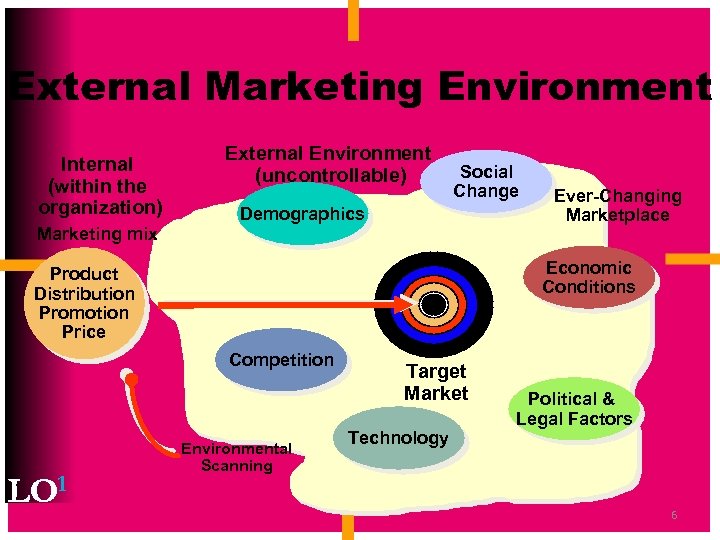
External Marketing Environment Internal (within the organization) External Environment (uncontrollable) Social Change Demographics Marketing mix Economic Conditions Product Distribution Promotion Price Competition LO 1 Ever-Changing Marketplace Environmental Scanning Target Market Technology Political & Legal Factors 6
Understanding Competition • TJ Maxx offers designer brands at discount prices • 2009 campaign compares the stores prices to those at boutiques and department stores: – http: //www. metacafe. com/watch/2591384/tj_maxx_commer cial_6/ – Acknowledging budgetary restraints will drive budget conscious shoppers to the store LO 1 7
Social Factors Describe the social factors that affect marketing LO 2 8
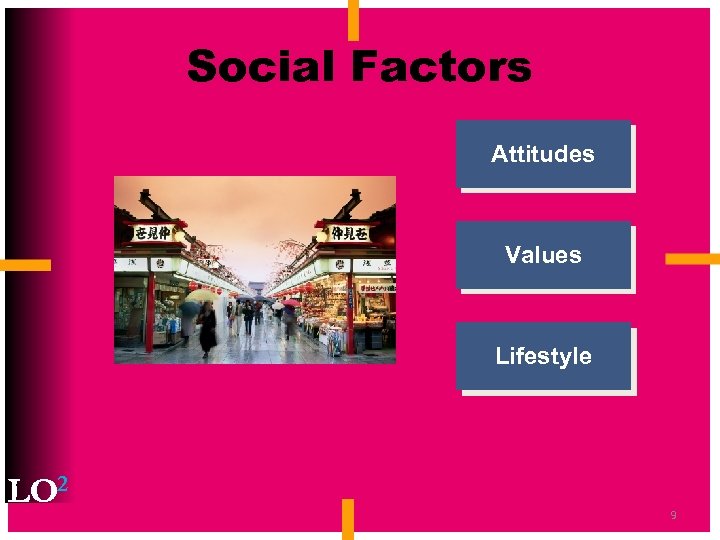
Social Factors Attitudes Values Lifestyle LO 2 9
Social Factors Influence: Products purchased Prices paid for products Effectiveness of promotions How, where, and when people purchase LO 2 10
Social Factors Core American Values Self-Sufficiency Upward Mobility Work Ethic Conformity LO 2 11
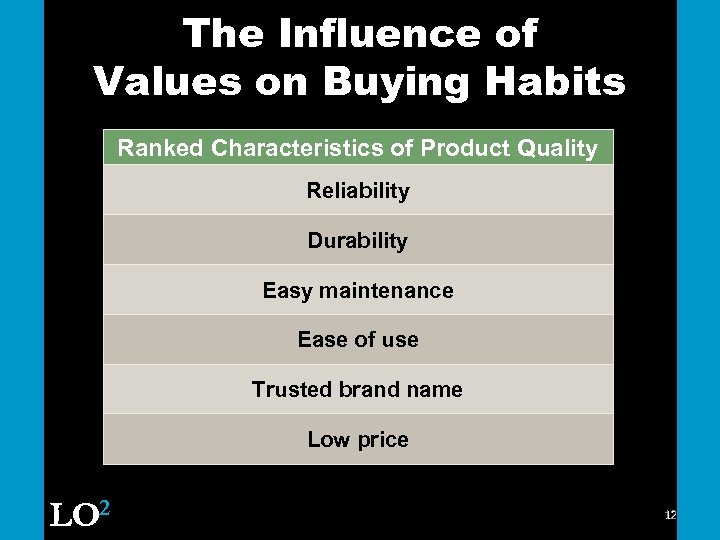
The Influence of Values on Buying Habits Ranked Characteristics of Product Quality Reliability Durability Easy maintenance Ease of use Trusted brand name Low price LO 2 12
Component Lifestyles The practice of choosing goods and services that meet one’s diverse needs and interests rather than conforming to a single, traditional lifestyle. Today’s consumers want multifunctional products • No longer defined only by occupation LO 2 13
Role of Families and Working Women • Growth of dual-income families results in increased purchasing power • Approximately 63% of work-age females are in the workforce • Women expect different things in life – purchase bulk of technology products – second largest group of home buyers after couples • Single households outnumber married households with kids LO 2 14
Demographic Factors Explain the importance to marketing managers of current demographic trends LO 3 15
Demographic Factors People are the basis for any market • Demographic characteristics relate to buyer behavior • Uncontrollable • Defined characteristics define marketing direction LO 3 16
Tweens § Pre- and early adolescents, age 9 to 14 § Population of 29 million § Purchasing power of $39 billion in 2009 § View TV ads as “just advertising” § Emerging as “the richest generation” and the “most influential generation in history” LO 3 17
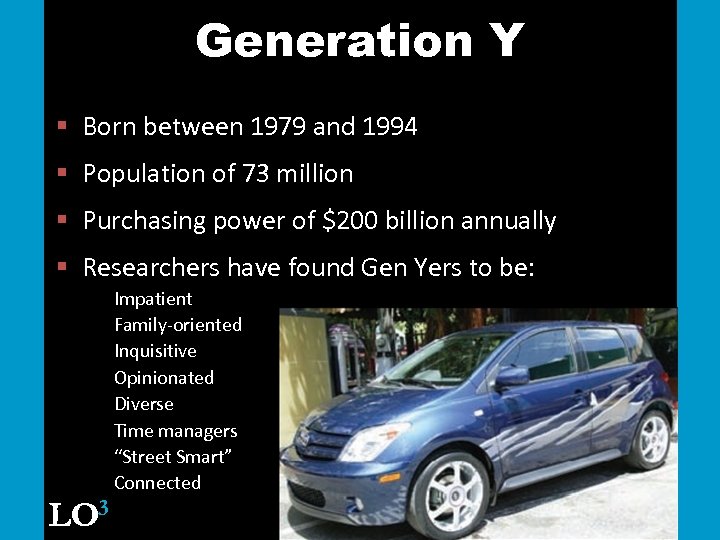
Generation Y § Born between 1979 and 1994 § Population of 73 million § Purchasing power of $200 billion annually § Researchers have found Gen Yers to be: – – – – LO 3 Impatient Family-oriented Inquisitive Opinionated Diverse Time managers “Street Smart” Connected 18
Generation X § Born between 1965 and 1978 § Population of 40 million § Savvy and cynical consumers § More protective and involved with their kids § Value the importance of education § Avid buyers of the latest clothes, technology, and recreational products LO 3 19
Baby Boomers § Born between 1946 and 1964 § Population of 77 million— the largest demographic segment § $2 trillion in spending power a year § Income will continue to grow as they keep working § Four segments of baby boomers: “Looking for balance” “Confident and living well” “At ease” “Overwhelmed” LO 3 20
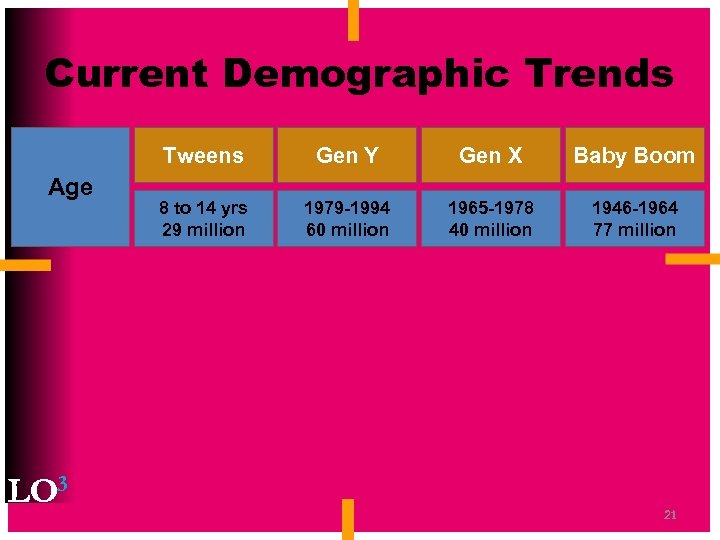
Current Demographic Trends Tweens Age LO 3 Gen Y Gen X Baby Boom 8 to 14 yrs 29 million 1979 -1994 60 million 1965 -1978 40 million 1946 -1964 77 million 21
Growing Ethnic Markets Explain the importance to marketing managers of multiculturalism and growing ethnic markets LO 4 22
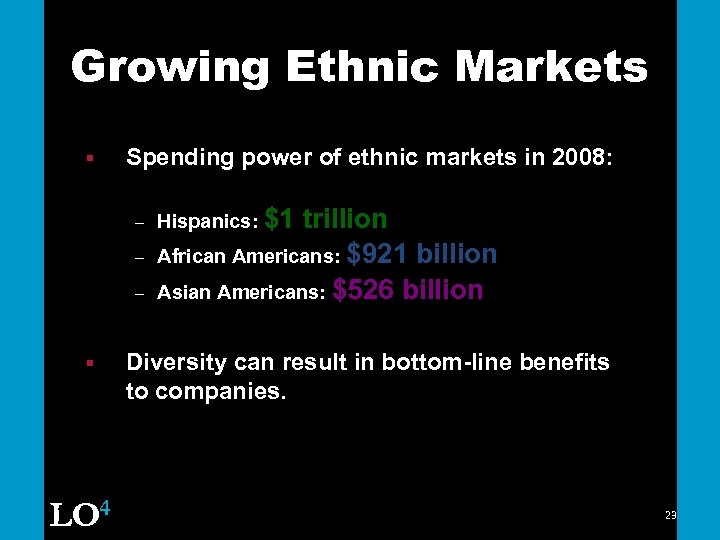
Growing Ethnic Markets § Spending power of ethnic markets in 2008: – – – § LO 4 Hispanics: $1 trillion African Americans: $921 billion Asian Americans: $526 billion Diversity can result in bottom-line benefits to companies. 23
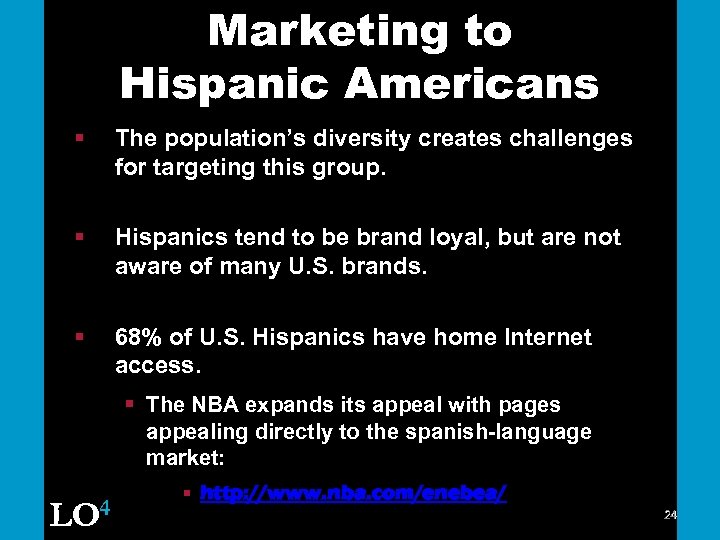
Marketing to Hispanic Americans § The population’s diversity creates challenges for targeting this group. § Hispanics tend to be brand loyal, but are not aware of many U. S. brands. § 68% of U. S. Hispanics have home Internet access. § The NBA expands its appeal with pages appealing directly to the spanish-language market: LO 4 § http: //www. nba. com/enebea/ 24
Marketing to African Americans § Many firms are creating products for the African American market. § Promotional dollars and media choices directed toward African Americans continue to increase. LO 4 25
Marketing to Asian Americans § Younger, better educated, and have highest average income of all groups § Sometimes called a “marketer’s dream” § Many products have been developed for Asian American market. § Cultural diversity within the Asian American market complicates promotional efforts. LO 4 26
Ethnic and Cultural Diversity § Multiculturalism: occurs when all major ethnic groups in an area (city, county, or census tract) are roughly equally represented § U. S. trend is toward greater multiculturalism § America’s racial and ethnic patterns have taken on distinctly regional dimensions LO 4 27
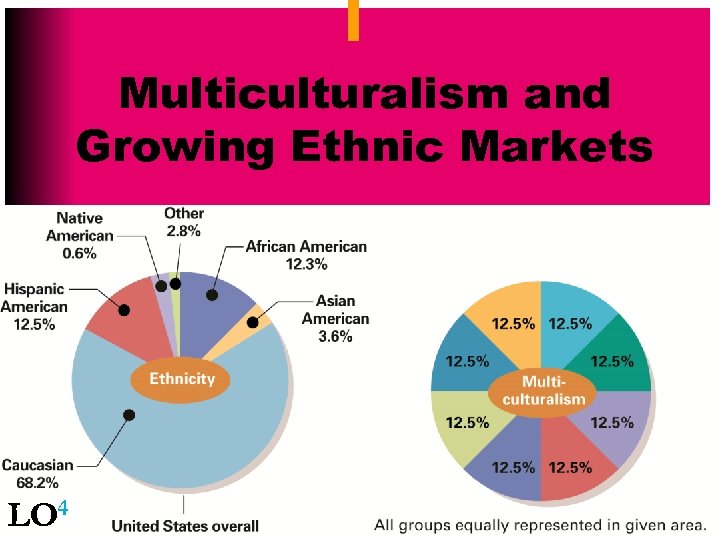
Multiculturalism and Growing Ethnic Markets LO 4 28
![Why Multicultural Marketing? “[With ethnic marketing] you're going to get more share of the](https://present5.com/presentation/3e88df5c92917d6e4ebd90a42dc3a075/image-29.jpg "Why Multicultural Marketing? “[With ethnic marketing] you're going to get more share of the")
Why Multicultural Marketing? “[With ethnic marketing] you're going to get more share of the heart, more share of the mind, and ultimately, more share of the wallet. ” Ø About one in three U. S. residents is a minority, representing over 100. 7 million people. Ø 7 states more than tripled their Hispanic population between 1990 and 2000: Alabama, Arkansas, Georgia, North Carolina, South Carolina, Tennessee, and Nevada. Ø Twenty percent of babies born in the United States are Latino. LO 4 SOURCE: Mike Robinson, CEO La. Verdad Marketing & Media, http: //www. laverdadmarketing. com/la_casa. htm; Lisa Biank Fasig, "An Expanding Business for an Expanding Market, " Business Courier of Cincinnati, September 7, 2007 29
Economic Factors Identify consumer and marketer reactions to the state of the economy LO 5 30
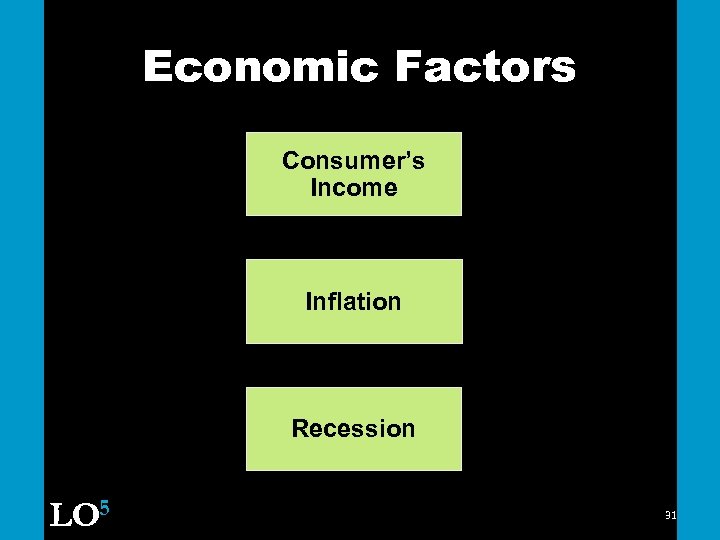
Economic Factors Consumer’s Income Inflation Recession LO 5 31
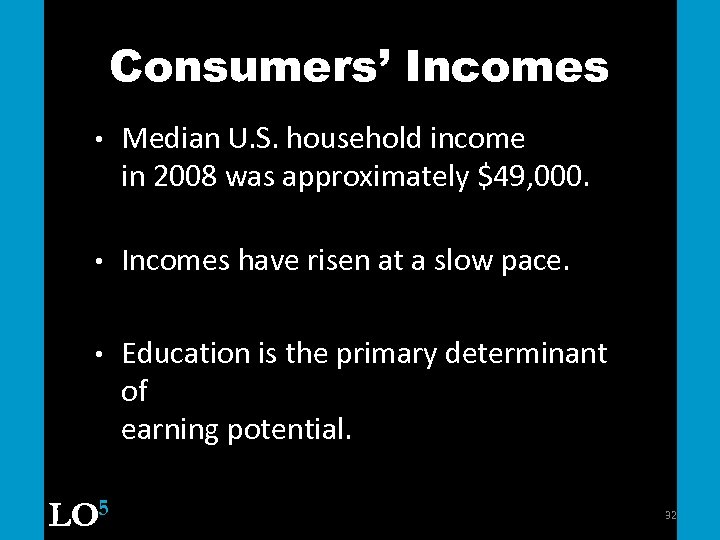
Consumers’ Incomes • Median U. S. household income in 2008 was approximately $49, 000. • Incomes have risen at a slow pace. • Education is the primary determinant of earning potential. LO 5 32
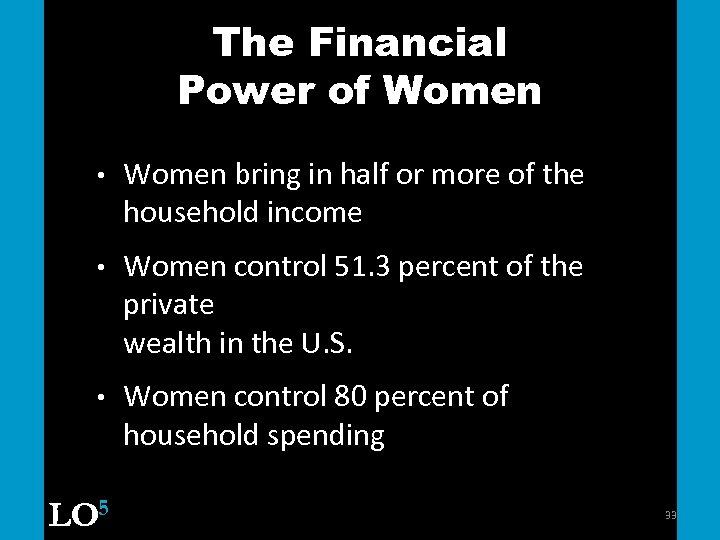
The Financial Power of Women • Women bring in half or more of the household income • Women control 51. 3 percent of the private wealth in the U. S. • Women control 80 percent of household spending LO 5 33
Recession Marketing Strategies • Improve existing products and introduce new ones • Maintain and expand customer services • Emphasize top-of-the-line products and promote product value LO 5 34
Thriving in an Economic Downturn Wal-Mart saw double-digit profit growth during the recent economic downturn. How? A shift in strategy it calls Win/Play/Draw: • Win: Outmaneuver competitors with low prices on hot products (flatscreen TVs) • Play: Reduce range of offerings to feature “hot sellers” (its $20 L. e. i. jeans) • Draw: Keep a stock of one-stop-shopping essentials (hardware, pharmacy items) LO 5 35
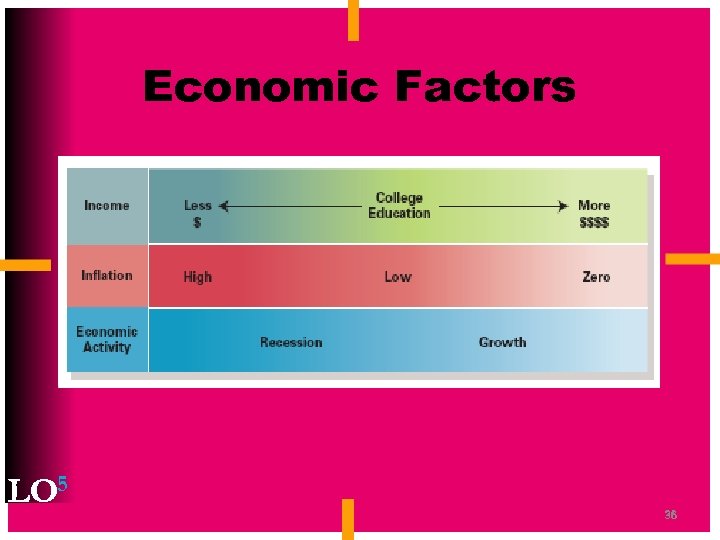
Economic Factors LO 5 36
Technological Factors Identify the impact of technology on a firm LO 6 37
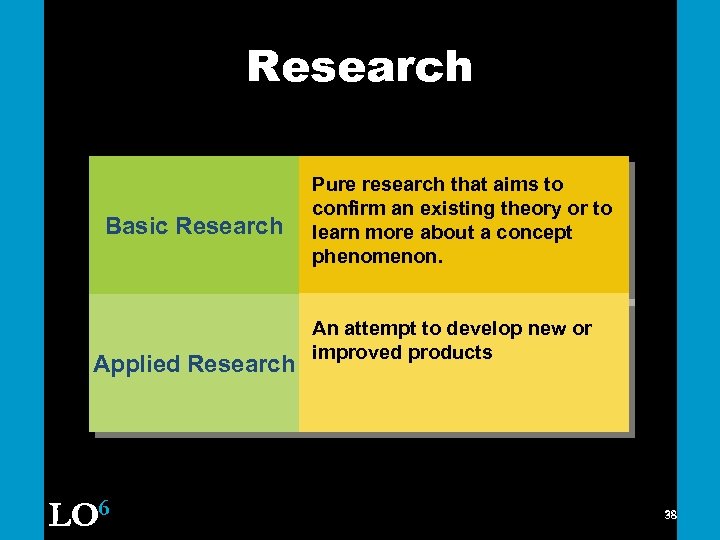
Research Basic Research Applied Research LO 6 Pure research that aims to confirm an existing theory or to learn more about a concept phenomenon. An attempt to develop new or improved products 38
RSS and Blogging • RSS feeds deliver updated news content according to users interests • Blogs allow marketers a way to look into consumer opinions with a simple search • Many blogs devoted to discussing advertisements, here are 10 popular ones: – http: //www. blogs. com/topten/10 -popularadvertising-blogs/ LO 6 39
Political and Legal Factors Discuss the political and legal environment of marketing LO 7 40
Political and Legal Factors Laws and Regulations Protect: § § LO 7 New technology Society Businesses Consumers 41
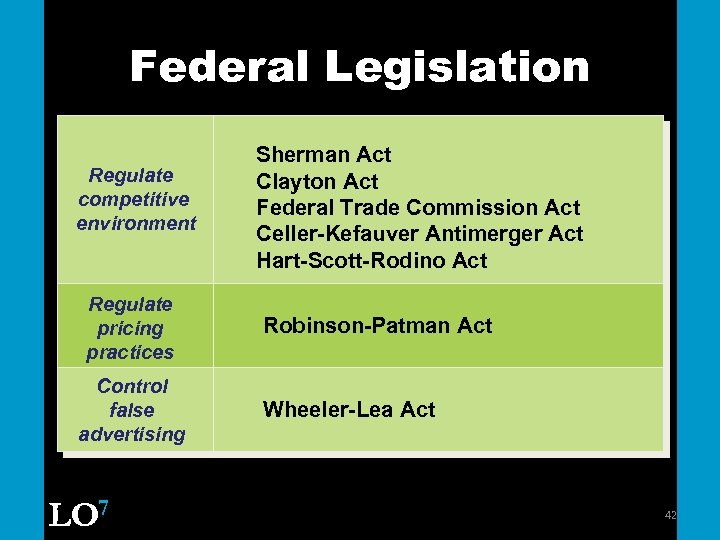
Federal Legislation Regulate competitive environment Regulate pricing practices Control false advertising LO 7 Sherman Act Clayton Act Federal Trade Commission Act Celler-Kefauver Antimerger Act Hart-Scott-Rodino Act Robinson-Patman Act Wheeler-Lea Act 42
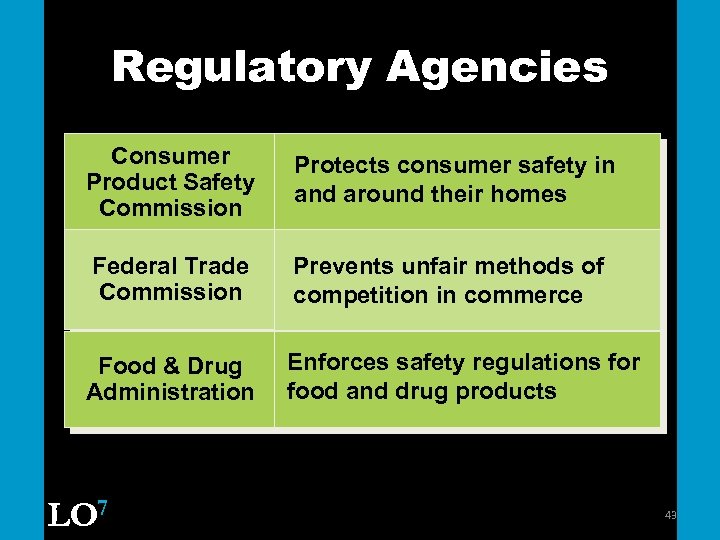
Regulatory Agencies Consumer Product Safety Commission Protects consumer safety in and around their homes Federal Trade Commission Prevents unfair methods of competition in commerce Food & Drug Administration Enforces safety regulations for food and drug products LO 7 43
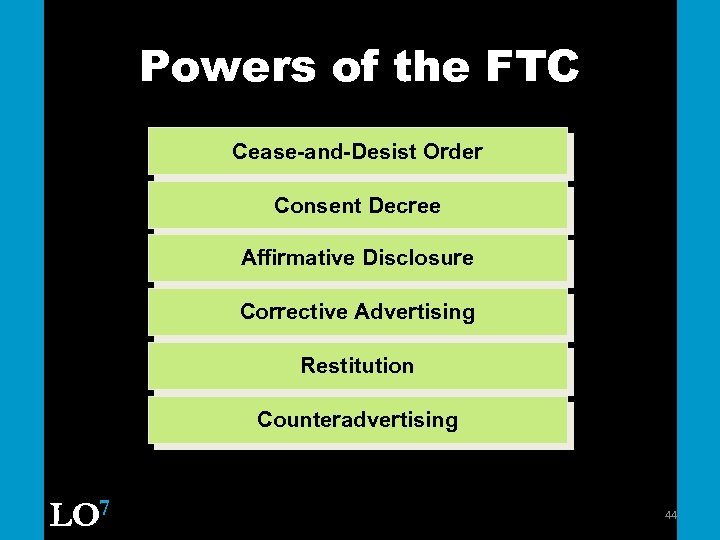
Powers of the FTC Cease-and-Desist Order Consent Decree Affirmative Disclosure Corrective Advertising Restitution Counteradvertising LO 7 44

Consumer Privacy Government Actions § Gramm-Leach-Bliley Act § Health Insurance Portability and Accountability Act (HIPPA) § California’s Notice of Security Breach Law LO 7 45
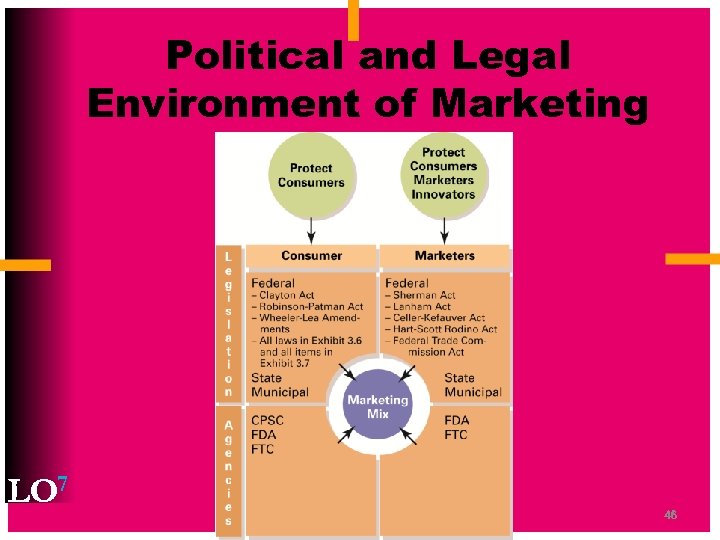
Political and Legal Environment of Marketing LO 7 46
Competitive Factors Explain the basics of foreign and domestic competition LO 8 47
Competitive Factors How many competitors? Control How big are competitors? How interdependent is the industry? LO 8 48
Competitive Factors Competition for Market Share and Profits • Firms must work harder to maintain profits and market share. LO 8 Global Competition • More foreign firms are entering U. S. market. • Foreign firms in U. S. now compete on product quality. 49
Скачать презентацию Lamb Hair Mc Daniel 2010 -2011 CHAPTER 4
3e88df5c92917d6e4ebd90a42dc3a075.ppt