 Скачать презентацию LAGOS BRT SYSTEM BY Dr Dayo Mobereola Managing
579974bd6d7dd947788620a8624ae095.ppt
- Количество слайдов: 15



LAGOS BRT SYSTEM BY Dr. Dayo Mobereola Managing Director/CEO LAMATA Presentation at the Asia BRTS conference 2012 Ahmedabad, India September 2012
Presentation contents v v v - v v Background Public Transport Operations in Lagos Existing and Proposed BRT corridors in Lagos Design/ Procurement Strategies Implementation Infrastructure Operations Achievement/Performance Issues and Challenges Lesson Learnt Next Steps 2
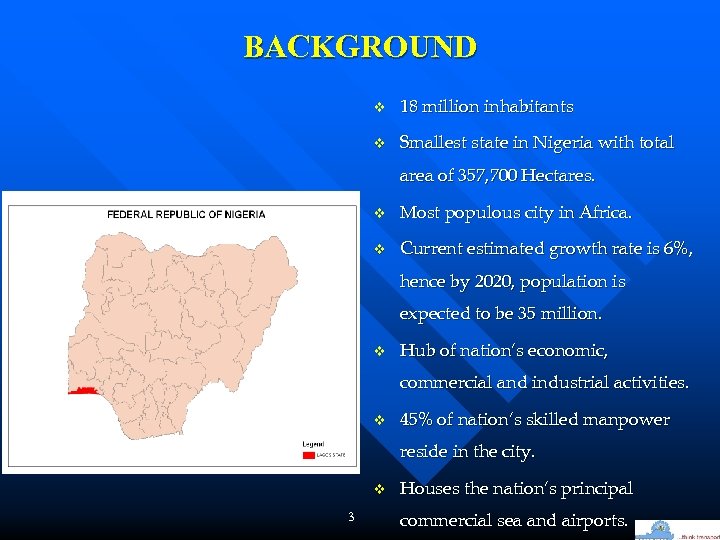
BACKGROUND v 18 million inhabitants v Smallest state in Nigeria with total area of 357, 700 Hectares. v Most populous city in Africa. v Current estimated growth rate is 6%, hence by 2020, population is expected to be 35 million. v Hub of nation’s economic, commercial and industrial activities. v 45% of nation’s skilled manpower reside in the city. v 3 Houses the nation’s principal commercial sea and airports.
PUBLIC TRANSPORT OPERATIONS IN LAGOS 4
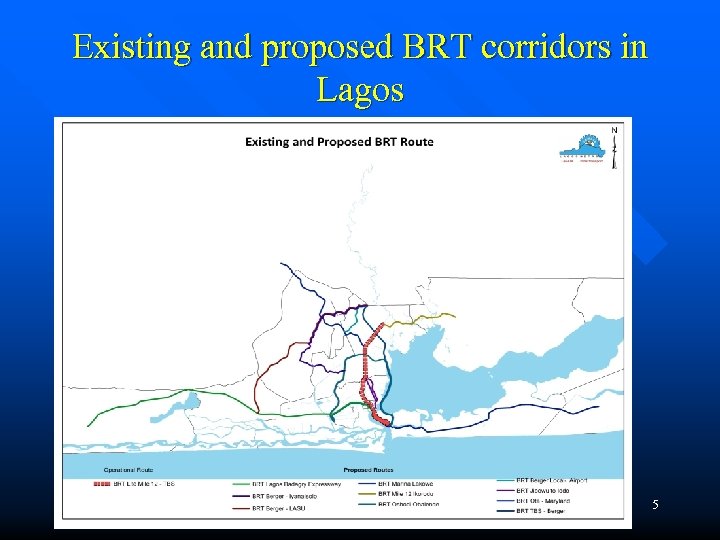
Existing and proposed BRT corridors in Lagos 5
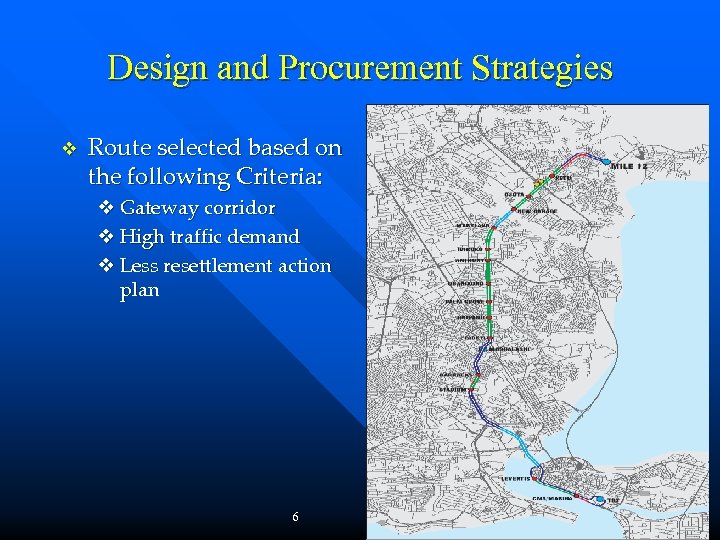
Design and Procurement Strategies v Route selected based on the following Criteria: v Gateway corridor v High traffic demand v Less resettlement action plan 6
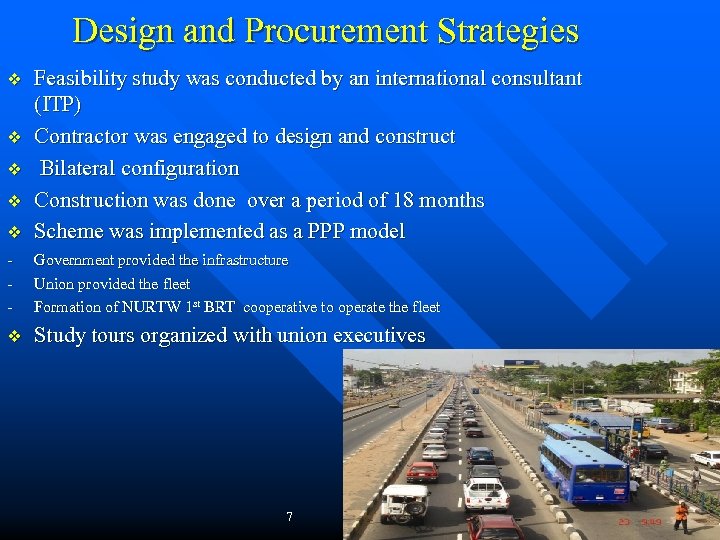
Design and Procurement Strategies v v v - Feasibility study was conducted by an international consultant (ITP) Contractor was engaged to design and construct Bilateral configuration Construction was done over a period of 18 months Scheme was implemented as a PPP model - Government provided the infrastructure Union provided the fleet Formation of NURTW 1 st BRT cooperative to operate the fleet v Study tours organized with union executives 7
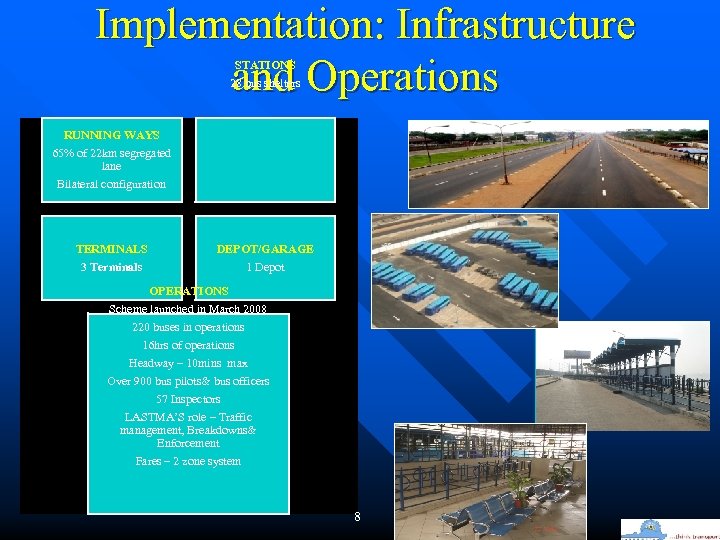
Implementation: Infrastructure and Operations STATIONS 28 bus shelters RUNNING WAYS 65% of 22 km segregated lane Bilateral configuration TERMINALS 3 Terminals DEPOT/GARAGE 1 Depot OPERATIONS Scheme launched in March 2008 220 buses in operations 16 hrs of operations Headway – 10 mins max Over 900 bus pilots& bus officers 57 Inspectors LASTMA’S role – Traffic management, Breakdowns& Enforcement Fares – 2 zone system 8
Achievement /Performance v Capacity development of the informal sector v Daily ridership well exceeds 140, 000 v Average trip per bus per day is 5 v Average waiting time of 15 mins v Average speed of 30 km/h v Average journey time of 55 mins v Over 211 million ridership sinception v Stability in fare
BRT IN OPERATION 10
Issues and Challenges Internal v Ownership - Monopolistic in nature v Management - Lack of corporate governance v Inefficient Service delivery External v Frequent damage infrastructure v Violation of BRT lane by other road users v Safety and security issues v Overriding 11
Lesson Learnt v Adequate preparation and planning are required for any successful transport initiative v Union resistance to change v There is reward in investing in high capacity buses v Financial institutions are now showing interest in public transport investment v Involvement of politician is imperative in the re-organisation of the informal sector v We need to look beyond the union in future BRT expansion to ensure high standard is maintained
Next steps v v v Extension and expansion of BRT network to Ikorodu Integration with the proposed Rail mass transit (Blue line at Marina) and other modes of transportation i. e. water transport Migration to electronic ticketing Introduction of feeder routes along the BRT corridors to enhance capacity utilization Consolidation of bus operations within the BRT routes is necessary to further improve efficiency and performance level of BRT services A model that involves professional private operators
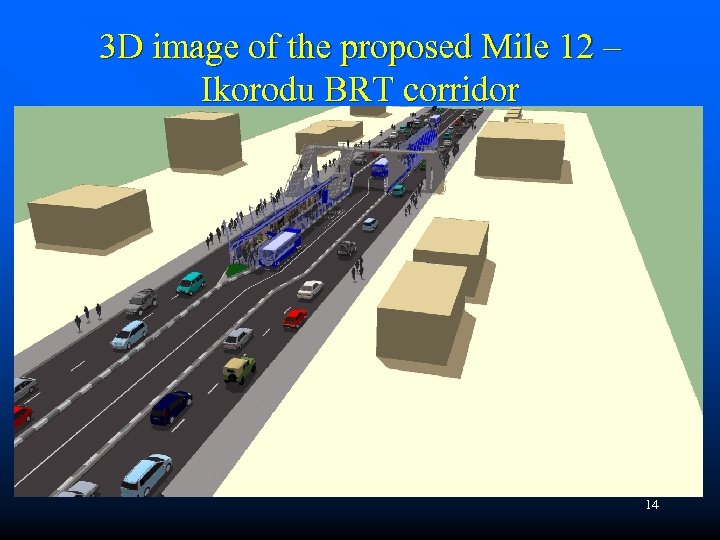
3 D image of the proposed Mile 12 – Ikorodu BRT corridor 14
THANK YOU 15
Скачать презентацию LAGOS BRT SYSTEM BY Dr Dayo Mobereola Managing
579974bd6d7dd947788620a8624ae095.ppt