 Скачать презентацию Laetitia Dablanc INRETS laetitia dablanc inrets fr Dr
8c640ae0775ebe2f0ff71c3131c8e2fb.ppt
- Количество слайдов: 33



Laetitia Dablanc – INRETS laetitia. dablanc@inrets. fr Dr. Laetitia Dablanc – INRETS laetitia. dablanc@inrets. fr Transportation Research Board’ 2010 Master CIMO World Bank Meeting 14 janvier 2009 13 January 2010 Transport de TRANSPORT, A KEY FREIGHT marchandises en ELEMENT OFville URBAN ECONOMY, THE GUIDELINES FOR PRACTITIONERS French National Institute for Transport and Safety Research (INRETS)
Acknowledgement • This paper is based on a 2009 study made for the World Bank as part of the “Freight transport for development" initiative, which examines how freight transport operations contribute to development • The Transport Research Support program is a joint World Bank/DFID initiative focusing on emerging issues in the transport sector. Its goal is to generate knowledge in high priority areas of the transport sector and to disseminate to practitioners and decision-makers in developing countries French National Institute for Transport and Safety Research (INRETS)
• Main dates for the completion of the report – March-June 2009 research and first draft – End of July 2009 revised version after reviewers’ comments – January 2010 presentation of an article at TRB • Content of the report (52 pages) – Information, statistics and data collection – Current policies and practices – Key issues and challenges – Policy recommendations – Appendix on Mexico City French National Institute for Transport and Safety Research (INRETS)
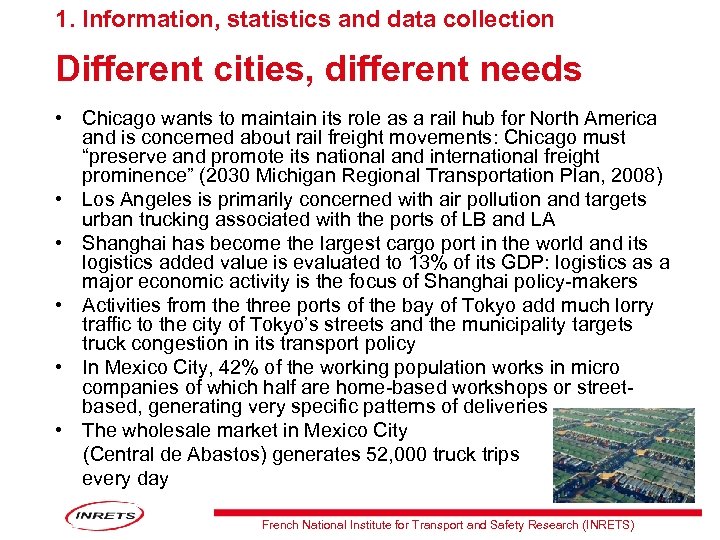
1. Information, statistics and data collection Different cities, different needs • Chicago wants to maintain its role as a rail hub for North America and is concerned about rail freight movements: Chicago must “preserve and promote its national and international freight prominence” (2030 Michigan Regional Transportation Plan, 2008) • Los Angeles is primarily concerned with air pollution and targets urban trucking associated with the ports of LB and LA • Shanghai has become the largest cargo port in the world and its logistics added value is evaluated to 13% of its GDP: logistics as a major economic activity is the focus of Shanghai policy-makers • Activities from the three ports of the bay of Tokyo add much lorry traffic to the city of Tokyo’s streets and the municipality targets truck congestion in its transport policy • In Mexico City, 42% of the working population works in micro companies of which half are home-based workshops or streetbased, generating very specific patterns of deliveries • The wholesale market in Mexico City (Central de Abastos) generates 52, 000 truck trips every day French National Institute for Transport and Safety Research (INRETS)
1. Information, statistics and data collection The logistics specificities of cities in poor countries • Urbanization has outdistanced the public supply of infrastructure and transport services, many roads unpaved and poorly maintained • Traffic congestion is an operational problem with slow nonmotorized vehicles merging into faster motorized traffic • A significant share of the recycling of goods is left to the informal sector and rag-pickers • Urban scenes include street vendors, selling everything from fresh fruits to electronics goods • Slums are part of the city landscape and have specific characteristics and supply needs • However, in most cities in intermediate or developing countries, part of the economy is fully integrated into global economic networks: the informal sector operates alongside advanced industries and services that have logistics concerns similar to those in developed countries French National Institute for Transport and Safety Research (INRETS)
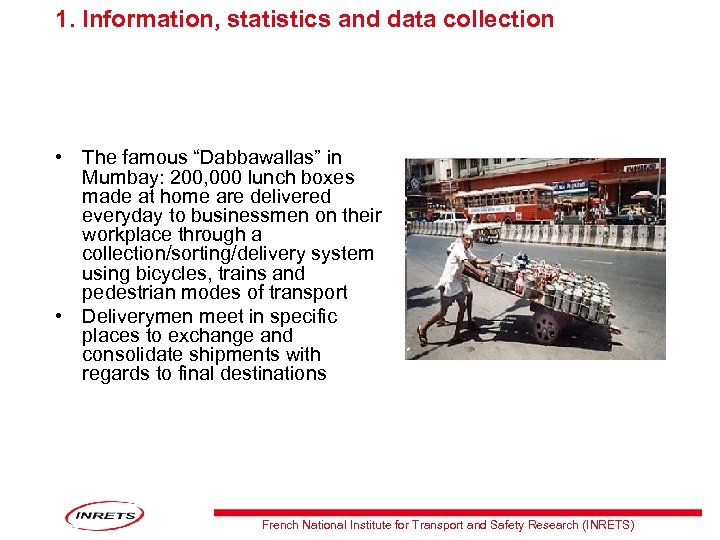
1. Information, statistics and data collection • The famous “Dabbawallas” in Mumbay: 200, 000 lunch boxes made at home are delivered everyday to businessmen on their workplace through a collection/sorting/delivery system using bicycles, trains and pedestrian modes of transport • Deliverymen meet in specific places to exchange and consolidate shipments with regards to final destinations French National Institute for Transport and Safety Research (INRETS)
1. Information, statistics and data collection Recent advances in urban freight surveys and methods • Many local surveys made in cities around the world – but with different methodologies – and few published results, resulting in poor information • New academic networks have emerged – the urban freight committee of the TRB – a Special Interest Group on urban goods movement at the World Conference on Transport Research – the Institute for City Logistics • European efforts to integrate methods through common projects and benchmarking • A European city generates: – 1 delivery or pick-up per job per week – 300 to 400 truck trips per 1000 people per day – 30 to 50 tons of goods person per year French National Institute for Transport and Safety Research (INRETS)
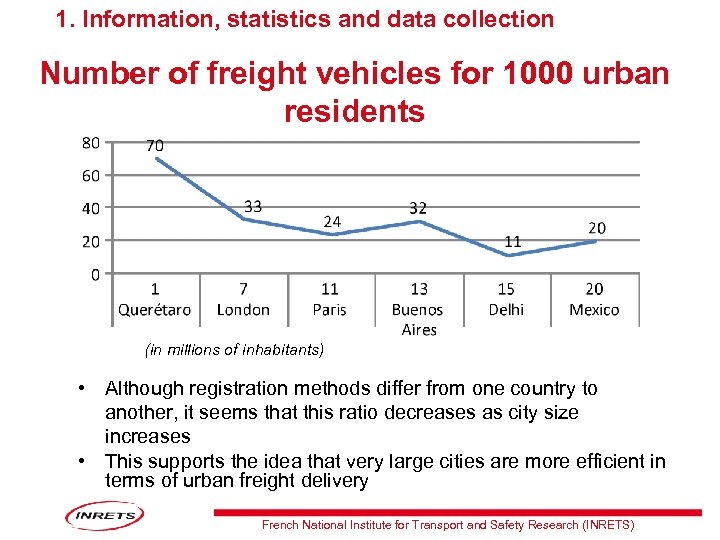
1. Information, statistics and data collection Number of freight vehicles for 1000 urban residents (in millions of inhabitants) • Although registration methods differ from one country to another, it seems that this ratio decreases as city size increases • This supports the idea that very large cities are more efficient in terms of urban freight delivery French National Institute for Transport and Safety Research (INRETS)
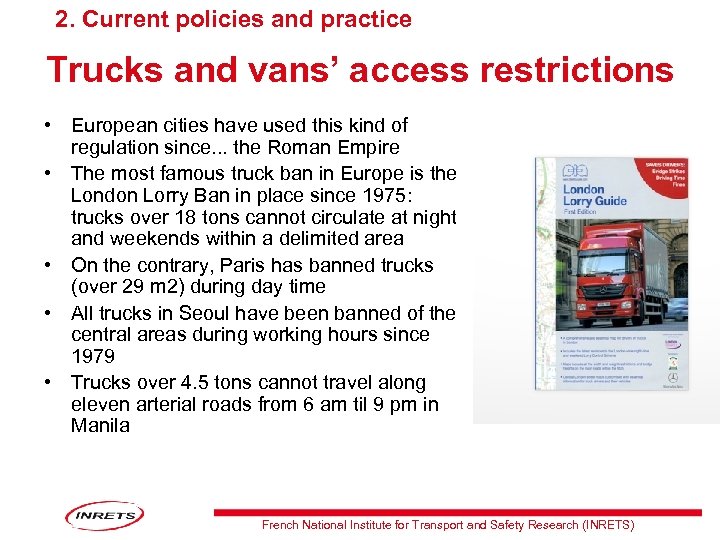
2. Current policies and practice Trucks and vans’ access restrictions • European cities have used this kind of regulation since. . . the Roman Empire • The most famous truck ban in Europe is the London Lorry Ban in place since 1975: trucks over 18 tons cannot circulate at night and weekends within a delimited area • On the contrary, Paris has banned trucks (over 29 m 2) during day time • All trucks in Seoul have been banned of the central areas during working hours since 1979 • Trucks over 4. 5 tons cannot travel along eleven arterial roads from 6 am til 9 pm in Manila French National Institute for Transport and Safety Research (INRETS)
2. Current policies and practice Access restrictions based on tonnage or size are not always optimal • These policies promote small capacity vehicles (vans, light trucks) increasing total congestion and diminishing the efficiency of freight transport • Regulating truck access requires enforcement and control, meaning a sufficient and well trained staff • Without adequate enforcement, carriers adhering to the rules feel frustrated over non abiding truck companies French National Institute for Transport and Safety Research (INRETS)
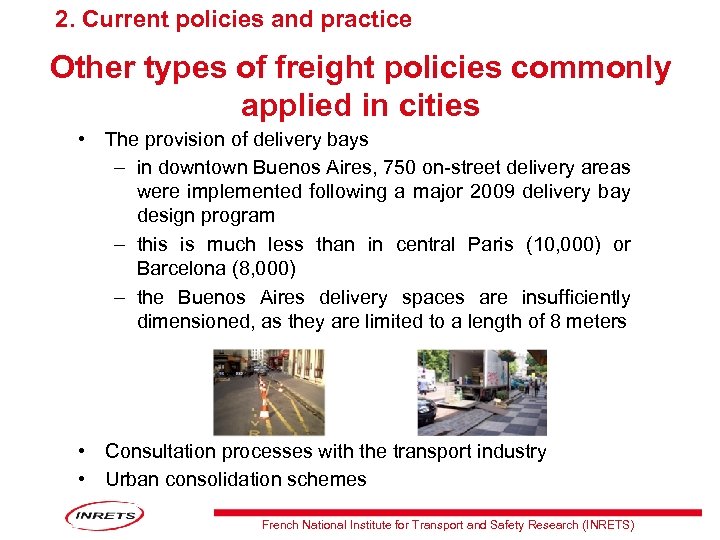
2. Current policies and practice Other types of freight policies commonly applied in cities • The provision of delivery bays – in downtown Buenos Aires, 750 on-street delivery areas were implemented following a major 2009 delivery bay design program – this is much less than in central Paris (10, 000) or Barcelona (8, 000) – the Buenos Aires delivery spaces are insufficiently dimensioned, as they are limited to a length of 8 meters • Consultation processes with the transport industry • Urban consolidation schemes French National Institute for Transport and Safety Research (INRETS)
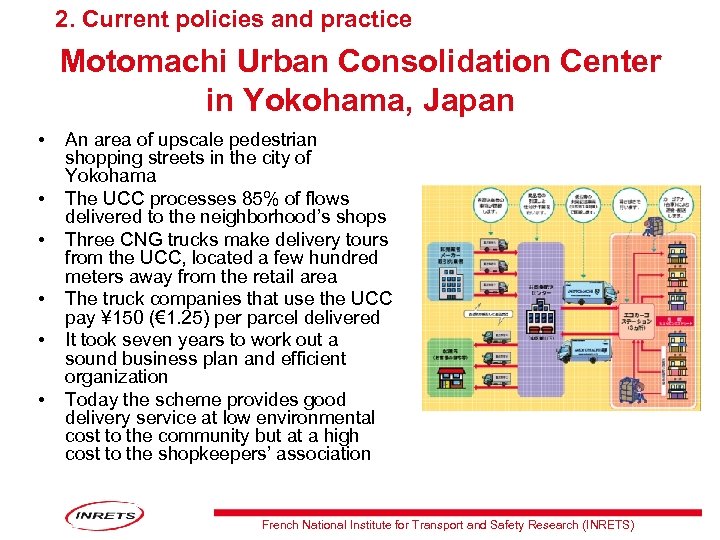
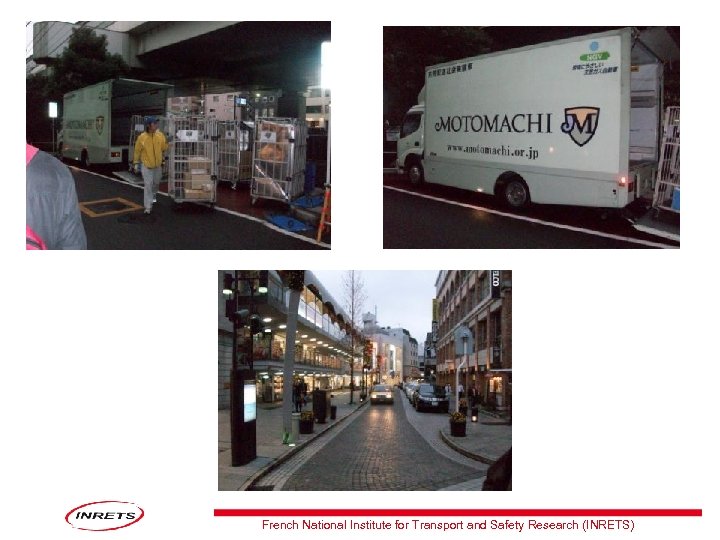
2. Current policies and practice Motomachi Urban Consolidation Center in Yokohama, Japan • • • An area of upscale pedestrian shopping streets in the city of Yokohama The UCC processes 85% of flows delivered to the neighborhood’s shops Three CNG trucks make delivery tours from the UCC, located a few hundred meters away from the retail area The truck companies that use the UCC pay ¥ 150 (€ 1. 25) per parcel delivered It took seven years to work out a sound business plan and efficient organization Today the scheme provides good delivery service at low environmental cost to the community but at a high cost to the shopkeepers’ association French National Institute for Transport and Safety Research (INRETS)
French National Institute for Transport and Safety Research (INRETS)
3. Key issues and challenges Environmental concerns • • Air pollution has decreased with the phasing out of leaded gasoline, but diesel vans and trucks remain a major source of pollution Urban freight is more polluting than long distance freight transport – urban delivery vehicles are older on average – many trucks end their life cycle in drayage operations between port terminals and urban distribution centers – operating speeds are slower than optimal speed due to congestion and traffic restrictions – constant acceleration and deceleration due to traffic lights, delivery stops and congestion – vehicle idling is frequent In large European cities, freight transport is responsible for a quarter of transport-related CO 2, a third of transport-related NOx and half of transport-related particulate matter In the metropolitan area of Mexico, 71% of the 3, 500 tons of PM 2. 5 generated in 2002 by mobile sources were from freight vehicles French National Institute for Transport and Safety Research (INRETS)
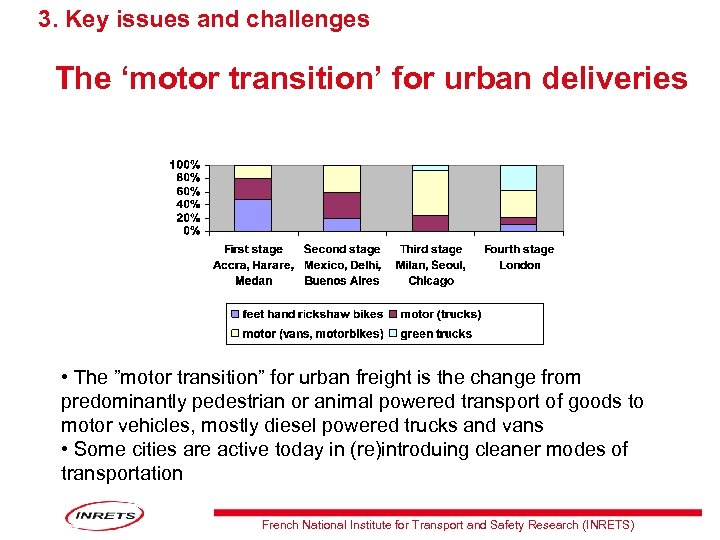
3. Key issues and challenges The ‘motor transition’ for urban deliveries • The ”motor transition” for urban freight is the change from predominantly pedestrian or animal powered transport of goods to motor vehicles, mostly diesel powered trucks and vans • Some cities are active today in (re)introduing cleaner modes of transportation French National Institute for Transport and Safety Research (INRETS)
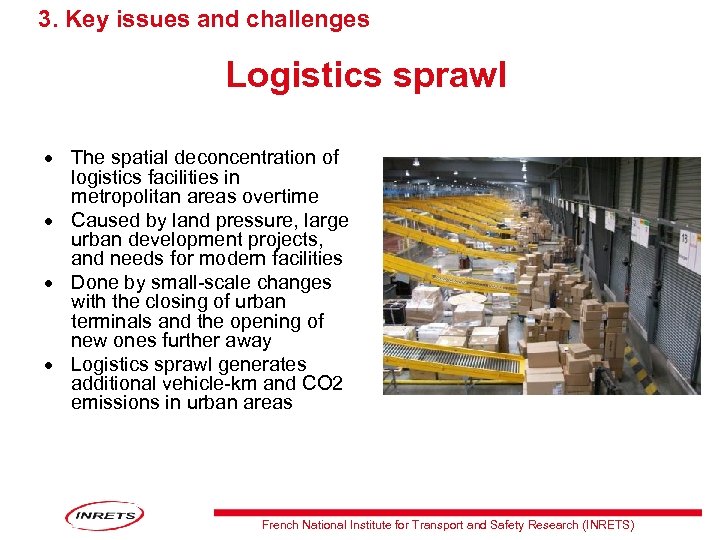
3. Key issues and challenges Logistics sprawl The spatial deconcentration of logistics facilities in metropolitan areas overtime Caused by land pressure, large urban development projects, and needs for modern facilities Done by small-scale changes with the closing of urban terminals and the opening of new ones further away Logistics sprawl generates additional vehicle-km and CO 2 emissions in urban areas French National Institute for Transport and Safety Research (INRETS)
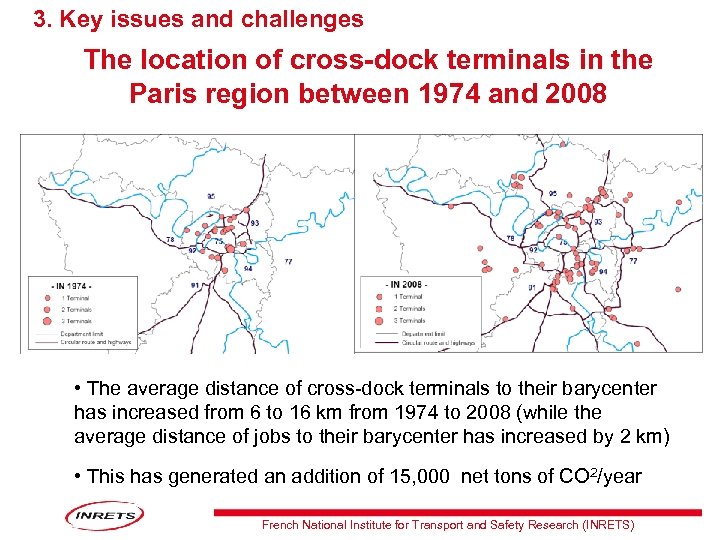
3. Key issues and challenges The location of cross-dock terminals in the Paris region between 1974 and 2008 • The average distance of cross-dock terminals to their barycenter has increased from 6 to 16 km from 1974 to 2008 (while the average distance of jobs to their barycenter has increased by 2 km) • This has generated an addition of 15, 000 net tons of CO 2/year French National Institute for Transport and Safety Research (INRETS)
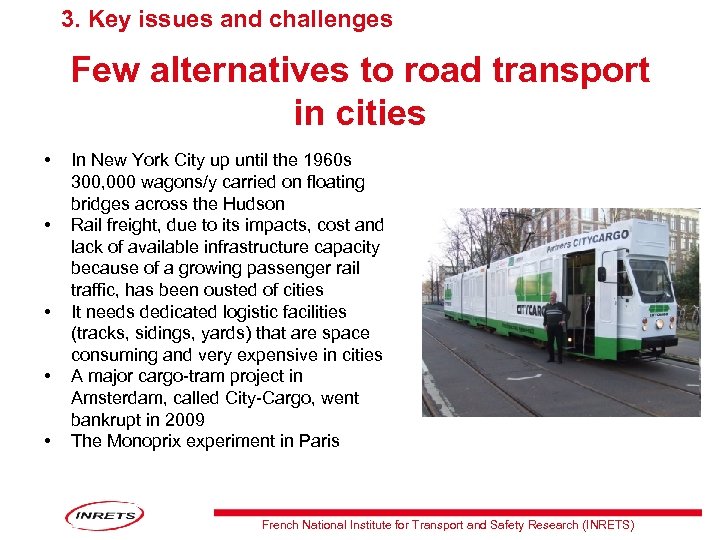
3. Key issues and challenges Few alternatives to road transport in cities • • • In New York City up until the 1960 s 300, 000 wagons/y carried on floating bridges across the Hudson Rail freight, due to its impacts, cost and lack of available infrastructure capacity because of a growing passenger rail traffic, has been ousted of cities It needs dedicated logistic facilities (tracks, sidings, yards) that are space consuming and very expensive in cities A major cargo-tram project in Amsterdam, called City-Cargo, went bankrupt in 2009 The Monoprix experiment in Paris French National Institute for Transport and Safety Research (INRETS)
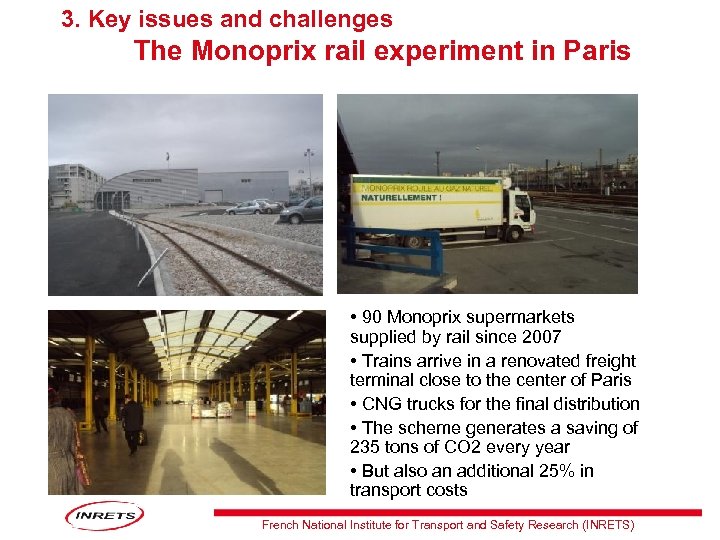
3. Key issues and challenges The Monoprix rail experiment in Paris • 90 Monoprix supermarkets supplied by rail since 2007 • Trains arrive in a renovated freight terminal close to the center of Paris • CNG trucks for the final distribution • The scheme generates a saving of 235 tons of CO 2 every year • But also an additional 25% in transport costs French National Institute for Transport and Safety Research (INRETS)
4. Policy recommendations Recommendations for cities seeking to promote a more efficient and environmentally friendly freight system The underlying principle is that freight must serve the local economy Many of these measures are simple and feasible Classified according to four main policy objectives Ø Assessing the needs of the economy Ø Serving urban growth and providing value added logistics services Ø Making cities safer and more livable Ø Facilitating deliveries and providing better labor conditions for delivery personnel French National Institute for Transport and Safety Research (INRETS)
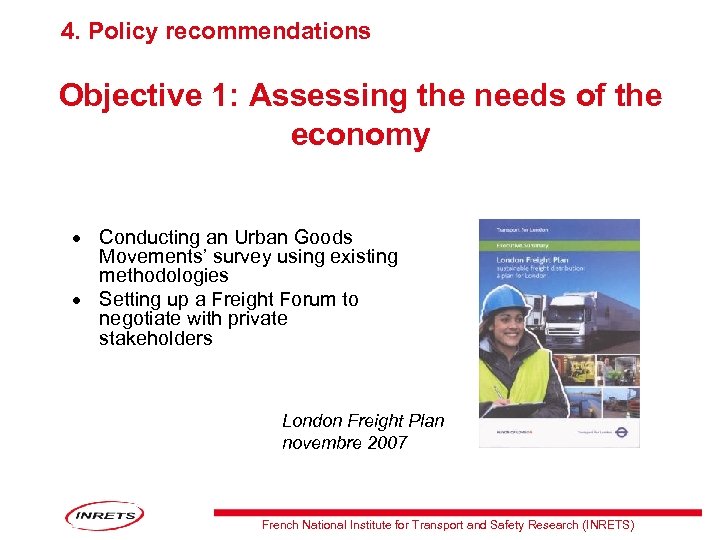
4. Policy recommendations Objective 1: Assessing the needs of the economy Conducting an Urban Goods Movements’ survey using existing methodologies Setting up a Freight Forum to negotiate with private stakeholders London Freight Plan novembre 2007 French National Institute for Transport and Safety Research (INRETS)
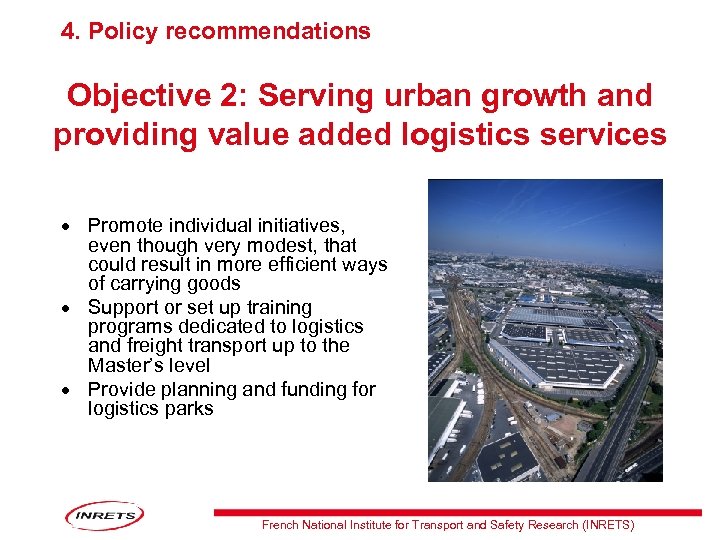
4. Policy recommendations Objective 2: Serving urban growth and providing value added logistics services Promote individual initiatives, even though very modest, that could result in more efficient ways of carrying goods Support or set up training programs dedicated to logistics and freight transport up to the Master’s level Provide planning and funding for logistics parks French National Institute for Transport and Safety Research (INRETS)
4. Policy recommendations Objective 3: Making cities safer and more livable Land use and planning policies Environmental standards for truck traffic and access regulations Promotion of innovations in clean delivery vehicles French National Institute for Transport and Safety Research (INRETS)
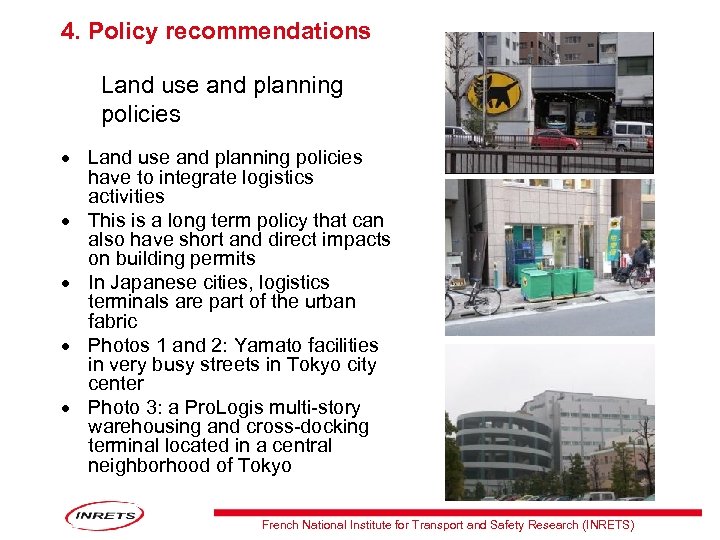
4. Policy recommendations Land use and planning policies have to integrate logistics activities This is a long term policy that can also have short and direct impacts on building permits In Japanese cities, logistics terminals are part of the urban fabric Photos 1 and 2: Yamato facilities in very busy streets in Tokyo city center Photo 3: a Pro. Logis multi-story warehousing and cross-docking terminal located in a central neighborhood of Tokyo French National Institute for Transport and Safety Research (INRETS)
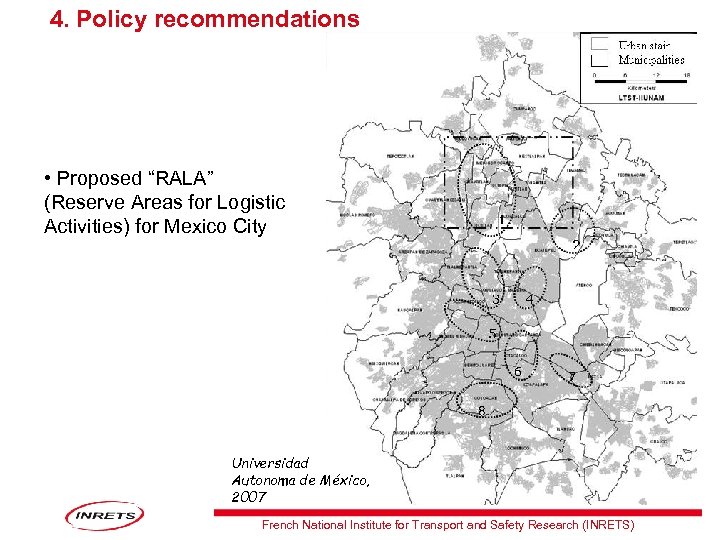
4. Policy recommendations • Proposed “RALA” (Reserve Areas for Logistic Activities) for Mexico City Universidad Autonoma de México, 2007 French National Institute for Transport and Safety Research (INRETS)
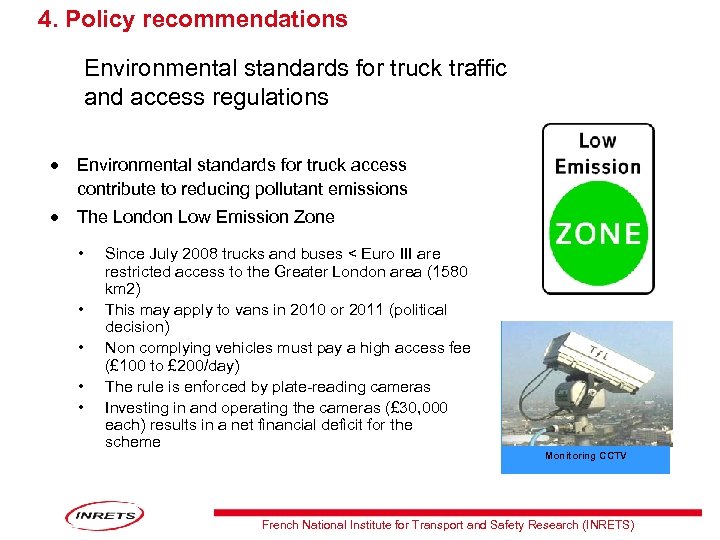
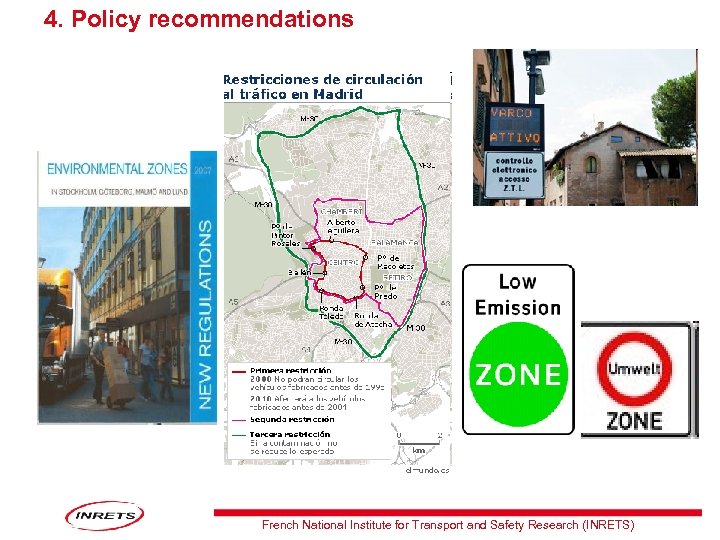
4. Policy recommendations Environmental standards for truck traffic and access regulations Environmental standards for truck access contribute to reducing pollutant emissions The London Low Emission Zone • • • Since July 2008 trucks and buses < Euro III are restricted access to the Greater London area (1580 km 2) This may apply to vans in 2010 or 2011 (political decision) Non complying vehicles must pay a high access fee (£ 100 to £ 200/day) The rule is enforced by plate-reading cameras Investing in and operating the cameras (£ 30, 000 each) results in a net financial deficit for the scheme Monitoring CCTV French National Institute for Transport and Safety Research (INRETS)
4. Policy recommendations French National Institute for Transport and Safety Research (INRETS)
4. Policy recommendations French National Institute for Transport and Safety Research (INRETS)
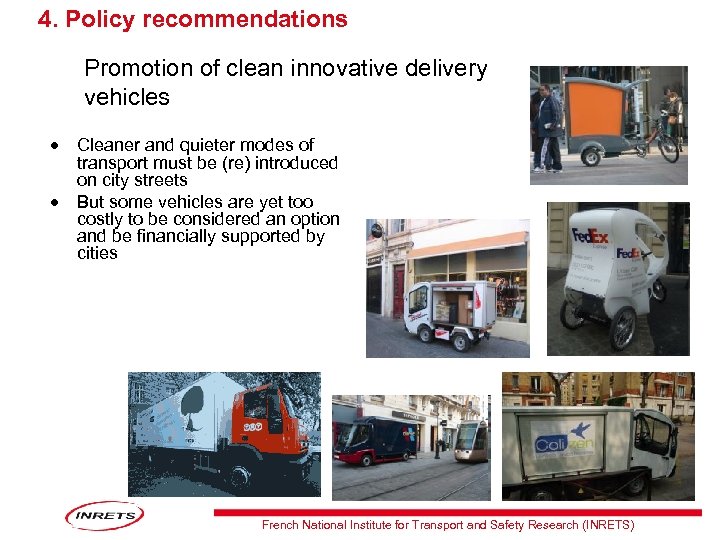
4. Policy recommendations Promotion of clean innovative delivery vehicles Cleaner and quieter modes of transport must be (re) introduced on city streets But some vehicles are yet too costly to be considered an option and be financially supported by cities French National Institute for Transport and Safety Research (INRETS)
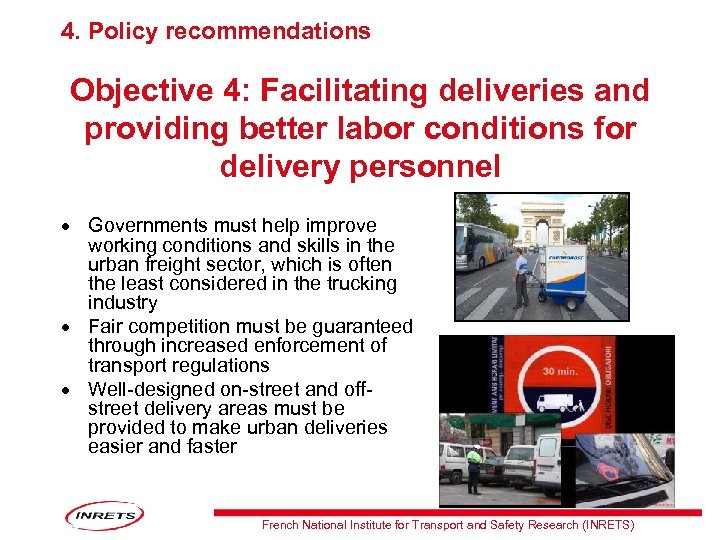
4. Policy recommendations Objective 4: Facilitating deliveries and providing better labor conditions for delivery personnel Governments must help improve working conditions and skills in the urban freight sector, which is often the least considered in the trucking industry Fair competition must be guaranteed through increased enforcement of transport regulations Well-designed on-street and offstreet delivery areas must be provided to make urban deliveries easier and faster French National Institute for Transport and Safety Research (INRETS)
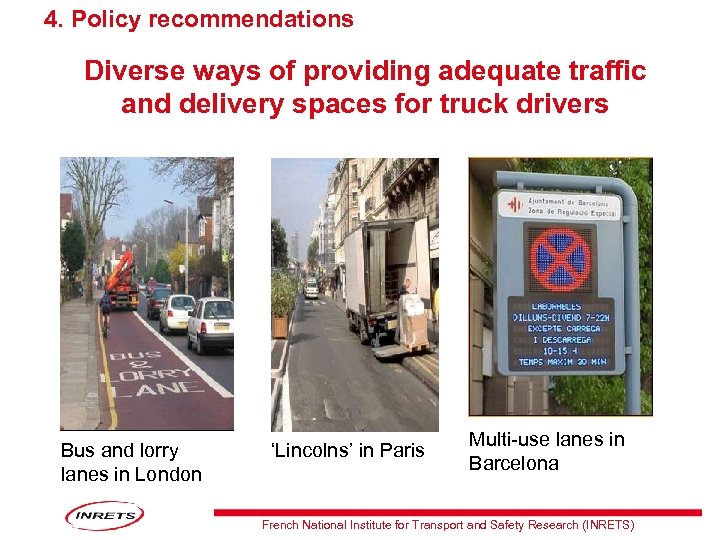
4. Policy recommendations Diverse ways of providing adequate traffic and delivery spaces for truck drivers Bus and lorry lanes in London ‘Lincolns’ in Paris Multi-use lanes in Barcelona French National Institute for Transport and Safety Research (INRETS)
Conclusion • Urban freight represents many jobs and an important economic asset for cities • Logistics services in cities are still of poor level and freight transport generates many environmental impacts in cities • Local decision-makers can implement simple and effective policies to address part of the issues • Many freight and logistics issues depend on long -term national policies that cannot be properly addressed at the local level French National Institute for Transport and Safety Research (INRETS)
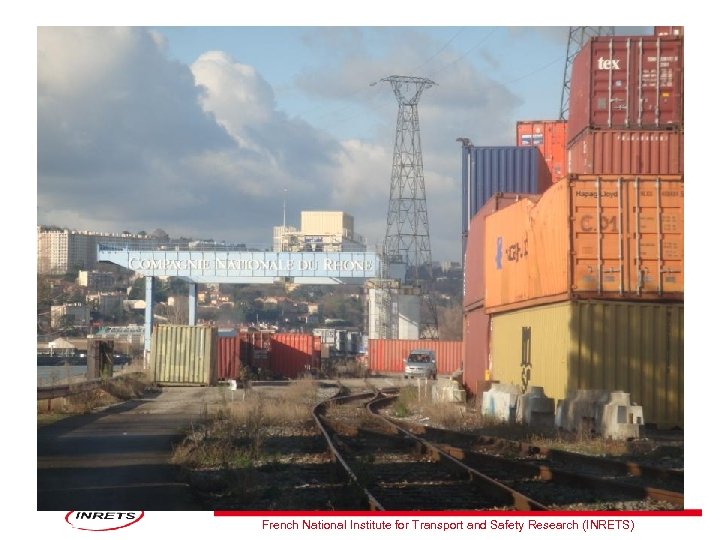
French National Institute for Transport and Safety Research (INRETS)
Скачать презентацию Laetitia Dablanc INRETS laetitia dablanc inrets fr Dr
8c640ae0775ebe2f0ff71c3131c8e2fb.ppt