


 Скачать презентацию Lack of Political Will and Market Power Jim
d2095db72f6323abac75ffb83be95bd0.ppt
- Количество слайдов: 22
 Lack of Political Will and Market Power Jim Steffes Vice President ® June 25, 2001
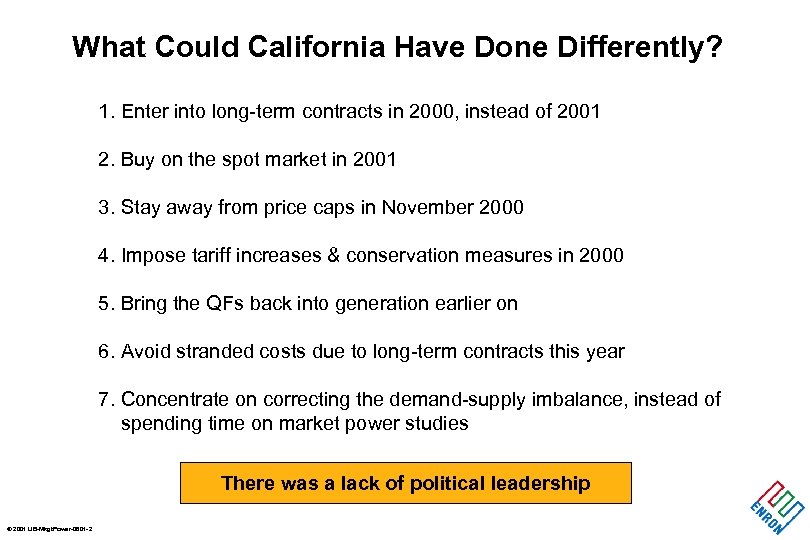 What Could California Have Done Differently? 1. Enter into long-term contracts in 2000, instead of 2001 2. Buy on the spot market in 2001 3. Stay away from price caps in November 2000 4. Impose tariff increases & conservation measures in 2000 5. Bring the QFs back into generation earlier on 6. Avoid stranded costs due to long-term contracts this year 7. Concentrate on correcting the demand-supply imbalance, instead of spending time on market power studies There was a lack of political leadership © 2001 UB-Mkgt. Power-0601 -2
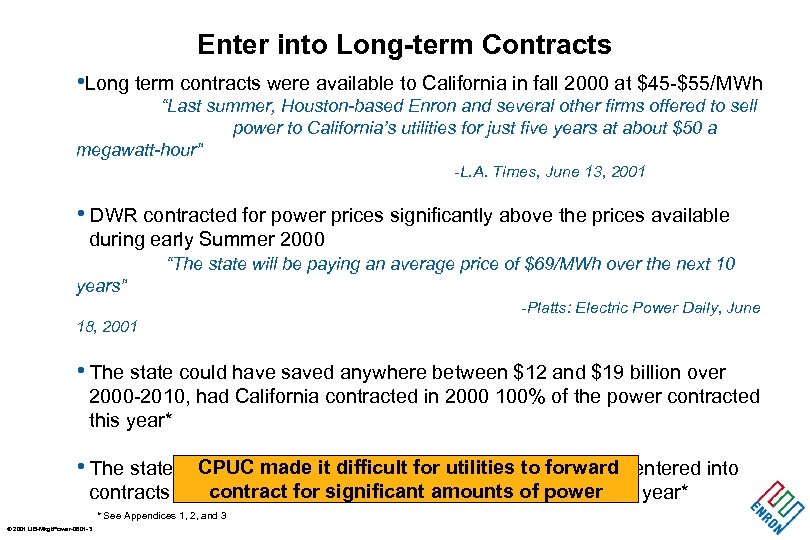 Enter into Long-term Contracts • Long term contracts were available to California in fall 2000 at $45 -$55/MWh “Last summer, Houston-based Enron and several other firms offered to sell power to California’s utilities for just five years at about $50 a megawatt-hour” -L. A. Times, June 13, 2001 • DWR contracted for power prices significantly above the prices available during early Summer 2000 “The state will be paying an average price of $69/MWh over the next 10 years” -Platts: Electric Power Daily, June 18, 2001 • The state could have saved anywhere between $12 and $19 billion over 2000 -2010, had California contracted in 2000 100% of the power contracted this year* CPUC made it close to $5 utilities to forward • The state could have saved difficult for billion, had California entered into contract least 25% of the power contracted contracts in 2000 for at for significant amounts of power this year* * See Appendices 1, 2, and 3 © 2001 UB-Mkgt. Power-0601 -3
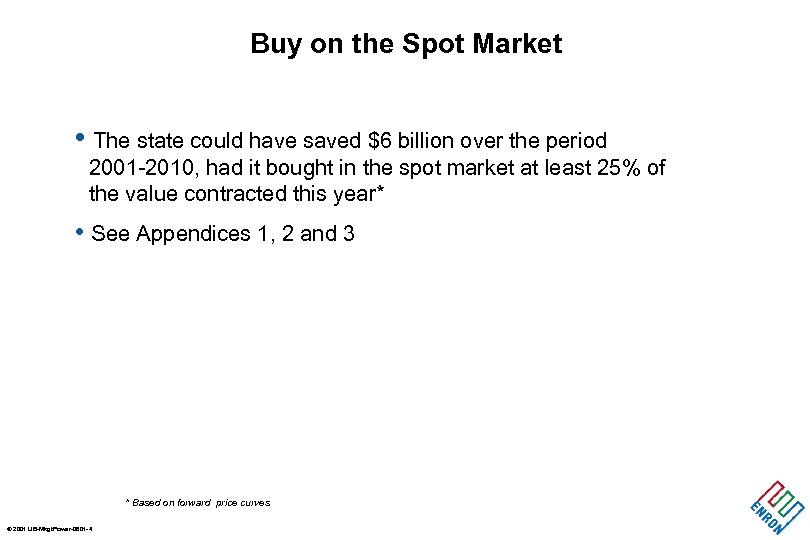 Buy on the Spot Market • The state could have saved $6 billion over the period 2001 -2010, had it bought in the spot market at least 25% of the value contracted this year* • See Appendices 1, 2 and 3 * Based on forward price curves © 2001 UB-Mkgt. Power-0601 -4
 Stay Away From Price Caps • Price caps of November 1, 2000 delayed much needed capacity that failed to come on line during Summer 2001 – – • NERC estimates that California would be deficient by about 3, 600 MW this summer This shortfall would have been reduced by 10 -20% without price caps The price cap on the California Power Exchange day-ahead market was lowered from $750/KWh to $250/KWh as the summer progressed – – By August 2000 average hourly exports were 3000 MW greater than in May 2000 Net imports in August 2000 were 3500 MW below 1999 levels Source: Federal Energy Regulatory Commission. Staff Report on U. S. Bulk Power Markets: Part I (November 2000) • The current price caps are likely to result in nearly 113 hours of rolling outages this summer for Californian residents, with an average size of approximately 1900 MW. – This would affect approximately 1. 4 million households Source: “The Impact of Wholesale Electricity Price Controls on California Summer Reliability, June 2001, U. S. Department of Energy © 2001 UB-Mkgt. Power-0601 -5
 Impose Tariff Increases • A 20% tariff increase in 2000 instead of 10% in January 2001 and 30% in June 2001 could have saved the state over the period 2000 -2010: – $7. 8 billion, assuming the same demand elasticity and conservation pattern for 2000 and 2001 – $7. 4 billion, assuming a lower demand elasticity and conservation pattern for 2001 than for 2000 • See Appendix 4 Source: DWR Report © 2001 UB-Mkgt. Power-0601 -6
 Bring QF’s Back into Generation • DWR purchased spot power at prices above $300/MWh between January and April 2001 • Many QFs offering power at $125/MWh went offline – change in the pricing formula for natural gas utilities withheld payments to the QFs (Edison: $529 million, PG&E: $387 million as of January 31 st, 2001) Source: Federal Energy Regulatory Commission. Staff Report on U. S. Bulk Power Markets: Part I (November 2000) • The state could have saved anywhere between $1. 0 and $1. 1 billion had DWR restored QF generation instead of resorting to spot market purchases • See Appendix 5 © 2001 UB-Mkgt. Power-0601 -7
 Avoid Stranded Costs • Long-term contracts entered into by DWR have resulted in about $21 billion in stranded costs, vis-à-vis purchases from the market* • See Appendix 6 * Based on forward price curves © 2001 UB-Mkgt. Power-0601 -8
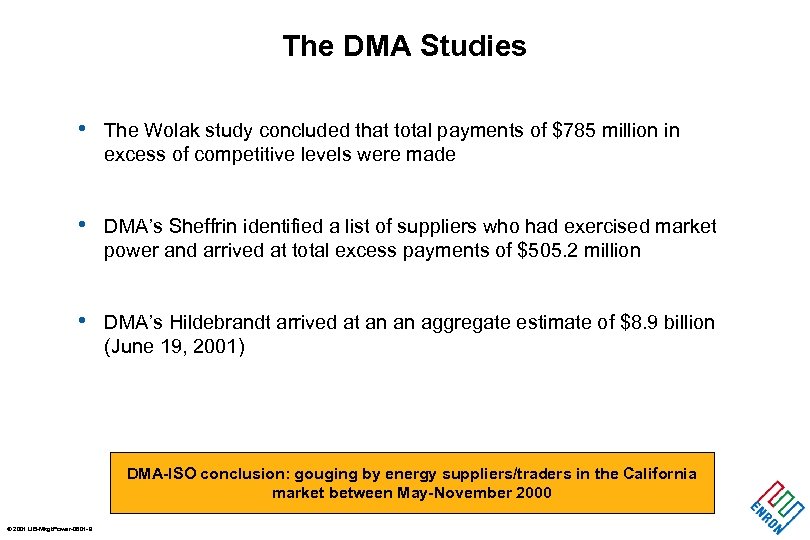 The DMA Studies • The Wolak study concluded that total payments of $785 million in excess of competitive levels were made • DMA’s Sheffrin identified a list of suppliers who had exercised market power and arrived at total excess payments of $505. 2 million • DMA’s Hildebrandt arrived at an an aggregate estimate of $8. 9 billion (June 19, 2001) DMA-ISO conclusion: gouging by energy suppliers/traders in the California market between May-November 2000 © 2001 UB-Mkgt. Power-0601 -9
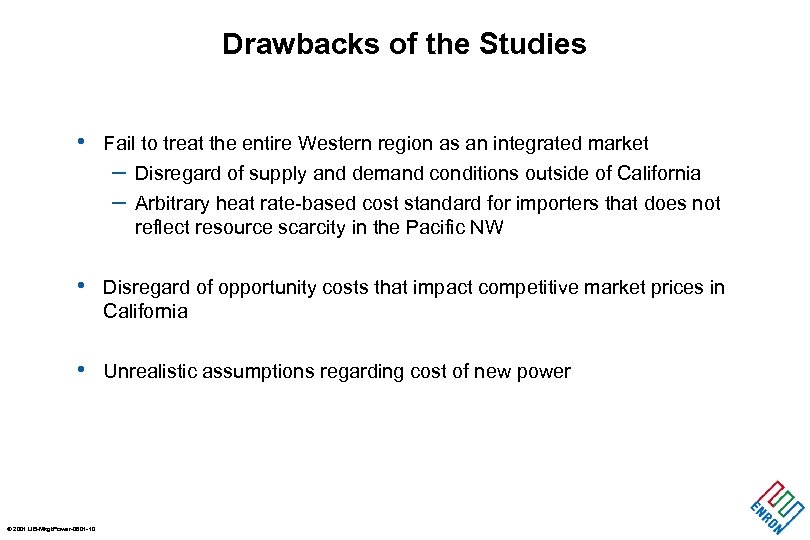 Drawbacks of the Studies • Fail to treat the entire Western region as an integrated market – Disregard of supply and demand conditions outside of California – Arbitrary heat rate-based cost standard for importers that does not reflect resource scarcity in the Pacific NW • Disregard of opportunity costs that impact competitive market prices in California • Unrealistic assumptions regarding cost of new power © 2001 UB-Mkgt. Power-0601 -10
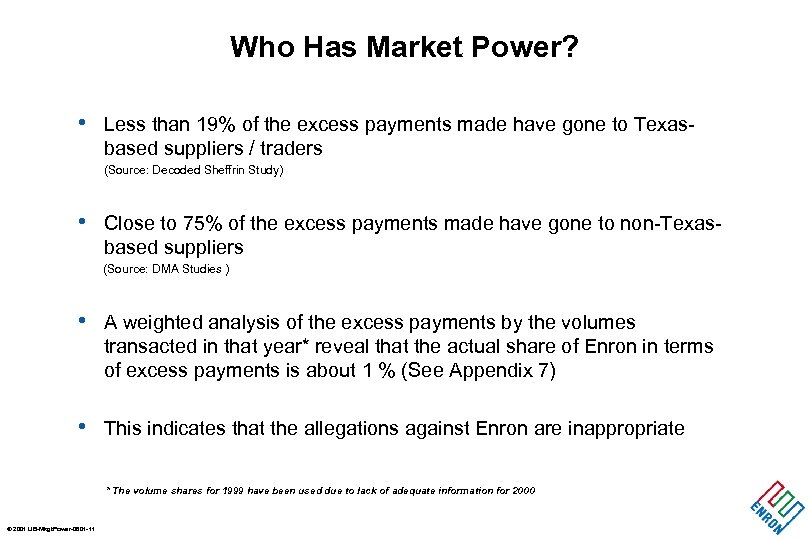 Who Has Market Power? • Less than 19% of the excess payments made have gone to Texasbased suppliers / traders (Source: Decoded Sheffrin Study) • Close to 75% of the excess payments made have gone to non-Texasbased suppliers (Source: DMA Studies ) • A weighted analysis of the excess payments by the volumes transacted in that year* reveal that the actual share of Enron in terms of excess payments is about 1 % (See Appendix 7) • This indicates that the allegations against Enron are inappropriate * The volume shares for 1999 have been used due to lack of adequate information for 2000 © 2001 UB-Mkgt. Power-0601 -11
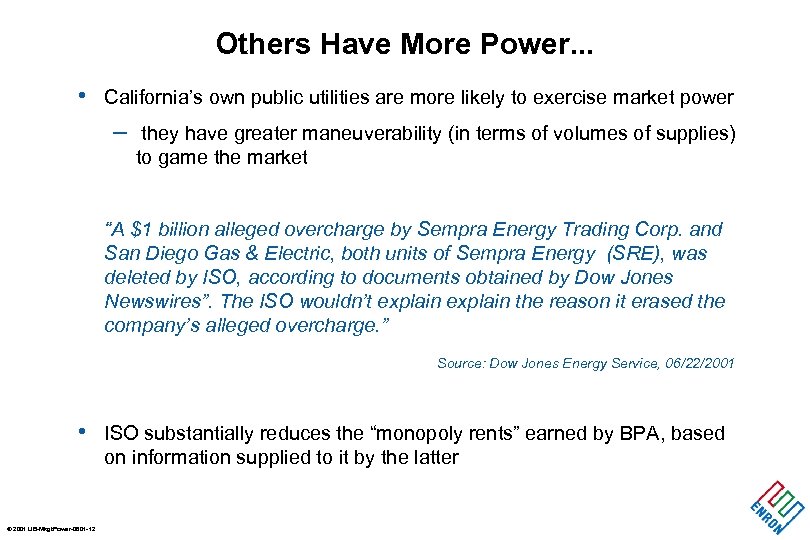 Others Have More Power. . . • California’s own public utilities are more likely to exercise market power – they have greater maneuverability (in terms of volumes of supplies) to game the market “A $1 billion alleged overcharge by Sempra Energy Trading Corp. and San Diego Gas & Electric, both units of Sempra Energy (SRE), was deleted by ISO, according to documents obtained by Dow Jones Newswires”. The ISO wouldn’t explain the reason it erased the company’s alleged overcharge. ” Source: Dow Jones Energy Service, 06/22/2001 • © 2001 UB-Mkgt. Power-0601 -12 ISO substantially reduces the “monopoly rents” earned by BPA, based on information supplied to it by the latter
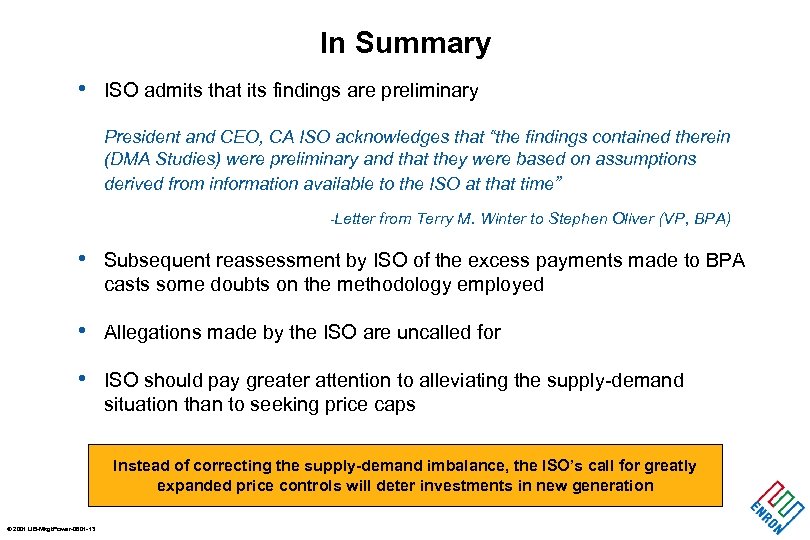 In Summary • ISO admits that its findings are preliminary President and CEO, CA ISO acknowledges that “the findings contained therein (DMA Studies) were preliminary and that they were based on assumptions derived from information available to the ISO at that time” -Letter from Terry M. Winter to Stephen Oliver (VP, BPA) • Subsequent reassessment by ISO of the excess payments made to BPA casts some doubts on the methodology employed • Allegations made by the ISO are uncalled for • ISO should pay greater attention to alleviating the supply-demand situation than to seeking price caps Instead of correcting the supply-demand imbalance, the ISO’s call for greatly expanded price controls will deter investments in new generation © 2001 UB-Mkgt. Power-0601 -13
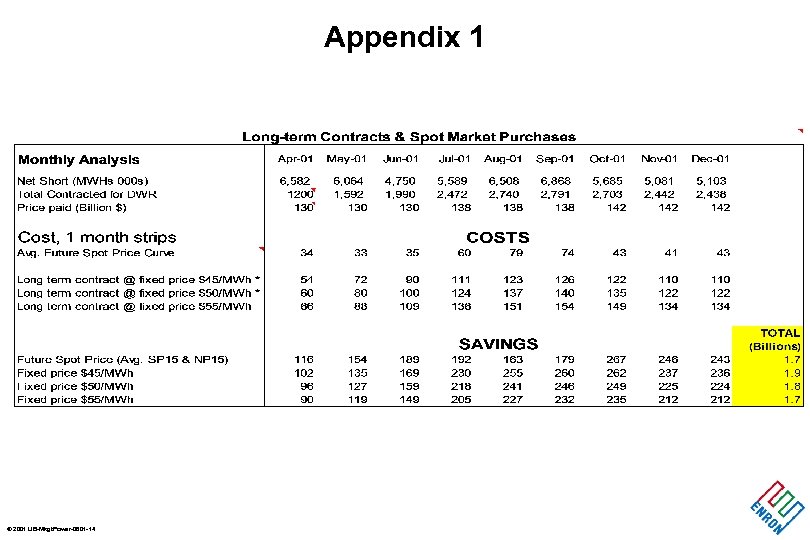 Appendix 1 © 2001 UB-Mkgt. Power-0601 -14
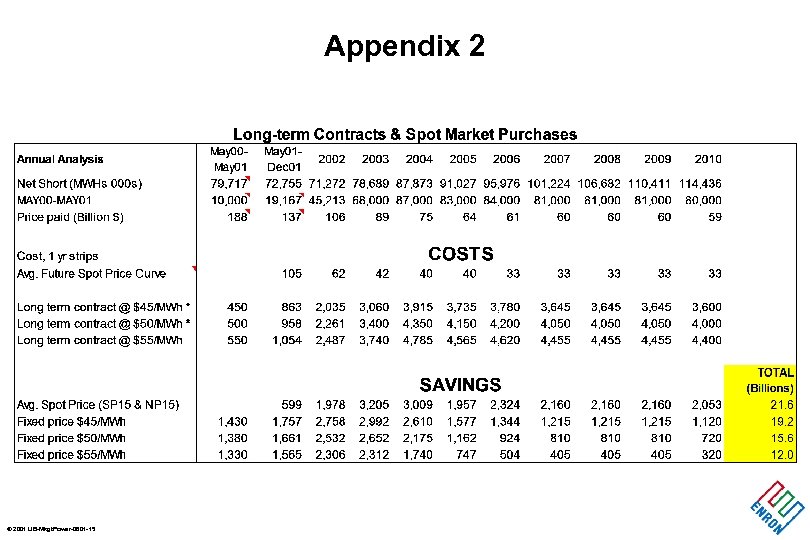 Appendix 2 © 2001 UB-Mkgt. Power-0601 -15
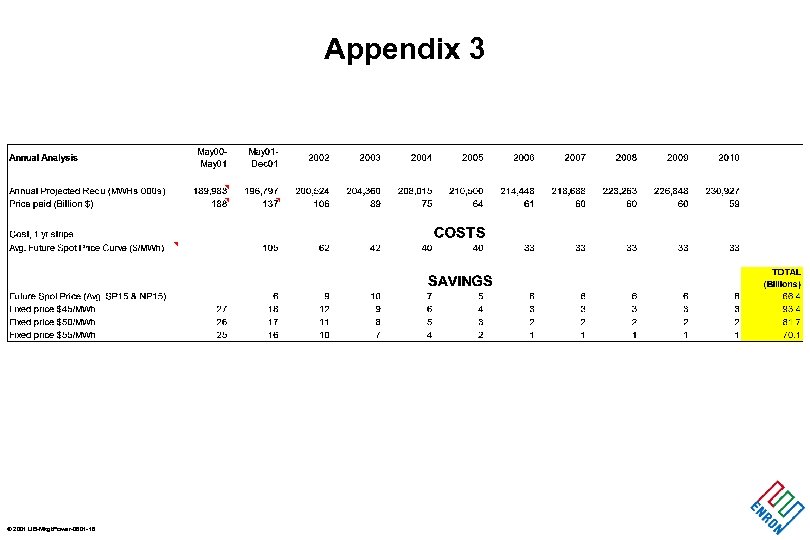 Appendix 3 © 2001 UB-Mkgt. Power-0601 -16
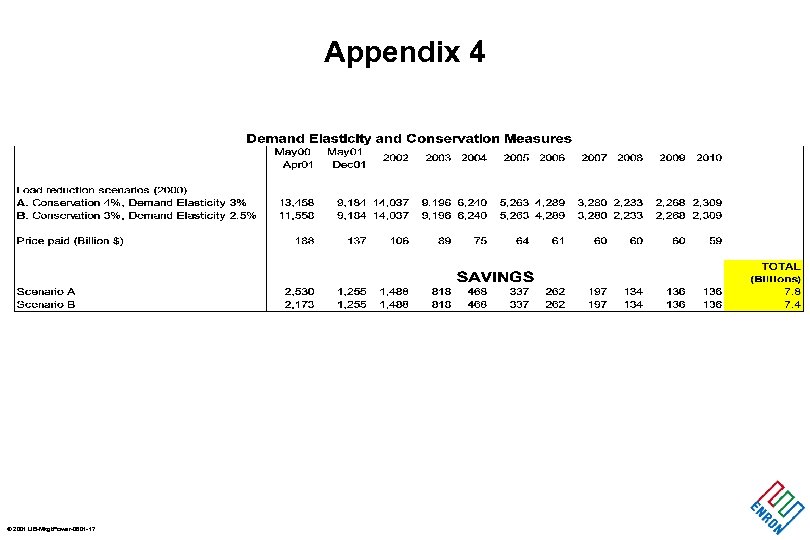 Appendix 4 © 2001 UB-Mkgt. Power-0601 -17
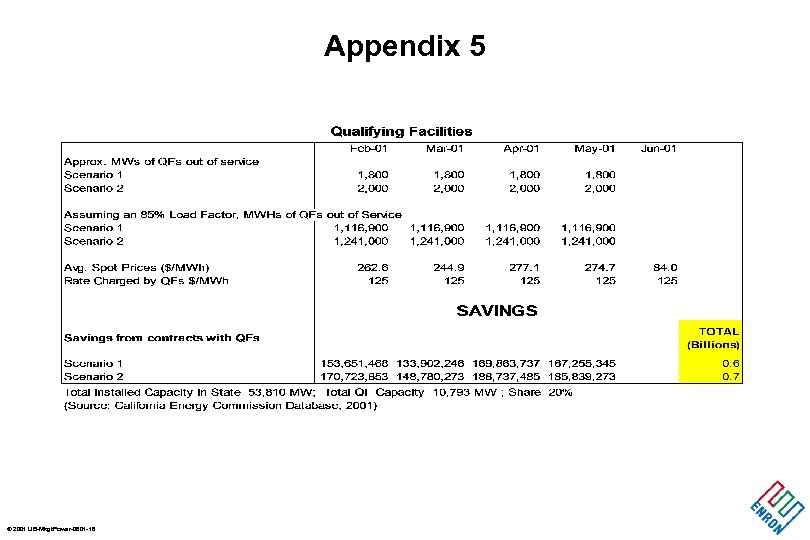 Appendix 5 © 2001 UB-Mkgt. Power-0601 -18
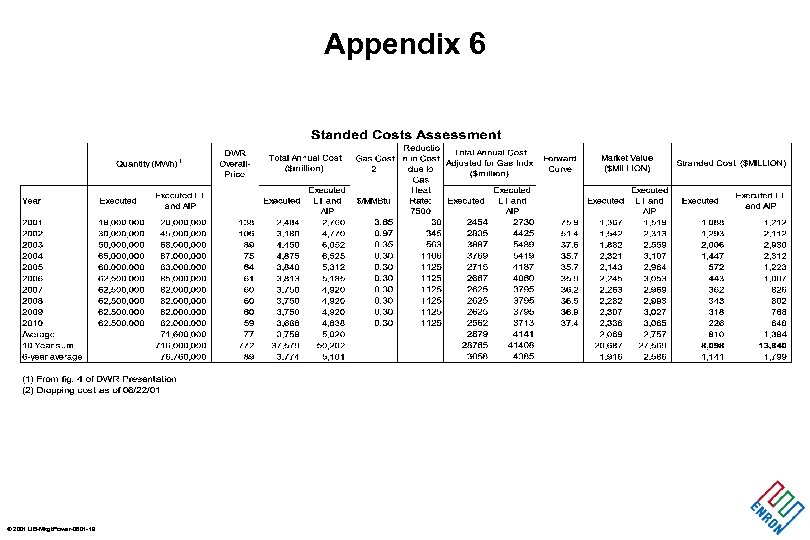 Appendix 6 © 2001 UB-Mkgt. Power-0601 -19
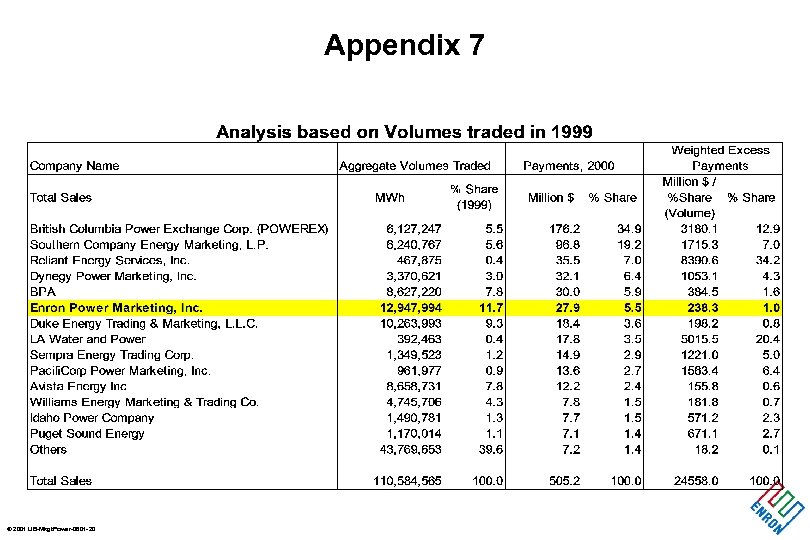 Appendix 7 © 2001 UB-Mkgt. Power-0601 -20
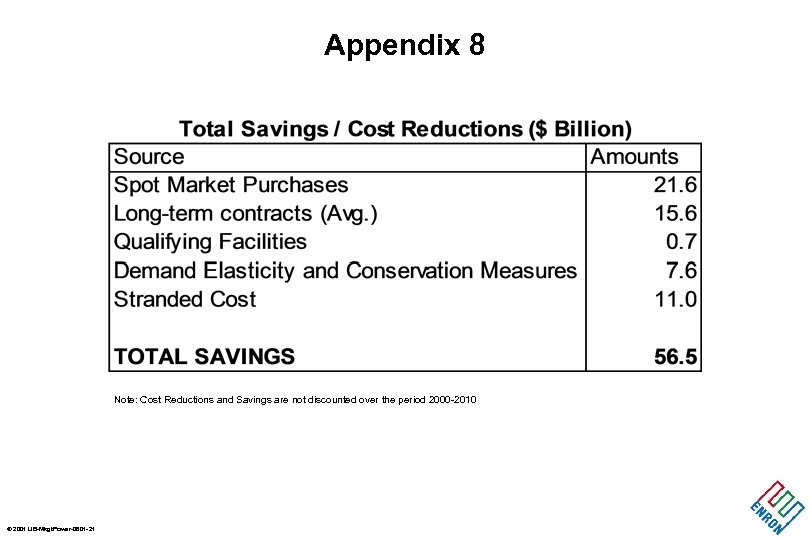 Appendix 8 Note: Cost Reductions and Savings are not discounted over the period 2000 -2010 © 2001 UB-Mkgt. Power-0601 -21
 ® © 2001 UB-Mkgt. Power-0601 -22