

Labor economics Lector’s teacher — Myronova Olga Mykolayivna

Labor economics Lector’s teacher - Myronova Olga Mykolayivna

Topic 3 THE LABOR PRODUCTIVITY
Questions: 1. Category of labor productivity 2. The concept and essence of the factors that influence the rate of labor productivity
Labor productivity shows the effectiveness of the labor process. Labor productivity is a cost-effectiveness of specific labor, which is determined by the number of products produced per unit of time, or the amount of time consumed per unit of output. Productivity growth means an increase in the number of products developed in unit time, or saving time consumed per unit of output.
Labor productivity is closely related to its intensity, which characterizes the degree of intensity of labor per unit of time and measured by the amount of human energy expended. The maximum level of intensity is determined by physiological and mental capabilities of the human body.
Labor productivity is measured by the ratio of manufactured goods to labor costs (the average number of staff). Depending on the direct or inverse relationship, there are two indicators: the production and the labor intensity.
The production is the amount of output per unit of time or number of products, which account for one average employee or a worker for a year, quarter, and month. It is measured by the ratio of output to the value of working time spent on the production:
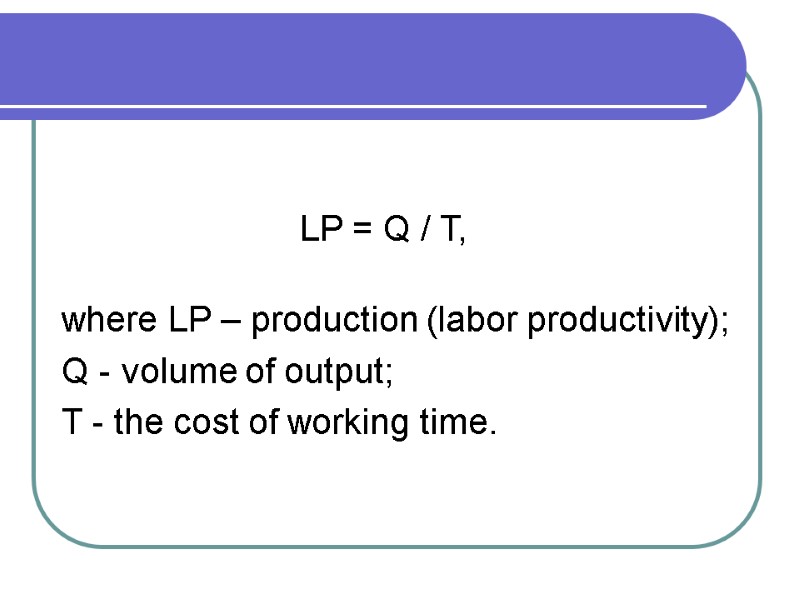
where LP – production (labor productivity); Q - volume of output; T - the cost of working time. LP = Q / T,
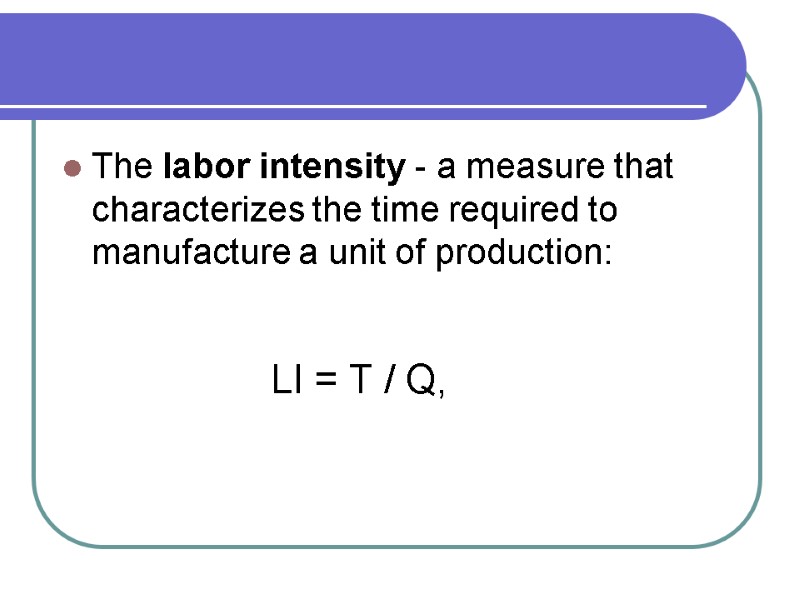
The labor intensity - a measure that characterizes the time required to manufacture a unit of production: LI = T / Q,
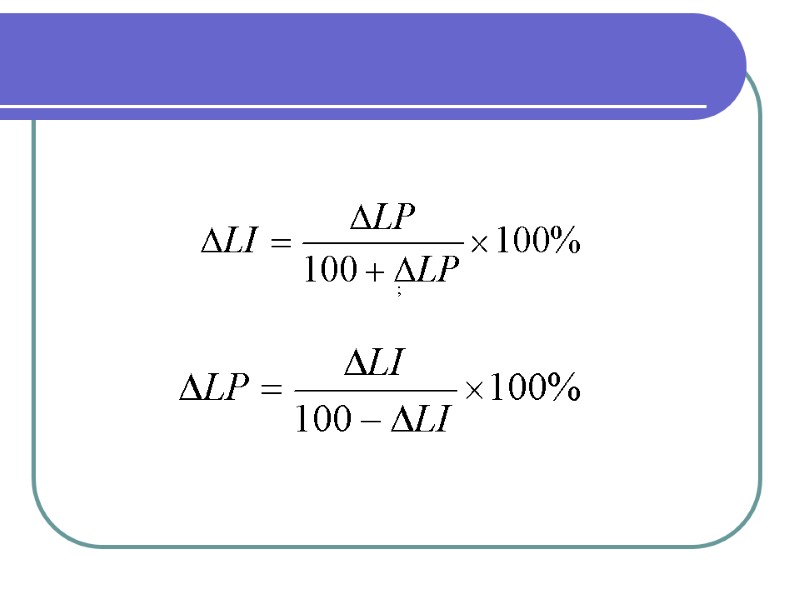
;
Methods of measuring of the labor productivity (production) depend on the method of calculating the volume of output. There is natural, labor and cost (money) methods.
The essence of the natural method consists in the fact that the volume of industrial production and productivity is calculated in physical units (pieces, tons, yards, etc.). Labor method most often used in the workplace, in teams, where the volume of products or work performed is defined in norm-hours. In modern conditions the most common method of measuring productivity is the value (money), which is based on the use of cost indexes of production.
Factors - is the driving force, an important cause that affects a particular process or phenomenon, and changes the level and dynamics of labor productivity.
Natural conditions - this is an environment of the social process of production: natural resources, climatic features, etc. Socio-economic conditions are determined by the nature of the relations of production, development of market relations, the degree of development of productive forces, the level of life.
Two main groups of productivity factors: external (not controlled) internal (controlled).
Internal factors - are those that are within the control of individual companies and are divided into "hard" and "soft".
"Hard" (persistent, permanent) contain: - The product - its quality, purpose, design, that is the requirements that apply to it the consumer; - Technology and equipment, more efficient use of materials, increased turnover rate of materials, materials management, development of efficient sources of supply.
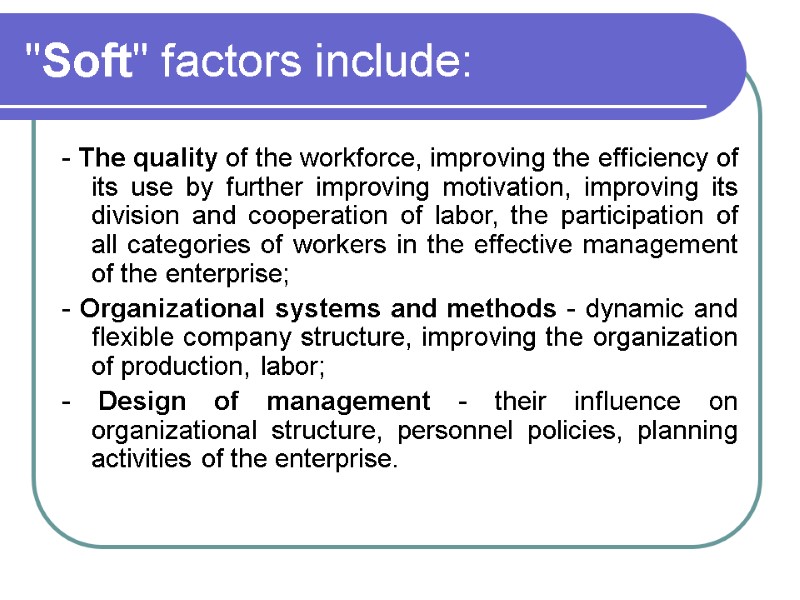
"Soft" factors include: - The quality of the workforce, improving the efficiency of its use by further improving motivation, improving its division and cooperation of labor, the participation of all categories of workers in the effective management of the enterprise; - Organizational systems and methods - dynamic and flexible company structure, improving the organization of production, labor; - Design of management - their influence on organizational structure, personnel policies, planning activities of the enterprise.
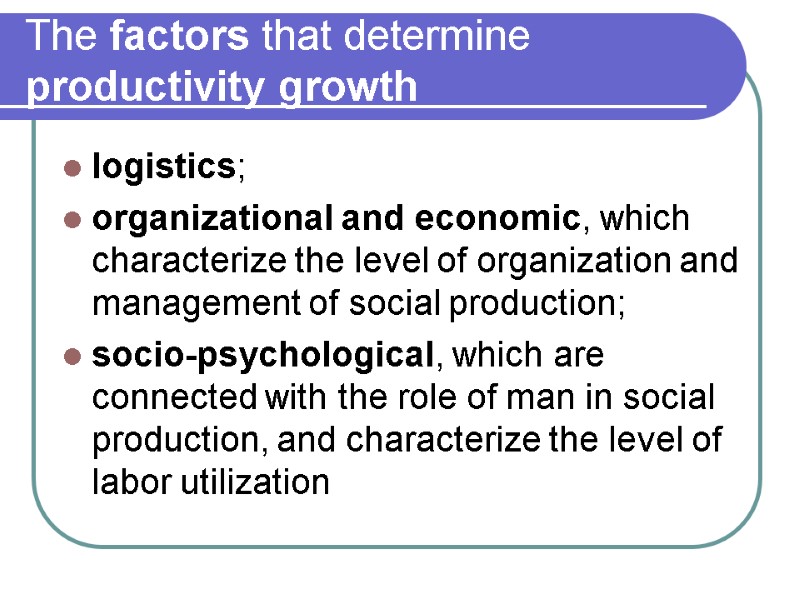
The factors that determine productivity growth logistics; organizational and economic, which characterize the level of organization and management of social production; socio-psychological, which are connected with the role of man in social production, and characterize the level of labor utilization
 Скачать презентацию Labor economics Lector’s teacher — Myronova Olga Mykolayivna
14144-topic_3.ppt
- Количество слайдов: 19