 Скачать презентацию l kalytiuk kubg edu ua Основи германістики Навчальна дисципліна
ger_1_2.pptx
- Количество слайдов: 63



l. kalytiuk@kubg. edu. ua Основи германістики Навчальна дисципліна
l. kalytiuk@kubg. edu. ua HISTORY of GERMANIC LANGUAGES
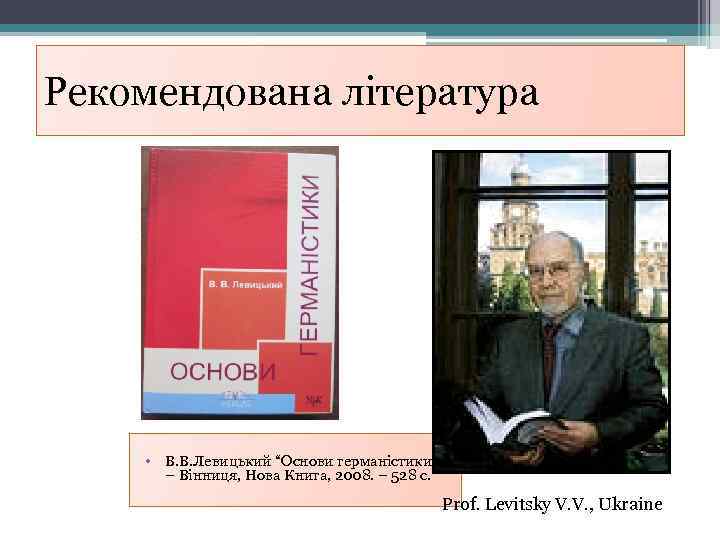
Рекомендована література • В. В. Левицький “Основи германістики”. – Вінниця, Нова Книга, 2008. – 528 с. Prof. Levitsky V. V. , Ukraine
Рекомендована література Вступ до германського мовознавства Жлуктенко Ю. О. , Яворська Т. А. : Київ: «Вища школа» , 1978. – 170 с. Арсеньева М. Г. , Балашова С. П. Берков В. П. , Соловьева Л. Н. Введение в германскую филологию. – М. : ГИС, 2000. - 314 с. WHO ARE THE GERMANIC PEOPLES? http: //www. odinsvolk. ca/Germanic. Peoples. htm
The structure of the course • • • Lectures Seminars Mid-term tests Modular test Individual work Exam Seminars involve - Preparatory reading (books, articles, additional material) - Watching documentary films - Reading old Germanic texts - Preparing additional tasks
At the end of the course students are supposed to: • Know the main terms used • Know the classification of Germanic languages and their common and distinctive features • Know the phonetic laws relevant for the Germanic languages • Know the classification of the Germanic tribes • Know the common Germanic runes FUTHARK • Know the Germanic gods • Know the semantic change types
Points at issue • • • 1) Subject and aims of the course 2) PIE : : IE; PG : : CG 3) The Germanic group of languages 4) The Germanic tribes (customs and traditions) 5) Germanic heathenism, pagan Germanic gods
Subject and aims of the course • Germanistics is a university course which studies languages, literature, history, (non)material culture of Germanic peoples as well as investigating common and specific features of the Germanic languages. As a specific domain of knowledge it appeared in XVII c. during the period of bourgeuis nations formation in Europe.
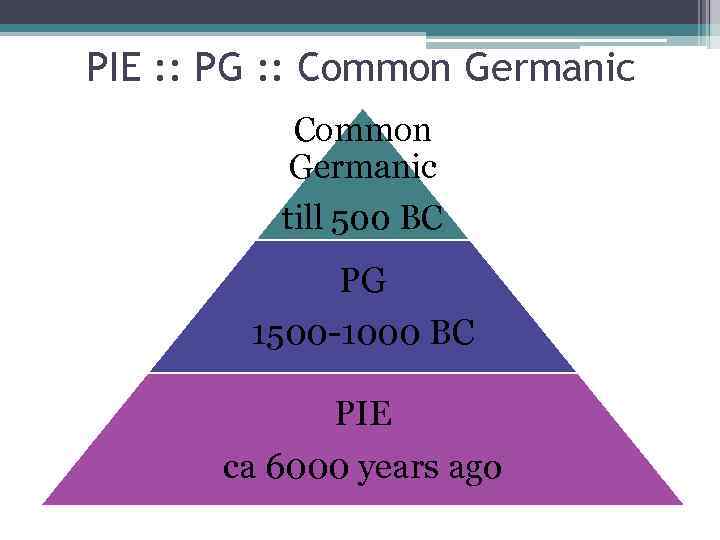
PIE : : PG : : Common Germanic till 500 BC PG 1500 -1000 BC PIE ca 6000 years ago
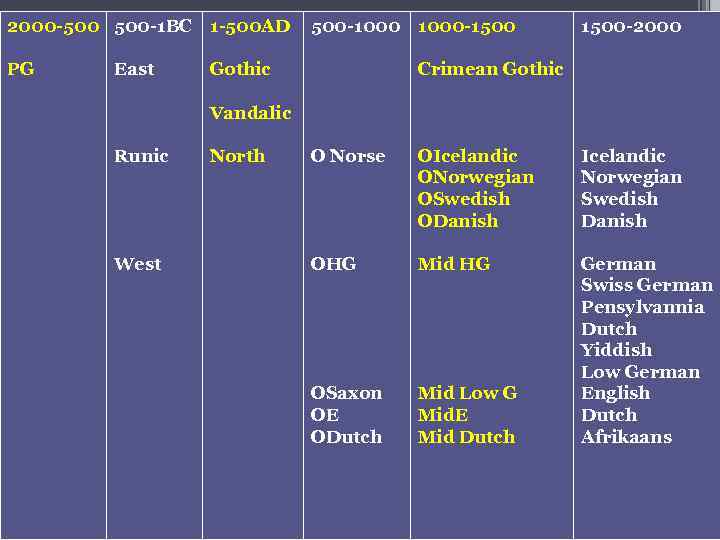
2000 -500 500 -1 ВС 1 -500 AD PG East 500 -1000 -1500 Gothic 1500 -2000 Crimean Gothic Vandalic Runic West North O Norse OIcelandic ONorwegian OSwedish ODanish Icelandic Norwegian Swedish Danish OHG Mid HG OSaxon OE ODutch Mid Low G Mid. E Mid Dutch German Swiss German Pensylvannia Dutch Yiddish Low German English Dutch Afrikaans
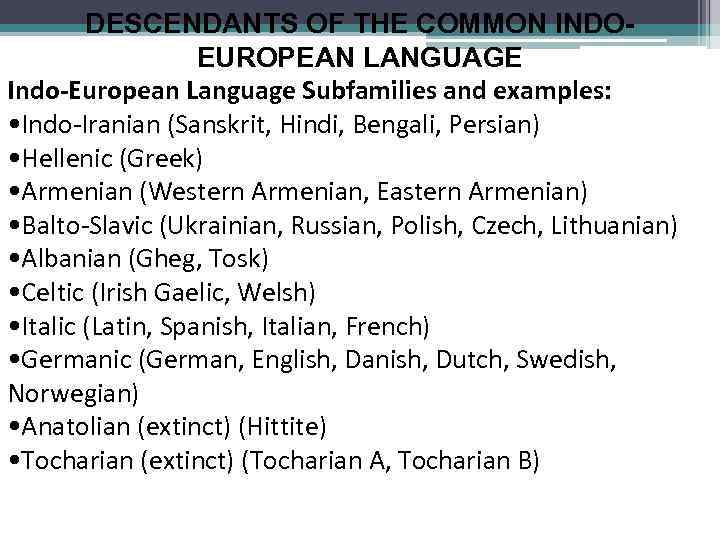
DESCENDANTS OF THE COMMON INDOEUROPEAN LANGUAGE Indo-European Language Subfamilies and examples: • Indo-Iranian (Sanskrit, Hindi, Bengali, Persian) • Hellenic (Greek) • Armenian (Western Armenian, Eastern Armenian) • Balto-Slavic (Ukrainian, Russian, Polish, Czech, Lithuanian) • Albanian (Gheg, Tosk) • Celtic (Irish Gaelic, Welsh) • Italic (Latin, Spanish, Italian, French) • Germanic (German, English, Danish, Dutch, Swedish, Norwegian) • Anatolian (extinct) (Hittite) • Tocharian (extinct) (Tocharian A, Tocharian B)
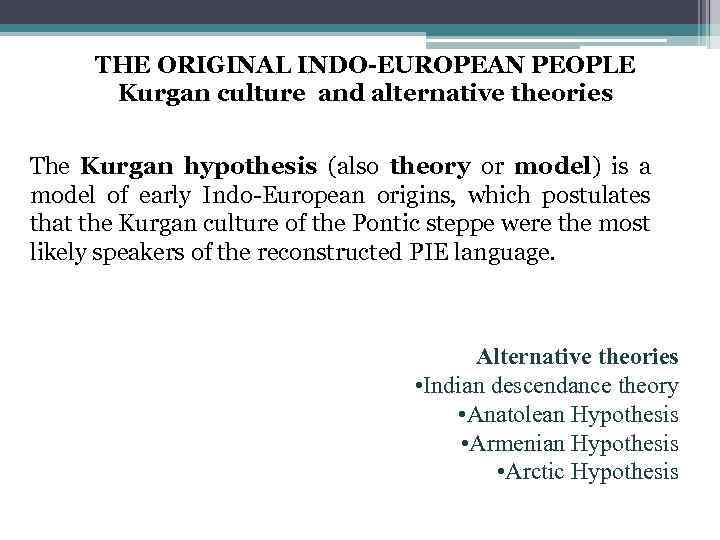
THE ORIGINAL INDO-EUROPEAN PEOPLE Kurgan culture and alternative theories The Kurgan hypothesis (also theory or model) is a model of early Indo-European origins, which postulates that the Kurgan culture of the Pontic steppe were the most likely speakers of the reconstructed PIE language. Alternative theories • Indian descendance theory • Anatolean Hypothesis • Аrmenian Hypothesis • Arctic Hypothesis
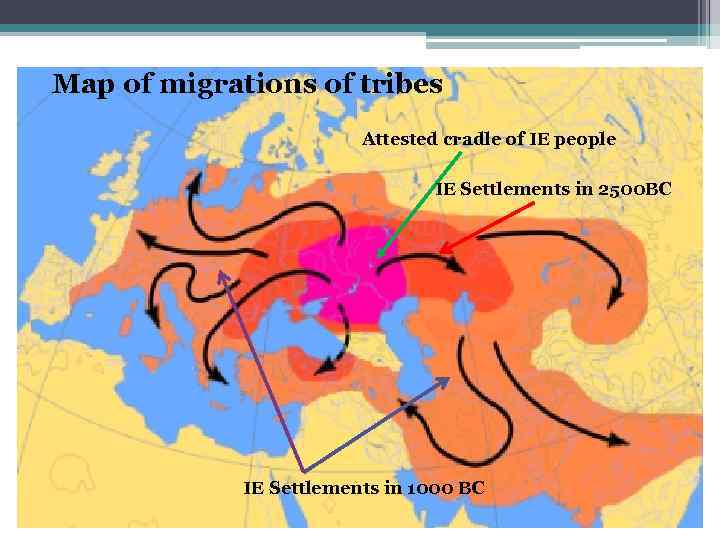
Map of migrations of tribes Attested cradle of IE people IE Settlements in 2500 BC IE Settlements in 1000 BC
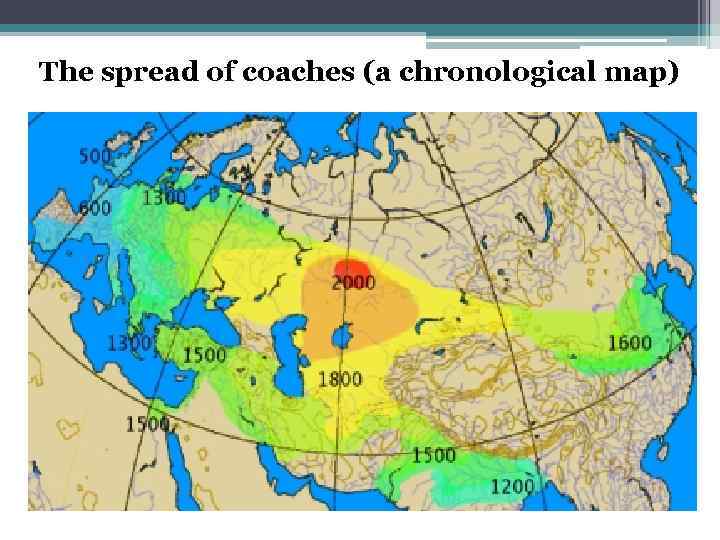
The spread of coaches (a chronological map)
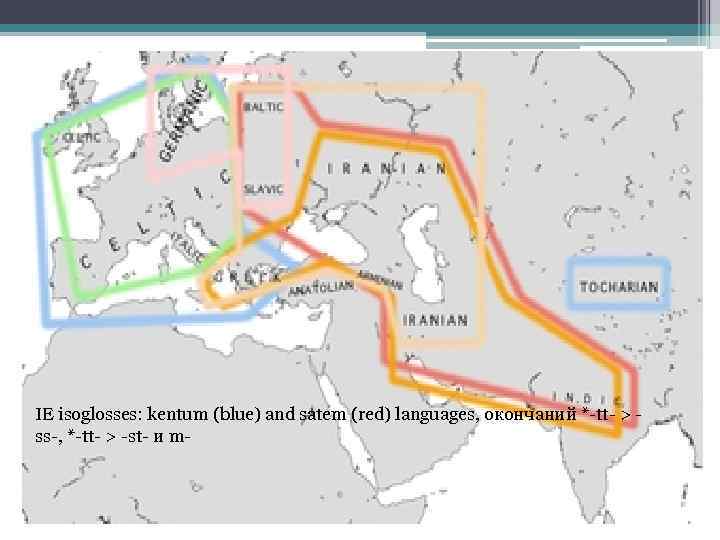
IE isoglosses: kentum (blue) and satem (red) languages, окончаний *-tt- > ss-, *-tt- > -st- и m-
![Proto-Indo-European phonemes: stops: [p], [t], [k], [b], [d], [g] palatal stops: [kj, [ gj](https://present5.com/presentation/171710837_437838380/image-16.jpg "Proto-Indo-European phonemes: stops: [p], [t], [k], [b], [d], [g] palatal stops: [kj, [ gj")
Proto-Indo-European phonemes: stops: [p], [t], [k], [b], [d], [g] palatal stops: [kj, [ gj ] labiovelar stops: [ kw], [ gw] aspirated stops (pronounced with a puff of air at the end): [bh], [dh], [gh] [ gjh ] [ gwh] three so-called "laryngeal" consonants (a glottal stop [ ʔ ], a voiceless pharyngeal fricative [ ħ ] and a pharyngeal fricative [ ʕ ] ) vowels: [ ɑ ], [ ε ], [ i ], [ ɔ], [ u ], [ ə ]
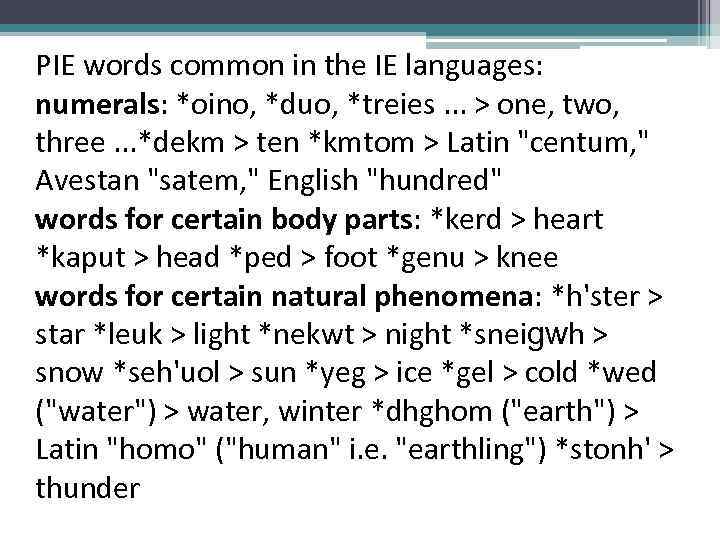
PIE words common in the IE languages: numerals: *oino, *duo, *treies. . . > one, two, three. . . *dekm > ten *kmtom > Latin "centum, " Avestan "satem, " English "hundred" words for certain body parts: *kerd > heart *kaput > head *ped > foot *genu > knee words for certain natural phenomena: *h'ster > star *leuk > light *nekwt > night *sneigwh > snow *seh'uol > sun *yeg > ice *gel > cold *wed ("water") > water, winter *dhghom ("earth") > Latin "homo" ("human" i. e. "earthling") *stonh' > thunder
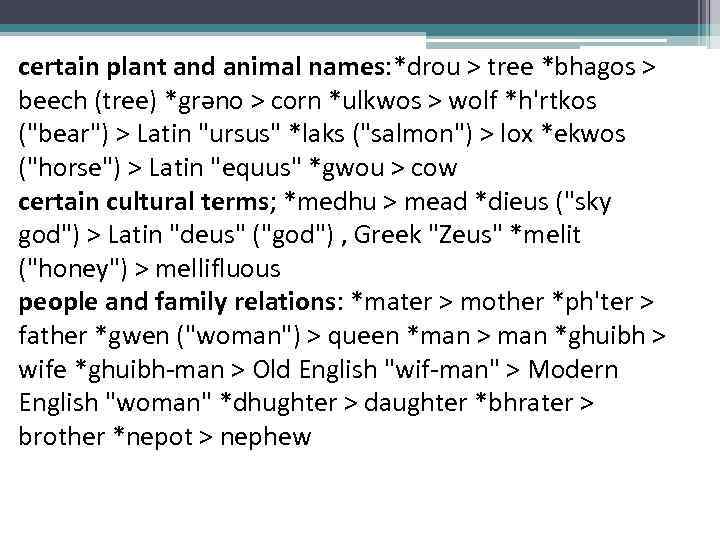
certain plant and animal names: *drou > tree *bhagos > beech (tree) *grəno > corn *ulkwos > wolf *h'rtkos ("bear") > Latin "ursus" *laks ("salmon") > lox *ekwos ("horse") > Latin "equus" *gwou > cow certain cultural terms; *medhu > mead *dieus ("sky god") > Latin "deus" ("god") , Greek "Zeus" *melit ("honey") > mellifluous people and family relations: *mater > mother *ph'ter > father *gwen ("woman") > queen *man > man *ghuibh > wife *ghuibh-man > Old English "wif-man" > Modern English "woman" *dhughter > daughter *bhrater > brother *nepot > nephew
Morphology The PIE language was inflected (inflectional endings, changes in root/stem vowels (ablaut system), and changes in the position of the accent to indicate grammatical information like case, number, tense, person, mood, etc. Nouns PIE nouns came in three genders: masculine, feminine and neuter and three numbers: singular, plural and dual example: ekwos ("horse"), ekwoses ("horses"), ekwosih' ("two horses")
PIE nouns were inflected for eight cases: • nominative • vocative • accusative • genitive • dative • ablative • locative • instrumental
Six aspects of PIE verbs: • present: continuing action in progress (I go) • imperfect: continuing action in the past (I was going) • aorist: momentary action in the past (I went) • perfect: completed action (I have gone) • pluperfect: completed action in the past (I had gone) • future: actions to come (I shall go) • PIE verbs had three "voices": active, passive and middle (reflexive)
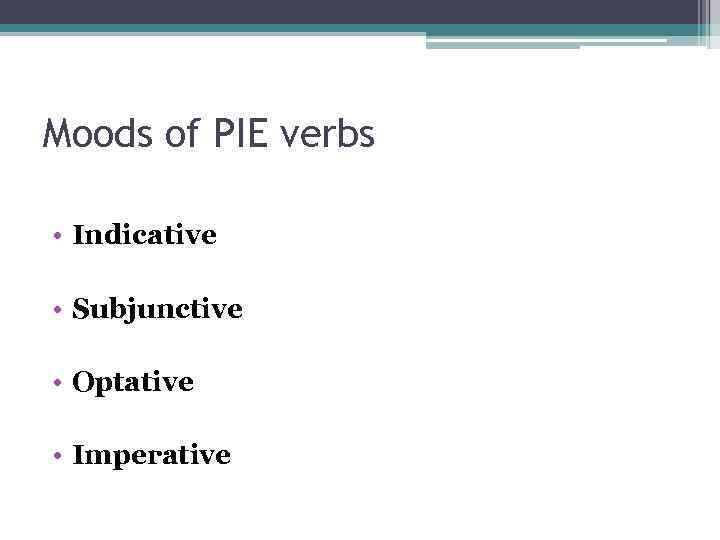
Moods of PIE verbs • Indicative • Subjunctive • Optative • Imperative
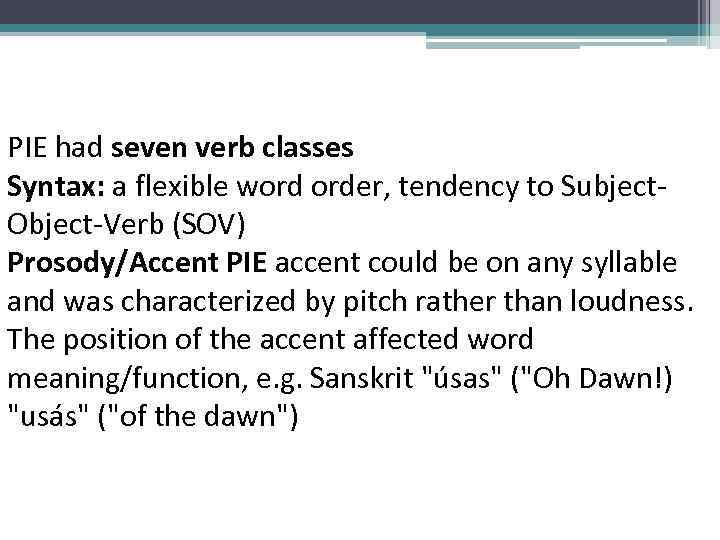
PIE had seven verb classes Syntax: a flexible word order, tendency to Subject. Object-Verb (SOV) Prosody/Accent PIE accent could be on any syllable and was characterized by pitch rather than loudness. The position of the accent affected word meaning/function, e. g. Sanskrit "úsas" ("Oh Dawn!) "usás" ("of the dawn")
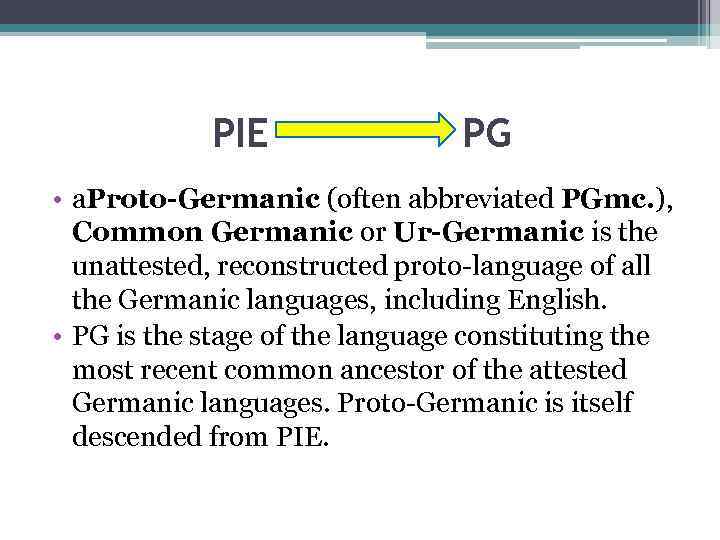
PIE PG • a. Proto-Germanic (often abbreviated PGmc. ), Common Germanic or Ur-Germanic is the unattested, reconstructed proto-language of all the Germanic languages, including English. • PG is the stage of the language constituting the most recent common ancestor of the attested Germanic languages. Proto-Germanic is itself descended from PIE.
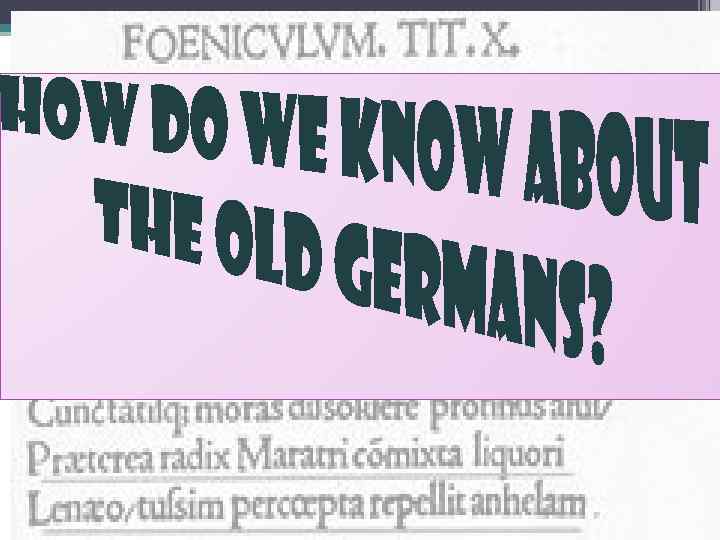
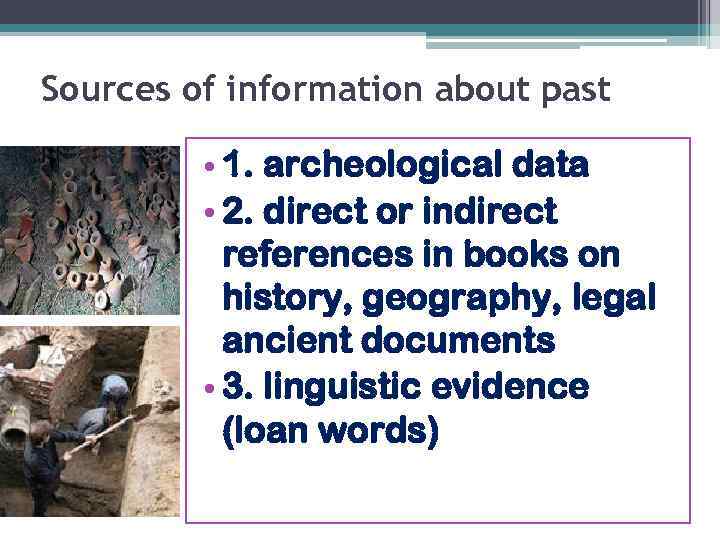
Sources of information about past • 1. archeological data • 2. direct or indirect references in books on history, geography, legal ancient documents • 3. linguistic evidence (loan words)
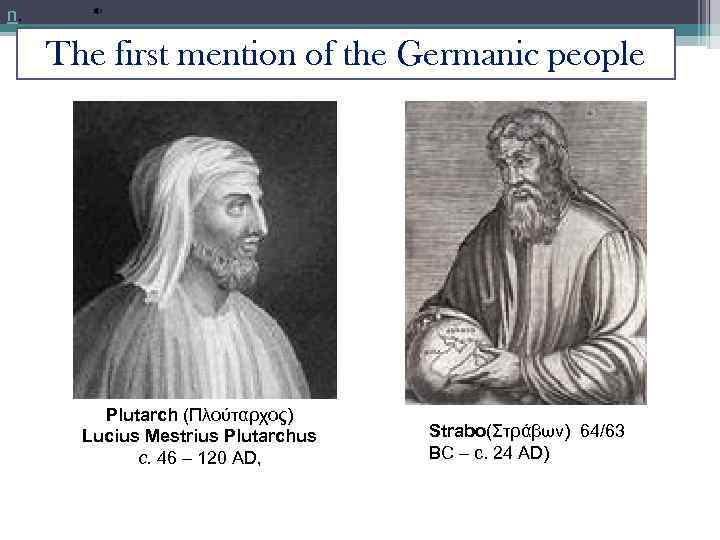
n. The first mention of the Germanic people Plutarch (Πλούταρχος) Lucius Mestrius Plutarchus c. 46 – 120 AD, Strabo(Στράβων) 64/63 BC – c. 24 AD)
The Germans is a group of ancient Indo-European tribes, formed in III millennium BC in the neolithic age on the shores North and Baltic seas as a result of merging IE with non IE tribes
Old Germanic Tribes • Hilleviones – north Germanic, Scandinavian tribes. Eastern sub group: Danes, Swedish, western subgroup: Icelandic, Norwegians. • Ingveones – West Germans: Frisians, Angles, Saxons, Jutes • Istvaeones – West Germanic: Franks • Erminones – West Germanic: Langobardi, Swebes, Bavarians • the Gothic tribes – the Goths, Burgundians, Vandals, Rugians, Bastarnae, Heruli.
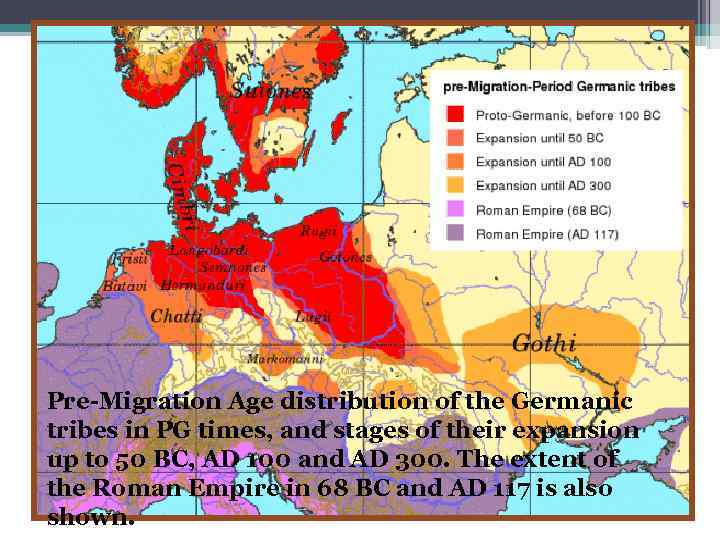
Pre-Migration Age distribution of the Germanic tribes in PG times, and stages of their expansion up to 50 BC, AD 100 and AD 300. The extent of the Roman Empire in 68 BC and AD 117 is also shown.
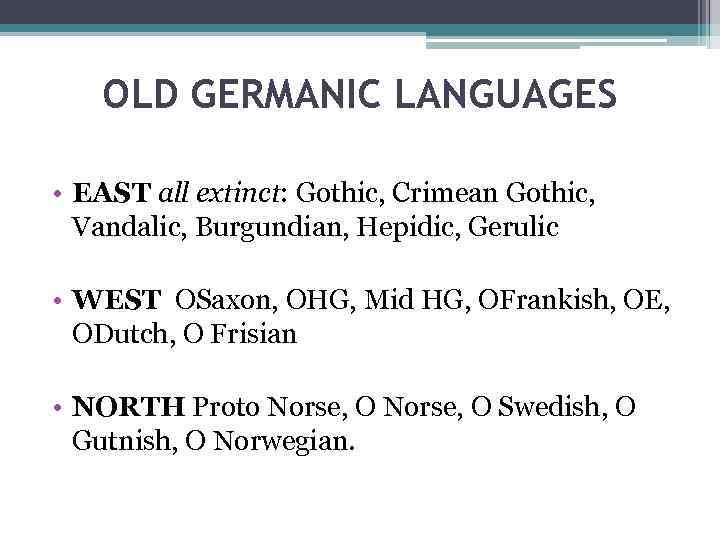
OLD GERMANIC LANGUAGES • EAST all extinct: Gothic, Crimean Gothic, Vandalic, Burgundian, Hepidic, Gerulic • WEST OSaxon, OHG, Mid HG, OFrankish, OE, ODutch, O Frisian • NORTH Proto Norse, O Swedish, O Gutnish, O Norwegian.
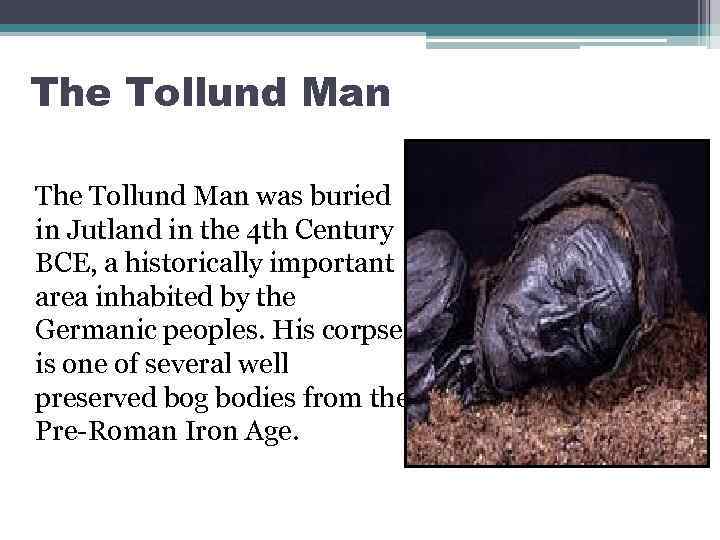
The Tollund Man was buried in Jutland in the 4 th Century BCE, a historically important area inhabited by the Germanic peoples. His corpse is one of several well preserved bog bodies from the Pre-Roman Iron Age.
The Germanic Peoples • are a historical group of IE-speaking peoples, originating in Northern Europe and identified by their use of the Germanic languages which diversified out of Common Germanic in the course of the Pre-Roman Iron Age. • The ancestors of these peoples became the ethnic groups of North Western Europe, such as the Danes, Swedes, Norwegians, Germans, Dutch, English and Frisians. • Migrating Germanic peoples spread throughout Europe in Late Antiquity (AD 300 -600) and the Early Middle Ages. Germanic languages became dominant along the Roman borders (Austria, Germany, Netherlands, Belgium and England), but in the rest of the (western) Roman provinces, the Germanic immigrants adopted Latin (Romance) dialects. • all Germanic peoples were eventually Christianized to varying extents.
• Evidence developed by archaeologists and linguists suggests that a people or group of peoples sharing a common material culture dwelt in a region defined by the Northern Bronze Age culture between 1700 BC and 600 BC. The Germanic tribes then inhabited southern Scandinavia, Denmark and Schleswig, The change of PIE to PG has been defined by the first sound shift (or Grimm's law) and must have occurred when mutually intelligible dialects or languages in a Sprachbund were still able to convey such a change to the whole region. • These peoples are tied together and influenced by regional features and migration patterns linked to prehistoric cultures like Hügelgräber, Urnfield, and La Tene. A deteriorating climate in Scandinavia around 850 BC to 760 BC and a later and more rapid one around 650 BC might have triggered migrations to the coast of Eastern Germany and further towards the Vistula.
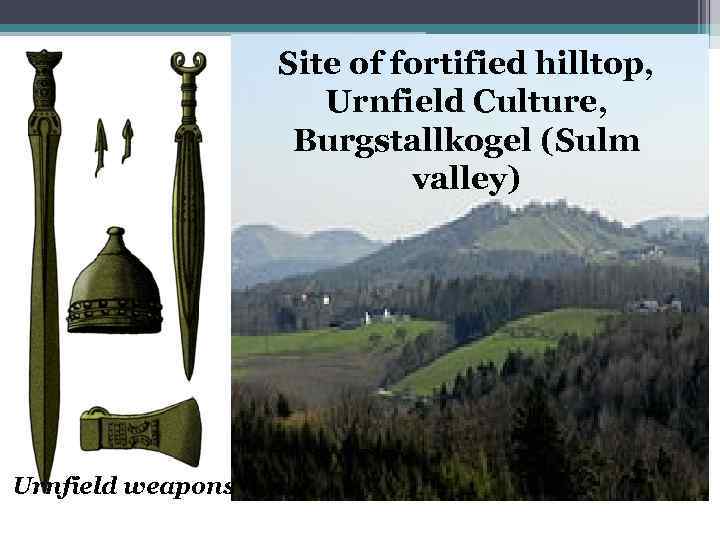
Site of fortified hilltop, Urnfield Culture, Burgstallkogel (Sulm valley) Urnfield weapons
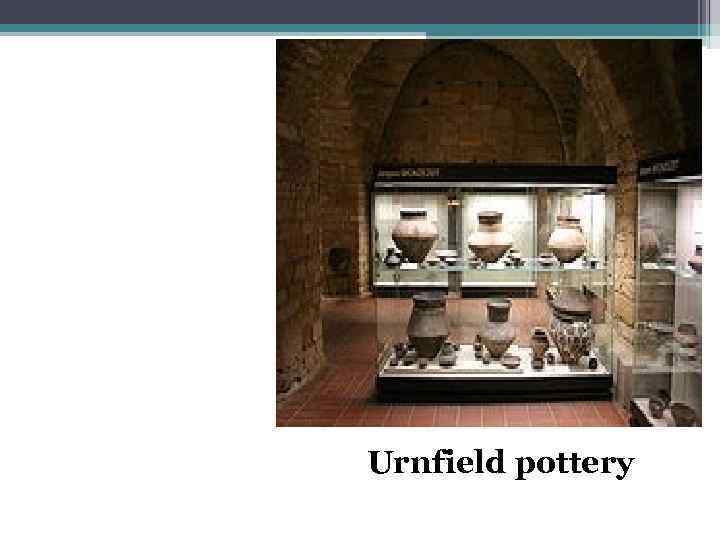
Urnfield pottery
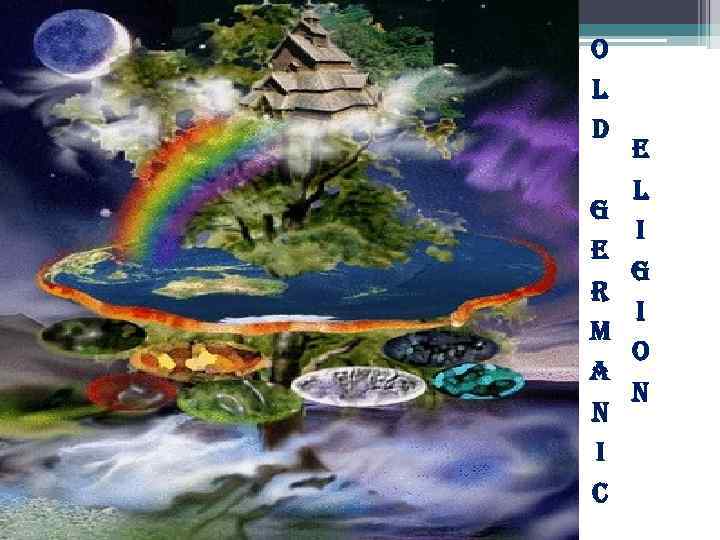
o l d g e r m a n i c e l i g i o n
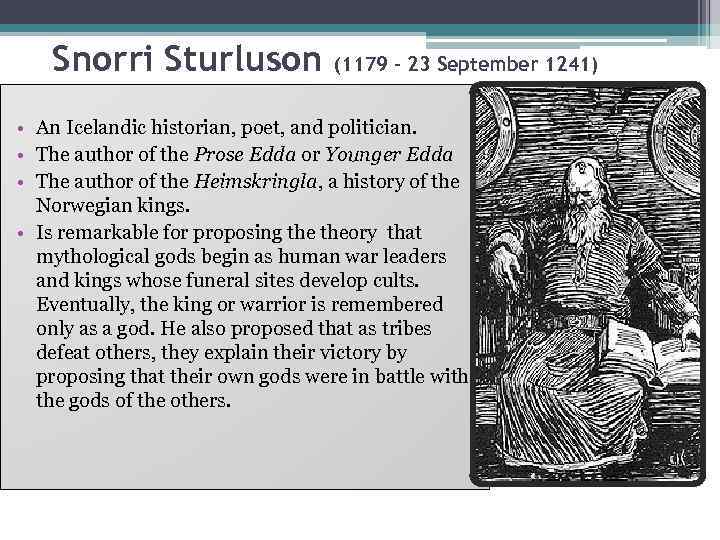
Snorri Sturluson (1179 – 23 September 1241) • An Icelandic historian, poet, and politician. • The author of the Prose Edda or Younger Edda • The author of the Heimskringla, a history of the Norwegian kings. • Is remarkable for proposing theory that mythological gods begin as human war leaders and kings whose funeral sites develop cults. Eventually, the king or warrior is remembered only as a god. He also proposed that as tribes defeat others, they explain their victory by proposing that their own gods were in battle with the gods of the others.
Pantheon of Scandinavian Gods • Is the result of assimilation of Vanir by Æsir after war. Vanir is represented by a limited number of gods having to do with agriculture, fertility, and possessing the gift to foresee and foretell (Njord, Freyr, Freya). • Æsir are represented in myths as patriarchial community where important issues are solved at the meeting ‘ting’, ritual feasts are very important. • • • Aesir gods: Wodan (power, wisdom, master of Valgalla Thor is the main fighter with giants and snakes Tyr – is the old IE heavenly god, patron of military assembly and quests; Teiwaz, god of war and early sky god, "Germanic Mars", Norse Týr, Old English Tiw, OHG Ziu, continues IE Dyeus. Heimdall guards gods and Yggdrasil. Ull - the god of snowshoes, hunting, the bow, and the shield; he was a handsome stepson of the thunder god Thor. Ull possessed warrior -like attributes and was called upon for aid in individual combat. Baldr – is the god of light and beauty
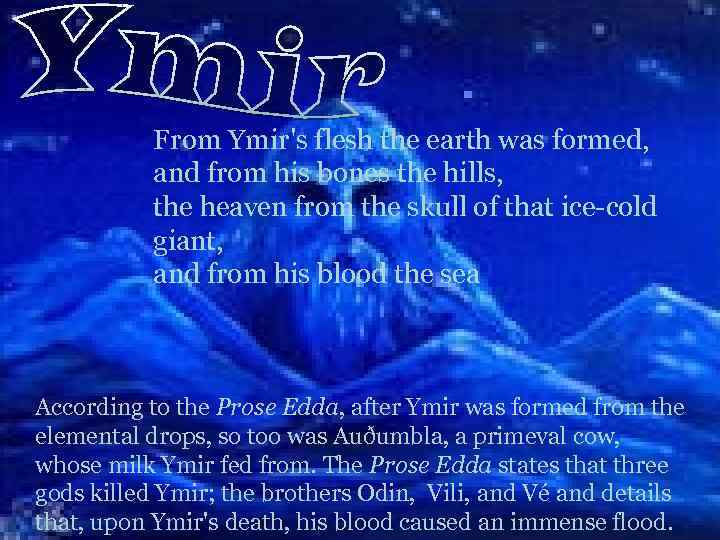
From Ymir's flesh the earth was formed, and from his bones the hills, the heaven from the skull of that ice-cold giant, and from his blood the sea According to the Prose Edda, after Ymir was formed from the elemental drops, so too was Auðumbla, a primeval cow, whose milk Ymir fed from. The Prose Edda states that three gods killed Ymir; the brothers Odin, Vili, and Vé and details that, upon Ymir's death, his blood caused an immense flood.
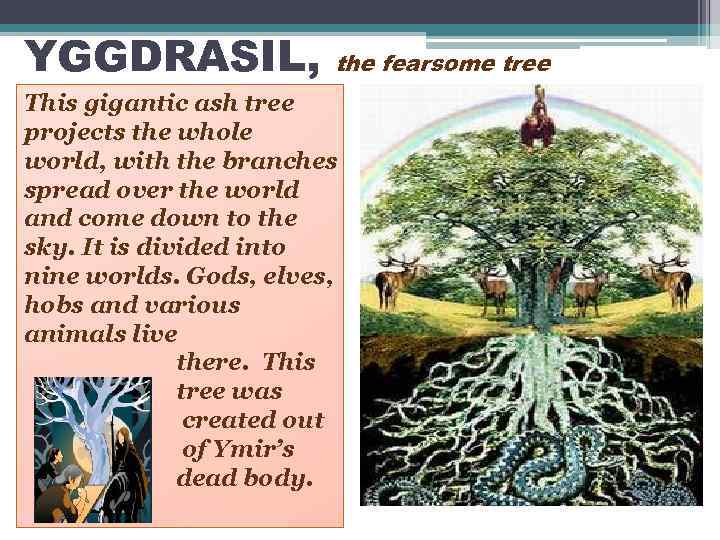
YGGDRASIL, the fearsome tree This gigantic ash tree projects the whole world, with the branches spread over the world and come down to the sky. It is divided into nine worlds. Gods, elves, hobs and various animals live there. This tree was created out of Ymir’s dead body.
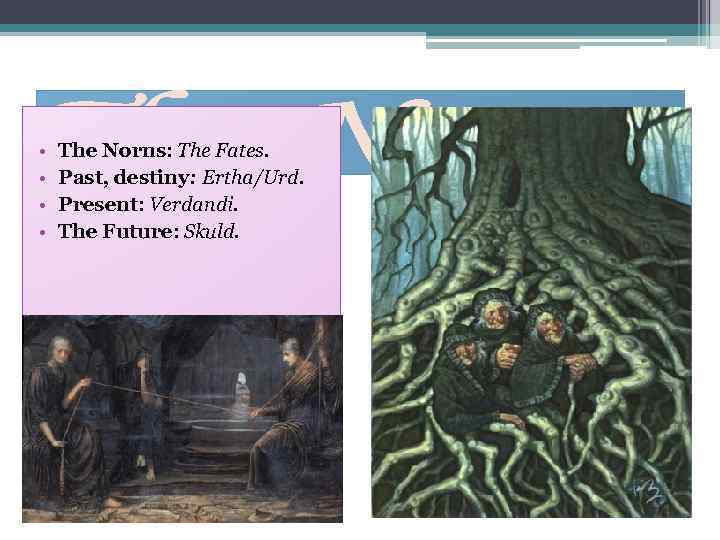
• • The Norns: The Fates. Past, destiny: Ertha/Urd. Present: Verdandi. The Future: Skuld.
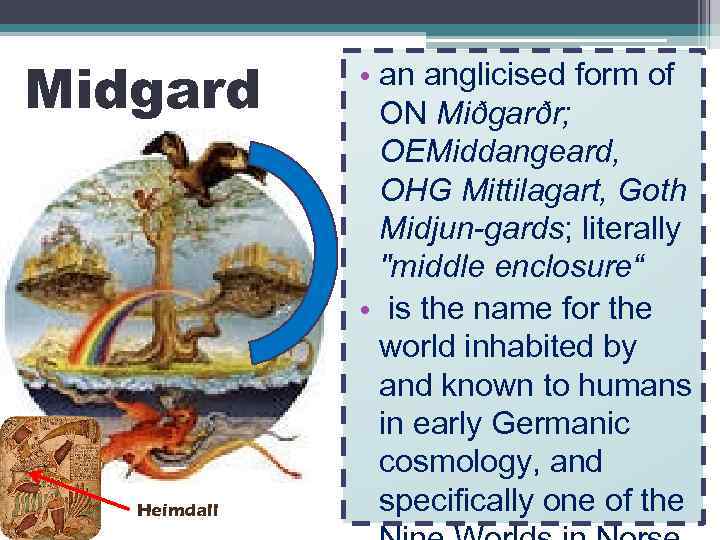
Midgard Heimdall • an anglicised form of ON Miðgarðr; OEMiddangeard, OHG Mittilagart, Goth Midjun-gards; literally "middle enclosure“ • is the name for the world inhabited by and known to humans in early Germanic cosmology, and specifically one of the
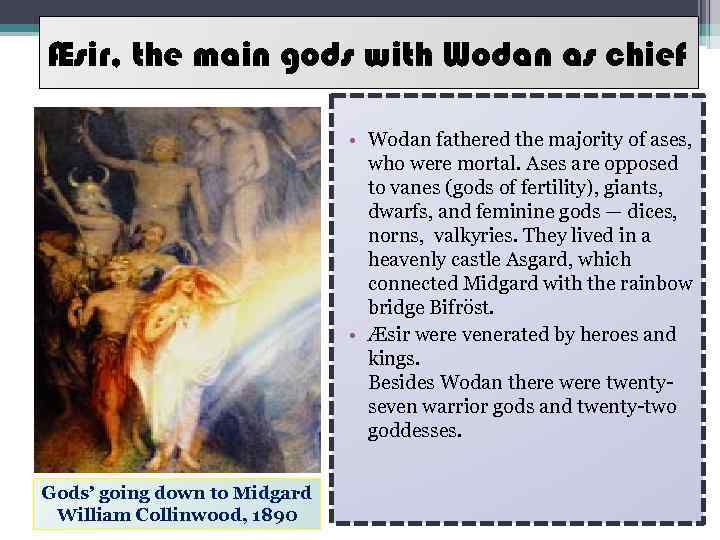
Æsir, the main gods with Wodan as chief • Wodan fathered the majority of ases, who were mortal. Ases are opposed to vanes (gods of fertility), giants, dwarfs, and feminine gods — dices, norns, valkyries. They lived in a heavenly castle Asgard, which connected Midgard with the rainbow bridge Bifröst. • Æsir were venerated by heroes and kings. Besides Wodan there were twentyseven warrior gods and twenty-two goddesses. Gods’ going down to Midgard William Collinwood, 1890
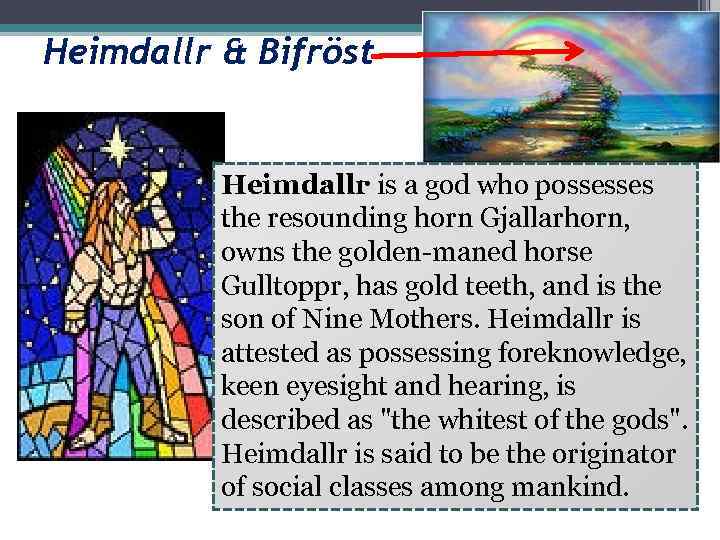
Heimdallr & Bifröst Heimdallr is a god who possesses the resounding horn Gjallarhorn, owns the golden-maned horse Gulltoppr, has gold teeth, and is the son of Nine Mothers. Heimdallr is attested as possessing foreknowledge, keen eyesight and hearing, is described as "the whitest of the gods". Heimdallr is said to be the originator of social classes among mankind.
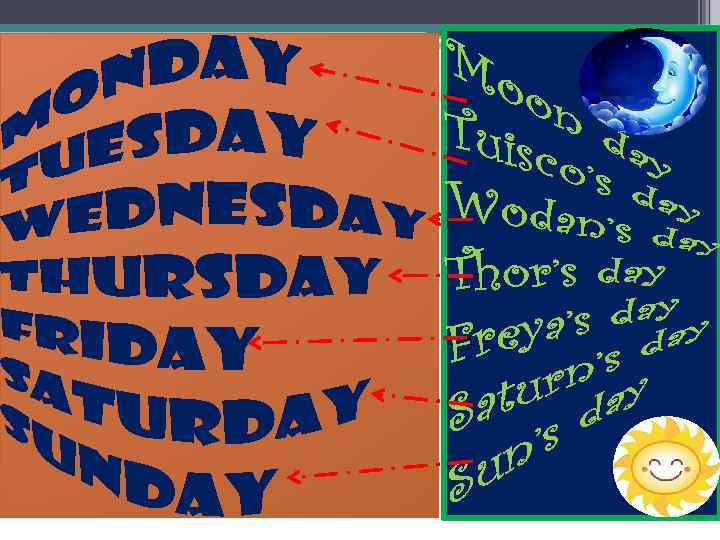
Týr is the god of Law, Justice, the Sky, and heroic glory in Norse mythology, portrayed as a one-handed man. Late Icelandic Eddas: Tyr is portrayed, alternately, as the son of Odin or of Hymir. The origins of his name and his possible relationship to Tuisto (Tacitus ‘Germania’) suggest he was once considered the father of the gods and head of the pantheon. It is assumed that Tîwaz was overtaken in popularity and in authority by both Odin and Thor at some point during the Migration Age, as Odin shares his role as God of war. Tuesday is in fact "Tīw's Day"
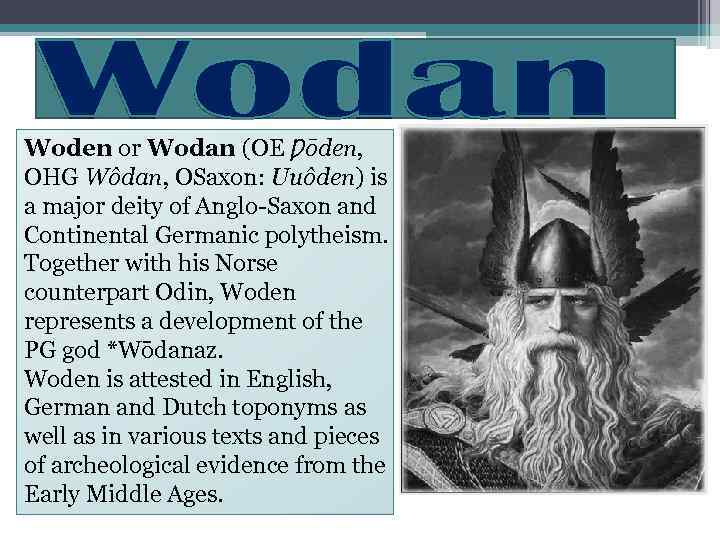
Woden or Wodan (OE Ƿōden, OHG Wôdan, OSaxon: Uuôden) is a major deity of Anglo-Saxon and Continental Germanic polytheism. Together with his Norse counterpart Odin, Woden represents a development of the PG god *Wōdanaz. Woden is attested in English, German and Dutch toponyms as well as in various texts and pieces of archeological evidence from the Early Middle Ages.
An explicit association of Wodan with the state of fury was made by 11 thc German chronicler Adam of Bremen, who described Wodan, id est furor, "Wodan, that is, the furious". Woden probably rose to prominence during the Migration period, gradually displacing Tyr as the head of the pantheon in West and North Germanic cultures - though such theories are only academic speculation based on trends of worship for other IE cognate deity figures related to Tyr. Óðinn was regarded as king of the gods and the ancestor of kings among ON speakes, but he was also associated with magic, the runes, poetry, and inspiration.
• Odin (oh-din): King of the Gods, Great Father. God of Runes, poetry, words of power, sacred poetry, magic, divination, storms, wind, death, rebirth, knowledge, weather, justice, reincarnation, wisdom, the arts, initiation, law, light, music, prophecy, patron of priests, war, inspiration, weapons, horses, medicine, fate, civilization, patron of pets, sages, and writers.
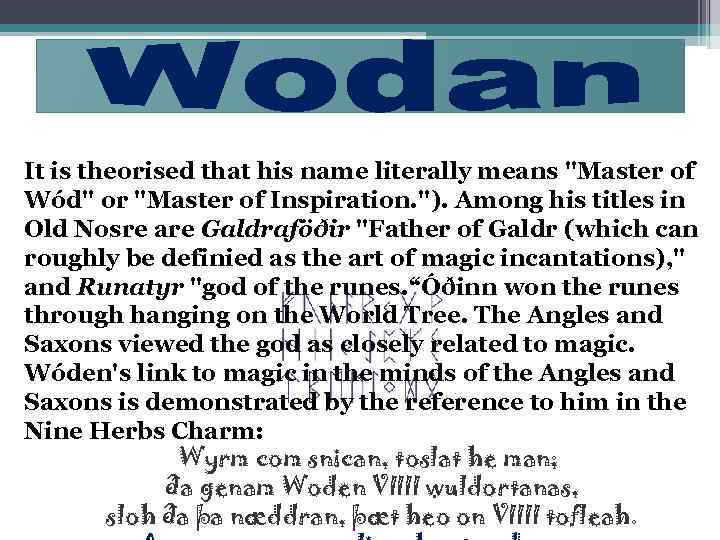
It is theorised that his name literally means "Master of Wód" or "Master of Inspiration. "). Among his titles in Old Nosre are Galdraföðir "Father of Galdr (which can roughly be definied as the art of magic incantations), " and Runatyr "god of the runes. “Óðinn won the runes through hanging on the World Tree. The Angles and Saxons viewed the god as closely related to magic. Wóden's link to magic in the minds of the Angles and Saxons is demonstrated by the reference to him in the Nine Herbs Charm: Wyrm com snican, toslat he man; ða genam Woden VIIII wuldortanas, sloh ða þa næddran, þæt heo on VIIII tofleah.
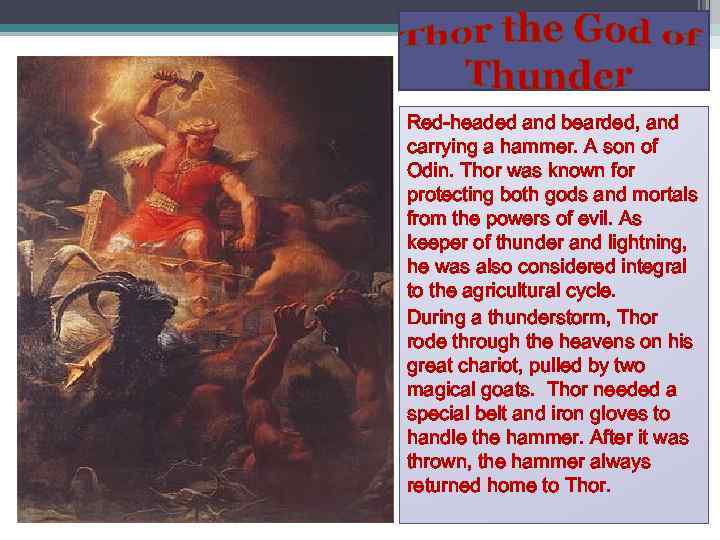
Red-headed and bearded, and carrying a hammer. A son of Odin. Thor was known for protecting both gods and mortals from the powers of evil. As keeper of thunder and lightning, he was also considered integral to the agricultural cycle. During a thunderstorm, Thor rode through the heavens on his great chariot, pulled by two magical goats. Thor needed a special belt and iron gloves to handle the hammer. After it was thrown, the hammer always returned home to Thor.
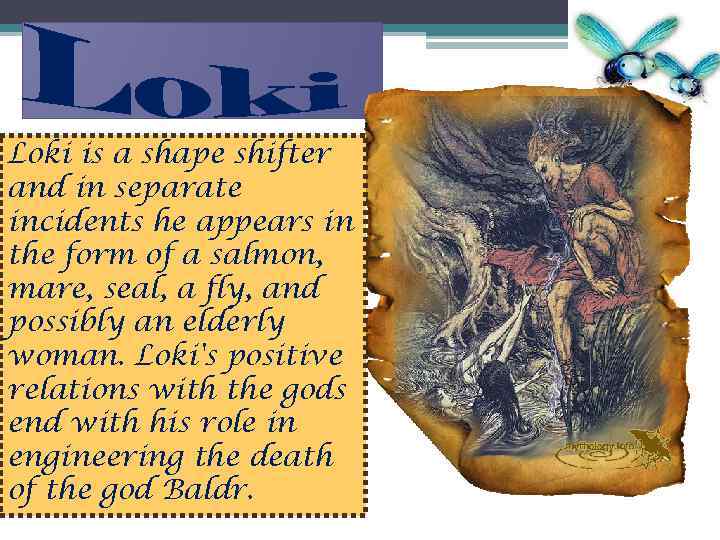
Loki is a shape shifter and in separate incidents he appears in the form of a salmon, mare, seal, a fly, and possibly an elderly woman. Loki's positive relations with the gods end with his role in engineering the death of the god Baldr.
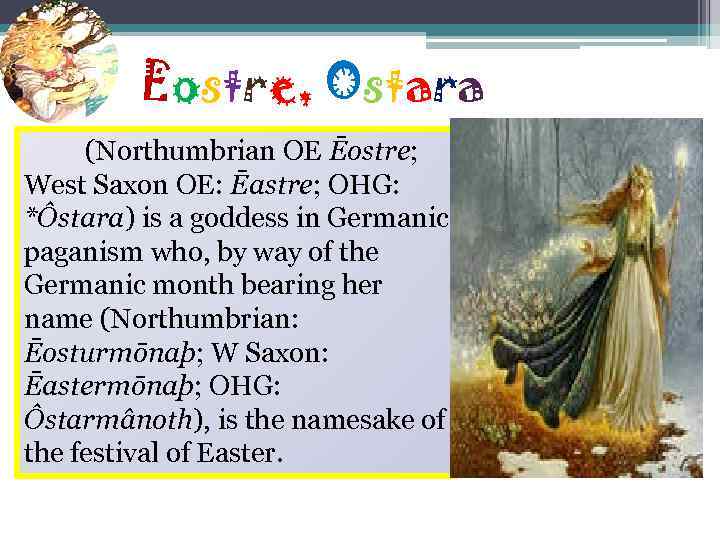
Eostre, Ostara (Northumbrian OE Ēostre; West Saxon OE: Ēastre; OHG: *Ôstara) is a goddess in Germanic paganism who, by way of the Germanic month bearing her name (Northumbrian: Ēosturmōnaþ; W Saxon: Ēastermōnaþ; OHG: Ôstarmânoth), is the namesake of the festival of Easter.
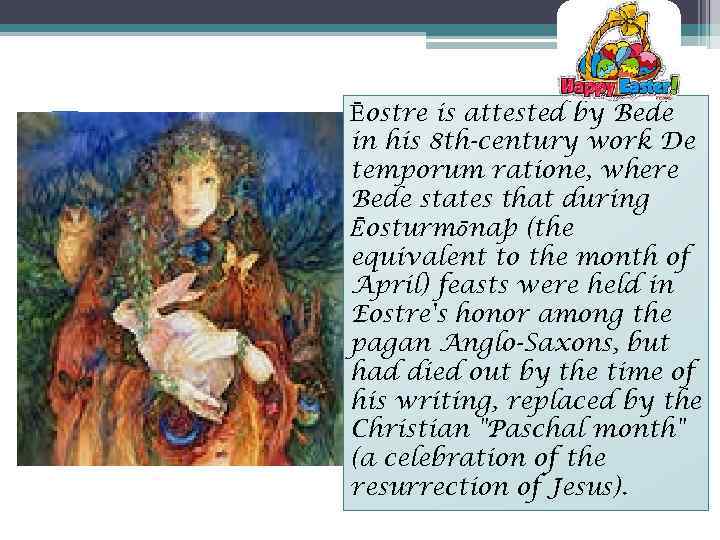
Eostre Ēostre is attested by Bede in his 8 th-century work De temporum ratione, where Bede states that during Ēosturmōnaþ (the equivalent to the month of April) feasts were held in Eostre's honor among the pagan Anglo-Saxons, but had died out by the time of his writing, replaced by the Christian "Paschal month" (a celebration of the resurrection of Jesus).
Eostre is connected for words for "east" and "shining. " It is therefore related to the Greek godname Eos, Goddess of the dawn in their pantheon. Her name survived in the German name of the Christian holy tide as Ostara, therefore if she was a Goddess, she was worshipped there as well.
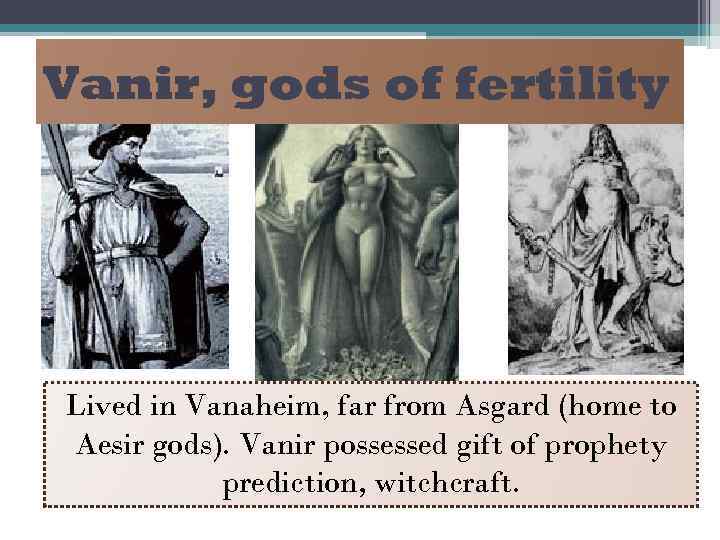
Vanir, gods of fertility Lived in Vanaheim, far from Asgard (home to Aesir gods). Vanir possessed gift of prophety prediction, witchcraft.
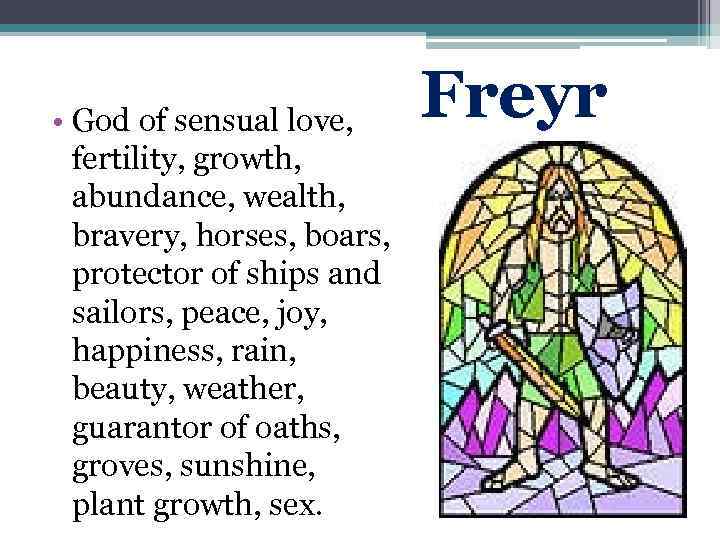
• God of sensual love, fertility, growth, abundance, wealth, bravery, horses, boars, protector of ships and sailors, peace, joy, happiness, rain, beauty, weather, guarantor of oaths, groves, sunshine, plant growth, sex. Freyr
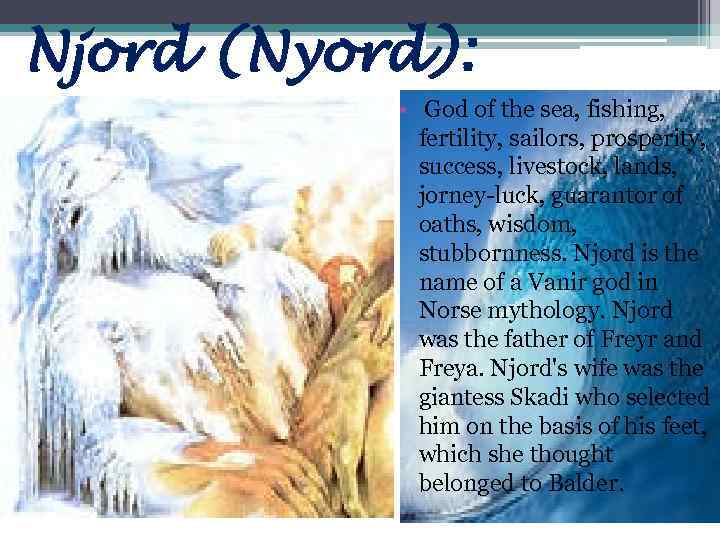
Njord (Nyord): • God of the sea, fishing, fertility, sailors, prosperity, success, livestock, lands, jorney-luck, guarantor of oaths, wisdom, stubbornness. Njord is the name of a Vanir god in Norse mythology. Njord was the father of Freyr and Freya. Njord's wife was the giantess Skadi who selected him on the basis of his feet, which she thought belonged to Balder.
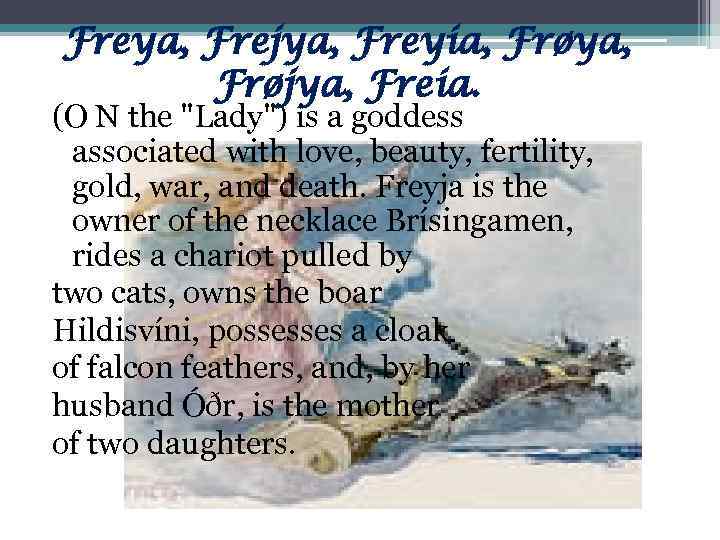
Freya, Frejya, Freyia, Frøya, Frøjya, Freia. (O N the "Lady") is a goddess associated with love, beauty, fertility, gold, war, and death. Freyja is the owner of the necklace Brísingamen, rides a chariot pulled by two cats, owns the boar Hildisvíni, possesses a cloak of falcon feathers, and, by her husband Óðr, is the mother of two daughters.
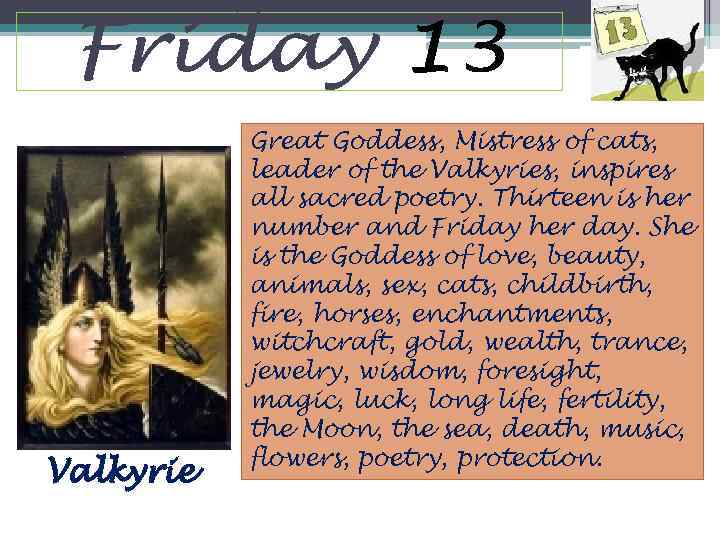
Valkyrie Great Goddess, Mistress of cats, leader of the Valkyries, inspires all sacred poetry. Thirteen is her number and Friday her day. She is the Goddess of love, beauty, animals, sex, cats, childbirth, fire, horses, enchantments, witchcraft, gold, wealth, trance, jewelry, wisdom, foresight, magic, luck, long life, fertility, the Moon, the sea, death, music, flowers, poetry, protection.
 Скачать презентацию l kalytiuk kubg edu ua Основи германістики Навчальна дисципліна
ger_1_2.pptx