



 L A N IO IC IT M D O A N R O T M C TE E S Y S
 Traditional economy - such an economic system, which the traditions and customs shaped the practice of using limited resources. It is the most ancient economy system.
 A TRADITIONAL ECONOMY IS DEFINED BY THREE CHARACTERISTICS: It is based on agriculture, fishing, hunting, gathering or some combination of the above. It is guided by traditions. It may use barter instead of money. For these reasons, people who live in a traditional economy appear to be living in poverty, even if their daily needs are being met.
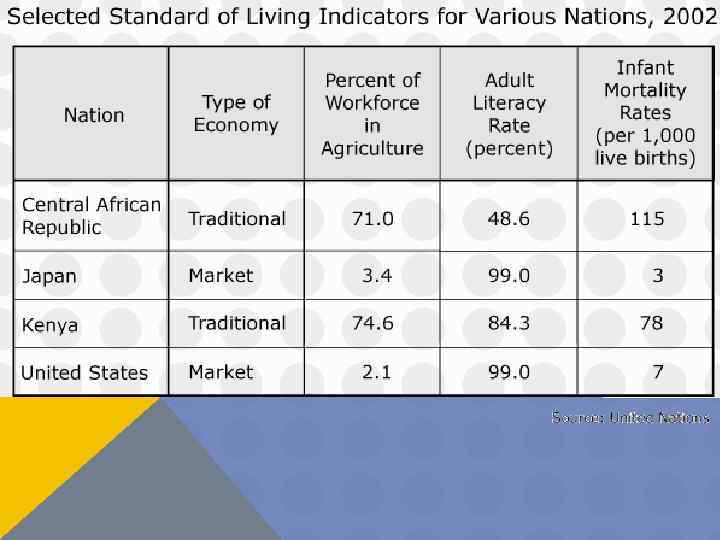
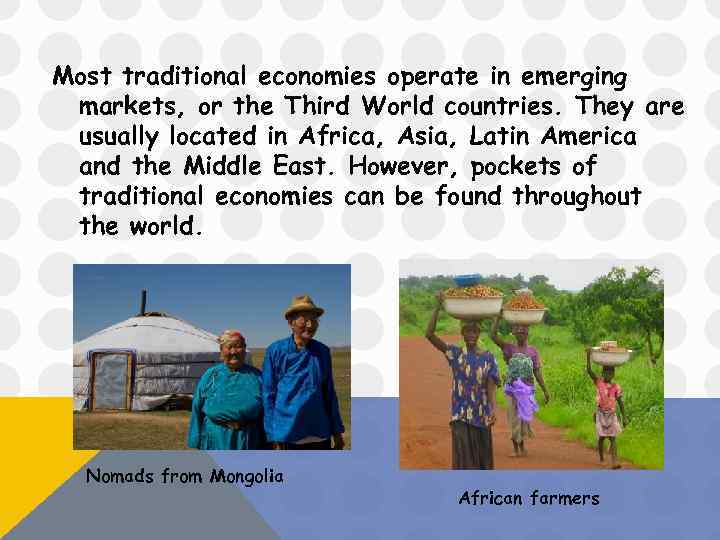 Most traditional economies operate in emerging markets, or the Third World countries. They are usually located in Africa, Asia, Latin America and the Middle East. However, pockets of traditional economies can be found throughout the world. Nomads from Mongolia African farmers
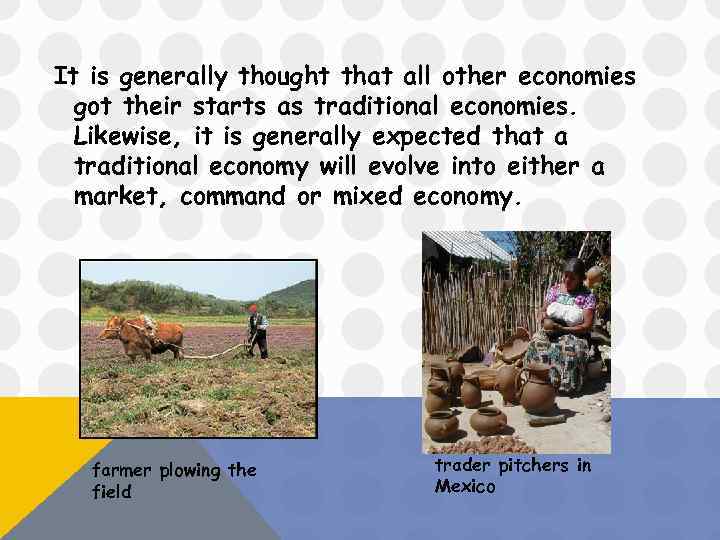 It is generally thought that all other economies got their starts as traditional economies. Likewise, it is generally expected that a traditional economy will evolve into either a market, command or mixed economy. farmer plowing the field trader pitchers in Mexico
 LEVELS OF A TRADITIONAL ECONOMY At its most basic level, a traditional economy exists in a hunter/gatherer and nomadic society. These groups live in families or tribes, and cover wide areas to find enough food to support them. They follow the herds of animals that sustain them. They may also move to follow the seasons, whether it's winter/summer or wet/dry season. At the next level, hunter/gatherers find a fertile area they can cultivate, and become farmers. They can support more people using fewer resources. This allows them to erect permanent structures, and trade with other groups instead of competing for resources.
 LEVELS OF A TRADITIONAL ECONOMY Nomadic hunter/gatherers usually compete with other groups for scarce natural resources. There is little need for trade, since they all consume and produce pretty much the same things. There may be trade between groups that don't compete, such as between one that relies on hunting comes across a group that relies on fishing, for example. In these cases, metal coins wold be heavy to carry and not really needed. However, once they started farming and settled down, the groups created some form of money to make trade over long distances easier.
 When traditional economies in the modern world interact with market or command economies, cash takes on a more important role. Cash enables those in the traditional economy to purchase better equipment to make their farming, hunting or fishing more profitable.
 TRADITIONAL ECONOMY ADVANTAGES Since traditional economies rely on custom and tradition, the distribution of resources is usually well-known. Everyone knows their role in production, and what they are likely to receive. Traditional economies are usually less destructive to the environment, and are therefore sustainable.
 TRADITIONAL ECONOMY DISADVANTAGES Traditional economies are very vulnerable to changes in nature, especially the weather. For this reason, traditional economies limit population growth. When the harvest or hunting is poor, people starve. They are also more vulnerable to market or command economies that have superior resources to wage war or take away needed natural resources. For example, Russian oil development in Siberia has damaged streams and the tundra, reducing traditional fishing and reindeer herding.
 TRADITIONAL ECONOMY EXAMPLES Traditional economies prevailed in the U. S. before the immigration of Europeans beginning in 1492. Native Americans economies that relied on hunting and fishing were more healthy than those that relied on farming and therefore massed in large, disease-prone communities. Nevertheless, even the most successful hunting-based economies were devastated by poaching and war from the new settlers. Their market economy gave them weapons and a source of funding that the traditional economies couldn't compete with.
 TRADITIONAL ECONOMY EXAMPLES Two-thirds of Haiti's population relies on subsistence farming for their livelihood. Their reliance on wood as a primary source of fuel has stripped the forests of trees. This makes them vulnerable to natural disasters, such as the earthquake that struck Haiti in 2010. Some economists also point to Haiti's tradition of voodoo as another reason for its poverty.
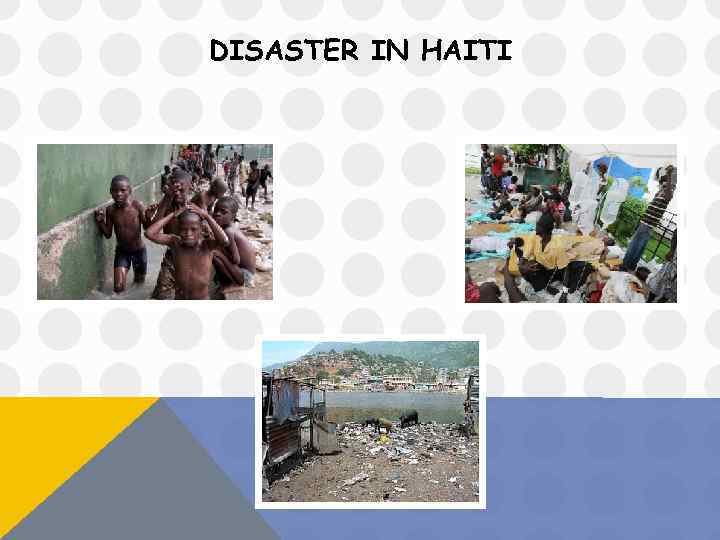 DISASTER IN HAITI
 THANKS FOR YOUR ATTENTION!!!=)