


 Скачать презентацию L 5 Introduction to Kinematics Outline 1
L05 - Kinematics (2014-15).pptx
- Количество слайдов: 21
 L 5 – Introduction to Kinematics Outline 1. 2. 3. 4. Basic definitions Motion along a straight line Equations of motion with constant velocity; Equations of motion with constant acceleration; SUVAT Equations 5. Motion in two (or three) dimensions 6. Graphical representations; Derivatives 7. Projectile motion. NU-CPS 1 2014
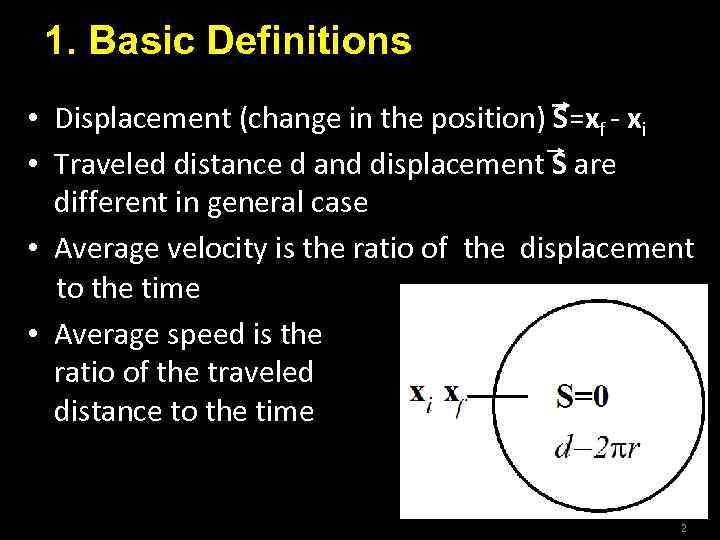 1. Basic Definitions • Displacement (change in the position) S=xf - xi • Traveled distance d and displacement S are different in general case • Average velocity is the ratio of the displacement to the time • Average speed is the ratio of the traveled distance to the time 2
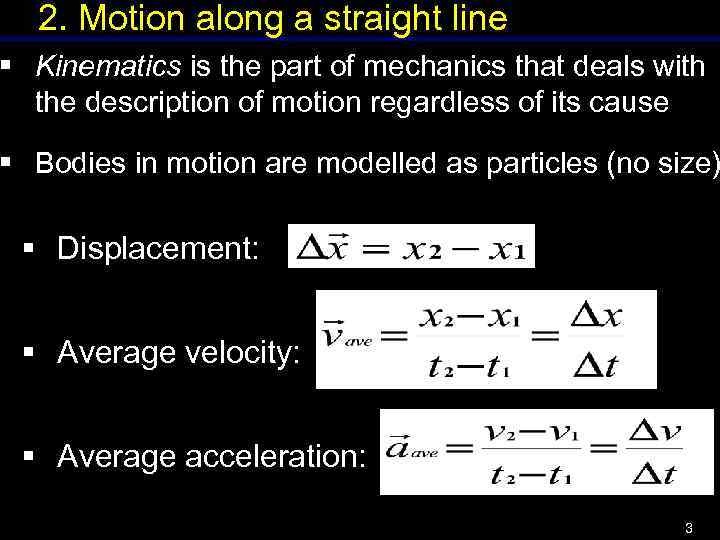 2. Motion along a straight line § Kinematics is the part of mechanics that deals with the description of motion regardless of its cause § Bodies in motion are modelled as particles (no size) § Displacement: § Average velocity: § Average acceleration: 3 3
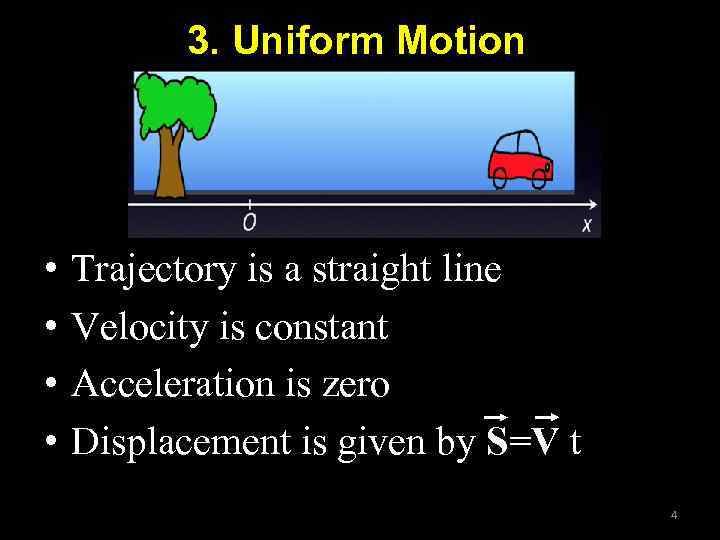 3. Uniform Motion • • Trajectory is a straight line Velocity is constant Acceleration is zero Displacement is given by S=V t 4
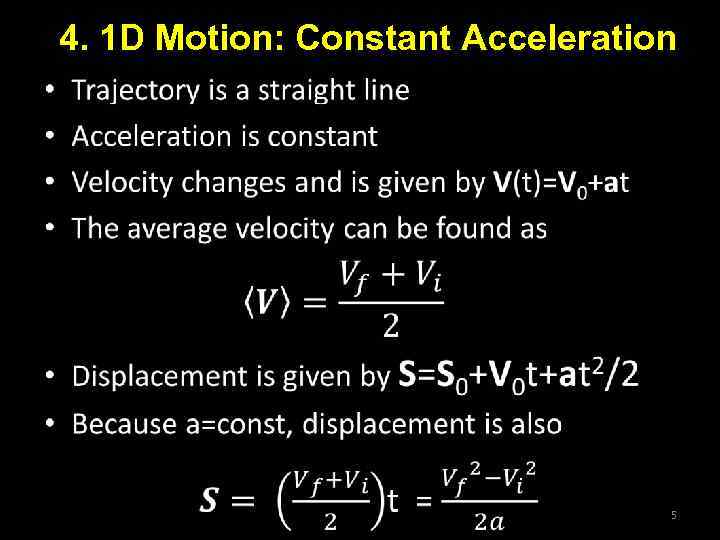 4. 1 D Motion: Constant Acceleration • 5
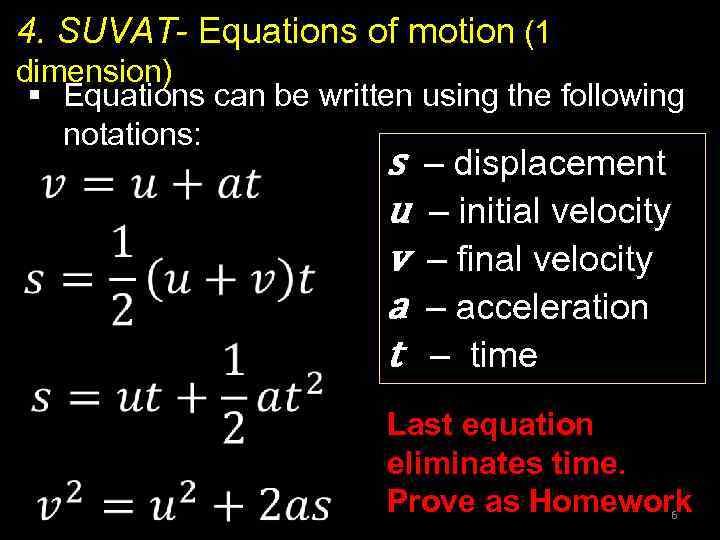 4. SUVAT- Equations of motion (1 dimension) § Equations can be written using the following notations: s – displacement u – initial velocity v – final velocity a – acceleration t – time Last equation eliminates time. Prove as Homework 6
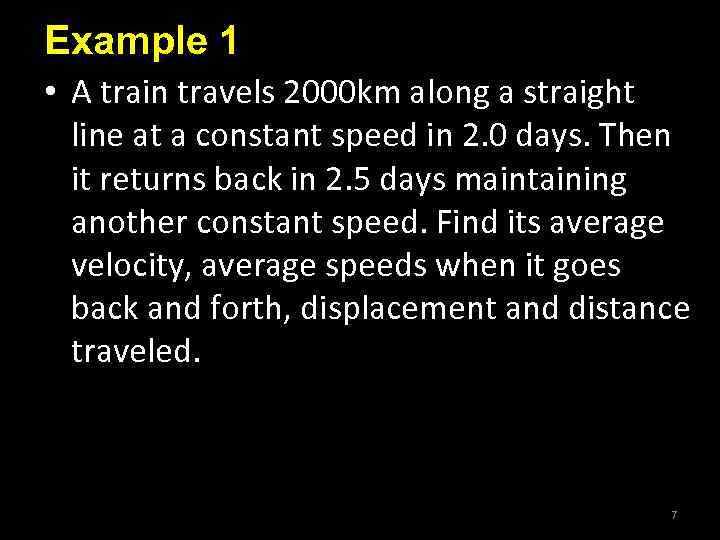 Example 1 • A train travels 2000 km along a straight line at a constant speed in 2. 0 days. Then it returns back in 2. 5 days maintaining another constant speed. Find its average velocity, average speeds when it goes back and forth, displacement and distance traveled. 7
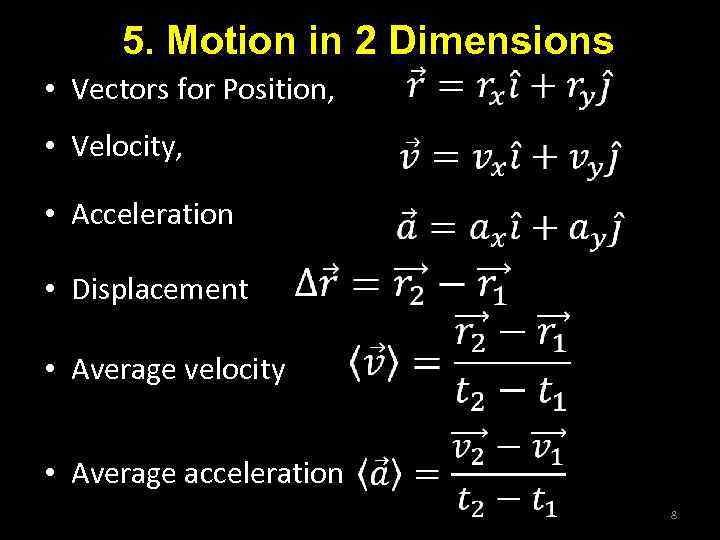 5. Motion in 2 Dimensions • Vectors for Position, • Velocity, • Acceleration • Displacement • Average velocity • Average acceleration 8
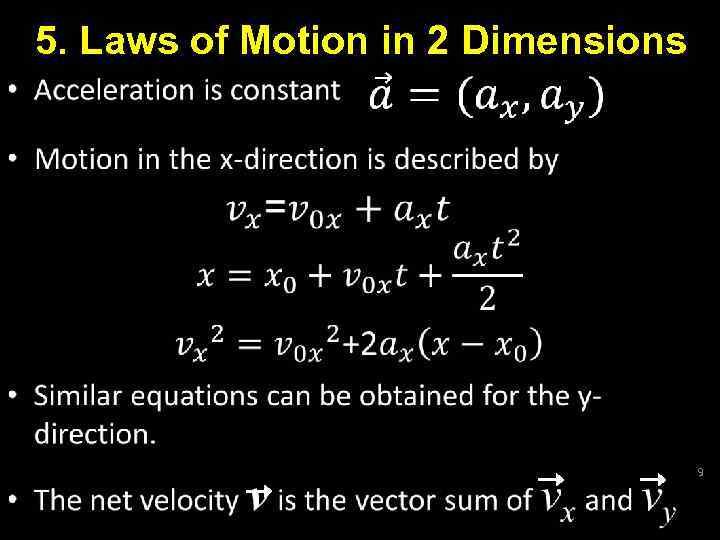 5. Laws of Motion in 2 Dimensions • 9
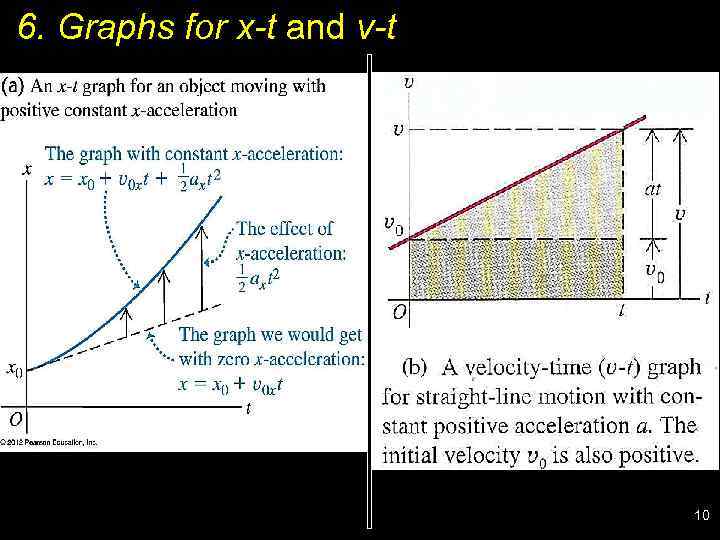 6. Graphs for x-t and v-t 10
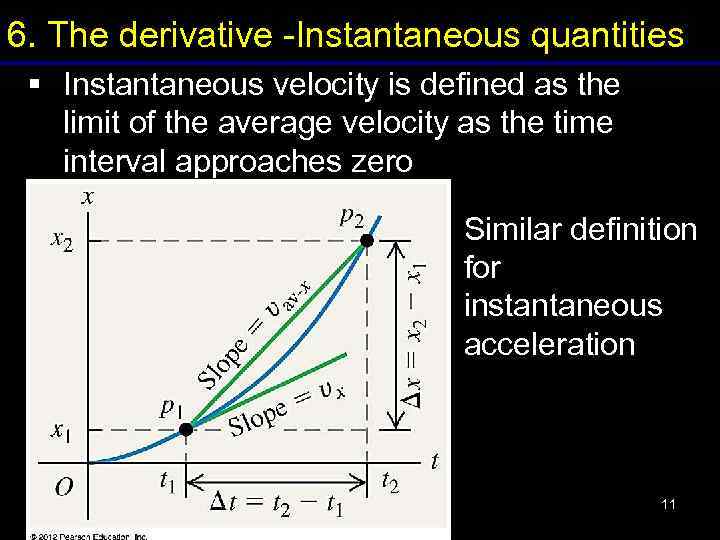 6. The derivative -Instantaneous quantities § Instantaneous velocity is defined as the limit of the average velocity as the time interval approaches zero Similar definition for instantaneous acceleration 11
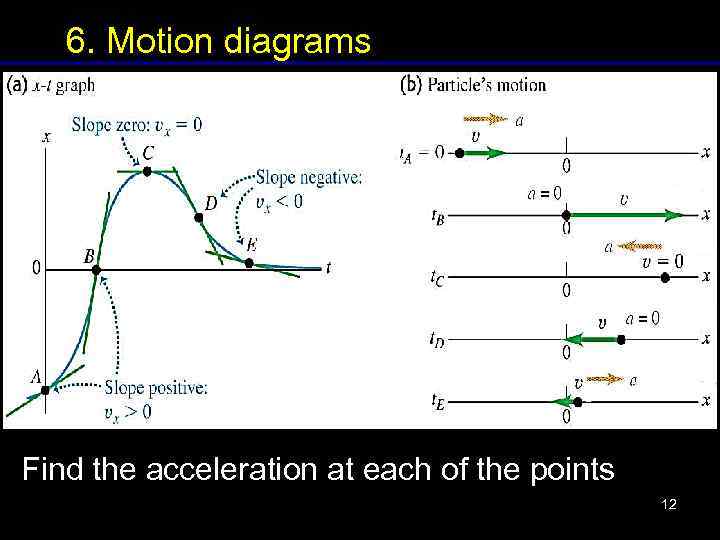 6. Motion diagrams Find the acceleration at each of the points 12
 7. PROJECTILE MOTION § A projectile is an object that is given an initial velocity, and whose motion is influenced only by gravity and air resistance § Simple model: • Neglect air resistance • Neglect Earth’s curvature motion § Two-dimensional motion in the plane containing the initial velocity vector 13
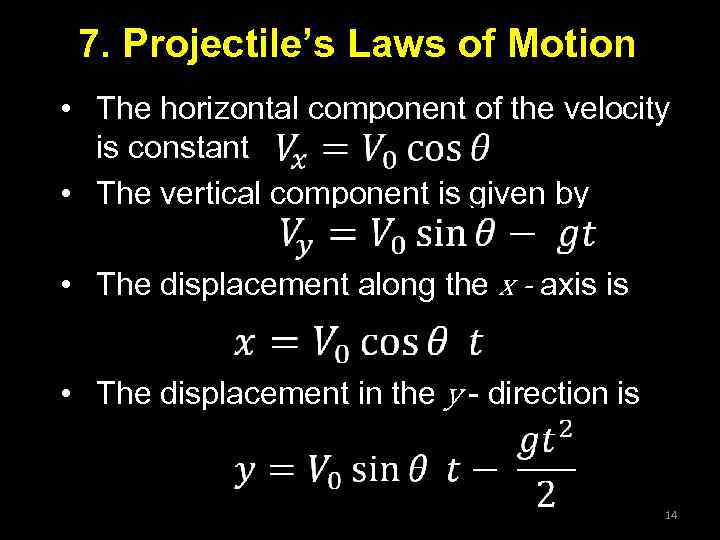 7. Projectile’s Laws of Motion • The horizontal component of the velocity is constant • The vertical component is given by • The displacement along the x - axis is • The displacement in the y - direction is 14
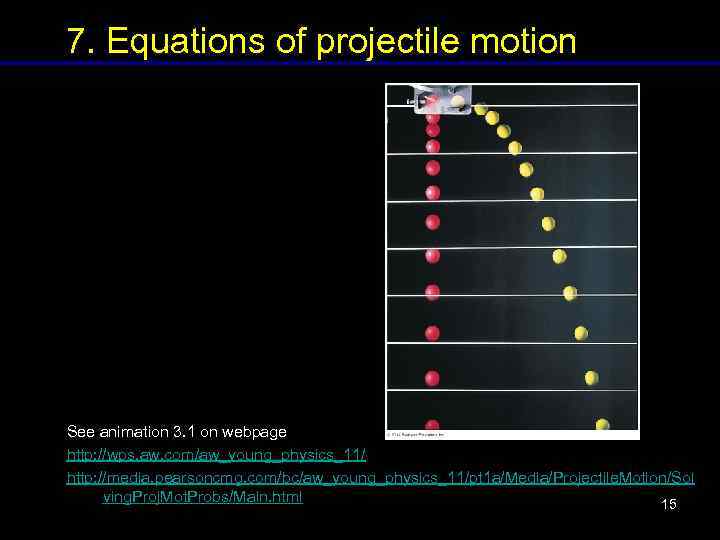 7. Equations of projectile motion See animation 3. 1 on webpage http: //wps. aw. com/aw_young_physics_11/ http: //media. pearsoncmg. com/bc/aw_young_physics_11/pt 1 a/Media/Projectile. Motion/Sol ving. Proj. Mot. Probs/Main. html 15
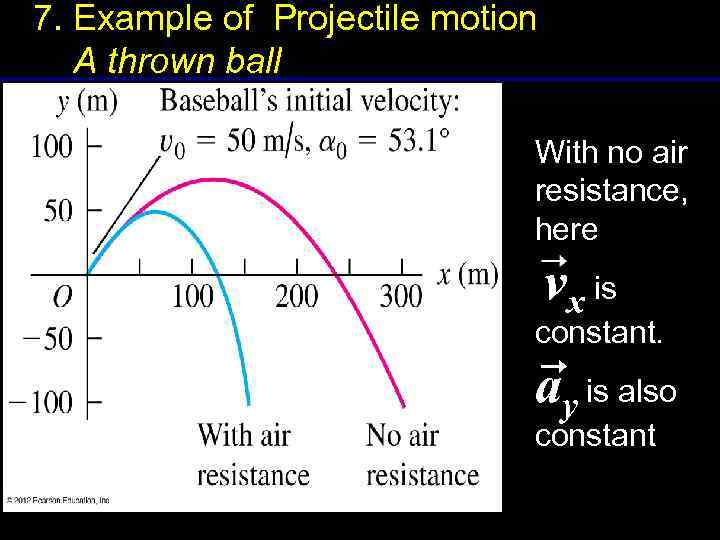 7. Example of Projectile motion A thrown ball With no air resistance, here v x is constant. ay is also constant 16
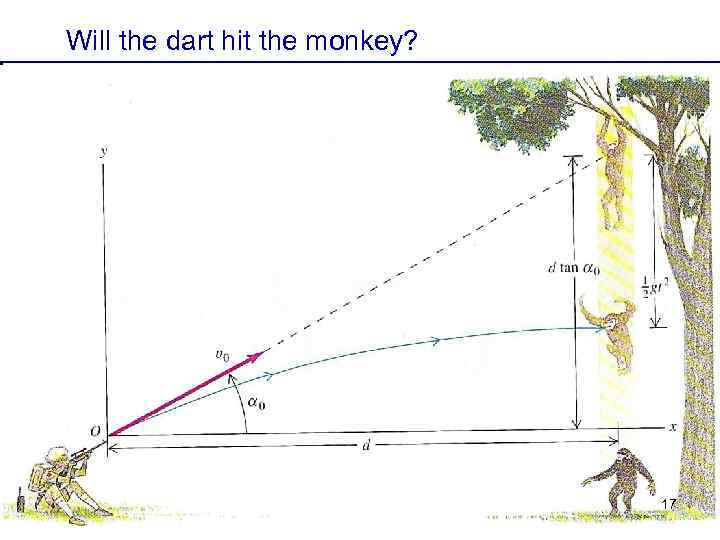 Will the dart hit the monkey? 17
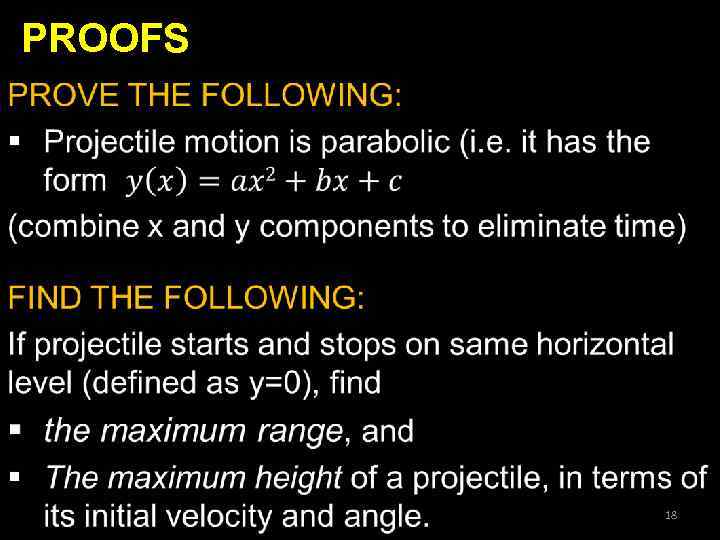 PROOFS 18
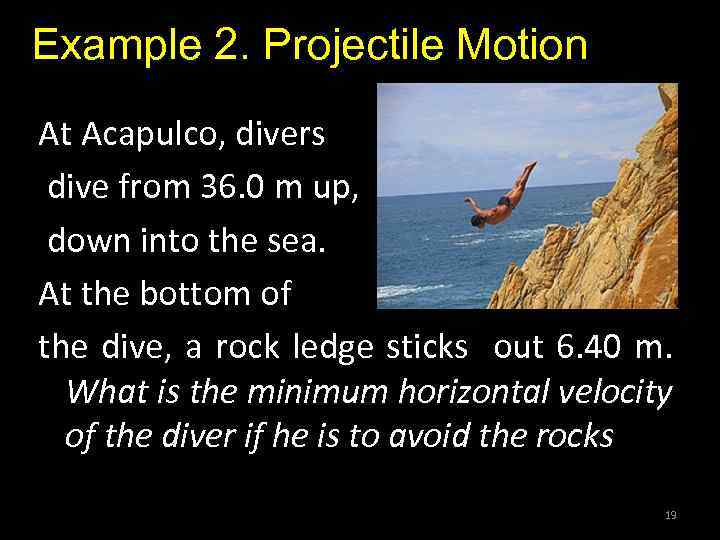 Example 2. Projectile Motion At Acapulco, divers dive from 36. 0 m up, down into the sea. At the bottom of the dive, a rock ledge sticks out 6. 40 m. What is the minimum horizontal velocity of the diver if he is to avoid the rocks? 19
 Reading: Essentials of College Physics , Serway Sections 2. 5 and 2. 6 (do examples 2. 4 & 2. 5) Sections 3. 3 and 3. 4 Checklist • Make sure you understood the kinematics of motion in 1, 2 and 3 dimensions. • Read Pages 24 -38, 43 -44, 62 -71 and 75 -76 from the book of Serway’s Essentials of College Physics –International Student Edition 20
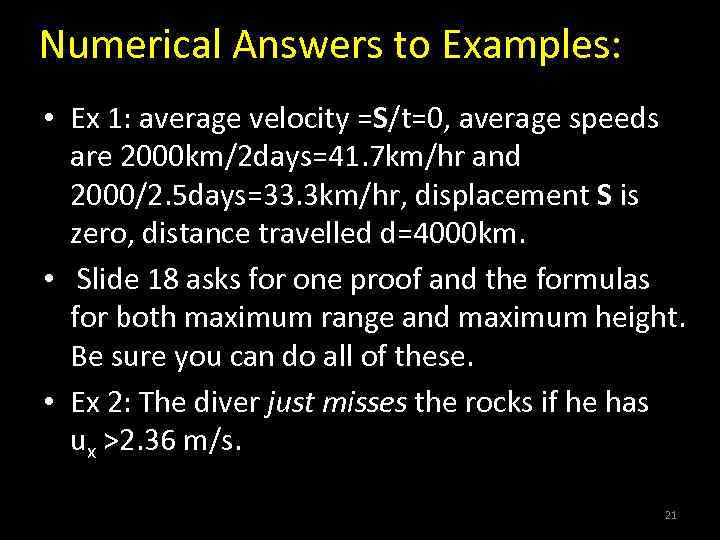 Numerical Answers to Examples: • Ex 1: average velocity =S/t=0, average speeds are 2000 km/2 days=41. 7 km/hr and 2000/2. 5 days=33. 3 km/hr, displacement S is zero, distance travelled d=4000 km. • Slide 18 asks for one proof and the formulas for both maximum range and maximum height. Be sure you can do all of these. • Ex 2: The diver just misses the rocks if he has ux ˃2. 36 m/s. 21