


 Скачать презентацию L 27 Electricity and Magnetism 4 simple
00452f0249e1919faadd88c33cec79f6.ppt
- Количество слайдов: 24
![L 27 Electricity and Magnetism [4] • simple electrical circuits – direct current DC](https://present5.com/presentation/00452f0249e1919faadd88c33cec79f6/image-1.jpg "L 27 Electricity and Magnetism [4] • simple electrical circuits – direct current DC") L 27 Electricity and Magnetism [4] • simple electrical circuits – direct current DC • Alternating current (AC) vs direct current (DC) • electric power distribution • household electricity • household wiring – Protection circuits - GFIC’s – Electrocution hazards • the kilowatt-hour (what you pay for) • Your carbon footprint 1
L 27 Electricity and Magnetism [4] • simple electrical circuits – direct current DC • Alternating current (AC) vs direct current (DC) • electric power distribution • household electricity • household wiring – Protection circuits - GFIC’s – Electrocution hazards • the kilowatt-hour (what you pay for) • Your carbon footprint 1
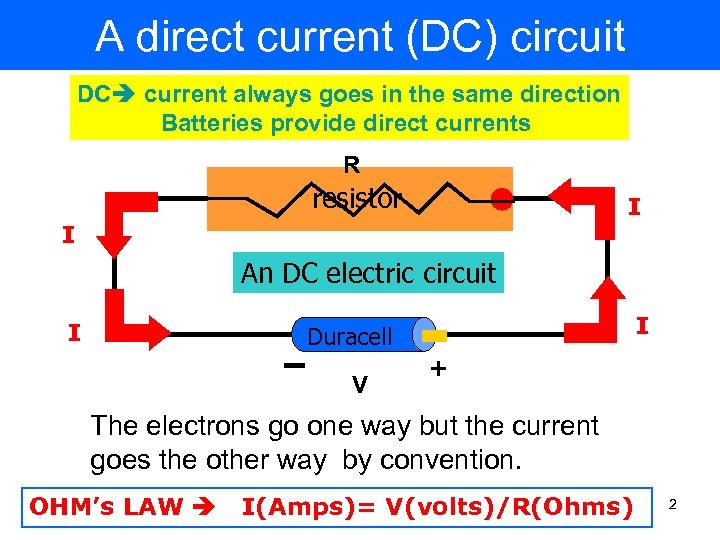 A direct current (DC) circuit DC current always goes in the same direction Batteries provide direct currents R resistor I I An DC electric circuit I I Duracell V + The electrons go one way but the current goes the other way by convention. OHM’s LAW I(Amps)= V(volts)/R(Ohms) 2
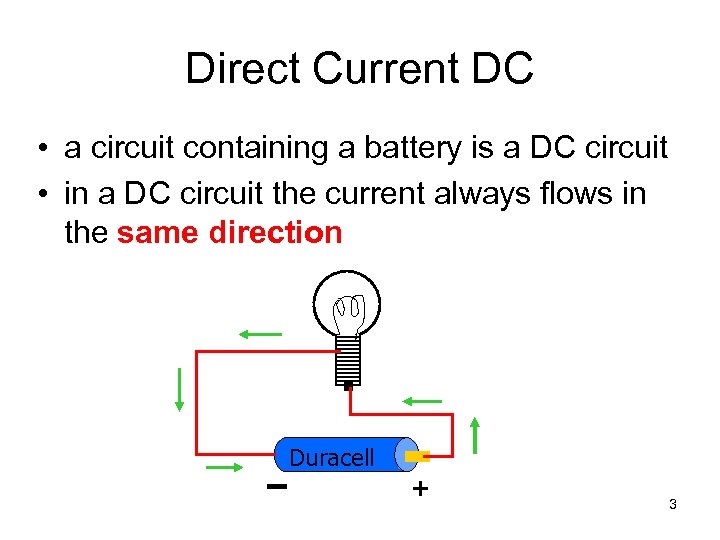 Direct Current DC • a circuit containing a battery is a DC circuit • in a DC circuit the current always flows in the same direction Duracell + 3
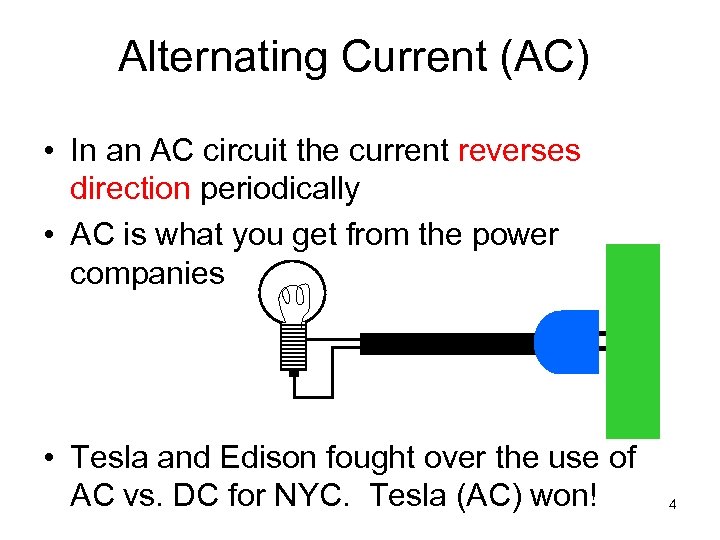 Alternating Current (AC) • In an AC circuit the current reverses direction periodically • AC is what you get from the power companies • Tesla and Edison fought over the use of AC vs. DC for NYC. Tesla (AC) won! 4
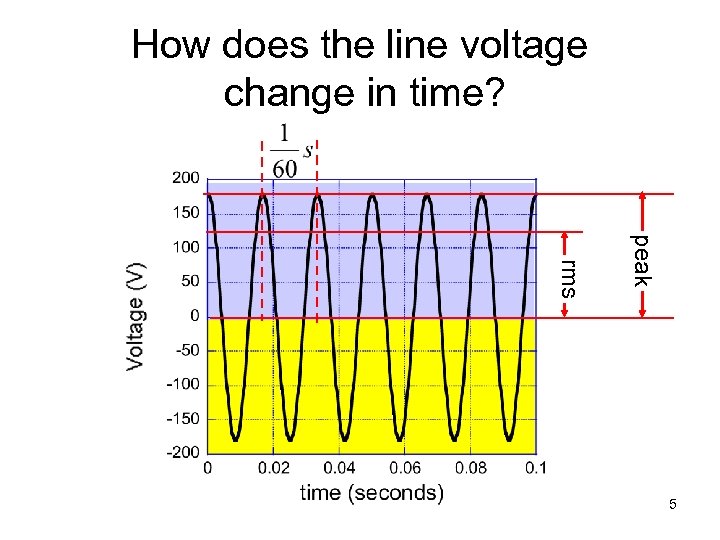 How does the line voltage change in time? peak rms 5
 AC current • The line voltage reverses polarity 60 times a second (60 Hertz) see • the current through the bulb reverses direction 60 times a second also • for heaters, hair dryers, irons, toasters, waffle makers, the fact that the current reverses makes no difference • battery chargers (e. g. , for cell phones) convert the AC to DC 6
 Why do we use AC ? ? (DC seems simpler ? ? ) • • AC power is easier to generate late 1800’s the war of the currents Edison (DC) vs Tesla (Westinghouse) (AC) Edison opened the first commercial power plane for producing DC in NY in 1892 • Tesla who was hired by George Westinghouse believed that AC was superior • Tesla was right, but Edison never gave up! 7
 Why AC is better than DC? • DC power is provided at one voltage only • AC power can be stepped up or down to provide any voltage required • DC is very expensive to transmit over large distances compared to AC, so many plants are required • DC power plants must be close to users • AC plants can be far outside cities • by 1895 DC was out and AC was in 8
 The electric generator • When a coil of wire is rotated inside a magnet, electricity is produced • http: //www. wvic. com/how-gen-works. htm • this electricity is AC • the voltage depends on how much wire the coil has and how fast it is rotated. • devices called transformers can make the voltage higher or lower • transformers only work with AC • Energy is required to rotate the coil 9
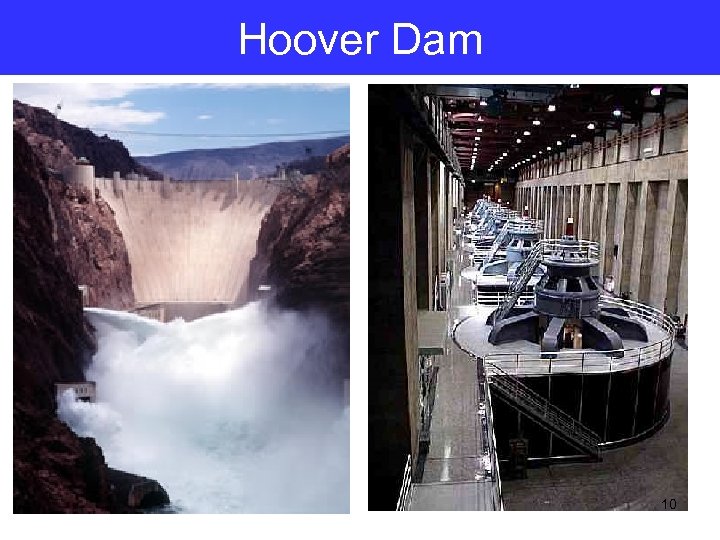 Hoover Dam 10
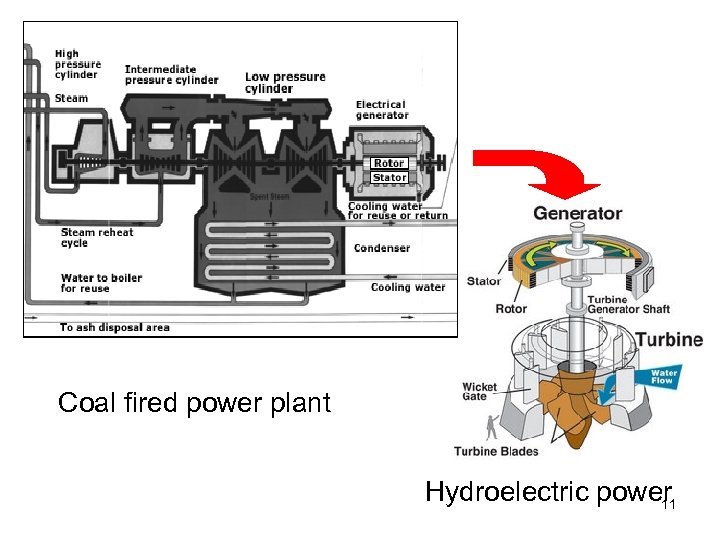 Coal fired power plant Hydroelectric power 11
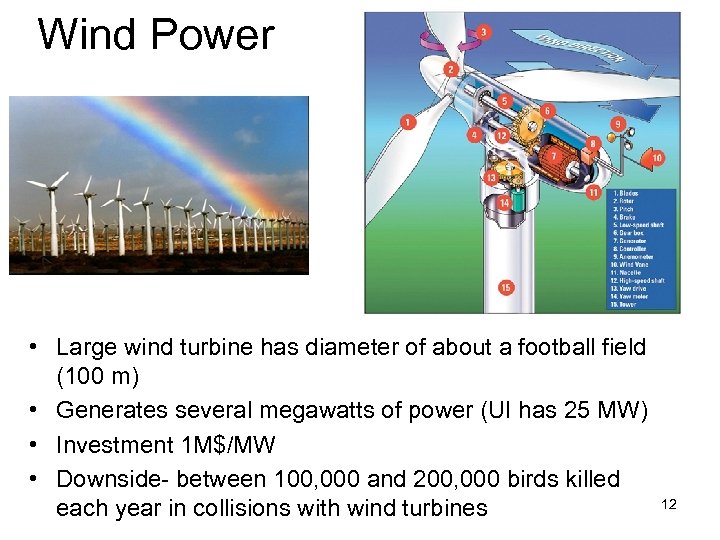 Wind Power • Large wind turbine has diameter of about a football field (100 m) • Generates several megawatts of power (UI has 25 MW) • Investment 1 M$/MW • Downside- between 100, 000 and 200, 000 birds killed each year in collisions with wind turbines 12
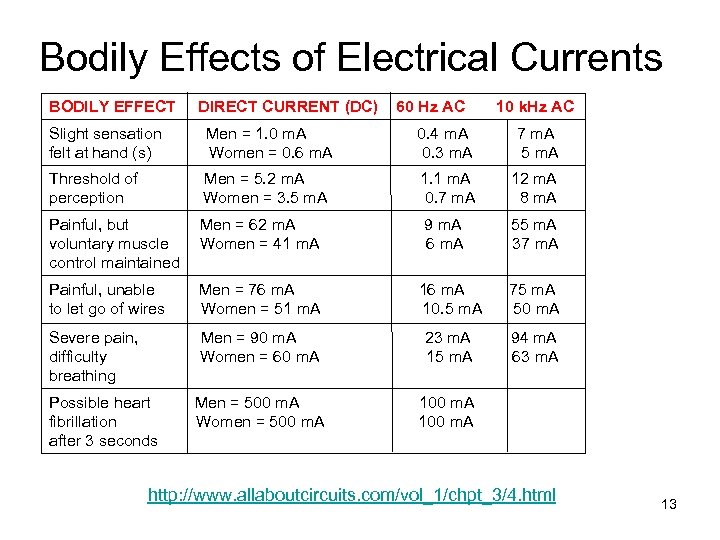 Bodily Effects of Electrical Currents BODILY EFFECT DIRECT CURRENT (DC) 60 Hz AC 10 k. Hz AC Slight sensation felt at hand (s) Men = 1. 0 m. A Women = 0. 6 m. A 0. 4 m. A 0. 3 m. A 7 m. A 5 m. A Threshold of perception Men = 5. 2 m. A Women = 3. 5 m. A 1. 1 m. A 0. 7 m. A 12 m. A 8 m. A Painful, but voluntary muscle control maintained Men = 62 m. A Women = 41 m. A 9 m. A 6 m. A 55 m. A 37 m. A Painful, unable to let go of wires Men = 76 m. A Women = 51 m. A 16 m. A 10. 5 m. A 75 m. A 50 m. A Severe pain, difficulty breathing Men = 90 m. A Women = 60 m. A 23 m. A 15 m. A 94 m. A 63 m. A Men = 500 m. A Women = 500 m. A 100 m. A Possible heart fibrillation after 3 seconds http: //www. allaboutcircuits. com/vol_1/chpt_3/4. html 13
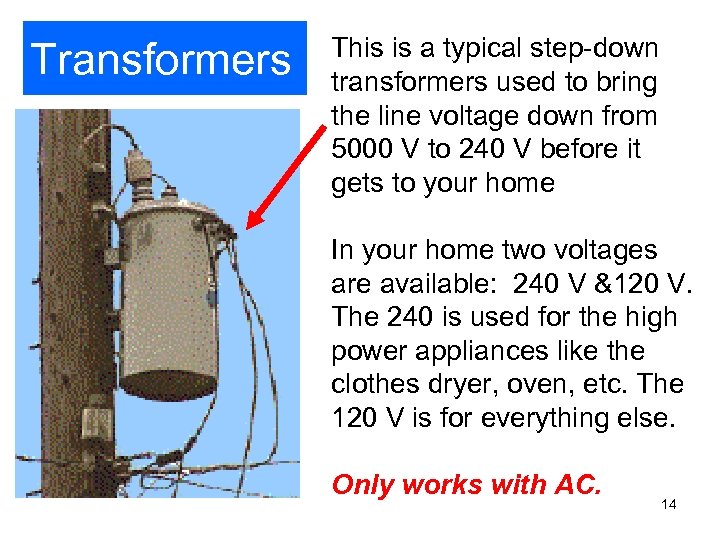 Transformers This is a typical step-down transformers used to bring the line voltage down from 5000 V to 240 V before it gets to your home In your home two voltages are available: 240 V &120 V. The 240 is used for the high power appliances like the clothes dryer, oven, etc. The 120 V is for everything else. Only works with AC. 14
 Circuit overload • if you have too many things plugged into the same circuit, the voltage may drop. • you may notice that a lamp plugged into the same outlet as a hair dryer dims a bit when you turn on the hair dryer because a hair dryer draws a lot of current • according to Ohm V = I R, a big I can cause enough drop in the voltage to be noticeable! 15
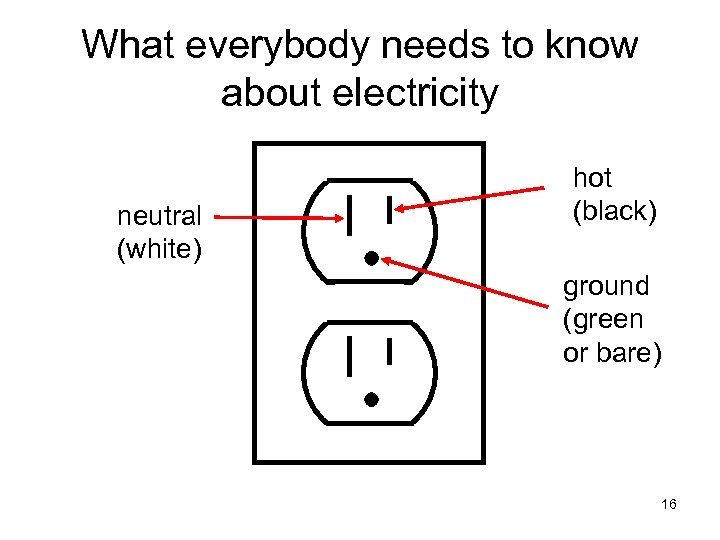 What everybody needs to know about electricity neutral (white) hot (black) ground (green or bare) 16
 Electric outlets • The current is supposed to flow from the hot side to the neutral, if too much current flows the fuse blows or the circuit breaker trips. • the ground is there for protection to provide a safe path for current in the event of a short circuit • on some circuits (kitchens and bathrooms) there is additional protection GFCI ground fault circuit interrupt. If current accidentally flows through anything other than the hot or neutral it interrupts the circuit very quickly 17
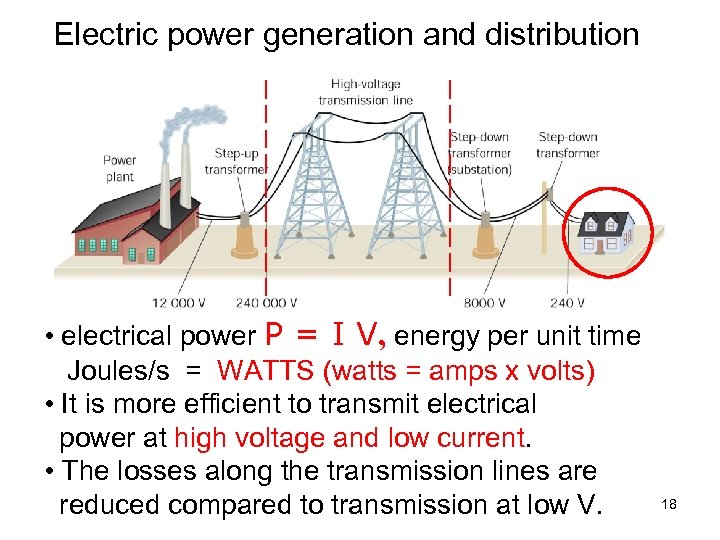 Electric power generation and distribution • electrical power P = I V, energy per unit time Joules/s = WATTS (watts = amps x volts) • It is more efficient to transmit electrical power at high voltage and low current. • The losses along the transmission lines are reduced compared to transmission at low V. 18
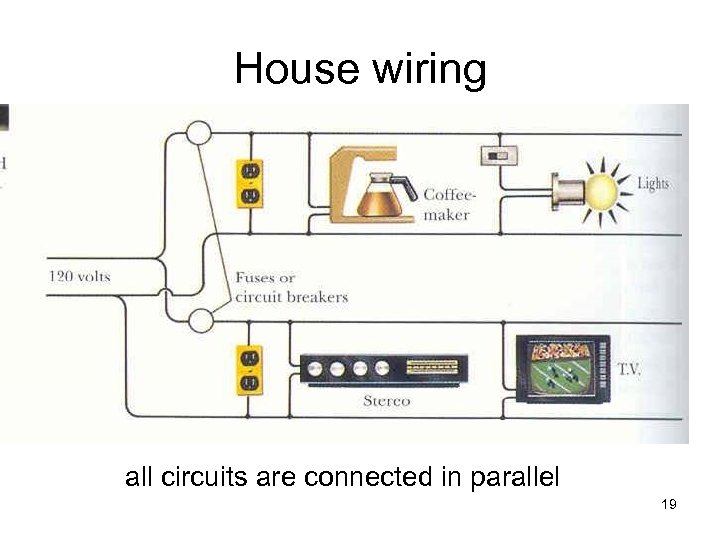 House wiring all circuits are connected in parallel 19
 electrical power • the power is how much electrical energy used per second = 1 Watt (1000 W = 1 k. W) • 1 Watt = 1 Joule / 1 second • Power (Watts) = current (A) x voltage (V) • the appliances required high power, like your electric range or clothes dryer operate at the higher voltage (240 V), so less current is used. • we pay for the total energy (not power) used each month - KW-hours (KWH) 20
 Paying for electricity (KWH) • You pay for the total amount of electrical energy that is used • the energy is measured in kilowatt-hours • the kilowatt (k. W) = 1000 W is the energy used per unit time • When k. W are multiplied by a time unit (hrs) we get total energy in KWH • The cost per KWH varies from about 6¢ in SD to 17¢ in HI, the average is about 10 ¢ 21
 $$$ example $$$ • At a rate of 10 cents per k. Wh, how much does it cost to keep a 100 W light bulb on for one day? • Solution: 100 W = 0. 1 k. W, one day = 24 hrs • # KWH = 0. 1 k. W x 24 hr = 2. 4 k. Wh cost = 2. 4 k. Wh x $0. 10/k. Wh = $0. 24 = 24 ¢ • for one month the cost is $7. 20 22
 Your carbon footprint • 1 ton of coal produces about 6000 KWH of electric power • 1 pound of coal can run a 100 W light for about 200 hours • an average US household uses about 10, 000 KWH of electricity per year • we pay for the number of KWH used each month • It takes 10, 000/6000 = 1. 66 tons (3000 lbs) of coal per year for each household • US coal reserves estimate: 300 billion tons! • Energy density (J/m 3) is important number 23
 Incandescent vs. Fluorescent ? • Incandescent lights (ordinary light bulbs) produce a lot of heat as well as light and are inefficient • Fluorescent lights produce the same amount of light output while using less power • Why do they take several seconds to come to full power they contain a small amount of mercury which must heat up to form a vapor • Fluorescent lights may not work well as outdoor lights in cold climates, like Iowa 24 winters!