Скачать презентацию Кривая роста в периодической суспензионной культуре
11- Рост и регенерация.ppt
- Количество слайдов: 16
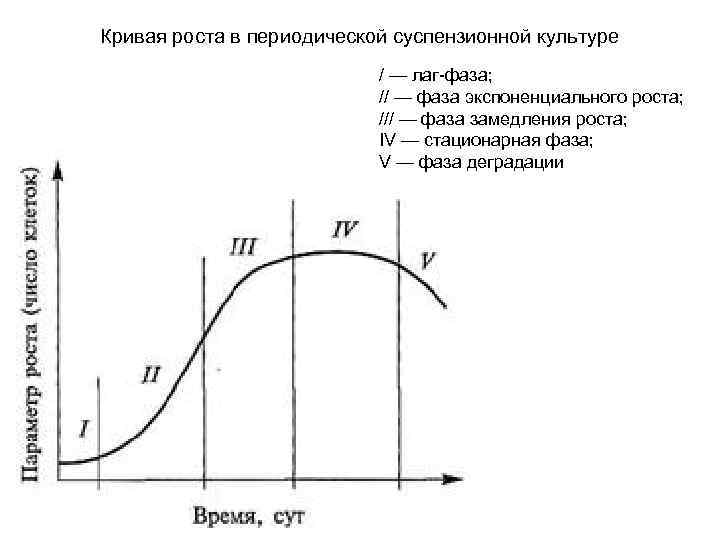 Кривая роста в периодической суспензионной культуре / — лаг-фаза; // — фаза экспоненциального роста; /// — фаза замедления роста; IV — стационарная фаза; V — фаза деградации
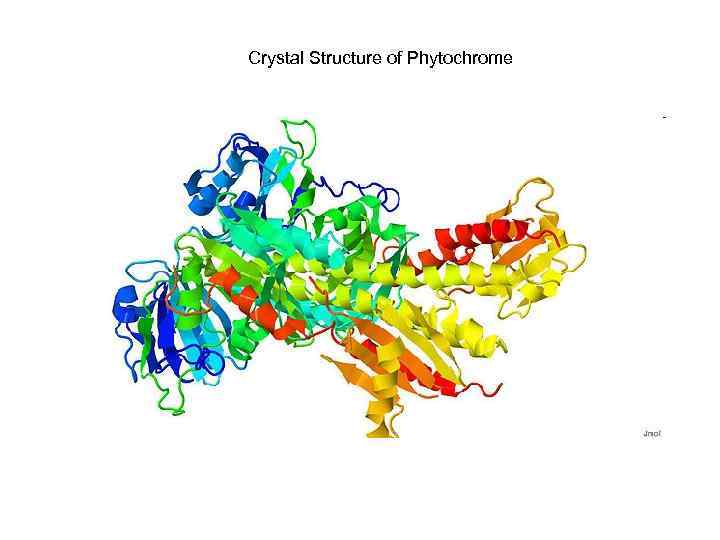 Crystal Structure of Phytochrome
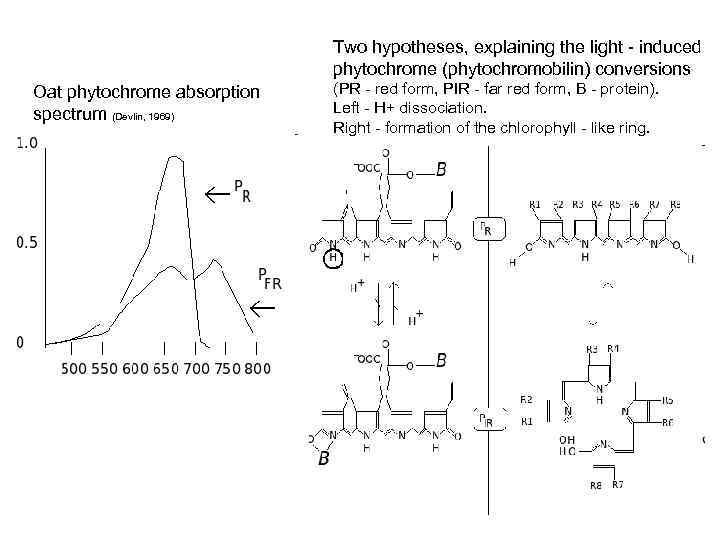 Two hypotheses, explaining the light - induced phytochrome (phytochromobilin) conversions Oat phytochrome absorption spectrum (Devlin, 1969) (PR - red form, PIR - far red form, B - protein). Left - H+ dissociation. Right - formation of the chlorophyll - like ring.
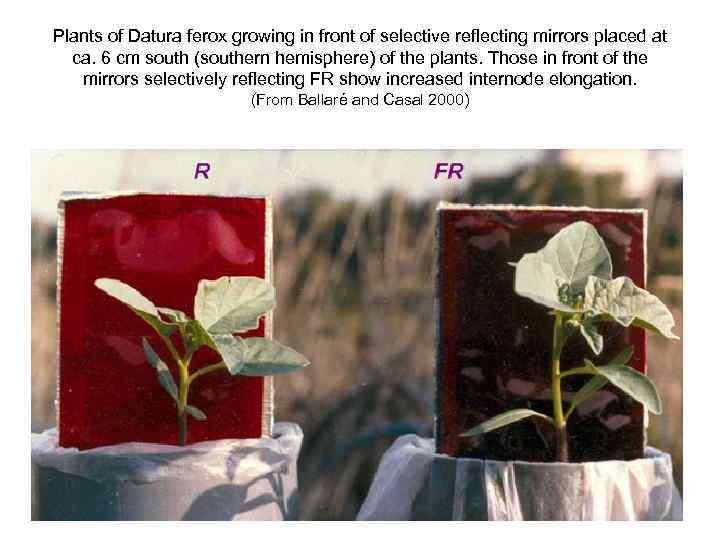 Plants of Datura ferox growing in front of selective reflecting mirrors placed at ca. 6 cm south (southern hemisphere) of the plants. Those in front of the mirrors selectively reflecting FR show increased internode elongation. (From Ballaré and Casal 2000)
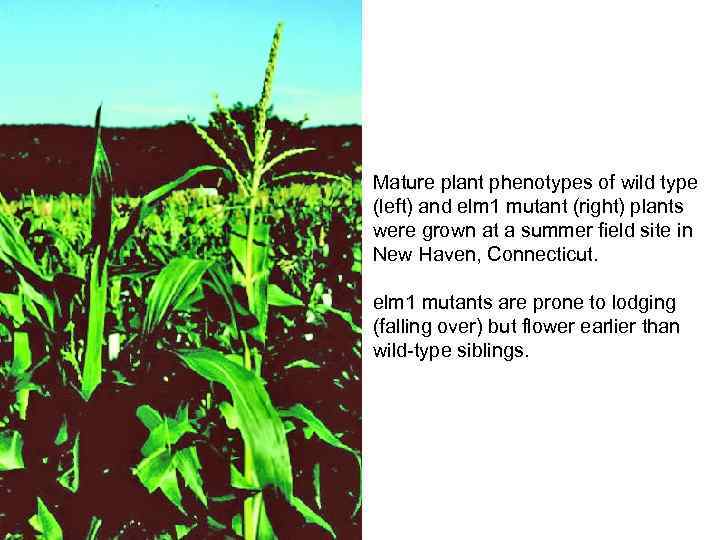 Mature plant phenotypes of wild type (left) and elm 1 mutant (right) plants were grown at a summer field site in New Haven, Connecticut. elm 1 mutants are prone to lodging (falling over) but flower earlier than wild-type siblings.
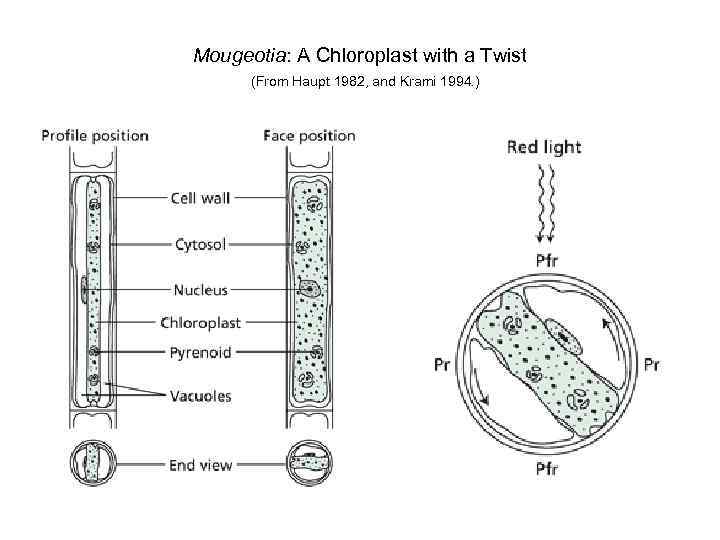 Mougeotia: A Chloroplast with a Twist (From Haupt 1982, and Krami 1994. )
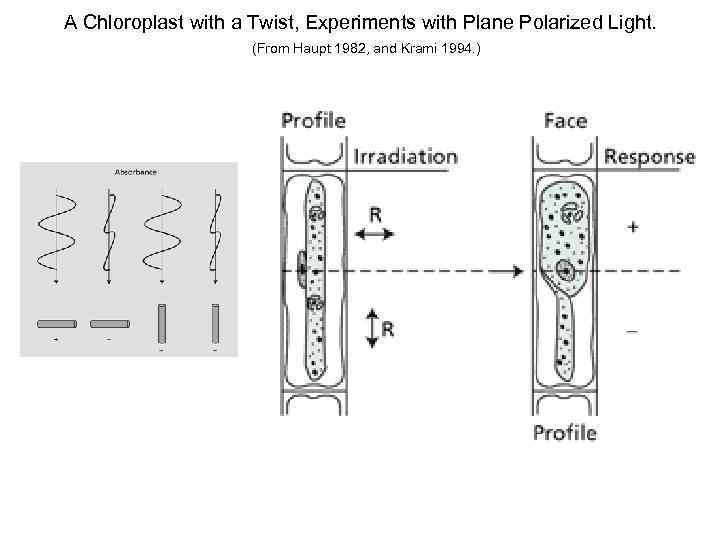 A Chloroplast with a Twist, Experiments with Plane Polarized Light. (From Haupt 1982, and Krami 1994. )
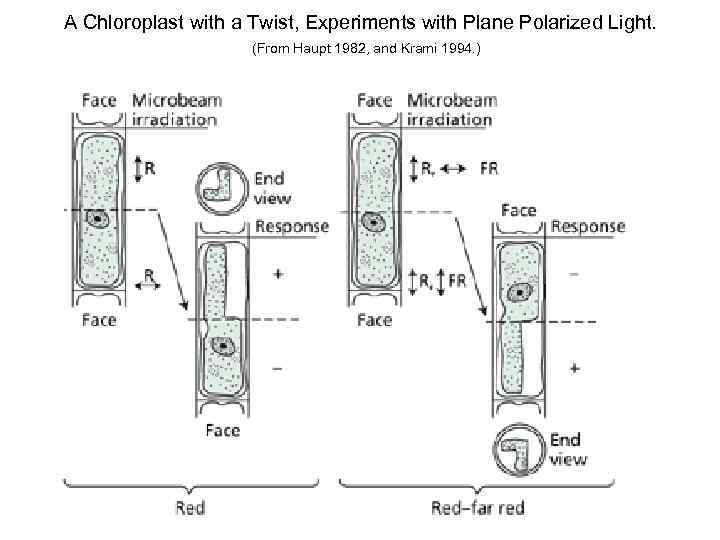 A Chloroplast with a Twist, Experiments with Plane Polarized Light. (From Haupt 1982, and Krami 1994. )
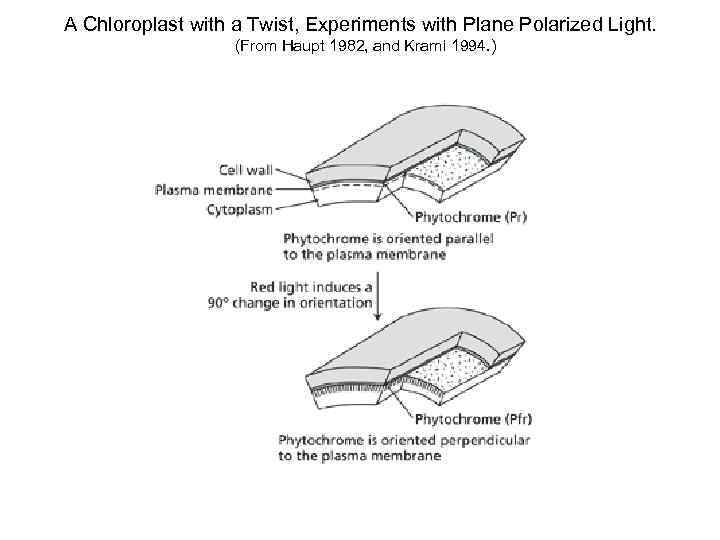 A Chloroplast with a Twist, Experiments with Plane Polarized Light. (From Haupt 1982, and Krami 1994. )
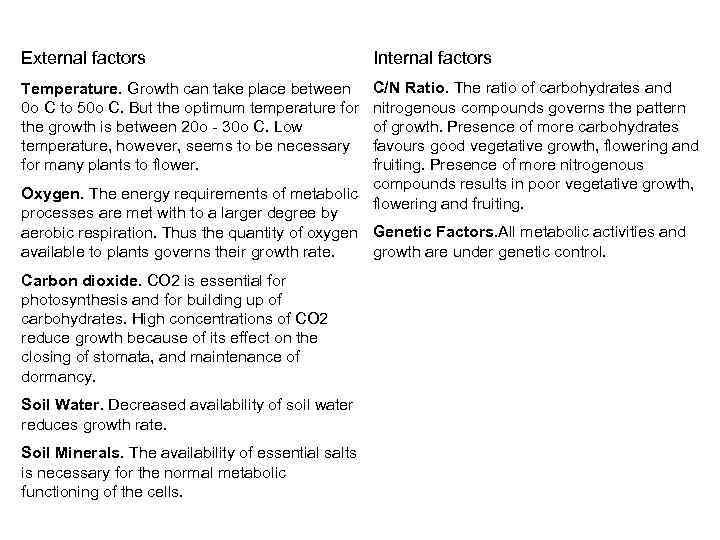 External factors Internal factors C/N Ratio. The ratio of carbohydrates and nitrogenous compounds governs the pattern of growth. Presence of more carbohydrates favours good vegetative growth, flowering and fruiting. Presence of more nitrogenous compounds results in poor vegetative growth, Oxygen. The energy requirements of metabolic flowering and fruiting. processes are met with to a larger degree by aerobic respiration. Thus the quantity of oxygen Genetic Factors. All metabolic activities and growth are under genetic control. available to plants governs their growth rate. Temperature. Growth can take place between 0 o C to 50 o C. But the optimum temperature for the growth is between 20 o - 30 o C. Low temperature, however, seems to be necessary for many plants to flower. Carbon dioxide. CO 2 is essential for photosynthesis and for building up of carbohydrates. High concentrations of CO 2 reduce growth because of its effect on the closing of stomata, and maintenance of dormancy. Soil Water. Decreased availability of soil water reduces growth rate. Soil Minerals. The availability of essential salts is necessary for the normal metabolic functioning of the cells.
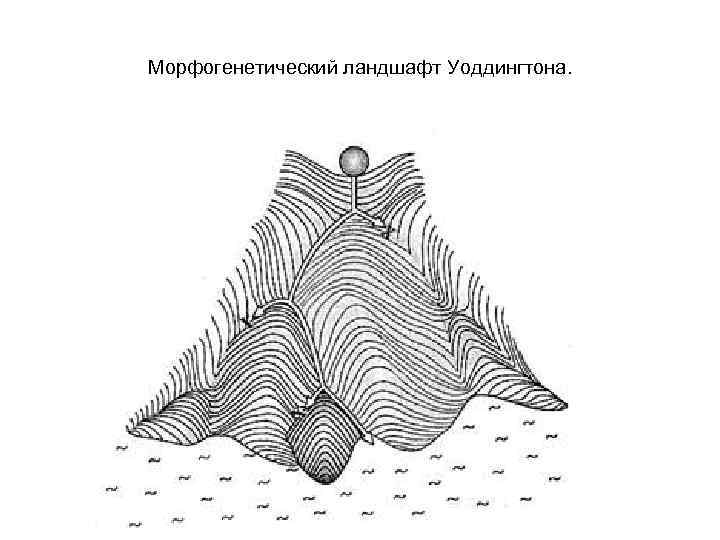 Морфогенетический ландшафт Уоддингтона.
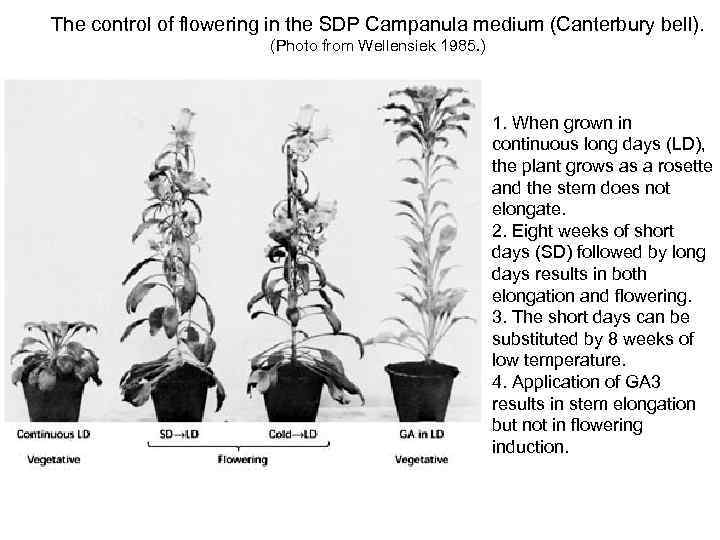 The control of flowering in the SDP Campanula medium (Canterbury bell). (Photo from Wellensiek 1985. ) 1. When grown in continuous long days (LD), the plant grows as a rosette and the stem does not elongate. 2. Eight weeks of short days (SD) followed by long days results in both elongation and flowering. 3. The short days can be substituted by 8 weeks of low temperature. 4. Application of GA 3 results in stem elongation but not in flowering induction.
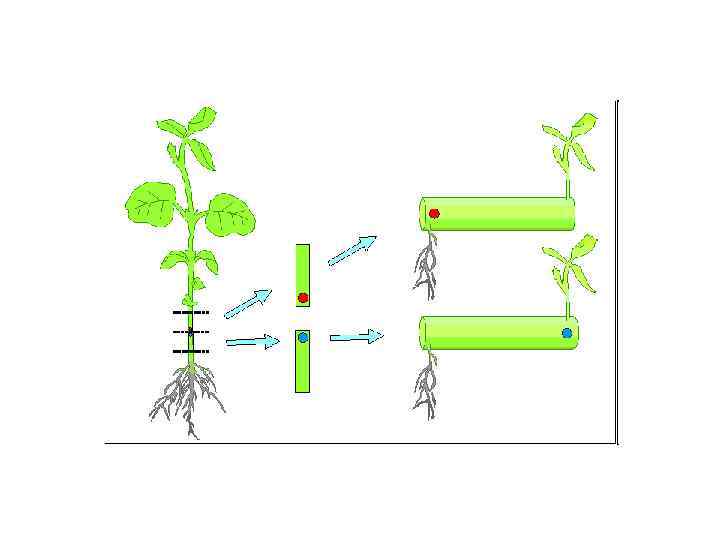
 I. Физиологическая регенерация II. Травматическая регенерация. 1. Регенерация, обусловленная дедифференцировкой клеток: а) заживление ран. б) органогенез, связанный с образованием каллуса. в) соматический эмбриогенез. г) восстановление частей без образования каллуса. 2. Регенерация на уровне меристем: а) восстановление апикальных меристем. б) органогенез из предсуществующих зачатков.