 Скачать презентацию KNAW-Alfalab Introducing Rich Internet Applications Leen Breure 18
490811360134c97e4f160b03ea1016a8.ppt
- Количество слайдов: 22



KNAW-Alfalab Introducing Rich Internet Applications Leen Breure 18 February 2010
What are Rich Internet Applications? • The RIA-concept: more easily described than defined • RIA is a multimedia web application, combining: Ø Richness of information • without overload Ø Richness of views • flexibility Ø Richness of interactivity • UI of desktop applications Ø Rich user experience: • Easy to use, a pleasure for both newbie's and experienced users • Direct response (preloading, client-side processing) Ø Emphasis on visualization and direct manipulation • precedence of visuals over text Ø Shallow page hierarchy • preferably single page design 2
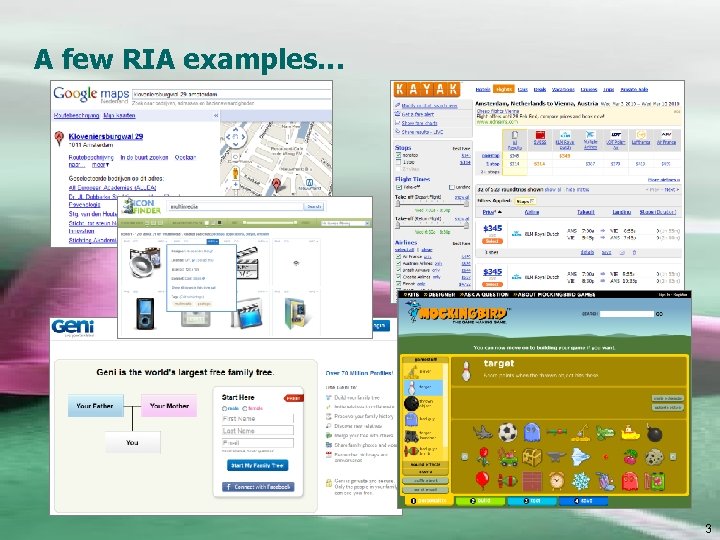
A few RIA examples… 3
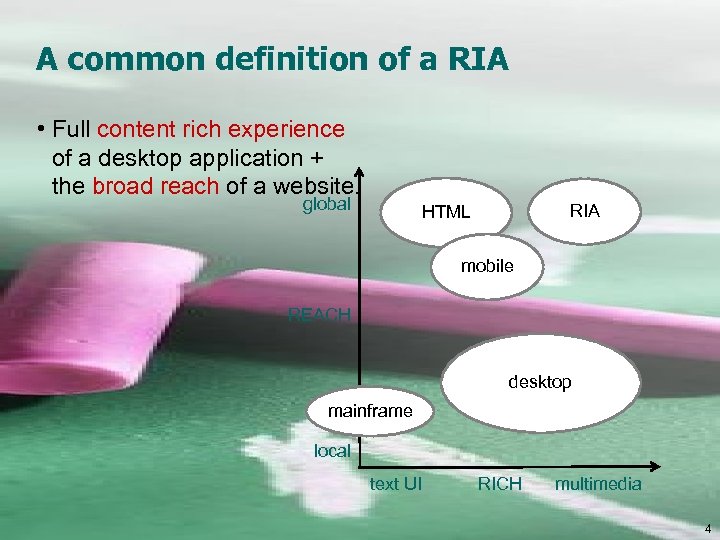
A common definition of a RIA • Full content rich experience of a desktop application + the broad reach of a website. global RIA HTML mobile REACH desktop mainframe local text UI RICH multimedia 4
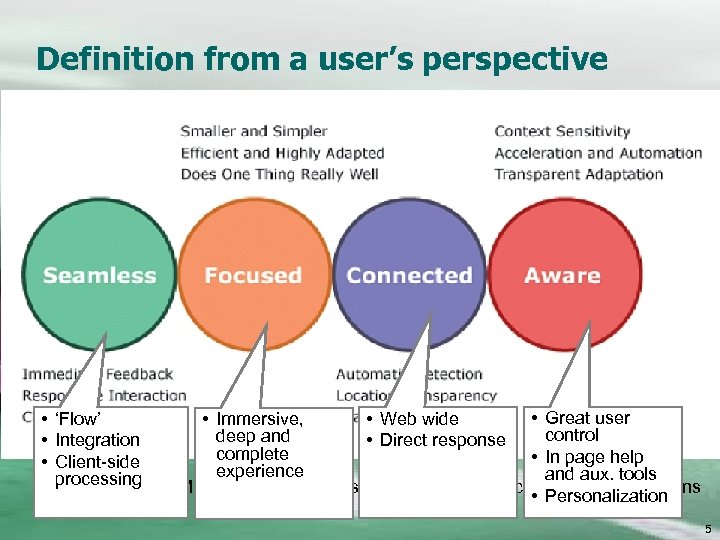
Definition from a user’s perspective • Great user • Web wide • ‘Flow’ • Immersive, control deep and • Direct response • Integration complete • In page help • Client-side experience and aux. tools processing K Mullet (2003), The Essence of Effective Rich Internet Applications From: • Personalization 5
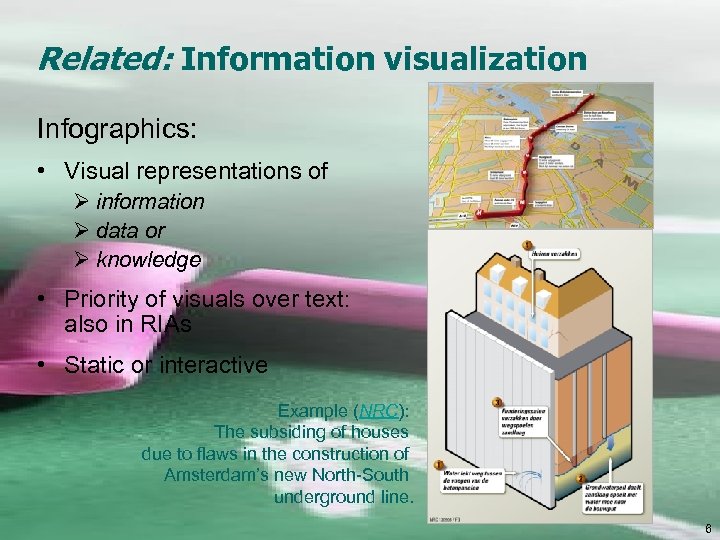
Related: Information visualization Infographics: • Visual representations of Ø information Ø data or Ø knowledge • Priority of visuals over text: also in RIAs • Static or interactive Example (NRC): The subsiding of houses due to flaws in the construction of Amsterdam’s new North-South underground line. 6
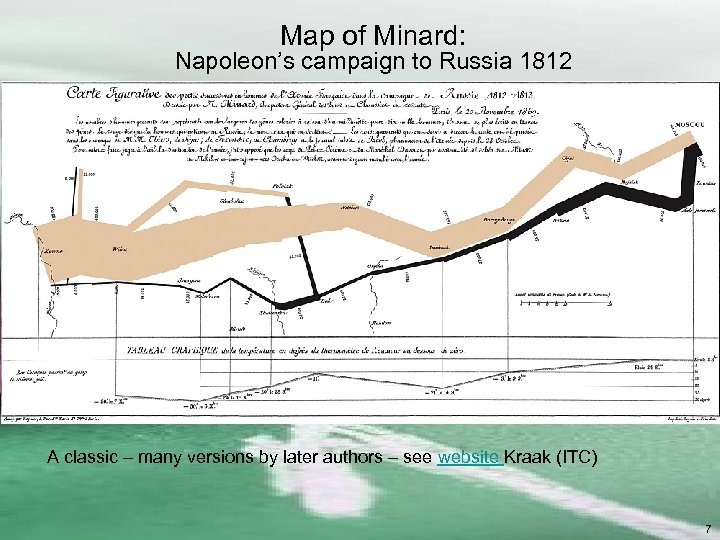
Map of Minard: Napoleon’s campaign to Russia 1812 A classic – many versions by later authors – see website Kraak (ITC) 7
Related: Mashups • Mashups Ø also: • Single page concept • One window shopping • Ease of use Ø but: • More aggregation of external information sources • Less integration than a RIA • Less visualization 8
RIA categories 1. Data application Ø Product catalogs Ø Product configurators 2. Productivity applications Ø Ø Online image editing Online text editors Modeling tools … and more 3. Edutainment applications Ø Entertainment Ø Education 9
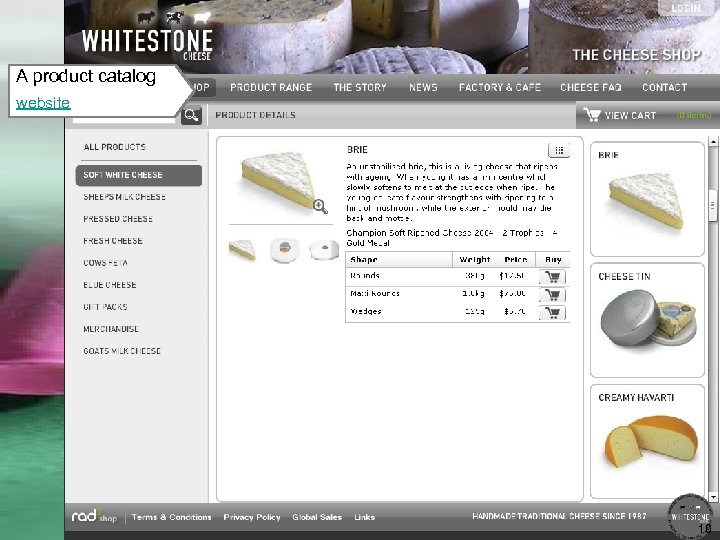
A product catalog website 10
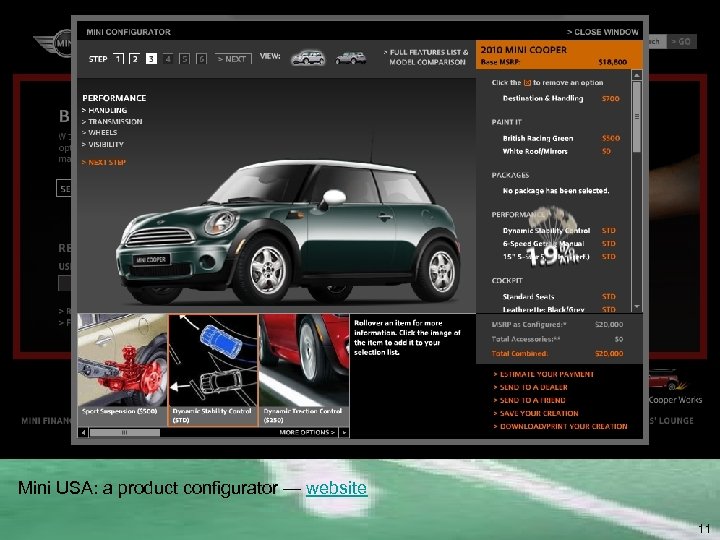
Mini USA: a product configurator — website 11
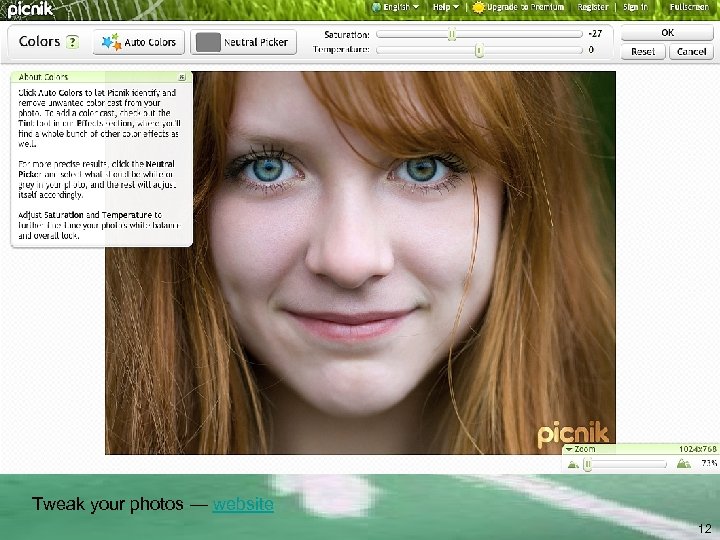
Tweak your photos — website 12
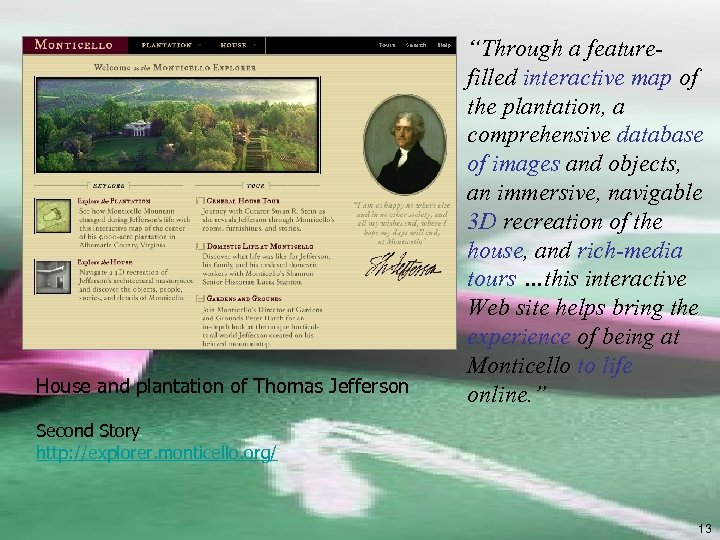
House and plantation of Thomas Jefferson “Through a featurefilled interactive map of the plantation, a comprehensive database of images and objects, an immersive, navigable 3 D recreation of the house, and rich-media tours …this interactive Web site helps bring the experience of being at Monticello to life online. ” Second Story http: //explorer. monticello. org/ 13
How to produce RIAs? • Much depends on the RIA category and context of use: • Data / Productivity / Edutainment • Audience: popular / scientific • Essential: content + expertise work with expert • Proven methodology: in general poor • Benefit from model-driven web engineering (e. g. Web. ML) • Requirements gathering may be complex • Consider the developing style of the team or web studio (e. g. Agile) • Implementation • Consider the software platform (Java. Script, Java, Flash, etc. ) • Production: – Manual: special class libraries – CASE-tools (e. g. Web. Ratio) • Don’t forget content production (high quality multimedia) 14
RIA technologies • Flash (and Flex) • Open. Laszlo • Silverlight • Java. FX • HTML + CSS + Java. Script • Less precise lay-out • Browser problems • Easy to implement • Adobe • Flex: XML-based declarative UI • Frame-based animations • Installed base: almost 100% • O-O: Action. Script 3 • Open source tools • Adobe participates in Open Screen • Open Source • XML-based • Flash & DHTML / AJAX • Microsoft • . Net languages • Time-based animations • Installed base: about 28% • Not on Linux and Solaris • Cross browser • Cross platform (particularly mobile) • Declarative non-verbose language 15
Methodology: model-driven web engineering • Web design methodologies aim at: Ø Separation of business logic from implementation Ø Separation of concerns: • Data model • Navigation model • etc. Ø Model compilers code and web pages • RIA design should be aware of these methodologies and may use them depending on: Ø type of RIA Ø work style Ø other constraints 16
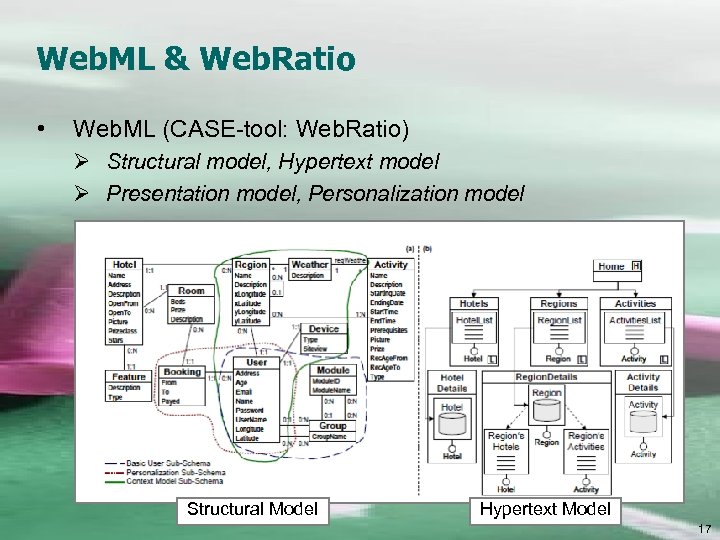
Web. ML & Web. Ratio • Web. ML (CASE-tool: Web. Ratio) Ø Structural model, Hypertext model Ø Presentation model, Personalization model Structural Model Hypertext Model 17
Disadvantages of RIAs 1. Costs of development 2. User needs more computer skills & information literacy 3. Usability and accessibility issues (e. g. Back-button problem) 4. Users must have an active, explorative attitude 5. For some people: rich = information overload 6. Sandbox: RIAs have limited access to local resources 7. If compiled: plug-in / run-time environment required If not compiled: Java. Script + HTML + CSS unreliable rendering 18
Our own research Leading question: 1. What architectural concepts are suitable for (edutainment) RIAs, and, 2. How can RIAs be produced in a more efficient and affordable way? Answers: 1. Full automation not feasible 2. Technology is NOT the problem (special class library, templates time saving) 3. Human side (both author / expert and users) most complex, in particular with scientific RIAs. 19
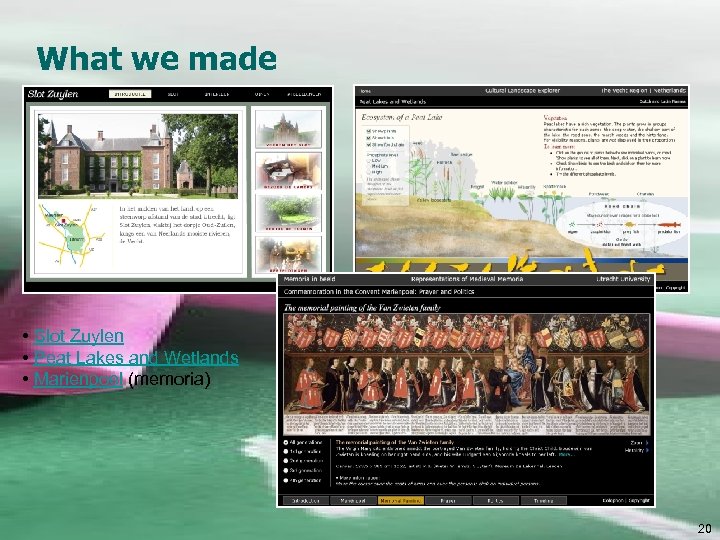
What we made • Slot Zuylen • Peat Lakes and Wetlands • Marienpoel (memoria) 20
Alfalab & RIAs? • Options: Ø Promoting Alfalab • Edutainment RIA • Productivity RIA • …or combination of both Ø RIA as user-friendly front-end of SOA • Data RIA • Productivity RIA 21
Discussion Questions 22
Скачать презентацию KNAW-Alfalab Introducing Rich Internet Applications Leen Breure 18
490811360134c97e4f160b03ea1016a8.ppt