


 Скачать презентацию Kingdom Animalia Animals What makes it an
d7aed45ec6c85dd16094fb37736a90ff.ppt
- Количество слайдов: 42
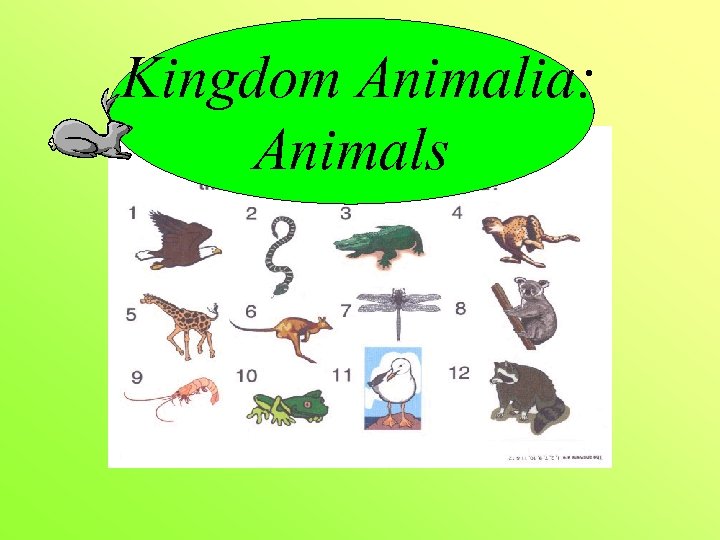 Kingdom Animalia: Animals
 What makes it an animal? • • Multicellular Eukaryotic Heterotrophic No cell wall Have complex organs and systems Can move at some point of their life cycle Reproduction is primarily sexual Divided into invertebrates and vertebrates
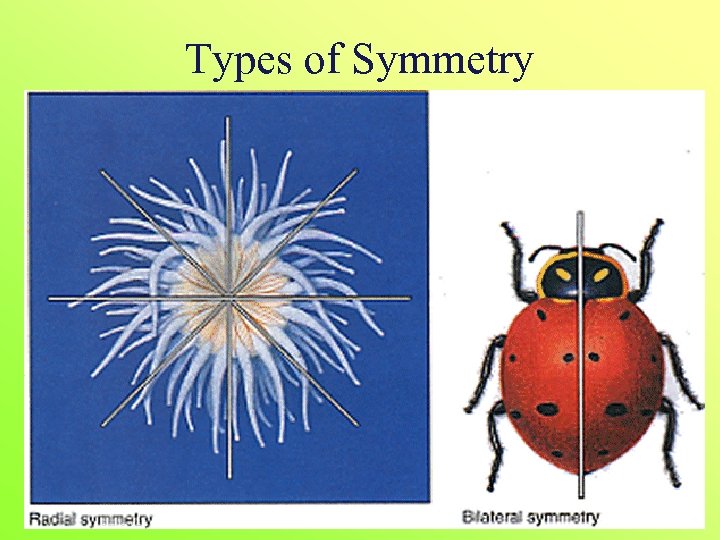 Types of Symmetry
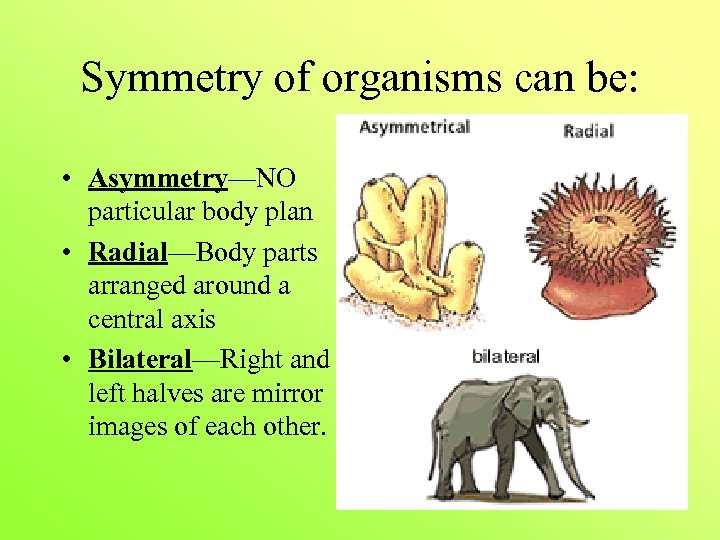 Symmetry of organisms can be: • Asymmetry—NO particular body plan • Radial—Body parts arranged around a central axis • Bilateral—Right and left halves are mirror images of each other.
 Anatomical Terms • • • Anterior--Toward the front (head end) Posterior--Toward the back or tail end Dorsal--Back side Ventral--Belly side Medial--Toward the midline of the body Lateral--Away from the midline of the body
 Other Anatomical Terms: • • • Proximal--Toward a reference point Distal--Away from a reference point Inferior--Lower or below Superior--Upper or above Cephalad or Cranial--Head Caudal or Caudad—Tail or tail end
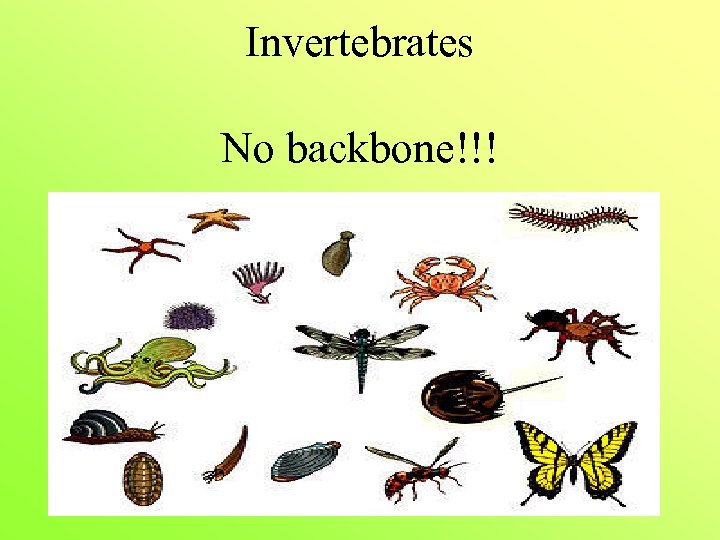 Invertebrates No backbone!!!
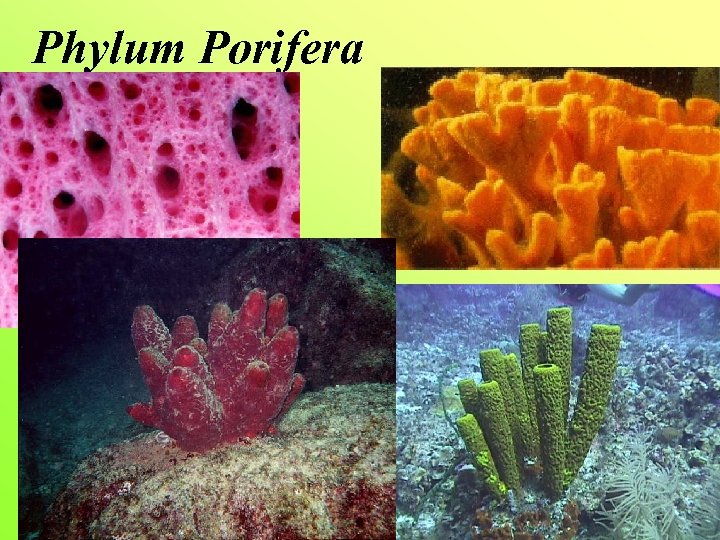 Phylum Porifera •
 Poriferans: Sponges • • • Asymmetrical Have pores through which water moves Filter feeders Sessile (can’t move) as adults Hermaphroditic (both sexes in the same organism) – Reproduction may be sexual or asexual • Regenerates
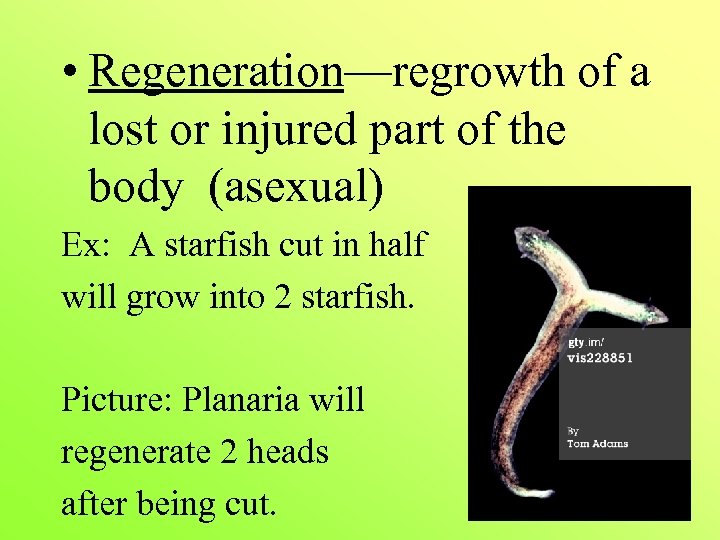 • Regeneration—regrowth of a lost or injured part of the body (asexual) Ex: A starfish cut in half will grow into 2 starfish. Picture: Planaria will regenerate 2 heads after being cut.
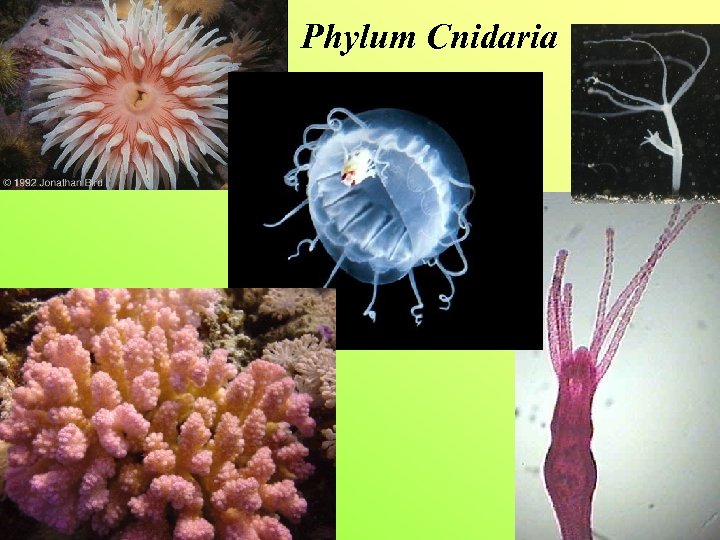 Phylum Cnidaria
 Cnidarians • • • Ex: hydras, jellyfish, sea corals, sea anemones Radial Symmetry Primarily marine Nerve net – simple nervous system – whole body responds One body opening Nematocysts (stinging cells) for protection and food gathering • Two basic body plans - polyp (vase), medusa (inverted umbrella)
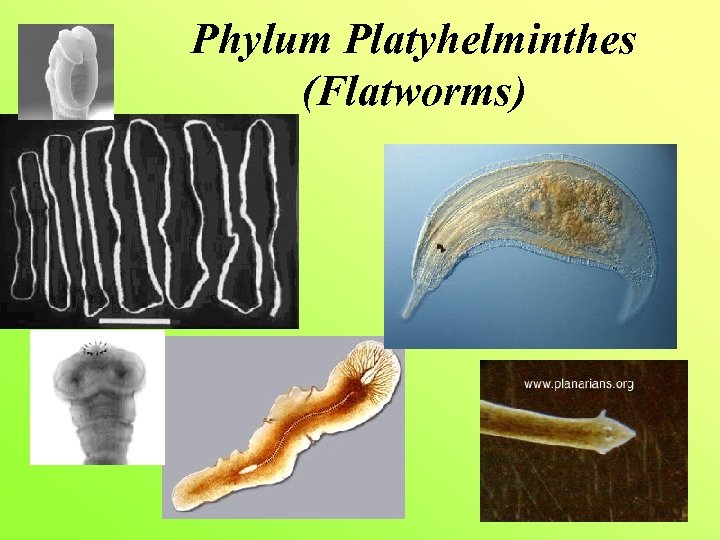 Phylum Platyhelminthes (Flatworms)
 Platyhelminthes (Flatworms) • • • Ex: Planarian, grubs, tapeworms, flukes Bilateral symmetry Thin, solid bodies; 1 mm to several meters long Cephalization (one end functions as the head) Digestive tract opens at only one end True organs and systems Most have both ovaries and testes Some parasitic, others free-living Regeneration
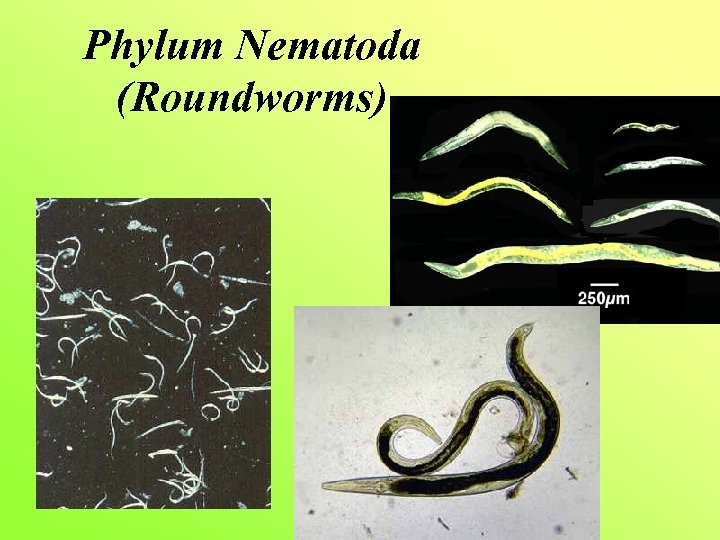 Phylum Nematoda (Roundworms)
 Nematodes (Roundworms) • • Ex: hookworms, pinworms, Ascaris Bilateral symmetry Cephalization Smaller than flatworms, tapered at both ends (NO distinct head and tail) • Two openings to the digestive tract; mouth and anus • Most are free living feeding on dead plant and animal matter or Some are parasitic • Found everywhere on earth
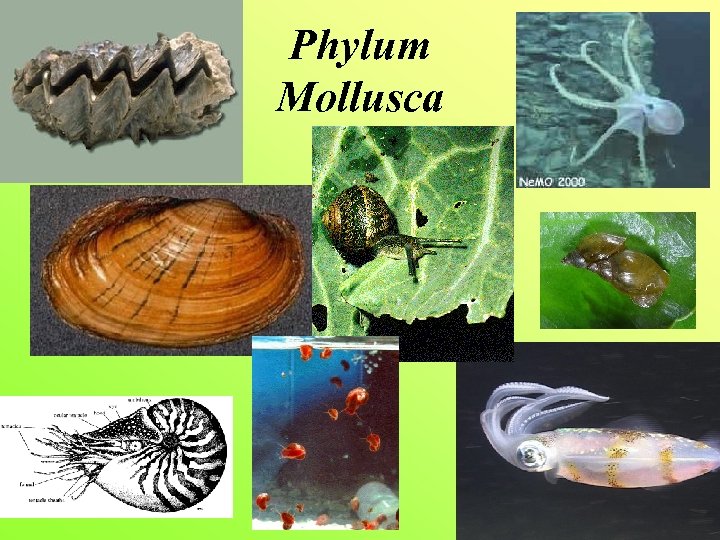 Phylum Mollusca
 Mollusks • • Soft-bodied Bilateral symmetry Ex: Clams, Snails, squid, oysters, and octopuses Generally live in water Some have a hard shell Digestive system closed with only one opening have a “foot” for gripping and creeping over surfaces • Gills • Three major classes: – gastropods (stomach-foot) – Ex: snails and slugs – bivalves(two shells) – Ex: oysters, clams – cephalopods (head-foot) – Ex: octopuses, squids
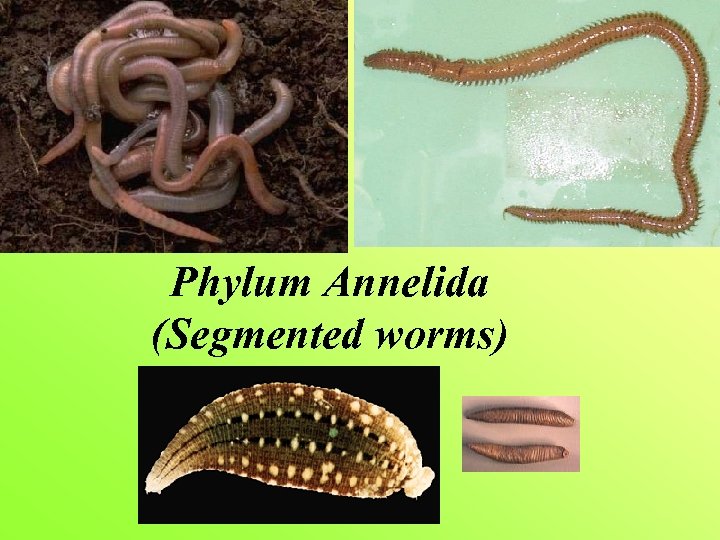 Phylum Annelida (Segmented worms)
 Annelids (Segmented worms) • • Ex: earthworms, leeches bilateral symmetry cephalization segmentation two body openings body systems closed circulatory system Are hermaphrodites
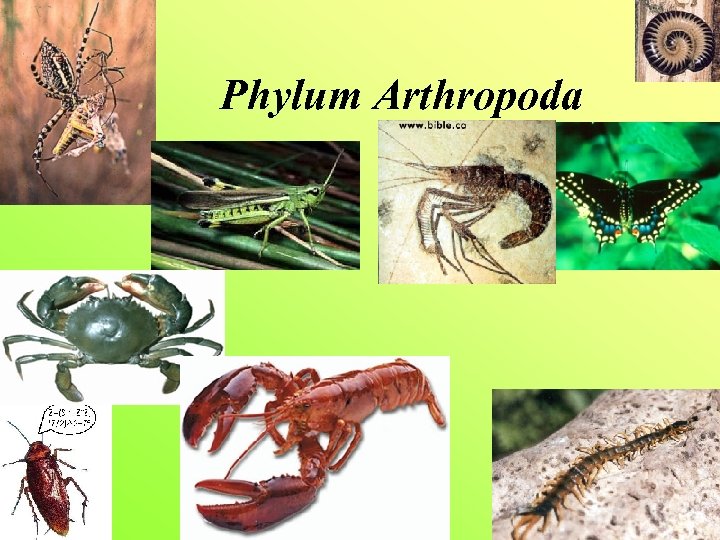 Phylum Arthropoda
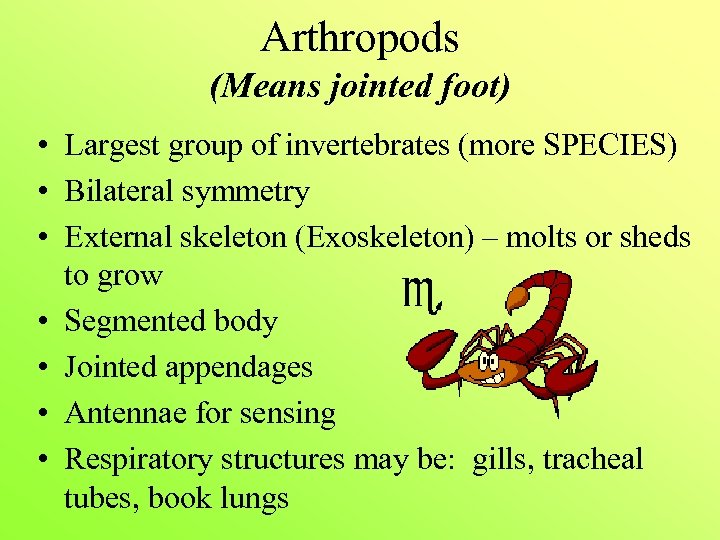 Arthropods (Means jointed foot) • Largest group of invertebrates (more SPECIES) • Bilateral symmetry • External skeleton (Exoskeleton) – molts or sheds to grow • Segmented body • Jointed appendages • Antennae for sensing • Respiratory structures may be: gills, tracheal tubes, book lungs
 Arthropods (cont. ) • 5 major classes: – Centipedes (carnivores) – 1 pair of legs per segment – Millipedes (herbivores) – 2 pairs of legs per segment – Crustaceans (Ex: crab, shrimp, lobster, crawfish) (Hard exoskeletons) • 10 walking legs, stalked eyes – Arachnids (Ex: spiders, ticks) • Two body regions - fused head and thorax plus abdomen • no antennae • 8 legs – Insects (largest group) (Ex: grasshoppers, butterflies, beetles, cockroaches) • live most everywhere, well-developed organs and senses, three body segments (head, thorax, abdomen), some can fly • May undergo metamorphosis – egg larvae pupae adult or egg nymph adult • 6 legs, antennae, three body regions
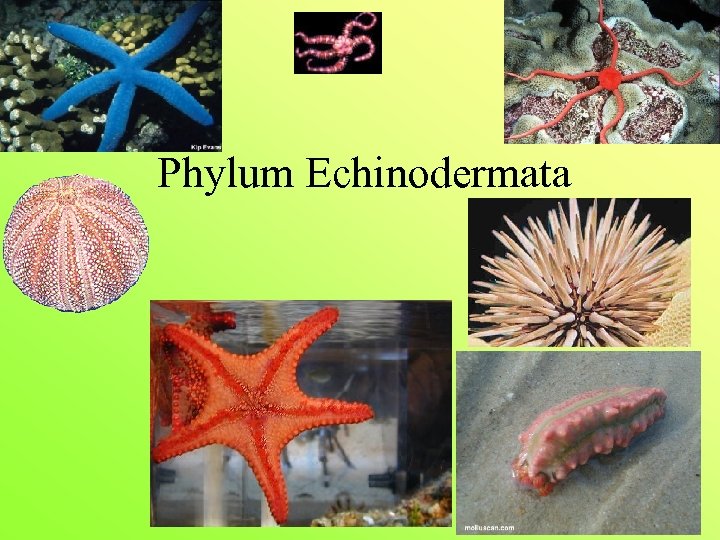 Phylum Echinodermata
 Echinoderms (Means spiny skin) • • Spiny skin for protection Marine Radial Symmetry Ex: starfish, sea urchins, sand dollars, sea cucumbers, brittle stars Some can regenerate. Internal skeleton (Endoskeleton) Water vascular system (aids in movement, gas exchange, excretion) Embryo suggests ancestry common to chordates
 Phylum Chordata: Vertebrates VERTEBRATES HAVE A BACKBONE! (Some chordates are not vertebrates, though!) • Chordates have: – Notochord, which is a backbone in vertebrates – Nerve Cord – Gill (or pharyngeal) slits at some stage of development • All have Bilateral Symmetry. • Head, body cavity, digestive system, body segmentation
 There are three classes of fish:
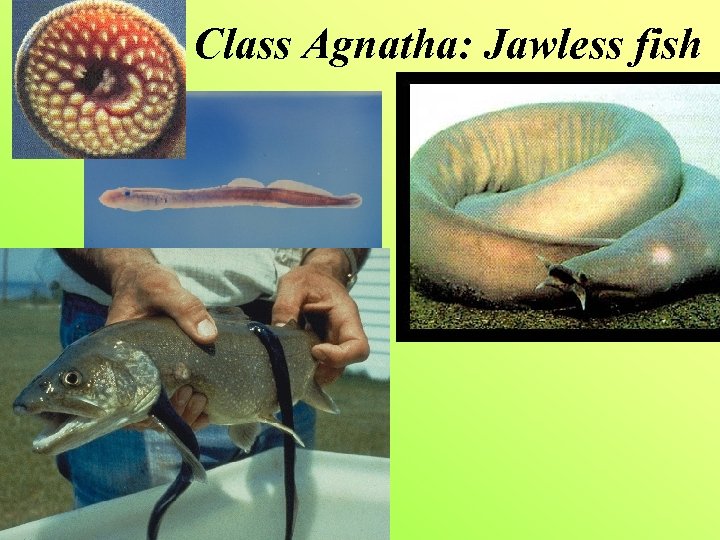 Class Agnatha: Jawless fish
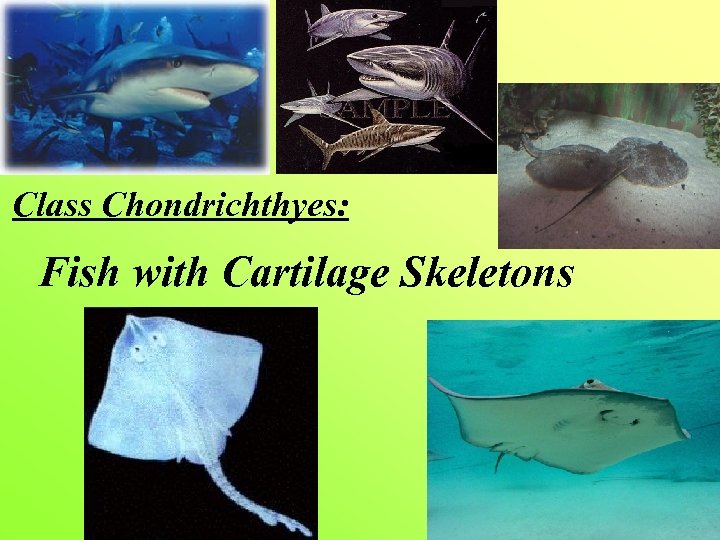 Class Chondrichthyes: Fish with Cartilage Skeletons
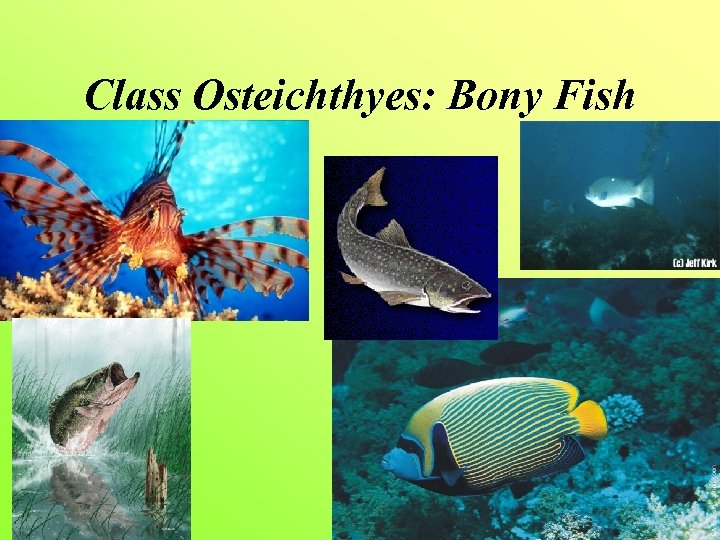 Class Osteichthyes: Bony Fish
 Three Classes of Fishes All Fishes: • Aquatic • Streamlined shape • Functional tail that facilitates movement through water • Most have gills. • Scales or Skin • Ectothermic • 2 -chambered heart Agnatha - jawless fishes—some parasitic Ex: lampreys and hagfishes (are the only ones) Chondrichthyes - Cartilaginous fish Ex: sharks, skates, rays Osteichthyes - Bony fish—Have a swim bladder Ex: Bass, trout, goldfish
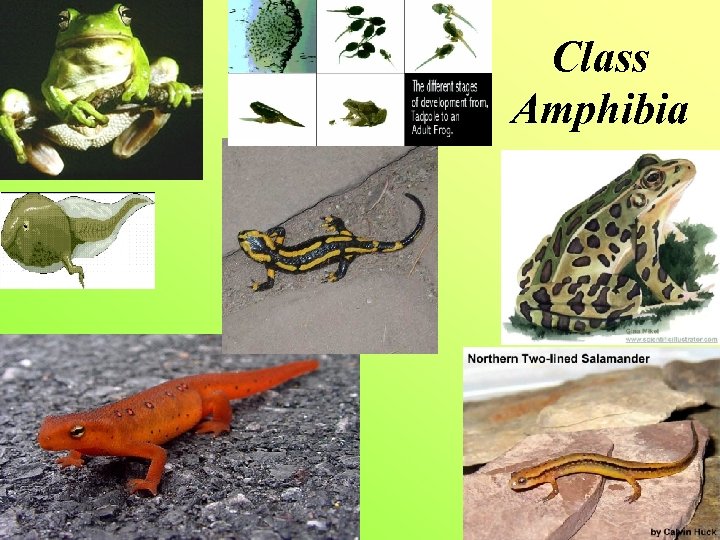 Class Amphibia
 Amphibians • Undergo metamorphosis (egg—tadpole— adult) • Live both on land in the water • Ex: Frogs, toads, salamanders • Fertilization is external. • Skin • Ectothermic • 3 -Chambered heart
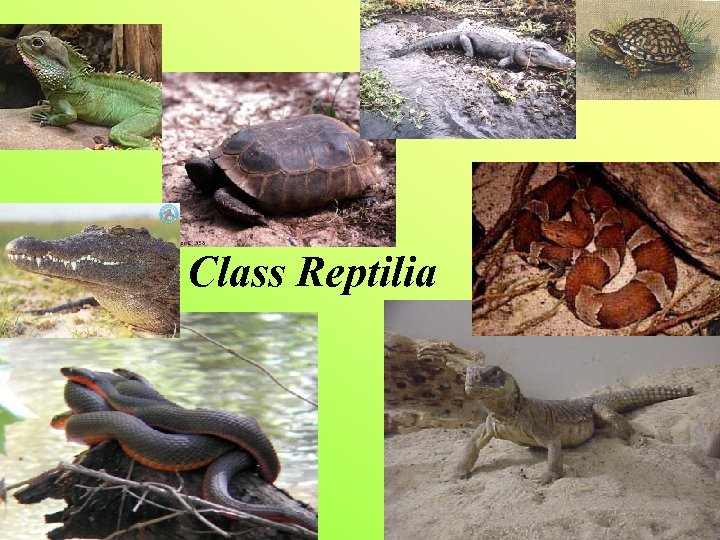 Class Reptilia
 Reptiles • Ex: Lizards, snakes, crocodiles, alligators, turtles • Dry, scaly skin • Most lay leathery eggs. (amniotic eggs) • Some bear live young. • Fertilization is internal. • Lungs • 3 -chambered heart (Some 4 -chambered) • Ectothermic
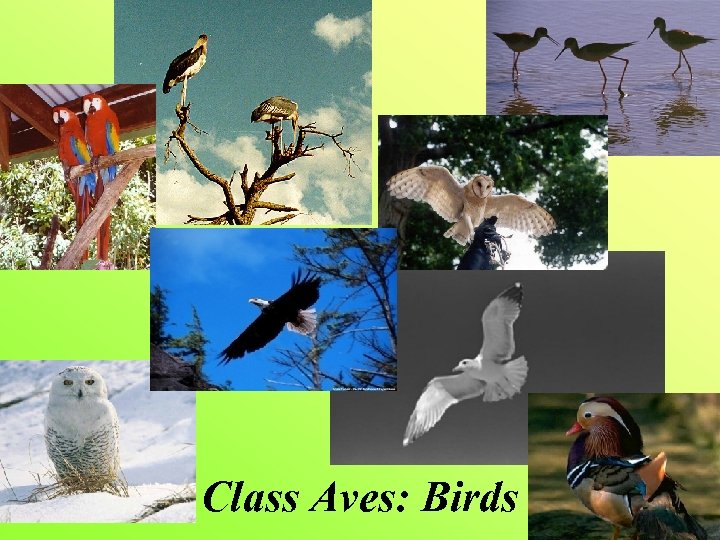 Class Aves: Birds
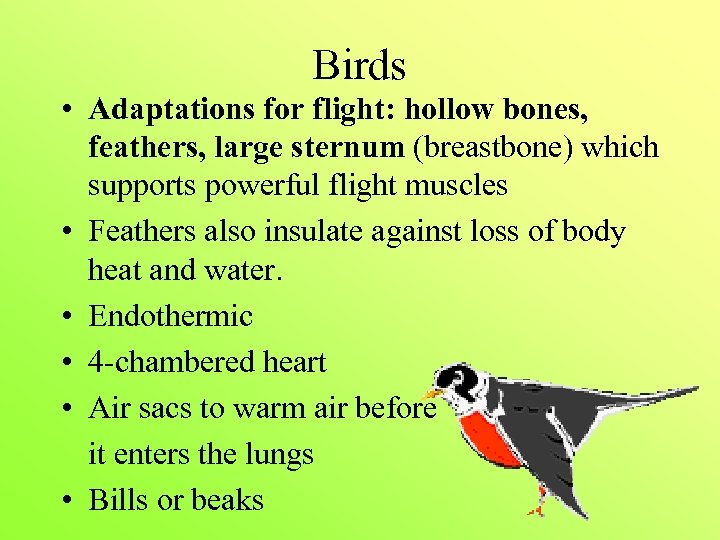 Birds • Adaptations for flight: hollow bones, feathers, large sternum (breastbone) which supports powerful flight muscles • Feathers also insulate against loss of body heat and water. • Endothermic • 4 -chambered heart • Air sacs to warm air before it enters the lungs • Bills or beaks
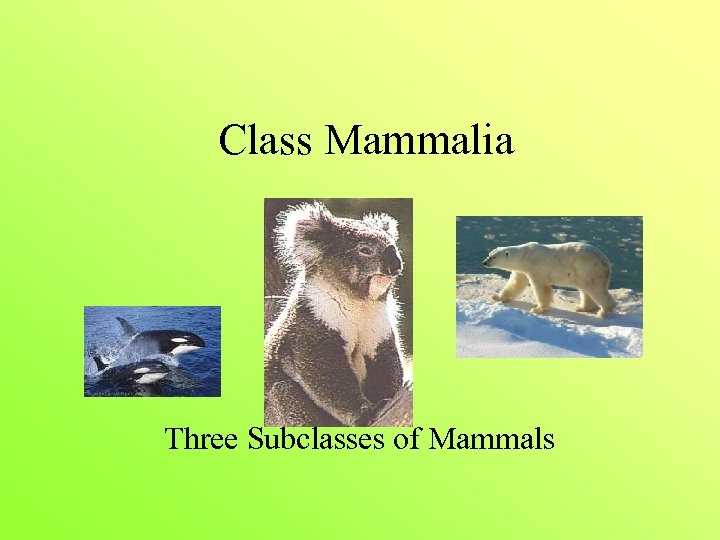 Class Mammalia Three Subclasses of Mammals
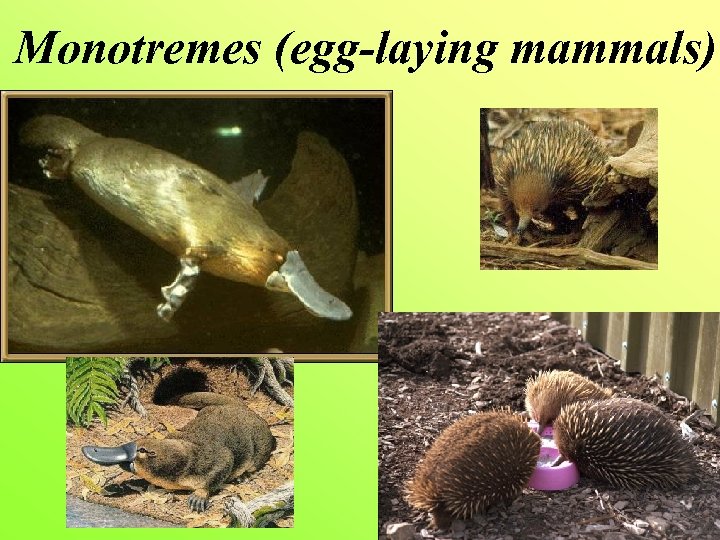 Monotremes (egg-laying mammals)
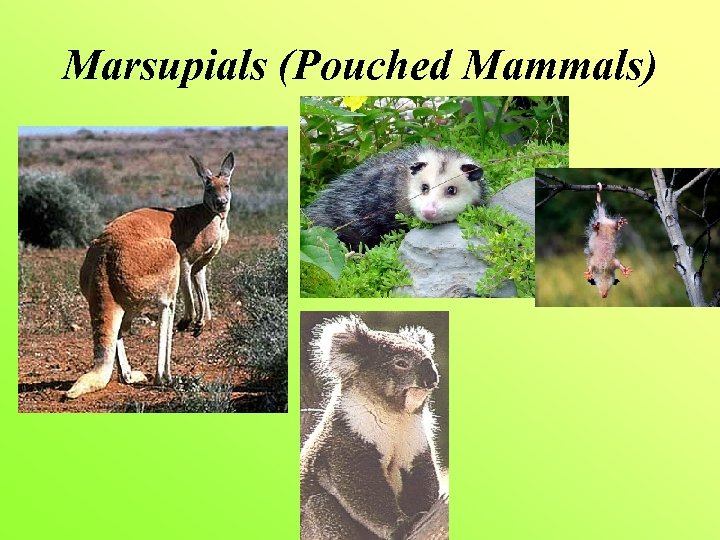 Marsupials (Pouched Mammals)
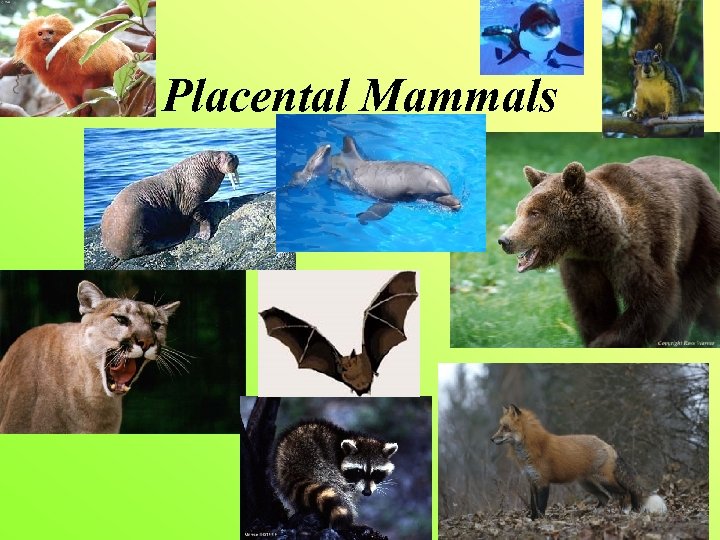 Placental Mammals
 Mammals • Most complex of all animals - highly developed organ systems and senses • Have hair or fur • Have mammary glands and feed their young milk • Endothermic • Three groups: – Monotremes – egg-laying mammals – found in Australia and New Zealand Ex: duck-billed platypus, spiny anteaters – Marsupials - pouched mammals - young born prematurely Ex: opossum, kangaroo, koala – Placental mammals - most mammals – young nourished by placenta until birth; born fully developed Ex: rabbits, deer, dogs, cats, bats, whales, monkeys, and humans