


 Скачать презентацию Keys to Your Financial Future Overview Keys
d22fc859e9fd5c71e7cc90d168b20279.ppt
- Количество слайдов: 32
 Keys to Your Financial Future Overview
 Keys to Your Financial Future: Curriculum Goal To give young people keys to their financial futures so they can be financially independent and financially capable. 1
 Why Keys? Working title was Financing Your Future Changed to “Keys” because: Keys provide access to things—an apartment, a car, a home and a business—many of the assets young people may be saving for. Keys provide security—locking an apartment, car, home or business can. Keys are about control—when young people have keys they have control over something. Keys provide answers—answer keys. Finally, information that is “key” is considered essential or important. 2
 Keys to Your Financial Future: Modules Module 1: Asset Building: Unlocking the door to long-term benefits building Module 2: Good Credit: Your score in the game of life Module 3: Money Management: Cashing in on financial success 3 Core Modules Prior to enrollment in Opportunity Passport™
 Keys to Your Financial Future: Modules Module 4: Education and Training: The power of knowledge for work and college Module 5: Housing: Reality in realty Module 6: Transportation: Enjoy the ride Module 7: Saving and Investing: Making the change by keeping it About the Module Names The module names were developed by the participants of the 2012 Jim Casey Youth Opportunities Initiative Youth Leadership In 4
 Keys to Your Financial Future: Modules Financial knowledge and skills to transition out of the foster care system, which includes the ability to: Set and achieve personal and financial goals. Open and maintain savings and checking/debit accounts. Describe the qualities of an affordable, stable and secure place to live and how to find and keep a stable and secure place to live. Describe the qualities of safe, reliable and affordable transportation and how to find and pay for it. Pay for training or education to achieve job-related/career goals. 5
 Keys to Your Financial Future: Outcomes Financial knowledge and skills to transition out of the foster care system, which includes the ability to: Keep sources (income and benefits) and uses (expenses, debt repayment, saving, asset building, charitable contributions) of resources in balance. Know what key documents they need and how to access and protect them. Develop knowledge and understanding of community resources and access/use them when needed. 6 Continue to build assets and protect those they have.
 Keys to Your Financial Future: Outcomes Savings for both asset building and emergencies. Knowledge about the access, use and management of credit, credit reports and credit scores. Connections with financial service professionals within the community. Ability to manage financial accounts. 7
 8 Keys to Your Financial Future: Repeating Competencies addressed contextually in multiple sessions for the purposes of reinforcement. Setting goals Building assets Contingency planning Protecting assets (including your identity) Operating as a savvy consumer Making decisions/evaluating the risks and returns of a product, service or situation Making and keeping a budget Managing cash flow Fixing or improving credit and/or managing and reducing debt
 Keys to Your Financial Future: Products Participant Workbook Facilitator’s Guide Training of Trainers Online Toolkit 9
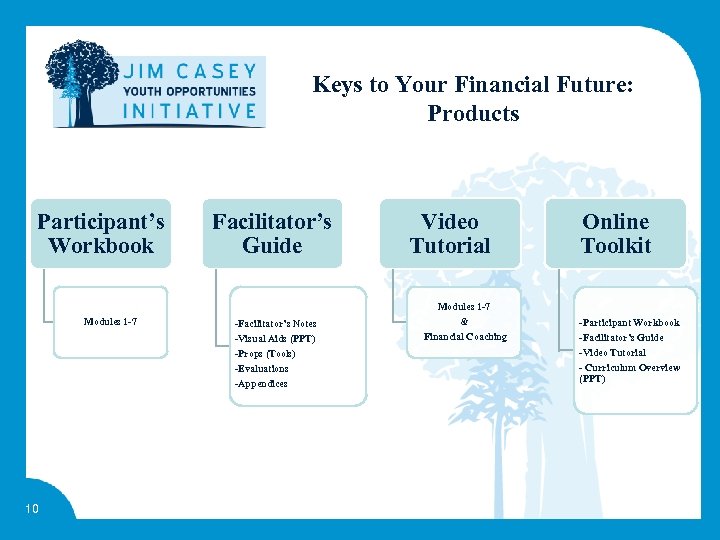 Keys to Your Financial Future: Products Participant’s Workbook Facilitator’s Guide Video Tutorial Online Toolkit Modules 1 -7 -Facilitator’s Notes -Visual Aids (PPT) -Props (Tools) -Evaluations -Appendices 10 & Financial Coaching -Participant Workbook -Facilitator’s Guide -Video Tutorial - Curriculum Overview (PPT)
 g a b r o a d r a n g e o f f i n a n c i a l s e r v i c e s a n d p r o d u c t s — n o t j u s t s a v i n g s a n d Changes from Previous Curriculum Based on increasing young people’s capacity to become more financially capable within current economic context resulting in greater emphasis on: Building assets—assets are also more broadly defined to include productive assets and social capital; thinking about assets from a portfolio model was added as a result of staff feedback c h e c k i n g a c c o u n t s Saving for emergencies—heavily emphasized in the context of contingency planning and debt mitigation Using a broad range of financial services an 11
 g a b r o a d r a n g e o f f i n a n c i a l s e r v i c e s a n d p r o d u c t s — n o t j u s t s a v i n g s a n d Changes from Previous Curriculum No “one strategy fits all” approaches—risks and rewards (costs/benefits and advantages/ disadvantage) of different approaches are examined in nearly every module Building credit—is a core topic and has much more content including information on credit scoring (Note: This is the topic that seems to interest the young people the most. ) c h e c k i n g a c c o u n t s Alternatives to budgeting—bill paying calendar, envelope system, cash flow and online/technology-based systems are presented as options 12
 g a b r o a d r a n g e o f f i n a n c i a l s e r v i c e s a n d p r o d u c t s — n o t j u s t s a v i n g s a n d Changes from Previous Curriculum Provides options—within materials, young people are asked to consider whether information is relevant to them now Highlights differences and provides specific guidance where age matters—credit reports, loans, accounts, driver’s license, etc. c h e c k i n g a c c o u n t s Aligned with changes to Opportunity Passport™—every module relates content to Opportunity Passport™ Matched Savings current policy 13
 g a b r o a d r a n g e o f f i n a n c i a l s e r v i c e s a n d p r o d u c t s — n o t j u s t s a v i n g s a n d Changes from Previous Curriculum More technical information, more detail—pro and con; more will be expected from site person stewarding financial education More narrative, but also more exercises and opportunities for reflection within workbook c h e c k i n g a c c o u n t s Use of real examples—credit report, lease, auto insurance summary and declarations, etc. 14
 g a b r o a d r a n g e o f f i n a n c i a l s e r v i c e s a n d p r o d u c t s — n o t j u s t s a v i n g s a n d Changes from Previous Curriculum Use of many case studies instead of one Use of contemporary names “The different case studies and stories used as examples, I like the diversity in the names. It’s neat they are not the usual Sally, Joe, and John names. The names used are relevant and recognizable for our generation. I know it is a small detail but definitely one I noticed and appreciated. ” c h e c k i n g a c c o u n t s 15
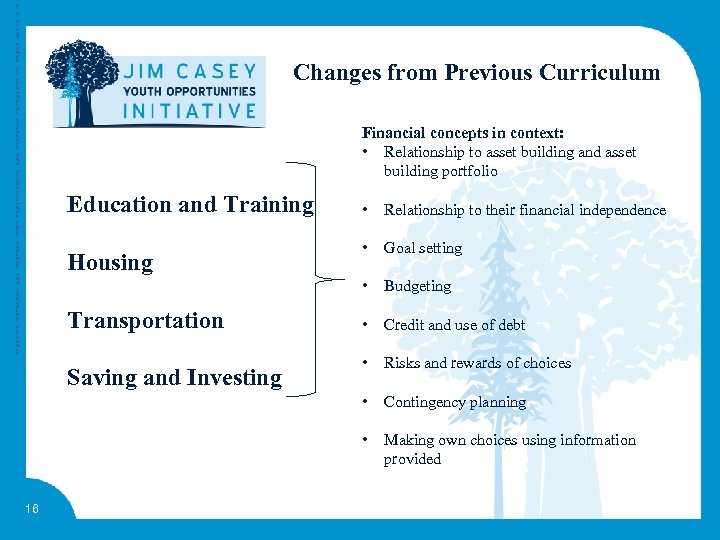 g a b r o a d r a n g e o f f i n a n c i a l s e r v i c e s a n d p r o d u c t s — n o t j u s t s a v i n g s a n d Changes from Previous Curriculum Financial concepts in context: • Relationship to asset building and asset building portfolio Education and Training Saving and Investing 16 Goal setting Budgeting • Credit and use of debt • Risks and rewards of choices Contingency planning • Transportation • • c h e c k i n g a c c o u n t s Relationship to their financial independence • Housing • Making own choices using information provided
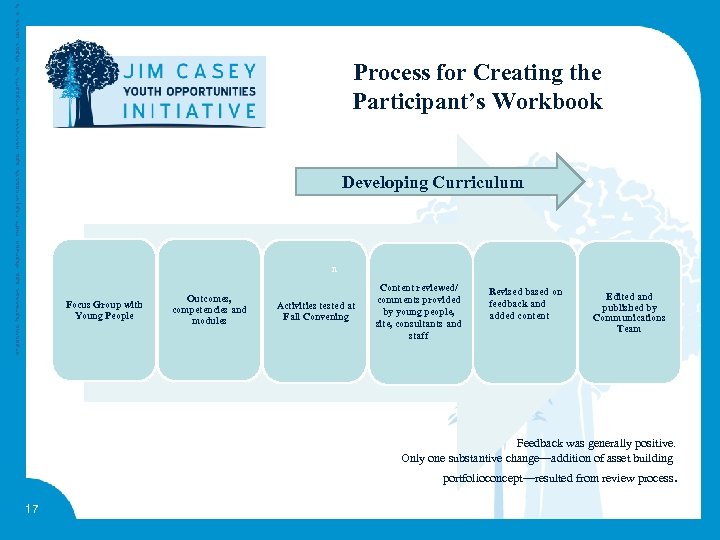 g a b r o a d r a n g e o f f i n a n c i a l s e r v i c e s a n d p r o d u c t s — n o t j u s t s a v i n g s a n d Process for Creating the Participant’s Workbook Developing Curriculum n c h e c k i n g a c c o u n t s Focus Group with Young People Outcomes, competencies and modules Activities tested at Fall Convening Content reviewed/ comments provided by young people, site, consultants and staff Revised based on feedback and added content Edited and published by Communications Team Feedback was generally positive. Only one substantive change—addition of asset building portfolioconcept—resulted from review process. 17
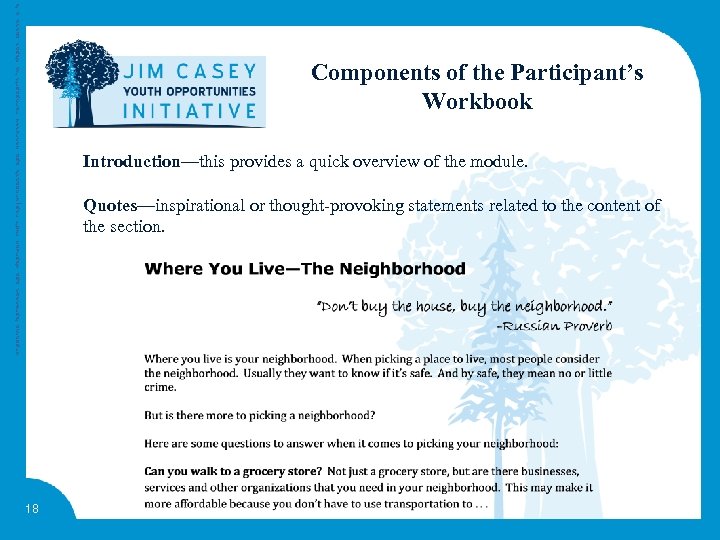 g a b r o a d r a n g e o f f i n a n c i a l s e r v i c e s a n d p r o d u c t s — n o t j u s t s a v i n g s a n d Components of the Participant’s Workbook Introduction—this provides a quick overview of the module. Quotes—inspirational or thought-provoking statements related to the content of the section. c h e c k i n g a c c o u n t s 18
 g a b r o a d r a n g e o f f i n a n c i a l s e r v i c e s a n d p r o d u c t s — n o t j u s t s a v i n g s a n d Components of the Participant’s Workbook Key Questions—these are either questions for reflection or questions that may be used in the training. Young people participating in Opportunity Passport™ and Keys to Your Financial Future Training can use the space provided to write their answers or ideas from others in the training group. c h e c k i n g a c c o u n t s Key Activity—these are case studies or problems that may be used during the training or can be used individually to get more practice in understanding a specific idea or concept covered in the curriculum. 19
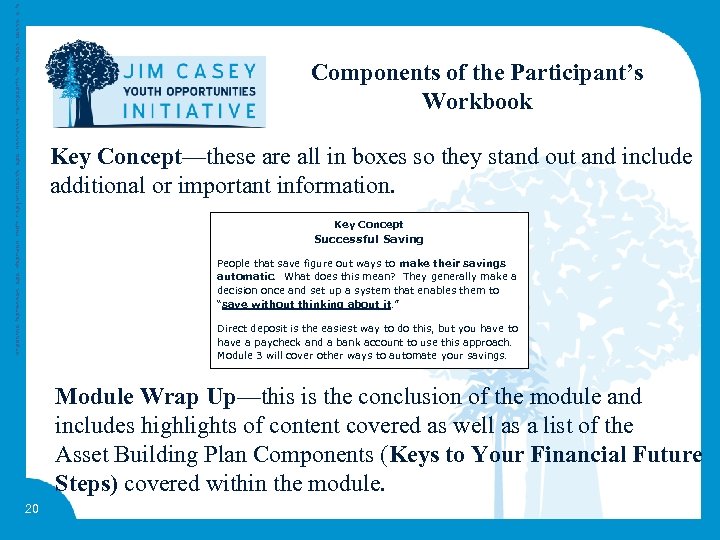 g a b r o a d r a n g e o f f i n a n c i a l s e r v i c e s a n d p r o d u c t s — n o t j u s t s a v i n g s a n d Components of the Participant’s Workbook Key Concept—these are all in boxes so they stand out and include additional or important information. Key Concept Successful Saving People that save figure out ways to make their savings automatic. What does this mean? They generally make a decision once and set up a system that enables them to “save without thinking about it. ” c h e c k i n g a c c o u n t s Direct deposit is the easiest way to do this, but you have to have a paycheck and a bank account to use this approach. Module 3 will cover other ways to automate your savings. Module Wrap Up—this is the conclusion of the module and includes highlights of content covered as well as a list of the Asset Building Plan Components (Keys to Your Financial Future Steps) covered within the module. 20
 g a b r o a d r a n g e o f f i n a n c i a l s e r v i c e s a n d p r o d u c t s — n o t j u s t s a v i n g s a n d Components of the Participant’s Workbook Within each module, there are Keys to Your Financial Future. Each step comprises a part of the Asset Building Plan. They are numbered by module and in the order they come within a module. c h e c k i n g a c c o u n t s When the young people complete all of these steps, their own asset building plan for financial independence. 21
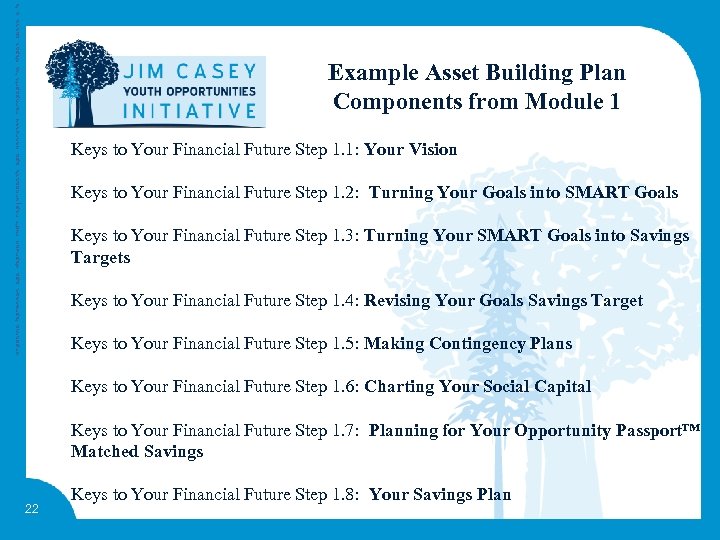 g a b r o a d r a n g e o f f i n a n c i a l s e r v i c e s a n d p r o d u c t s — n o t j u s t s a v i n g s a n d Example Asset Building Plan Components from Module 1 Keys to Your Financial Future Step 1. 1: Your Vision Keys to Your Financial Future Step 1. 2: Turning Your Goals into SMART Goals Keys to Your Financial Future Step 1. 3: Turning Your SMART Goals into Savings Targets c h e c k i n g a c c o u n t s Keys to Your Financial Future Step 1. 4: Revising Your Goals Savings Target Keys to Your Financial Future Step 1. 5: Making Contingency Plans Keys to Your Financial Future Step 1. 6: Charting Your Social Capital Keys to Your Financial Future Step 1. 7: Planning for Your Opportunity Passport™ Matched Savings 22 Keys to Your Financial Future Step 1. 8: Your Savings Plan
 g a b r o a d r a n g e o f f i n a n c i a l s e r v i c e s a n d p r o d u c t s — n o t j u s t s a v i n g s a n d Drawbacks Volume of content—may be too much for some sites to handle; may require technical assistance from consultants Options within Modules—some people like options, some people don’t Lack of integration of video and technology —intentionally not included due to uneven resources at sites; optional lessons should be included in online toolkit for those who can run classes on computers, for example c h e c k i n g a c c o u n t s 23
 g a b r o a d r a n g e o f f i n a n c i a l s e r v i c e s a n d p r o d u c t s — n o t j u s t s a v i n g s a n d Changes from Previous Curriculum More guidance Greater diversity of training techniques Options for activities within module c h e c k i n g a c c o u n t s Resources for coaching 24 “How one presents something is often as strong a political statement as the content one is presenting. ” -Training for Transformatio
 g a b r o a d r a n g e o f f i n a n c i a l s e r v i c e s a n d p r o d u c t s — n o t j u s t s a v i n g s a n d Components of the Facilitator’s Guide Training overview Session outcomes Materials needed for the training—this is a list of any handouts, visual aids, training props or other supplies you may need for the training session. c h e c k i n g a c c o u n t s Overview of KEY ACTIVITIES—this is a list of the activities contained within the Participant Workbook in chart format with an indication of whether the activity is used within the training. Keys to Your Financial Future Steps—this is a list of the Asset Building Plan components covered within the section of the training. 25
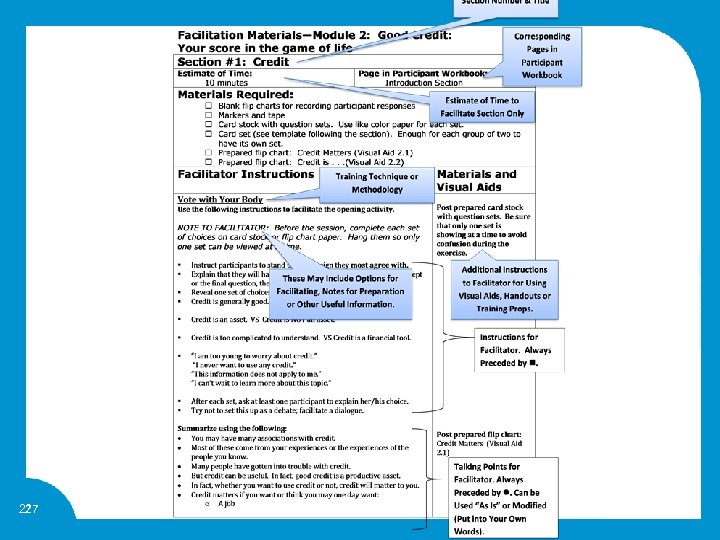
 g a b r o a d r a n g e o f f i n a n c i a l s e r v i c e s a n d p r o d u c t s — n o t j u s t s a v i n g s a n d Components of the Facilitator’s Guide Ø Keys to Preparation—this is a plan for helping you prepare for facilitating the training. Ø Keys to Timing the Facilitation of the Module Ø Following the facilitation materials, you will find: • Answer keys to the Key Activities • Templates for Training Props • Templates for the Visual Aids—these are available in Power. Point format also, but are provided to help you prepare flip charts prior to each training c h e c k i n g a c c o u n t s “Tell me and I'll forget. Show me, and I may not remember. Involve me, and I'll understand. ” 26 Native American Saying
 27 27
27 27
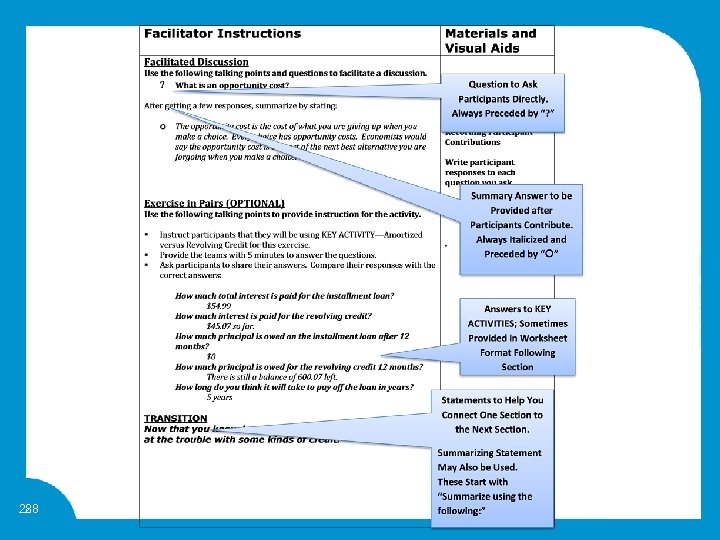 28 28
28 28
 g a b r o a d r a n g e o f f i n a n c i a l s e r v i c e s a n d p r o d u c t s — n o t j u s t s a v i n g s a n d Components of the Facilitator’s Guide Ø Facilitator Guide Introduction Ø Pre-Training Assessment Ø Post-Training Assessment Ø Evaluations for all Modules Ø Visual Aids for all Modules (PPT file) Ø Appendix 1 & 2 (Icebreakers [1] and Energizers [2]) Ø Appendix 3 (Financial Coaching) Ø Appendix 4 (Asset Building Plan Components) c h e c k i n g a c c o u n t s 29
 g a b r o a d r a n g e o f f i n a n c i a l s e r v i c e s a n d p r o d u c t s — n o t j u s t s a v i n g s a n d Keys to Your Financial Future: Video Tutorial Ø Provides trainers with additional information to develop content knowledge and skills to deliver Keys to Your Financial Future to the young people they serve in a way that is effective, engaging and builds the financial capability of young people. Ø Provides an orientation to Keys to Your Financial Future including the participant’s workbook, the facilitator’s guide and the training tools as well as an introduction to coaching to supplement and support the young people during and following completion of the training and throughout their involvement with the Opportunity Passport™. c h e c k i n g a c c o u n t s 30
 g a b r o a d r a n g e o f f i n a n c i a l s e r v i c e s a n d p r o d u c t s — n o t j u s t s a v i n g s a n d Keys to Your Financial Future: Video Tutorial-Results Ø Knowledge of the outcomes, competencies and content of Keys to Your Financial Future. Ø Ability to use the materials provided with the curriculum to deliver effective and engaging financial education that supports the young people they serve in reaching their own respective goals and building their financial capability. c h e c k i n g a c c o u n t s Ø Understanding of the Jim Casey Youth Opportunities Initiative’s expectations regarding financial education delivery. Ø Understanding of the pre/post assessment tools and how to analyze them for site level information on financial education efficacy. Ø Knowledge of financial coaching and how to use it to strengthen the financial capability of the young people they serve. 31