 Скачать презентацию Key words Symbol Mixture Physical change chemical change
46e8516b53cb01dc1db8a8412862a66c.ppt
- Количество слайдов: 186



Key words Symbol Mixture Physical change chemical change Proton Liquid Thermal energy Freezing Compound chemical reaction Molecule electron Neutron Gas vaporization coalesce matter atomic number atomic mass periodic table nucleus evaporation boiling element conservation of mass Period ductile magnetic condensation sublimation atom precipitate malleable conductor corrosion superheated gases coalesce deposition=frost heterogeneous mixture homogeneous mixture combustibility
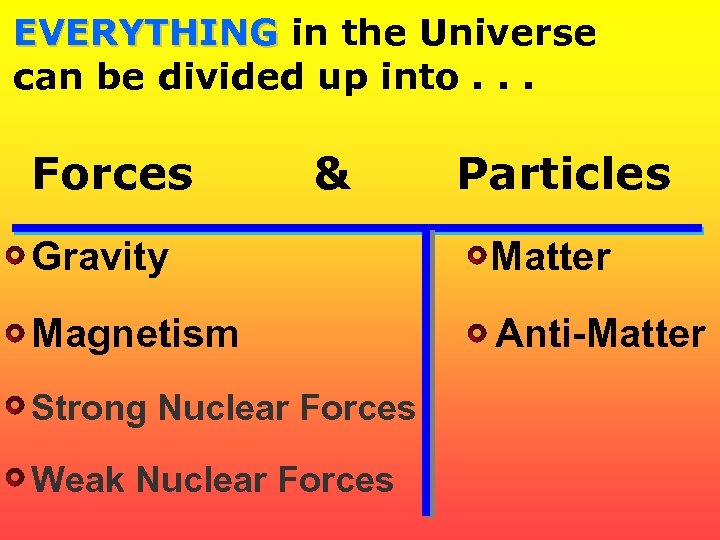
EVERYTHING in the Universe can be divided up into. . . Forces & Particles Gravity Matter Magnetism Anti-Matter Strong Nuclear Forces Weak Nuclear Forces
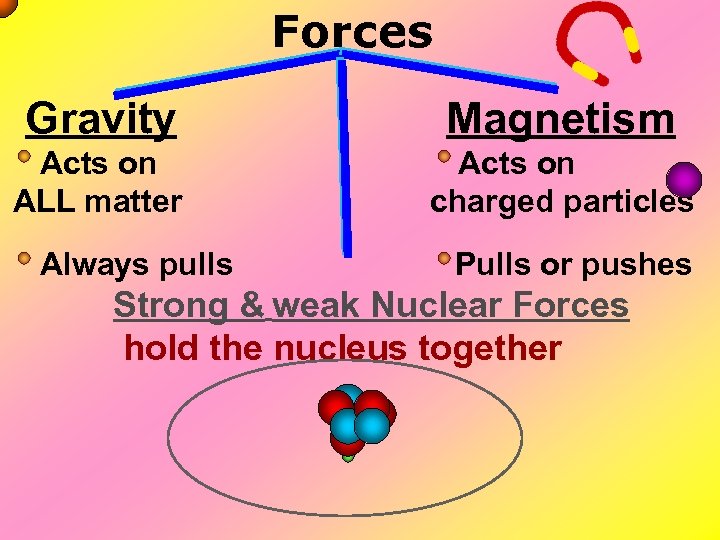
Forces Magnetism Acts on ALL matter Acts on charged particles Gravity Always pulls Pulls or pushes Strong & weak Nuclear Forces hold the nucleus together
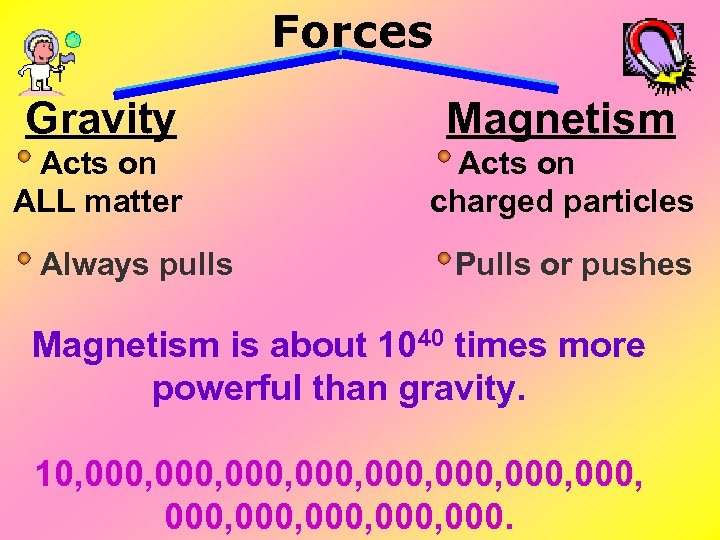
Forces Gravity Magnetism Acts on ALL matter Acts on charged particles Always pulls Pulls or pushes Magnetism is about 1040 times more powerful than gravity. 10, 000, 000, 000, 000.
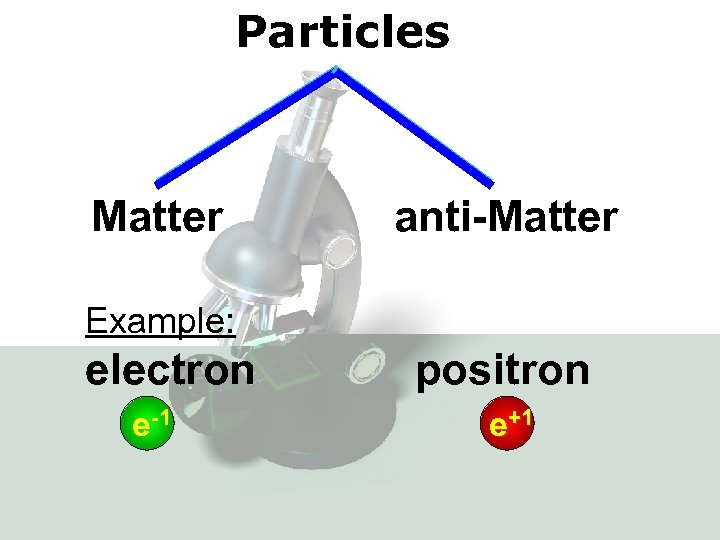
Particles Matter anti-Matter Example: electron e-1 positron e+1
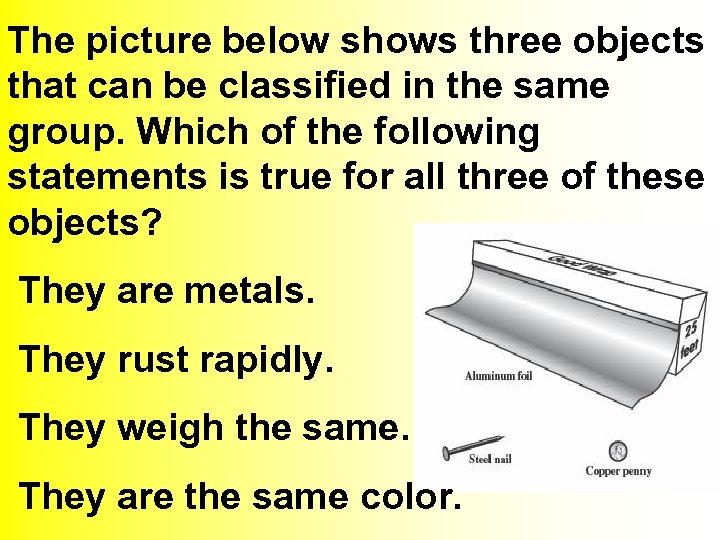
The picture below shows three objects that can be classified in the same group. Which of the following statements is true for all three of these objects? They are metals. They rust rapidly. They weigh the same. They are the same color.
Which pair of elements is MOST similar? Ca and F Na and Cl Ne and Ar Li and H
Copper is an element that is used in electrical wires. What is the smallest unit of copper that still maintains the characteristics of copper? the atom the electron the nucleus the proton
In making a pizza, which process involves a chemical change? Mixing spices for the sauce Slicing pepperoni for the topping Spreading cheese on the pizza Baking the dough to form the crust
What is the smallest particle of the element gold (Au) that can still be classified as gold? atom molecule neutron proton
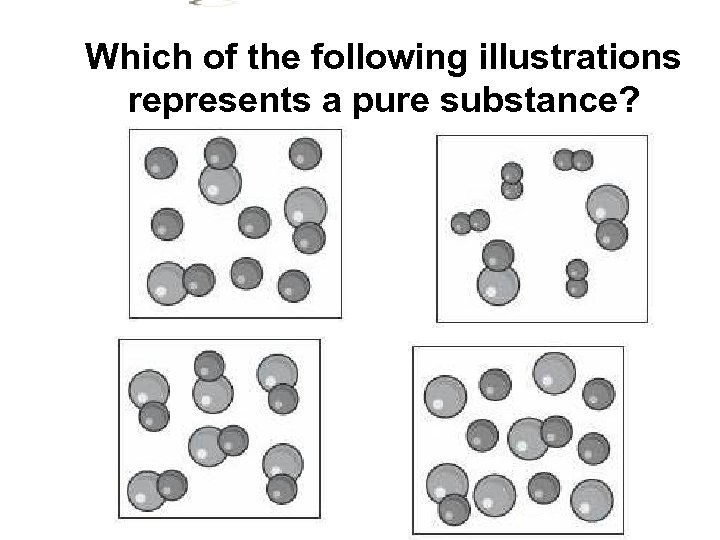
Which of the following illustrations represents a pure substance?
If 1 kg of the compound toluene melts at – 95°C, then 500 g of toluene will melt at – 47. 5°C. melt at – 95°C. boil at 47. 5°C.
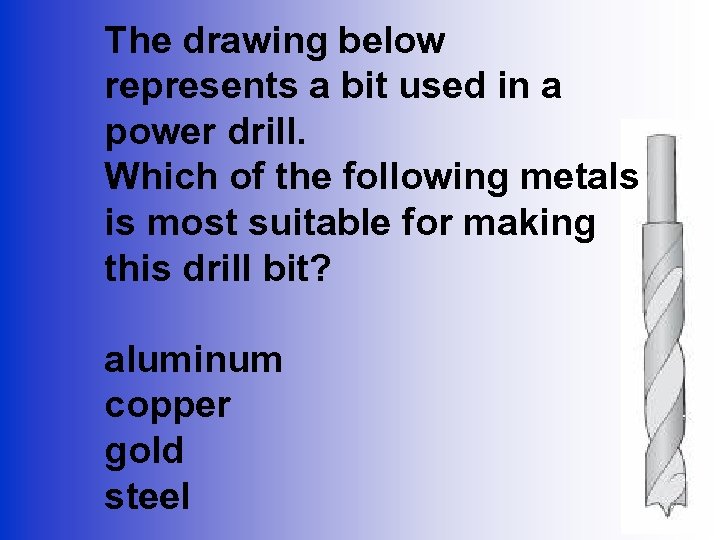
The drawing below represents a bit used in a power drill. Which of the following metals is most suitable for making this drill bit? aluminum copper gold steel
Which statement about the molecules in ice and the molecules in liquid water is correct? The molecules in ice have more energy than the molecules in liquid water. The molecules in ice contain different atoms than the molecules in liquid water. The molecules in ice have more electric charge than the molecules in liquid water. The molecules in ice are less free to move than the molecules in liquid water.
Which formulas represent compounds? O 2, H 2 O 2 CO 2, H 2 O H 2, CO 2 H 2, O 2
Which is an example of a chemical change? pepper being ground onto a salad a match being lit sugar being dissolved in water wood being chopped
Which statement is correct concerning the mass of a ball of clay? The mass changes as the altitude of the ball of clay changes. The mass changes as the shape of the ball of clay changes. The mass of the ball of clay is unchanged by altitude or shape. The mass is doubled when the ball of clay is divided into two equal pieces.
Mary wants to find the density of a small stone. Which tools will she need? a meterstick and a thermometer and a balance and a graduated cylinder and a meterstick
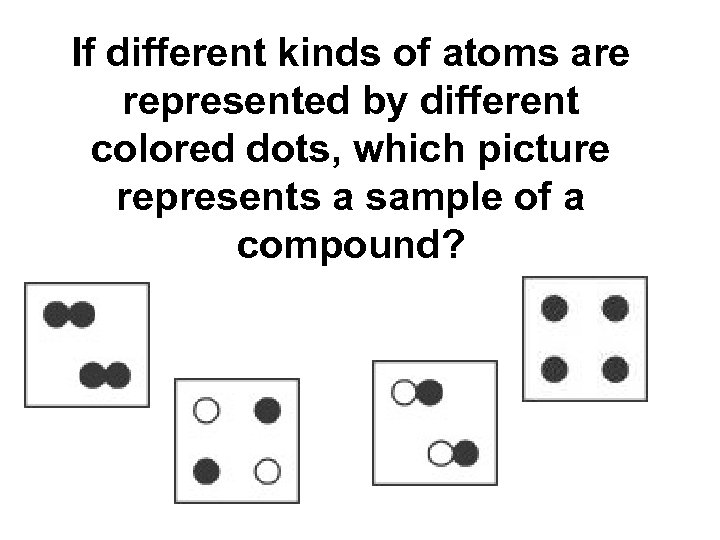
If different kinds of atoms are represented by different colored dots, which picture represents a sample of a compound?
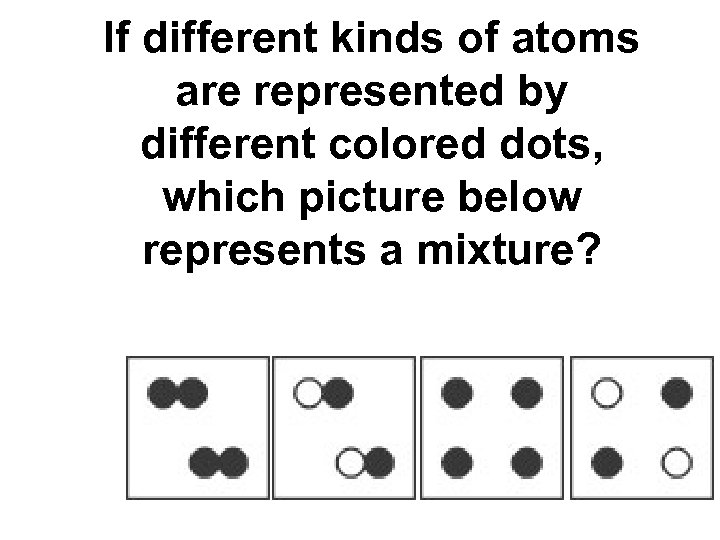
If different kinds of atoms are represented by different colored dots, which picture below represents a mixture?
Which of the following is a compound? oxygen water nitrogen air
Evidence of a chemical change would be a melting popsicle. spinning top. spilled bucket of water. rusting car fender.
Which symbol represents carbon? Ca N K C
Moisture that collects on the outside of a cold glass results from the process of evaporation. condensation. sublimation. vaporization.

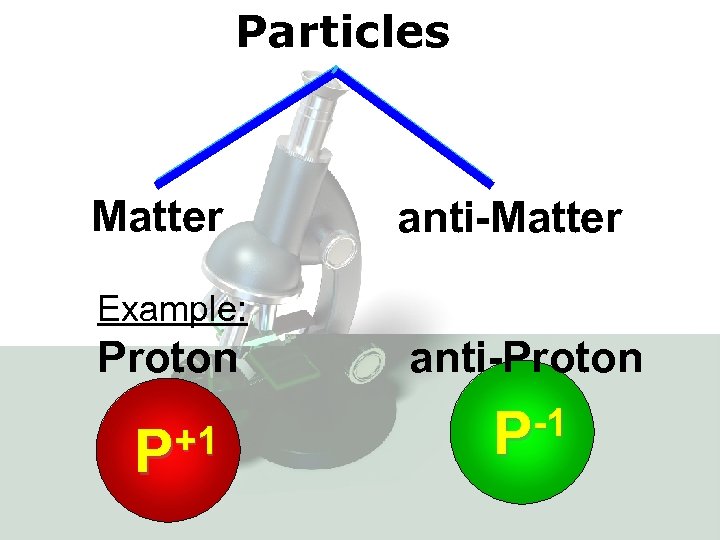
Particles Matter anti-Matter Example: Proton anti-Proton +1 P -1 P
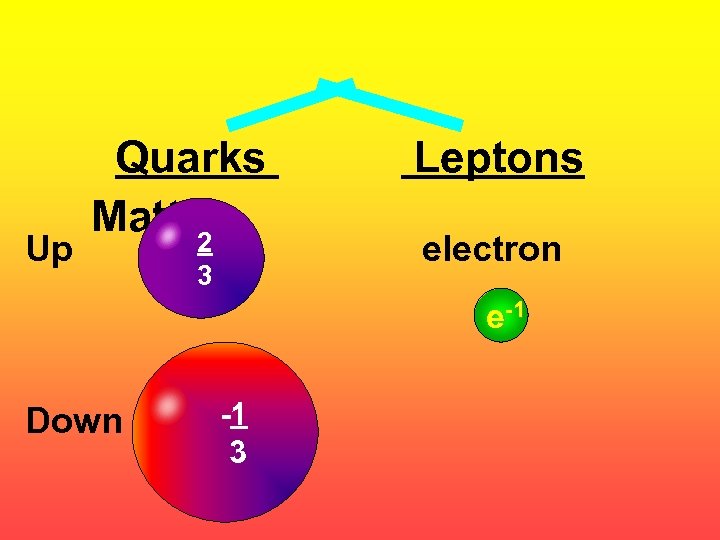
Up Quarks Matter 2 3 Leptons electron e-1 Down -1 3
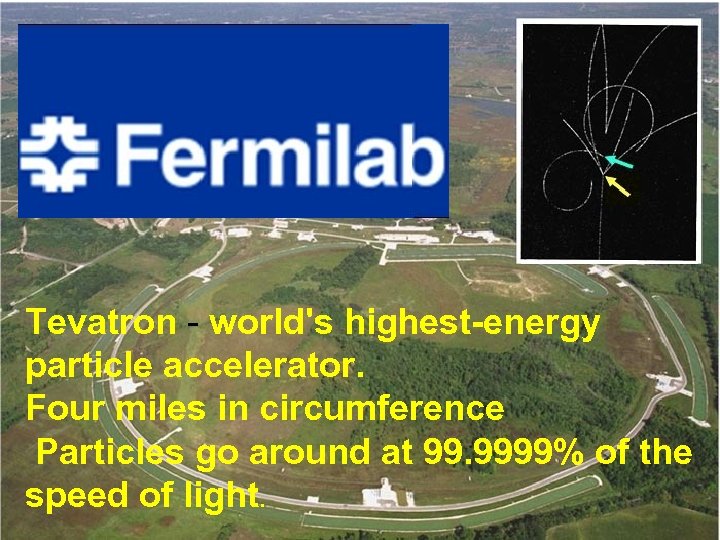
Tevatron - world's highest-energy particle accelerator. Four miles in circumference Particles go around at 99. 9999% of the speed of light.
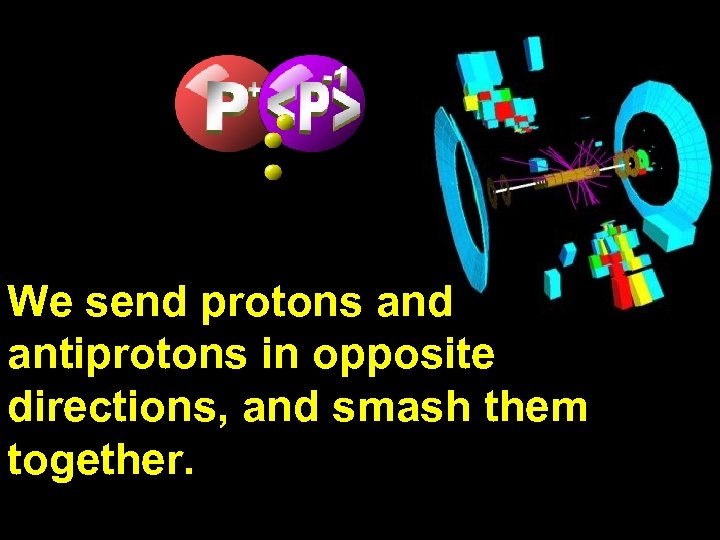
We send protons and antiprotons in opposite directions, and smash them together.
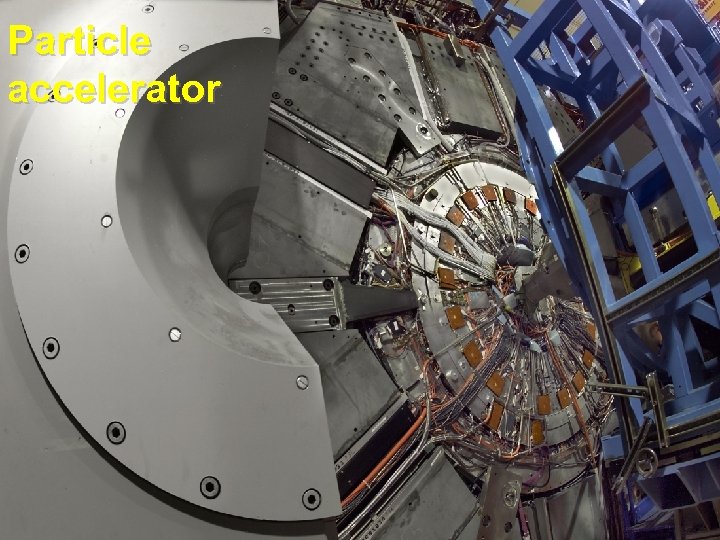
Particle accelerator
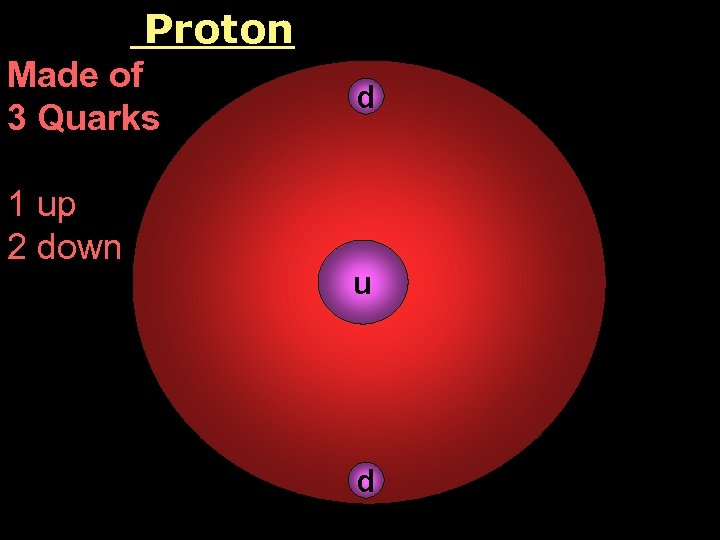
Proton Made of 3 Quarks 1 up 2 down d u d
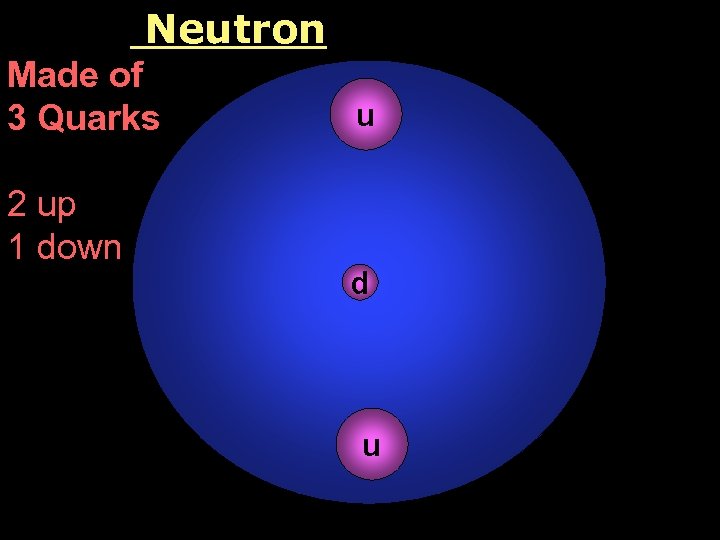
Neutron Made of 3 Quarks 2 up 1 down u d u
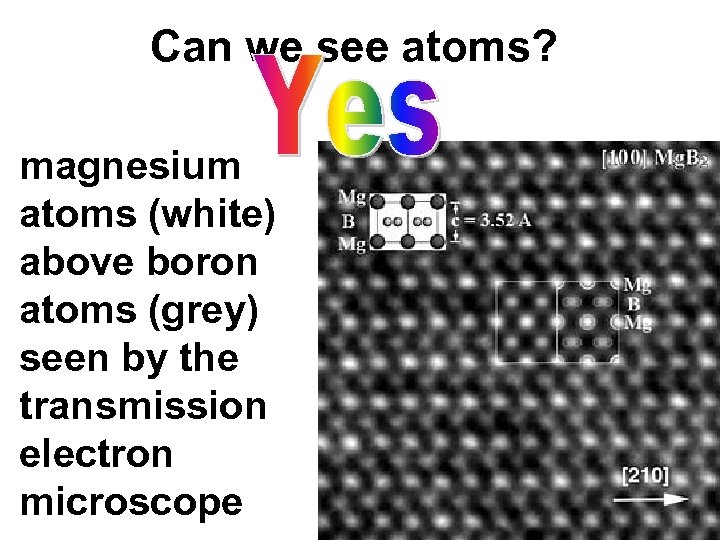
Can we see atoms? magnesium atoms (white) above boron atoms (grey) seen by the transmission electron microscope
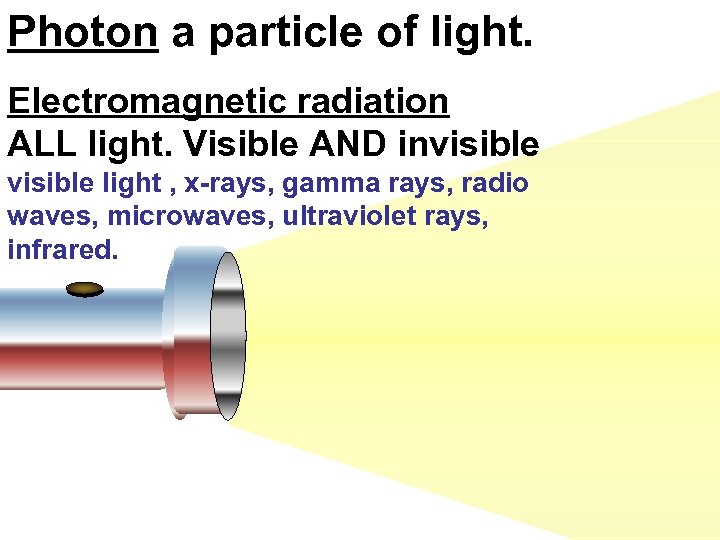
Photon a particle of light. Electromagnetic radiation ALL light. Visible AND invisible light , x-rays, gamma rays, radio waves, microwaves, ultraviolet rays, infrared.
Photon a particle of light Laser
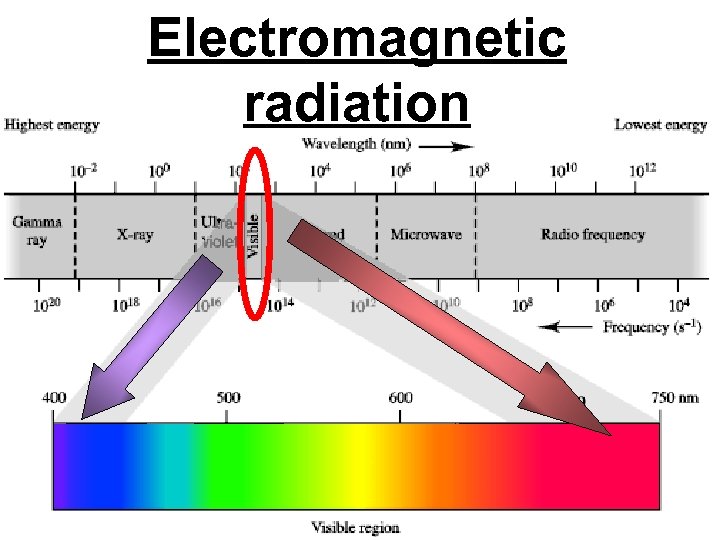
Electromagnetic radiation
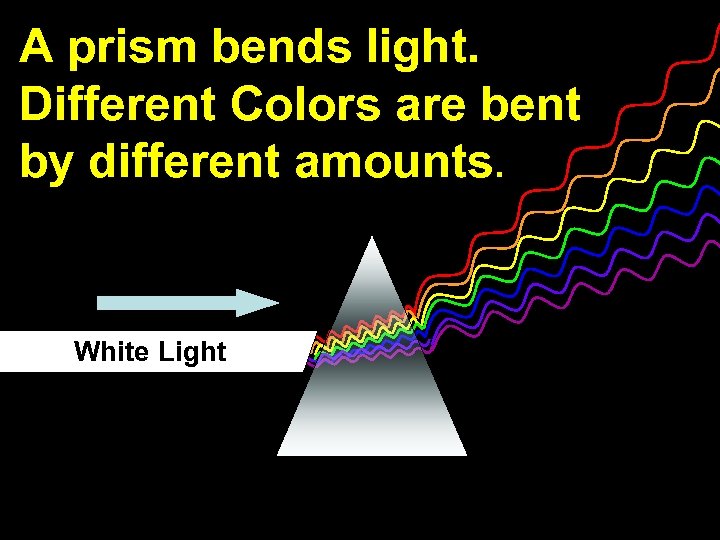
A prism bends light. Different Colors are bent by different amounts. White Light
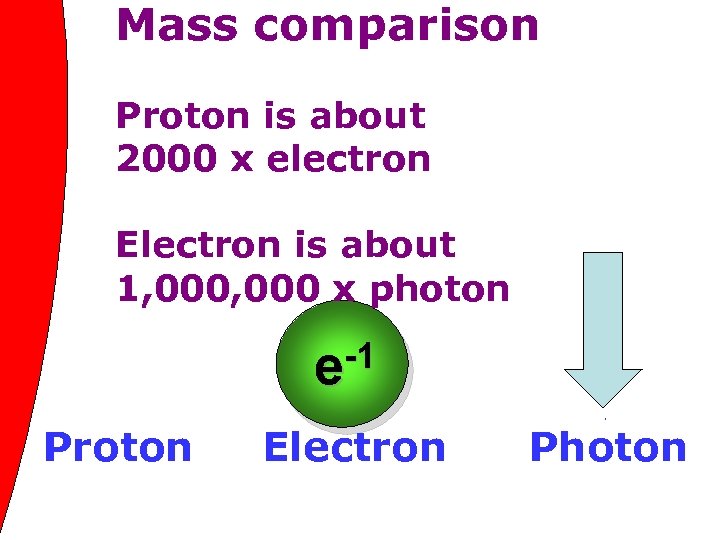
Mass comparison Proton is about 2000 x electron Electron is about 1, 000 x photon -1 e Proton Electron . Photon
DO everything be made of matter ? What are the building blocks of matter ? How many elements are there? What B da opposite of a mixture
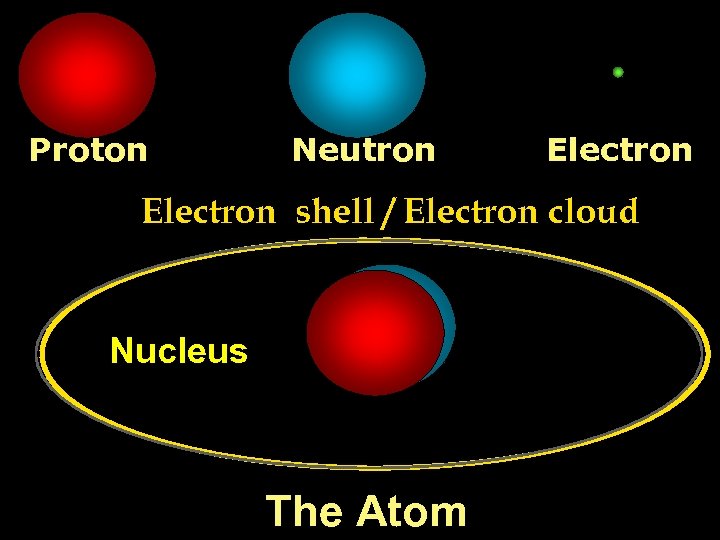
Proton Neutron Electron shell / Electron cloud Nucleus The Atom
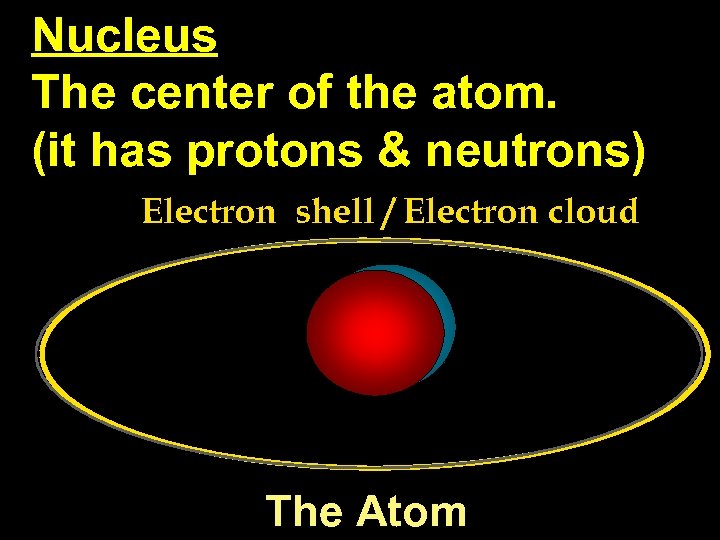
Nucleus The center of the atom. (it has protons & neutrons) Electron shell / Electron cloud The Atom
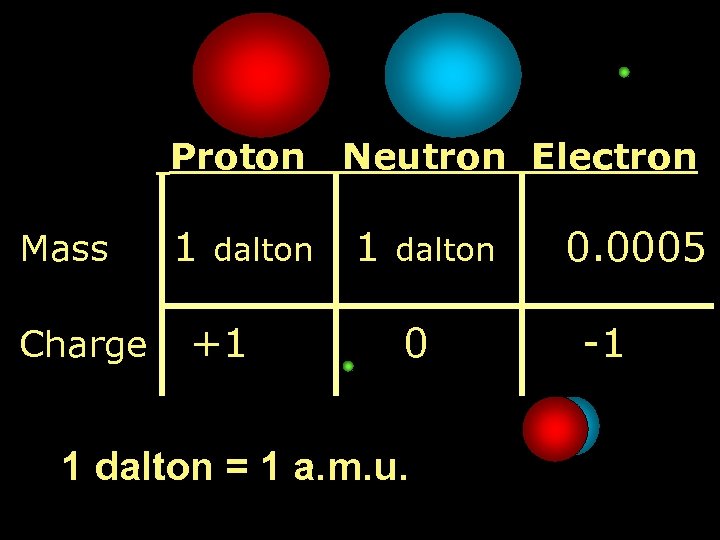
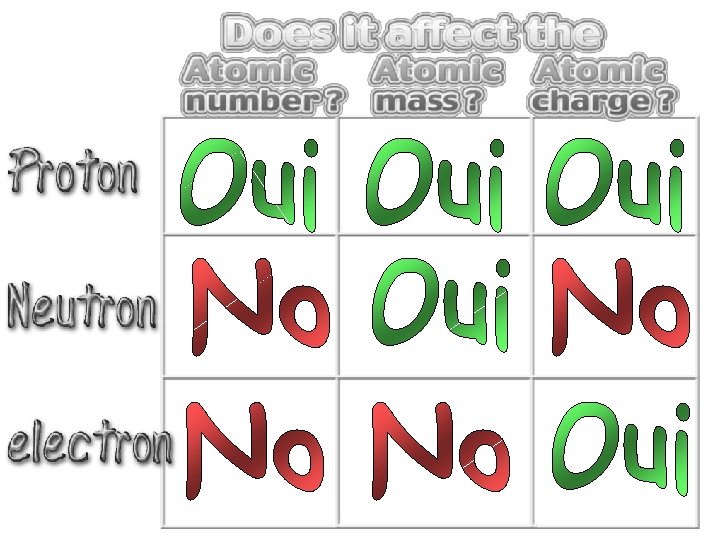
Proton Mass Charge 1 Neutron Electron 1 dalton +1 dalton 0. 0005 0 1 dalton = 1 a. m. u. -1
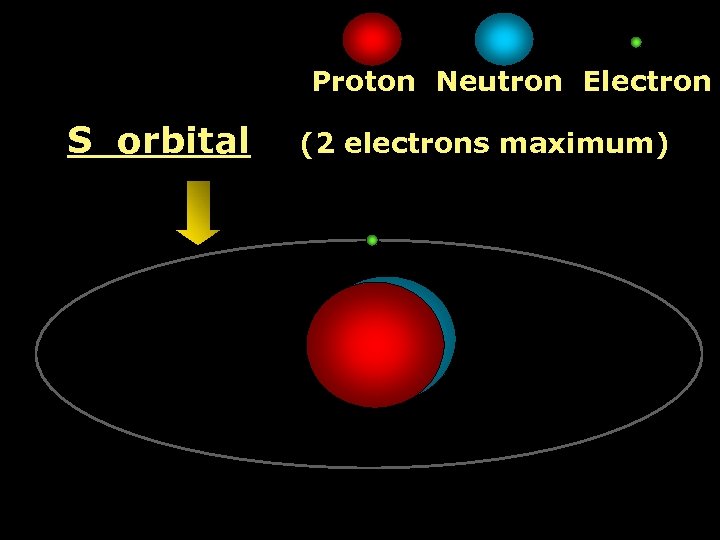
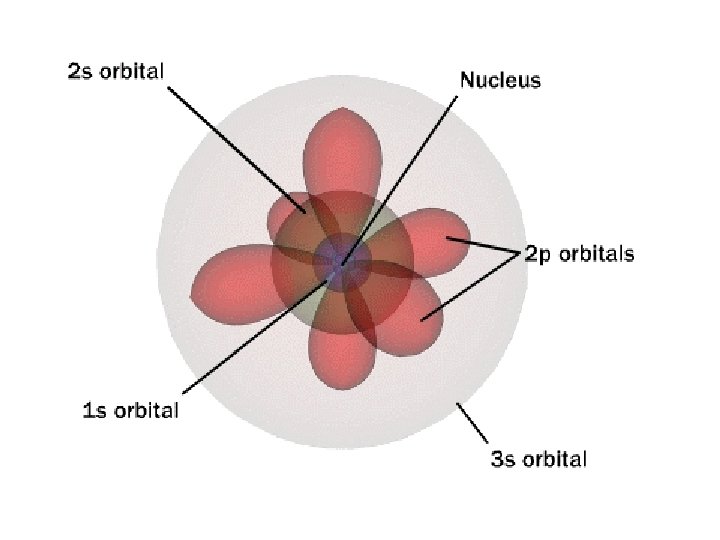
Proton Neutron Electron S orbital (2 electrons maximum)
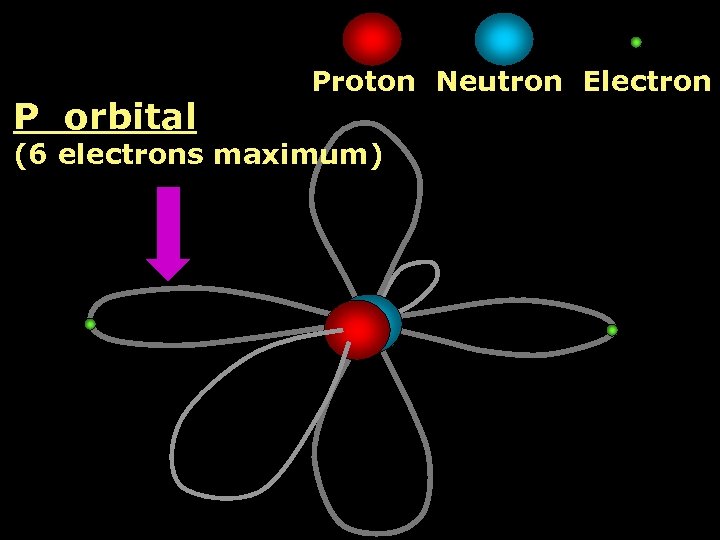
P orbital Proton Neutron Electron (6 electrons maximum)
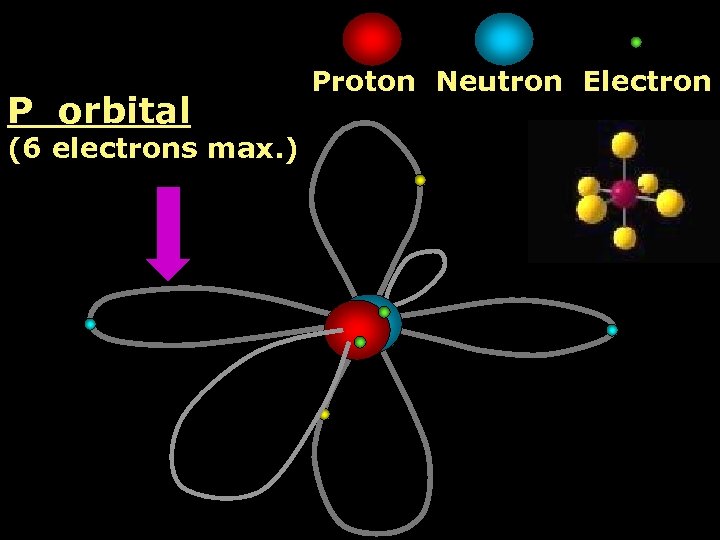
P orbital Proton Neutron Electron (6 electrons max. )
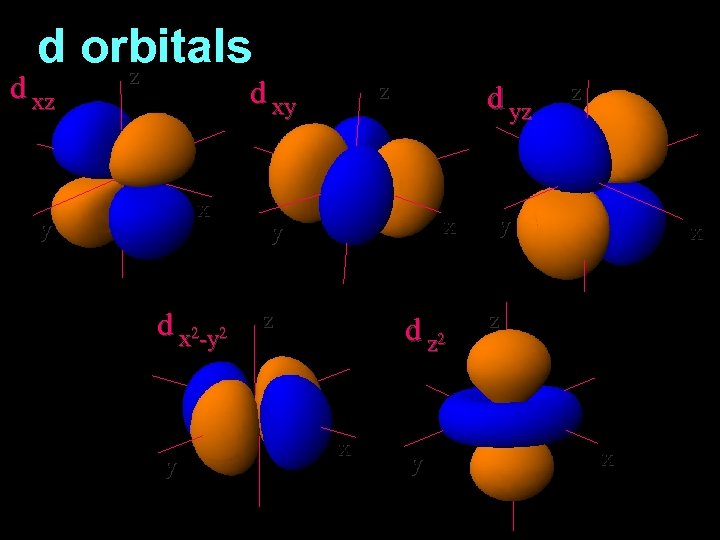
d orbitals z d xy x y d x 2 -y 2 y z d yz x y z d z 2 x y z y x z x
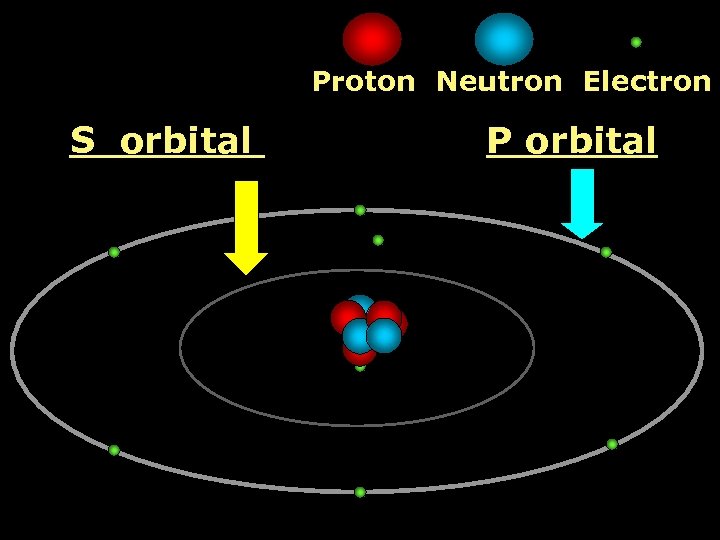
Proton Neutron Electron S orbital P orbital
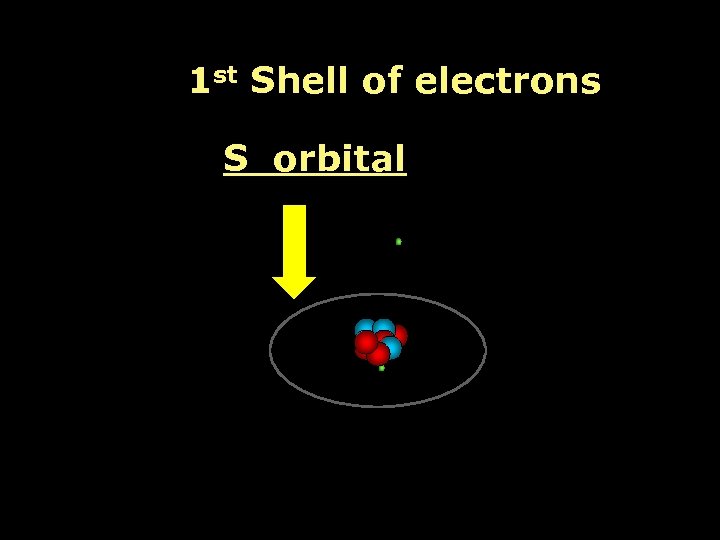
1 st Shell of electrons S orbital
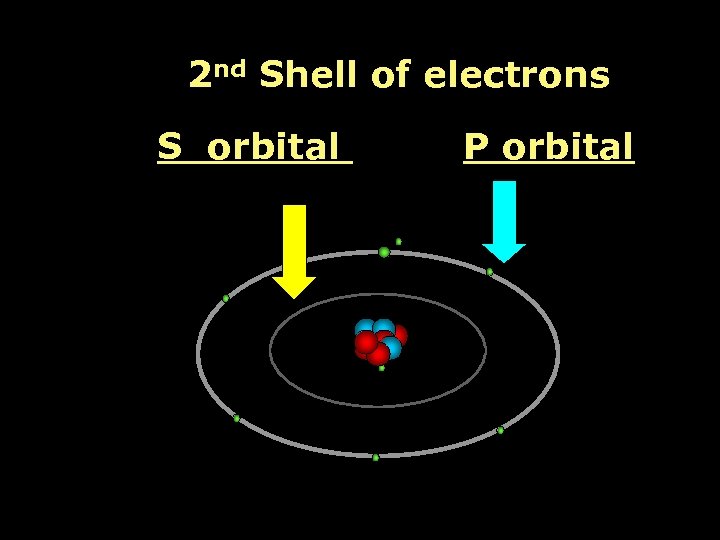
2 nd Shell of electrons S orbital P orbital
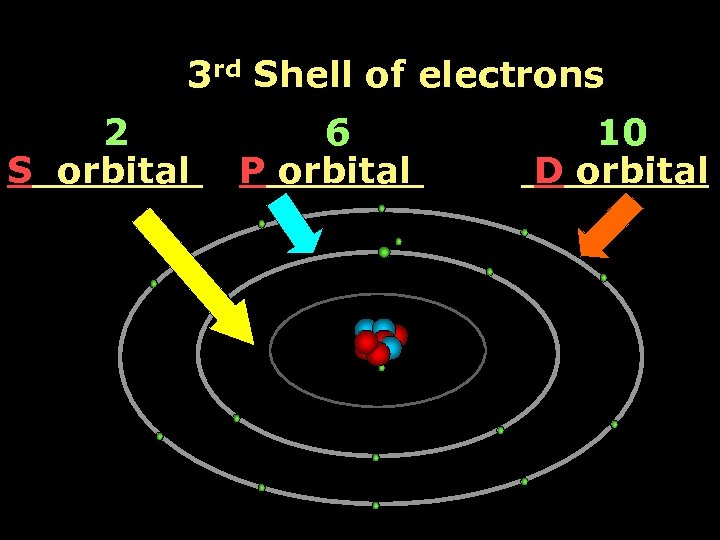
3 rd Shell of electrons 2 S orbital 6 P orbital 10 D orbital
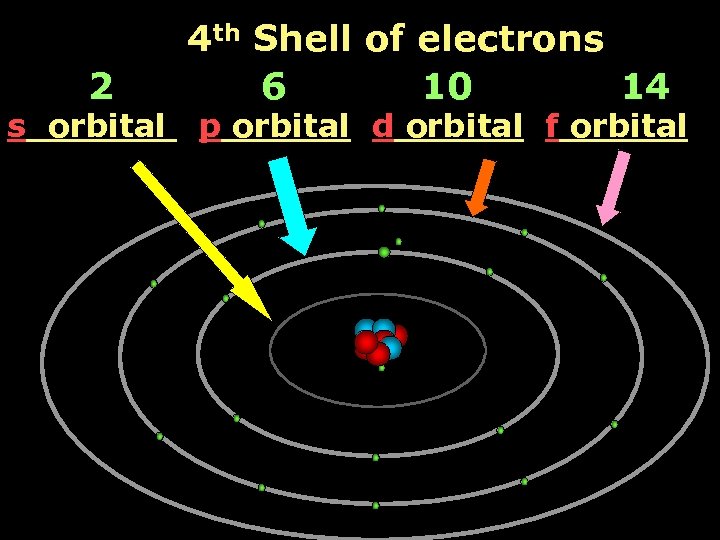
2 s orbital 4 th Shell of electrons 6 10 14 p orbital d orbital f orbital
Element Atom(s) having a specific number of Protons.
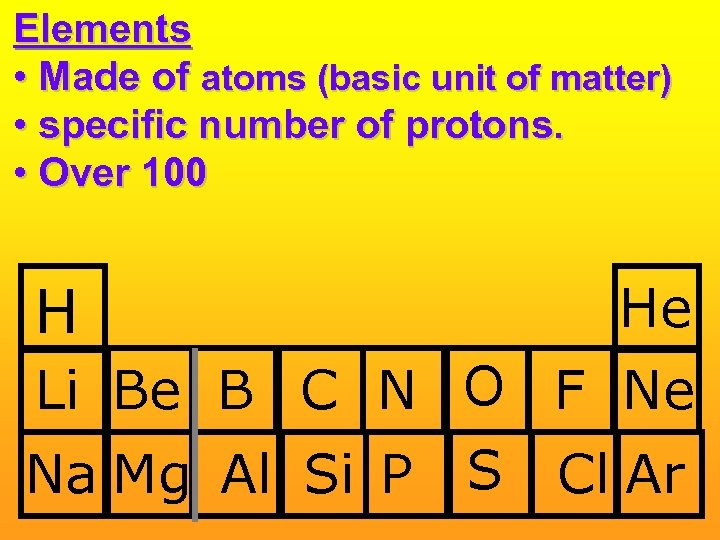
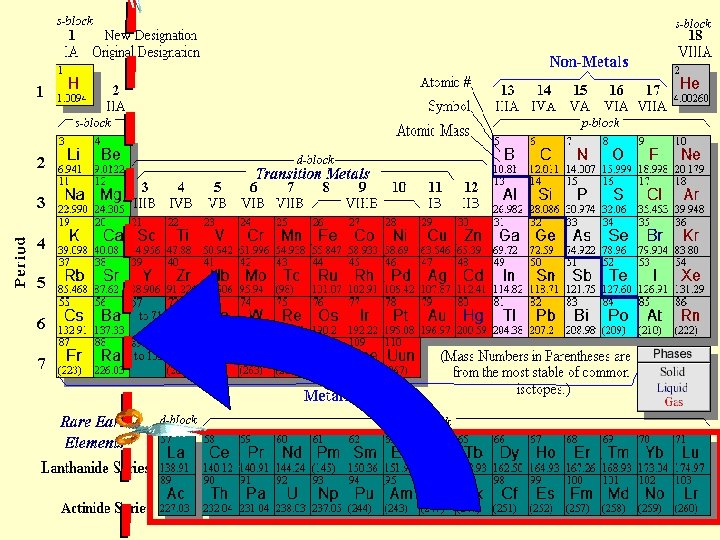
Elements • Made of atoms (basic unit of matter) • specific number of protons. • Over 100 H He Li Be B C N O F Ne Na Mg Al Si P S Cl Ar
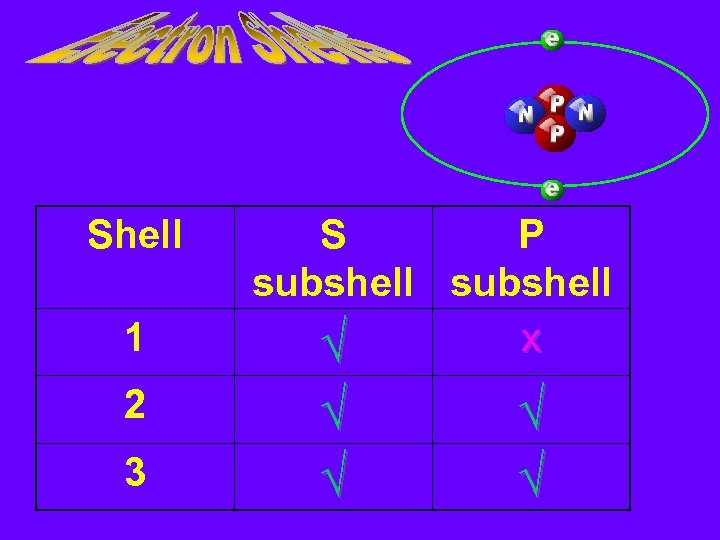
Shell 1 2 3 S P subshell x √ √ √
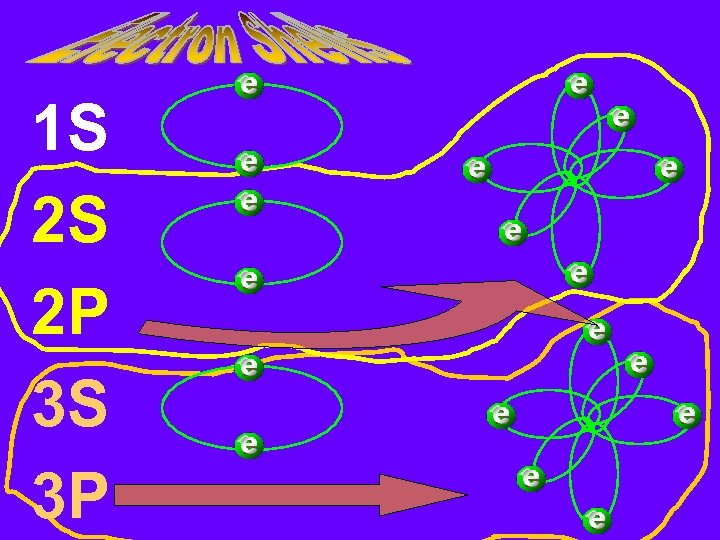
1 S 2 S 2 P 3 S 3 P
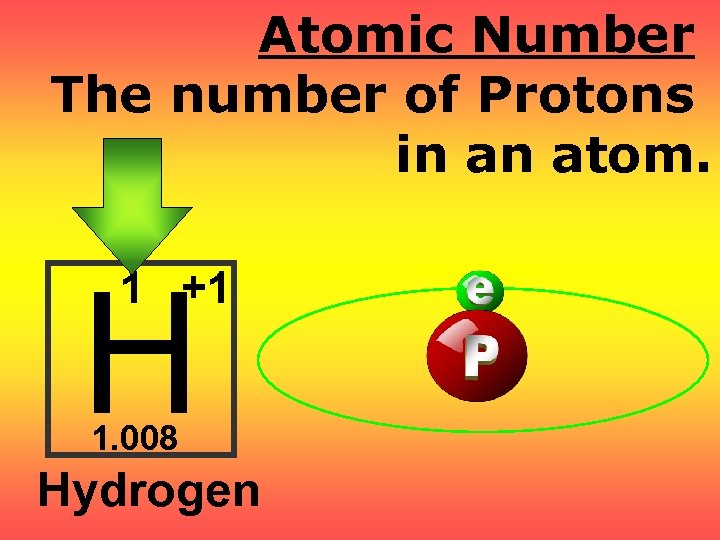
Atomic Number The number of Protons in an atom. H 1 +1 1. 008 Hydrogen
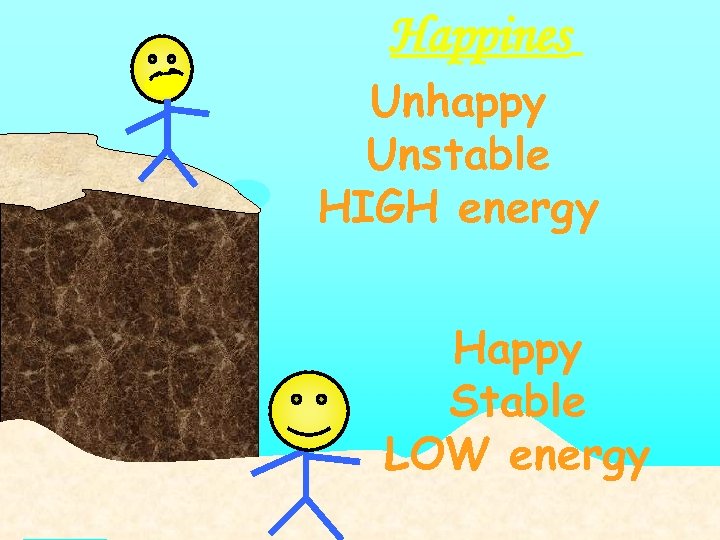
Happines Unhappy Unstable HIGH energy Happy Stable LOW energy
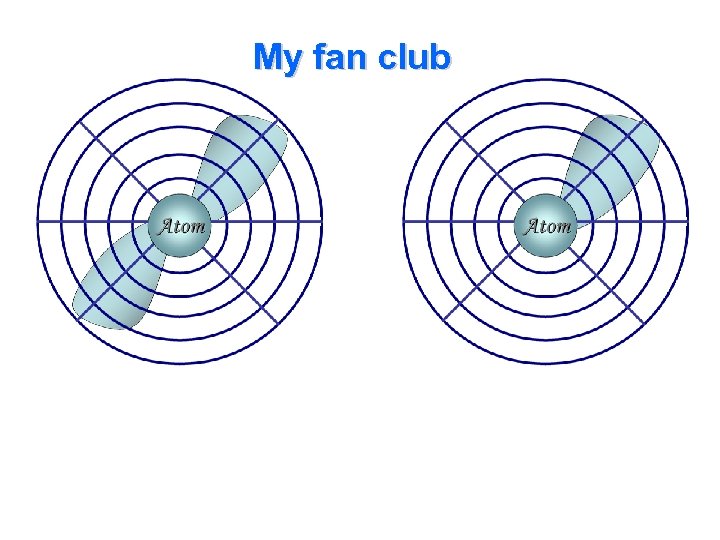
My fan club
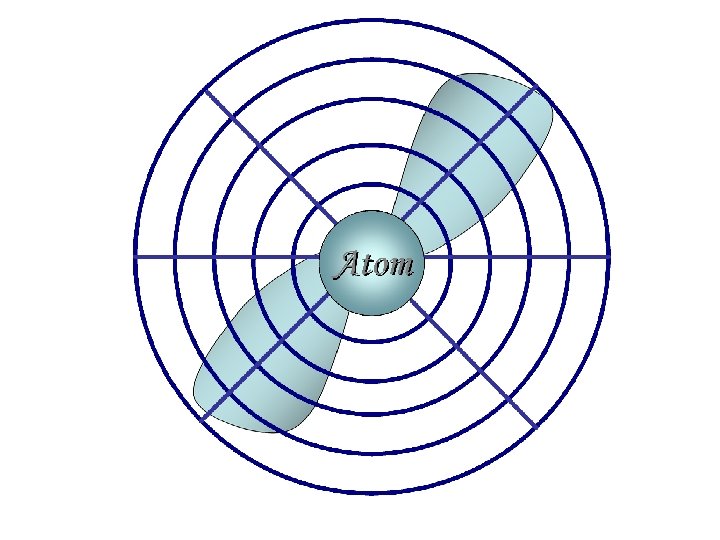
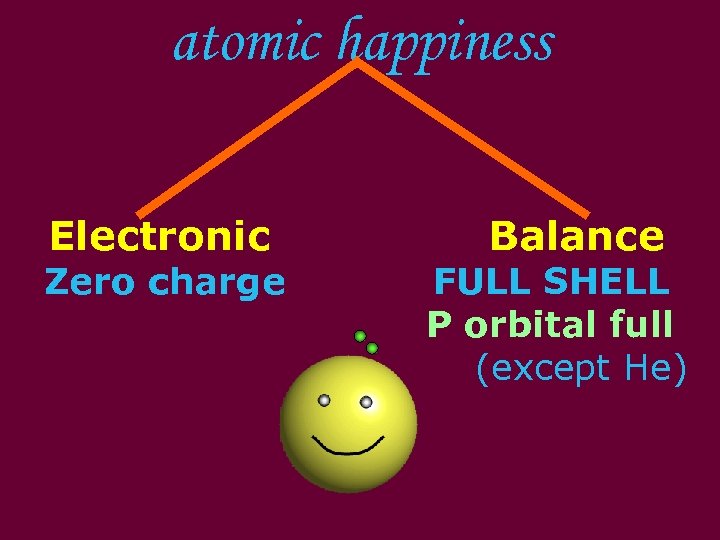
atomic happiness Electronic Balance Zero charge FULL SHELL P orbital full (except He)
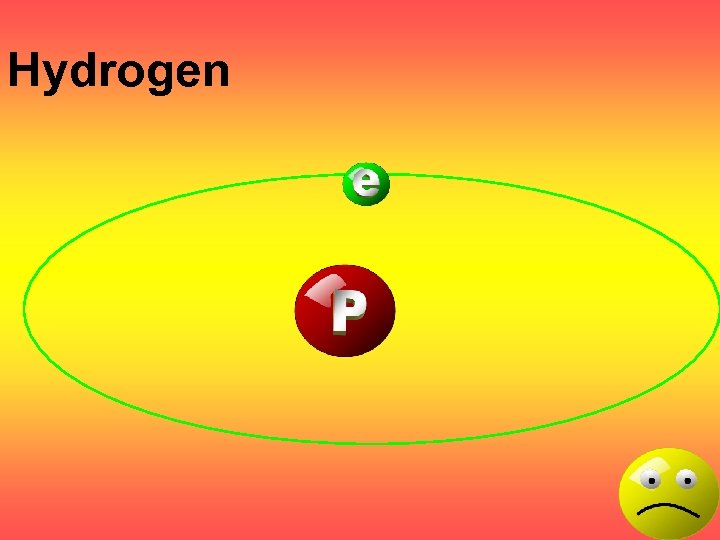
Hydrogen
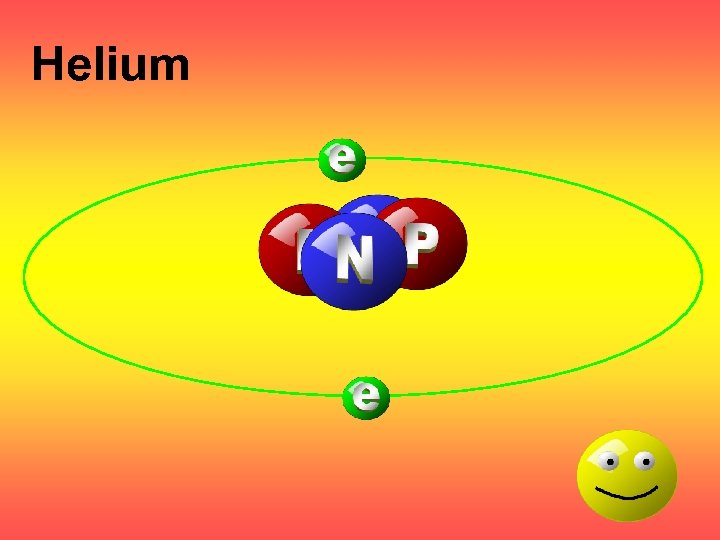
Helium
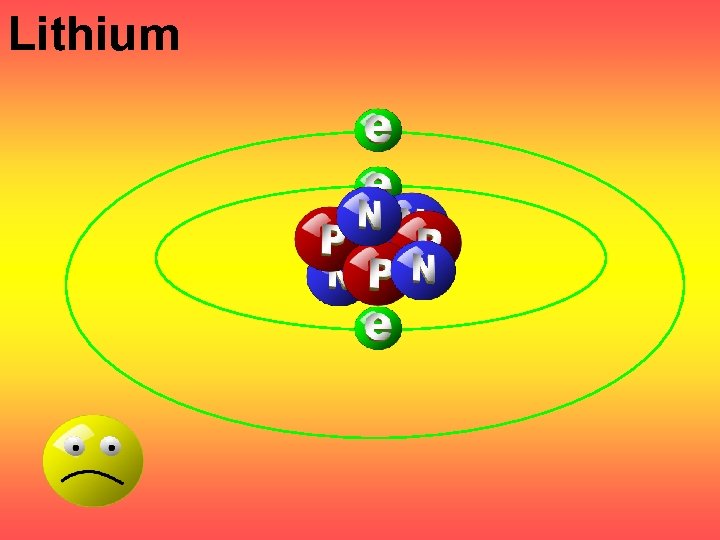
Lithium
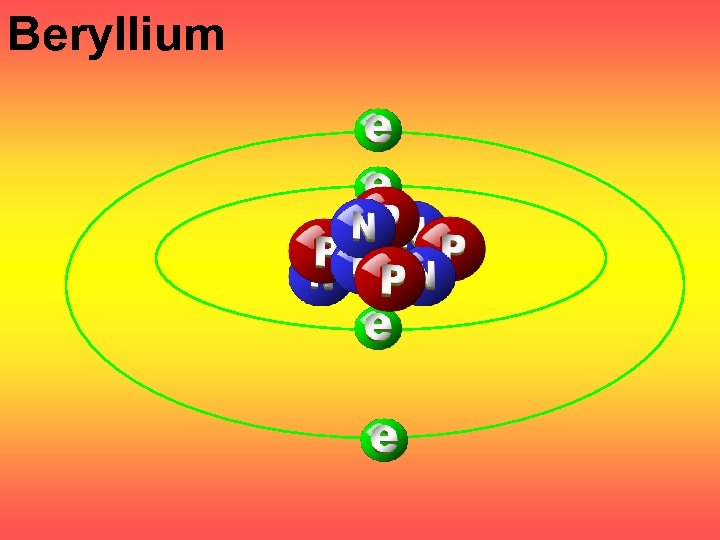
Beryllium
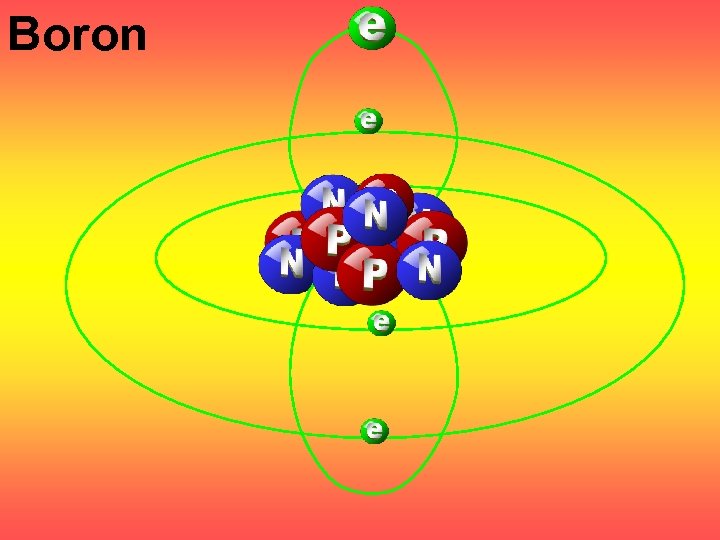
Boron
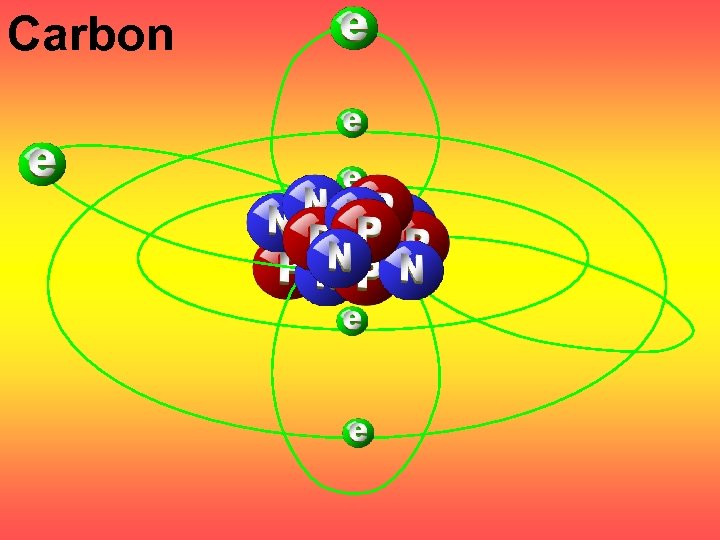
Carbon
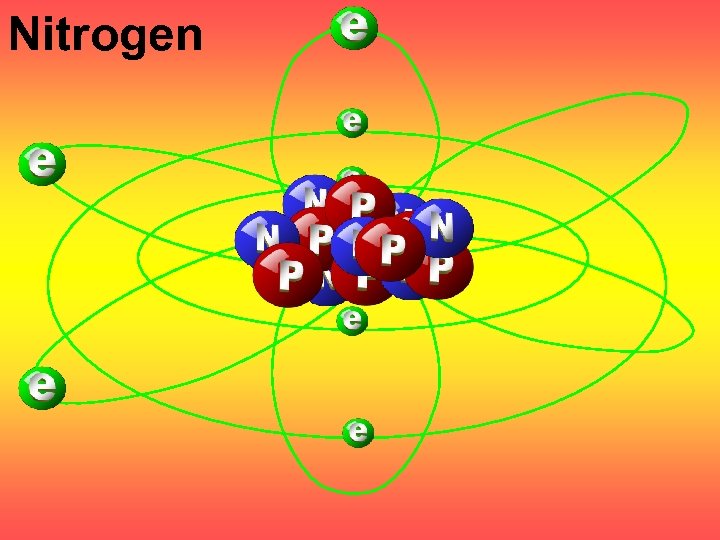
Nitrogen
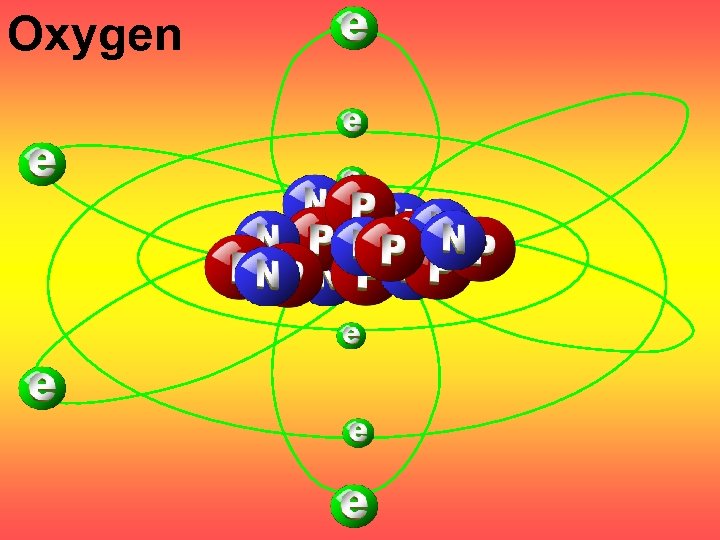
Oxygen
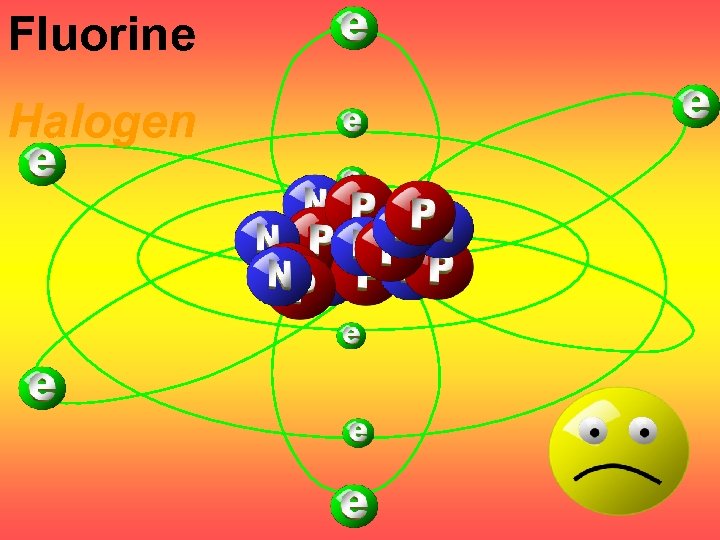
Fluorine Halogen
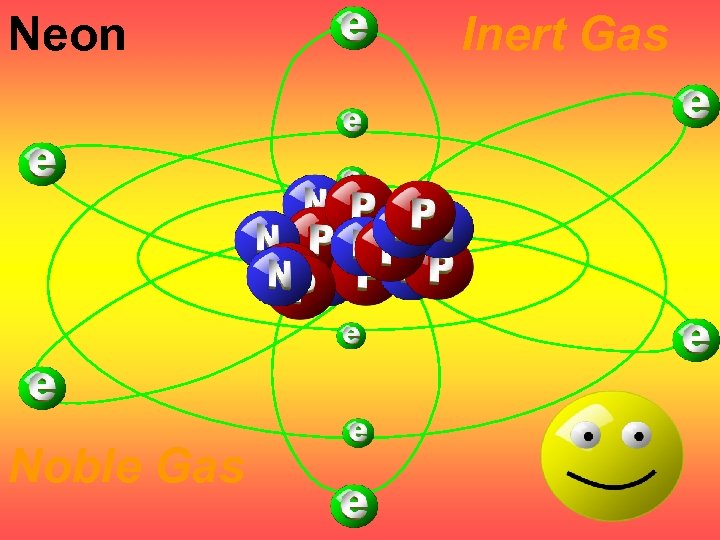
Neon Noble Gas Inert Gas
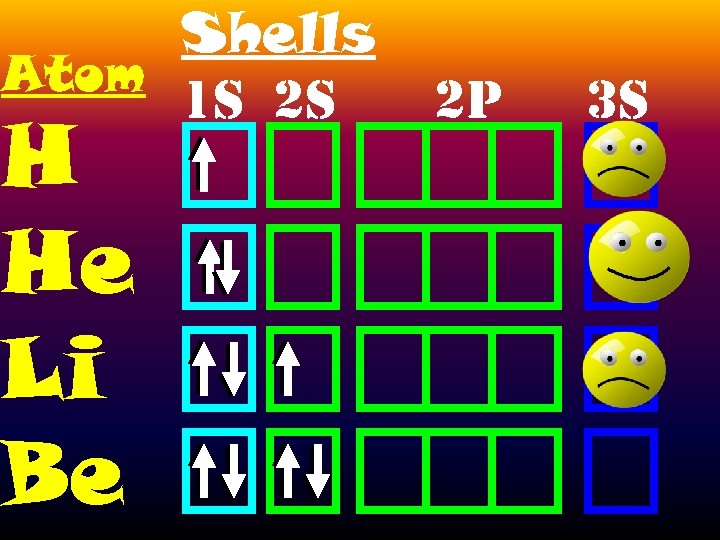
Shells Atom 1 S 2 S H He Li Be 2 P 3 S
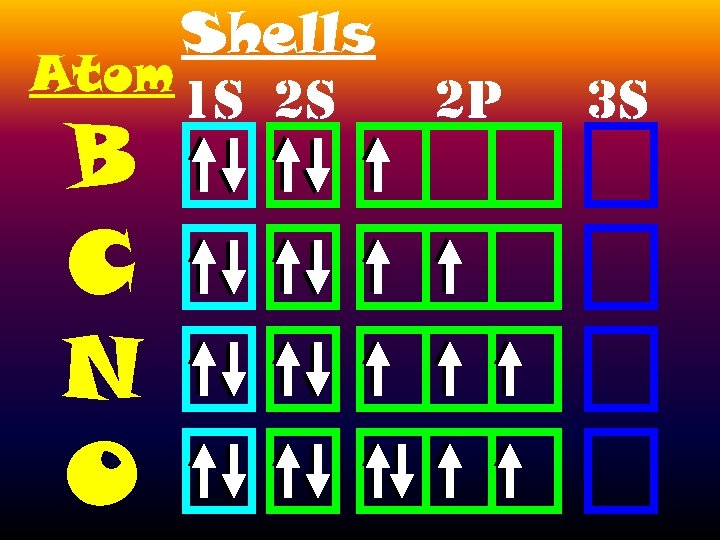
Shells Atom 1 S 2 S B C N O 2 P 3 S
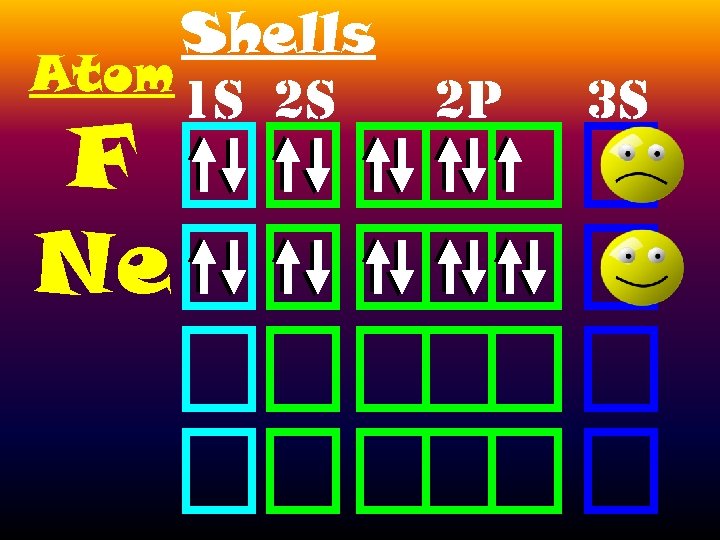
Shells Atom 1 S 2 S F Ne 2 P 3 S
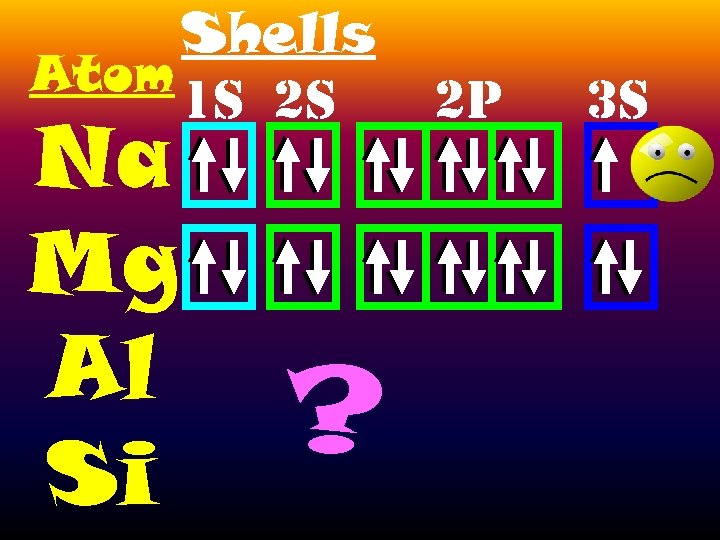
Shells Atom 1 S 2 S Na Mg Al Si ? 2 P 3 S
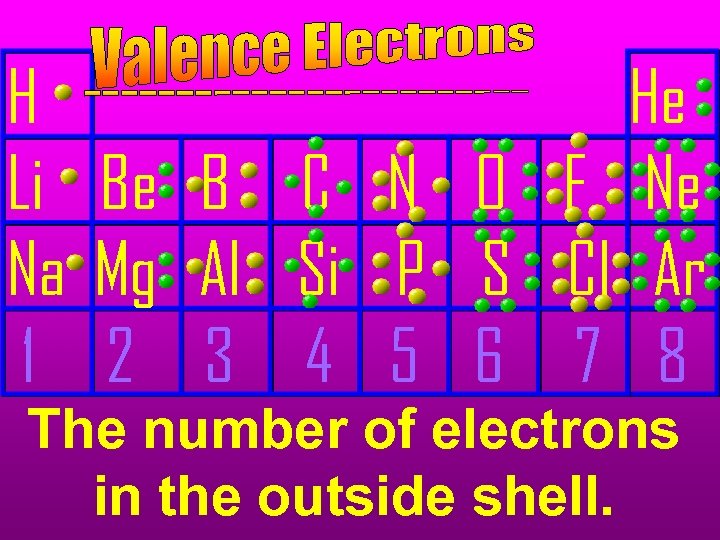
H He Li Be B C N O F Ne Na Mg Al Si P S Cl Ar 1 2 3 4 5 6 7 8 The number of electrons in the outside shell.
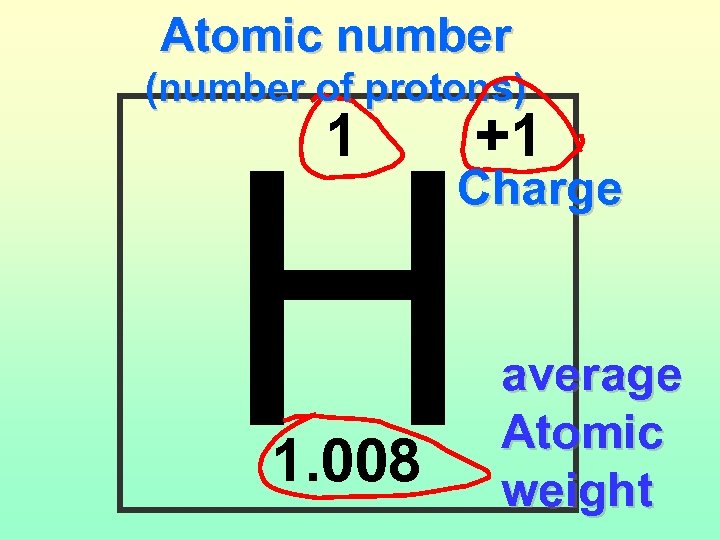
Atomic number (number of protons) H 1 1. 008 +1 Charge average Atomic weight
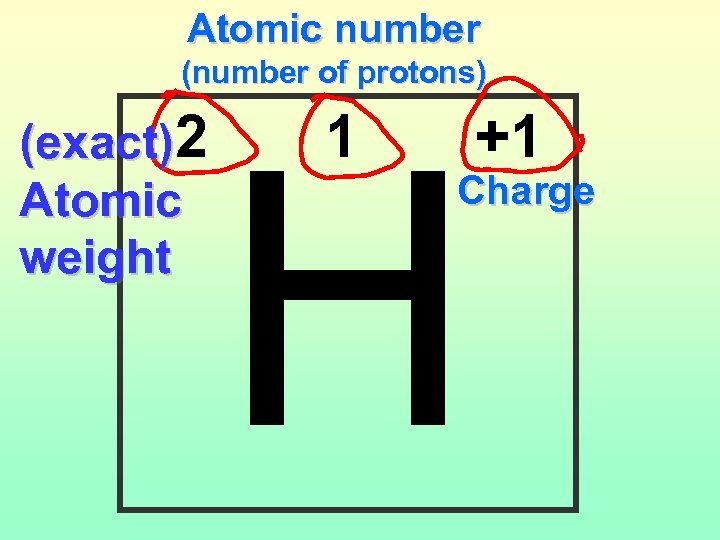
Atomic number (number of protons) (exact)2 Atomic weight H 1 +1 Charge
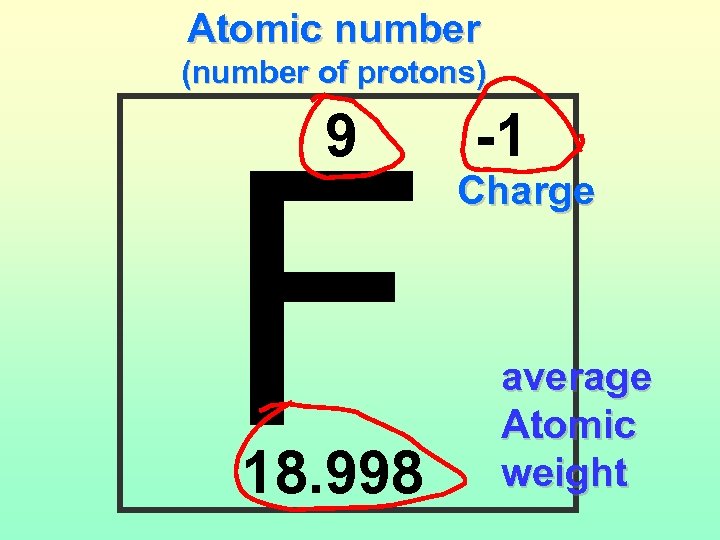
Atomic number (number of protons) F 9 18. 998 -1 Charge average Atomic weight
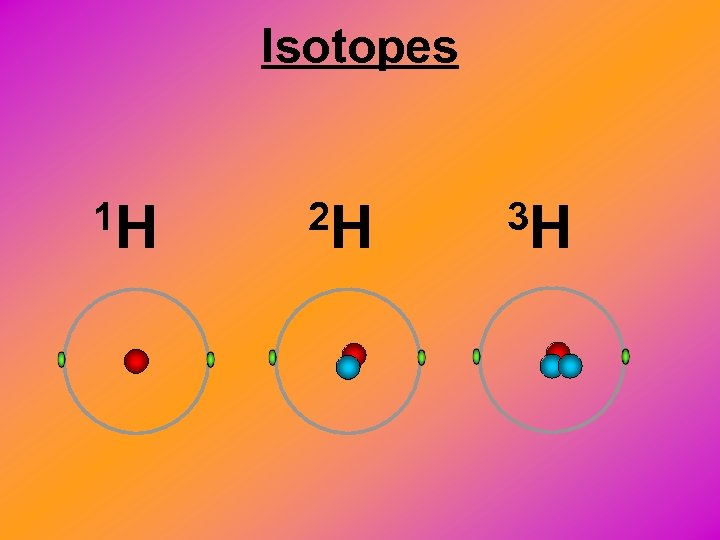
Isotopes 1 H 2 H 3 H
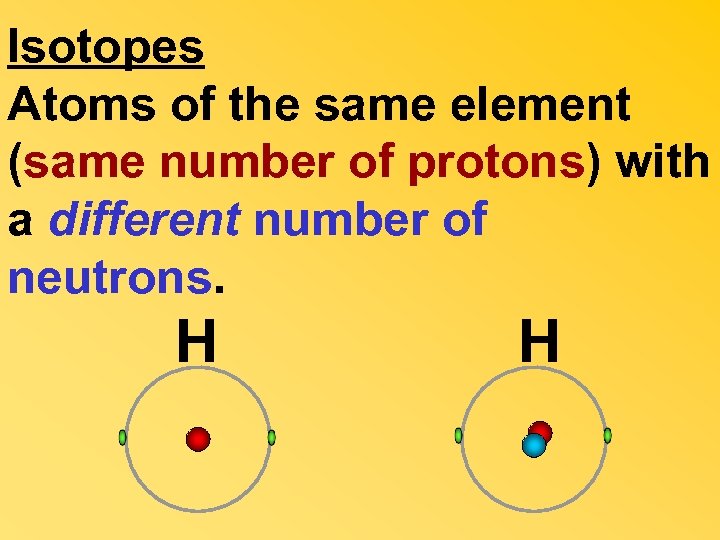
Isotopes Atoms of the same element (same number of protons) with a different number of neutrons. H H
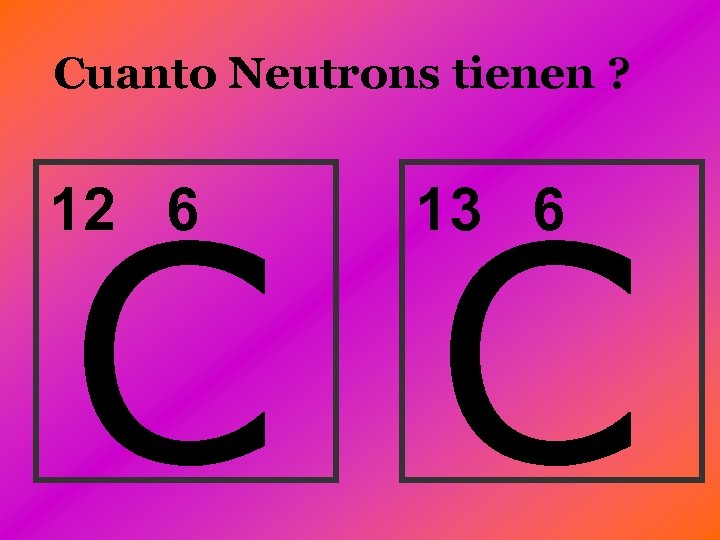
Cuanto Neutrons tienen ? C C 12 6 13 6
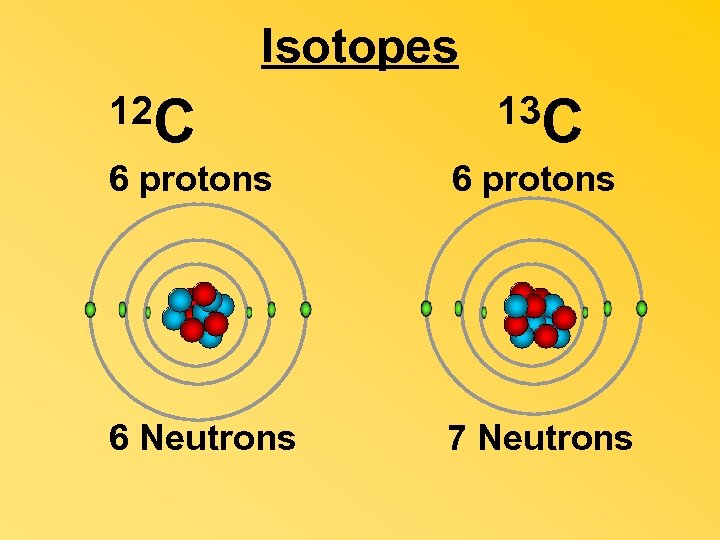
Isotopes 12 C 13 C 6 protons 6 Neutrons 7 Neutrons
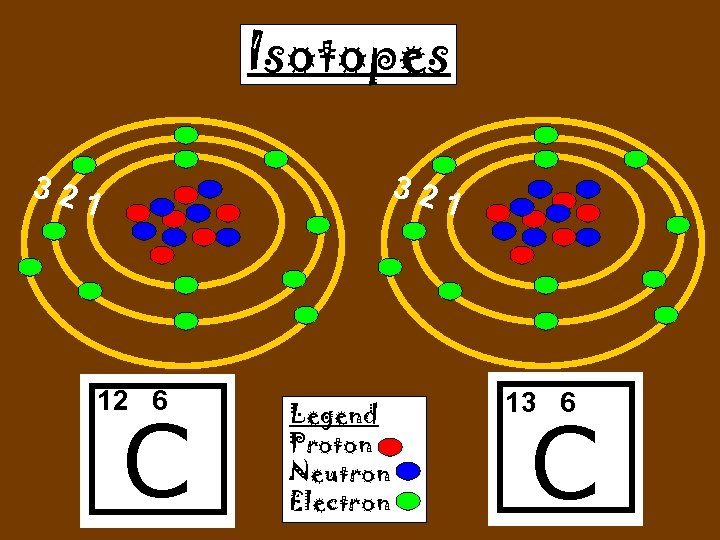
Isotopes 32 32 1 12 6 C Legend Proton Neutron Electron 1 13 6 C
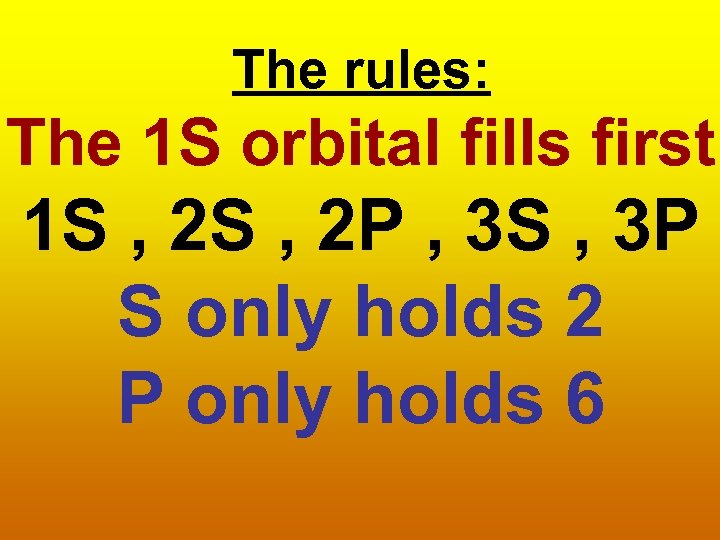
The rules: The 1 S orbital fills first 1 S , 2 P , 3 S , 3 P S only holds 2 P only holds 6
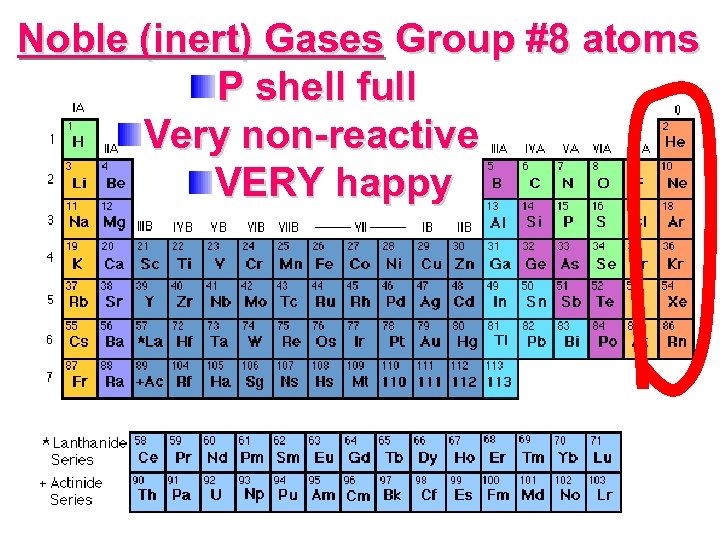
Noble (inert) Gases Group #8 atoms P shell full Very non-reactive VERY happy
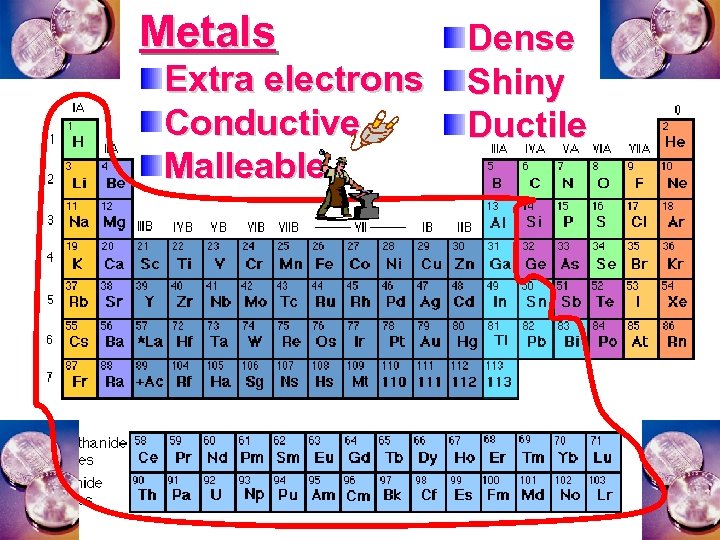
Metals Extra electrons Conductive Malleable Dense Shiny Ductile
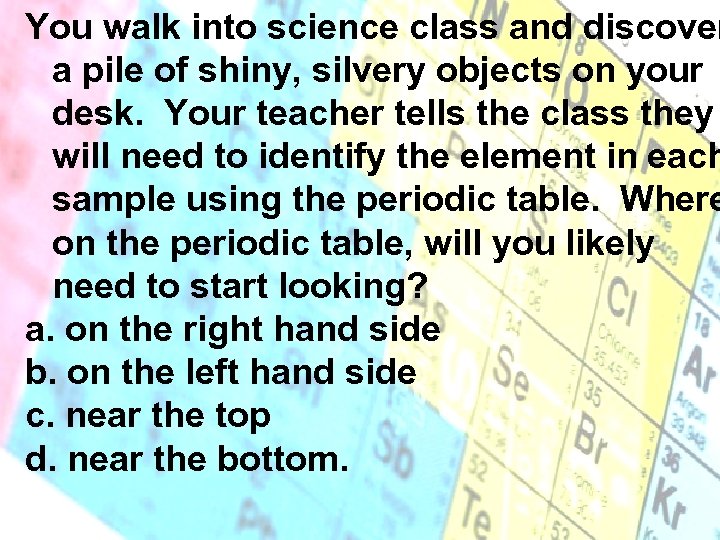
You walk into science class and discover a pile of shiny, silvery objects on your desk. Your teacher tells the class they will need to identify the element in each sample using the periodic table. Where on the periodic table, will you likely need to start looking? a. on the right hand side b. on the left hand side c. near the top d. near the bottom.
Metal an atom with 1 -3 extra valence electrons. Shiny Dense Malleable Ductile Electrical conductors Thermal conductors
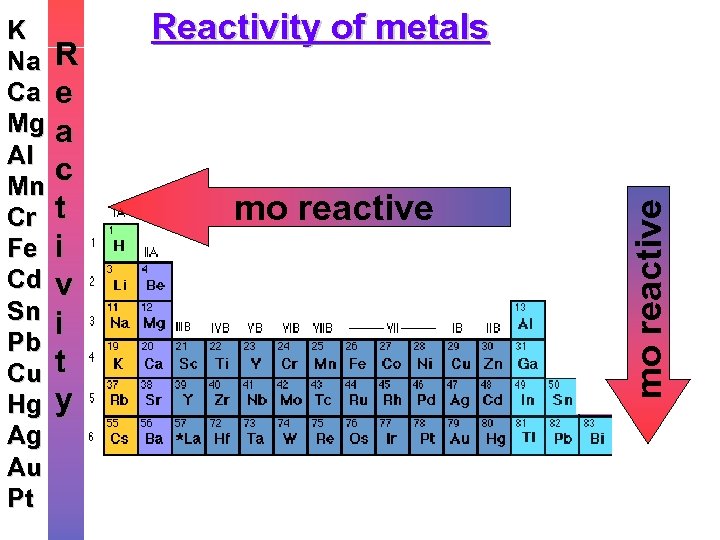
R e a c t i v i t y Reactivity of metals mo reactive K Na Ca Mg Al Mn Cr Fe Cd Sn Pb Cu Hg Ag Au Pt
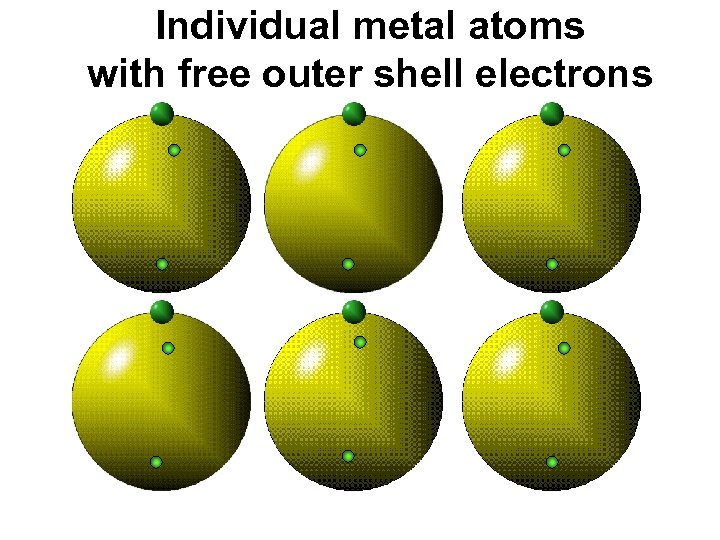
Individual metal atoms with free outer shell electrons
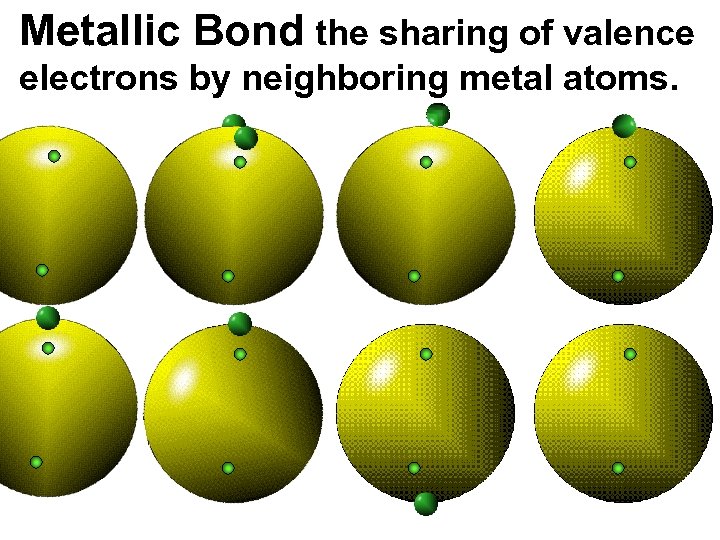
Metallic Bond the sharing of valence electrons by neighboring metal atoms.
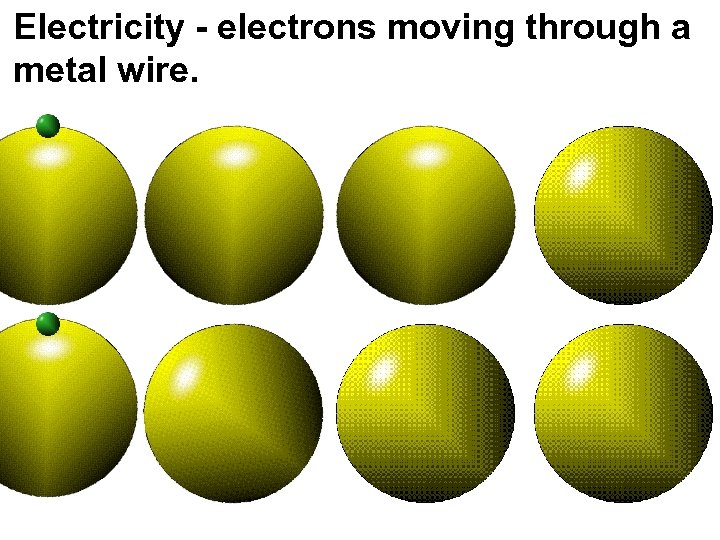
Electricity - electrons moving through a metal wire.
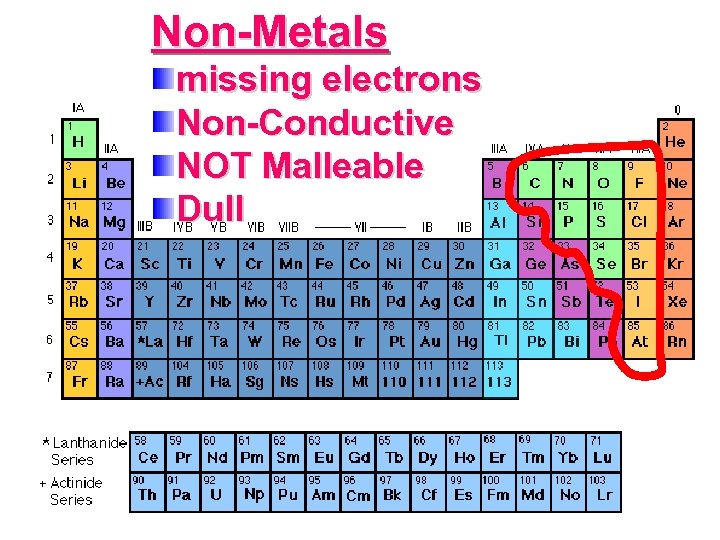
Non-Metals missing electrons Non-Conductive NOT Malleable Dull
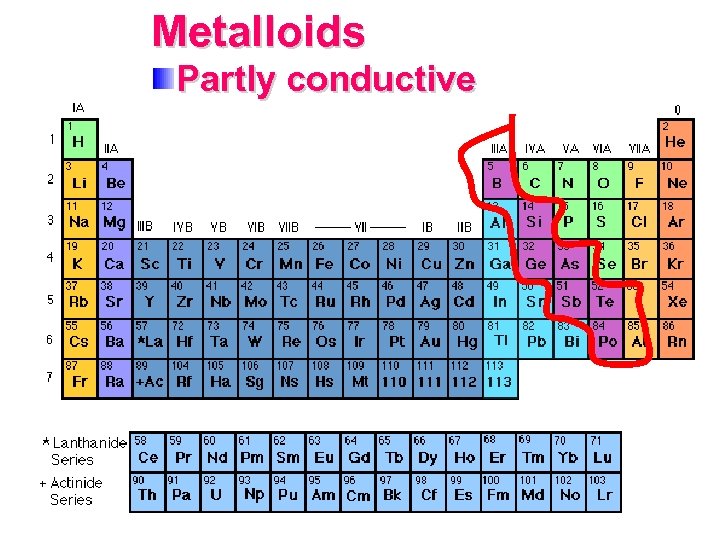
Metalloids Partly conductive
States of Matter There are 4 States of Matter (NOT really)
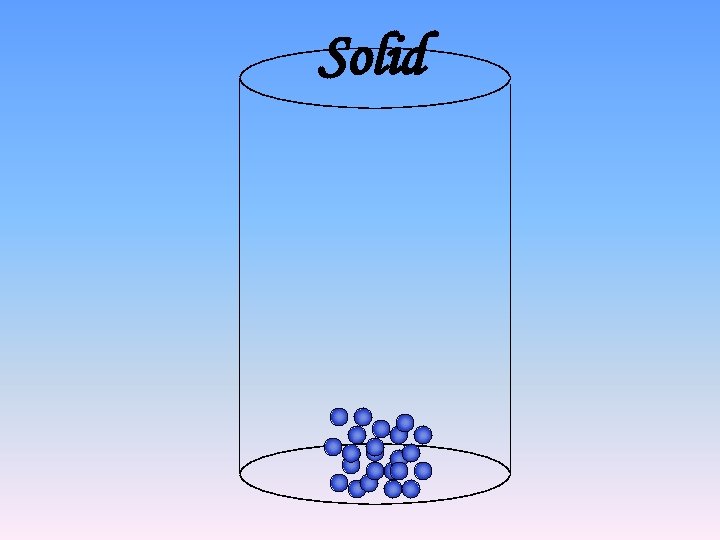
Solid
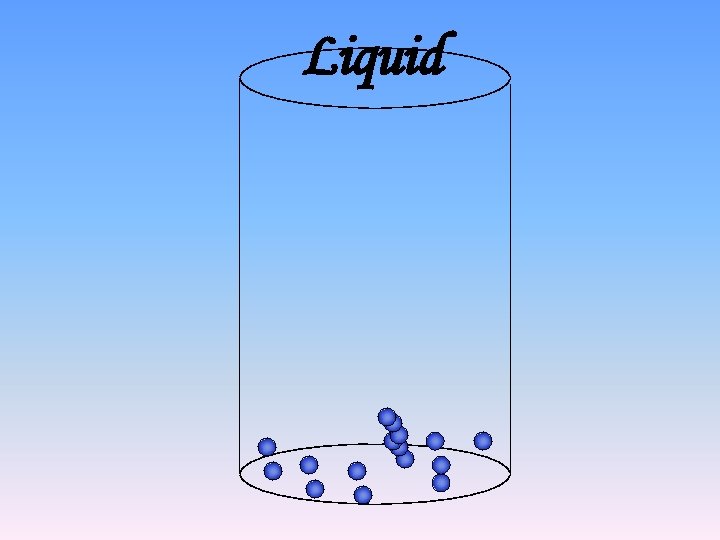
Liquid
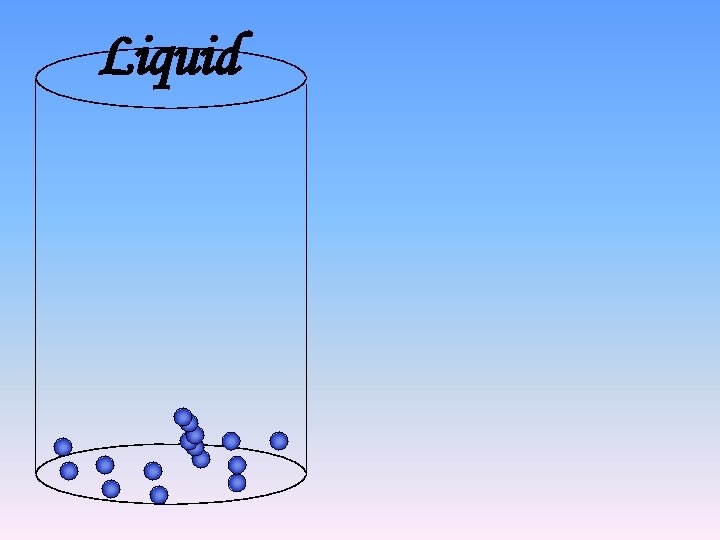
Liquid
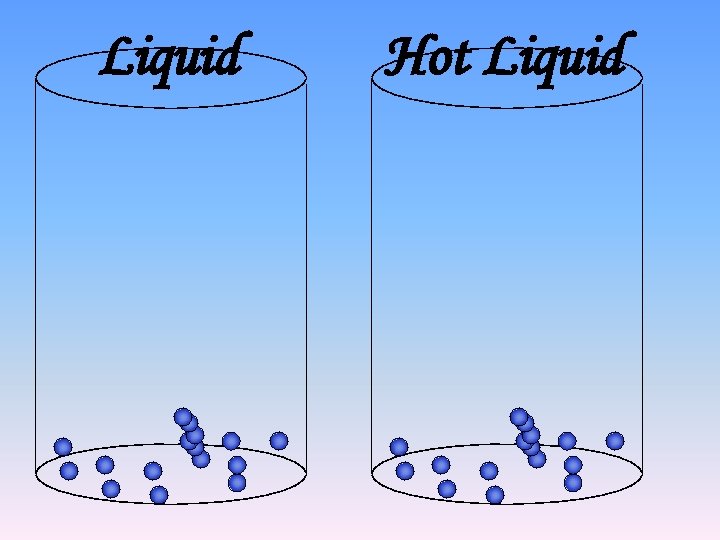
Liquid Hot Liquid
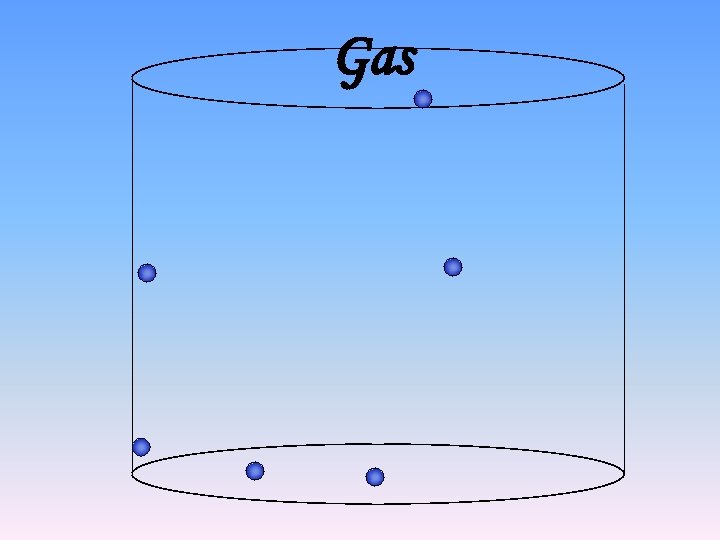
Gas
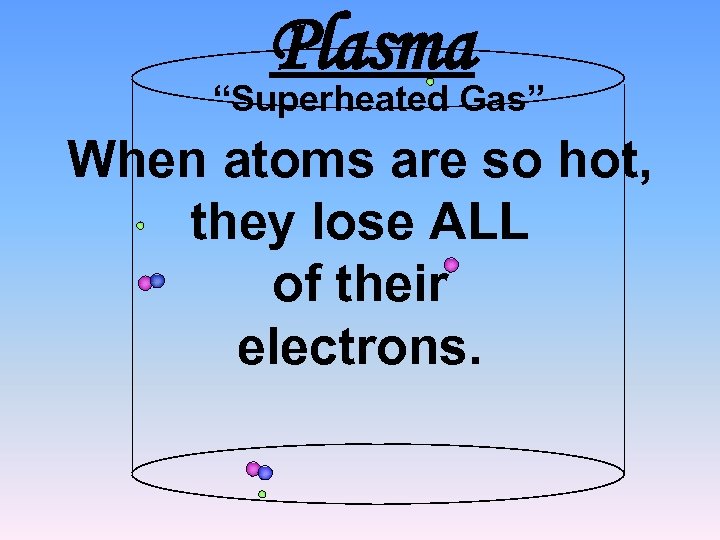
Plasma “Superheated Gas” When atoms are so hot, they lose ALL of their electrons.
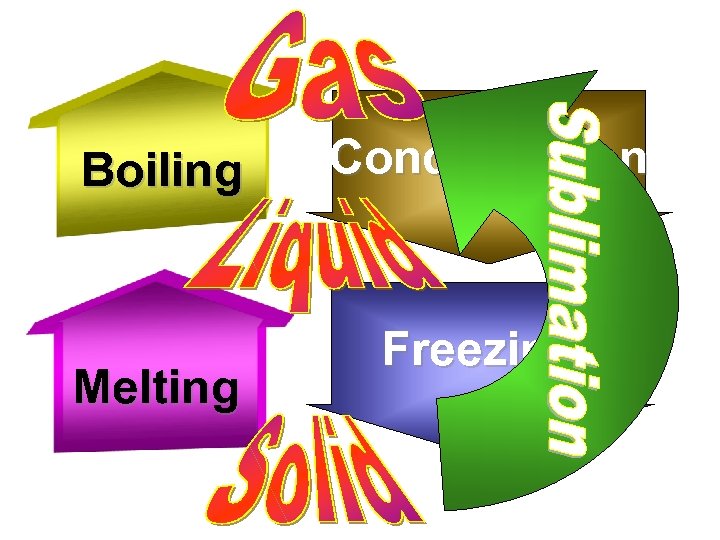
Boiling Melting Condensation Freezing
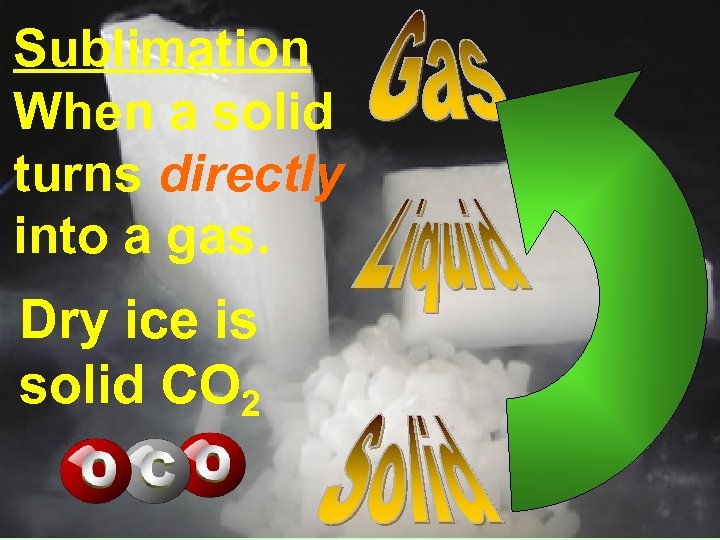
Sublimation When a solid turns directly into a gas. Dry ice is solid CO 2
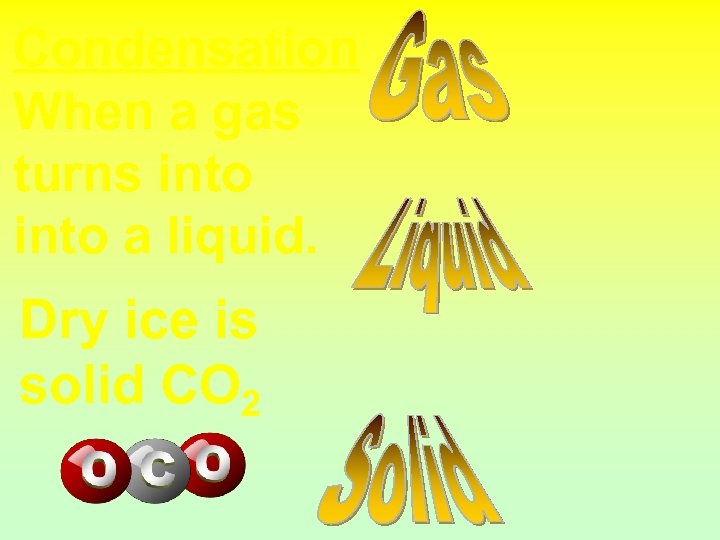
Condensation When a gas turns into a liquid. Dry ice is solid CO 2
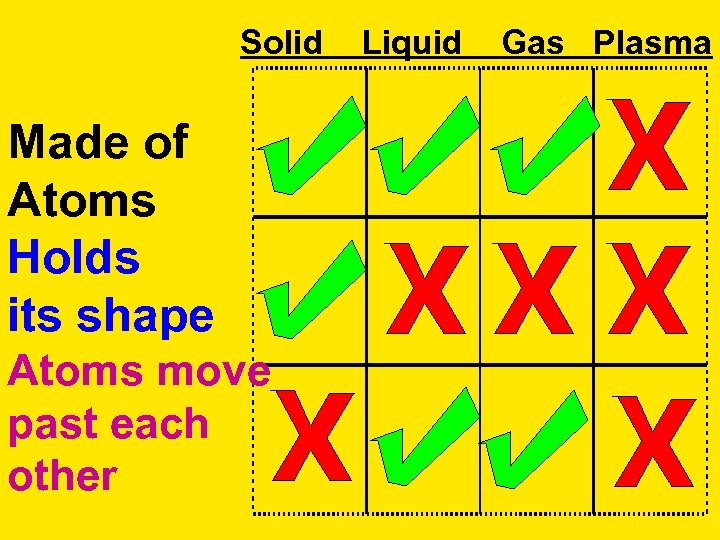
Solid Made of Atoms Holds its shape Atoms move past each other Liquid Gas Plasma
The solid, liquid, and gaseous states of water differ from each other in the mass of the individual atoms. the size of the individual atoms. the net electrical charge of the individual molecules. the average speed of movement of the individual molecules.
Fireworks contain different elements in them for displaying different colors. The different colors occur because: a. the different elements burn at different temperatures. b. atoms of various elements react with each other differently. c. atoms of various elements emit light at different frequencies. d. atoms of different elements have different numbers of protons.
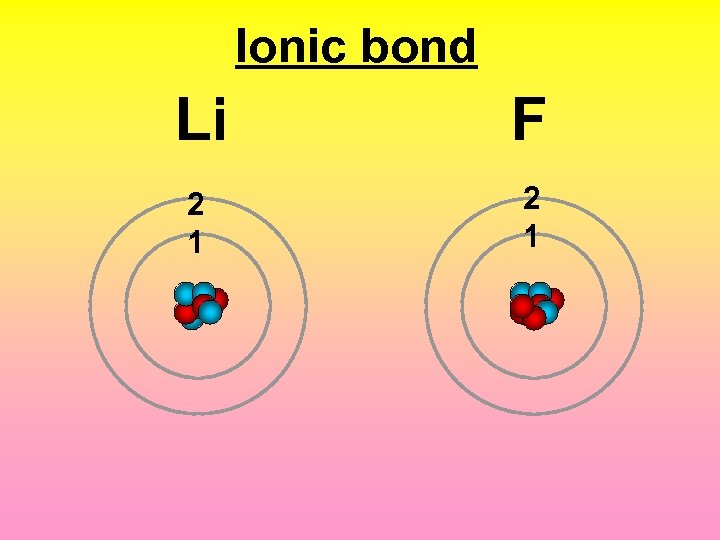
Ionic bond 2 1 F Li
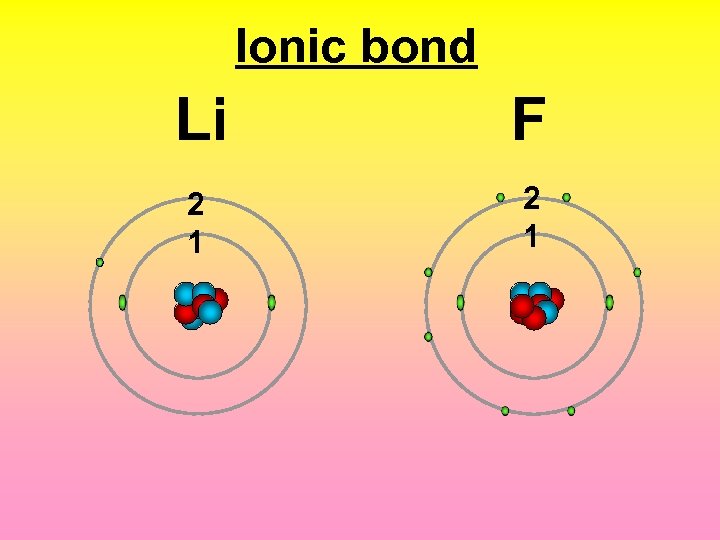
Ionic bond 2 1 F Li
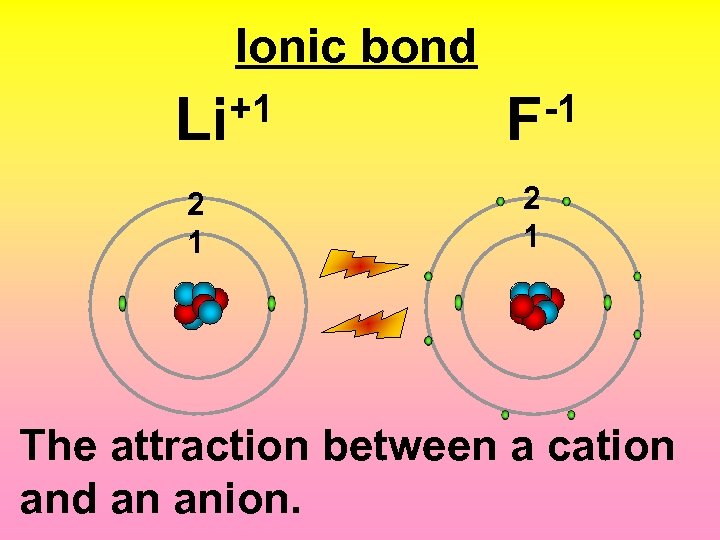
Ionic bond +1 Li -1 F 2 1 The attraction between a cation and an anion.
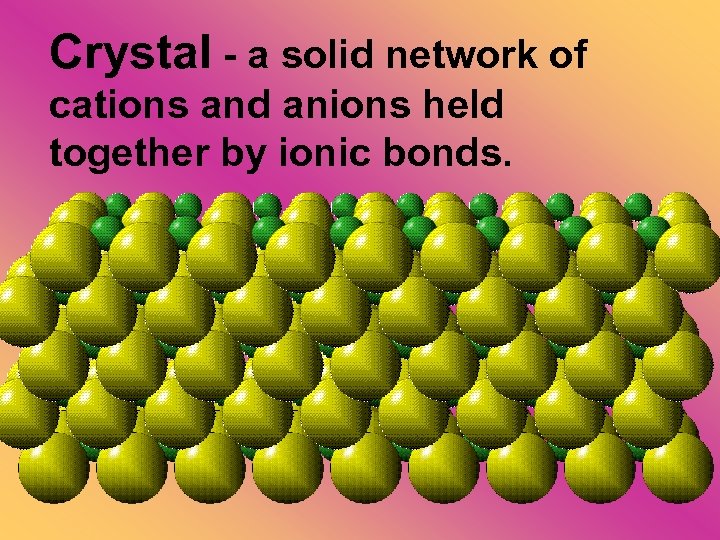
Crystal - a solid network of cations and anions held together by ionic bonds.
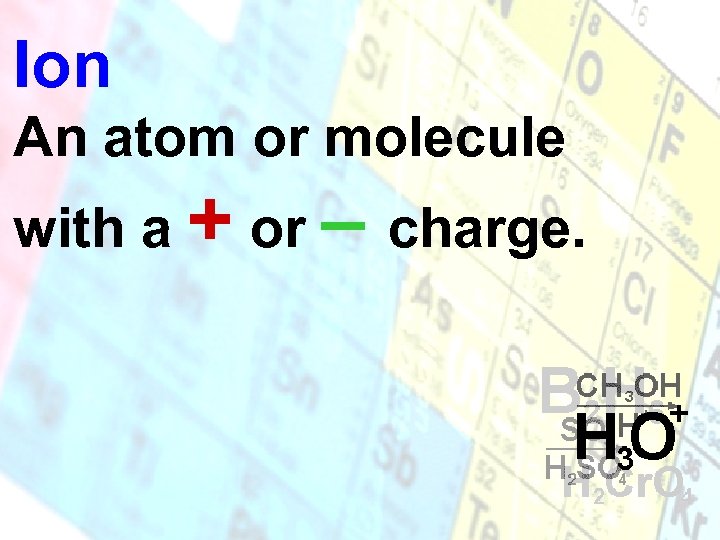
Ion An atom or molecule with a + or – charge.
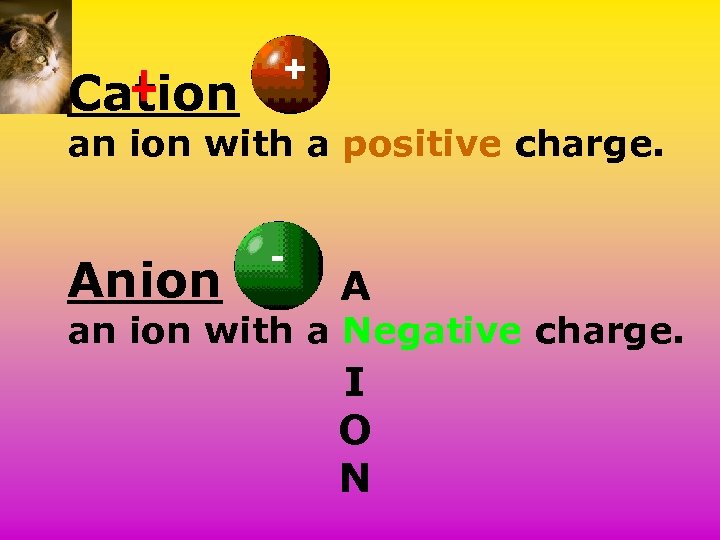
Cation + an ion with a positive charge. Anion - A an ion with a Negative charge. I O N
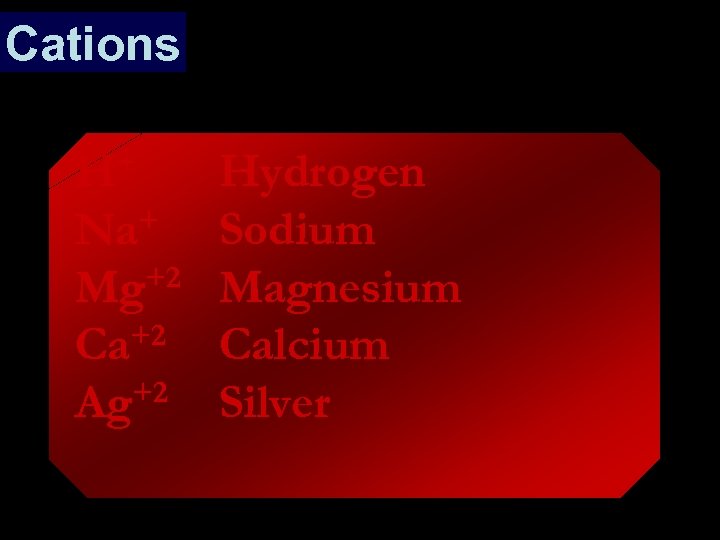
Cations + H Na+ +2 Mg Ca+2 +2 Ag Hydrogen Sodium Magnesium Calcium Silver
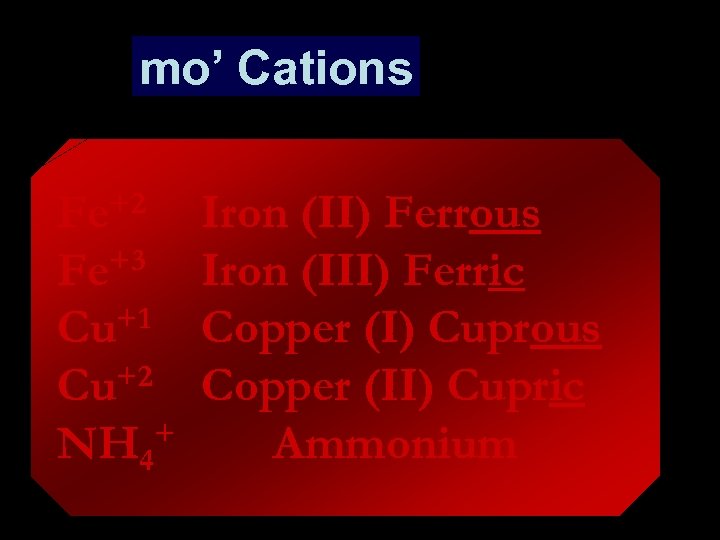
mo’ Cations Fe+2 +3 Fe +1 Cu Cu+2 + NH 4 Iron (II) Ferrous Iron (III) Ferric Copper (I) Cuprous Copper (II) Cupric Ammonium
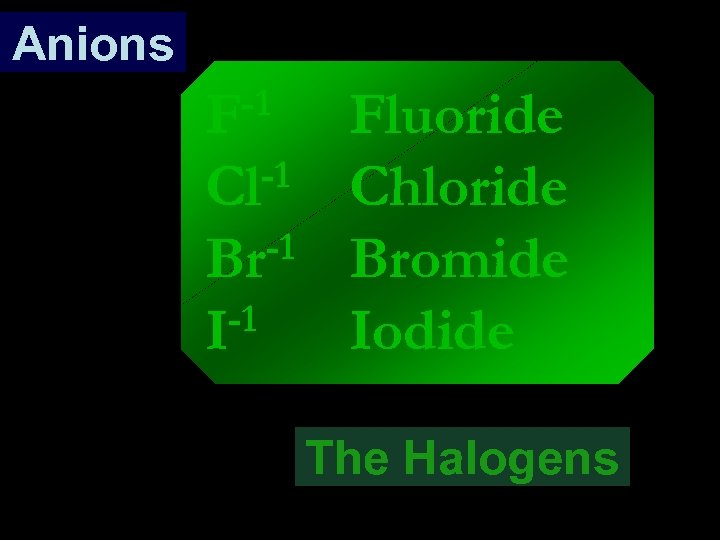
Anions -1 F -1 Cl -1 Br -1 I Fluoride Chloride Bromide Iodide The Halogens
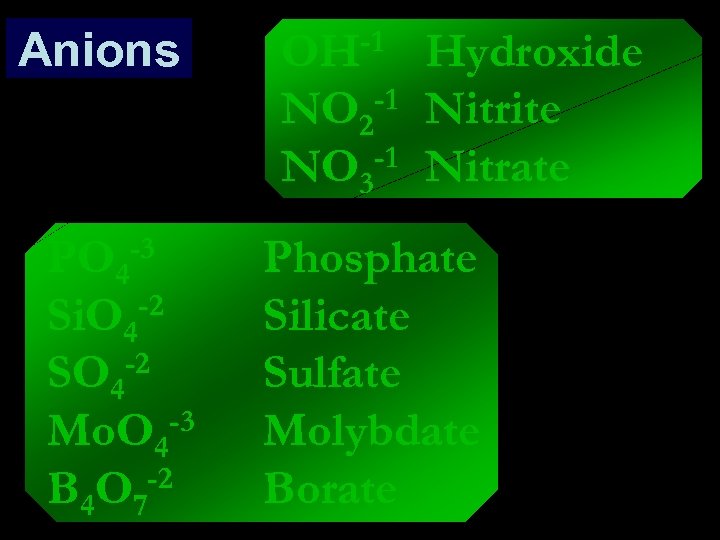
Anions -1 OH NO 2 -1 -1 NO 3 -3 PO 4 -2 Si. O 4 SO 4 -2 -3 Mo. O 4 B 4 O 7 -2 Hydroxide Nitrite Nitrate Phosphate Silicate Sulfate Molybdate Borate
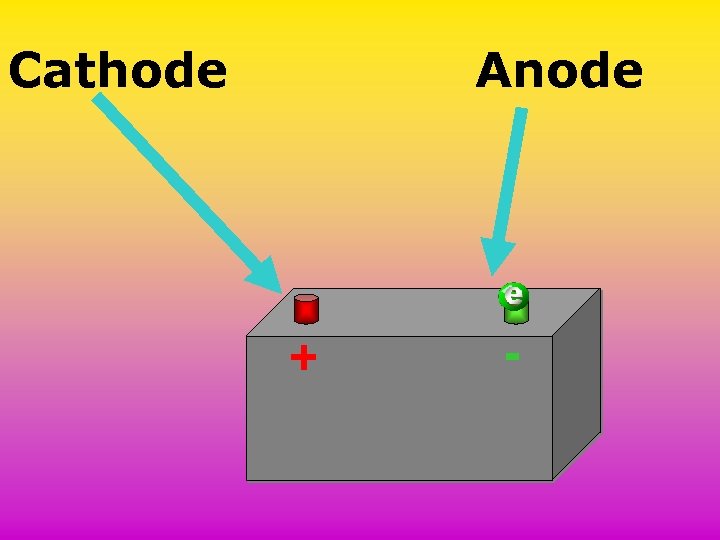
Cathode Anode + - Never. Ready
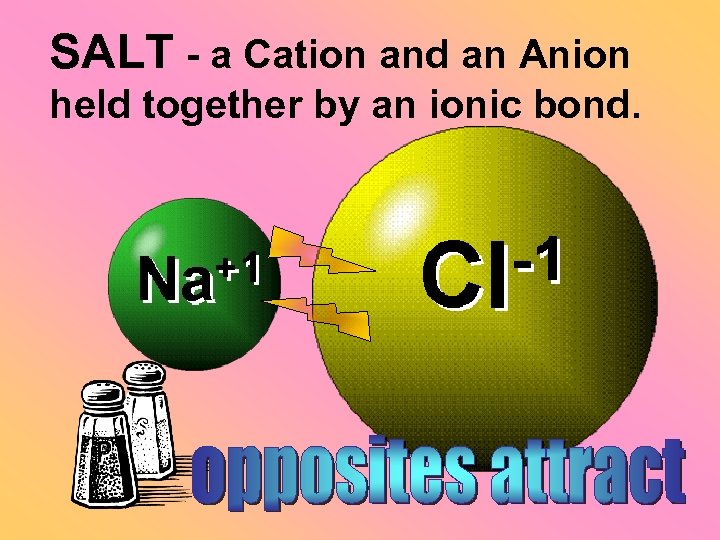
SALT - a Cation and an Anion held together by an ionic bond.
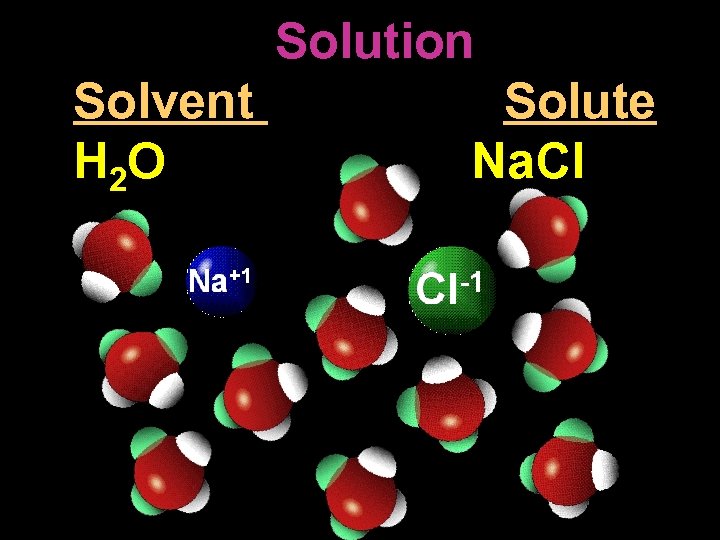
Solution Solvent H 2 O Solute Na. Cl
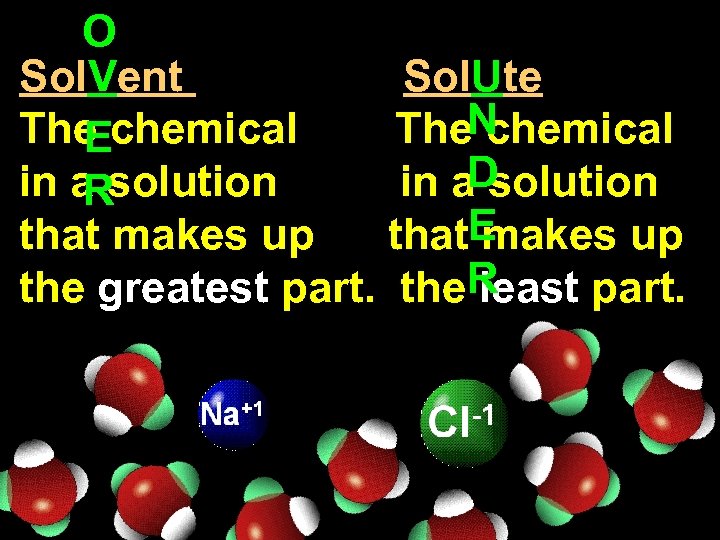
O Sol. Vent Sol. Ute The chemical The. N chemical E in a solution in a. D solution R that makes up that. E makes up the greatest part. the. R least part.
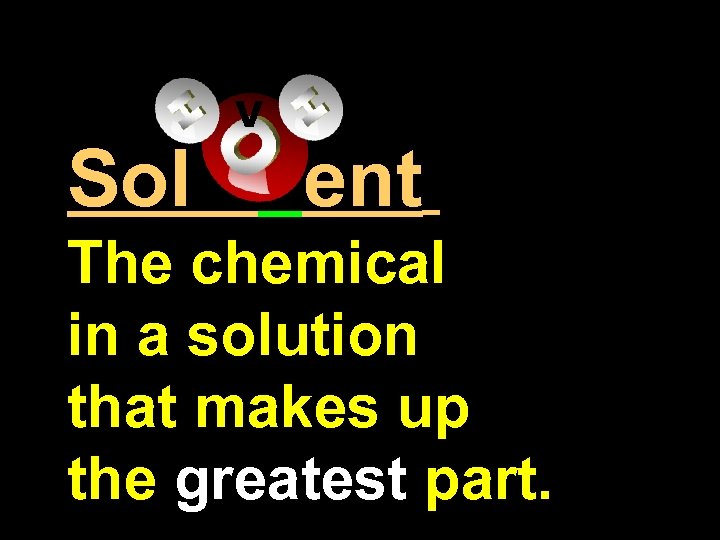
Sol V ent The chemical in a solution that makes up the greatest part.
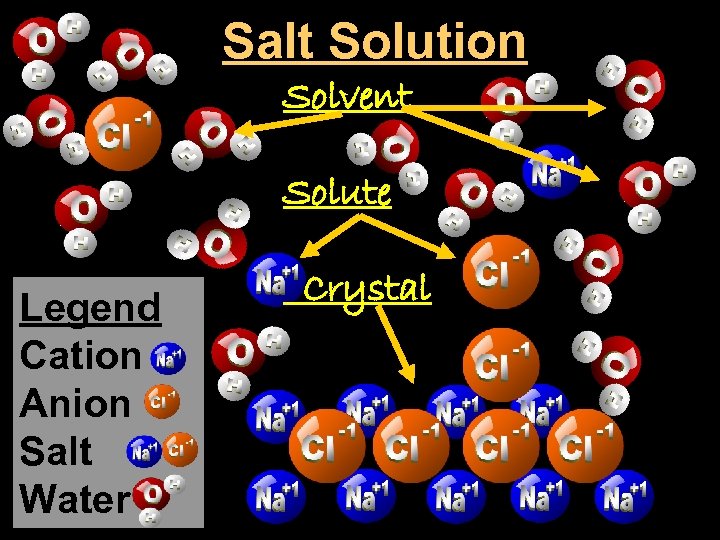
Salt Solution Solvent Solute Legend Cation Anion Salt Water Crystal
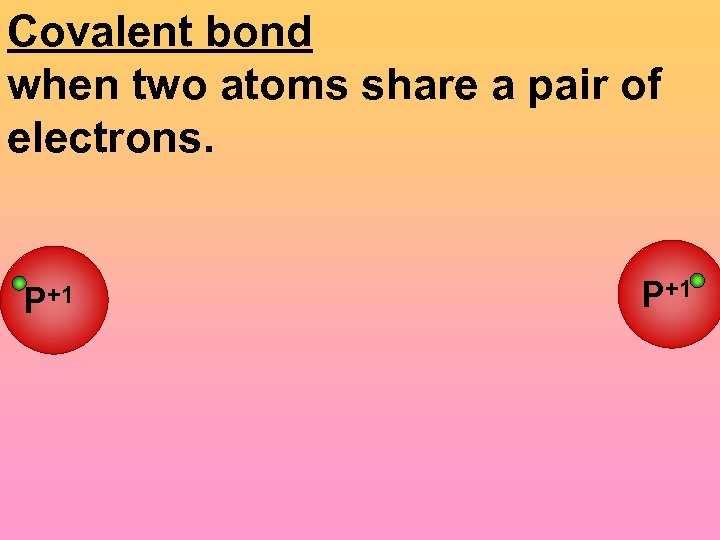
Covalent bond when two atoms share a pair of electrons. P+1 +1 P
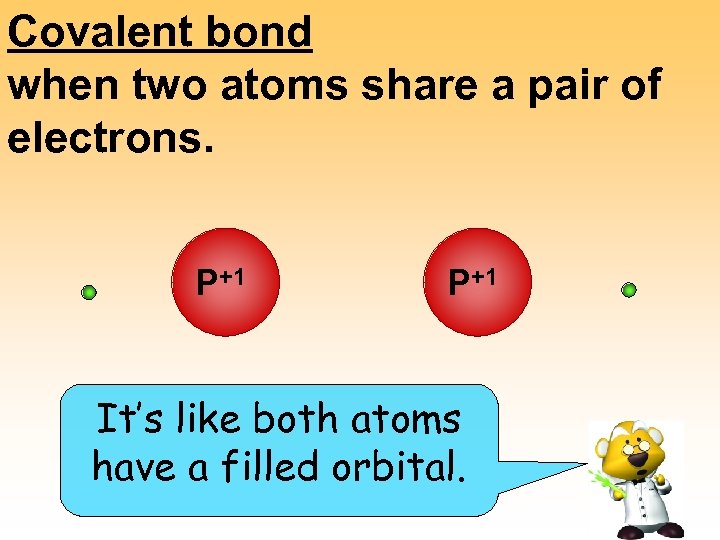
Covalent bond when two atoms share a pair of electrons. P+1 It’s like both atoms have a filled orbital.
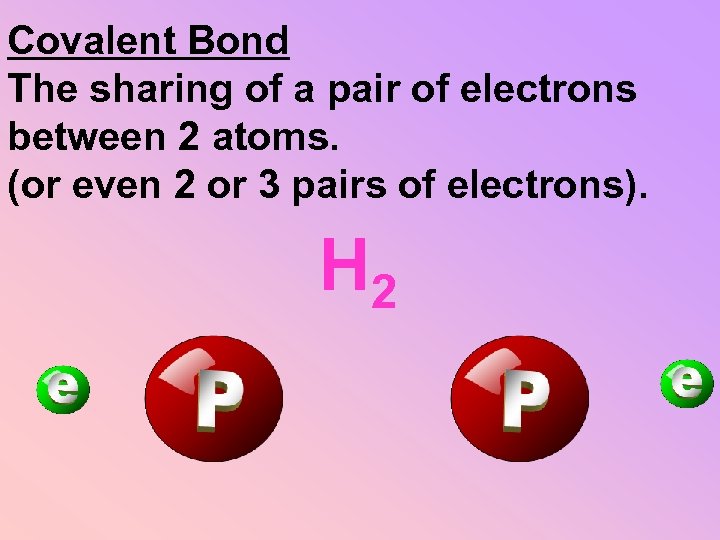
Covalent Bond The sharing of a pair of electrons between 2 atoms. (or even 2 or 3 pairs of electrons). H 2
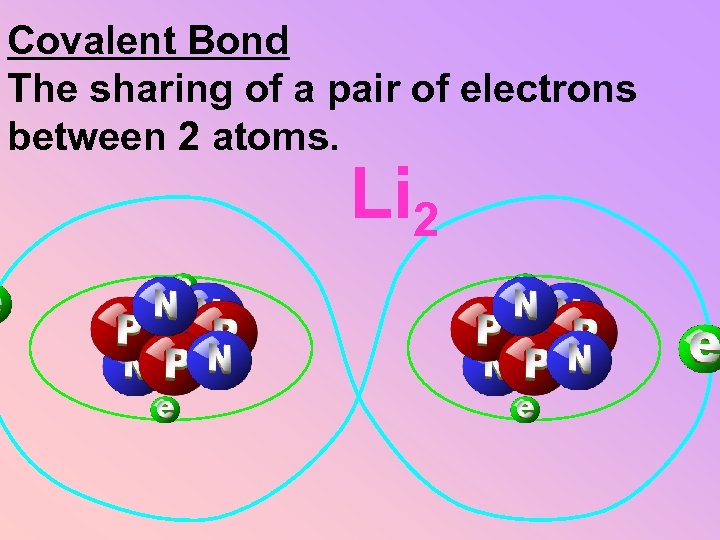
Covalent Bond The sharing of a pair of electrons between 2 atoms. Li 2
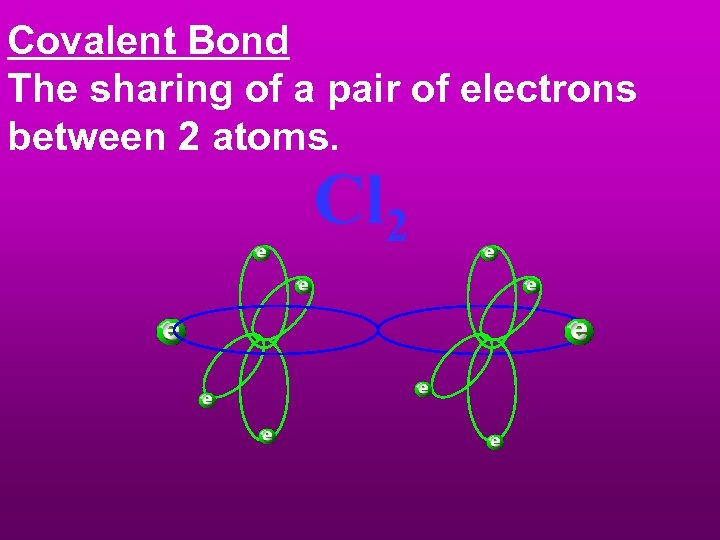
Covalent Bond The sharing of a pair of electrons between 2 atoms. Cl 2
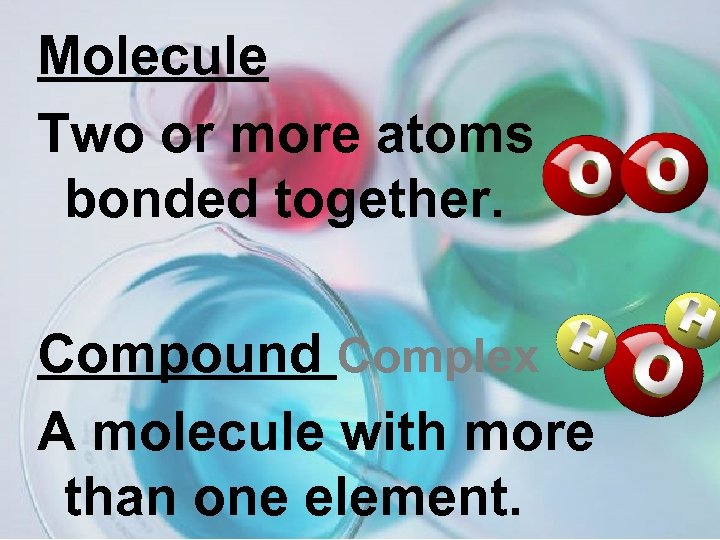
Molecule Two or more atoms bonded together. Compound Complex A molecule with more than one element.
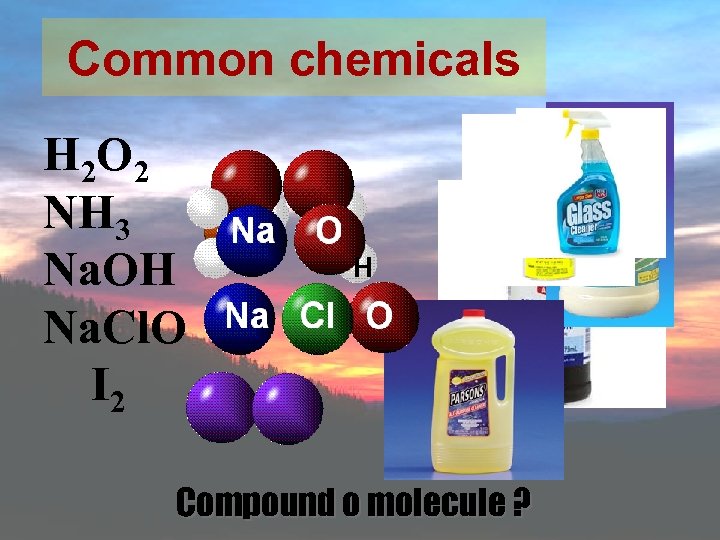
Common chemicals H 2 O 2 NH 3 Na. OH Na. Cl. O I 2 Compound o molecule ?
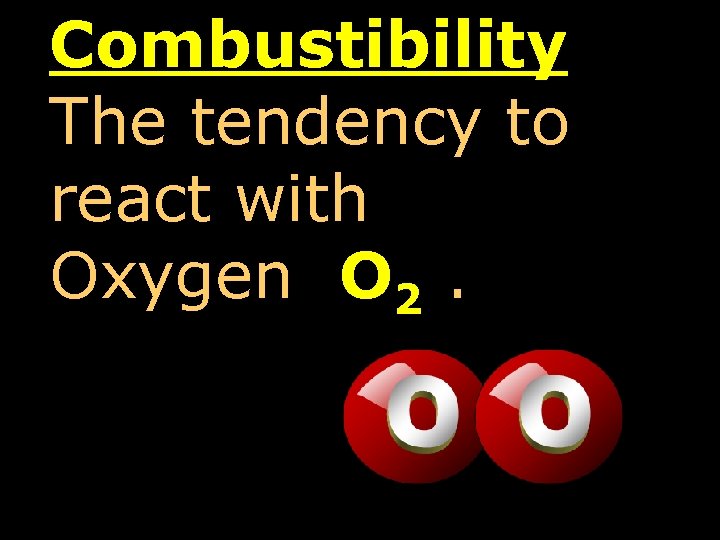
Combustibility The tendency to react with Oxygen O 2.
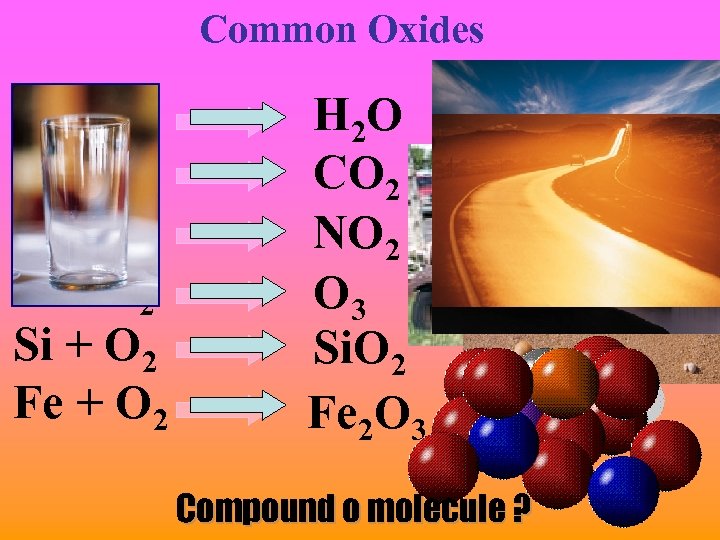
Common Oxides H + O 2 C + O 2 N + O 2 O + O 2 Si + O 2 Fe + O 2 H 2 O CO 2 NO 2 O 3 Si. O 2 Fe 2 O 3 Compound o molecule ?
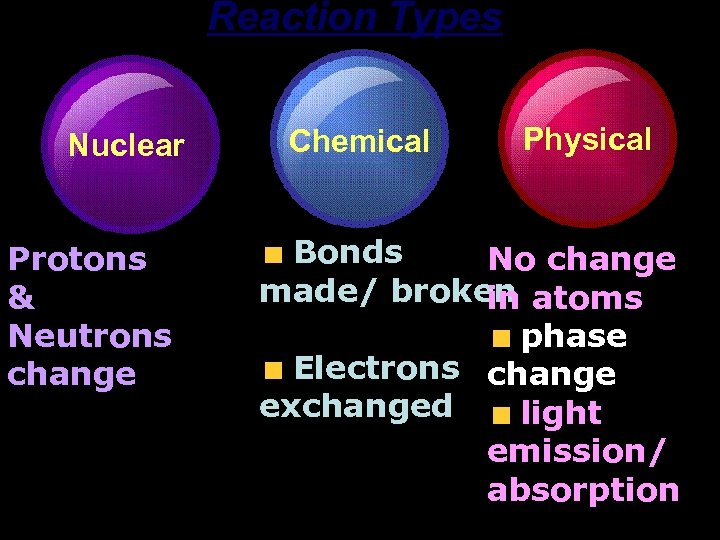
Reaction Types Nuclear Protons & Neutrons change Chemical Physical Bonds No change made/ broken atoms in phase Electrons change exchanged light emission/ absorption
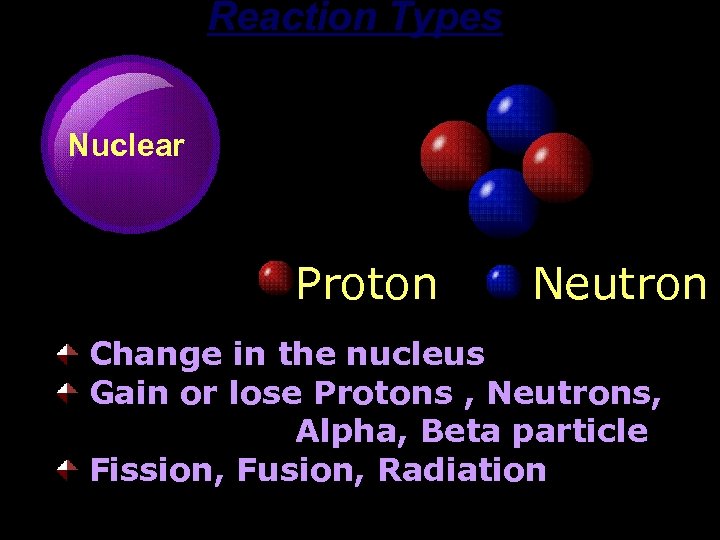
Reaction Types Nuclear Proton Neutron Change in the nucleus Gain or lose Protons , Neutrons, Alpha, Beta particle Fission, Fusion, Radiation
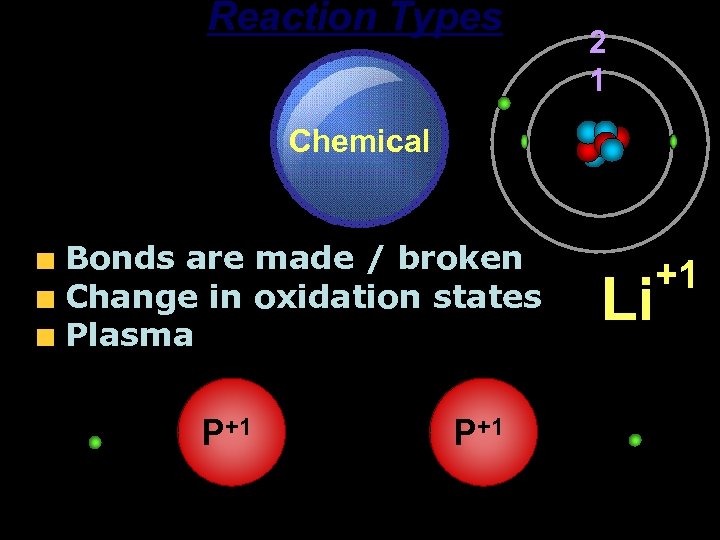
Reaction Types Chemical Bonds are made / broken Change in oxidation states Plasma P+1 2 1 P+1 Li +1
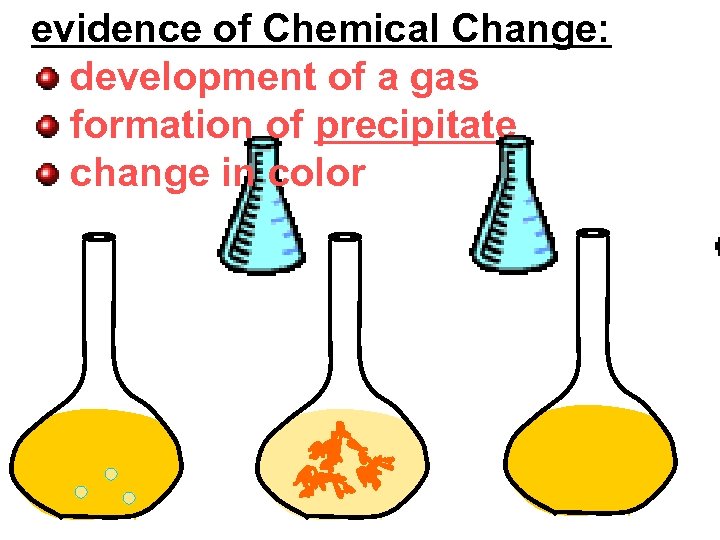
evidence of Chemical Change: development of a gas formation of precipitate change in color
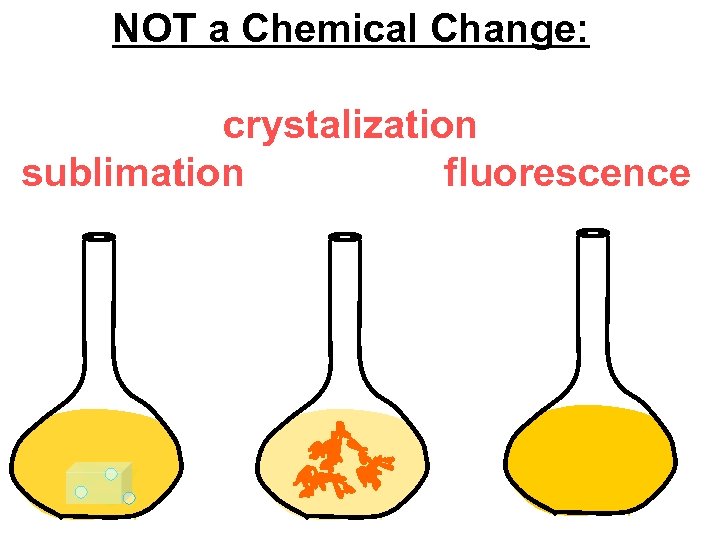
NOT a Chemical Change: crystalization sublimation fluorescence
more evidence of a Chemical Change: light fire Flame Test http: //webmineral. com/help/Flame. Test. shtml
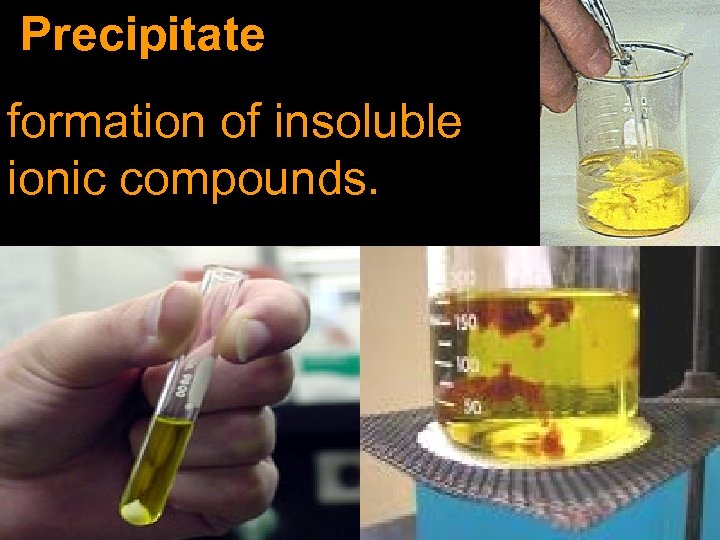
Precipitate formation of insoluble ionic compounds.
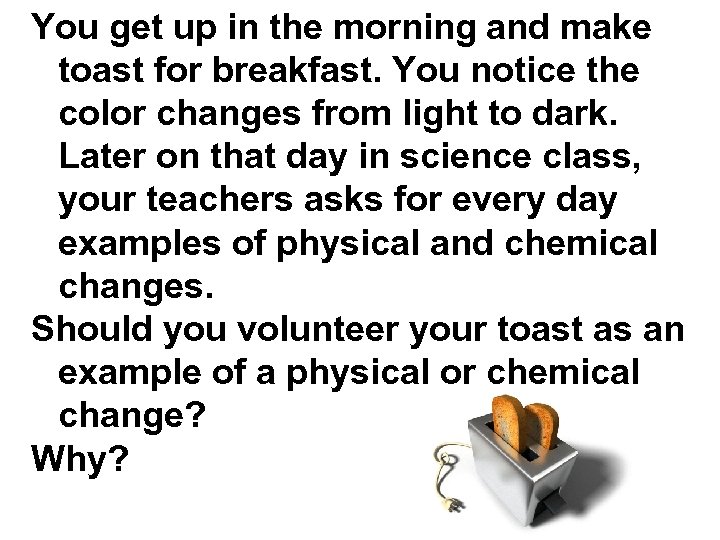
You get up in the morning and make toast for breakfast. You notice the color changes from light to dark. Later on that day in science class, your teachers asks for every day examples of physical and chemical changes. Should you volunteer your toast as an example of a physical or chemical change? Why?
Lucy noticed that her coin collection had begun to tarnish. Some of the metal in the coins had begun to change color. The formation of tarnish is most similar to which of the following changes? shredding a piece of paper into hundreds of tiny strips dropping a dinner plate on the floor melting ice cubes in a glass of juice burning a piece of paper to ashes in a fireplace
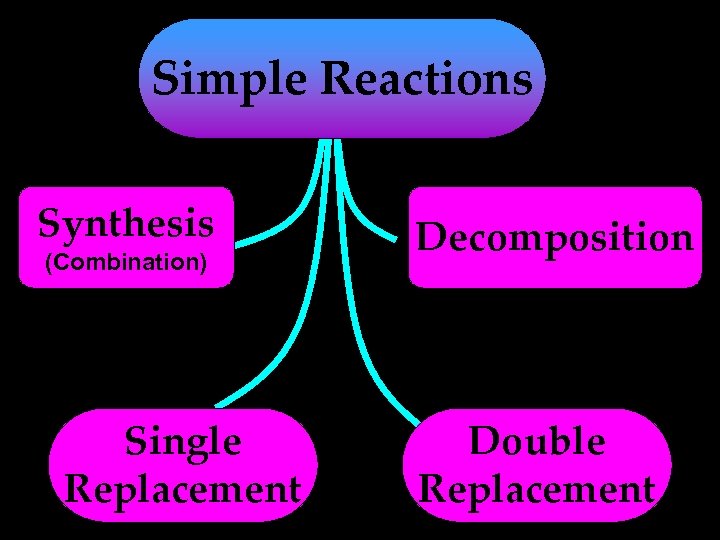
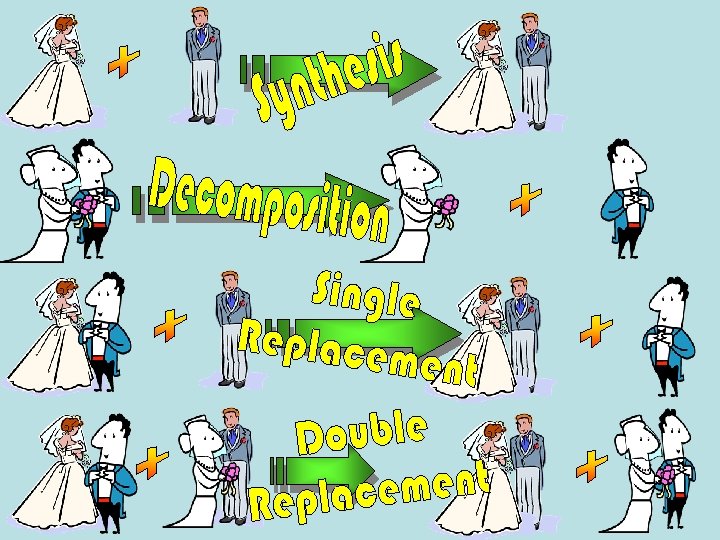
Simple Reactions Synthesis (Combination) Single Replacement Decomposition Double Replacement
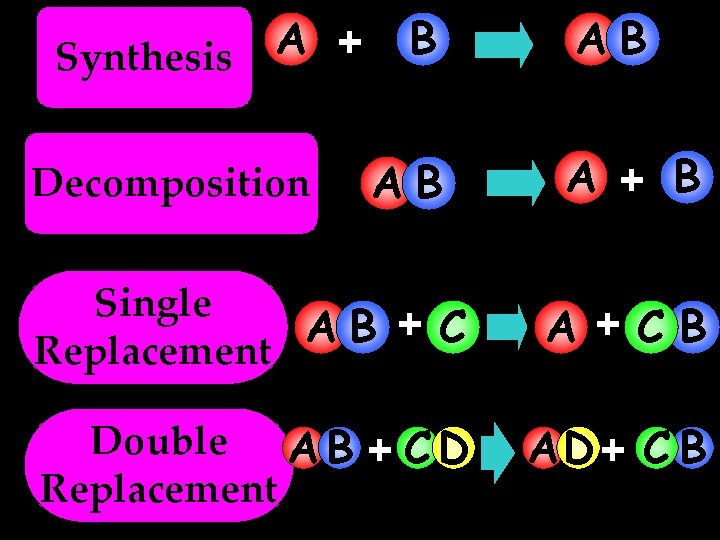
A + Synthesis Decomposition B AB AB A + B Single AB + C Replacement A +CB Double A B + C D Replacement AD + C B
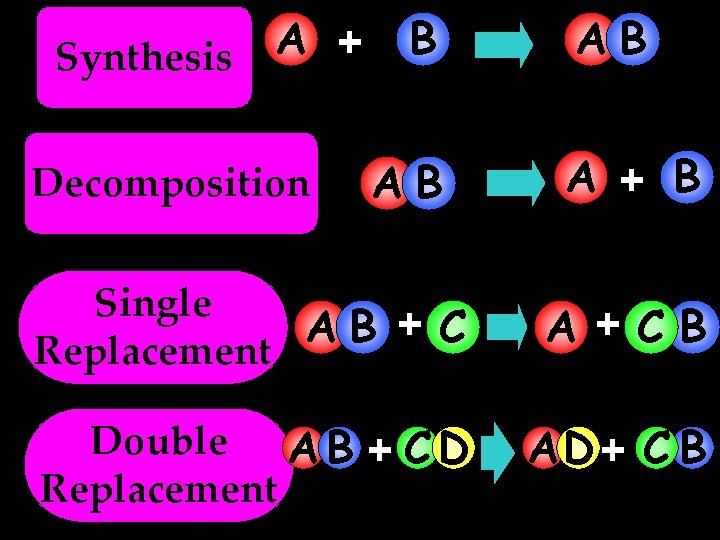
A + Synthesis Decomposition B AB AB A + B Single AB + C Replacement A +CB Double A B + C D Replacement AD + C B
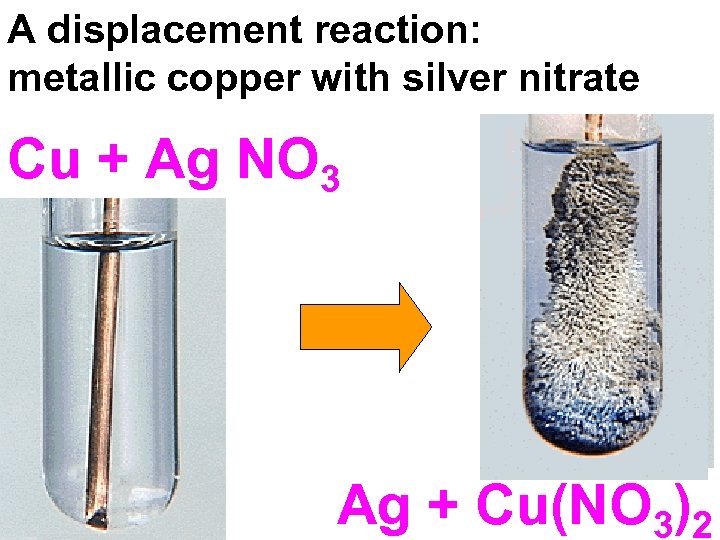
A displacement reaction: metallic copper with silver nitrate Cu + Ag NO 3 Ag + Cu(NO 3)2
Balancing equations
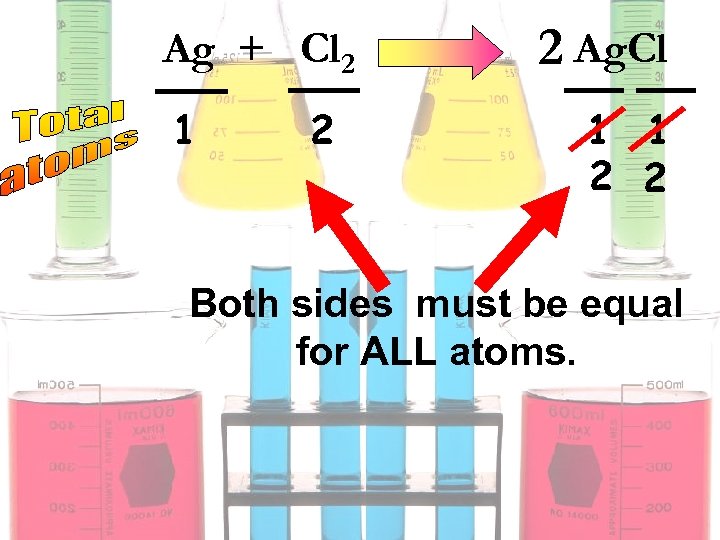
Ag + Cl 2 1 2 2 Ag. Cl 1 1 2 2 Both sides must be equal for ALL atoms.
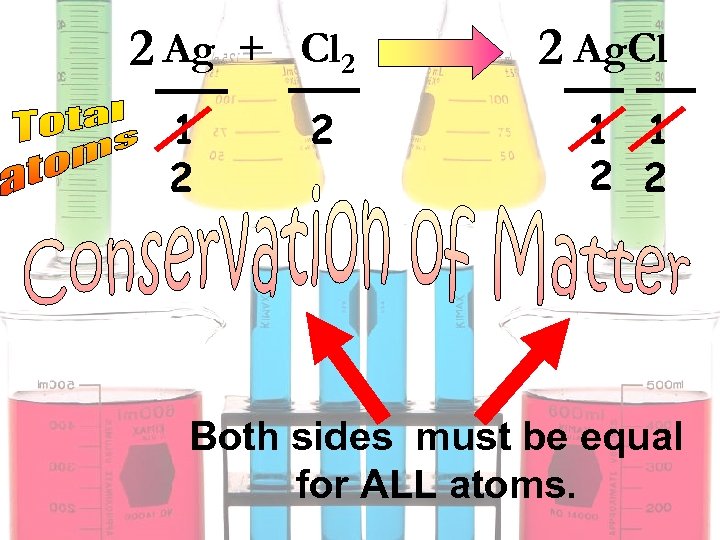
2 Ag + Cl 2 1 2 2 2 Ag. Cl 1 1 2 2 Both sides must be equal for ALL atoms.
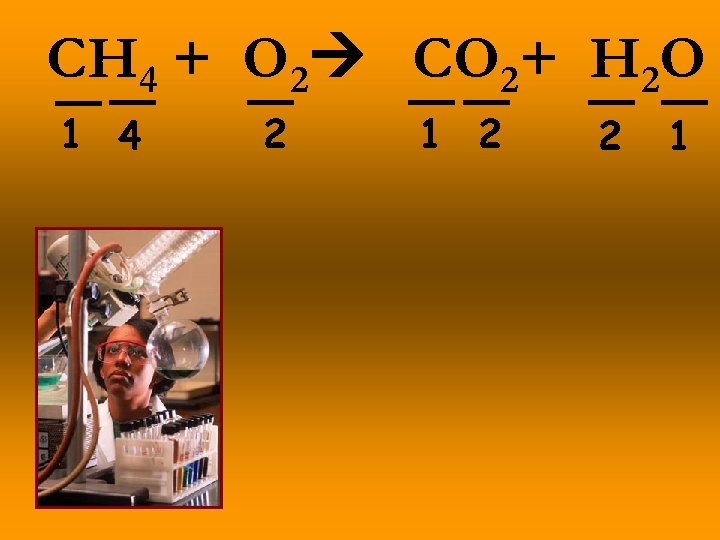
CH 4 + O 2 CO 2+ H 2 O 1 4 2 1 2 2 1
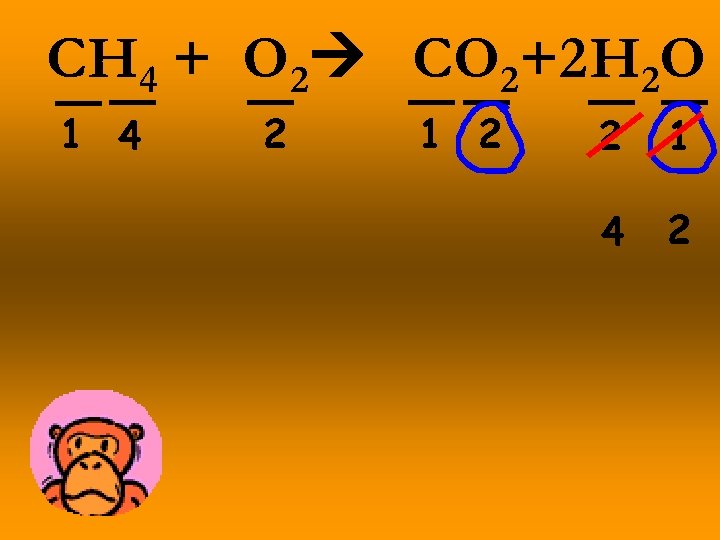
CH 4 + O 2 CO 2+2 H 2 O 1 4 2 1 2 2 1 4 2
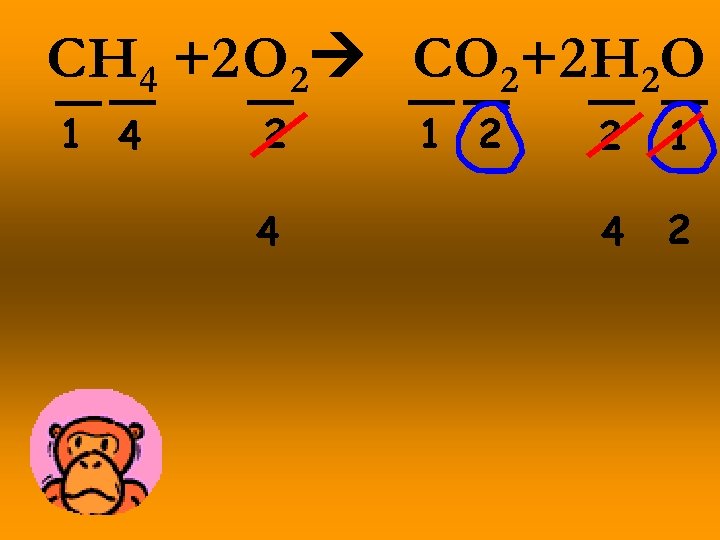
CH 4 +2 O 2 CO 2+2 H 2 O 1 4 2 4 1 2 2 1 4 2
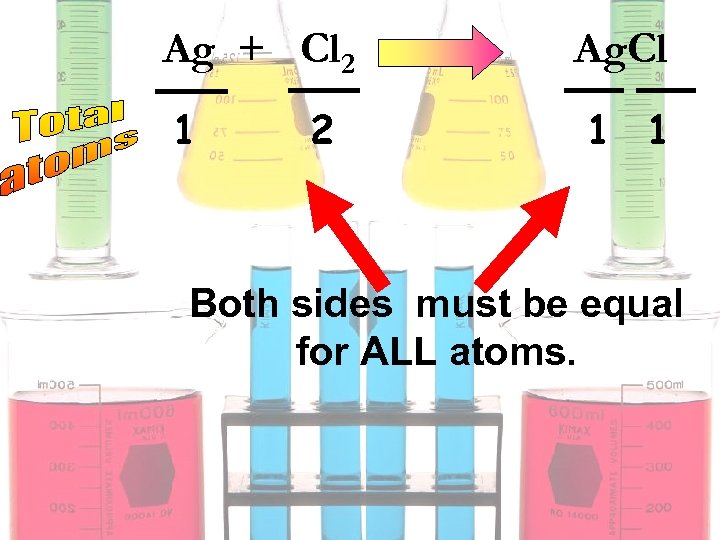
Ag + Cl 2 1 2 Ag. Cl 1 1 Both sides must be equal for ALL atoms.
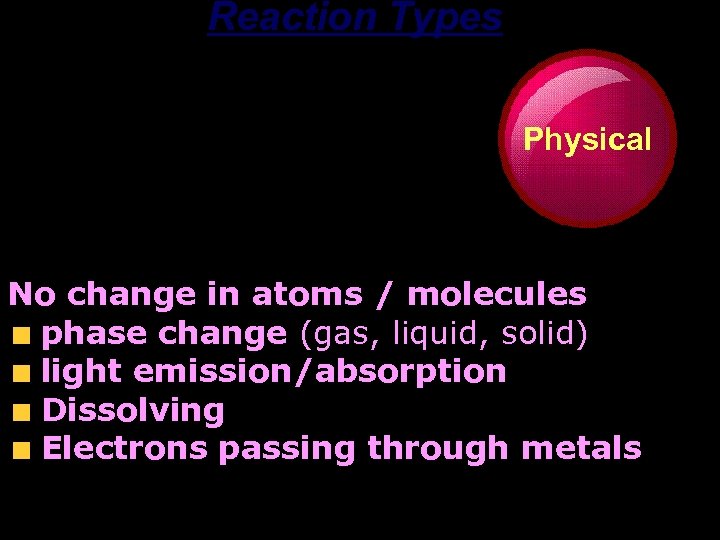
Reaction Types Physical No change in atoms / molecules phase change (gas, liquid, solid) light emission/absorption Dissolving Electrons passing through metals
Pure substance Mixture
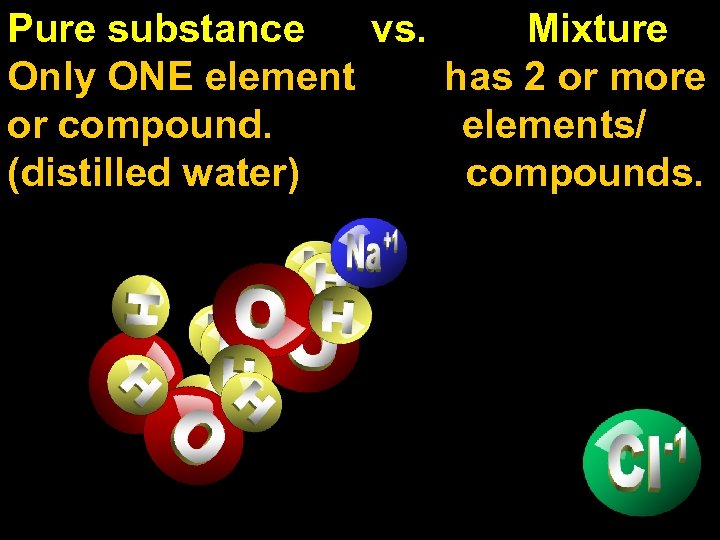
Pure substance vs. Mixture Only ONE element has 2 or more or compound. elements/ (distilled water) compounds.
A chocolate chip cookie is an example of a _______, because _______. a. compound, the ingredients are chemically bonded. b. compound, it is the same throughout. c. mixture, you can separate out the chips. d. mixture, you cannot distinguish between the ingredients.
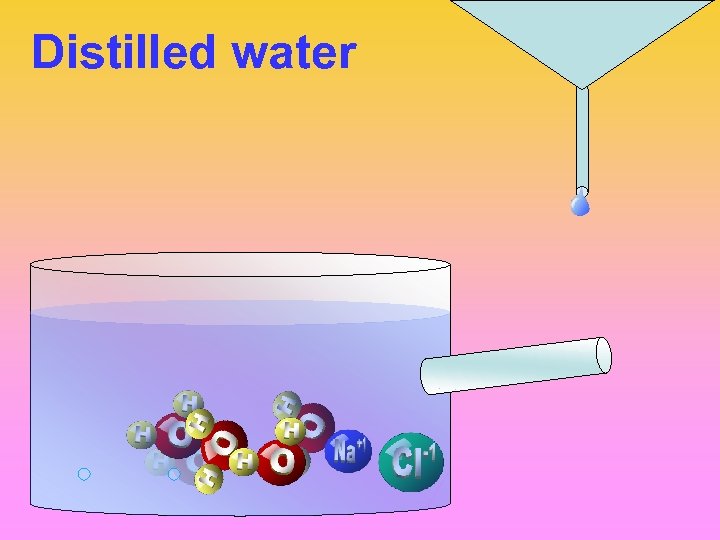
Distilled water
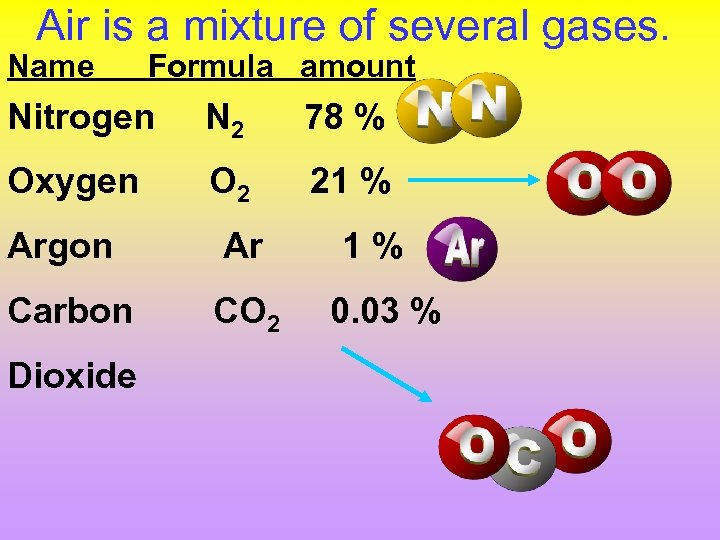
Air is a mixture of several gases. Name Formula amount Nitrogen N 2 78 % Oxygen O 2 21 % Argon Ar Carbon CO 2 Dioxide 1% 0. 03 %
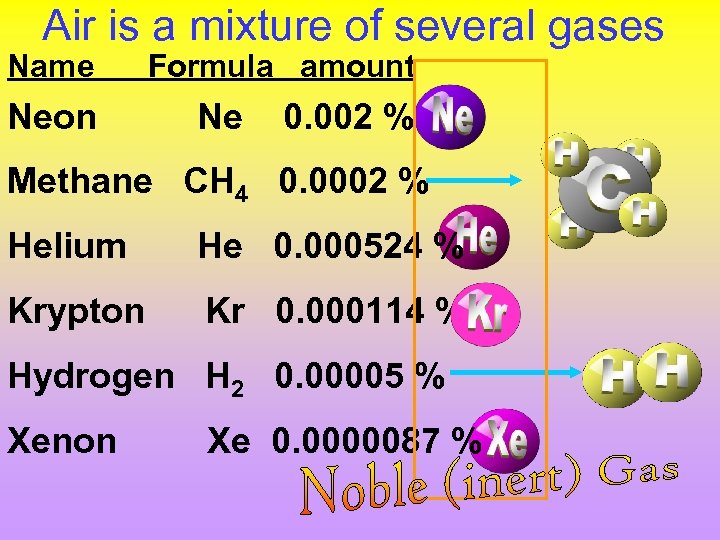
Air is a mixture of several gases Name Neon Formula amount Ne 0. 002 % Methane CH 4 0. 0002 % Helium He 0. 000524 % Krypton Kr 0. 000114 % Hydrogen H 2 0. 00005 % Xenon Xe 0. 0000087 %
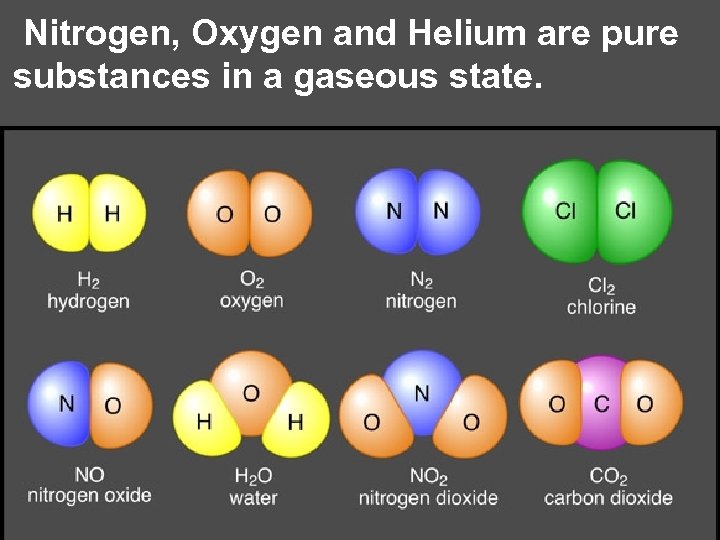
Nitrogen, Oxygen and Helium are pure substances in a gaseous state.
Atoms are NOT the same as molecules. Air and oxygen are NOT the same. Helium and hot air are NOT the same.
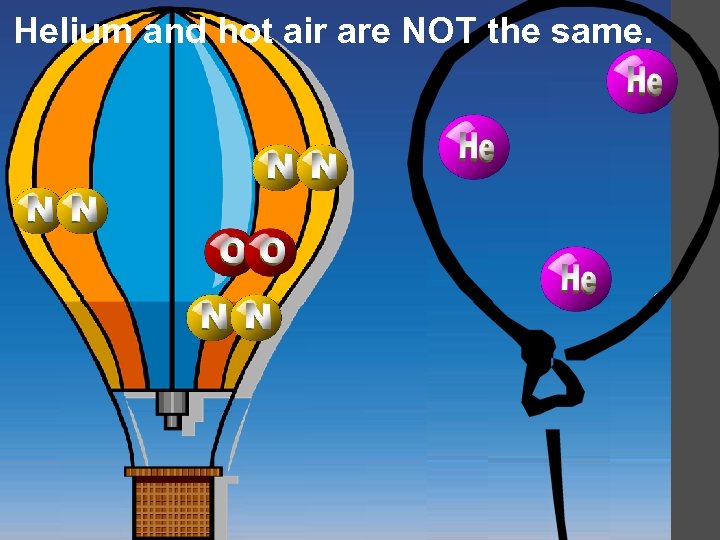
Helium and hot air are NOT the same.
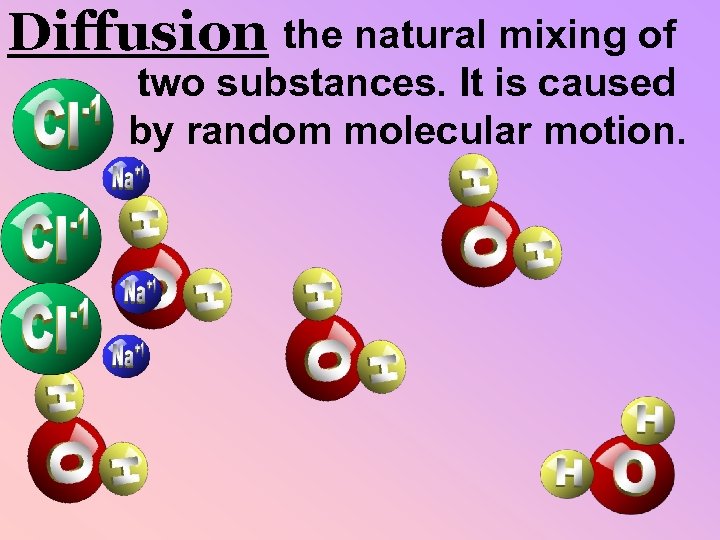
Diffusion the natural mixing of two substances. It is caused by random molecular motion.
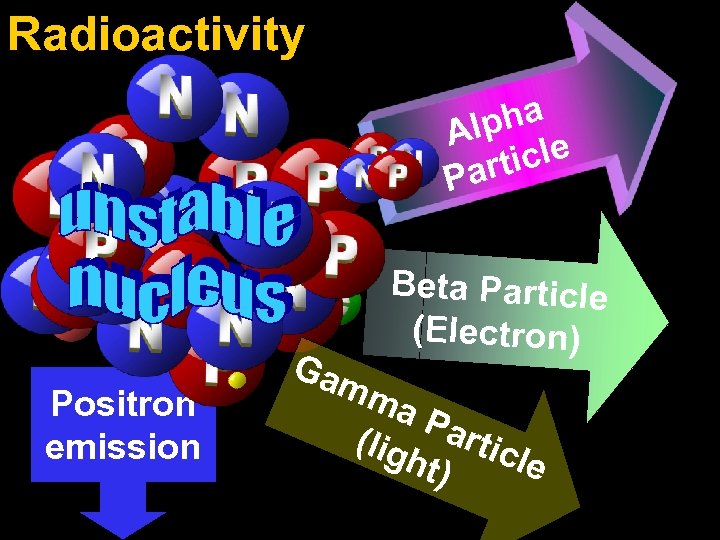
Radioactivity pha Al ticle Par Beta Particle (Electron) Positron emission Ga mm a. P (lig artic ht) le
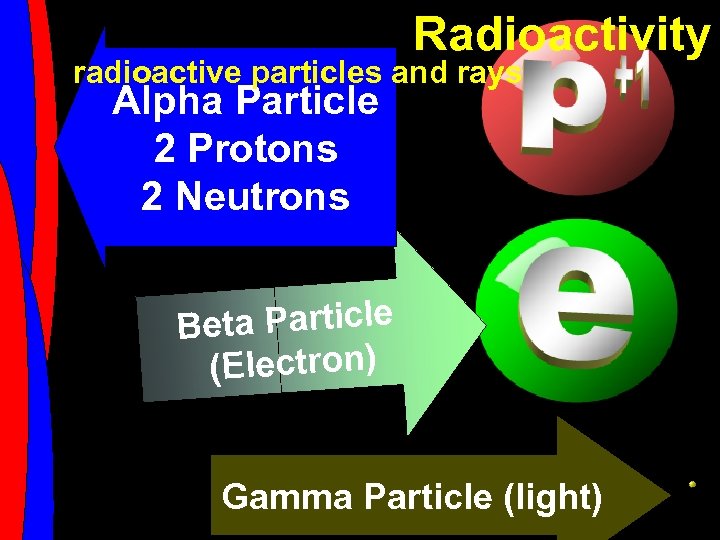
Radioactivity radioactive particles and rays Alpha Particle 2 Protons 2 Neutrons Beta Particle (Electron) Gamma Particle (light)
Radioactive decay Radioactivity Change in the nucleus of an atom Loss of an Alpha, Beta, or Gamma particle
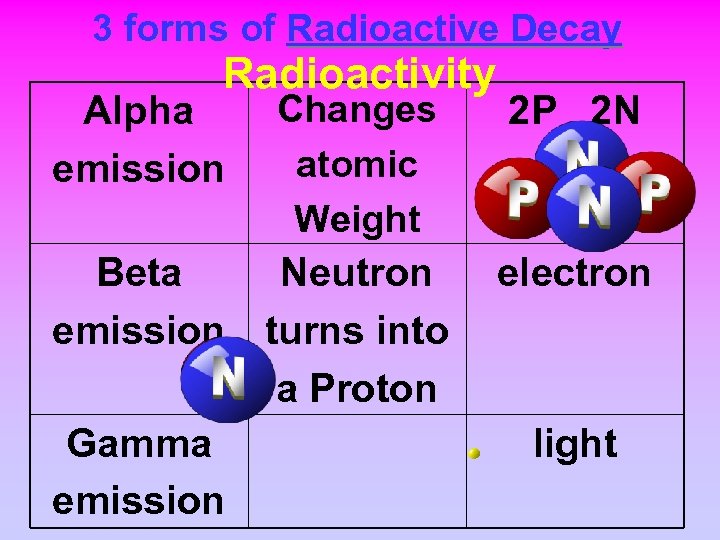
3 forms of Radioactive Decay Radioactivity Alpha emission Changes atomic Weight Beta Neutron emission turns into a Proton Gamma emission 2 P 2 N electron light
It’s time to learn about. . .
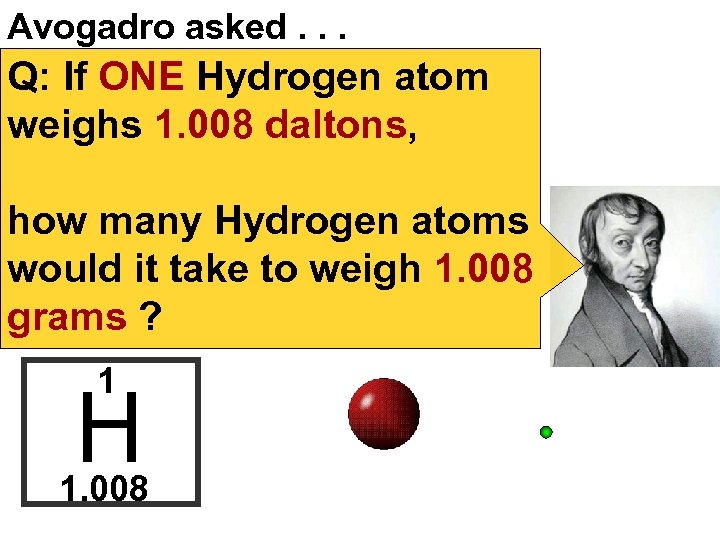
Avogadro asked. . . Q: If ONE Hydrogen atom weighs 1. 008 daltons, how many Hydrogen atoms would it take to weigh 1. 008 grams ? 1 H 1. 008
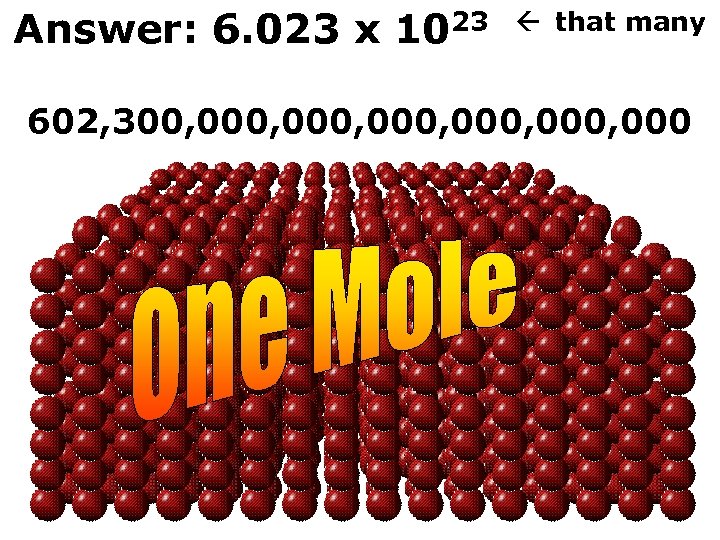
Answer: 6. 023 x 1023 that many 602, 300, 000, 000
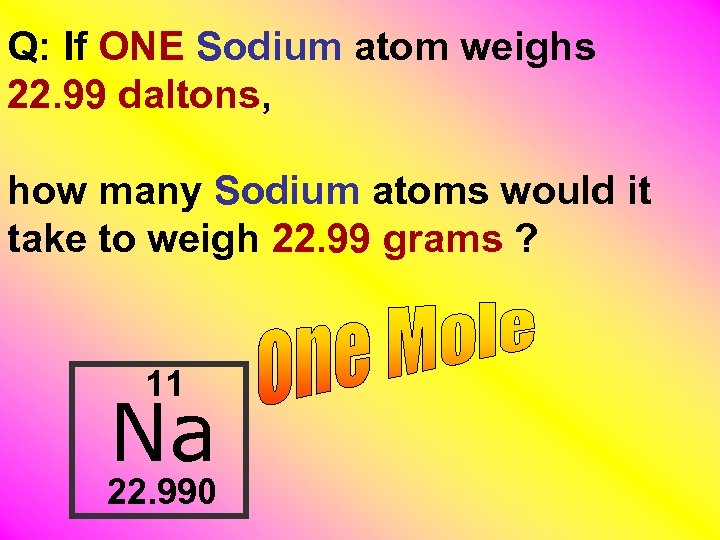
Q: If ONE Sodium atom weighs 22. 99 daltons, how many Sodium atoms would it take to weigh 22. 99 grams ? 11 Na 22. 990
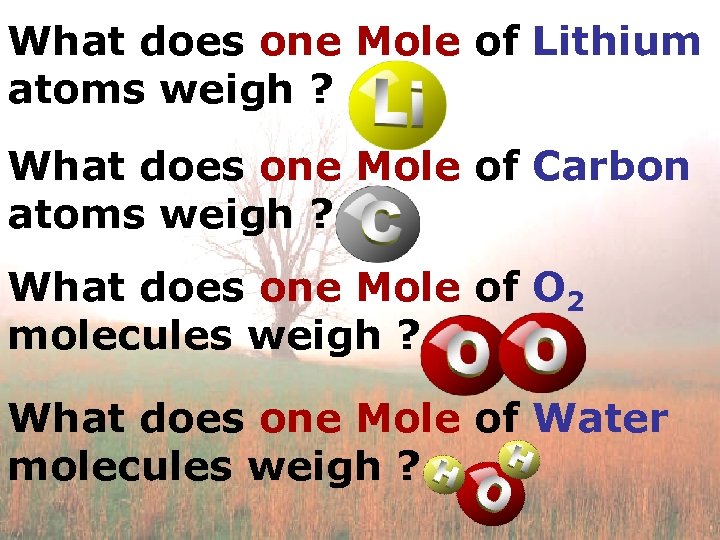
What does one Mole of Lithium atoms weigh ? What does one Mole of Carbon atoms weigh ? What does one Mole of O 2 molecules weigh ? What does one Mole of Water molecules weigh ?
Six munths ago I cudnt evun spelt chemissed. An now I are one.
This powerpoint was kindly donated to www. worldofteaching. com http: //www. worldofteaching. com is home to over a thousand powerpoints submitted by teachers. This is a completely free site and requires no registration. Please visit and I hope it will help in your teaching.
Скачать презентацию Key words Symbol Mixture Physical change chemical change
46e8516b53cb01dc1db8a8412862a66c.ppt