


 Скачать презентацию Key Gaps in Malaria and Emerging Infectious Disease
449311c9afc83ddd20064b552e94d6f9.ppt
- Количество слайдов: 43
 Key Gaps in Malaria and Emerging Infectious Disease Control Priorities for a Regional Response Dr Eva Christophel, in collaboration with relevant units and the SEARO WHO Regional Office for the Western Pacific, Manila, Philippines APLMA Regional Financing for Malaria Task Force (RFMTF), Hong Kong, May 12, 2014
 Outline of Presentation l Burden of major communicable diseases in the Region, key gaps l Malaria: Threats to controlling and eliminating malaria in Asia Pacific, and opportunities. l Priorities for a Regional Response 2
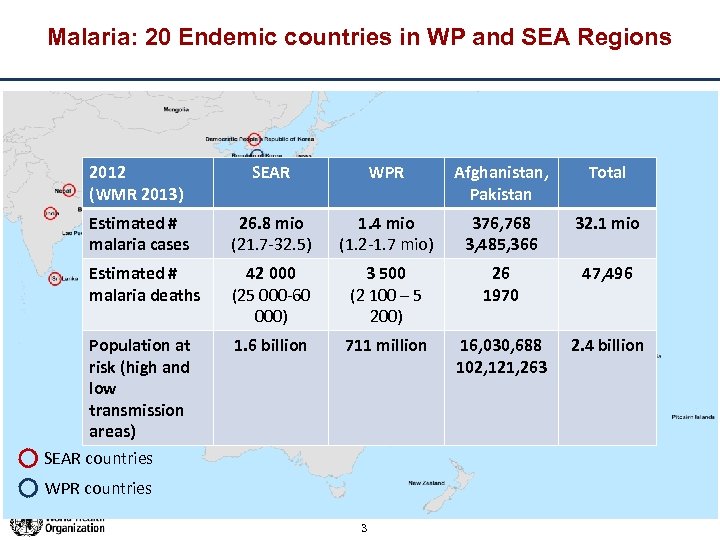 Malaria: 20 Endemic countries in WP and SEA Regions 2012 (WMR 2013) SEAR WPR Afghanistan, Pakistan Total Estimated # malaria cases 26. 8 mio (21. 7 -32. 5) 1. 4 mio (1. 2 -1. 7 mio) 376, 768 3, 485, 366 32. 1 mio Estimated # malaria deaths 42 000 (25 000 -60 000) 3 500 (2 100 – 5 200) 26 1970 47, 496 1. 6 billion 711 million 16, 030, 688 102, 121, 263 2. 4 billion Population at risk (high and low transmission areas) SEAR countries WPR countries 3
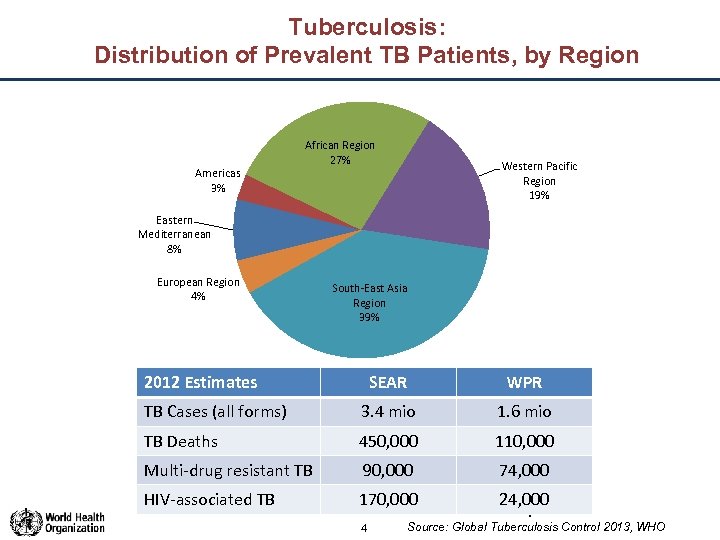 Tuberculosis: Distribution of Prevalent TB Patients, by Region Americas 3% African Region 27% Western Pacific Region 19% Eastern Mediterranean 8% European Region 4% South-East Asia Region 39% 2012 Estimates SEAR WPR TB Cases (all forms) 3. 4 mio 1. 6 mio TB Deaths 450, 000 110, 000 Multi-drug resistant TB 90, 000 74, 000 HIV-associated TB 170, 000 24, 000 4 4 Source: Global Tuberculosis Control 2013, WHO
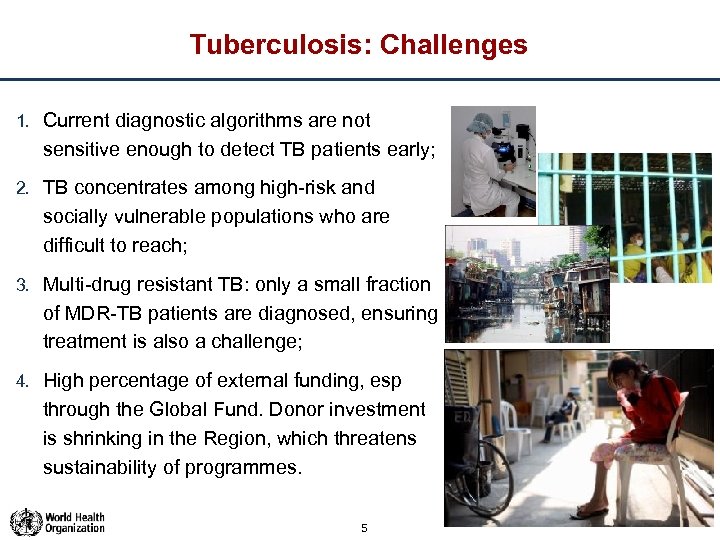 Tuberculosis: Challenges 1. Current diagnostic algorithms are not sensitive enough to detect TB patients early; 2. TB concentrates among high-risk and socially vulnerable populations who are difficult to reach; 3. Multi-drug resistant TB: only a small fraction of MDR-TB patients are diagnosed, ensuring treatment is also a challenge; 4. High percentage of external funding, esp through the Global Fund. Donor investment is shrinking in the Region, which threatens sustainability of programmes. 5
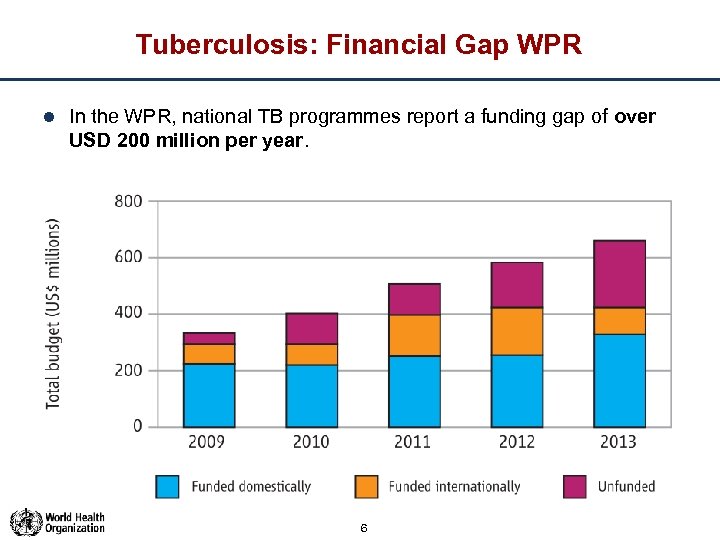 Tuberculosis: Financial Gap WPR l In the WPR, national TB programmes report a funding gap of over USD 200 million per year. 6
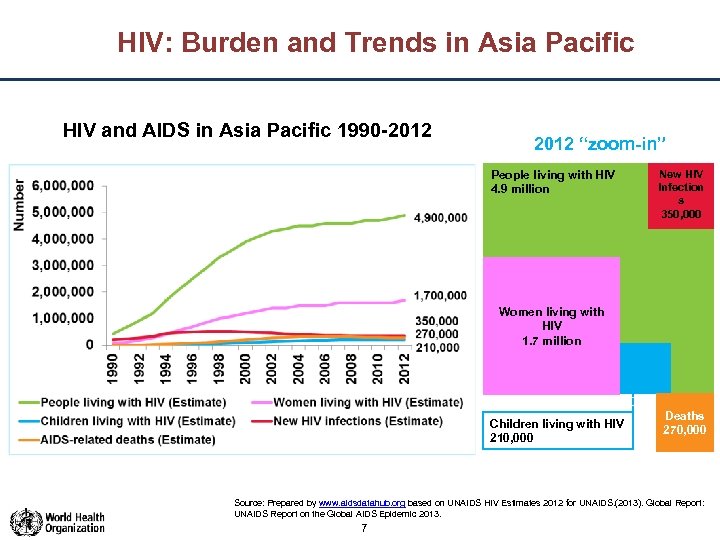 HIV: Burden and Trends in Asia Pacific HIV and AIDS in Asia Pacific 1990 -2012 “zoom-in” People living with HIV 4. 9 million New HIV Infection s 350, 000 Women living with HIV 1. 7 million Children living with HIV 210, 000 Deaths 270, 000 Source: Prepared by www. aidsdatahub. org based on UNAIDS HIV Estimates 2012 for UNAIDS. (2013). Global Report: UNAIDS Report on the Global AIDS Epidemic 2013. 7
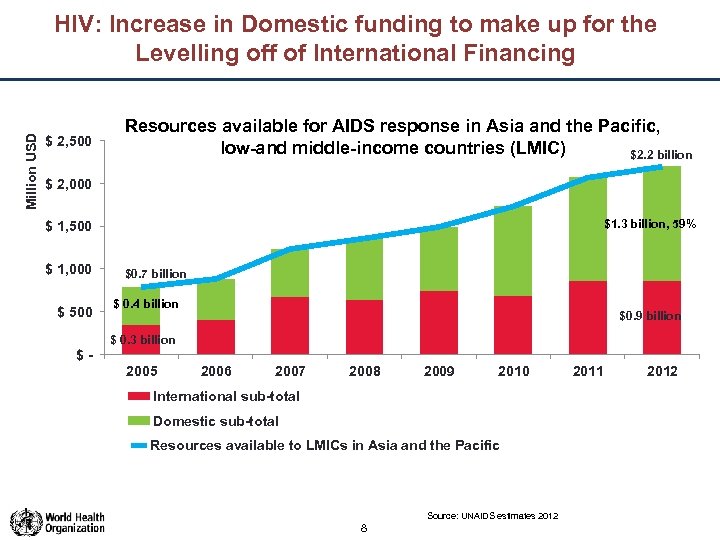 Million USD HIV: Increase in Domestic funding to make up for the Levelling off of International Financing $ 2, 500 Resources available for AIDS response in Asia and the Pacific, low-and middle-income countries (LMIC) $2. 2 billion $ 2, 000 $1. 3 billion, 59% $ 1, 500 $ 1, 000 $ 500 $0. 7 billion $ 0. 4 billion $0. 9 billion $ 0. 3 billion $2005 2006 2007 2008 2009 2010 International sub-total Domestic sub-total Resources available to LMICs in Asia and the Pacific Source: UNAIDS estimates 2012 8 2011 2012
 HIV: Challenges in Financing HIV programmes l Heavily reliant on donor funding for low and middle income countries, particularly Cambodia (89%), Lao PDR (93%) and Viet Nam (83%). Government should increase their domestic public HIV spending as GDP per capita rises; l Not enough is spent on key populations prevention programmes, e. g. spending on prevention for key populations accounts for only 24% of AIDS spending in Asia and the Pacific (2009 -2012). l Moreover, prevention spending on key populations is heavily dependent on international financing sources. 9
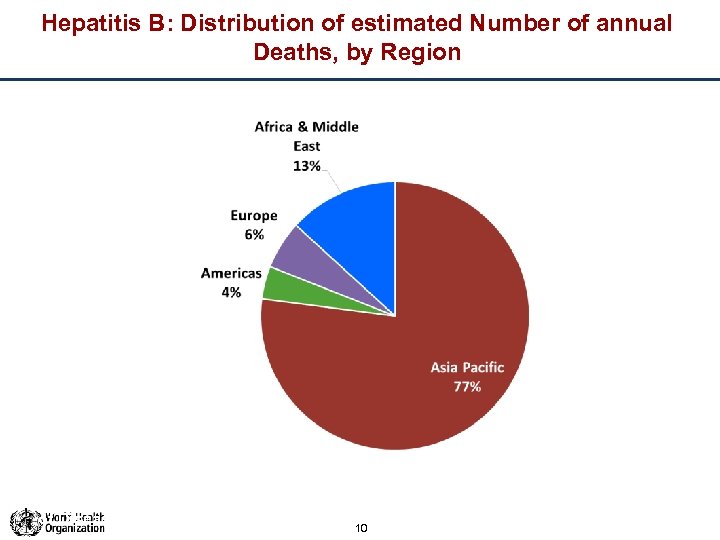 Hepatitis B: Distribution of estimated Number of annual Deaths, by Region Courtesy of IHME – Global Burden of Disease Study 10
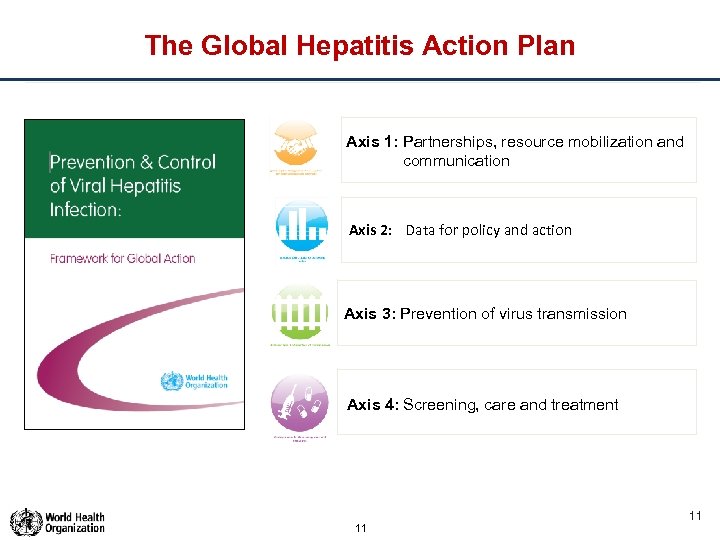 The Global Hepatitis Action Plan Axis 1: Partnerships, resource mobilization and communication Axis 2: Data for policy and action Axis 3: Prevention of virus transmission Axis 4: Screening, care and treatment 11 11
 Hepatitis: Gaps and Challenges • Low levels of awareness, advocacy, and financial engagement from national governments • Lack of data is a barrier to country-level dialogue and engagement • Progress made in prevention, especially HBV immunization, but high coverage of birth dose vaccination remains a challenge in many countries • Remarkable advances in hepatitis treatment options, but equitable access to quality and affordable diagnostics and medicines still far for many countries. 12
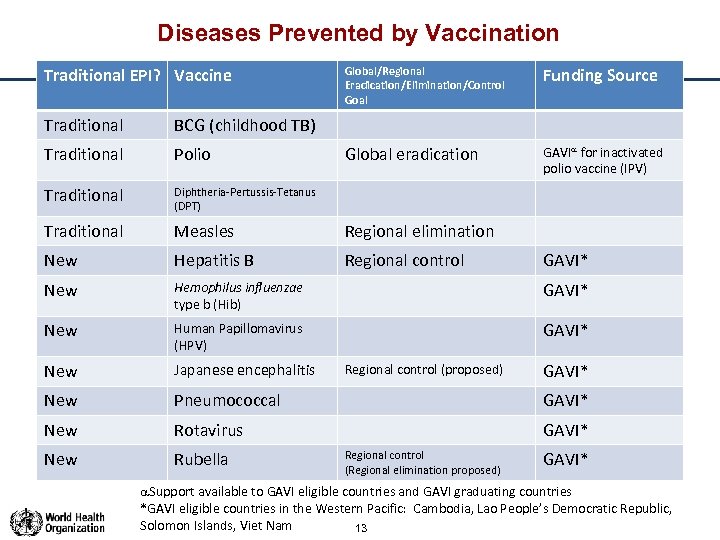 Diseases Prevented by Vaccination Traditional EPI? Vaccine Global/Regional Eradication/Elimination/Control Goal Funding Source Global eradication GAVI for inactivated polio vaccine (IPV) Traditional BCG (childhood TB) Traditional Polio Traditional Diphtheria-Pertussis-Tetanus (DPT) Traditional Measles Regional elimination New Hepatitis B Regional control New Hemophilus influenzae type b (Hib) GAVI* New Human Papillomavirus (HPV) GAVI* New Japanese encephalitis New Pneumococcal GAVI* New Rotavirus GAVI* New Rubella Regional control (proposed) Regional control (Regional elimination proposed) GAVI* Support available to GAVI eligible countries and GAVI graduating countries *GAVI eligible countries in the Western Pacific: Cambodia, Lao People’s Democratic Republic, Solomon Islands, Viet Nam 13
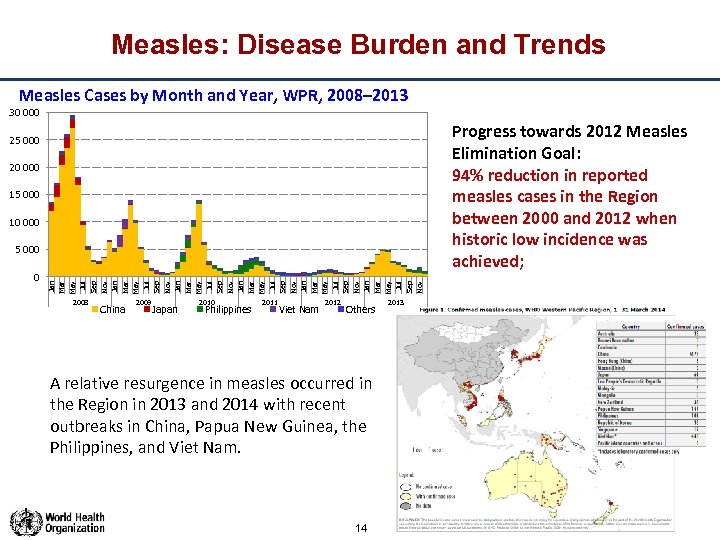 Measles: Disease Burden and Trends Measles Cases by Month and Year, WPR, 2008– 2013 30 000 Progress towards 2012 Measles Elimination Goal: 94% reduction in reported measles cases in the Region between 2000 and 2012 when historic low incidence was achieved; 25 000 20 000 15 000 10 000 China Philippines Viet Nam Others A relative resurgence in measles occurred in the Region in 2013 and 2014 with recent outbreaks in China, Papua New Guinea, the Philippines, and Viet Nam. 14 Nov Jul 2013 Sep May Jan Mar Nov Jul 2012 Sep May Jan Mar Nov Jul 2011 Sep May Jan Mar Nov Jul 2010 Sep May Jan Japan Mar Nov Jul 2009 Sep May Jan Mar Nov Jul 2008 Sep May Jan 0 Mar 5 000
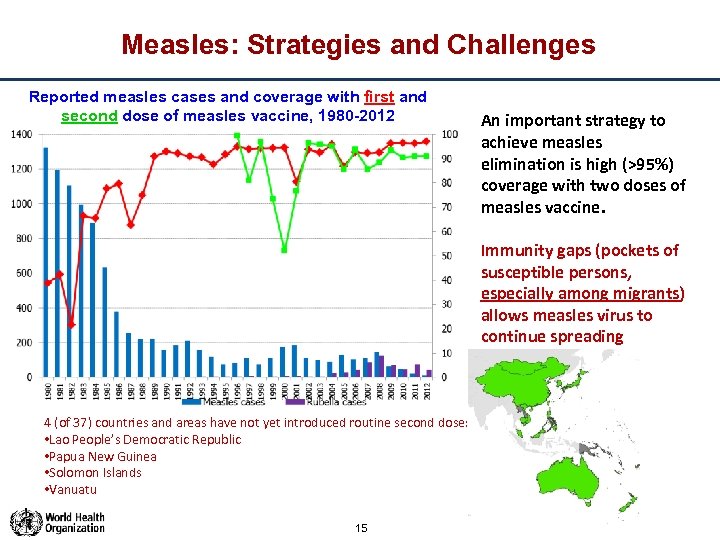 Measles: Strategies and Challenges Reported measles cases and coverage with first and second dose of measles vaccine, 1980 -2012 An important strategy to achieve measles elimination is high (>95%) coverage with two doses of measles vaccine. Immunity gaps (pockets of susceptible persons, especially among migrants) allows measles virus to continue spreading 4 (of 37) countries and areas have not yet introduced routine second dose: • Lao People’s Democratic Republic • Papua New Guinea • Solomon Islands • Vanuatu 15
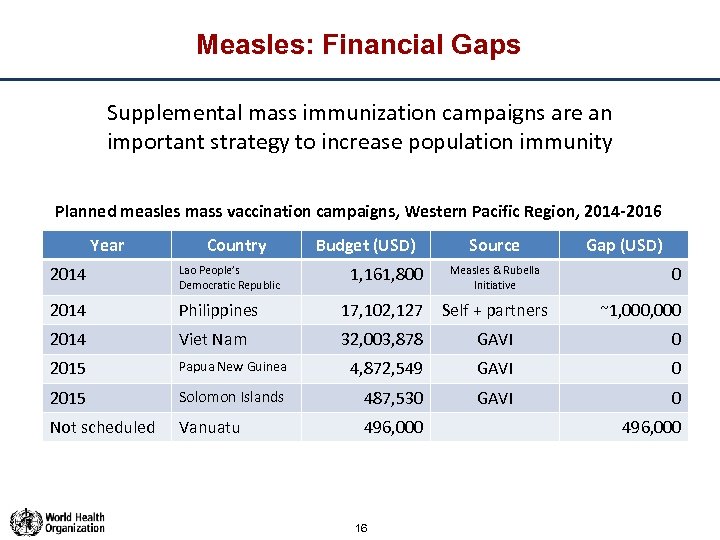 Measles: Financial Gaps Supplemental mass immunization campaigns are an important strategy to increase population immunity Planned measles mass vaccination campaigns, Western Pacific Region, 2014 -2016 Year Country Budget (USD) 1, 161, 800 Source Gap (USD) 2014 Lao People’s Democratic Republic 2014 Philippines 17, 102, 127 Self + partners 2014 Viet Nam 32, 003, 878 GAVI 0 2015 Papua New Guinea 4, 872, 549 GAVI 0 2015 Solomon Islands 487, 530 GAVI 0 Not scheduled Vanuatu 496, 000 16 Measles & Rubella Initiative 0 ~1, 000 496, 000
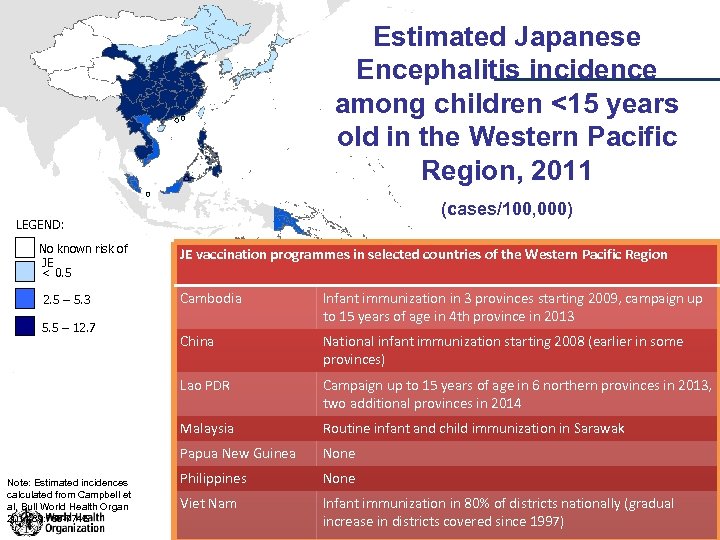 Estimated Japanese Encephalitis incidence among children <15 years old in the Western Pacific Region, 2011 (cases/100, 000) LEGEND: No known risk of JE < 0. 5 JE vaccination programmes in selected countries of the Western Pacific Region China National infant immunization starting 2008 (earlier in some provinces) Campaign up to 15 years of age in 6 northern provinces in 2013, two additional provinces in 2014 Routine infant and child immunization in Sarawak Papua New Guinea Note: Estimated incidences calculated from Campbell et al, Bull World Health Organ 2011; 89: 766 -774 E Infant immunization in 3 provinces starting 2009, campaign up to 15 years of age in 4 th province in 2013 Malaysia 5. 5 – 12. 7 Cambodia Lao PDR 2. 5 – 5. 3 None Philippines None Viet Nam Infant immunization in 80% of districts nationally (gradual increase in districts covered since 1997) 17
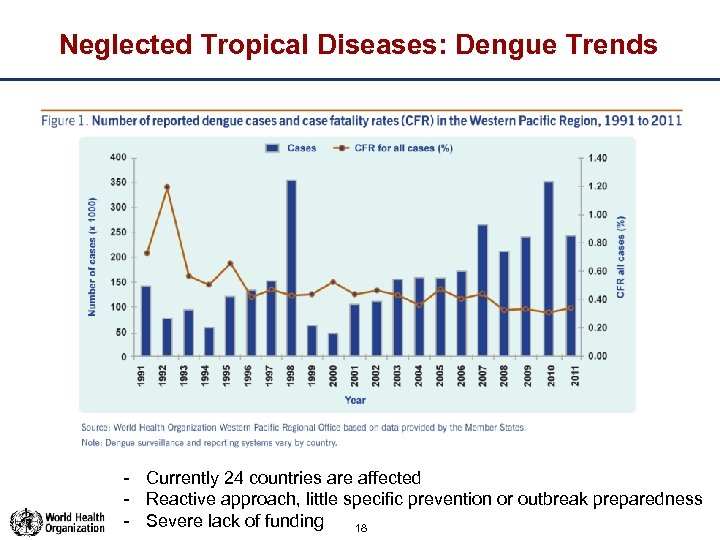 Neglected Tropical Diseases: Dengue Trends - Currently 24 countries are affected - Reactive approach, little specific prevention or outbreak preparedness - Severe lack of funding 18
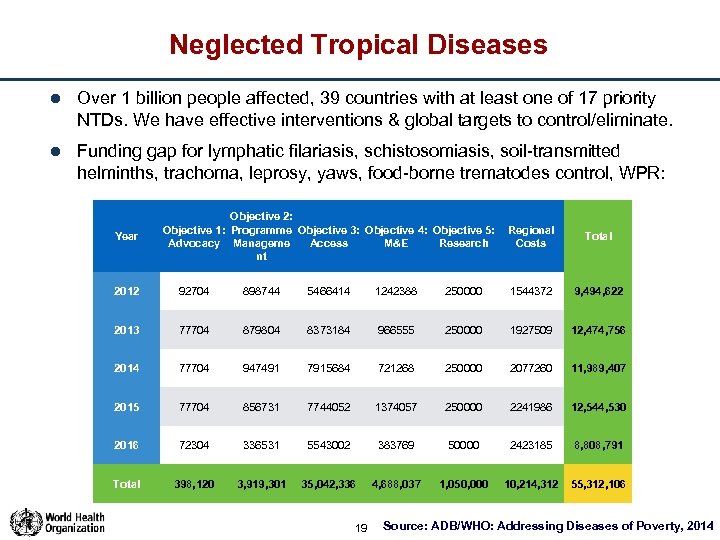 Neglected Tropical Diseases l Over 1 billion people affected, 39 countries with at least one of 17 priority NTDs. We have effective interventions & global targets to control/eliminate. l Funding gap for lymphatic filariasis, schistosomiasis, soil-transmitted helminths, trachoma, leprosy, yaws, food-borne trematodes control, WPR: Year Objective 2: Objective 1: Programme Objective 3: Objective 4: Objective 5: Advocacy Manageme Access M&E Research nt Regional Costs Total 2012 92704 898744 5466414 1242388 250000 1544372 9, 494, 622 2013 77704 879804 8373184 966555 250000 1927509 12, 474, 756 2014 77704 947491 7915684 721268 250000 2077260 11, 989, 407 2015 77704 856731 7744052 1374057 250000 2241986 12, 544, 530 2016 72304 336531 5543002 383769 50000 2423185 8, 808, 791 Total 398, 120 3, 919, 301 35, 042, 336 4, 688, 037 1, 050, 000 10, 214, 312 55, 312, 106 19 Source: ADB/WHO: Addressing Diseases of Poverty, 2014
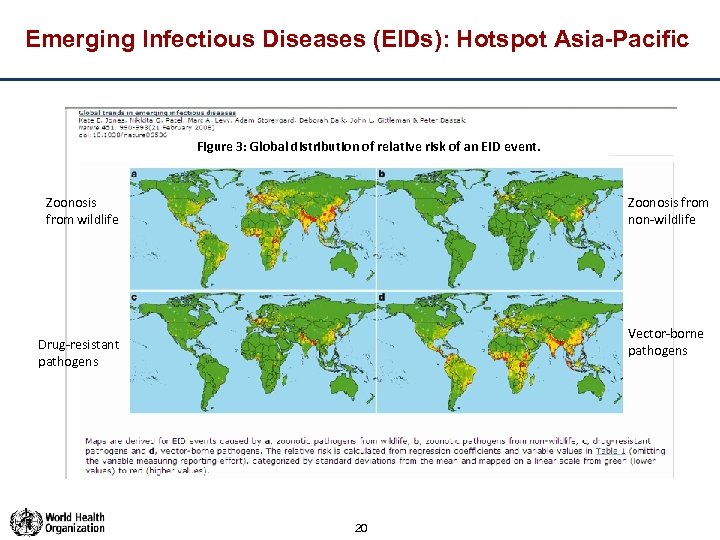 Emerging Infectious Diseases (EIDs): Hotspot Asia-Pacific Figure 3: Global distribution of relative risk of an EID event. Zoonosis from wildlife Zoonosis from non-wildlife Vector-borne pathogens Drug-resistant pathogens 20
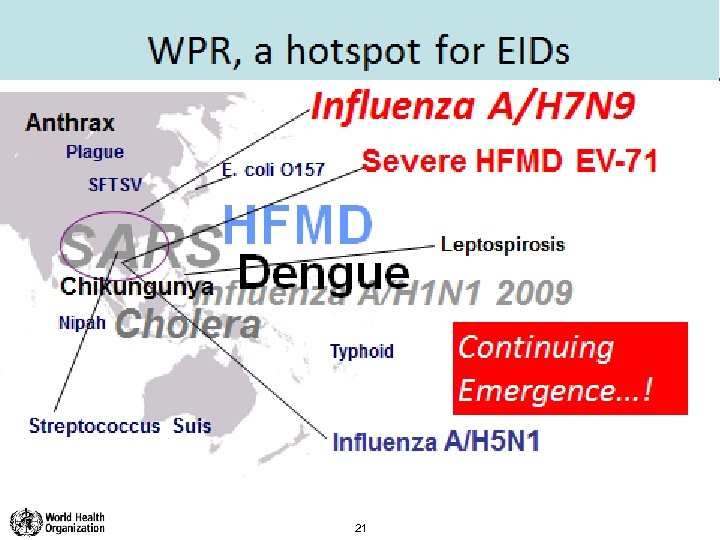 WPR, a hotspot for EIDs Influenza A/H 7 N 9 Anthrax Plague SFTSV Severe HFMD EV-71 E. coli O 157 HFMD SARS Leptospirosis Dengue A/H 1 N 1 2009 Chikungunya Influenza Nipah Cholera Streptococcus Suis Typhoid Continuing Emergence…! Influenza A/H 5 N 1 21
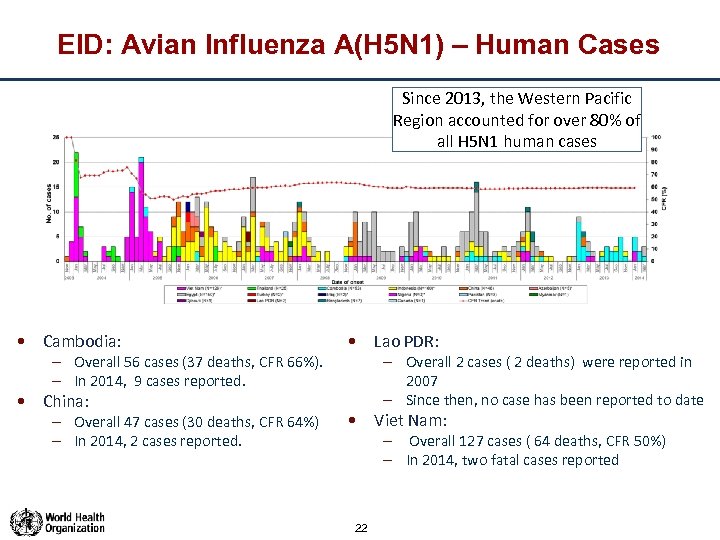 EID: Avian Influenza A(H 5 N 1) – Human Cases Since 2013, the Western Pacific Region accounted for over 80% of all H 5 N 1 human cases • Cambodia: – Overall 56 cases (37 deaths, CFR 66%). – In 2014, 9 cases reported. • China: – Overall 47 cases (30 deaths, CFR 64%) – In 2014, 2 cases reported. • Lao PDR: – Overall 2 cases ( 2 deaths) were reported in 2007 – Since then, no case has been reported to date • Viet Nam: – Overall 127 cases ( 64 deaths, CFR 50%) – In 2014, two fatal cases reported 22
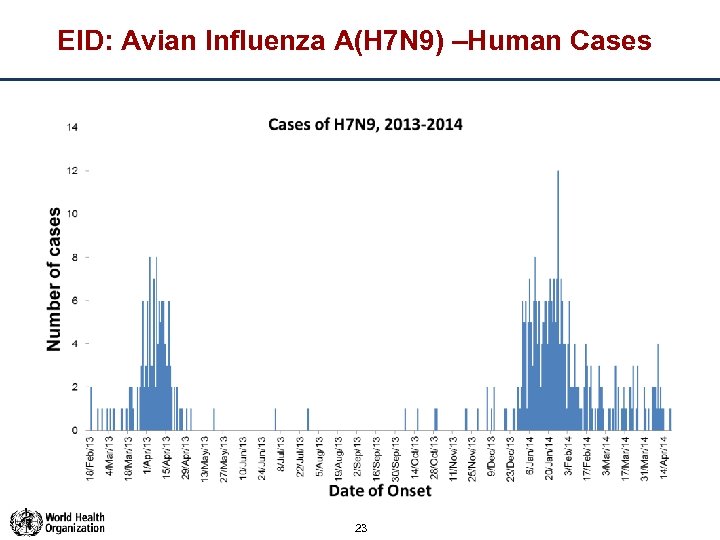 EID: Avian Influenza A(H 7 N 9) –Human Cases 23
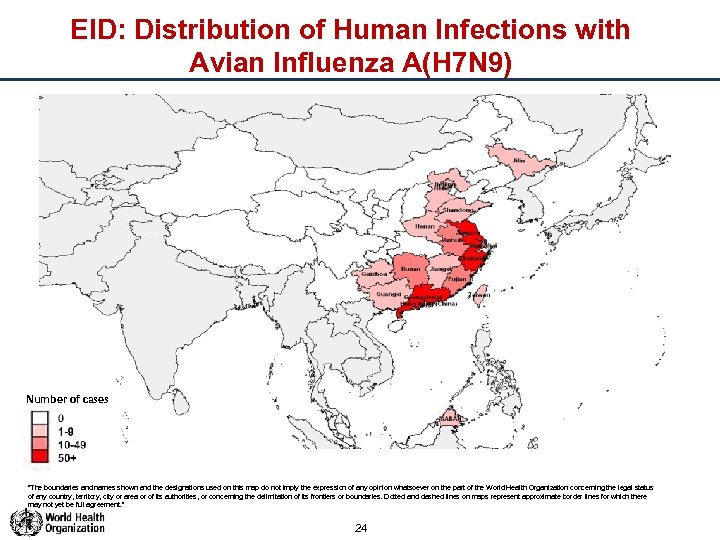 EID: Distribution of Human Infections with Avian Influenza A(H 7 N 9) Number of cases "The boundaries and names shown and the designations used on this map do not imply the expression of any opinion whatsoever on the part of the World Health Organization concerning the legal status of any country, territory, city or area or of its authorities, or concerning the delimitation of its frontiers or boundaries. Dotted and dashed lines on maps represent approximate border lines for which there may not yet be full agreement. " 24
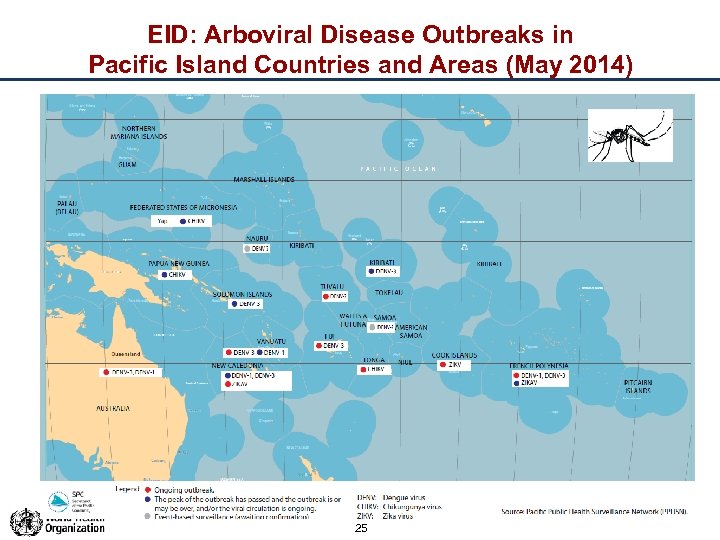 EID: Arboviral Disease Outbreaks in Pacific Island Countries and Areas (May 2014) DENV-? CHIKV 25
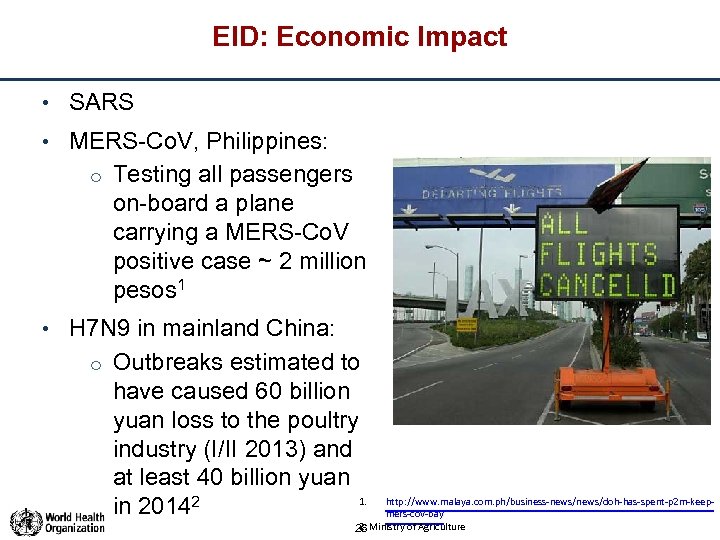 EID: Economic Impact • SARS • MERS-Co. V, Philippines: o Testing all passengers on-board a plane carrying a MERS-Co. V positive case ~ 2 million pesos 1 • H 7 N 9 in mainland China: o Outbreaks estimated to have caused 60 billion yuan loss to the poultry industry (I/II 2013) and at least 40 billion yuan 1. in 20142 http: //www. malaya. com. ph/business-news/doh-has-spent-p 2 m-keepmers-cov-bay 2. 26 Ministry of Agriculture
 EID: International Health Regulations 2005 • Legally binding international instrument for global public health security, for preventing international spread of disease, enforced 2007 • International commitment for shared responsibilities and collective defence against diseases information sharing! • Network of national IHR focal points and WHO contact points, 24/7 27
 EID: Challenges • Health security threats continue to occur in unexpected way, if not managed well, resulting in significant health, economic, social and political consequences • Strong national and international capacities are a MUST for managing unpredictable/uncertain threats • The Region is NOT sufficiently prepared to cope with severe public health emergencies and disasters • Investing in health security essential, AND sustaining it equally vital 28
 EID: The way forward • Continue to support to countries in meeting the IHR core • • capacity requirements through implementation of the Asia Pacific Strategy for Emerging Diseases/APSED (2010). This includes capacity building in surveillance, laboratory, zoonoses, risk communication, PH emergency planning Regional strategies, especially APSED, have proven to be valuable tools to support countries to meet IHR core capacity requirements. Promote cross-cutting capacities that serve as foundation for all emergency risk management Foster regional partnerships for emergency risk management Respond to major emerging disease outbreaks and emergencies swiftly and in coordinated way (WHO Emergency Response Framework) 29
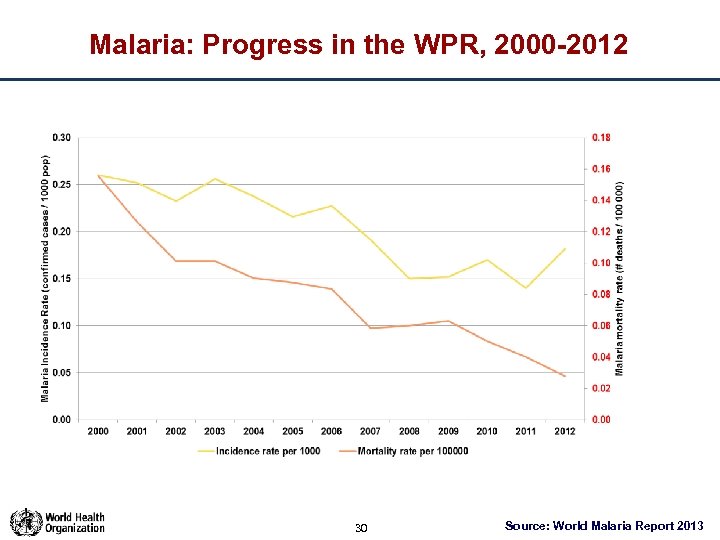 Malaria: Progress in the WPR, 2000 -2012 30 Source: World Malaria Report 2013
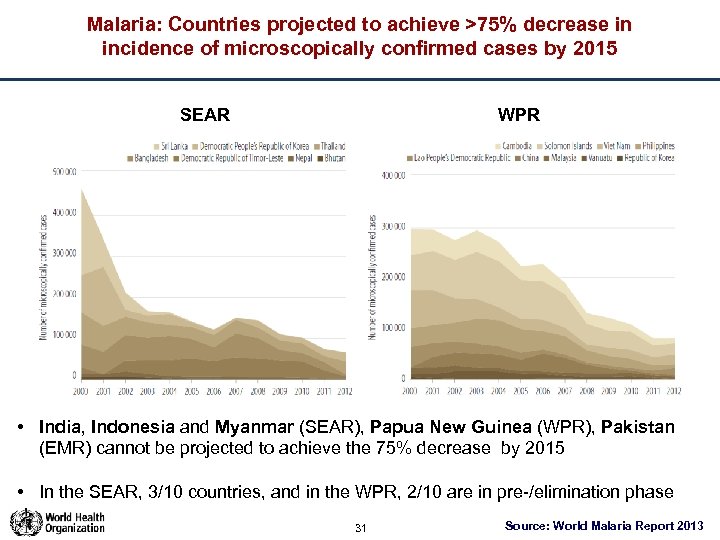 Malaria: Countries projected to achieve >75% decrease in incidence of microscopically confirmed cases by 2015 SEAR WPR • India, Indonesia and Myanmar (SEAR), Papua New Guinea (WPR), Pakistan (EMR) cannot be projected to achieve the 75% decrease by 2015 • In the SEAR, 3/10 countries, and in the WPR, 2/10 are in pre-/elimination phase 31 Source: World Malaria Report 2013
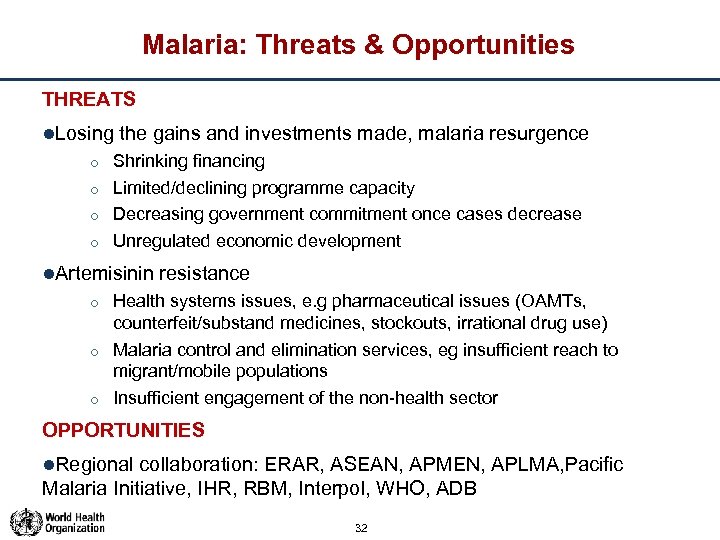 Malaria: Threats & Opportunities THREATS l. Losing the gains and investments made, malaria resurgence Shrinking financing o Limited/declining programme capacity o Decreasing government commitment once cases decrease o Unregulated economic development o l. Artemisinin resistance Health systems issues, e. g pharmaceutical issues (OAMTs, counterfeit/substand medicines, stockouts, irrational drug use) o Malaria control and elimination services, eg insufficient reach to migrant/mobile populations o Insufficient engagement of the non-health sector o OPPORTUNITIES l. Regional collaboration: ERAR, ASEAN, APMEN, APLMA, Pacific Malaria Initiative, IHR, RBM, Interpol, WHO, ADB 32
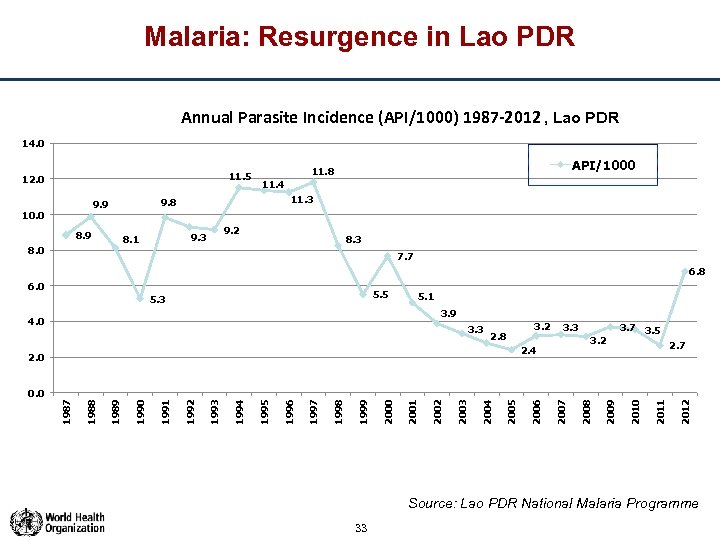 Malaria: Resurgence in Lao PDR Annual Parasite Incidence (API/1000) 1987 -2012 , Lao PDR 14. 0 11. 5 12. 0 10. 0 11. 4 11. 3 9. 8 9. 9 8. 0 9. 2 9. 3 8. 1 API/1000 11. 8 8. 3 7. 7 6. 8 6. 0 5. 5 5. 3 5. 1 3. 9 4. 0 3. 3 2. 8 3. 2 3. 3 3. 2 2. 4 2. 0 3. 7 3. 5 2. 7 2012 2011 2010 2009 2008 2007 2006 2005 2004 2003 2002 2001 2000 1999 1998 1997 1996 1995 1994 1993 1992 1991 1990 1989 1988 1987 0. 0 Source: Lao PDR National Malaria Programme 33
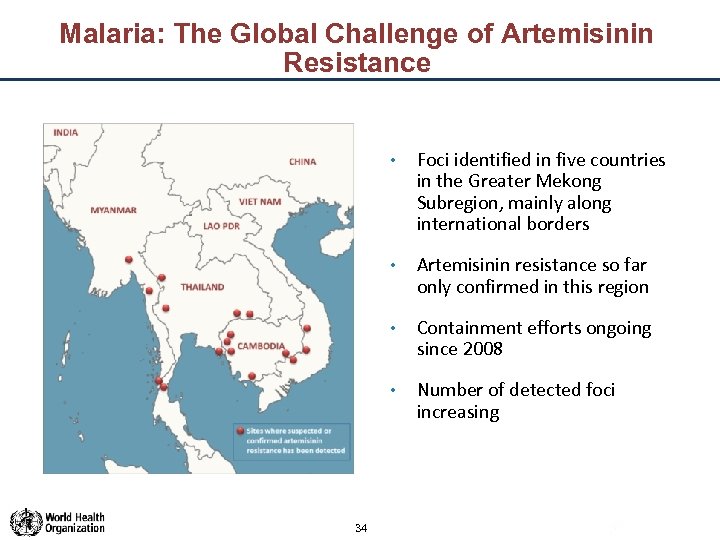 Malaria: The Global Challenge of Artemisinin Resistance • • Artemisinin resistance so far only confirmed in this region • Containment efforts ongoing since 2008 • 34 Foci identified in five countries in the Greater Mekong Subregion, mainly along international borders Number of detected foci increasing
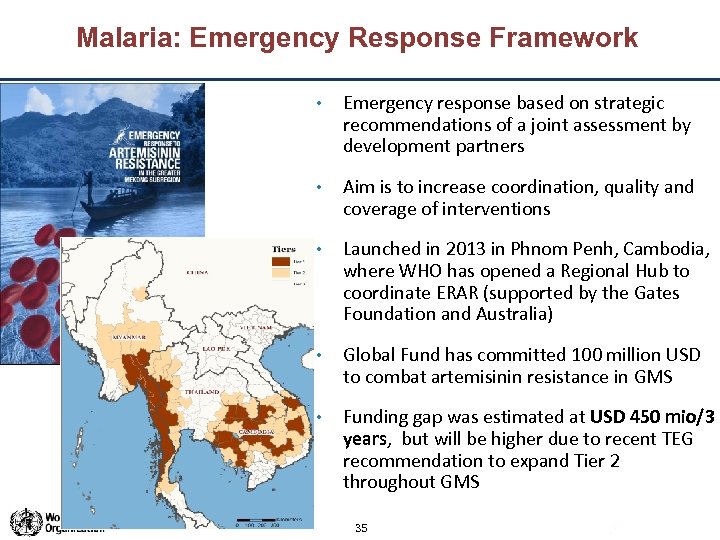 Malaria: Emergency Response Framework • Emergency response based on strategic recommendations of a joint assessment by development partners • Aim is to increase coordination, quality and coverage of interventions • Launched in 2013 in Phnom Penh, Cambodia, where WHO has opened a Regional Hub to coordinate ERAR (supported by the Gates Foundation and Australia) • Global Fund has committed 100 million USD to combat artemisinin resistance in GMS • Funding gap was estimated at USD 450 mio/3 years, but will be higher due to recent TEG recommendation to expand Tier 2 throughout GMS 35
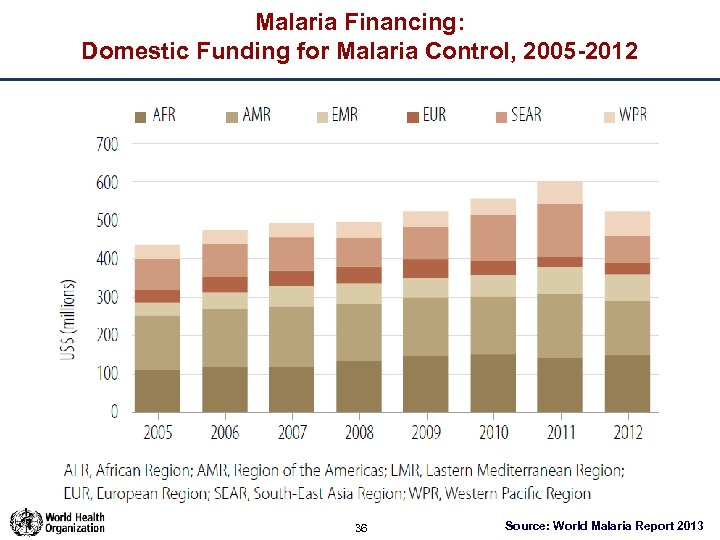 Malaria Financing: Domestic Funding for Malaria Control, 2005 -2012 36 Source: World Malaria Report 2013
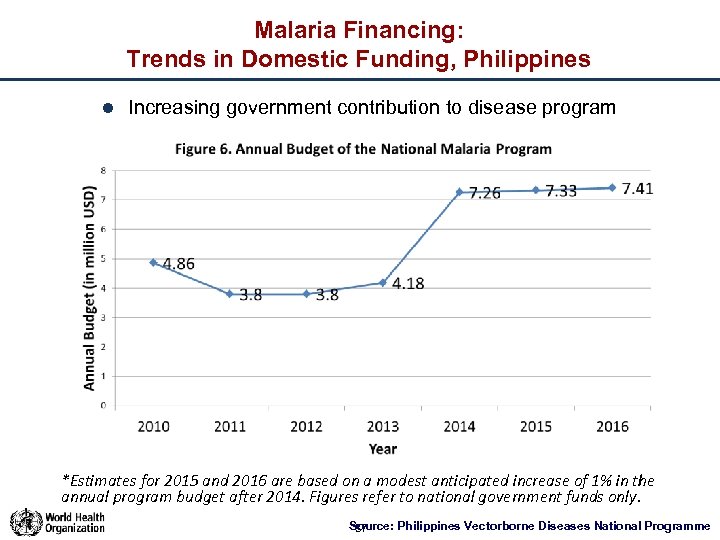 Malaria Financing: Trends in Domestic Funding, Philippines l Increasing government contribution to disease program *Estimates for 2015 and 2016 are based on a modest anticipated increase of 1% in the annual program budget after 2014. Figures refer to national government funds only. Source: Philippines Vectorborne Diseases National Programme 37
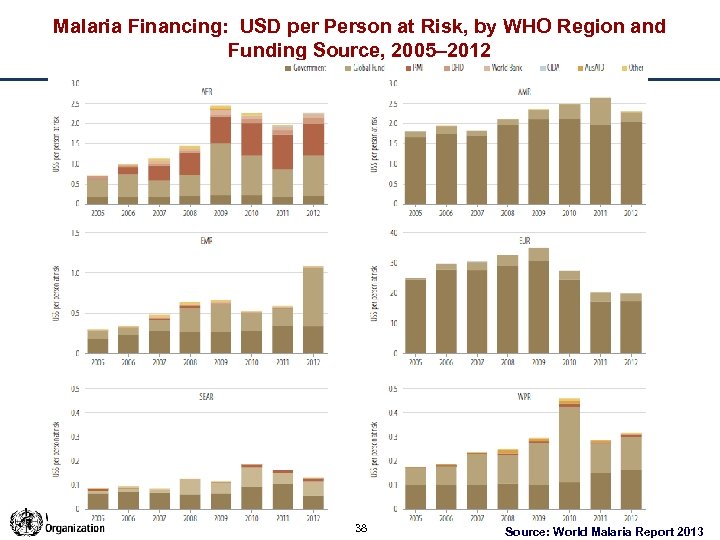 Malaria Financing: USD per Person at Risk, by WHO Region and Funding Source, 2005– 2012 38 Source: World Malaria Report 2013
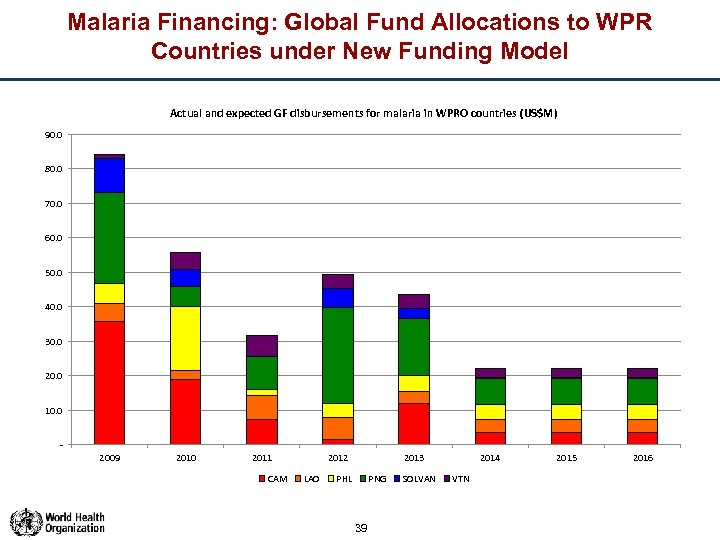 Malaria Financing: Global Fund Allocations to WPR Countries under New Funding Model Actual and expected GF disbursements for malaria in WPRO countries (US$M) 90. 0 80. 0 70. 0 60. 0 50. 0 40. 0 30. 0 20. 0 10. 0 2009 2010 2011 CAM 2012 LAO 2013 PHL PNG 39 SOLVAN 2014 VTN 2015 2016
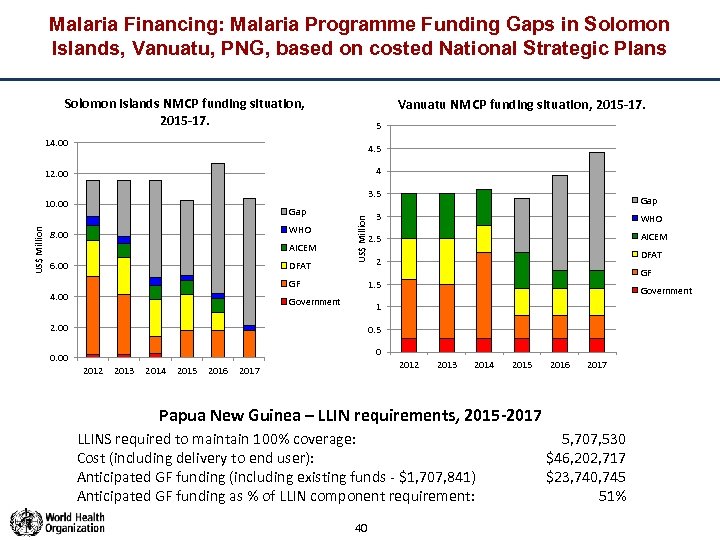 Malaria Financing: Malaria Programme Funding Gaps in Solomon Islands, Vanuatu, PNG, based on costed National Strategic Plans Solomon Islands NMCP funding situation, 2015 -17. Vanuatu NMCP funding situation, 2015 -17. 5 14. 00 4. 5 4 12. 00 US$ Million Gap WHO 8. 00 AICEM DFAT 6. 00 US$ Million 3. 5 10. 00 GF 4. 00 Gap 3 WHO AICEM 2. 5 DFAT 2 GF 1. 5 Government 1 2. 00 0. 5 0 0. 00 2012 2013 2014 2015 2016 2012 2017 2013 2014 2015 2016 2017 Papua New Guinea – LLIN requirements, 2015 -2017 LLINS required to maintain 100% coverage: Cost (including delivery to end user): Anticipated GF funding (including existing funds - $1, 707, 841) Anticipated GF funding as % of LLIN component requirement: 40 5, 707, 530 $46, 202, 717 $23, 740, 745 51%
 Conclusions • Major improvements have been achieved across a range of communicable diseases in the Region, but the CD burden remains significant, disproportionately affecting the poor. Much remains to be done. • We have effective tools for most diseases. These cannot be sufficiently rolled out, largely because of significant funding gaps, which are increasing due to shrinking external funding to the Region. Despite most of the countries in the Region having moved to middle-income status, these funding gaps currently cannot all be shouldered by national budgets, except in a few. • Malaria is especially vulnerable to losing the enormous gains and investments made, as it can resurge rapidly once interventions are scaled back prematurely. • There are many opportunities for regional collaboration (e. g ERAR, ASEAN, IHR/APSED, Interpol) which should be intensified. 41
 Priorities for a regional response 1. Mobilize funds to fill the programme gaps. o Prioritize high incidence countries. o Artemisinin resistance containment/elimination, as a regional and global public good, should receive international financing o Malaria elimination should have significant domestic funds. 2. Use the opportunity of the current revision and costing of National Malaria Strategic Plans in most countries to get detailed analyses of malaria programme requirements (eg commodities, funds), which should be used at regional and global levels. 3. Foster greater collaboration between malaria and other national and regional initiatives, for synergies and cost saving, and document and evaluate this. Including on cross cutting issues such as migrant health. 4. Initiate innovative funding models and pilot and evaluate them. o 42
 THANK YOU 43