 Скачать презентацию KEPLER Overview and Project Status Bertram Ludäscher ludaesch ucdavis
d69e1aca8151d477459e2bb4cfaac70c.ppt
- Количество слайдов: 28



KEPLER: Overview and Project Status Bertram Ludäscher ludaesch@ucdavis. edu Associate Professor Dept. of Computer Science & Genome Center University of California, Davis 6 th Biennial Ptolemy Miniconference Featuring the Kepler Project May 12 th, 2005, Berkeley, CA Fellow San Diego Supercomputer Center University of California, San Diego UC DAVIS Department of Computer Science San Diego Supercomputer Center
Outline • Scientific Workflows (SWFs) – Cyberinfrastructure, from bioinformatics to astrophysics • Some Kepler History – … or why Ptolemy II rules • Current and Emerging Kepler Features – from SWF plumbing/hacking to SWF design • Outlook 6 th Biennial Ptolemy Miniconf. , May 12 th, 2005, Berkeley Kepler Overview, B. Ludäscher
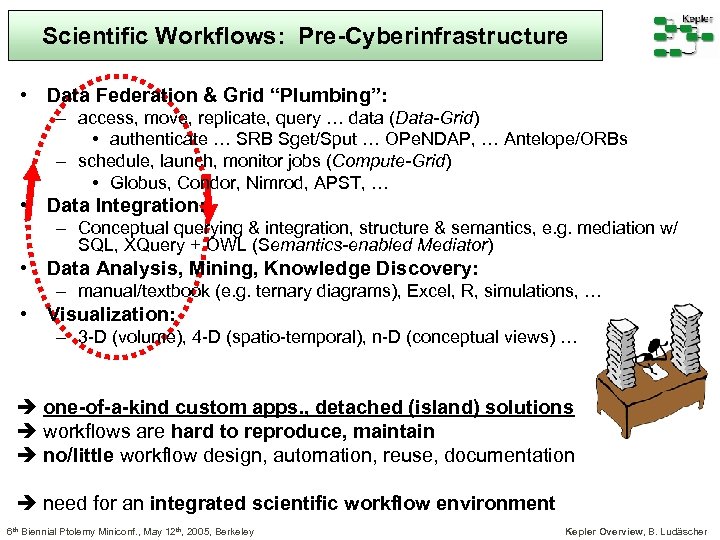
Scientific Workflows: Pre-Cyberinfrastructure • Data Federation & Grid “Plumbing”: – access, move, replicate, query … data (Data-Grid) • authenticate … SRB Sget/Sput … OPe. NDAP, … Antelope/ORBs – schedule, launch, monitor jobs (Compute-Grid) • Globus, Condor, Nimrod, APST, … • Data Integration: – Conceptual querying & integration, structure & semantics, e. g. mediation w/ SQL, XQuery + OWL (Semantics-enabled Mediator) • Data Analysis, Mining, Knowledge Discovery: – manual/textbook (e. g. ternary diagrams), Excel, R, simulations, … • Visualization: – 3 -D (volume), 4 -D (spatio-temporal), n-D (conceptual views) … one-of-a-kind custom apps. , detached (island) solutions workflows are hard to reproduce, maintain no/little workflow design, automation, reuse, documentation need for an integrated scientific workflow environment 6 th Biennial Ptolemy Miniconf. , May 12 th, 2005, Berkeley Kepler Overview, B. Ludäscher
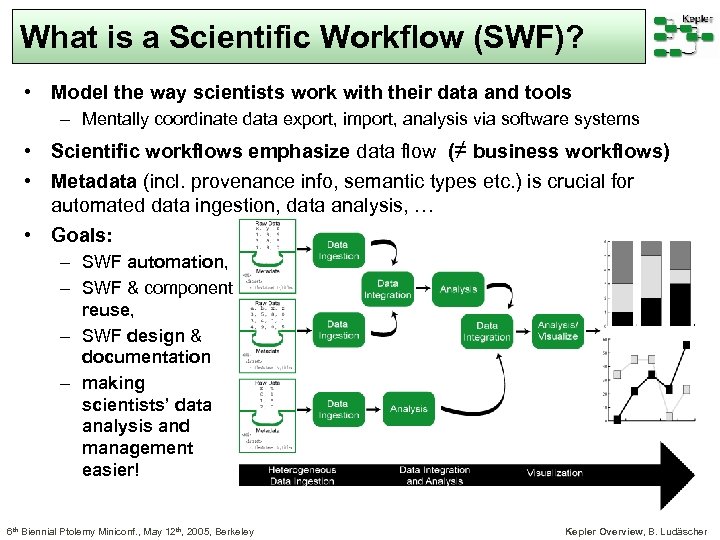
What is a Scientific Workflow (SWF)? • Model the way scientists work with their data and tools – Mentally coordinate data export, import, analysis via software systems • Scientific workflows emphasize data flow (≠ business workflows) • Metadata (incl. provenance info, semantic types etc. ) is crucial for automated data ingestion, data analysis, … • Goals: – SWF automation, – SWF & component reuse, – SWF design & documentation – making scientists’ data analysis and management easier! 6 th Biennial Ptolemy Miniconf. , May 12 th, 2005, Berkeley Kepler Overview, B. Ludäscher
Some Scientific Workflow Features • Typical requirements/characteristics: – – – – – data-intensive and/or compute-intensive plumbing-intensive dataflow-oriented distribution (data, processing) user-interaction “in the middle”, … … vs. (C-z; bg; fg)-ing (“detach” and reconnect) advanced programming constructs (map(f), zip, takewhile, …) logging, provenance, “registering back” (intermediate) products … • … easy to recognize a SWF when you see one! 6 th Biennial Ptolemy Miniconf. , May 12 th, 2005, Berkeley Kepler Overview, B. Ludäscher
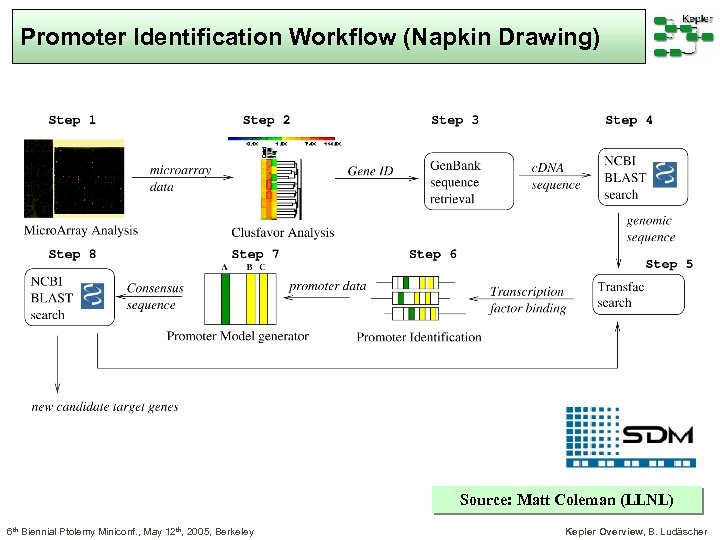
Promoter Identification Workflow (Napkin Drawing) Source: Matt Coleman (LLNL) 6 th Biennial Ptolemy Miniconf. , May 12 th, 2005, Berkeley Kepler Overview, B. Ludäscher
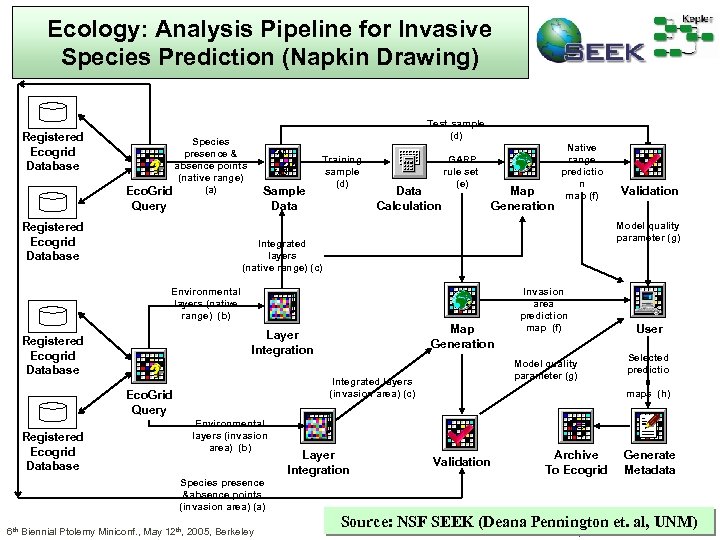
Ecology: Analysis Pipeline for Invasive Species Prediction (Napkin Drawing) Registered Ecogrid Database Test sample (d) Species presence & absence points (native range) (a) Eco. Grid +A 1 +A 2 +A 3 Sample Data Query Registered Ecogrid Database Training sample (d) Data Calculation GARP rule set (e) Map Generation Integrated layers (native range) (c) Map Generation Layer Integration Registered Ecogrid Database Environmental layers (invasion area) (b) Layer Integration Invasion area prediction map (f) Model quality parameter (g) Integrated layers (invasion area) (c) Eco. Grid Query Validation Model quality parameter (g) Environmental layers (native range) (b) Registered Ecogrid Database Native range predictio n map (f) Validation Archive To Ecogrid User Selected predictio n maps (h) Generate Metadata Species presence &absence points (invasion area) (a) 6 th Biennial Ptolemy Miniconf. , May 12 th, 2005, Berkeley Source: NSF SEEK (Deana Pennington et. al, UNM) Kepler Overview, B. Ludäscher
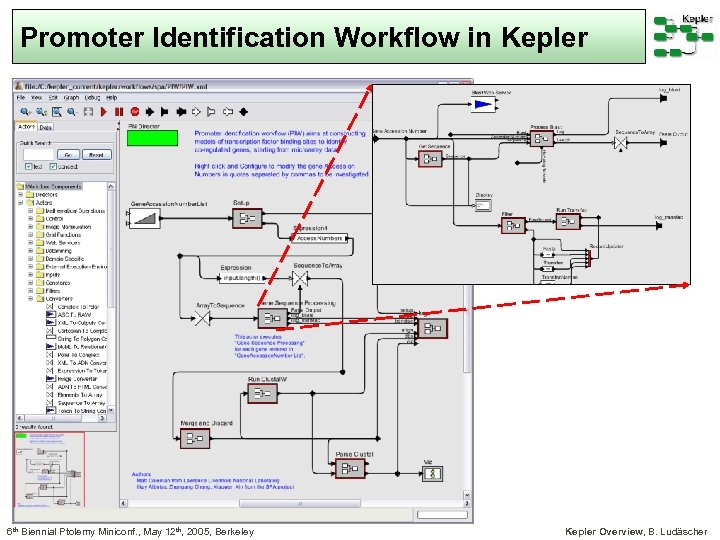
Promoter Identification Workflow in Kepler 6 th Biennial Ptolemy Miniconf. , May 12 th, 2005, Berkeley Kepler Overview, B. Ludäscher
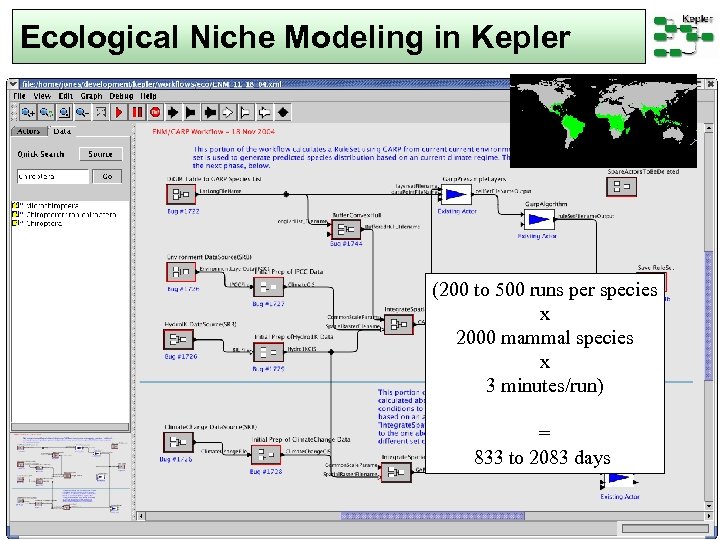
Ecological Niche Modeling in Kepler (200 to 500 runs per species x 2000 mammal species x 3 minutes/run) = 833 to 2083 days 6 th Biennial Ptolemy Miniconf. , May 12 th, 2005, Berkeley Kepler Overview, B. Ludäscher
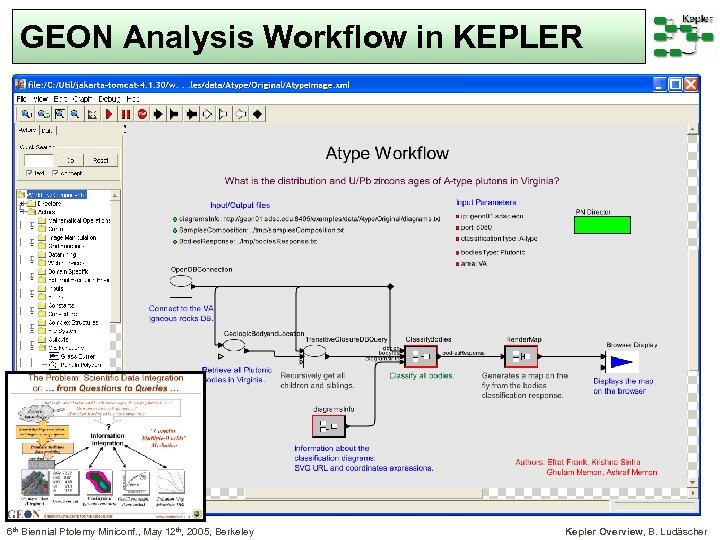
GEON Analysis Workflow in KEPLER 6 th Biennial Ptolemy Miniconf. , May 12 th, 2005, Berkeley Kepler Overview, B. Ludäscher
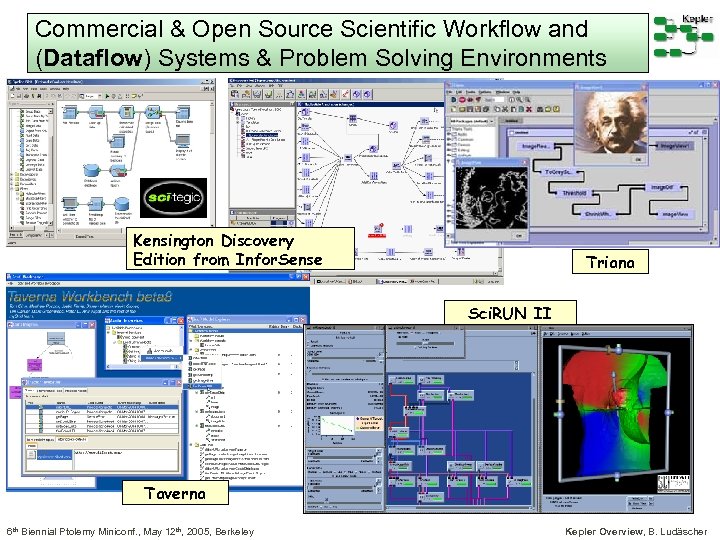
Commercial & Open Source Scientific Workflow and (Dataflow) Systems & Problem Solving Environments Kensington Discovery Edition from Infor. Sense Triana Sci. RUN II Taverna 6 th Biennial Ptolemy Miniconf. , May 12 th, 2005, Berkeley Kepler Overview, B. Ludäscher
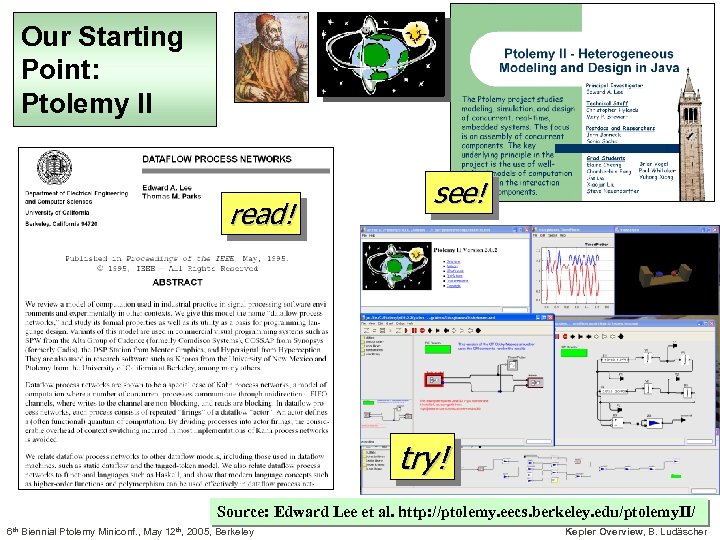
Our Starting Point: Ptolemy II read! see! try! Source: Edward Lee et al. http: //ptolemy. eecs. berkeley. edu/ptolemy. II/ 6 th Biennial Ptolemy Miniconf. , May 12 th, 2005, Berkeley Kepler Overview, B. Ludäscher
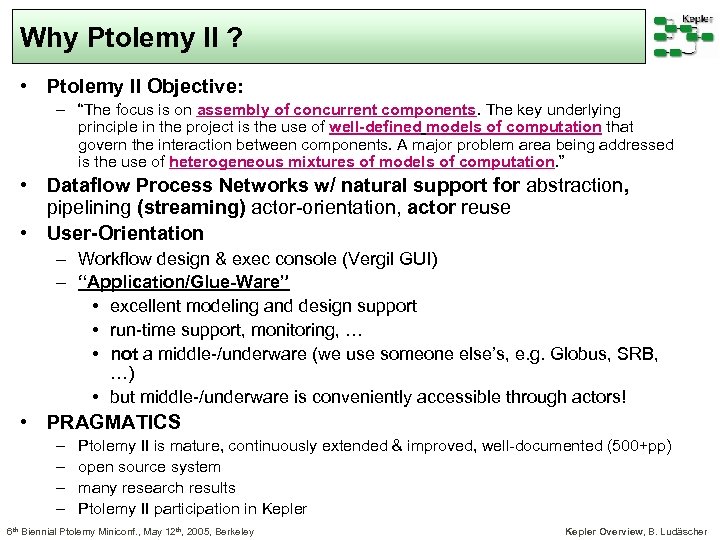
Why Ptolemy II ? • Ptolemy II Objective: – “The focus is on assembly of concurrent components. The key underlying principle in the project is the use of well-defined models of computation that govern the interaction between components. A major problem area being addressed is the use of heterogeneous mixtures of models of computation. ” • Dataflow Process Networks w/ natural support for abstraction, pipelining (streaming) actor-orientation, actor reuse • User-Orientation – Workflow design & exec console (Vergil GUI) – “Application/Glue-Ware” • excellent modeling and design support • run-time support, monitoring, … • not a middle-/underware (we use someone else’s, e. g. Globus, SRB, …) • but middle-/underware is conveniently accessible through actors! • PRAGMATICS – – Ptolemy II is mature, continuously extended & improved, well-documented (500+pp) open source system many research results Ptolemy II participation in Kepler 6 th Biennial Ptolemy Miniconf. , May 12 th, 2005, Berkeley Kepler Overview, B. Ludäscher
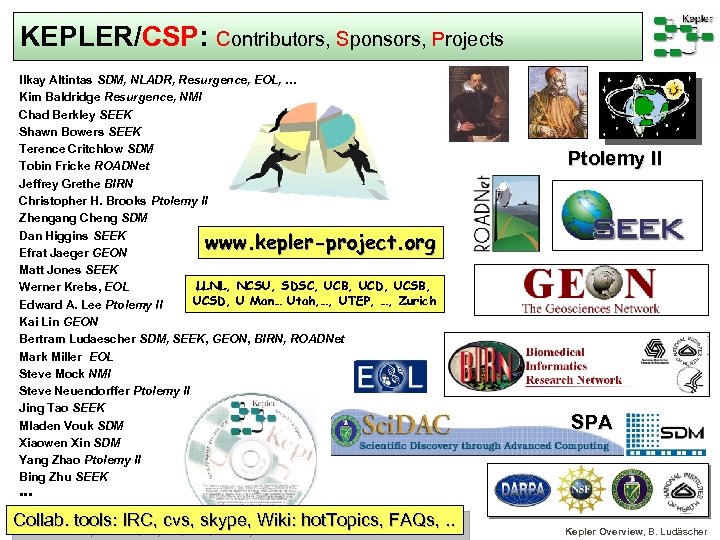
KEPLER/CSP: Contributors, Sponsors, Projects Ilkay Altintas SDM, NLADR, Resurgence, EOL, … Kim Baldridge Resurgence, NMI Chad Berkley SEEK Shawn Bowers SEEK Terence Critchlow SDM Tobin Fricke ROADNet Jeffrey Grethe BIRN Christopher H. Brooks Ptolemy II Zhengang Cheng SDM Dan Higgins SEEK Efrat Jaeger GEON Matt Jones SEEK LLNL, NCSU, SDSC, UCB, UCD, UCSB, Werner Krebs, EOL UCSD, U Man… Utah, …, UTEP, …, Zurich Edward A. Lee Ptolemy II www. kepler-project. org Kai Lin GEON Bertram Ludaescher SDM, SEEK, GEON, BIRN, ROADNet Mark Miller EOL Steve Mock NMI Steve Neuendorffer Ptolemy II Jing Tao SEEK Mladen Vouk SDM Xiaowen Xin SDM Yang Zhao Ptolemy II Bing Zhu SEEK • • • Collab. tools: IRC, cvs, skype, Wiki: hot. Topics, FAQs, . . 6 th Biennial Ptolemy Miniconf. , May 12 th, 2005, Berkeley SPA Kepler Overview, B. Ludäscher
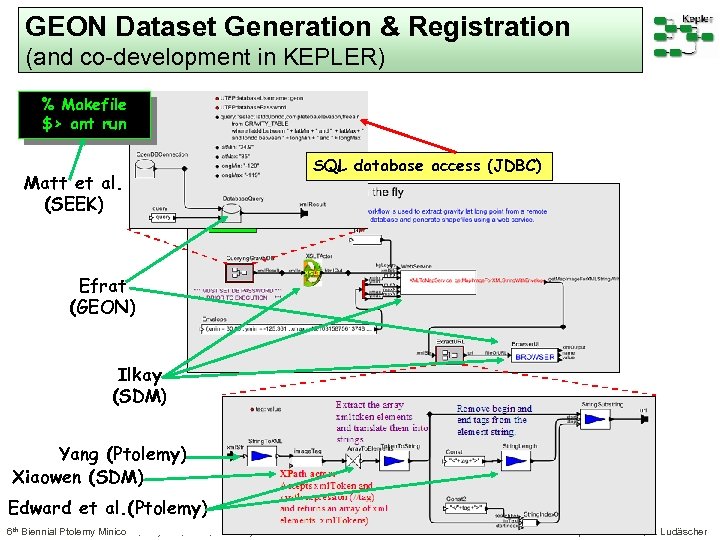
GEON Dataset Generation & Registration (and co-development in KEPLER) % Makefile $> ant run Matt et al. (SEEK) SQL database access (JDBC) Efrat (GEON) Ilkay (SDM) Yang (Ptolemy) Xiaowen (SDM) Edward et al. (Ptolemy) 6 th Biennial Ptolemy Miniconf. , May 12 th, 2005, Berkeley Kepler Overview, B. Ludäscher
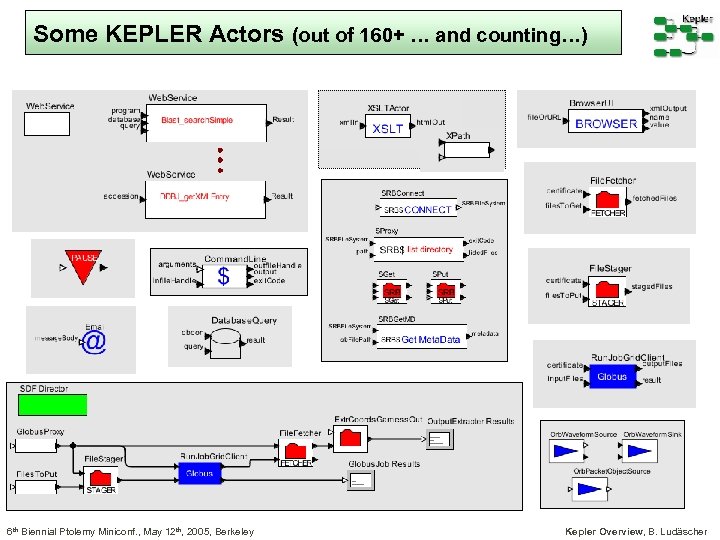
Some KEPLER Actors (out of 160+ … and counting…) 6 th Biennial Ptolemy Miniconf. , May 12 th, 2005, Berkeley Kepler Overview, B. Ludäscher
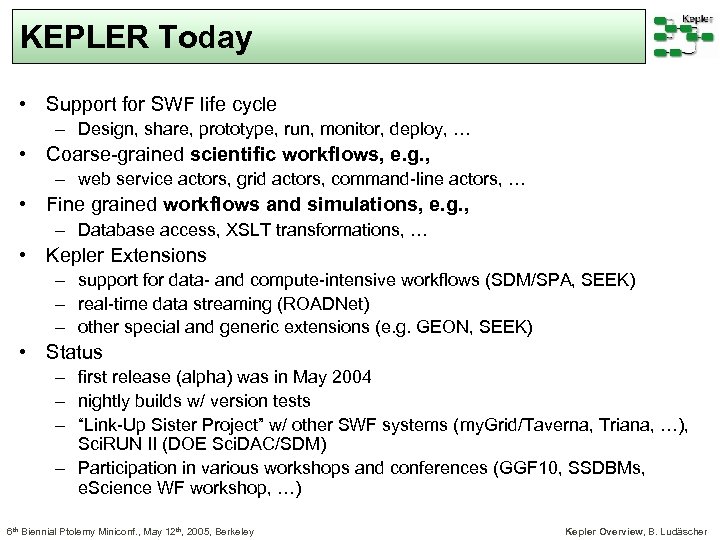
KEPLER Today • Support for SWF life cycle – Design, share, prototype, run, monitor, deploy, … • Coarse-grained scientific workflows, e. g. , – web service actors, grid actors, command-line actors, … • Fine grained workflows and simulations, e. g. , – Database access, XSLT transformations, … • Kepler Extensions – support for data- and compute-intensive workflows (SDM/SPA, SEEK) – real-time data streaming (ROADNet) – other special and generic extensions (e. g. GEON, SEEK) • Status – first release (alpha) was in May 2004 – nightly builds w/ version tests – “Link-Up Sister Project” w/ other SWF systems (my. Grid/Taverna, Triana, …), Sci. RUN II (DOE Sci. DAC/SDM) – Participation in various workshops and conferences (GGF 10, SSDBMs, e. Science WF workshop, …) 6 th Biennial Ptolemy Miniconf. , May 12 th, 2005, Berkeley Kepler Overview, B. Ludäscher
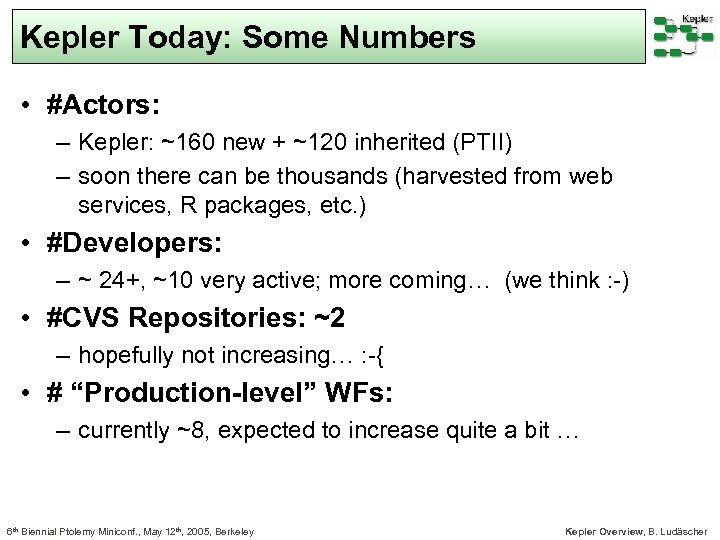
Kepler Today: Some Numbers • #Actors: – Kepler: ~160 new + ~120 inherited (PTII) – soon there can be thousands (harvested from web services, R packages, etc. ) • #Developers: – ~ 24+, ~10 very active; more coming… (we think : -) • #CVS Repositories: ~2 – hopefully not increasing… : -{ • # “Production-level” WFs: – currently ~8, expected to increase quite a bit … 6 th Biennial Ptolemy Miniconf. , May 12 th, 2005, Berkeley Kepler Overview, B. Ludäscher
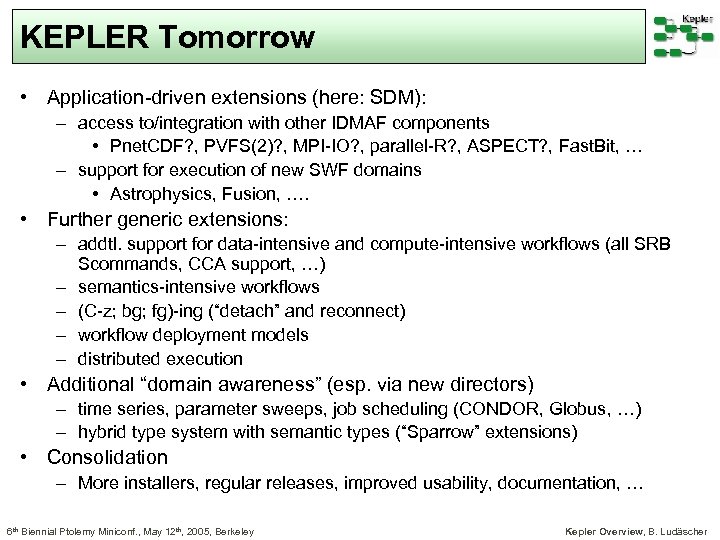
KEPLER Tomorrow • Application-driven extensions (here: SDM): – access to/integration with other IDMAF components • Pnet. CDF? , PVFS(2)? , MPI-IO? , parallel-R? , ASPECT? , Fast. Bit, … – support for execution of new SWF domains • Astrophysics, Fusion, …. • Further generic extensions: – addtl. support for data-intensive and compute-intensive workflows (all SRB Scommands, CCA support, …) – semantics-intensive workflows – (C-z; bg; fg)-ing (“detach” and reconnect) – workflow deployment models – distributed execution • Additional “domain awareness” (esp. via new directors) – time series, parameter sweeps, job scheduling (CONDOR, Globus, …) – hybrid type system with semantic types (“Sparrow” extensions) • Consolidation – More installers, regular releases, improved usability, documentation, … 6 th Biennial Ptolemy Miniconf. , May 12 th, 2005, Berkeley Kepler Overview, B. Ludäscher
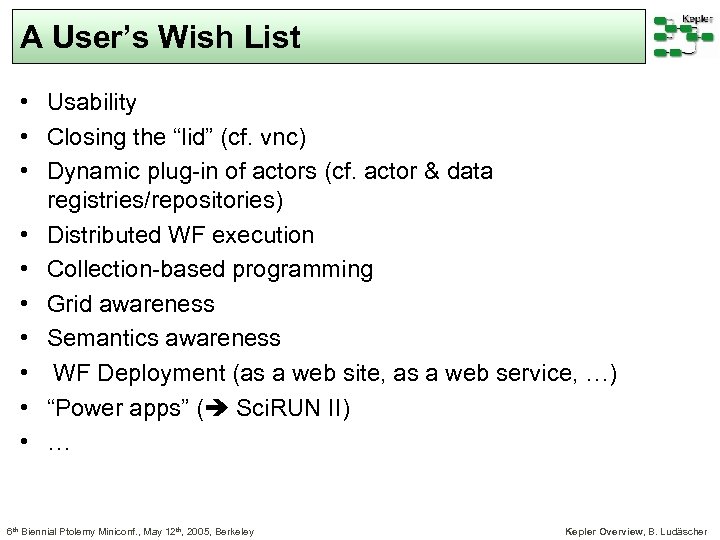
A User’s Wish List • Usability • Closing the “lid” (cf. vnc) • Dynamic plug-in of actors (cf. actor & data registries/repositories) • Distributed WF execution • Collection-based programming • Grid awareness • Semantics awareness • WF Deployment (as a web site, as a web service, …) • “Power apps” ( Sci. RUN II) • … 6 th Biennial Ptolemy Miniconf. , May 12 th, 2005, Berkeley Kepler Overview, B. Ludäscher
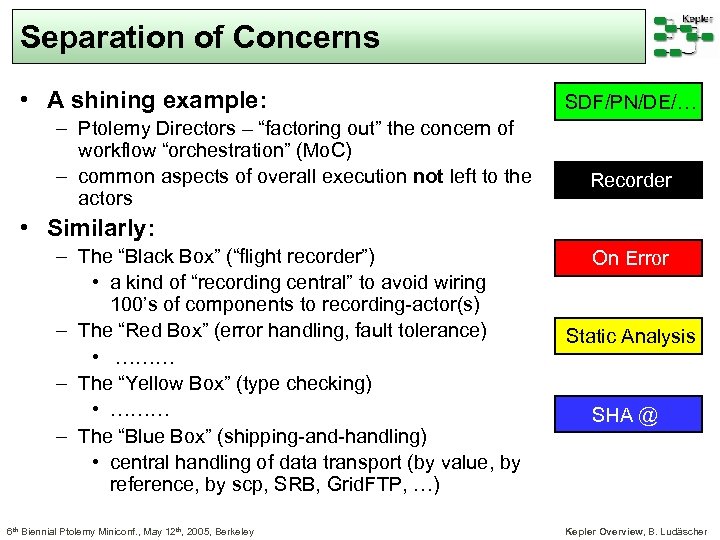
Separation of Concerns • A shining example: – Ptolemy Directors – “factoring out” the concern of workflow “orchestration” (Mo. C) – common aspects of overall execution not left to the actors SDF/PN/DE/… Recorder • Similarly: – The “Black Box” (“flight recorder”) • a kind of “recording central” to avoid wiring 100’s of components to recording-actor(s) – The “Red Box” (error handling, fault tolerance) • ……… – The “Yellow Box” (type checking) • ……… – The “Blue Box” (shipping-and-handling) • central handling of data transport (by value, by reference, by scp, SRB, Grid. FTP, …) 6 th Biennial Ptolemy Miniconf. , May 12 th, 2005, Berkeley On Error Static Analysis SHA @ Kepler Overview, B. Ludäscher
Separation of Concerns: Port Types • Token consumption (& production) “type” – a director’s concern • Token “transport type” – by value, reference (which one), protocol (SOAP, scp, Grid. FTP, scp, SRB, …) – a SHA concern • Structural and semantic types – SAT (static analysis & typing) concern – built after static unit type system… • static unit type system as a special case!? 6 th Biennial Ptolemy Miniconf. , May 12 th, 2005, Berkeley Kepler Overview, B. Ludäscher
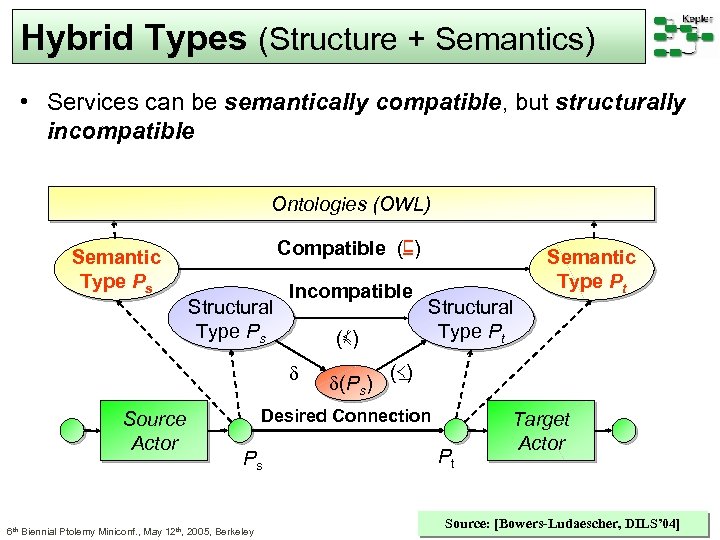
Hybrid Types (Structure + Semantics) • Services can be semantically compatible, but structurally incompatible Ontologies (OWL) Semantic Type Ps Compatible (⊑) Structural Type Ps Incompatible (⋠) Source Actor (Ps) Structural Type Pt (≺) Desired Connection Ps 6 th Biennial Ptolemy Miniconf. , May 12 th, 2005, Berkeley Semantic Type Pt Pt Target Actor Source: [Bowers-Ludaescher, DILS’ 04] Kepler Overview, B. Ludäscher
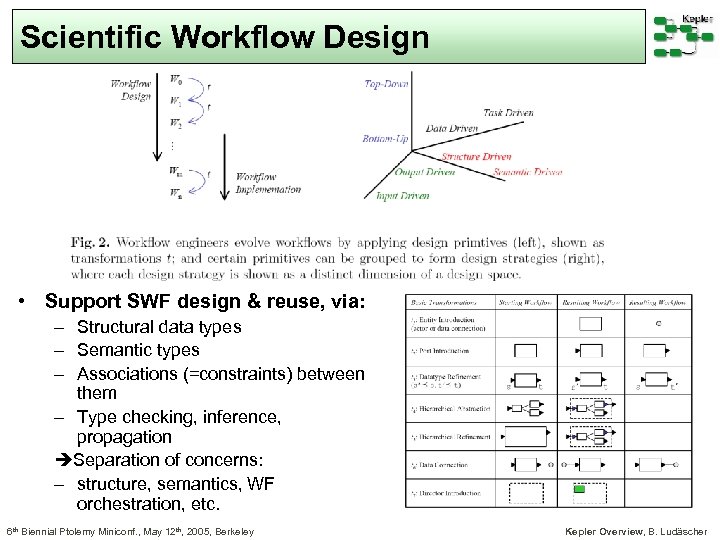
Scientific Workflow Design • Support SWF design & reuse, via: – Structural data types – Semantic types – Associations (=constraints) between them – Type checking, inference, propagation Separation of concerns: – structure, semantics, WF orchestration, etc. 6 th Biennial Ptolemy Miniconf. , May 12 th, 2005, Berkeley Kepler Overview, B. Ludäscher
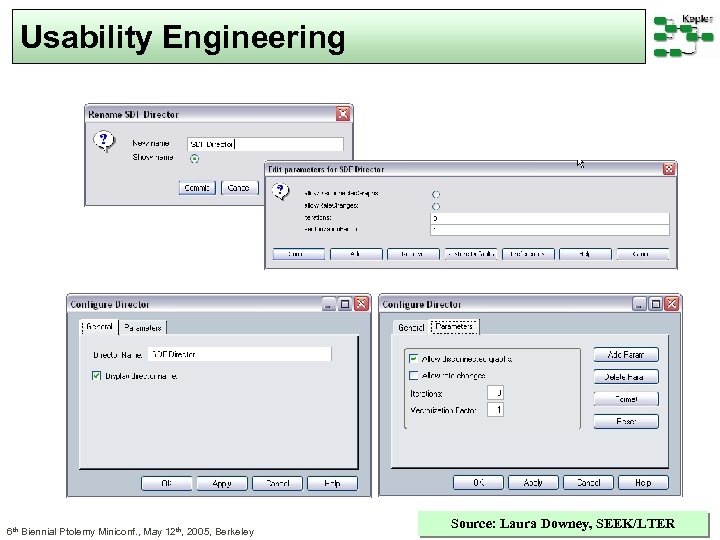
Usability Engineering 6 th Biennial Ptolemy Miniconf. , May 12 th, 2005, Berkeley Source: Laura Downey, SEEK/LTER Kepler Overview, B. Ludäscher
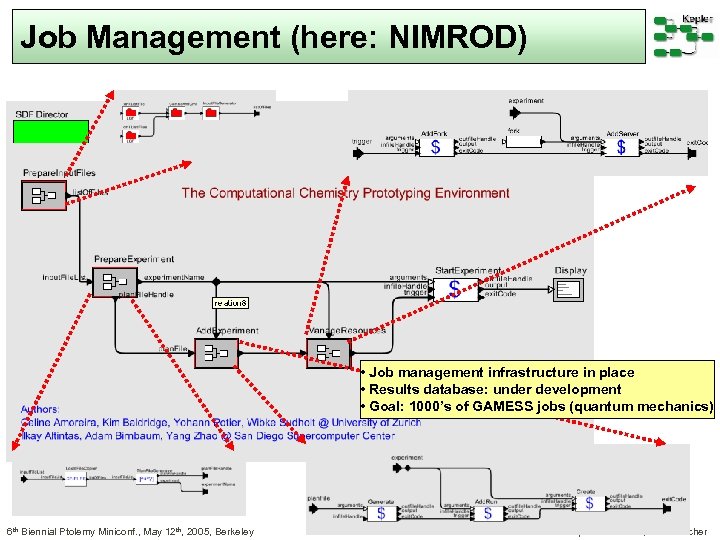
Job Management (here: NIMROD) • Job management infrastructure in place • Results database: under development • Goal: 1000’s of GAMESS jobs (quantum mechanics) 6 th Biennial Ptolemy Miniconf. , May 12 th, 2005, Berkeley Kepler Overview, B. Ludäscher
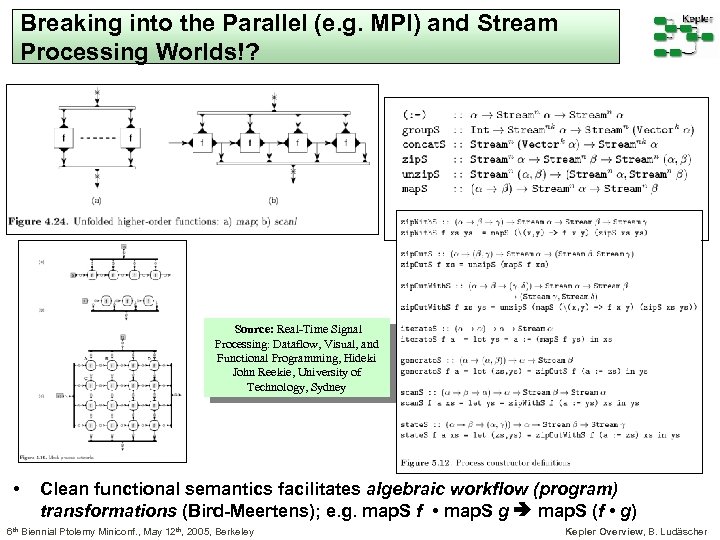
Breaking into the Parallel (e. g. MPI) and Stream Processing Worlds!? Source: Real-Time Signal Processing: Dataflow, Visual, and Functional Programming, Hideki John Reekie, University of Technology, Sydney • Clean functional semantics facilitates algebraic workflow (program) transformations (Bird-Meertens); e. g. map. S f • map. S g map. S (f • g) 6 th Biennial Ptolemy Miniconf. , May 12 th, 2005, Berkeley Kepler Overview, B. Ludäscher
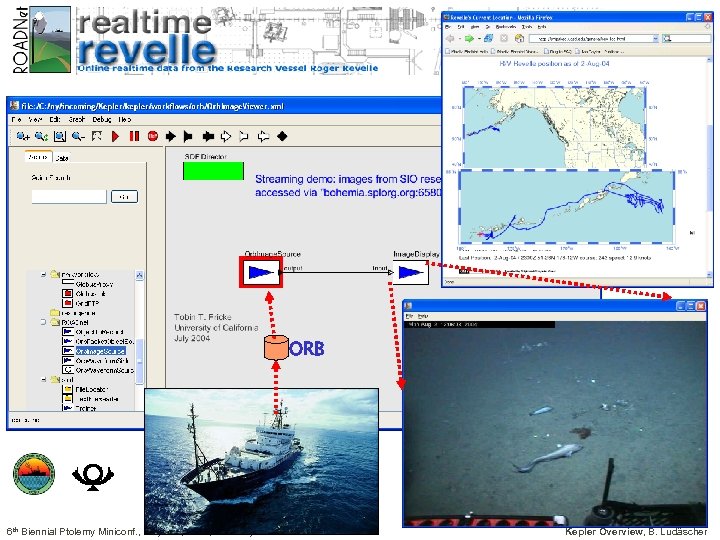
ORB 6 th Biennial Ptolemy Miniconf. , May 12 th, 2005, Berkeley Kepler Overview, B. Ludäscher
Скачать презентацию KEPLER Overview and Project Status Bertram Ludäscher ludaesch ucdavis
d69e1aca8151d477459e2bb4cfaac70c.ppt