 Скачать презентацию Kazimir Malevich 1878 -1935 Biography of the
Казимир Малевич.ppt
- Количество слайдов: 12



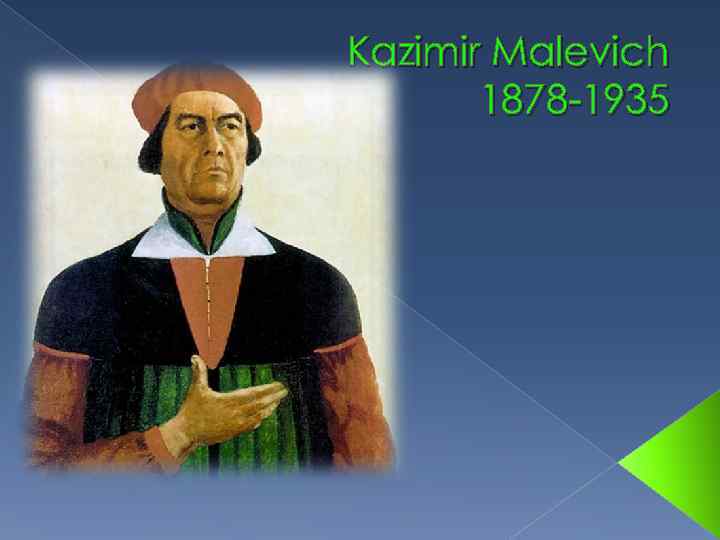
Kazimir Malevich 1878 -1935
Biography of the artist Kazimir Severinovich Malevich was born near Kiev, Kiev Governorate of Russian Empire. His parents, Seweryn and Ludwika Malevich, were ethnic Poles, and he was baptised in the Roman Catholic Church. His father was the manager of a sugar factory. Kazimir was the first of fourteen children, although only nine of the children survived into adulthood. His family moved often and he spent most of his childhood in the villages of Ukraine amidst sugarbeet plantations, far from centers of culture. Until age 12 or 13 he knew nothing of professional artists, though peasant art had surrounded him in childhood. He delighted in peasant embroidery, and in decorated walls and stoves. He himself was able to paint in the peasant style. He studied drawing in Kiev from 1895 to 1896.
In 1904, after the death of his father, he moved to Moscow. He studied at the Moscow School of Painting, Sculpture and Architecture from 1904 to 1910 and in the studio of Fedor Rerberg in Moscow (1904 -1910). In 1911 he participated in the second exhibition of the group Soyuza Molodyozhi (Union of Youth) in St. Petersburg, together with Vladimir Tatlin and, in 1912, the group held its third exhibition, which included works by Aleksandra Ekster, Tatlin and others. In the same year he participated in an exhibition by the collective Donkey's Tail in Moscow. By that time his works were influenced by Natalia Goncharova and Mikhail Larionov, Russian avant-garde painters who were particularly interested in Russian folk art called lubok. In March 1913 a major exhibition of Aristarkh Lentulov's paintings opened in Moscow. The effect of this exhibition was comparable with that of Paul Cezanne in Paris in 1907, as all the main Russian avant-garde artists of the time (including Malevich) immediately absorbed the cubist principles and began using them in their works. Already in the same year the Cubo-Futurist opera Victory Over the Sun with Malevich's stage-set became a great success. In 1914 Malevich exhibited his works in the Salon des Independants in Paris together with Alexander Archipenko, Sonia Delaunay, Aleksandra Ekster and Vadim Meller, among others.
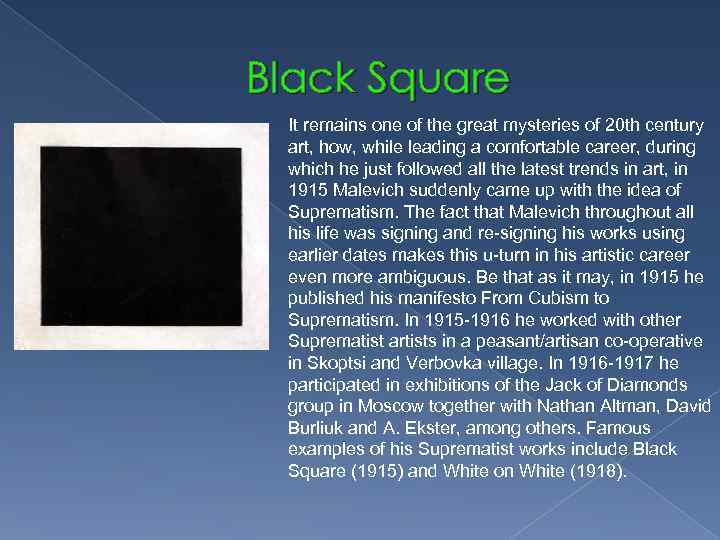
Black Square It remains one of the great mysteries of 20 th century art, how, while leading a comfortable career, during which he just followed all the latest trends in art, in 1915 Malevich suddenly came up with the idea of Suprematism. The fact that Malevich throughout all his life was signing and re-signing his works using earlier dates makes this u-turn in his artistic career even more ambiguous. Be that as it may, in 1915 he published his manifesto From Cubism to Suprematism. In 1915 -1916 he worked with other Suprematist artists in a peasant/artisan co-operative in Skoptsi and Verbovka village. In 1916 -1917 he participated in exhibitions of the Jack of Diamonds group in Moscow together with Nathan Altman, David Burliuk and A. Ekster, among others. Famous examples of his Suprematist works include Black Square (1915) and White on White (1918).
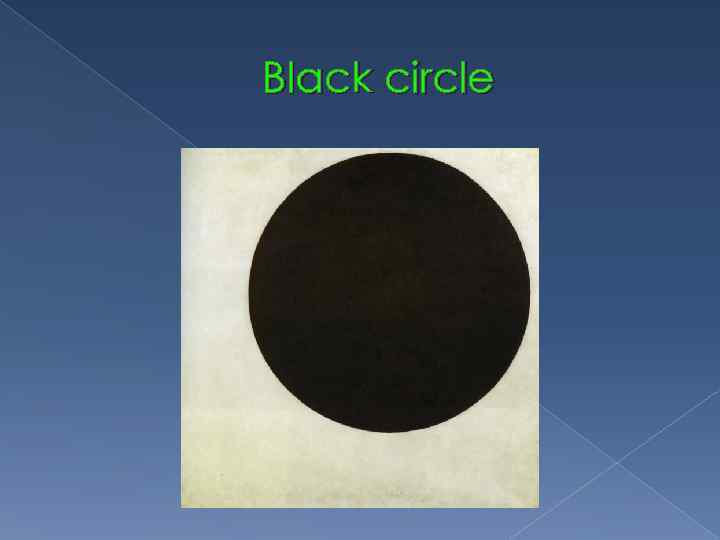
Black circle
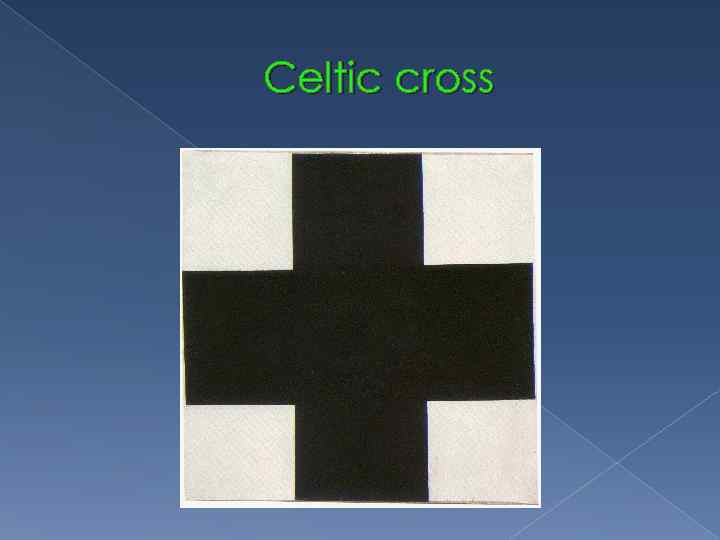
Celtic cross
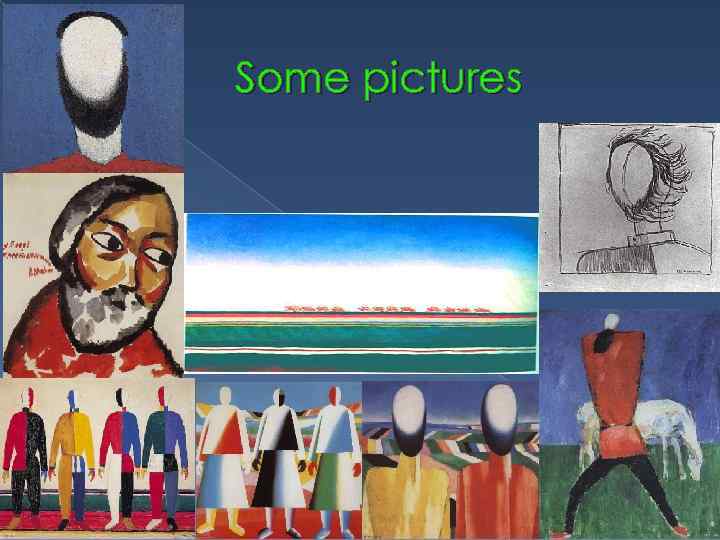
Some pictures
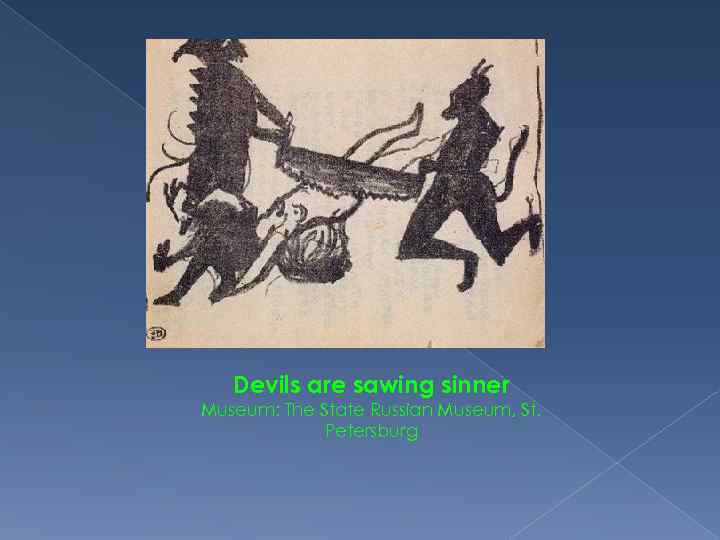
Devils are sawing sinner Museum: The State Russian Museum, St. Petersburg
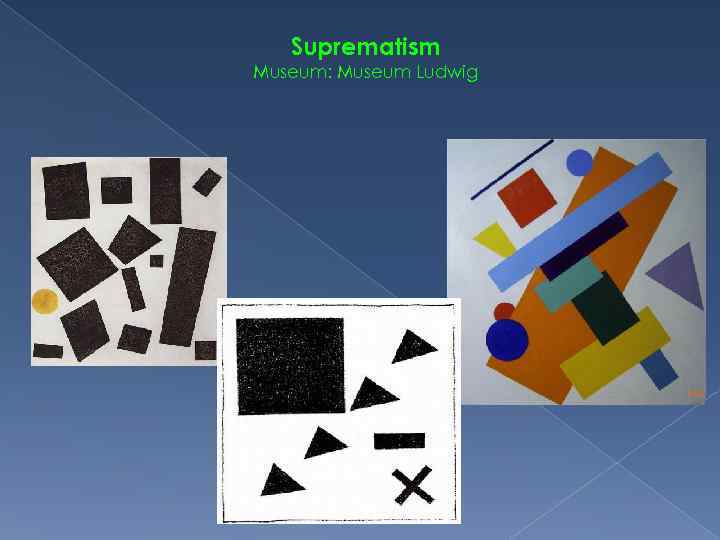
Suprematism Museum: Museum Ludwig
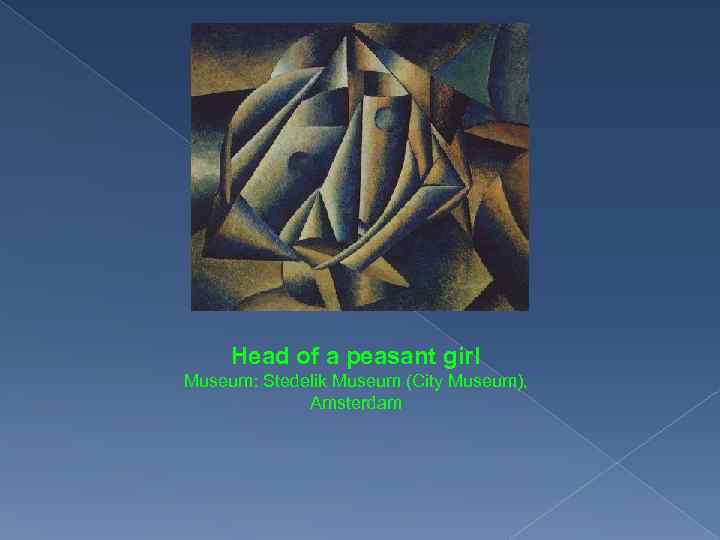
Head of a peasant girl Museum: Stedelik Museum (City Museum), Amsterdam
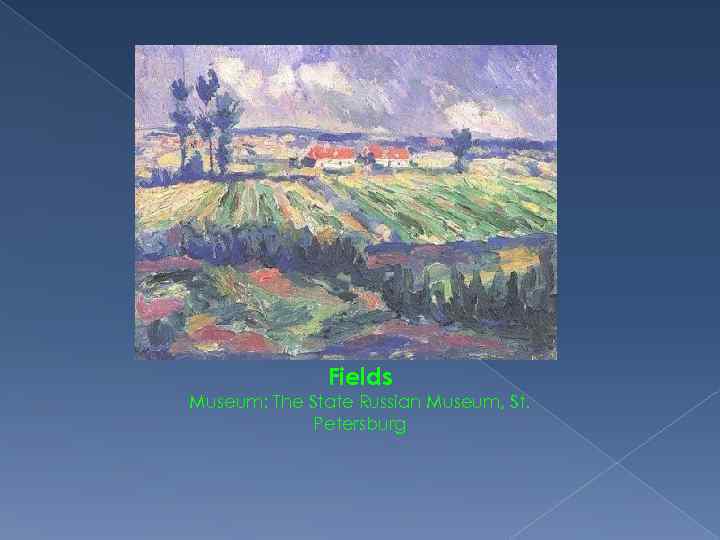
Fields Museum: The State Russian Museum, St. Petersburg
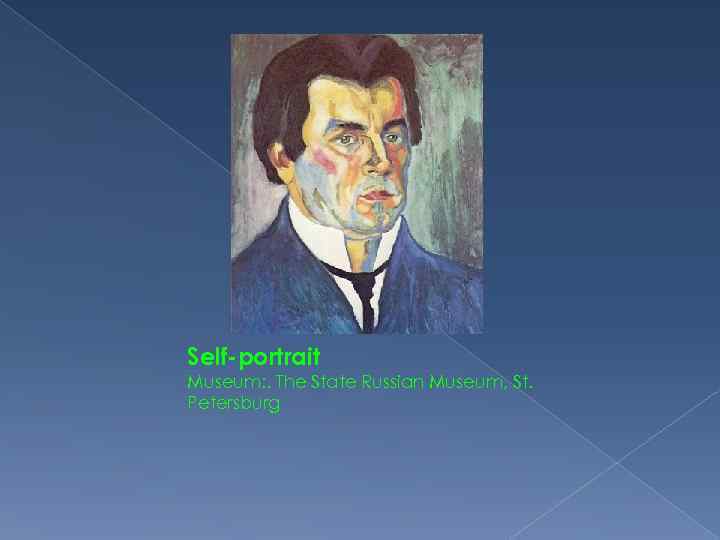
Self-portrait Museum: . The State Russian Museum, St. Petersburg
Скачать презентацию Kazimir Malevich 1878 -1935 Biography of the
Казимир Малевич.ppt