 Скачать презентацию Kazakh – Russian Medical University Endocarditis Done by:
инфаркт.ppt
- Количество слайдов: 10



Kazakh – Russian Medical University Endocarditis Done by: Aibek Bazilov, 206 A Checked by: Abdykadyrova. G. I Almaty 2017
Plan 1. Myocardial infarction 2. Classification 3. Periods of myocardial infarction 4. Diagnosis of myocardial infarction: 5. Prevention
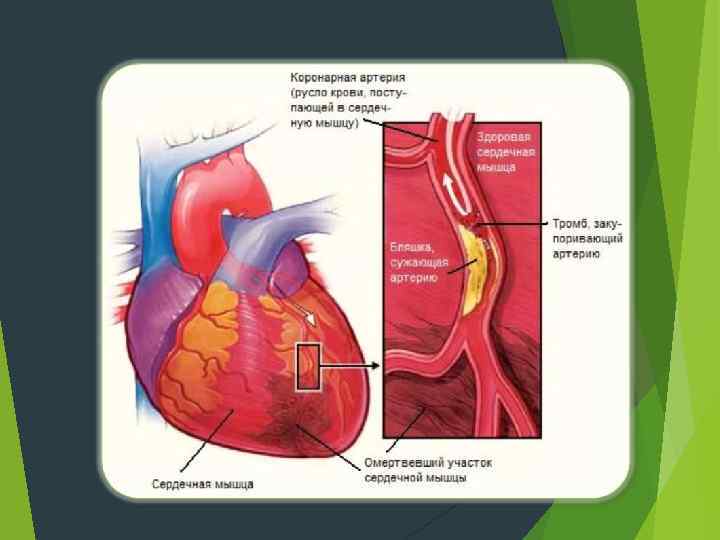
1. Myocardial infarction. One of the clinical forms of coronary heart disease, which proceeds with the development of ischemic necrosis of the myocardium, caused by the absolute or relative insufficiency of its blood supply.
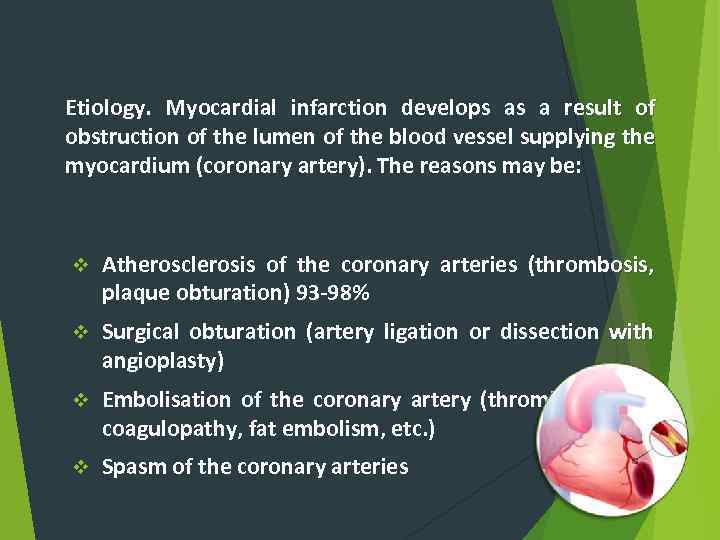
Etiology. Myocardial infarction develops as a result of obstruction of the lumen of the blood vessel supplying the myocardium (coronary artery). The reasons may be: v Atherosclerosis of the coronary arteries (thrombosis, plaque obturation) 93 -98% v Surgical obturation (artery ligation or dissection with angioplasty) v Embolisation of the coronary artery (thrombosis with coagulopathy, fat embolism, etc. ) v Spasm of the coronary arteries
2. Classification By the amount of damage: Small-focal Large-focal By anatomy lesions: Transmural Intramural Subendocardial Subepicardial By localization of the focus of necrosis: Myocardial infarction of the left ventricle (anterior, lateral, inferior, posterior) Isolated myocardial infarction of the apex of the heart Myocardial infarction of the interventricular septum Myocardial infarction of the right ventricle Combined localization: posterior-inferior, anterior-lateral, and others.
3. Periods of myocardial infarction The most acute period - from the development of ischemia to the onset of myocardial necrosis, lasts up to 12 hours; Acute - from the formation of necrosis to myomalacia (enzymatic melting of necrotic muscle tissue), lasts up to 12 days. Subacute - initial processes of scar organization, development of granulation tissue on the site of necrotic, duration of up to 1 month Period of scarring - maturation of the scar, adaptation of the myocardium to new conditions of functioning up to 6 months.
4. Diagnosis of myocardial infarction: ECG General blood analysis In the biochemical analysis of the blood, markers of damage to the heart muscle appear - CK, myoglobin, troponins. Uzi heart Chest X-ray reveals complications of myocardial infarction (congestion in the lungs)

5. Prevention Rejection of bad habits Proper nutrition (refusal of food rich in cholesterol, the rejection of animal fats) Active way of life - constant physical activity contributes to the development of roundabout ways of blood supply to the heart muscle, which in turn increases the endurance of the heart to a lack of oxygen and reduces the risk of developing a heart attack Combating obesity and hypertension significantly increase the chances of survival of a patient with myocardial infarction

Questions 1. How is myocardial infarction diagnosed? 2. How many periods does myocardial infarction have? 3. Causes of myocardial infarction? 4. Classification of myocardial infarction?
Скачать презентацию Kazakh – Russian Medical University Endocarditis Done by:
инфаркт.ppt