


 Скачать презентацию KARAGANDA STATE MEDICAL UNIVERSITY Karaganda 2013 Work of
Kamariden_M_Heart.pptx
- Количество слайдов: 22
 KARAGANDA STATE MEDICAL UNIVERSITY Karaganda 2013 Work of the heart PRESENT SIMPLE Made by: Kamariden M. K. Group 136 GM. Checked by : Iskakova K. I.
 The pumping of the heart sends out blood under pressure to the arteries. Blood pressure is greatest in the aorta; the wall of the left ventricle is thicker than that of the right ventricle and pumps blood to the entire body. Blood pressure then decreases as the cross-sectional area of arteries and then arterioles increases.
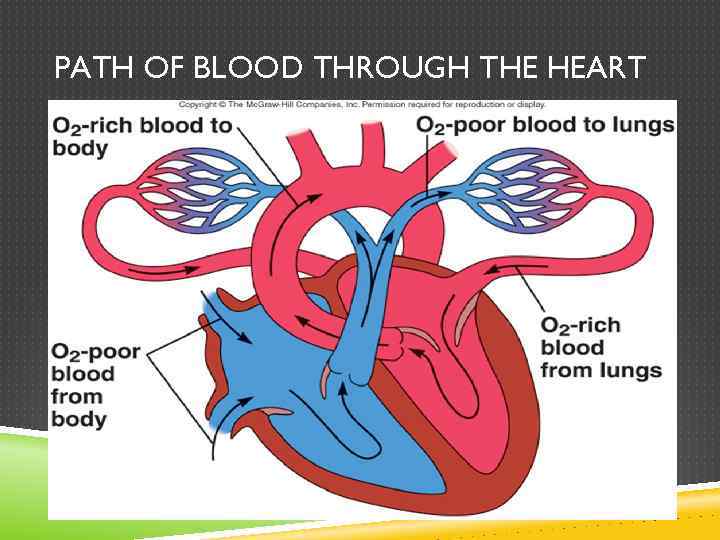 PATH OF BLOOD THROUGH THE HEART
 CARDIAC CYCLE The cardiac cycle refers to the repeating pattern of contraction and relaxation of the heart. The phase of contraction is called systole, and the phase of relaxation is called diastole. When these terms are used without reference to specific chambers, they refer to contraction and relaxation of the ventricles. It should be noted, however, that the atria also contract and relax. There is an atrial systole and diastole. Atrial contraction occurs toward the end of diastole, when the ventricles are relaxed; when the ventricles contract during systole, the atria are relaxed.
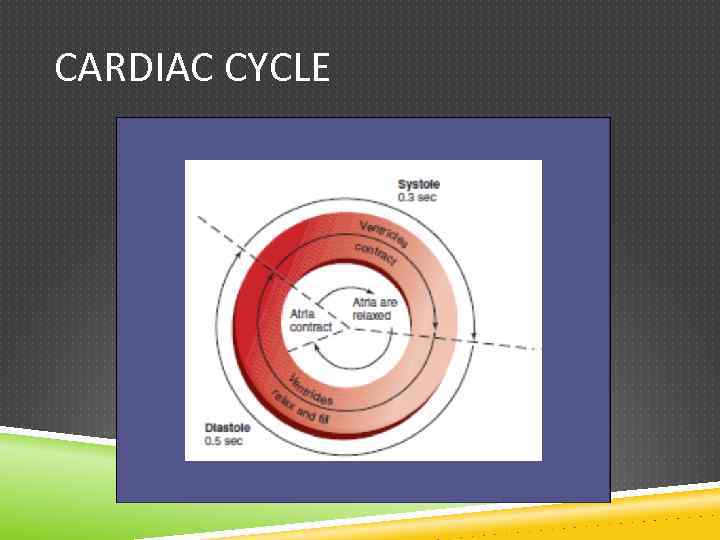 CARDIAC CYCLE
 CARDIAC OUTPUT Volume of blood pumped per unit time from the ventricle In mammals this is the volume ejected from either the left or right ventricle, not the combined total Volume of blood ejected per beat is the stroke volume Stroke volume determined by dividing cardiac output by heart rate
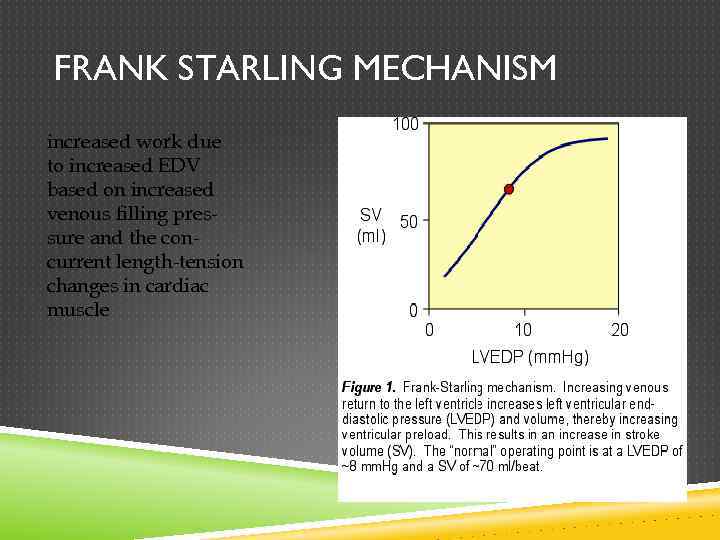 FRANK STARLING MECHANISM increased work due to increased EDV based on increased venous filling pressure and the concurrent length-tension changes in cardiac muscle
 THE HEARTBEAT Each heartbeat is called a cardiac cycle. When the heart beats, the two atria contract together, then the two ventricles contract; then the whole heart relaxes. The heart sounds, lub-dup, are due to the closing of the atrioventricular valves, followed by the closing of the semilunar valves.
 HEART RATE - Normal range is 60 -100 beats per minute - Tachycardia is greater than 100 bpm - Bradycardia is less than 60 bpm - Sympathetic system INCREASES HR - Parasympathetic system (Vagus) DECREASES HR (CBQ)
 INTRINSIC CONTROL OF HEARTBEAT The SA (sinoatrial) node, or pacemaker, initiates the heartbeat and causes the atria to contract on average every 0. 85 seconds. The AV (atrioventricular) node conveys the stimulus and initiates contraction of the ventricles. The signal for the ventricles to contract travels from the AV node through the atrioventricular bundle to the smaller Purkinje fibers.
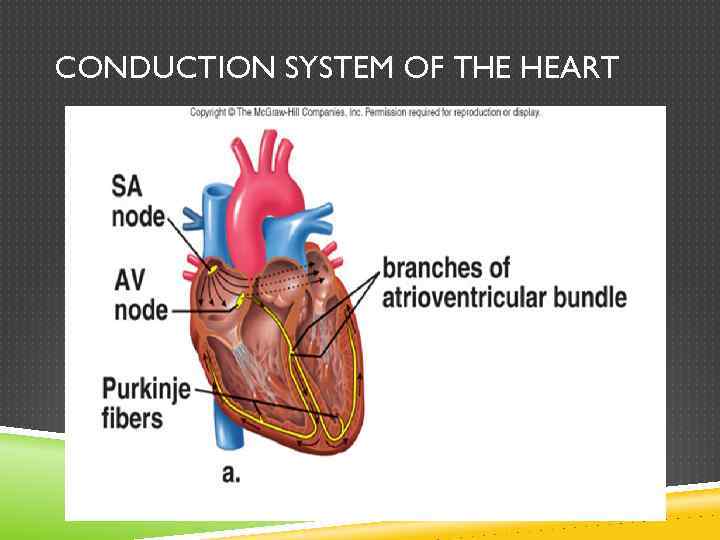 CONDUCTION SYSTEM OF THE HEART
 EXTRINSIC CONTROL OF HEARTBEAT A cardiac control center in the medulla oblongata speeds up or slows down the heart rate by way of the autonomic nervous system branches: parasympathetic system (slows heart rate) and the sympathetic system (increases heart rate). Hormones epinephrine and norepinephrine from the adrenal medulla also stimulate faster heart rate.
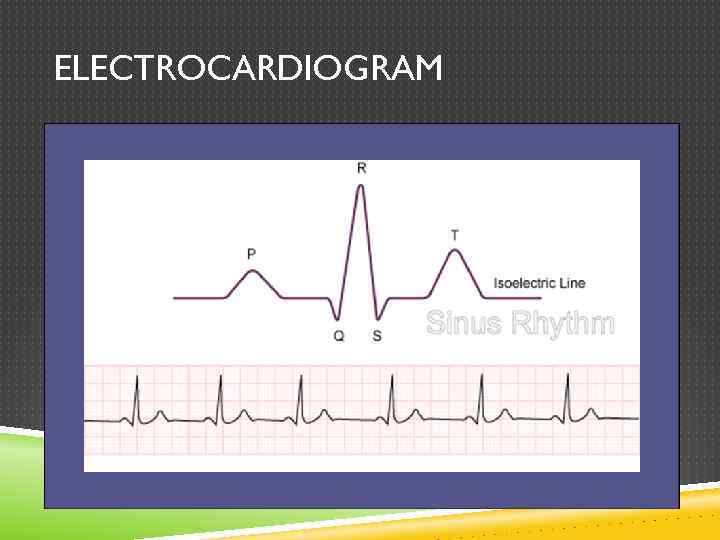
 THE ELECTROCARDIOGRAM An electrocardiogram (ECG) is a recording of the electrical changes that occur in the myocardium during a cardiac cycle. Atrial depolarization creates the P wave, ventricle depolarization creates the QRS wave, and repolarization of the ventricles produces the T wave.
 ELECTROCARDIOGRAM
 PRESENT SIMPLE Для выражения обычного, постоянного действия, действия происходящего вообще, а не в момент речи. He drinks coffee in the morning Для выражения общеизвестных фактов. The Earth goes round the Sun Земля вращается вокруг солнца
 УКАЗАТЕЛИ ВРЕМЕНИ: Always всегда Sometimes иногда Usually Often часто обычно Every day Каждый день
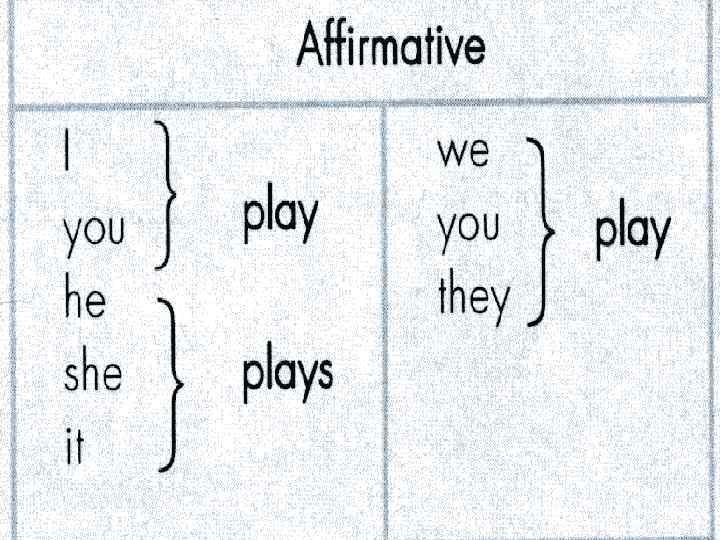 УТВЕРДИТЕЛЬНАЯ ФОРМА:
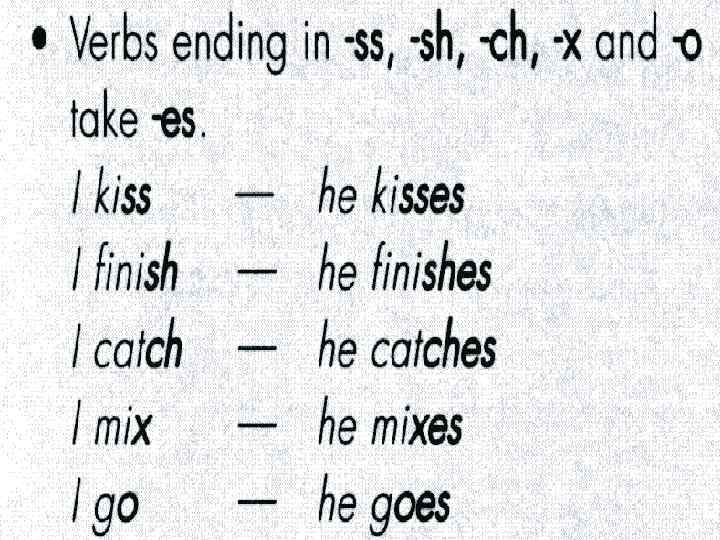
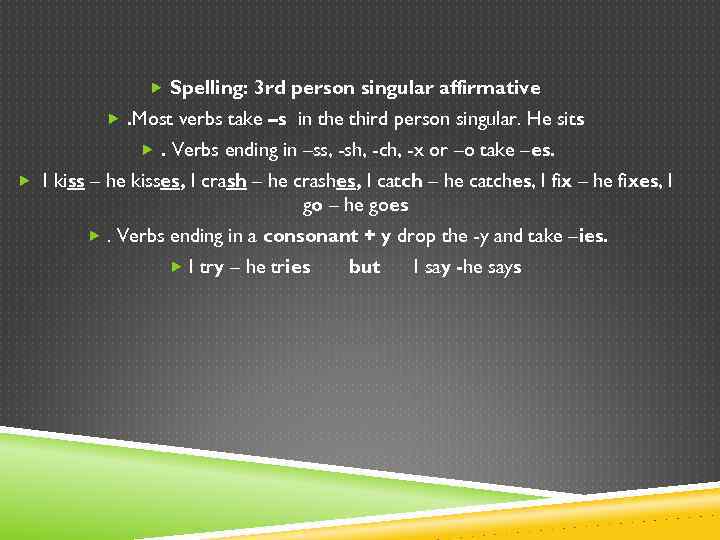 Spelling: 3 rd person singular affirmative . Most verbs take –s in the third person singular. He sits . Verbs ending in –ss, -sh, -ch, -x or –o take –es. I kiss – he kisses, I crash – he crashes, I catch – he catches, I fix – he fixes, I go – he goes . Verbs ending in a consonant + y drop the -y and take –ies. I try – he tries but I say -he says
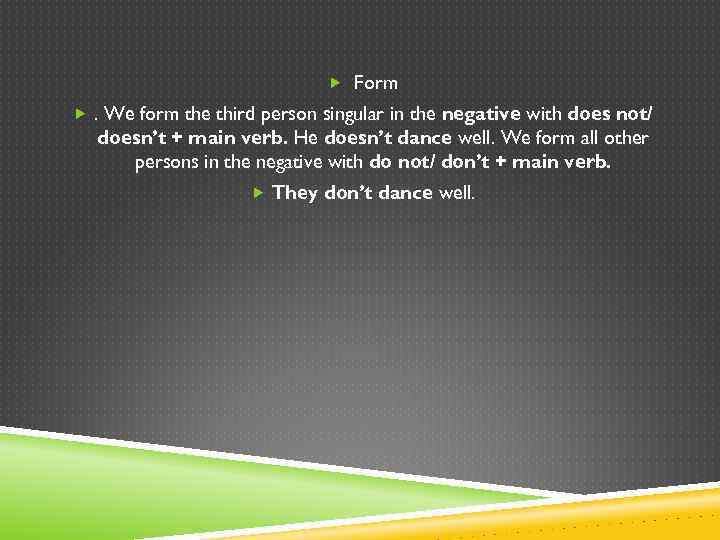 Form . We form the third person singular in the negative with does not/ doesn’t + main verb. He doesn’t dance well. We form all other persons in the negative with do not/ don’t + main verb. They don’t dance well.
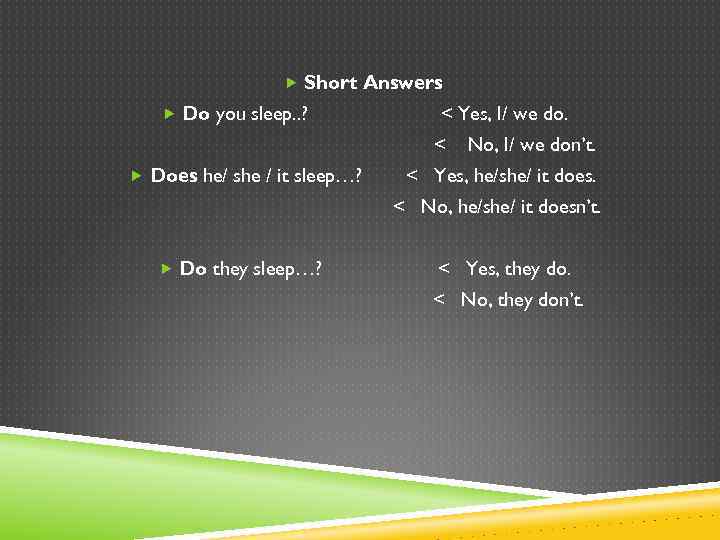 Short Answers Do you sleep. . ? < Yes, I/ we do. < Does he/ she / it sleep…? No, I/ we don’t. < Yes, he/she/ it does. < No, he/she/ it doesn’t. Do they sleep…? < Yes, they do. < No, they don’t.
 THANK YOU FOR YOUR ATTENTION!