


 Скачать презентацию Karaganda state medical university Independent work of students
Conditionals.ppt
- Количество слайдов: 10
 Karaganda state medical university Independent work of students: Conditionals Prepared: «OZ» 3 -002 st. group Mirzakulova A. KARAGANDA 2016
 Условные предложения или придаточные предложения условия (Conditionals) – это сложноподчиненные предложения, состоящие из главного предложения (Main clause) и придаточного условия (if-clause), которое часто вводится союзом if. Условные предложения в английском языке используются для описания осуществимых или неосуществимых ситуаций и бывают четырех типов.
 Conditionals In Britain, they built new roads, thinking that if the roads were wider and less crowded, the air pollution could be cleaned up more easily. When the air is not too dirty, the forests can clean it. Even if they seem far away from where you live, rain forests are important for the whole planet.
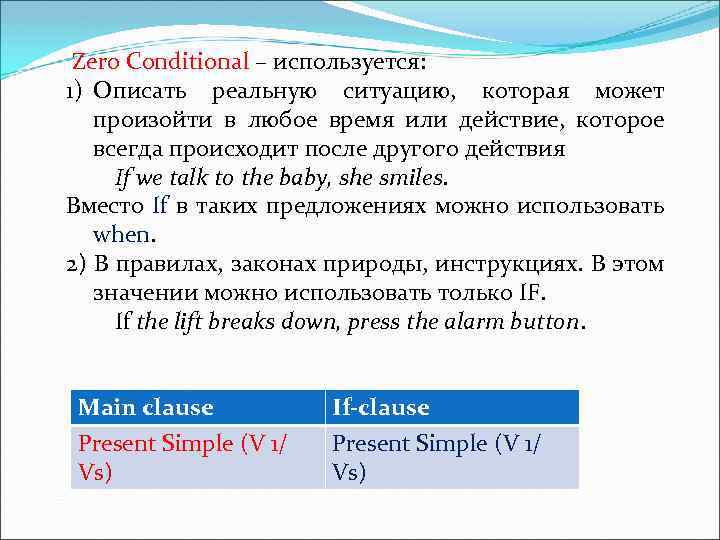 Zero Conditional – используется: 1) Описать реальную ситуацию, которая может произойти в любое время или действие, которое всегда происходит после другого действия If we talk to the baby, she smiles. Вместо If в таких предложениях можно использовать when. 2) В правилах, законах природы, инструкциях. В этом значении можно использовать только IF. If the lift breaks down, press the alarm button. Main clause Present Simple (V 1/ Vs) If-clause Present Simple (V 1/ Vs)
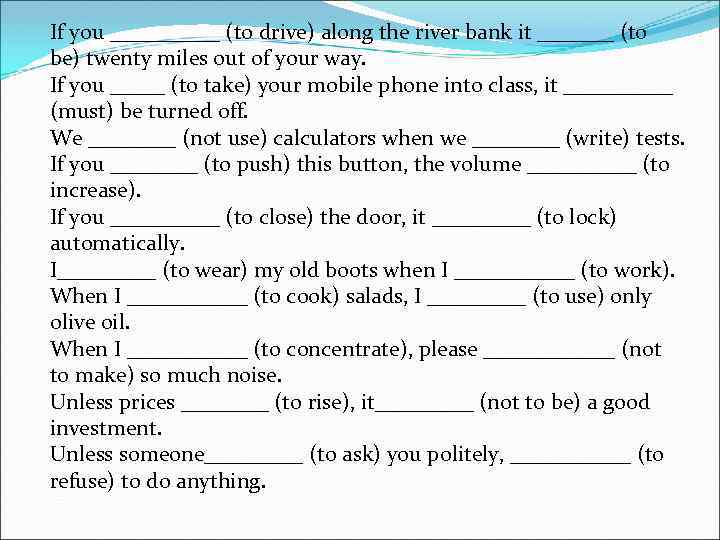 If you _____ (to drive) along the river bank it _______ (to be) twenty miles out of your way. If you _____ (to take) your mobile phone into class, it _____ (must) be turned off. We ____ (not use) calculators when we ____ (write) tests. If you ____ (to push) this button, the volume _____ (to increase). If you _____ (to close) the door, it _____ (to lock) automatically. I_____ (to wear) my old boots when I ______ (to work). When I ______ (to cook) salads, I _____ (to use) only olive oil. When I ______ (to concentrate), please ______ (not to make) so much noise. Unless prices ____ (to rise), it_____ (not to be) a good investment. Unless someone_____ (to ask) you politely, ______ (to refuse) to do anything.
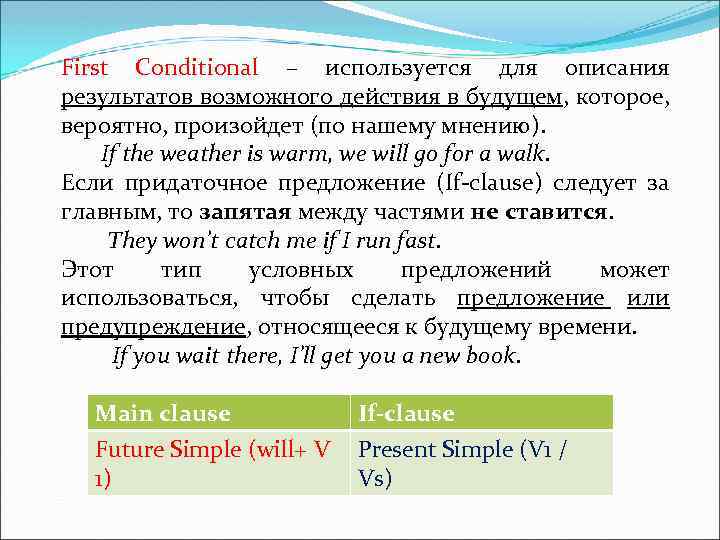 First Conditional – используется для описания результатов возможного действия в будущем, которое, вероятно, произойдет (по нашему мнению). If the weather is warm, we will go for a walk. Если придаточное предложение (If-clause) следует за главным, то запятая между частями не ставится. They won’t catch me if I run fast. Этот тип условных предложений может использоваться, чтобы сделать предложение или предупреждение, относящееся к будущему времени. If you wait there, I’ll get you a new book. Main clause Future Simple (will+ V 1) If-clause Present Simple (V 1 / Vs)
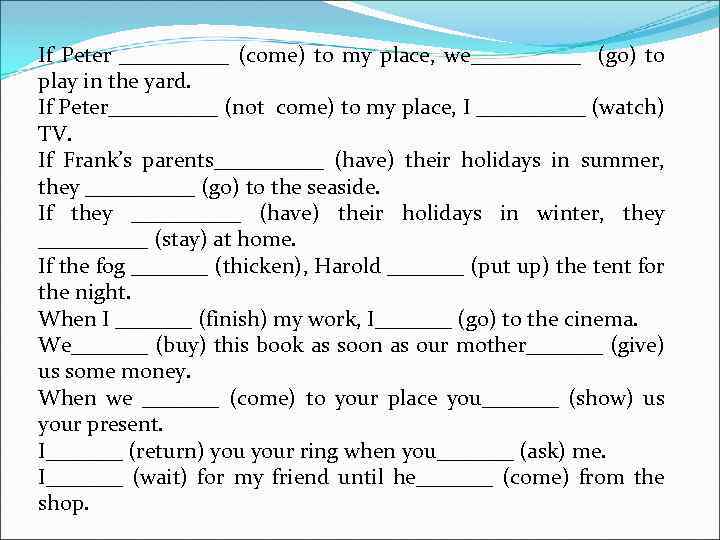 If Peter _____ (come) to my place, we_____ (go) to play in the yard. If Peter_____ (not come) to my place, I _____ (watch) TV. If Frank’s parents_____ (have) their holidays in summer, they _____ (go) to the seaside. If they _____ (have) their holidays in winter, they _____ (stay) at home. If the fog _______ (thicken), Harold _______ (put up) the tent for the night. When I _______ (finish) my work, I_______ (go) to the cinema. We_______ (buy) this book as soon as our mother_______ (give) us some money. When we _______ (come) to your place you_______ (show) us your present. I_______ (return) your ring when you_______ (ask) me. I_______ (wait) for my friend until he_______ (come) from the shop.
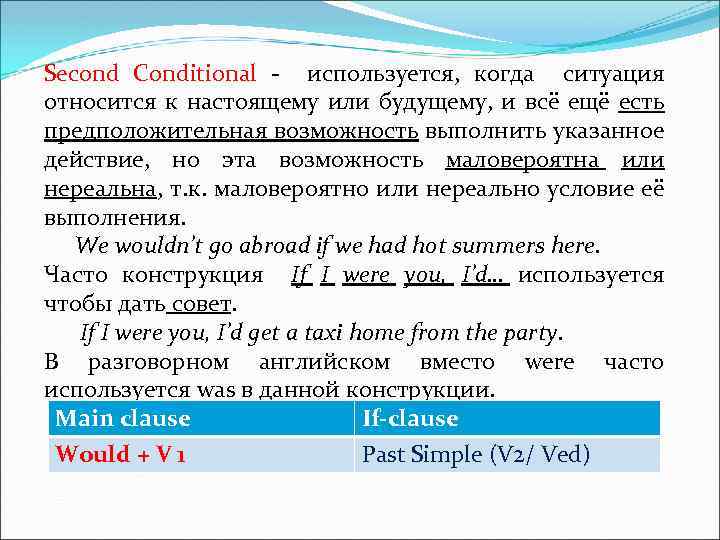 Second Conditional - используется, когда ситуация относится к настоящему или будущему, и всё ещё есть предположительная возможность выполнить указанное действие, но эта возможность маловероятна или нереальна, т. к. маловероятно или нереально условие её выполнения. We wouldn’t go abroad if we had hot summers here. Часто конструкция If I were you, I’d… используется чтобы дать совет. If I were you, I’d get a taxi home from the party. В разговорном английском вместо were часто используется was в данной конструкции. Main clause If-clause Would + V 1 Past Simple (V 2/ Ved)
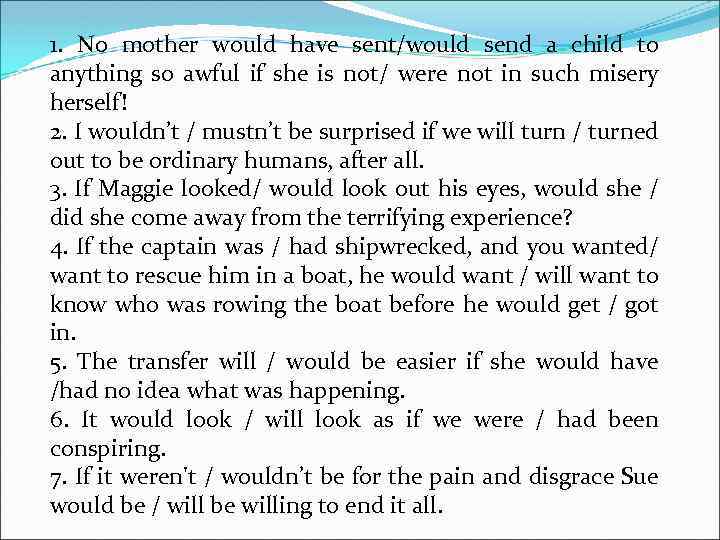 1. No mother would have sent/would send a child to anything so awful if she is not/ were not in such misery herself! 2. I wouldn’t / mustn’t be surprised if we will turn / turned out to be ordinary humans, after all. 3. If Maggie looked/ would look out his eyes, would she / did she come away from the terrifying experience? 4. If the captain was / had shipwrecked, and you wanted/ want to rescue him in a boat, he would want / will want to know who was rowing the boat before he would get / got in. 5. The transfer will / would be easier if she would have /had no idea what was happening. 6. It would look / will look as if we were / had been conspiring. 7. If it weren't / wouldn’t be for the pain and disgrace Sue would be / will be willing to end it all.
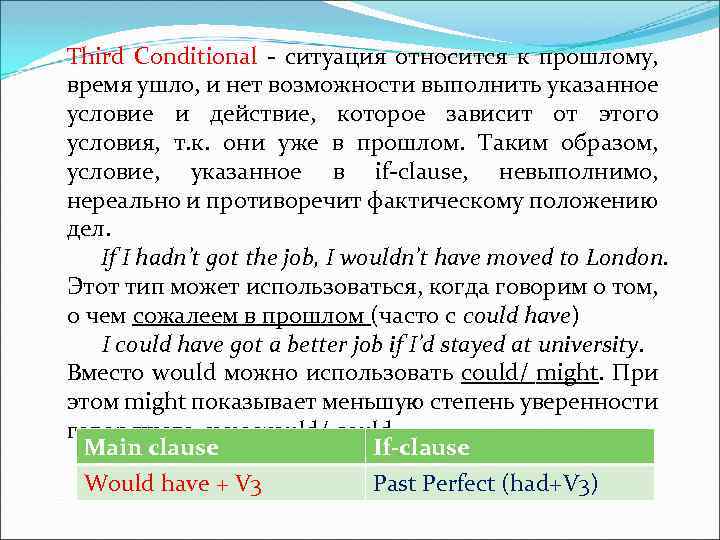 Third Conditional - ситуация относится к прошлому, время ушло, и нет возможности выполнить указанное условие и действие, которое зависит от этого условия, т. к. они уже в прошлом. Таким образом, условие, указанное в if-clause, невыполнимо, нереально и противоречит фактическому положению дел. If I hadn’t got the job, I wouldn’t have moved to London. Этот тип может использоваться, когда говорим о том, о чем сожалеем в прошлом (часто с could have) I could have got a better job if I’d stayed at university. Вместо would можно использовать could/ might. При этом might показывает меньшую степень уверенности говорящего, чем would/ could. Main clause If-clause Would have + V 3 Past Perfect (had+V 3)