


 Скачать презентацию KANS 111 The World of Civil Societies Ag
6f52063954915a1bad1b2599bfa47e85.ppt
- Количество слайдов: 27
 KANS 111 The World of Civil Societies Ag Alfa ke 26. 11. 2008 12: 00 -14: 00 Children for the Nation! Japanese Debate on the Aging of Society Pekka Korhonen
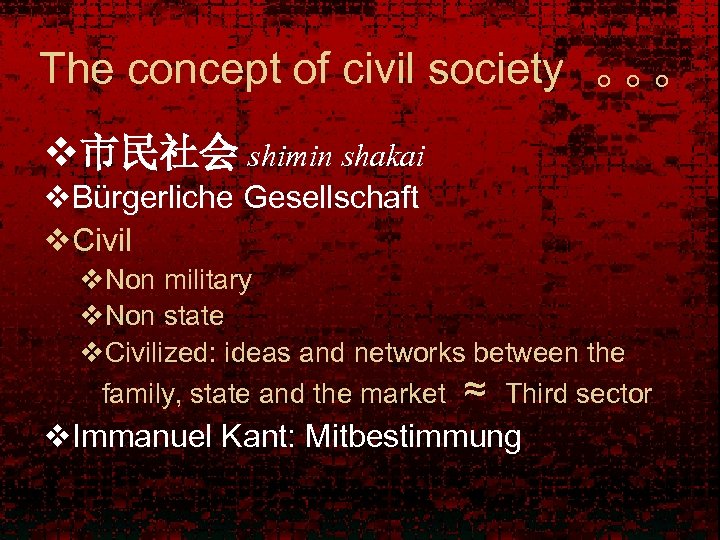 The concept of civil society 。。。 v市民社会 shimin shakai v. Bürgerliche Gesellschaft v. Civil v. Non military v. Non state v. Civilized: ideas and networks between the family, state and the market ≈ Third sector v. Immanuel Kant: Mitbestimmung
 … the world population is in the midst of an unprecedented transformation brought about by the transition from a regime of high mortality and high fertility to one of low mortality and low fertility. United Nations 2006, World Population Prospects: The 2006 Revision.
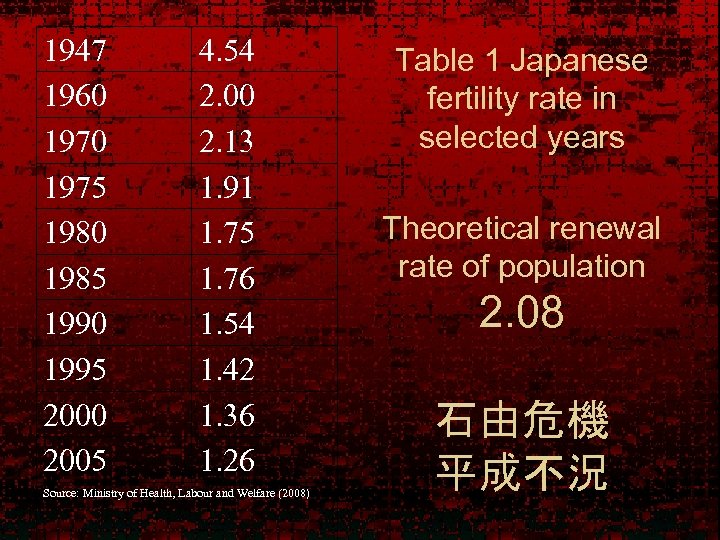 1947 1960 1975 1980 1985 1990 1995 2000 2005 4. 54 2. 00 2. 13 1. 91 1. 75 1. 76 1. 54 1. 42 1. 36 1. 26 Source: Ministry of Health, Labour and Welfare (2008) Table 1 Japanese fertility rate in selected years Theoretical renewal rate of population 2. 08 石由危機 平成不況
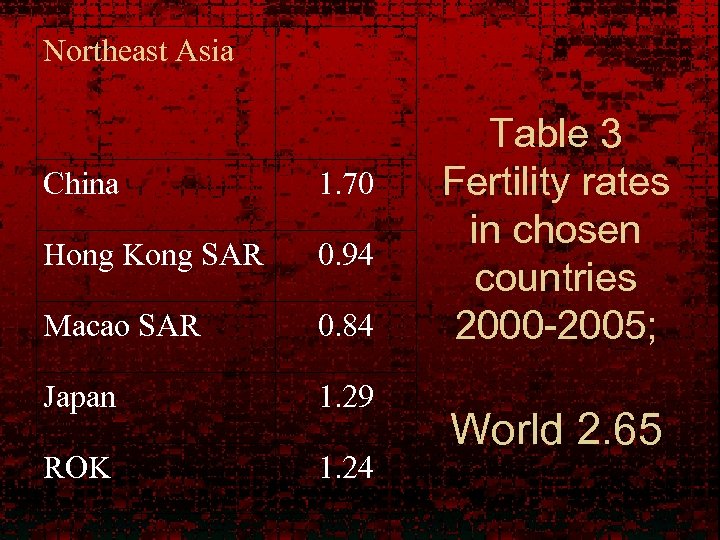 Northeast Asia China 1. 70 Hong Kong SAR 0. 94 Macao SAR 0. 84 Japan 1. 29 ROK 1. 24 Table 3 Fertility rates in chosen countries 2000 -2005; World 2. 65
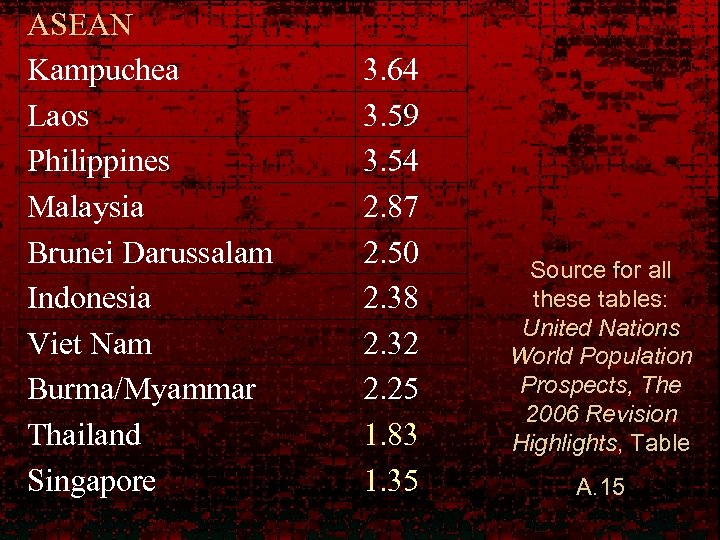 ASEAN Kampuchea Laos Philippines Malaysia Brunei Darussalam Indonesia Viet Nam Burma/Myammar Thailand Singapore 3. 64 3. 59 3. 54 2. 87 2. 50 2. 38 2. 32 2. 25 1. 83 1. 35 Source for all these tables: United Nations World Population Prospects, The 2006 Revision Highlights, Table A. 15
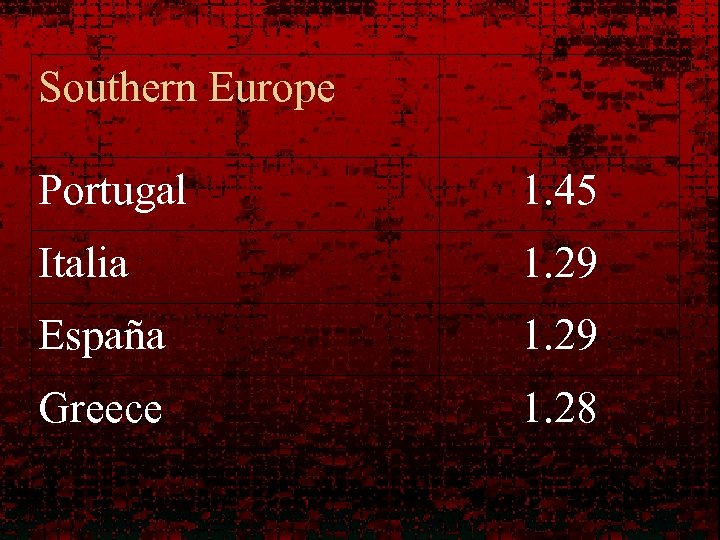 Southern Europe Portugal 1. 45 Italia 1. 29 España 1. 29 Greece 1. 28
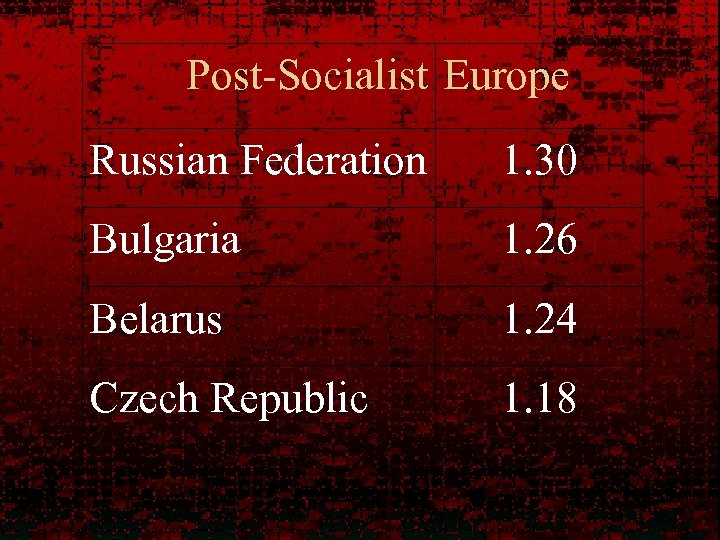 Post-Socialist Europe Russian Federation 1. 30 Bulgaria 1. 26 Belarus 1. 24 Czech Republic 1. 18
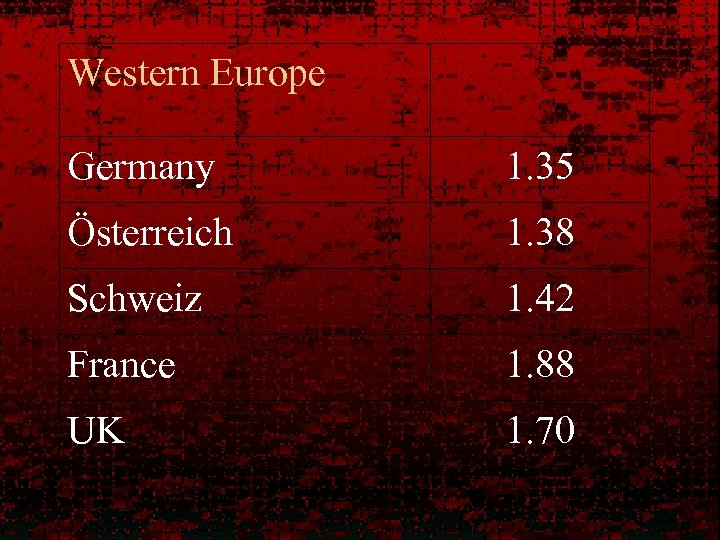 Western Europe Germany 1. 35 Österreich 1. 38 Schweiz 1. 42 France 1. 88 UK 1. 70
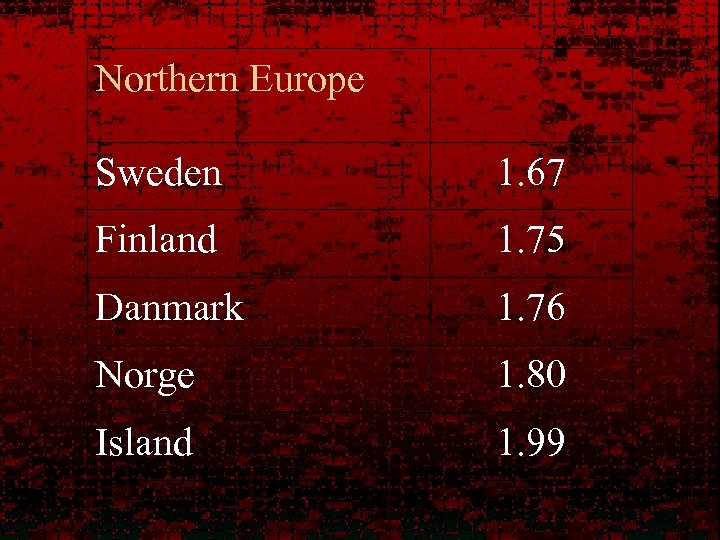 Northern Europe Sweden 1. 67 Finland 1. 75 Danmark 1. 76 Norge 1. 80 Island 1. 99
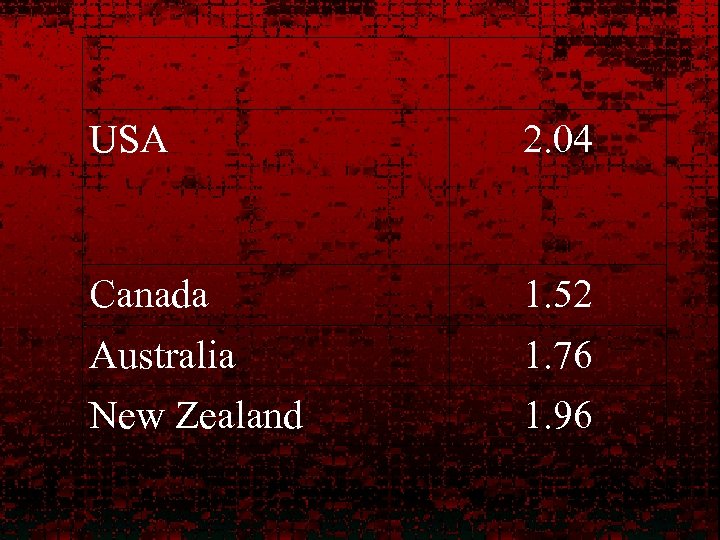 USA 2. 04 Canada 1. 52 Australia New Zealand 1. 76 1. 96
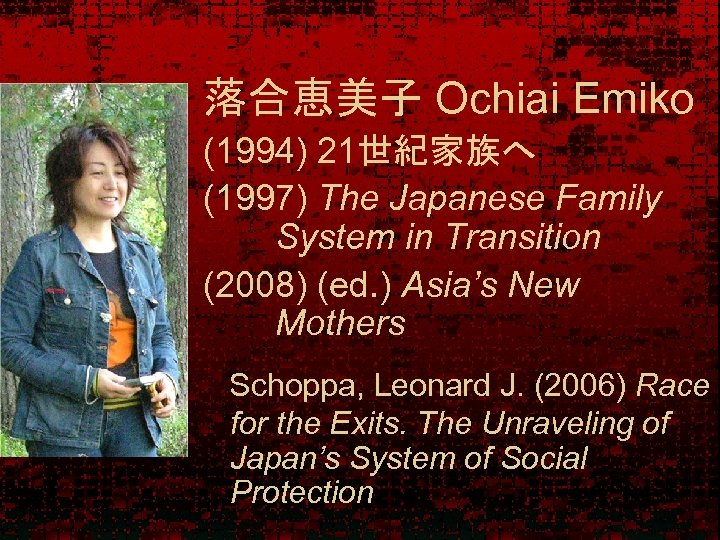 落合恵美子 Ochiai Emiko (1994) 21世紀家族へ (1997) The Japanese Family System in Transition (2008) (ed. ) Asia’s New Mothers Schoppa, Leonard J. (2006) Race for the Exits. The Unraveling of Japan’s System of Social Protection
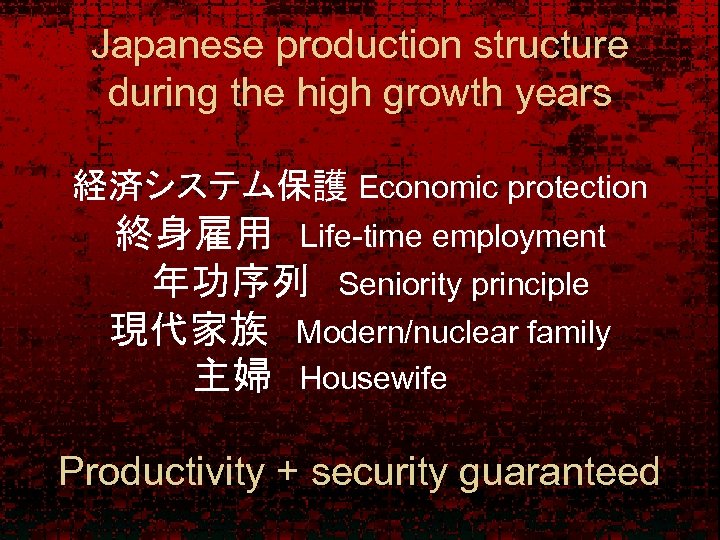 Japanese production structure during the high growth years 経済システム保護 Economic protection 終身雇用 Life-time employment 年功序列 Seniority principle 現代家族 Modern/nuclear family 主婦 Housewife Productivity + security guaranteed
 Life courses of a Japanese woman 1. Housewife + dependence on husband 2. No children, both spouses working 3. Single, working
 Security problems of a professional housewife 1. 2. 3. 4. Sufficiency of husband’s salary Reliability of husband’s salary Divorce Rusting of vocational proficiency → Action strategy has been mainly Exit 2. No children, both spouses working 3. Single, working
 Care of old age • 1990 s • Urbanization, working women, small apartments • Exit was not an option (suicide only), thus Voice was the only viable strategy • 介護保険 2000 Long-term care insurance • First big reform of social security laws since the 1960 s, when labour insurance laws were enacted.
 Child care legislation • 1992 maternity allowance in limited cases • 2006 general maternity allowance; 1 st child ¥ 5, 000 (€ 40); 2 nd ¥ 5, 000, 3 rd or more ¥ 10, 000 per month • Company schemes; トヨタ自動車株式会社: labour force 男 60 000, 女 4600, administrative professionals 女 150.
 Public debate as disciplinary action • Maintained generally as an underpolitical issue, not raised within political discussion as a structural and rational problem → problem of personal morality
 1997 -8 Japanese health and social ministry + university committees; argument: After women have been guaranteed basic social services, as well as positive moral support of the state, employers and husbands, only then do they have the necessary economic and psychological security to make children, while they also can continue working, like most of them wish.
![Yamada Masahiro(1999) パラサイト・シングルの時代 They enjoy abundant love from their parents […] and simultaneously eat](https://present5.com/presentation/6f52063954915a1bad1b2599bfa47e85/image-20.jpg "Yamada Masahiro(1999) パラサイト・シングルの時代 They enjoy abundant love from their parents […] and simultaneously eat") Yamada Masahiro(1999) パラサイト・シングルの時代 They enjoy abundant love from their parents […] and simultaneously eat better food than their parents, wear expensive clothing, and travel abroad […] Parasite singles place themselves at the best positions of child and adult. They enjoy the security belonging to children, while they also enjoy the freedom of adults. • George Lakoff: moral arguments within concepts;
Yamada Masahiro(1999) パラサイト・シングルの時代 They enjoy abundant love from their parents […] and simultaneously eat better food than their parents, wear expensive clothing, and travel abroad […] Parasite singles place themselves at the best positions of child and adult. They enjoy the security belonging to children, while they also enjoy the freedom of adults. • George Lakoff: moral arguments within concepts;
 三浦展(2006)下流社会 What is missing from the youth of the bottom current? It is will. They do not have the will to rise to the middle current, or if they are sinking down from there, their will is not strong enough to correct the situation… As a matter of fact they are the same precariat as all over the world
 Sakai Junko (2003) 負け 犬の遠吠え Makeinu no Tōboe
 You can crush a 30+ year old woman, however intelligent, successful, professional, wealthy, or beautiful she ever is, simply by saying to her: 『as a woman, you are not happy』。
 Getting married and giving birth to babies is the main duty of women [and a national obligation]. Although it would look as if anything was accepted in the modern Japanese society, unmarried women still feel themselves guilty. The life of a Loser Dog is like the life of a criminal. We continuously have to justify ourselves.
 Ishihara Shintaro(1932年生)2001 • ”I would not say like this, Iwai Toshio has said so … but when a woman no more can give birth to children, she turns into a frivolous being. And if she happened to live at the age of 100, she would cause a lot of damage to the earth, using its resources. A man can make babies even if he is very old” • ”Well yes, I thought, but because I am a politician, I of course cannot say such a thing publicly. ” (笑い)。
 Yanagisawa Hakuo, Health and Social Minister (1931年生) 27. 1. 2007 • The amount of child-making machines called women is limited. They all simply have to be obligated to give birth to more children. • Cheap for state finances, but irrelevant in terms of results.
 When I was 35 years old, I noticed what all Loser Dogs around me had in common. They watched kabuki, and were engaged also in other traditional arts. They used their time and money to rear Japanese culture, instead of rearing children.