



Какие женщины на нас бросают взоры.
A bare conductor ran in the car. § bare голый § сonductor кондуктор § ran бегал § сar машина
A bare conductor ran in the car. § bare оголенный § сonductor провод § ran был проложен § сar вагон
Ambiguity the property of language units to bear several different meanings.
Some languages are more ambiguous (English, Chinese) others are less so (Ukrainian, German) It depends on how a meaning is expressed in one or another language.
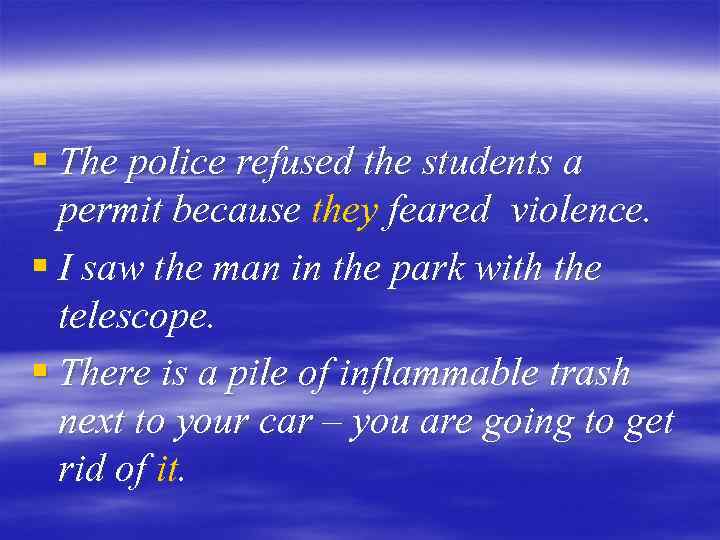
§ The police refused the students a permit because they feared violence. § I saw the man in the park with the telescope. § There is a pile of inflammable trash next to your car – you are going to get rid of it.
In the above examples not only in the meaning of the words ambiguous but also the relations between them.
Why? Why are language units ambiguous?
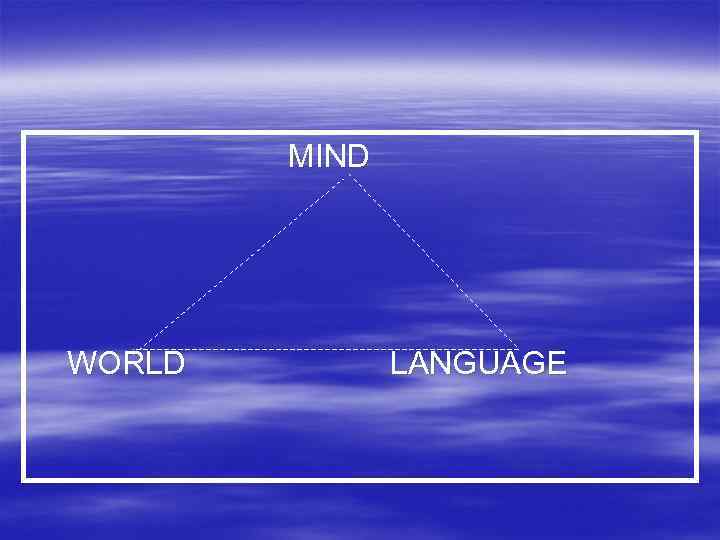
MIND WORLD LANGUAGE
According to common scientific opinion there may never be a direct link between the sign, the object and the referent.
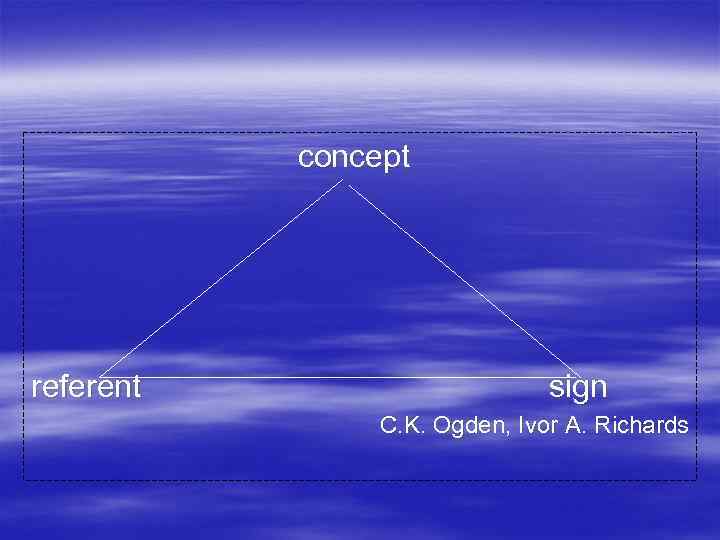
concept referent sign C. K. Ogden, Ivor A. Richards
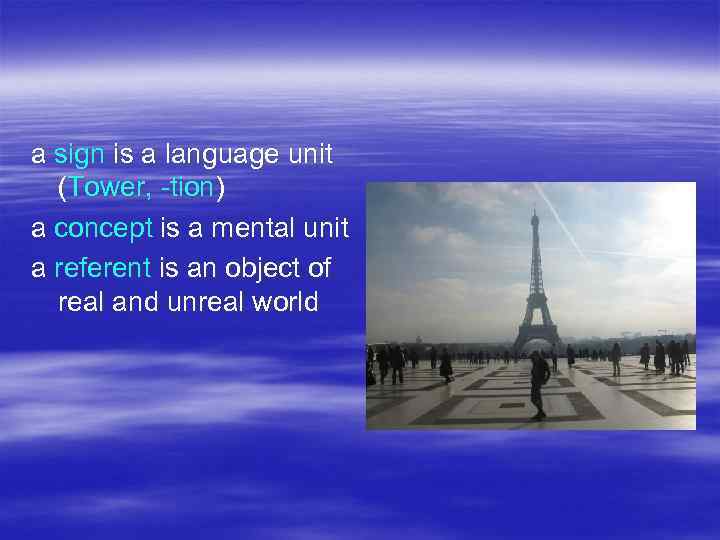
a sign is a language unit (Tower, -tion) a concept is a mental unit a referent is an object of real and unreal world

There is usually no direct link between an image of the real world and the form of the word.
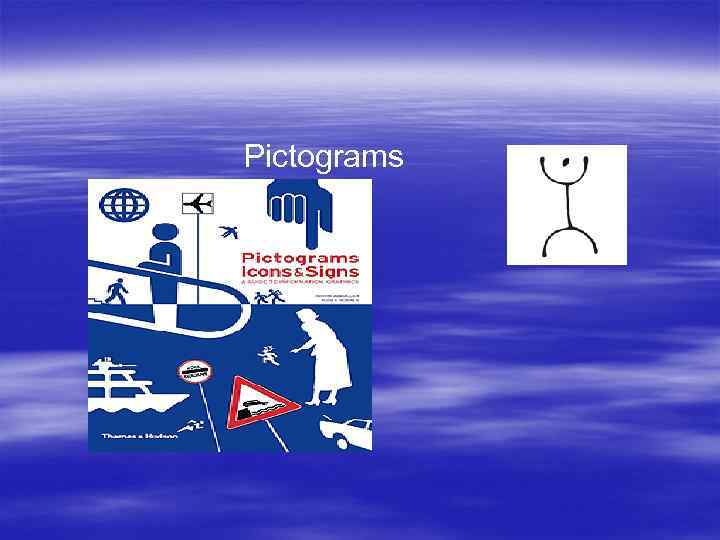
Pictograms
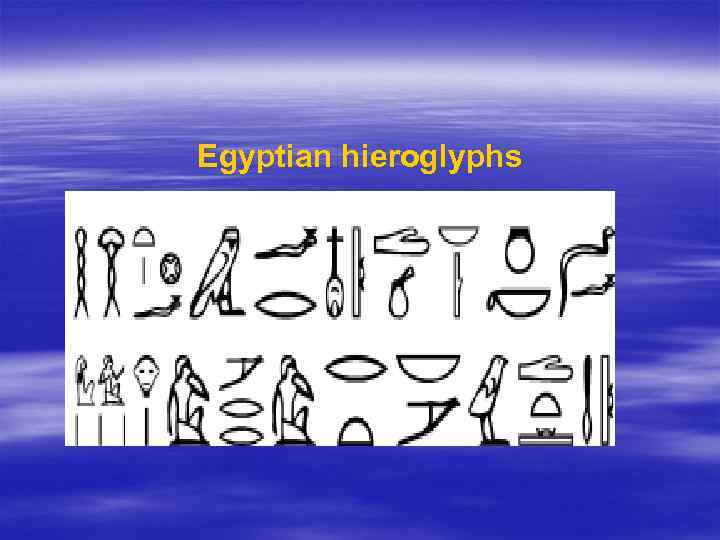
Egyptian hieroglyphs
At the early stages of language development there was a direct link between the language signs and the real world. It may be found even in modern language : cuckoo, bang, slippers.
Similarity was replaced by convention – generally accepted practice, especially with regard to social behavior
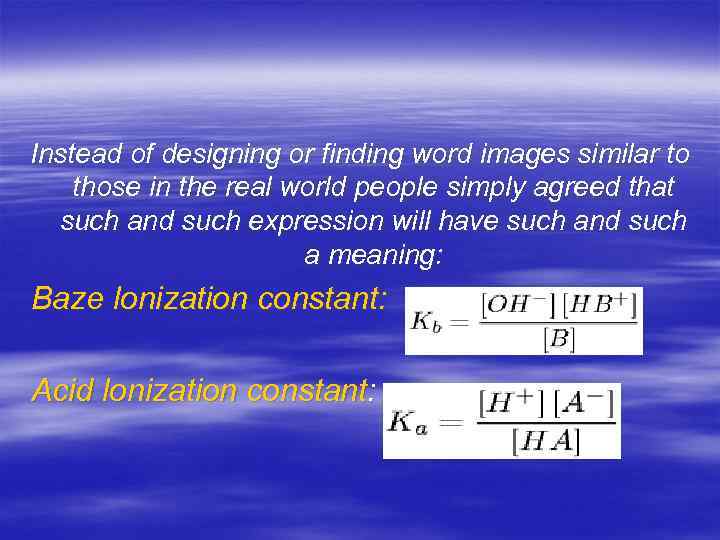
Instead of designing or finding word images similar to those in the real world people simply agreed that such and such expression will have such and such a meaning: Baze lonization constant: Acid lonization constant:
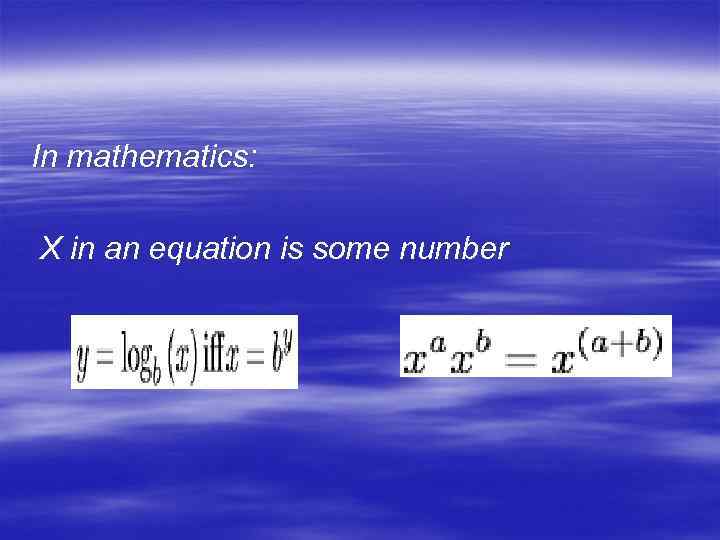
In mathematics: X in an equation is some number
When you learn a language, you join a convention. And when you speak you are understood only by the members of this convention, that is by the speakers of this language.
E. g. if you understand “Einverstanden”, “Ausgezeichnet” – you are a member of the German language convention, if not, then you are not. If you understand the sign language you are a member of this sign language convention.
Languages are developing and in this process words develop new meanings. As a result we have that we have Ambiguity.
A word, phrase, or sentence is ambiguous if it has more than one meaning. The word 'light', for example, can mean: not very heavy not very dark. Words like 'light', 'note', 'bear' and 'over' are lexically ambiguous.
They induce ambiguity in phrases or sentences in which they occur, such as 'The duchess can't bear children'. Phrases and sentences can be ambiguous even if none of their constituents is.
The phrase 'porcelain egg container' is structurally ambiguous, as is the sentence 'The police shot the rioters with guns'.
There are two types of ambiguity, lexical and structural. Ambiguity can have both ü a lexical and ü a structural basis, as with sentences like 'I left her behind for you' 'He saw her duck'.
Lexical ambiguity is by far the more common. ØNouns: 'chip', 'pen', 'suit', ØVerbs: 'call', 'draw‘, 'run', ØAdjectives: 'deep', 'dry' 'hard'.
There are various tests for ambiguity. ühaving two unrelated antonyms: 'hard', has both 'soft' and 'easy' as opposites. üthe conjunction reduction test.
'The tailor pressed one suit in his shop and one in the municipal court'. 'suit' is used to refer to an article of clothing and 'one' is used to refer to a legal action.
Our task is to get rid of the ambiguity in the process of language formalization. This task is called DISAMBUGUATION.
