


 Скачать презентацию Judaism Early History of the Israelites n
3c67ae4ac0627b8ff5a21e66627b9ab7.ppt
- Количество слайдов: 50
 Judaism
 Early History of the Israelites n n n n n 2000 B. C. –Abraham migrates from Mesopotamia to Canaan, where he founds the Israelite nation. Famine forces Israelites to migrate to Egypt, where they are enslaved. Moses leads the Israelites out of Egypt. Israelites enter Canaan, the promised land. 1000 B. C. –David unites Israelites into kingdom of Israel. Solomon builds capital at Jerusalem, but his rule inspires revolts. 922 B. C. –Kingdom weakens after splitting into Israel and Judah. 722 B. C. –Assyrians conquer Israel 586 B. C. –Babylonians capture Judah – Babylonian Captivity. Persians conquer Babylon and free the Jews from captivity.
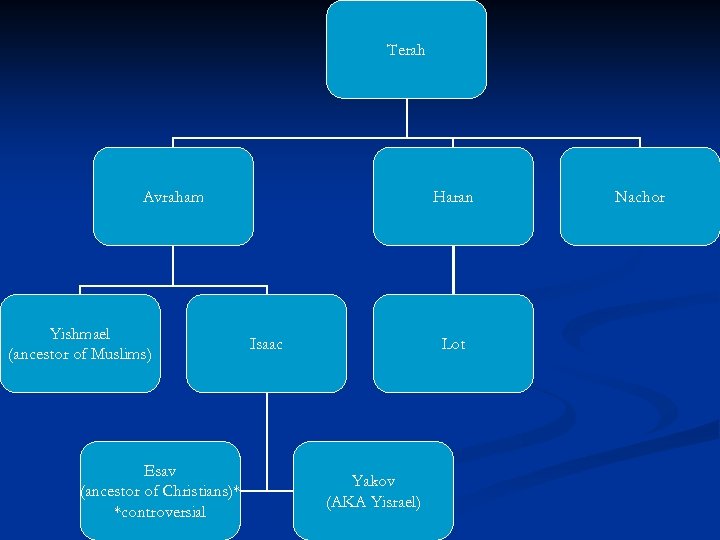 Terah Avraham Yishmael (ancestor of Muslims) Esav (ancestor of Christians)* *controversial Haran Isaac Lot Yakov (AKA Yisrael) Nachor
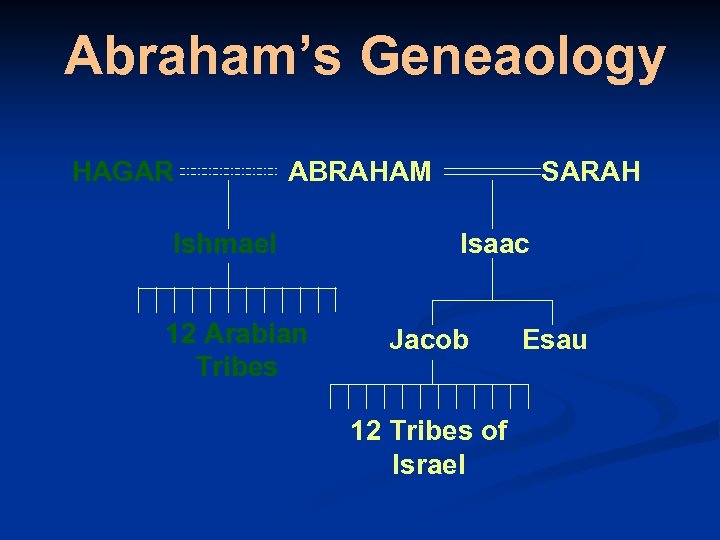 Abraham’s Geneaology HAGAR ABRAHAM Ishmael 12 Arabian Tribes SARAH Isaac Jacob 12 Tribes of Israel Esau
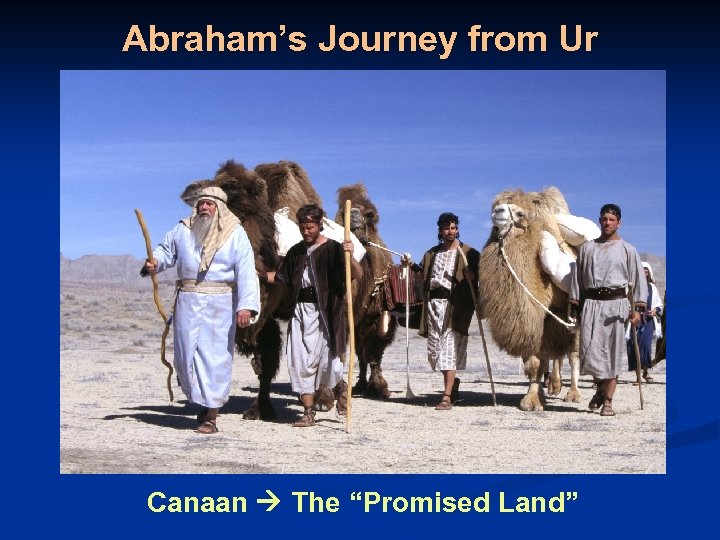 Abraham’s Journey from Ur Canaan The “Promised Land”
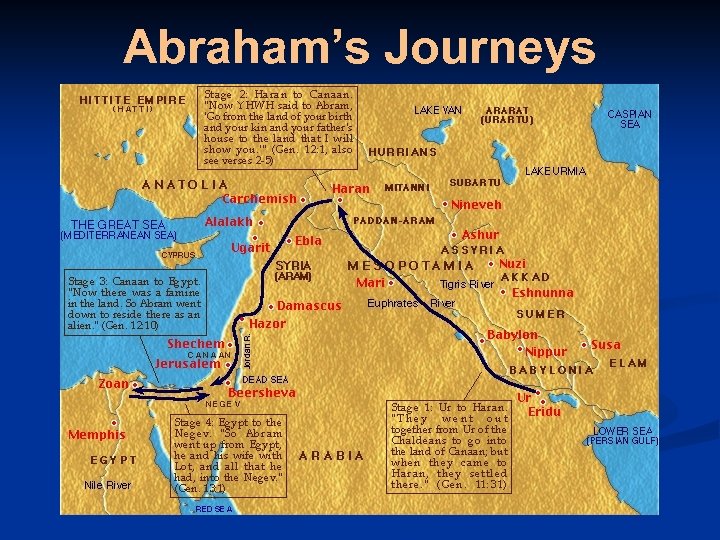 Abraham’s Journeys
 Miarat Ha. Machpelah (Cave of Machpelah) is located in Chevron AKA Kiryat Arba n Chevron became known as Kiryat Arba because of the four pairs of husbands and wives buried there: n 1. Adam and Eve 3. Yitzchak and Rivkah 2. Avraham and Sarah 4. Yakov and Leah
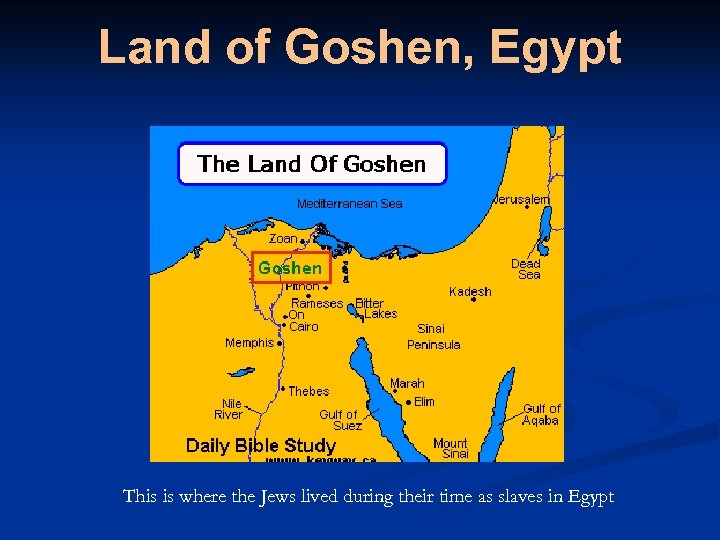 Land of Goshen, Egypt This is where the Jews lived during their time as slaves in Egypt
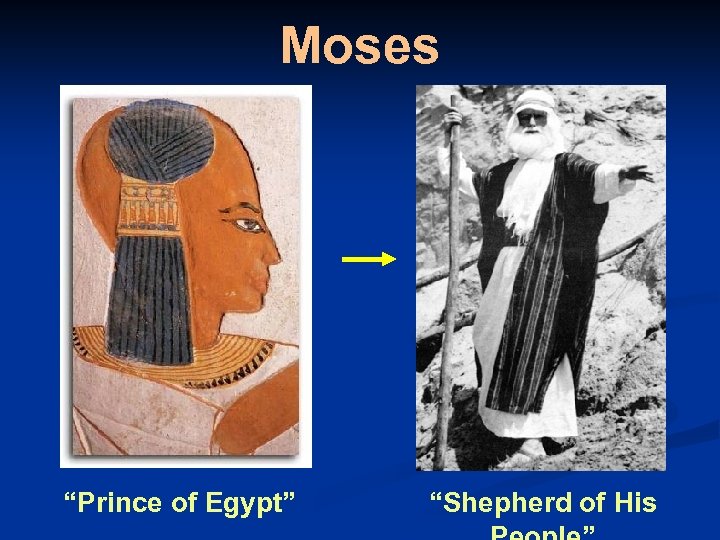 Moses “Prince of Egypt” “Shepherd of His
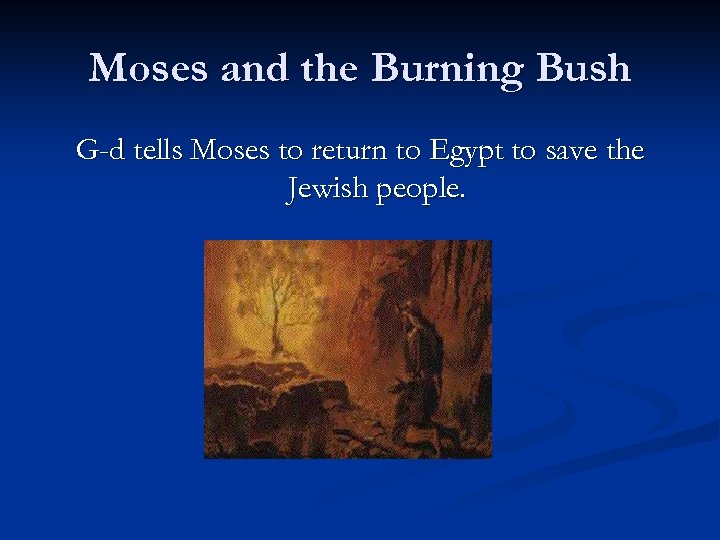 Moses and the Burning Bush G-d tells Moses to return to Egypt to save the Jewish people.
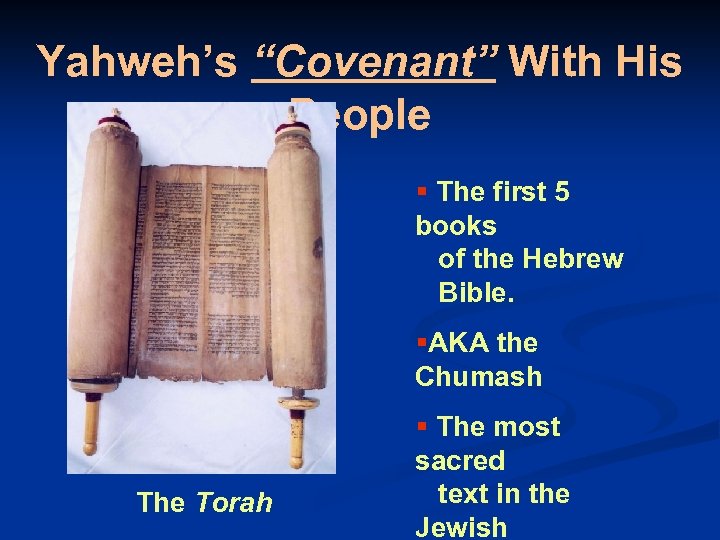 Yahweh’s “Covenant” With His People § The first 5 books of the Hebrew Bible. §AKA the Chumash The Torah § The most sacred text in the Jewish
 Ten Commandments 1. 2. 3. 4. 5. 6. 7. 8. 9. 10. You shall have no other gods but me. You shall not make for yourself any idol, nor bow down to it or worship it. You shall not say G-d’s name in vain. You shall remember and keep the Sabbath day holy. Respect your father and mother. You must not kill. You must not commit adultery. You must not steal. You must not give false evidence against your neighbour. You must not be envious of your neighbor's goods of his house, wife, or anything that belongs to him.
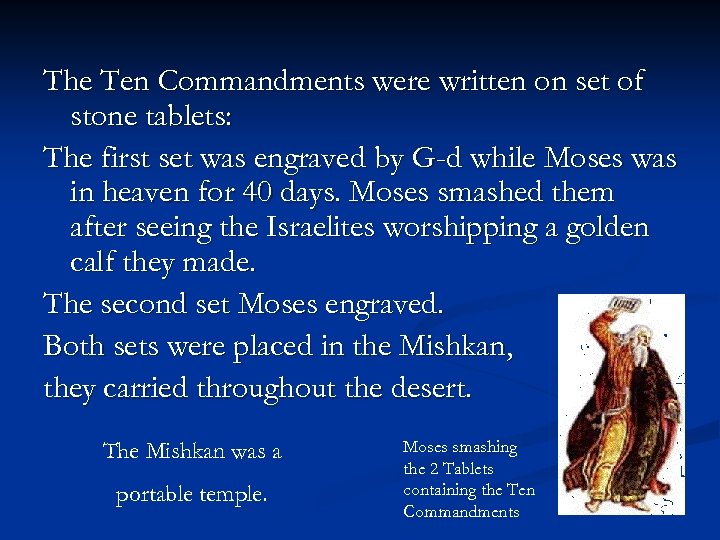 The Ten Commandments were written on set of stone tablets: The first set was engraved by G-d while Moses was in heaven for 40 days. Moses smashed them after seeing the Israelites worshipping a golden calf they made. The second set Moses engraved. Both sets were placed in the Mishkan, they carried throughout the desert. The Mishkan was a portable temple. Moses smashing the 2 Tablets containing the Ten Commandments
 “Castes” Kohanim – priestly caste, a subset of the Tribe of Levi, descendants of Aharon, Moses’ brother, chosen by Ha. Shem The High Priest (Kohen Hagadol) is the only person who is permitted to enter the “Holy of Holies” (Kodeh Hakadashim) and only once a year, on Yom Kippur. n Levi’im - The remainder of the Tribe of Levi is assigned roles in connection with the Mishkan (the portable Temple that the Jewish People transported from place to place in the Wilderness and also for the first several hundred years of their residence in the Land of Israel). Each group within the Tribe would, for example, be assigned to carry a different part of the paraphernalia of the Mishkan (the curtains, the coverings, the Menorah, the Table, the Holy Ark. . . ) n
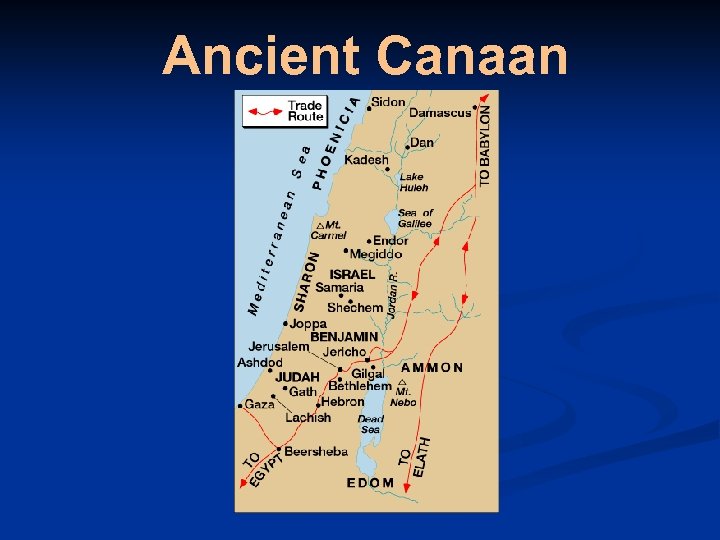 Ancient Canaan
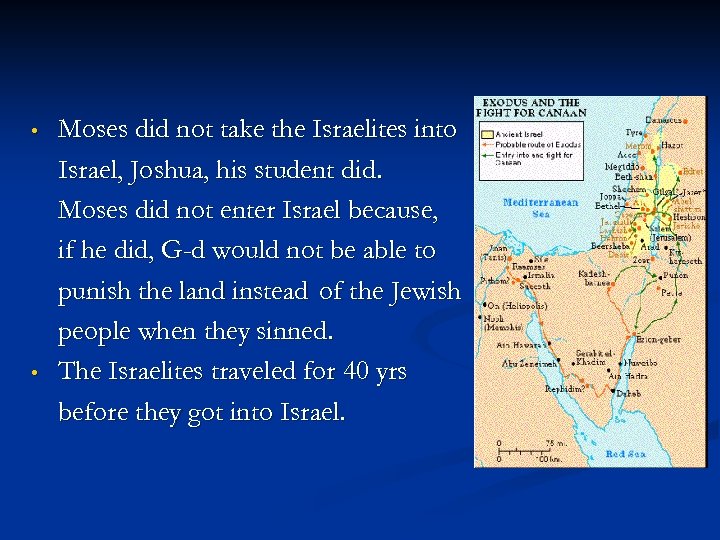 • • Moses did not take the Israelites into Israel, Joshua, his student did. Moses did not enter Israel because, if he did, G-d would not be able to punish the land instead of the Jewish people when they sinned. The Israelites traveled for 40 yrs before they got into Israel.
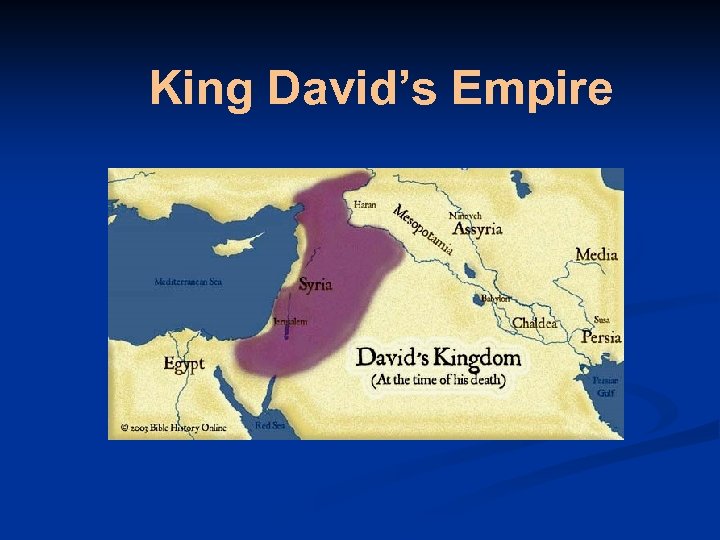 King David’s Empire
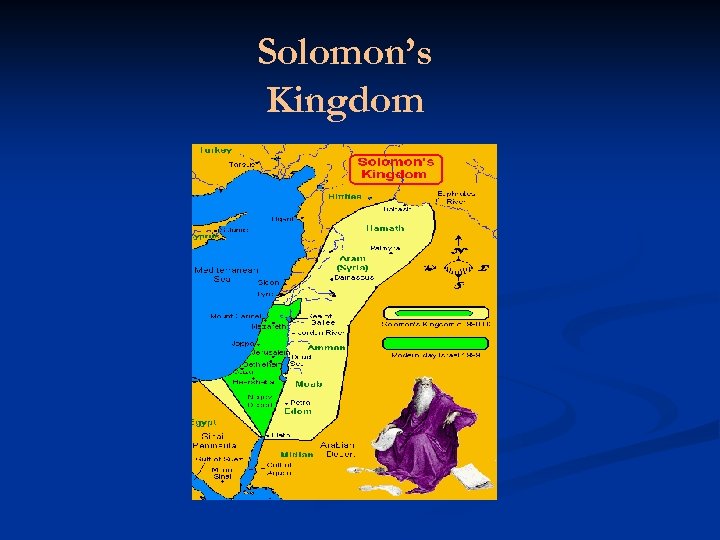 Solomon’s Kingdom
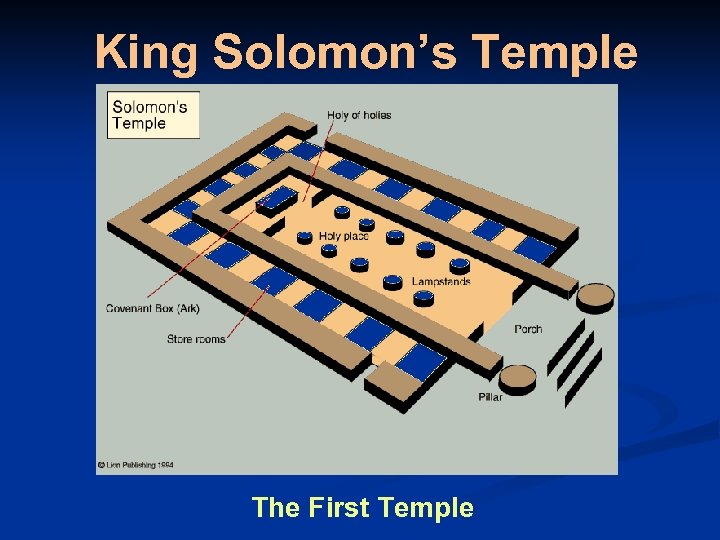 King Solomon’s Temple Floor Plan The First Temple
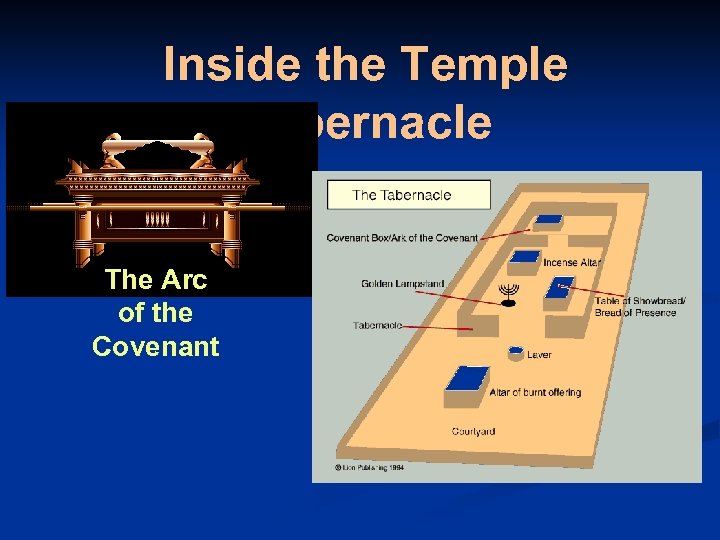 Inside the Temple Tabernacle The Arc of the Covenant
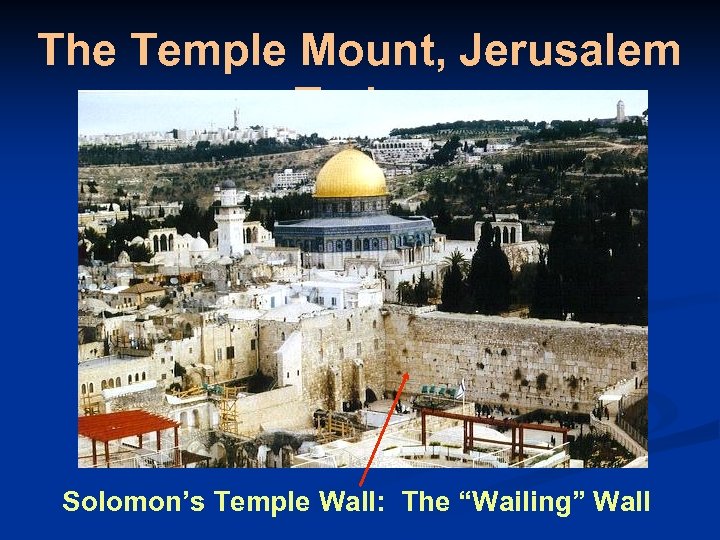 The Temple Mount, Jerusalem Today Solomon’s Temple Wall: The “Wailing” Wall
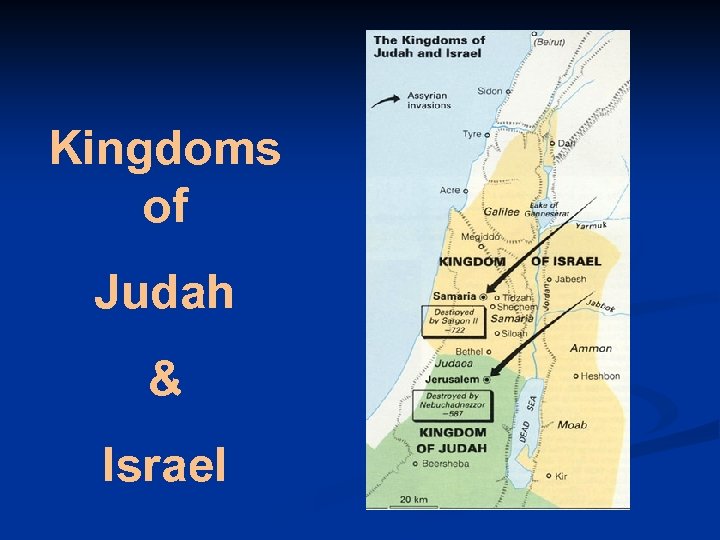 Kingdoms of Judah & Israel
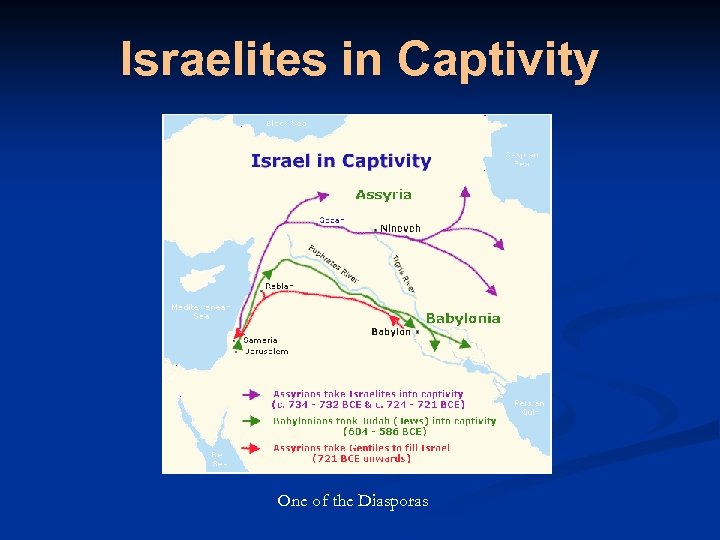 Israelites in Captivity One of the Diasporas
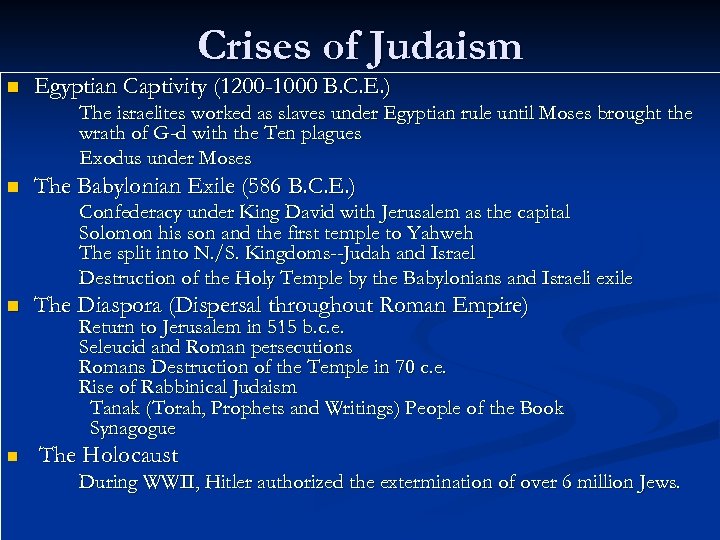 Crises of Judaism n Egyptian Captivity (1200 -1000 B. C. E. ) The israelites worked as slaves under Egyptian rule until Moses brought the wrath of G-d with the Ten plagues Exodus under Moses n The Babylonian Exile (586 B. C. E. ) Confederacy under King David with Jerusalem as the capital Solomon his son and the first temple to Yahweh The split into N. /S. Kingdoms--Judah and Israel Destruction of the Holy Temple by the Babylonians and Israeli exile n n The Diaspora (Dispersal throughout Roman Empire) Return to Jerusalem in 515 b. c. e. Seleucid and Roman persecutions Romans Destruction of the Temple in 70 c. e. Rise of Rabbinical Judaism Tanak (Torah, Prophets and Writings) People of the Book Synagogue The Holocaust During WWII, Hitler authorized the extermination of over 6 million Jews.
 The Israelites were monotheistic, believing in one true God. At the time, most other people worshiped many gods. The Israelites believed God to be all-knowing, allpowerful, and present everywhere. The Israelites believed that they were God’s “chosen people. ” They believed that God would lead them to the “promised land. ”
 Teachings on Law and Morality The laws of the Torah address all aspects of life, from cleanliness and food preparation to criminal matters. Jews believe that God gave them a set of laws called the Ten Commandments. Jewish prophets, or spiritual leaders, preached a code of ethics, or moral standards of behavior. Examples: n n The rich and powerful must protect the poor and weak. All people are equal under God. Unlike many ancient people, the Jews believed their leaders were fully human and bound by God’s law.
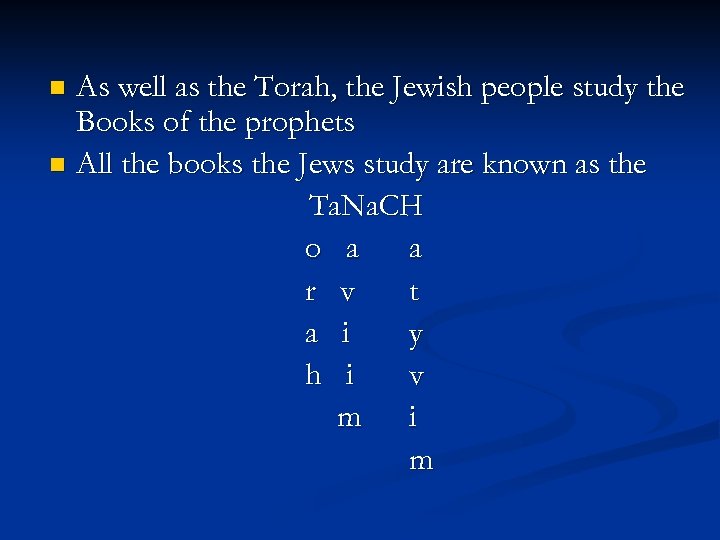 As well as the Torah, the Jewish people study the Books of the prophets n All the books the Jews study are known as the Ta. Na. CH o a a r v t a i y h i v m i m n
 Mitzvot A mitzvah (mitzvot in plural form) is a good deed. n The Jewish people are supposed to follow 613 mitzvot while non-Jews only have 7 that they are expected to follow (the 7 mitzvot bnai Noah). n The 7 mitzvot bnai Noah are an abridged version of the 10 Commandments n
 Conversion Jews do NOT try to convert people of other religions. (There are no Jewish missionaries. ) n Those who want to convert, are asked three times before they convert if they are sure of their decision. n
 Aleph-bet (the Hebrew Alphabet) The Hebrew Alphabet can be written in print or script. In Rashi (a commentary on the Torah), the alephbet looks different than the regular print or script. The Hebrew alphabet can also represent numbers.
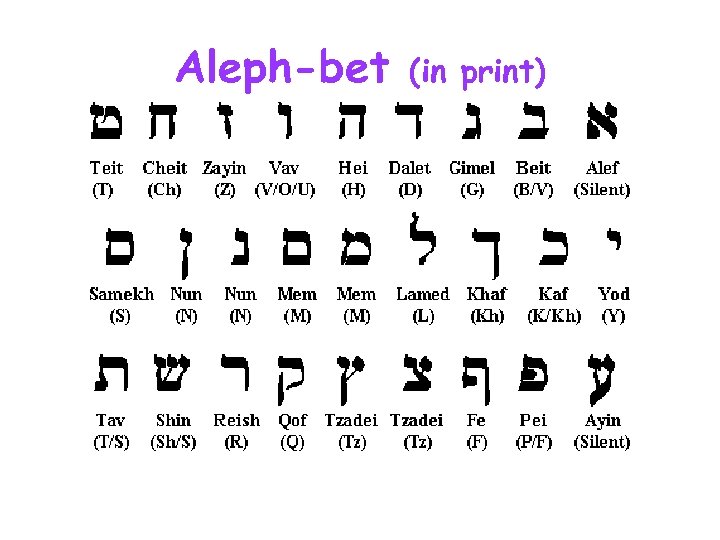 Aleph-bet (in print)
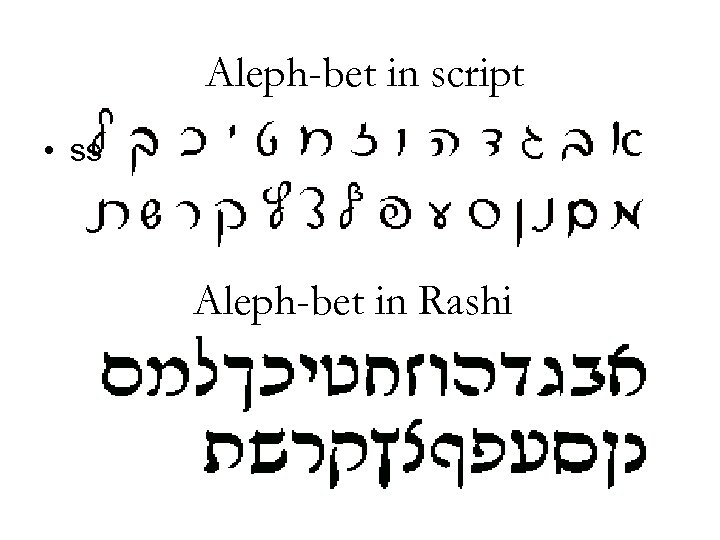 Aleph-bet in script • ss Aleph-bet in Rashi
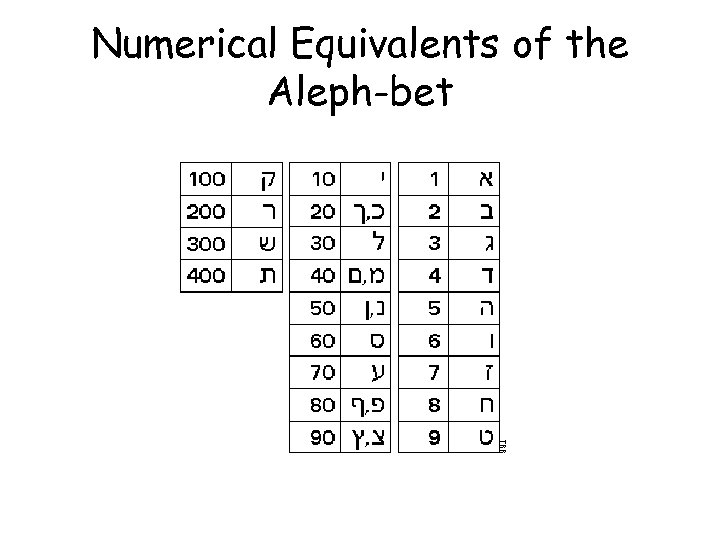 Numerical Equivalents of the Aleph-bet
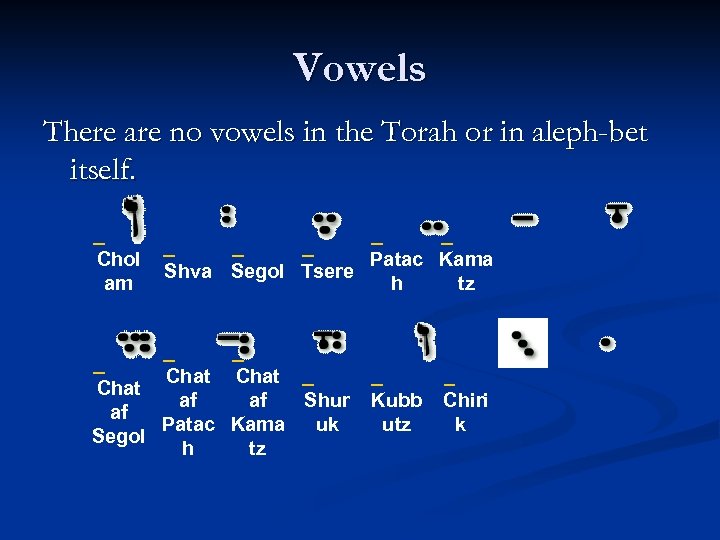 Vowels There are no vowels in the Torah or in aleph-bet itself. Chol Patac Kama Shva Segol Tsere am h tz Chat Shur Kubb af af af Patac Kama uk utz Segol h tz Chiri k
 Bar/Bat Mitzvah n At the age of 13 boys receive their bar mitzvah. They read from the Torah. At the age of 12, girls receive their bat mitzvah. Depending on the level of orthodoxy, different traditions are followed. n Orthodox – a party and speech Conservative/Reform – girls read from the Torah, as well as, have a party and say a speech
 Kippot A kippah (plural - kippot)( Hebrew: )כפה yarmulkais a thin, slightly-rounded skullcap , traditionally worn by observant Jewish men. n Some women in the egalitarian Conservative and Reform movements also wear it during services. n
 Modesty Males wear kippot as a sign of modesty n Women wear clothes that cover their knees, elbows and collar bone n n When they marry, women cover their hair
 Kosher Jewish people are only supposed to eat food that follow the rules of koshroot. n Jews can only eat meat of animals that chew its cud and have split hooves. The animal must be slaughtered in the quickest and most painless way possible. n
 Tefilah (Prayer) A siddur is a prayer book. n Males above the age of 13 wear tefillin while they pray. n Its better to pray at synagogue (AKA shul or temple) with a minyan (group of 10 men) n Jews pray three times a day: n Shacharit – in the morning n Minchah – in the afternoon n Ma’ariv – in the evening n
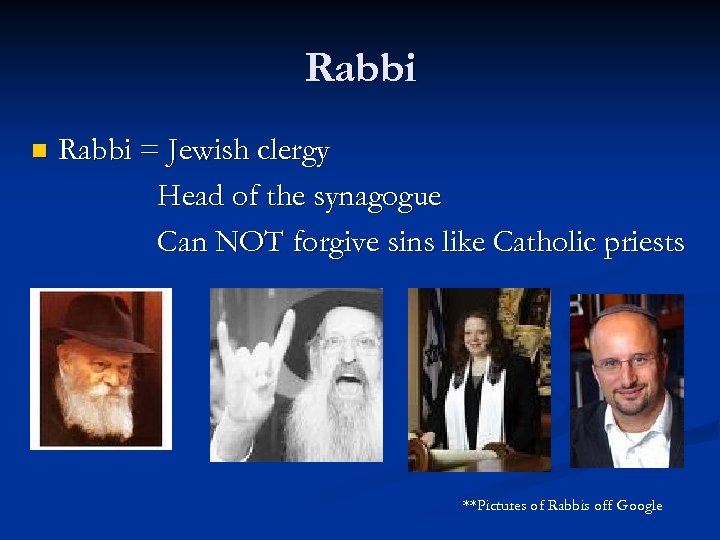 Rabbi n Rabbi = Jewish clergy Head of the synagogue Can NOT forgive sins like Catholic priests **Pictures of Rabbis off Google
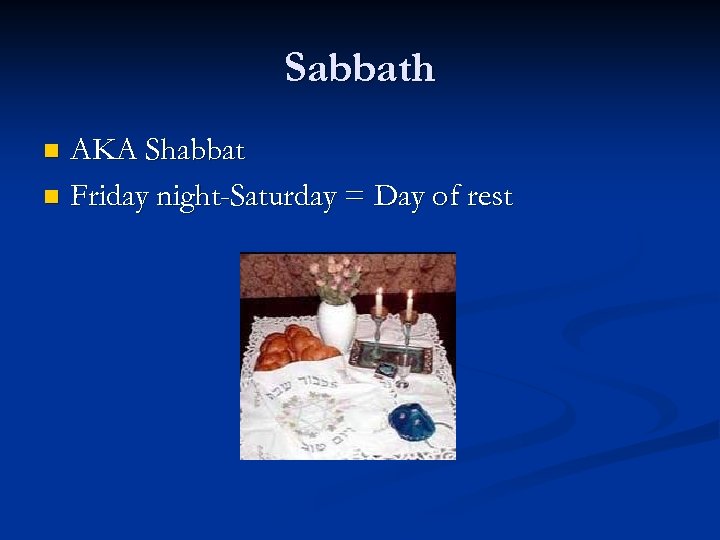 Sabbath AKA Shabbat n Friday night-Saturday = Day of rest n
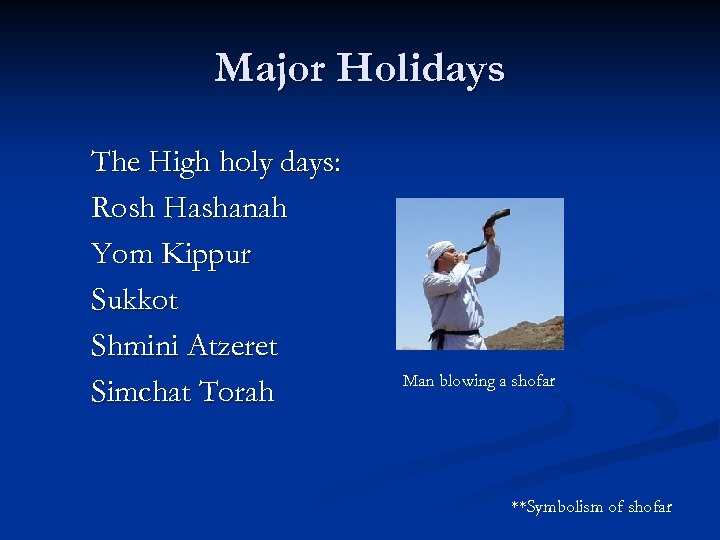 Major Holidays The High holy days: Rosh Hashanah Yom Kippur Sukkot Shmini Atzeret Simchat Torah Man blowing a shofar **Symbolism of shofar
 Major Holidays Other Important holidays include: n Pesach (Passover) n Shavuot – when the Jews received the Torah on Mt Sinai n Chanukah Even though Chanukah occurs earlier in the year, it occurred later in Jewish history
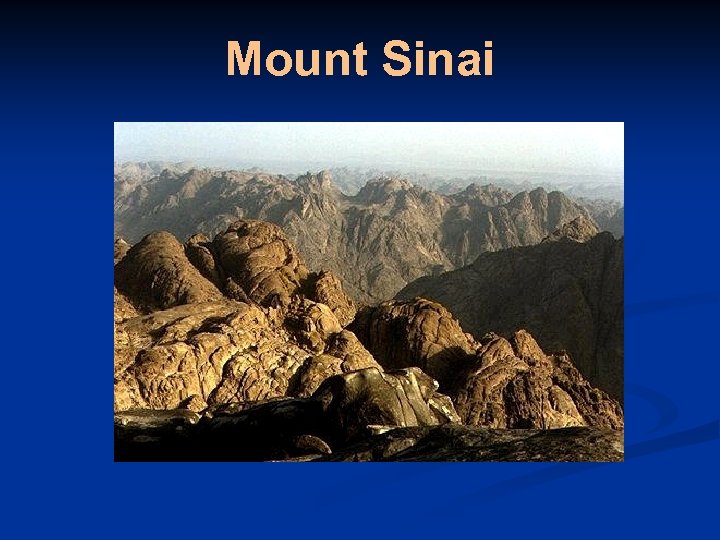 Mount Sinai
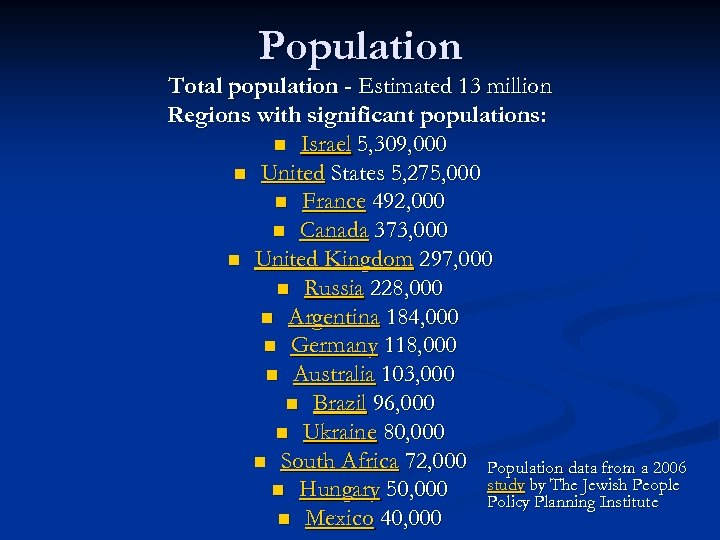 Population Total population - Estimated 13 million Regions with significant populations: n Israel 5, 309, 000 n United States 5, 275, 000 n France 492, 000 n Canada 373, 000 n United Kingdom 297, 000 n Russia 228, 000 n Argentina 184, 000 n Germany 118, 000 n Australia 103, 000 n Brazil 96, 000 n Ukraine 80, 000 n South Africa 72, 000 Population data from a 2006 study by The Jewish People n Hungary 50, 000 Policy Planning Institute n Mexico 40, 000
 Judaism is determined by maternity – if your mom is Jewish, you are Jewish n What sect of Judaism you are is determined by paternity – if your dad is Israeli, you are Sephardic but if your dad is European, you are Ashkenazi. n
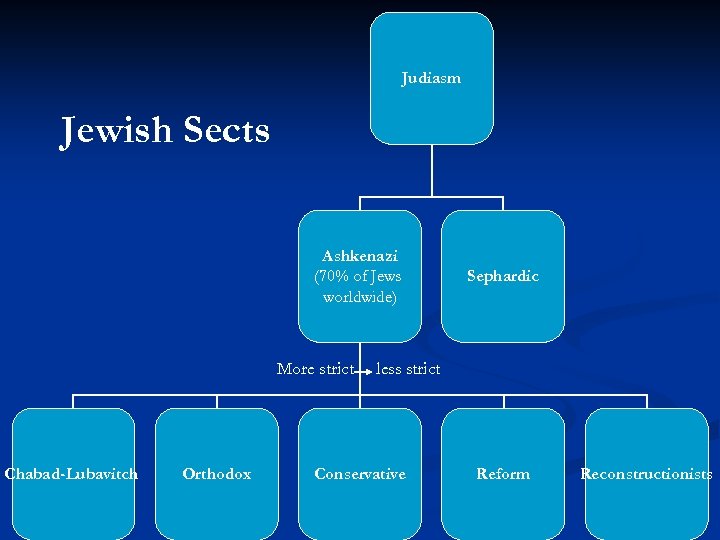 Judiasm Jewish Sects Ashkenazi (70% of Jews worldwide) More strict Chabad-Lubavitch Orthodox Sephardic less strict Conservative Reform Reconstructionists
 Israel Established May 14 th 1948 (5 Iyar 5708) n 1 st Prime Minister – David Ben Gurion n 1 st President - Chaim Weizmann n Current Prime Minister – Ehud Olmert n Current President - Shimon Peres n n (power wise) president of israel=vice president of U. S.
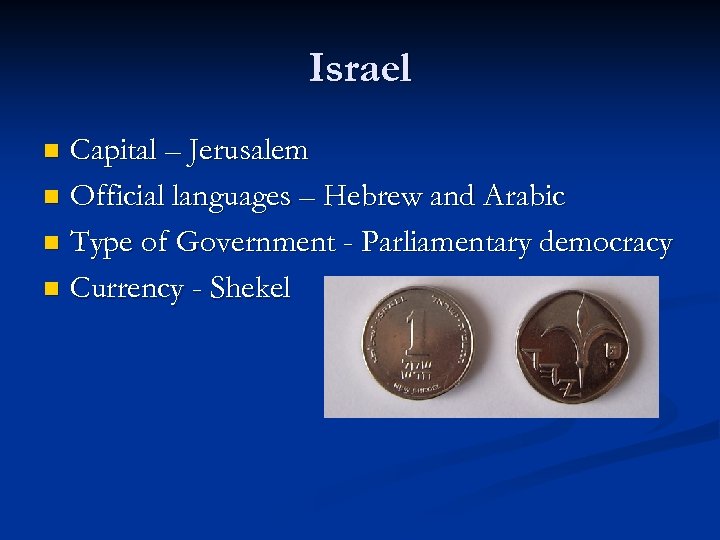 Israel Capital – Jerusalem n Official languages – Hebrew and Arabic n Type of Government - Parliamentary democracy n Currency - Shekel n
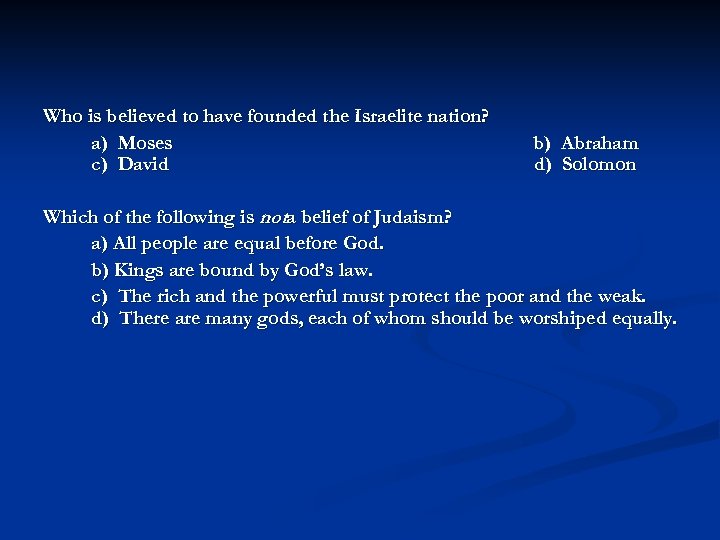 Who is believed to have founded the Israelite nation? a) Moses c) David b) Abraham d) Solomon Which of the following is nota belief of Judaism? a) All people are equal before God. b) Kings are bound by God’s law. c) The rich and the powerful must protect the poor and the weak. d) There are many gods, each of whom should be worshiped equally.