 Скачать презентацию JSE Liberty Staff Investment Challenge June 2011 Setting
0e8aa1e3bf9b93e2804f8f9769dfaee2.ppt
- Количество слайдов: 9




JSE/Liberty Staff Investment Challenge June 2011
Setting your Investment Strategy • Consider your goals and time horizon • Watch out for inflation and costs • Be honest about your risk tolerance: • Investing involves risk • No pain, no gain • Know what you know • What not to do: • Don't follow fads • Don't be satisfied • Don't lose money 2
Investing or Trading to Success? The primary difference between trading and investing is your time horizon. • What trading attempts to predict is the near term behaviour of other traders • Short-term traders attempt to buy low and sell high, not focusing as much on company fundamentals as long-term investors tend to do • Investors look to find and hold successful businesses and earn returns from earnings distributions 3
Understand how your emotions affect your investing Some common psychological traps to avoid: • Prospect theory (risk versus reward) • Loss Aversion (fear losing greater than appreciate gaining) • Status quo bias (tend not to change accepted behaviour) • Gambler's fallacy (observations are based on prior trials) • Anchoring (rely too heavily on one piece of information) • Confirmation Bias (find information supporting our view) 4
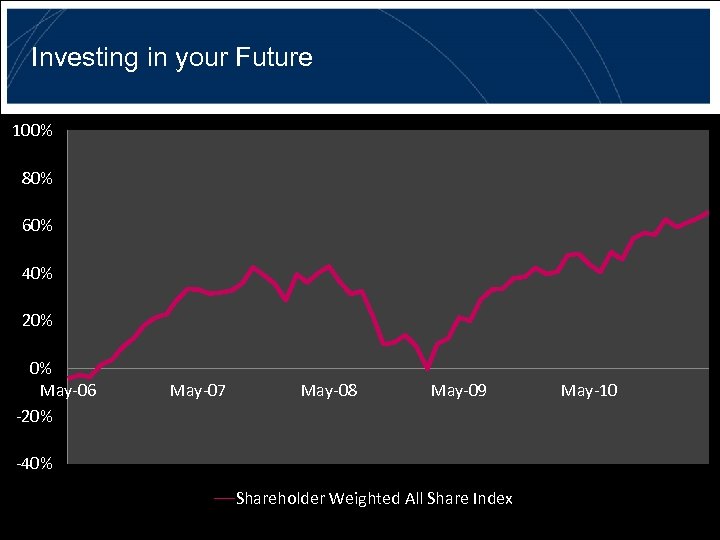
Investing in your Future 100% 80% 60% 40% 20% 0% May-06 -20% May-07 May-08 May-09 May-10 -40% Shareholder Weighted All Share Index 5
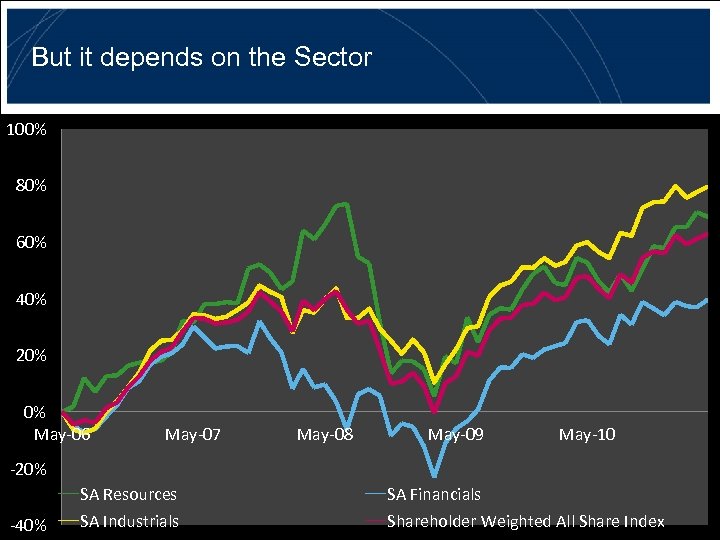
But it depends on the Sector 100% 80% 60% 40% 20% 0% May-06 May-07 May-08 May-09 May-10 -20% SA Resources -40% SA Financials SA Industrials Shareholder Weighted All Share Index 6
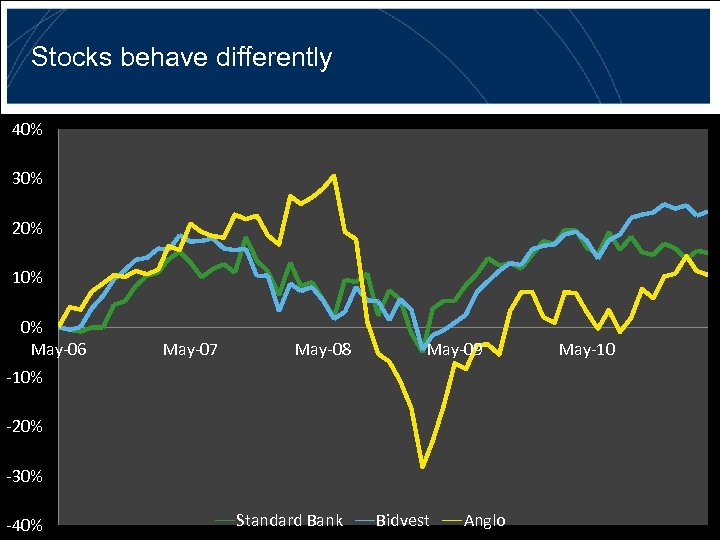
Stocks behave differently 40% 30% 20% 10% 0% May-06 May-07 May-08 May-09 May-10 -10% -20% -30% -40% Standard Bank Bidvest Anglo 7
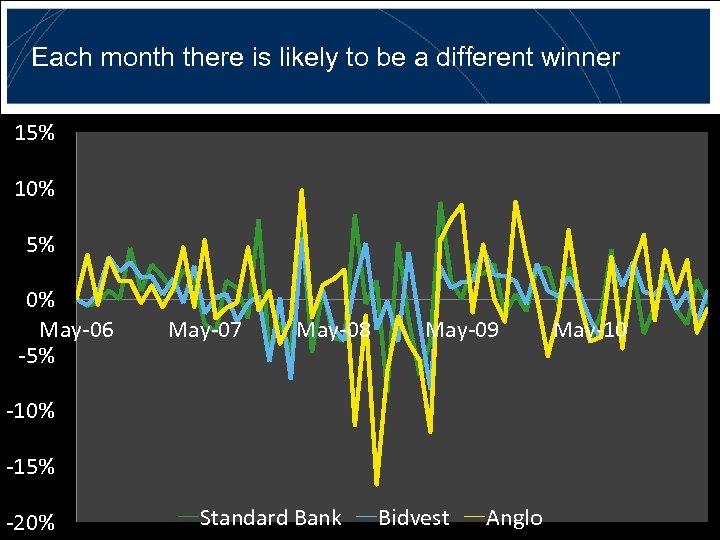
Each month there is likely to be a different winner 15% 10% 5% 0% May-06 -5% May-07 May-08 May-09 May-10 -10% -15% -20% Standard Bank Bidvest Anglo 8
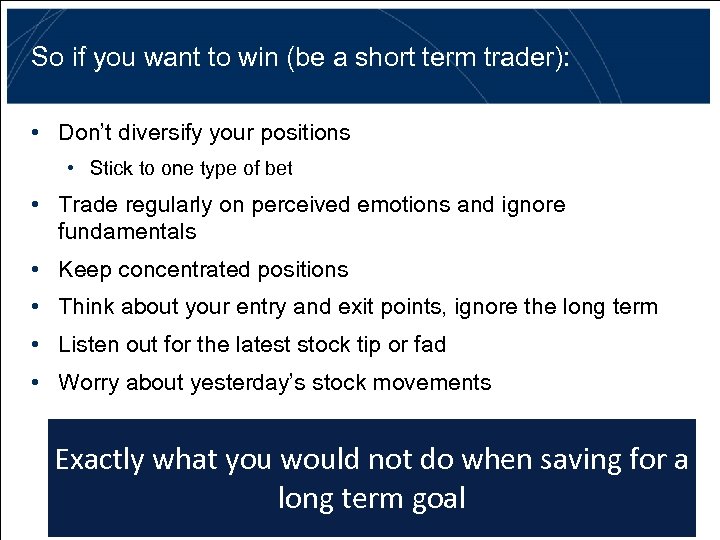
So if you want to win (be a short term trader): • Don’t diversify your positions • Stick to one type of bet • Trade regularly on perceived emotions and ignore fundamentals • Keep concentrated positions • Think about your entry and exit points, ignore the long term • Listen out for the latest stock tip or fad • Worry about yesterday’s stock movements Exactly what you would not do when saving for a long term goal 9
Скачать презентацию JSE Liberty Staff Investment Challenge June 2011 Setting
0e8aa1e3bf9b93e2804f8f9769dfaee2.ppt