


 Скачать презентацию JS 115 — Introduction to STRs I Pre
975e688e67500ef5dfe3fdf1c6063f02.ppt
- Количество слайдов: 36
 JS 115 - Introduction to STRs I. Pre class activities a. b. Review Assignments and Schedules Return and Review Exam 1 II. Learning Objectives (C 5) a. Short Tandem Repeats 1. Biology of STRs 2. Fluorescence and Detection formats 3. Stutter 4. Statistics and Interpretation b. Other markers: mt. DNA and Y STRs
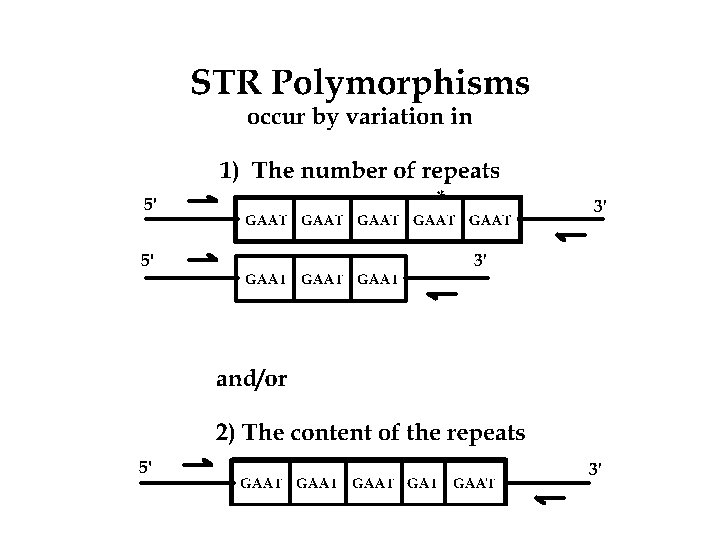
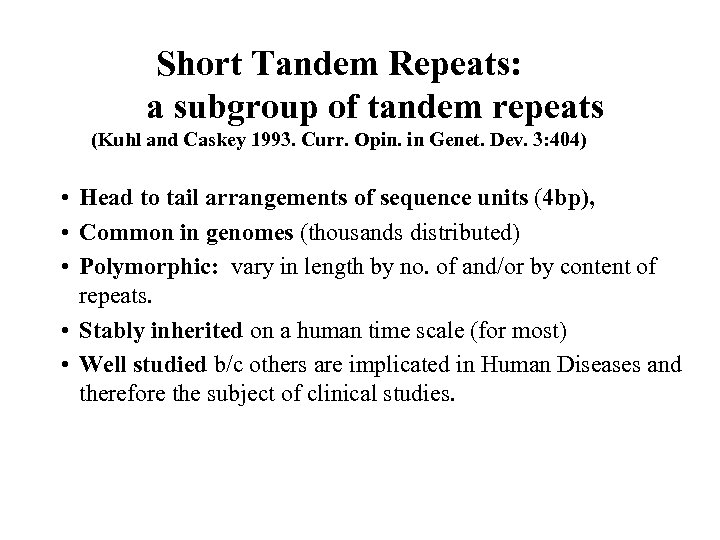 Short Tandem Repeats: a subgroup of tandem repeats (Kuhl and Caskey 1993. Curr. Opin. in Genet. Dev. 3: 404) • Head to tail arrangements of sequence units (4 bp), • Common in genomes (thousands distributed) • Polymorphic: vary in length by no. of and/or by content of repeats. • Stably inherited on a human time scale (for most) • Well studied b/c others are implicated in Human Diseases and therefore the subject of clinical studies.
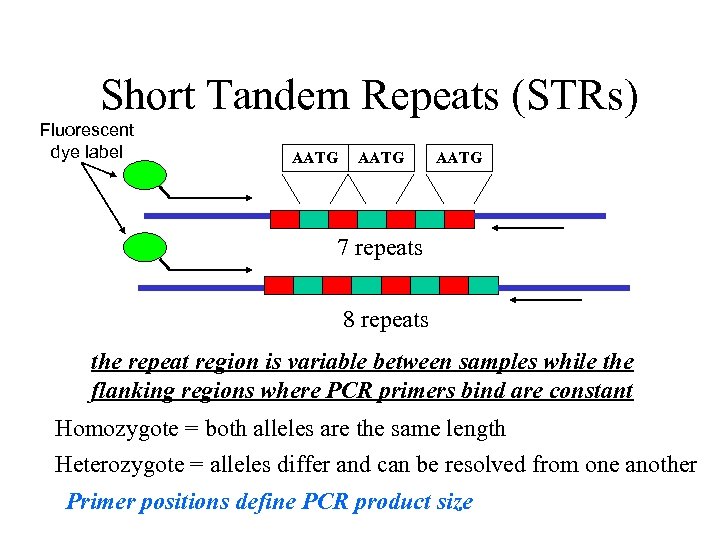 Short Tandem Repeats (STRs) Fluorescent dye label AATG 7 repeats 8 repeats the repeat region is variable between samples while the flanking regions where PCR primers bind are constant Homozygote = both alleles are the same length Heterozygote = alleles differ and can be resolved from one another Primer positions define PCR product size
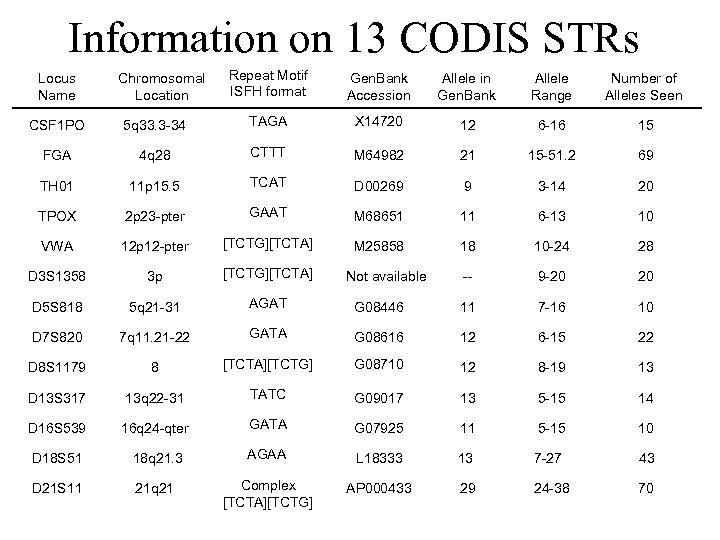 Information on 13 CODIS STRs Locus Name CSF 1 PO FGA TH 01 TPOX VWA D 3 S 1358 D 5 S 818 D 7 S 820 D 8 S 1179 D 13 S 317 D 16 S 539 D 18 S 51 D 21 S 11 Repeat Motif ISFH format Gen. Bank Accession Allele in Gen. Bank Allele Range Number of Alleles Seen 5 q 33. 3 -34 TAGA X 14720 12 6 -16 15 4 q 28 CTTT M 64982 21 15 -51. 2 69 11 p 15. 5 TCAT D 00269 9 3 -14 20 2 p 23 -pter GAAT M 68651 11 6 -13 10 12 p 12 -pter [TCTG][TCTA] M 25858 18 10 -24 28 3 p [TCTG][TCTA] -- 9 -20 20 5 q 21 -31 AGAT G 08446 11 7 -16 10 7 q 11. 21 -22 GATA G 08616 12 6 -15 22 8 [TCTA][TCTG] G 08710 12 8 -19 13 13 q 22 -31 TATC G 09017 13 5 -15 14 16 q 24 -qter GATA G 07925 11 5 -15 10 18 q 21. 3 AGAA L 18333 13 7 -27 43 21 q 21 Complex [TCTA][TCTG] AP 000433 29 24 -38 70 Chromosomal Location Not available
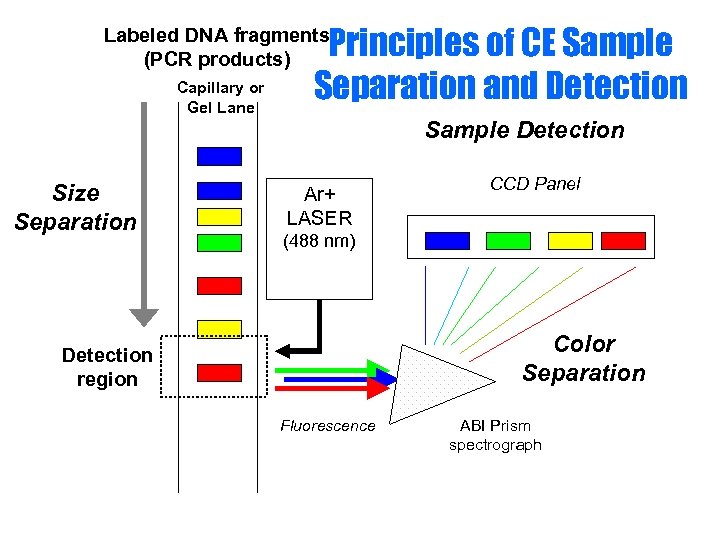
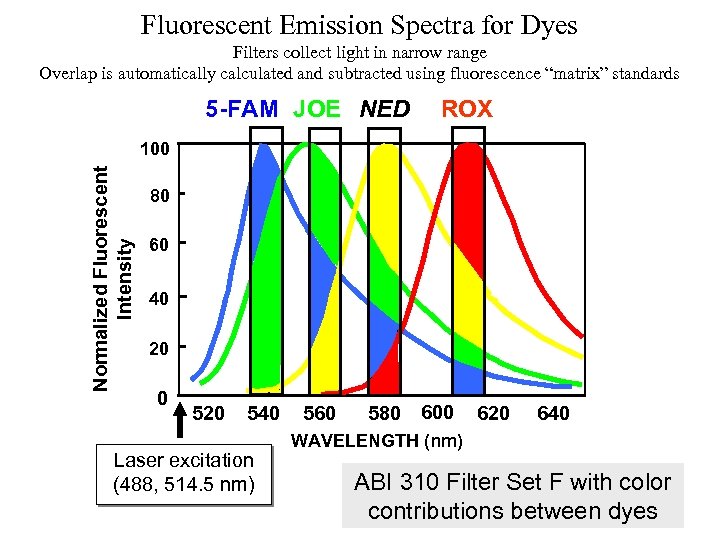 Fluorescent Emission Spectra for Dyes Filters collect light in narrow range Overlap is automatically calculated and subtracted using fluorescence “matrix” standards 5 -FAM JOE NED ROX Normalized Fluorescent Intensity 100 80 60 40 20 0 520 540 Laser excitation (488, 514. 5 nm) 560 580 600 620 640 WAVELENGTH (nm) ABI 310 Filter Set F with color contributions between dyes
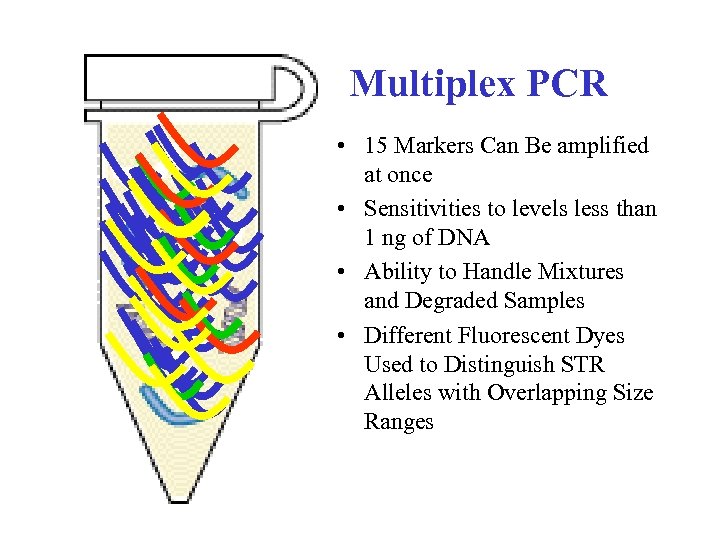 Multiplex PCR • 15 Markers Can Be amplified at once • Sensitivities to levels less than 1 ng of DNA • Ability to Handle Mixtures and Degraded Samples • Different Fluorescent Dyes Used to Distinguish STR Alleles with Overlapping Size Ranges
 Detection Formats • Gel Electrophoresis • Capillary Electrophoresis • Microarrays (Nanogen) • MALDITOF-MS (Sequenome)
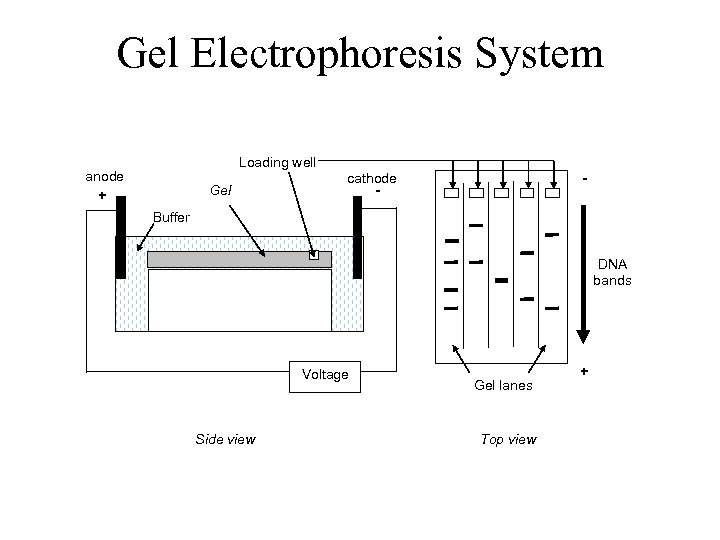 Gel Electrophoresis System Loading well anode + Gel - cathode - Buffer DNA bands Voltage Side view Gel lanes Top view +
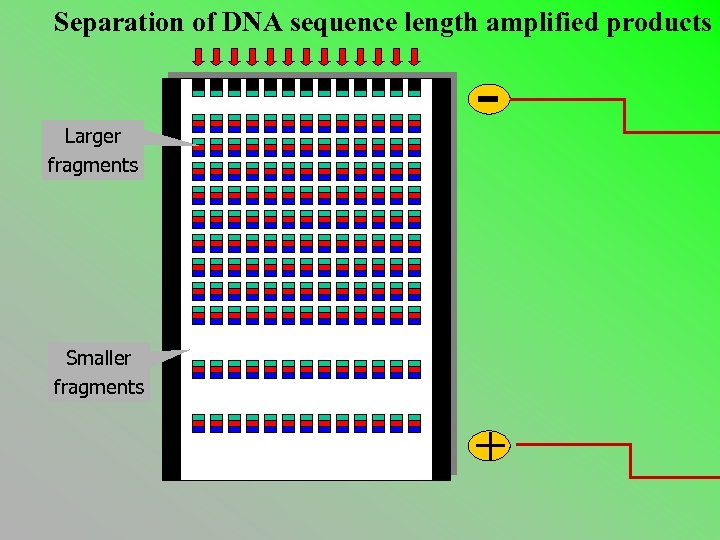 Separation of DNA sequence length amplified products Larger fragments - Smaller fragments +
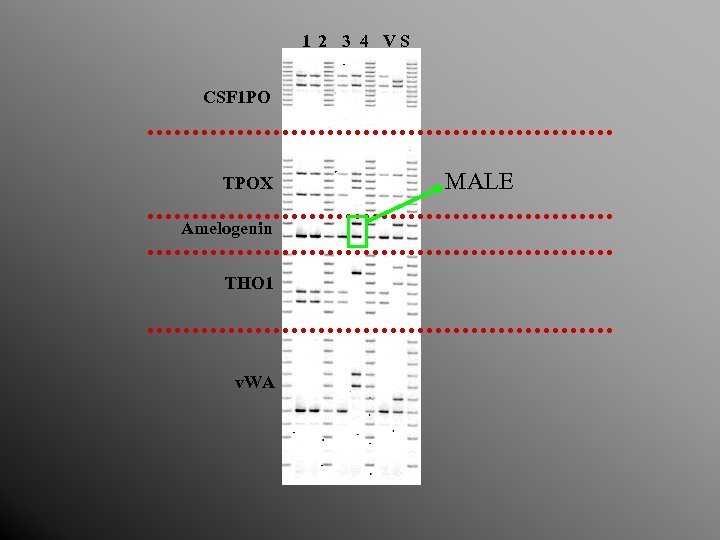
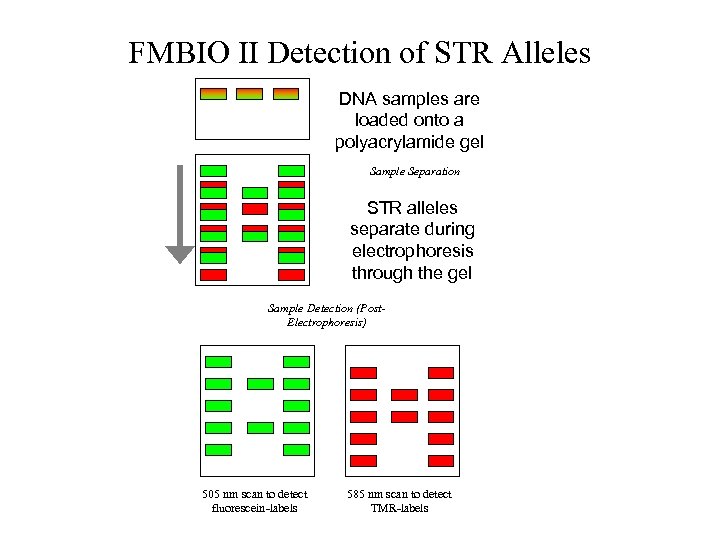 FMBIO II Detection of STR Alleles DNA samples are loaded onto a polyacrylamide gel Sample Separation STR alleles separate during electrophoresis through the gel Sample Detection (Post. Electrophoresis) 505 nm scan to detect fluorescein-labels 585 nm scan to detect TMR-labels
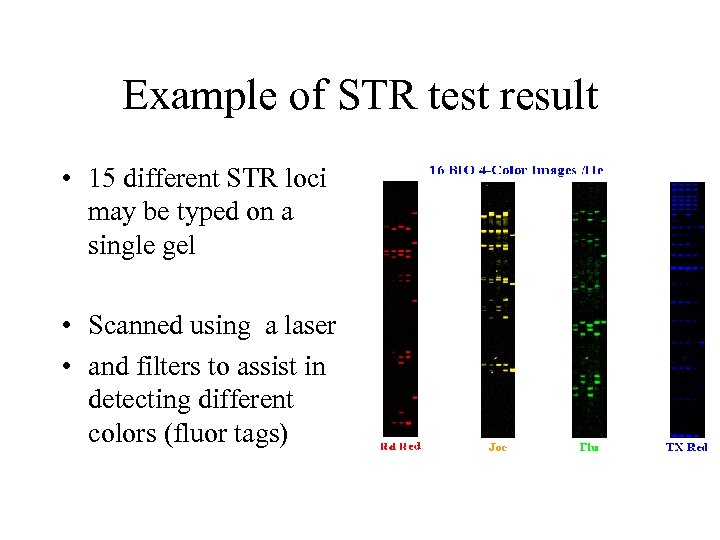 Example of STR test result • 15 different STR loci may be typed on a single gel • Scanned using a laser • and filters to assist in detecting different colors (fluor tags)
 1 2 3 4 VS CSF 1 PO TPOX Amelogenin THO 1 v. WA MALE
 Capillary Electrophoresis System Laser Capillary filled with polymer solution (cathode) 5 -20 k. V Inlet Buffer Sample tray moves Sample tray automatically beneath the cathode end of the capillary to deliver each sample in succession Detection window + (anode) Outlet Buffer Data Acquisition
 Principles of CE Sample Separation and Detection Labeled DNA fragments (PCR products) Capillary or Gel Lane Sample Detection Size Separation Ar+ LASER CCD Panel (488 nm) Color Separation Detection region Fluorescence ABI Prism spectrograph
 Results are interpreted and printed Peaks Electropherogram: ABI Prism 310 Genetic Analyzer
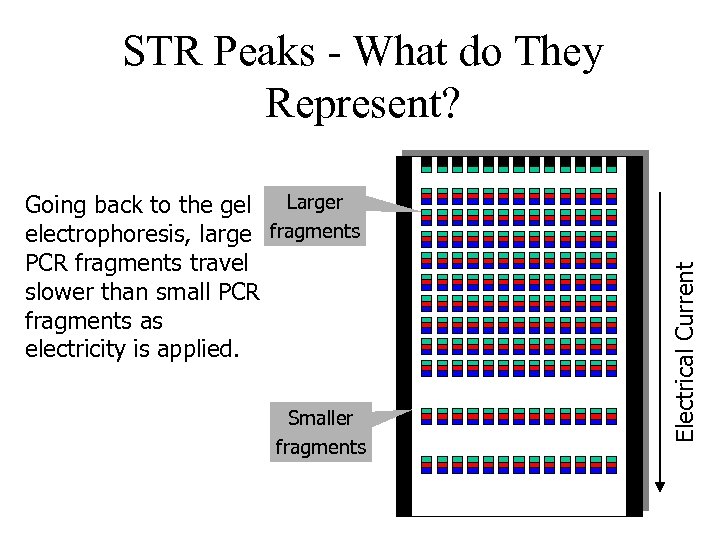 Going back to the gel Larger electrophoresis, large fragments PCR fragments travel slower than small PCR fragments as electricity is applied. Smaller fragments Electrical Current STR Peaks - What do They Represent?
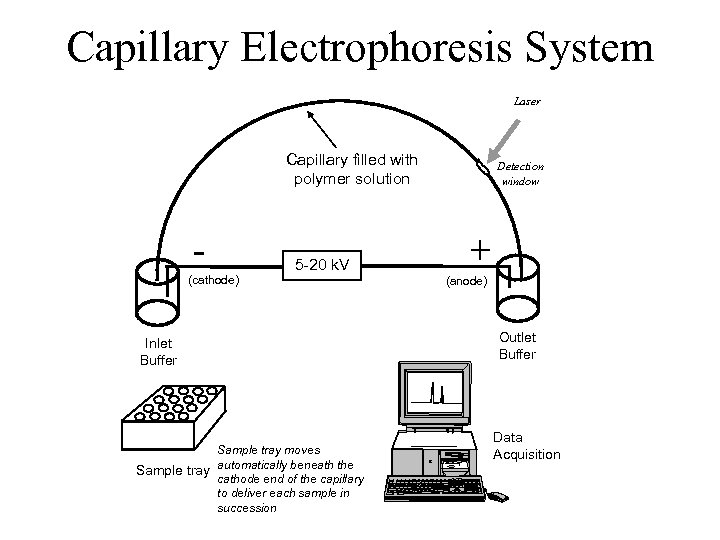
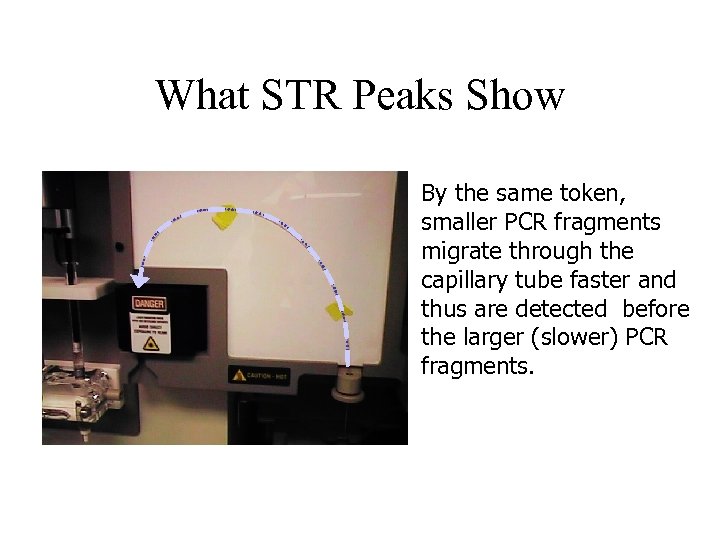 What STR Peaks Show By the same token, smaller PCR fragments migrate through the capillary tube faster and thus are detected before the larger (slower) PCR fragments.
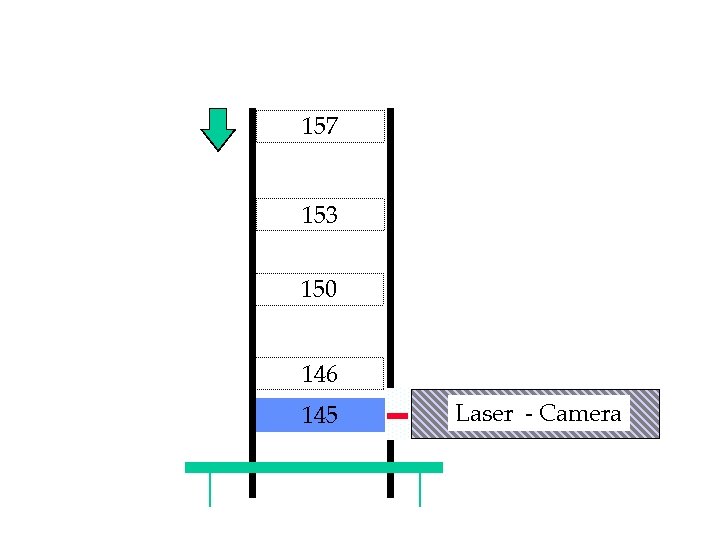 157 153 150 146 145 Laser - Camera
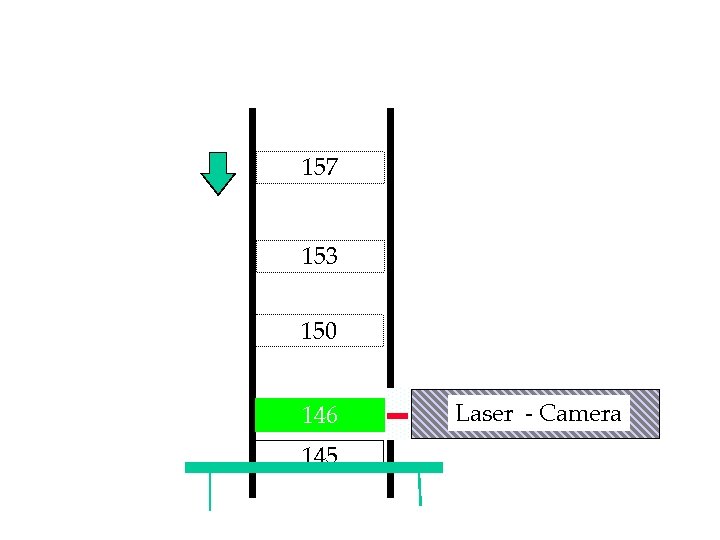 157 153 150 146 145 Laser - Camera
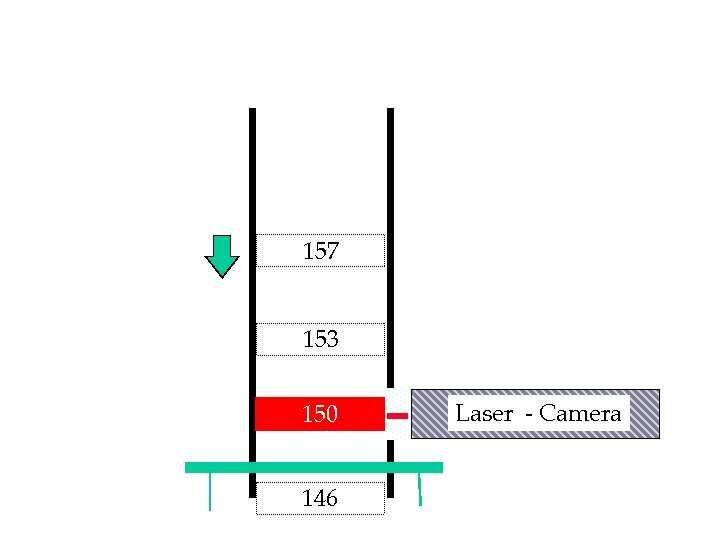 157 153 150 146 Laser - Camera
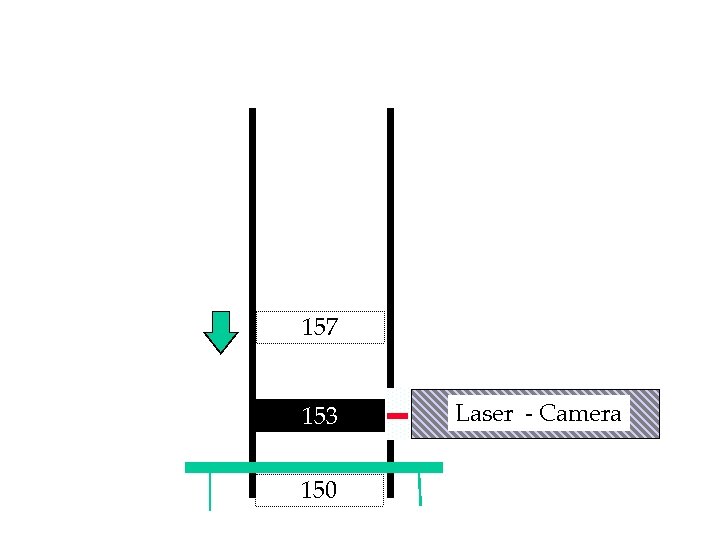 157 153 150 Laser - Camera
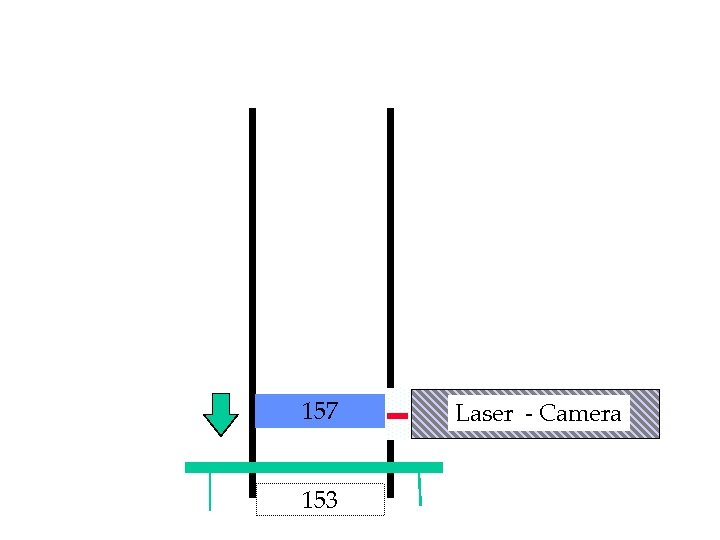 157 153 Laser - Camera
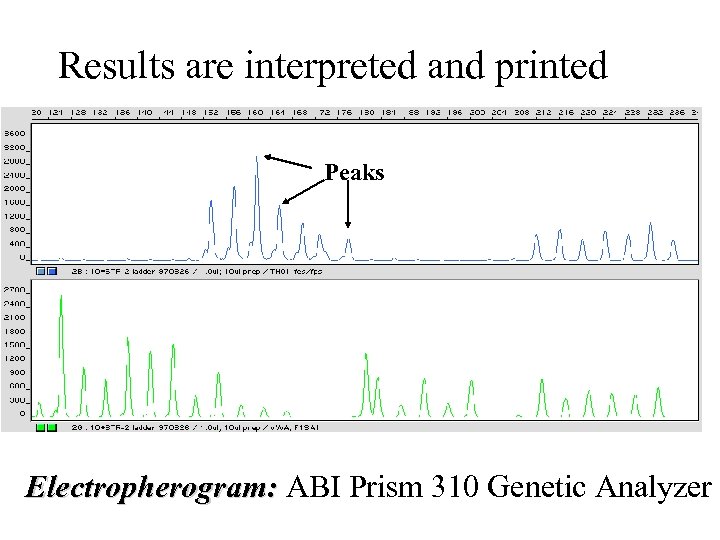
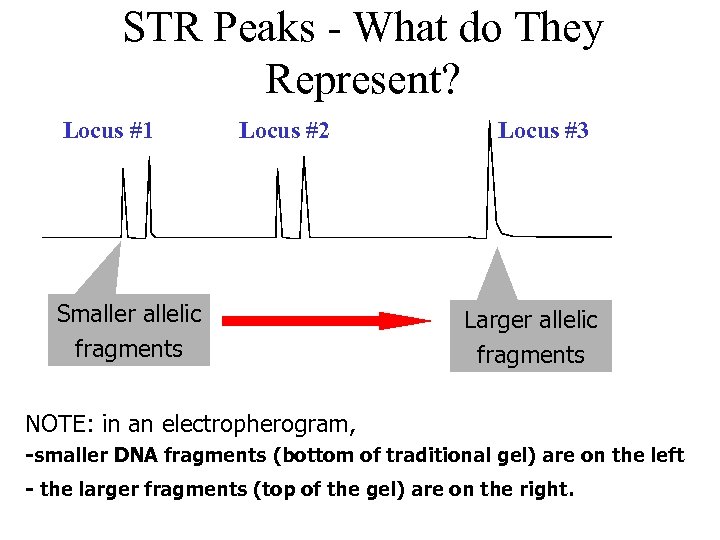 STR Peaks - What do They Represent? Locus #1 Locus #2 Smaller allelic fragments Locus #3 Larger allelic fragments NOTE: in an electropherogram, -smaller DNA fragments (bottom of traditional gel) are on the left - the larger fragments (top of the gel) are on the right.
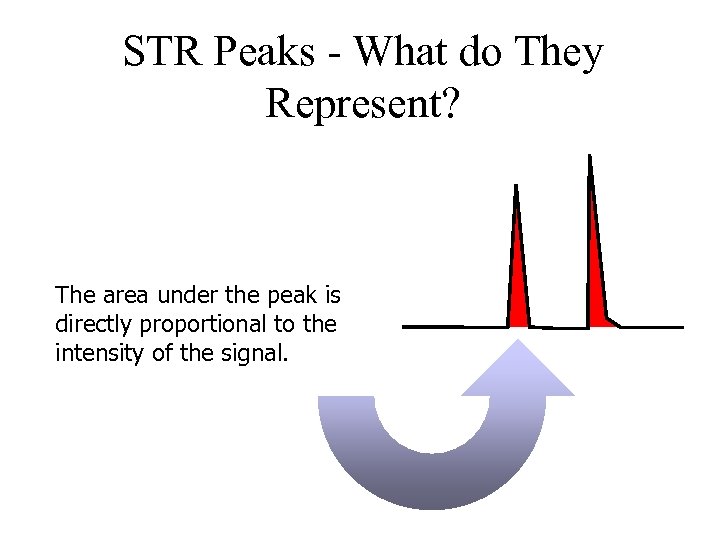 STR Peaks - What do They Represent? The area under the peak is directly proportional to the intensity of the signal.
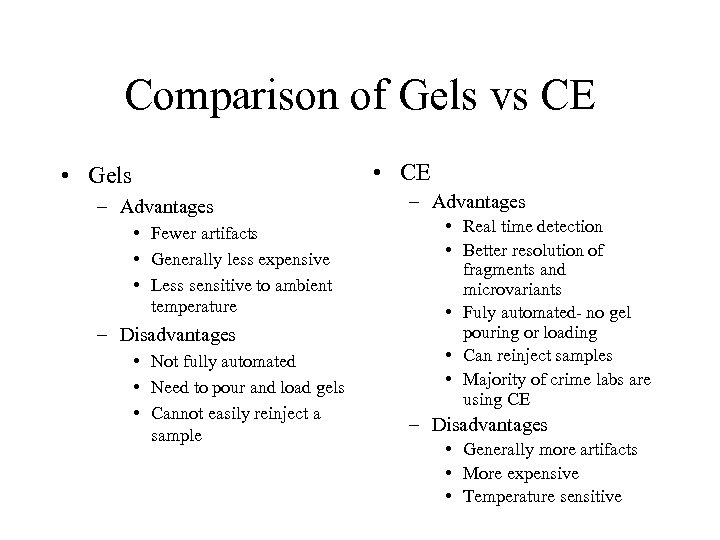 Comparison of Gels vs CE • CE • Gels – Advantages • Fewer artifacts • Generally less expensive • Less sensitive to ambient temperature – Disadvantages • Not fully automated • Need to pour and load gels • Cannot easily reinject a sample – Advantages • Real time detection • Better resolution of fragments and microvariants • Fuly automated- no gel pouring or loading • Can reinject samples • Majority of crime labs are using CE – Disadvantages • Generally more artifacts • More expensive • Temperature sensitive
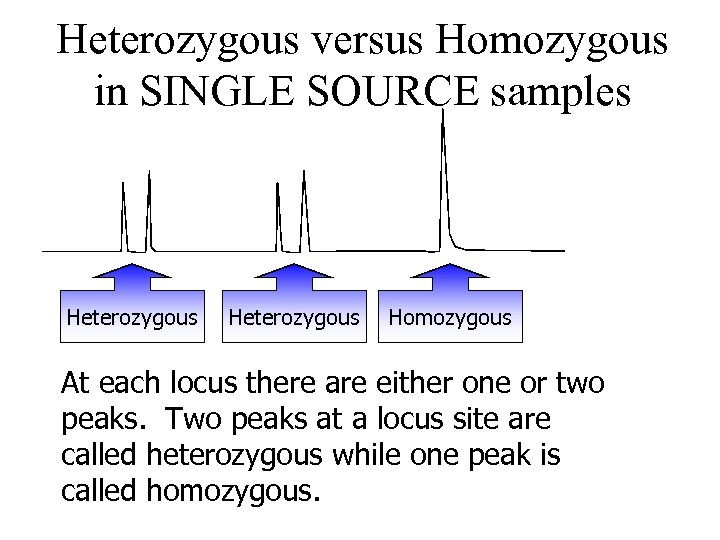 Heterozygous versus Homozygous in SINGLE SOURCE samples Heterozygous Locus 1 Heterozygous Locus 2 Homozygous Locus 3 At each locus there are either one or two peaks. Two peaks at a locus site are called heterozygous while one peak is called homozygous.
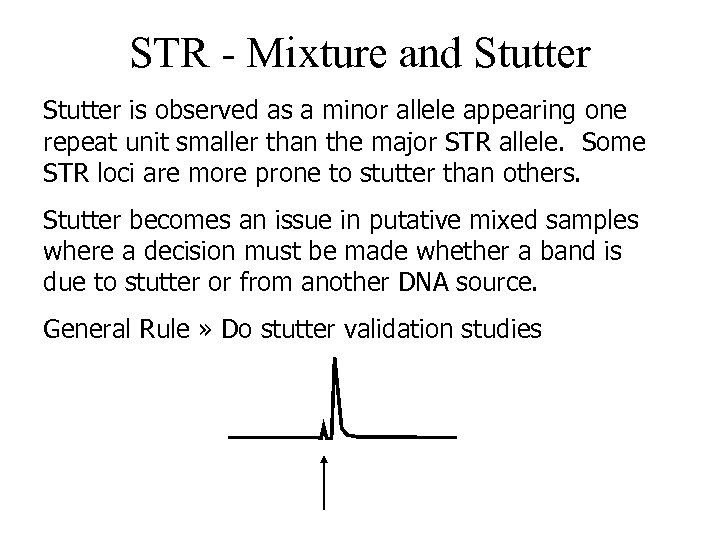 STR - Mixture and Stutter is observed as a minor allele appearing one repeat unit smaller than the major STR allele. Some STR loci are more prone to stutter than others. Stutter becomes an issue in putative mixed samples where a decision must be made whether a band is due to stutter or from another DNA source. General Rule » Do stutter validation studies
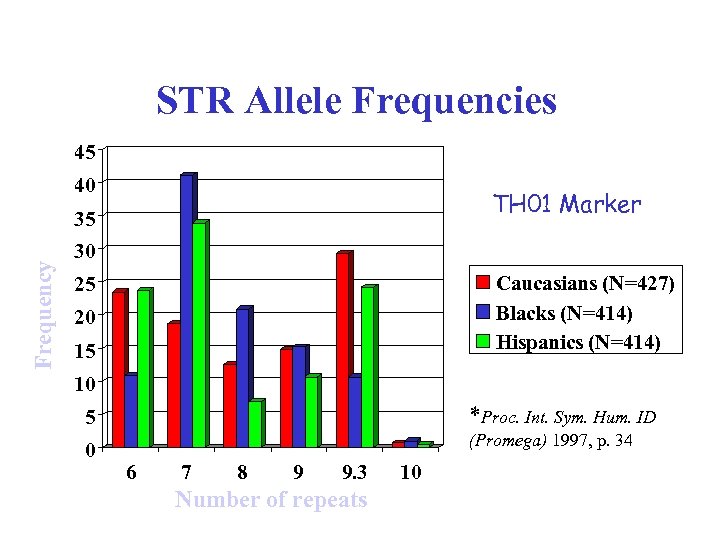 STR Allele Frequencies 45 40 TH 01 Marker Frequency 35 30 Caucasians (N=427) Blacks (N=414) Hispanics (N=414) 25 20 15 10 5 *Proc. Int. Sym. Hum. ID 0 (Promega) 1997, p. 34 6 7 8 9 9. 3 Number of repeats 10
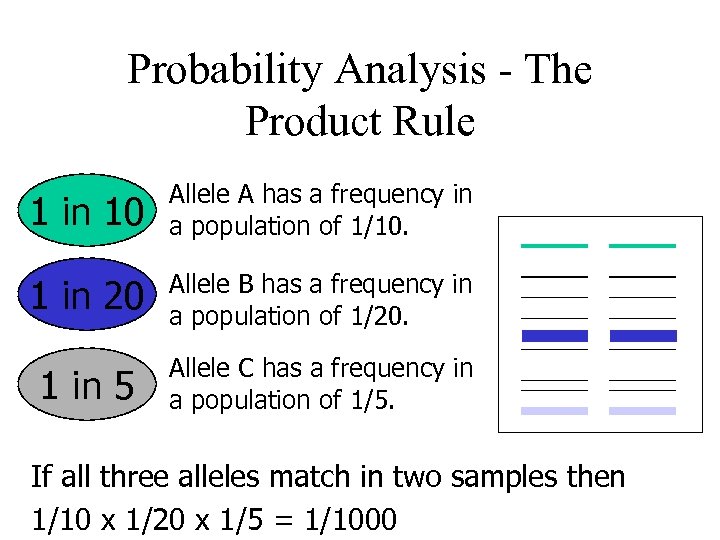 Probability Analysis - The Product Rule 1 in 10 Allele A has a frequency in a population of 1/10. 1 in 20 Allele B has a frequency in a population of 1/20. 1 in 5 Allele C has a frequency in a population of 1/5. If all three alleles match in two samples then 1/10 x 1/20 x 1/5 = 1/1000
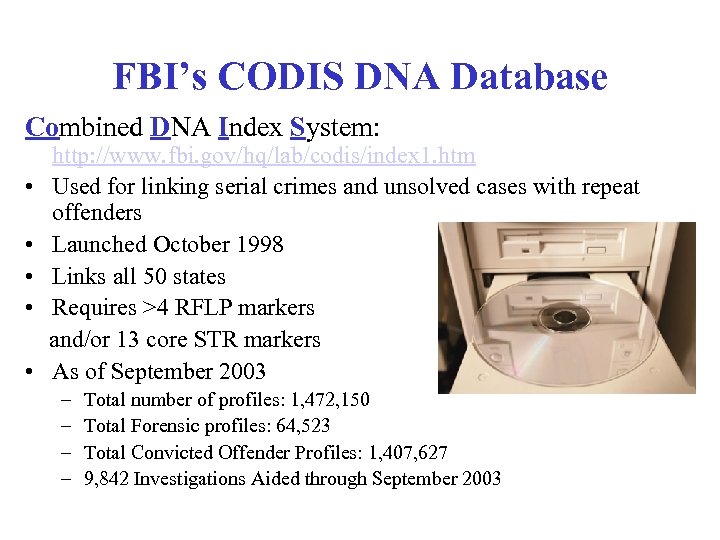 FBI’s CODIS DNA Database Combined DNA Index System: • • • http: //www. fbi. gov/hq/lab/codis/index 1. htm Used for linking serial crimes and unsolved cases with repeat offenders Launched October 1998 Links all 50 states Requires >4 RFLP markers and/or 13 core STR markers As of September 2003 – – Total number of profiles: 1, 472, 150 Total Forensic profiles: 64, 523 Total Convicted Offender Profiles: 1, 407, 627 9, 842 Investigations Aided through September 2003
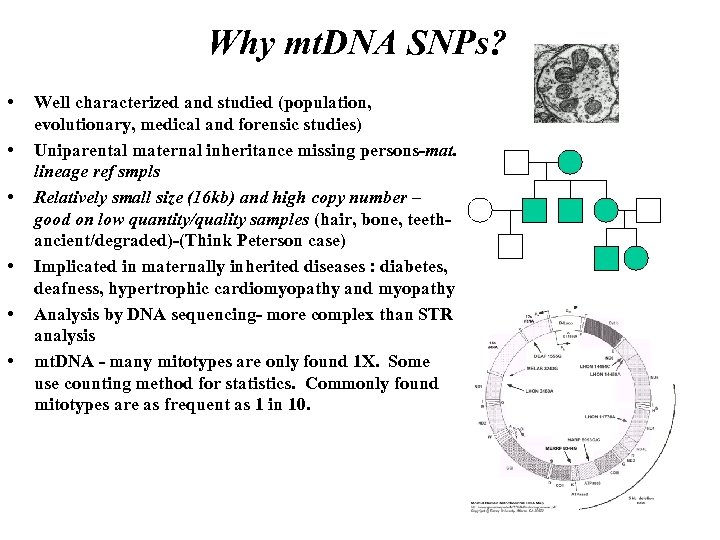 Why mt. DNA SNPs? • • • Well characterized and studied (population, evolutionary, medical and forensic studies) Uniparental maternal inheritance missing persons-mat. lineage ref smpls Relatively small size (16 kb) and high copy number – good on low quantity/quality samples (hair, bone, teethancient/degraded)-(Think Peterson case) Implicated in maternally inherited diseases : diabetes, deafness, hypertrophic cardiomyopathy and myopathy Analysis by DNA sequencing- more complex than STR analysis mt. DNA - many mitotypes are only found 1 X. Some use counting method for statistics. Commonly found mitotypes are as frequent as 1 in 10.
 Why Y? • Applications – Forensic investigations (98% of violent crime by men) – Biodefense- Male terrorist profiling – Genealogical and Evolutionary studies • Advantages to Human Identity Testing – Male component isolated without differential extraction – Paternal lineages – Some cases with no spermatazoa- use Y STRs – Assess number of male donors/contributors – Same analysis as autosomal STRs • Challenges – Y STR kits not as abundant- now 12 plexes available in 2003 – Some Y Haplogroups are common – Population specific haplotying needed for new markers
 Summary 1 • • • Review of DNA Function and Structure • Deoxyribo. Nucleic Acid : blueprints of life 3 main functions: RIM » 1) Replication » 2) Information Storage » 3) Mutation for variation • Central Dogma information flow--------> DNA------->RNA------>protein transcription translation Function: – RIM- Pacific RIM- Replication-Information-Mutation – Information Storage- Phone Number analogy-Sequence Structure: – PBS- The only station Sierra and Gabriel can watch – Asian Guys Can Teach: AGCT – DNA is where its AT – DNA velcro (David Letterman
 Review of PCR • Review of PCR – PCR is repeated rounds of template directed, DNA replication • d. NTPs added to 3’OH of a primer • Components are template, primers, d. NTPs, Mg++ and taq polymerase. – Contamination prevention • separation of pre and post PCR areas, use of dedicated equipment, aerosol pipette tips and controls, process one sample at a time, separate reference samples from evidence, avoid splashing, wear protective gear and reagent prep care. – PCR is useful on degraded DNA. Due to specificity of primers, will not amplify non human DNA – Pitfalls- inhibitors, primer binding site mutations (rare), contamination
 Review of STRs Intro to STRs – Head to tail arrangements 4 bp repeat units – Polymorphic, Common, Stably Inherited, Implicated in Diseases – Advantages- Discrete, Small- less prone to PA, Useful on highly degraded DNA, Ability to Multiplex , Provide powerful discrimination. – STR biological artifacts- stutter, adenylation, microvariants, null alleles, mutations – Multiplexing STR loci provide powerful discrimination