


 Скачать презентацию Jonathan Swift 1667 -1745 Name Arzamastsev Nick
Jonathan Swift (1667-1745).pptx
- Количество слайдов: 19
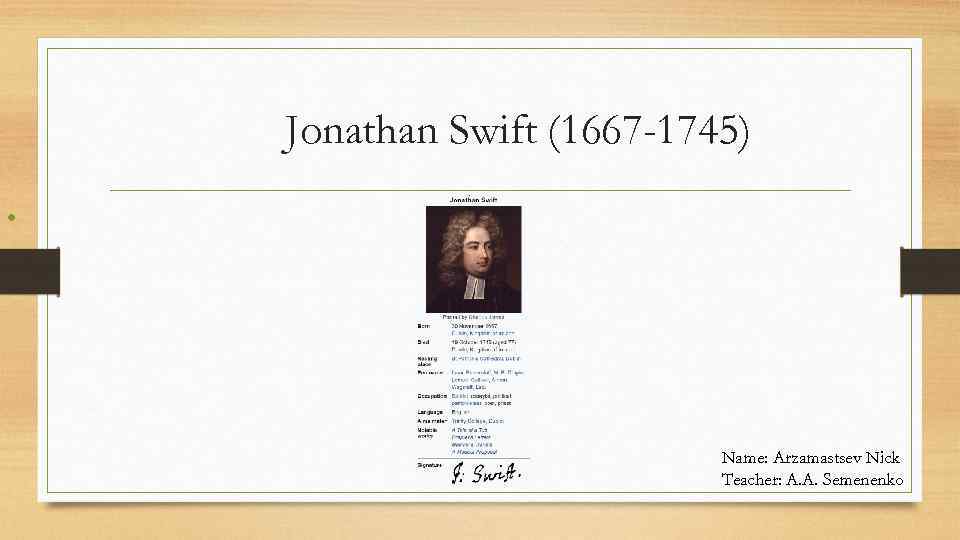 Jonathan Swift (1667 -1745) • Name: Arzamastsev Nick Teacher: A. A. Semenenko
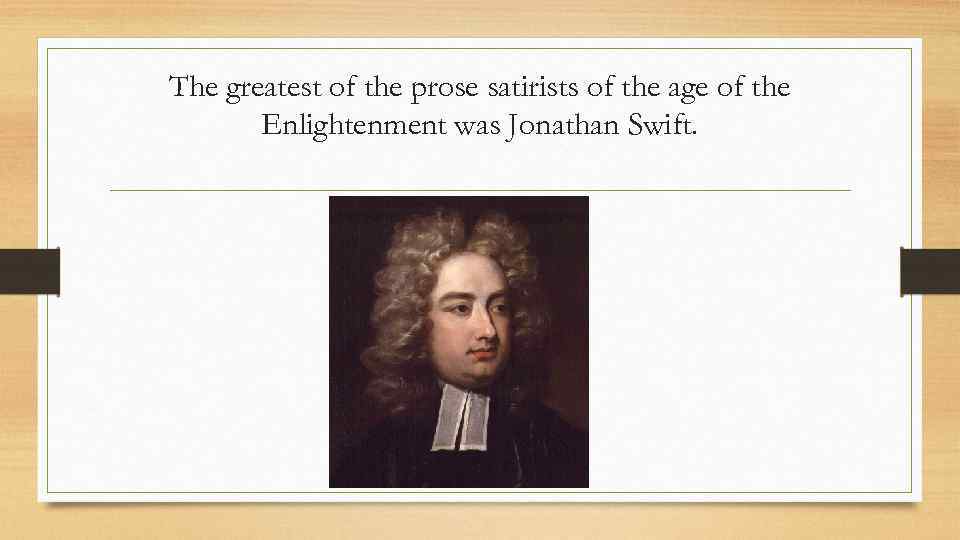 The greatest of the prose satirists of the age of the Enlightenment was Jonathan Swift.
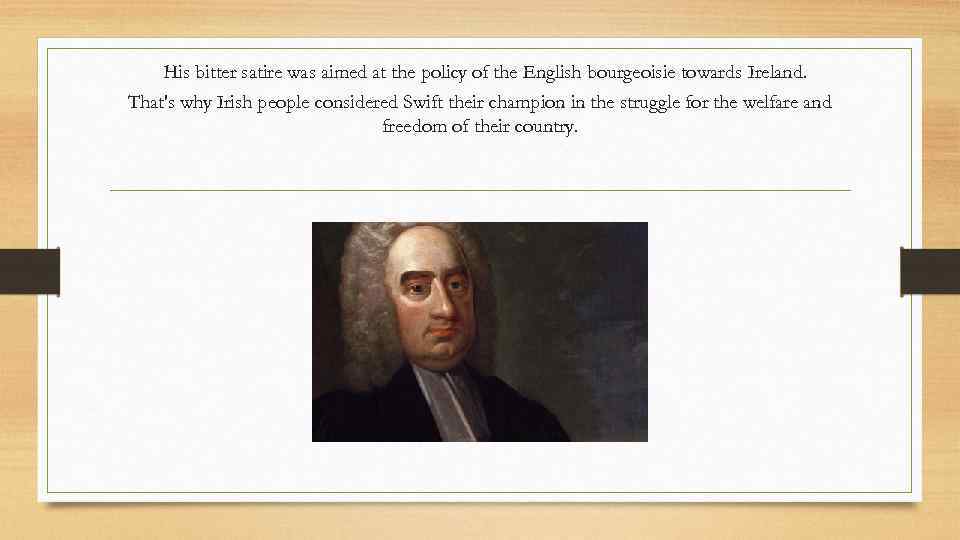 His bitter satire was aimed at the policy of the English bourgeoisie towards Ireland. That's why Irish people considered Swift their champion in the struggle for the welfare and freedom of their country.
 Jonathan Swift was born in Dublin, but he came from an Eng lish family. His father died before he was born. The boy saw little of his mother's care: she had to go back to her native town.
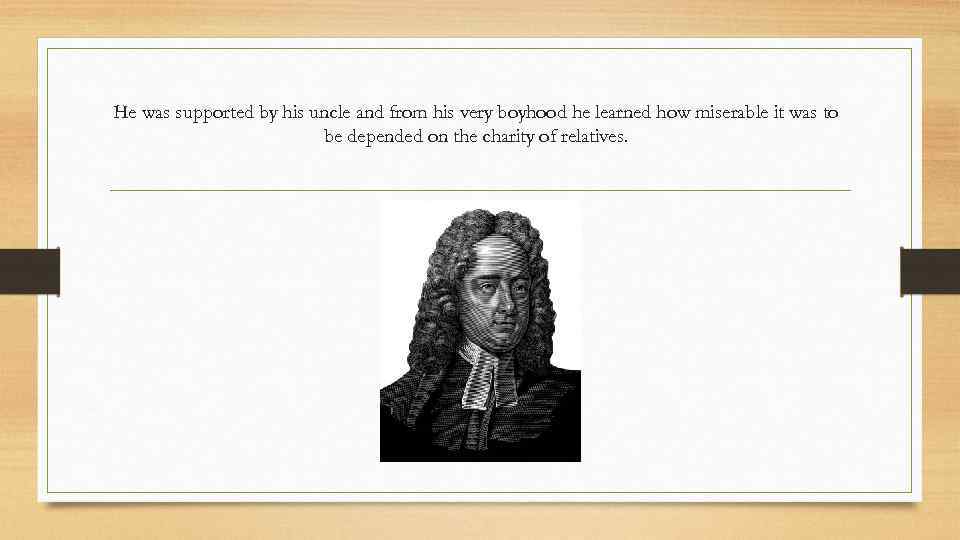 He was supported by his uncle and from his very boyhood he learned how miserable it was to be depended on the charity of relatives.
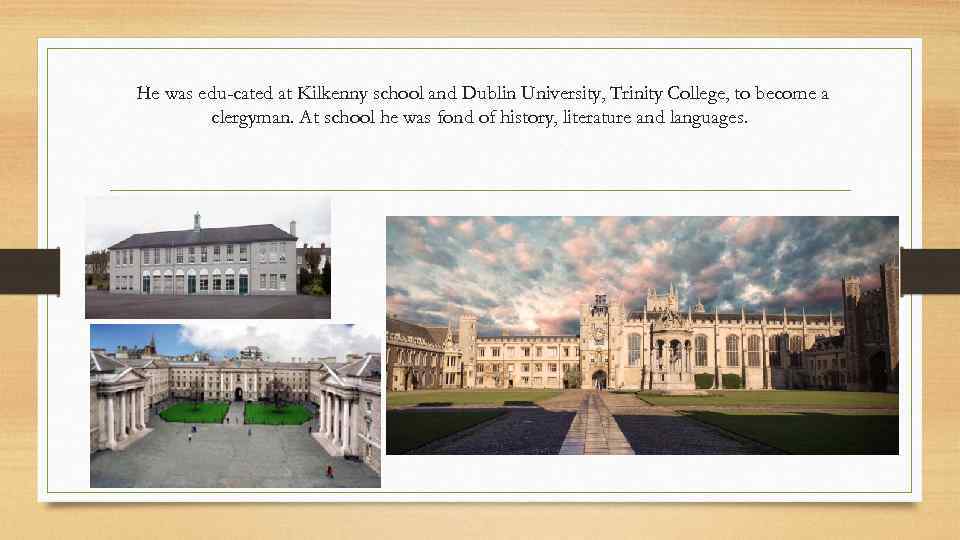 He was edu cated at Kilkenny school and Dublin University, Trinity College, to become a clergyman. At school he was fond of history, literature and languages.
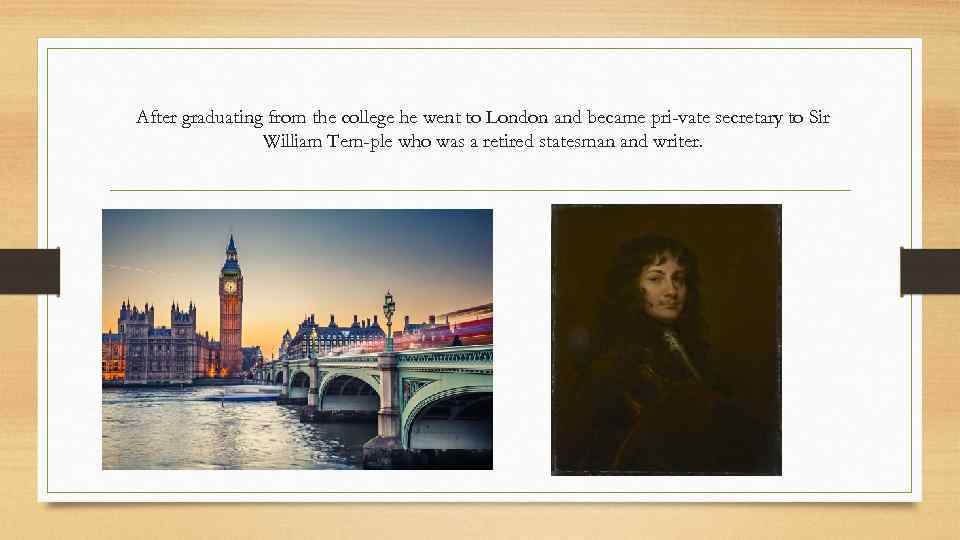 After graduating from the college he went to London and became pri vate secretary to Sir William Tem ple who was a retired statesman and writer.
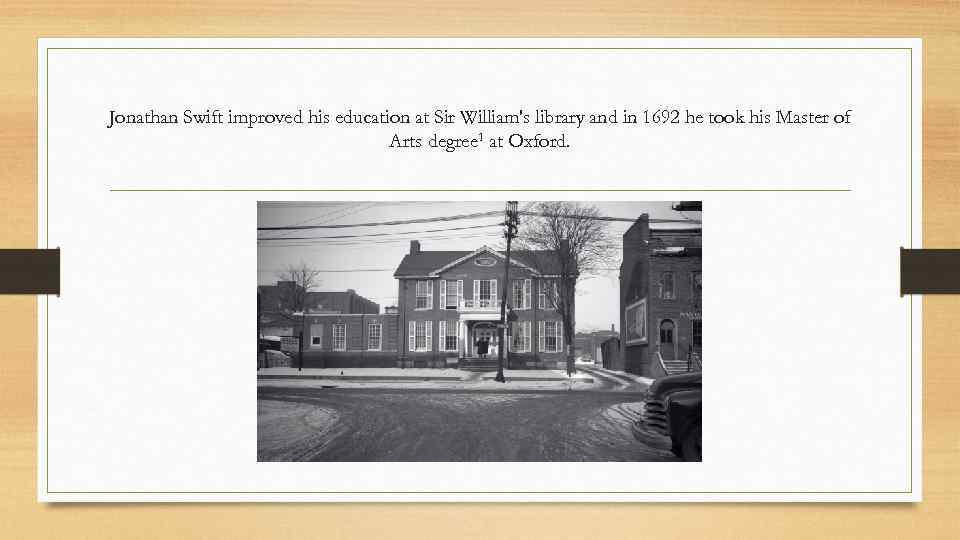 Jonathan Swift improved his education at Sir William's library and in 1692 he took his Master of Arts degree 1 at Oxford.
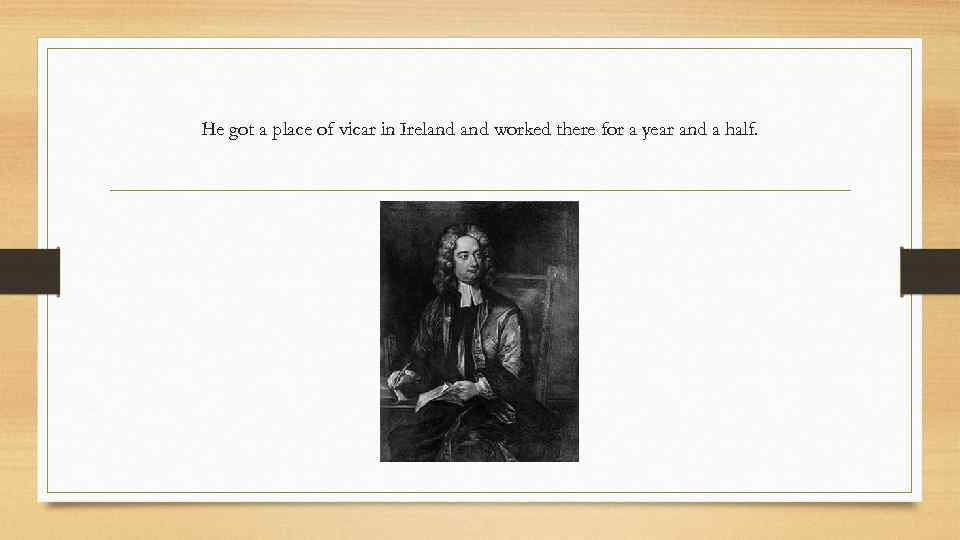 He got a place of vicar in Ireland worked there for a year and a half.
 He wrote much and burned most of what he wrote.
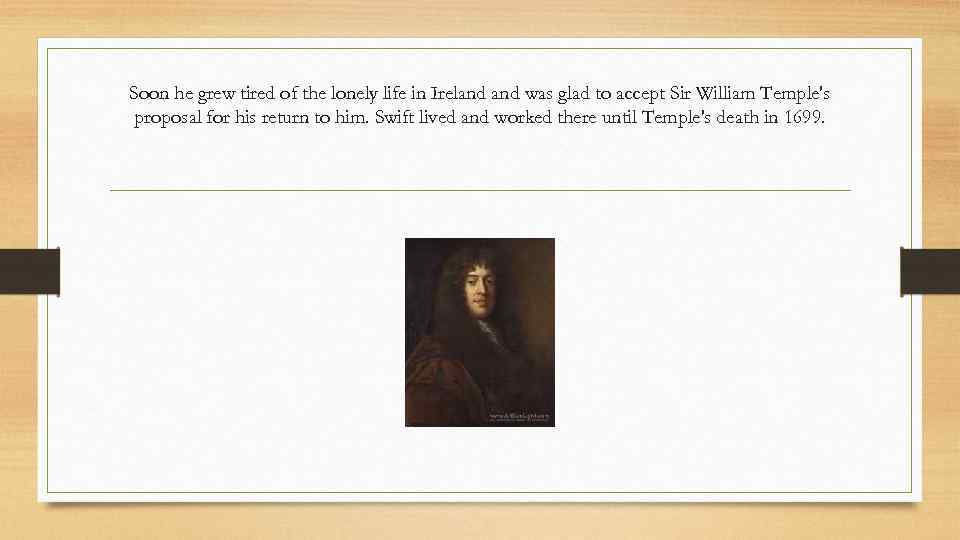 Soon he grew tired of the lonely life in Ireland was glad to accept Sir William Temple's proposal for his return to him. Swift lived and worked there until Temple's death in 1699.
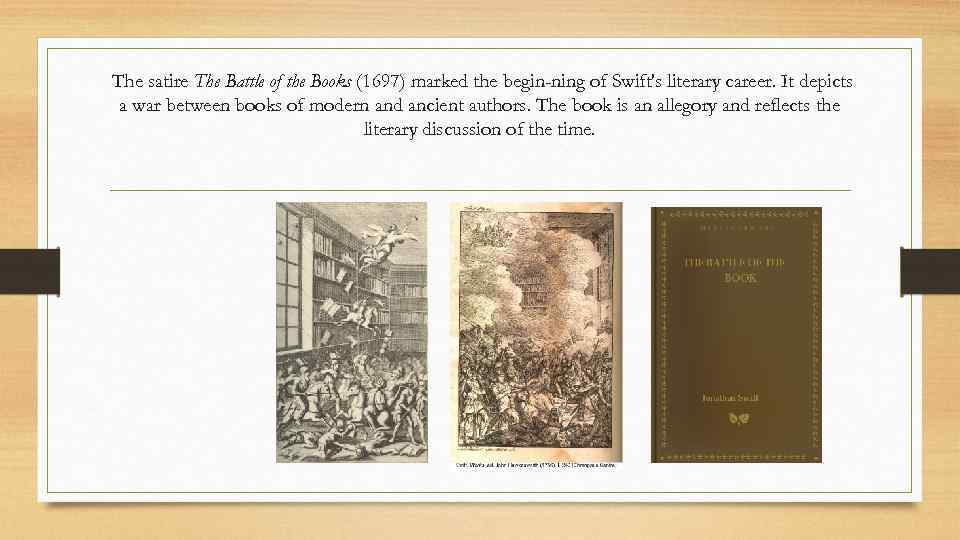 The satire The Battle of the Books (1697) marked the begin ning of Swift's literary career. It depicts a war between books of modern and ancient authors. The book is an allegory and reflects the literary discussion of the time.
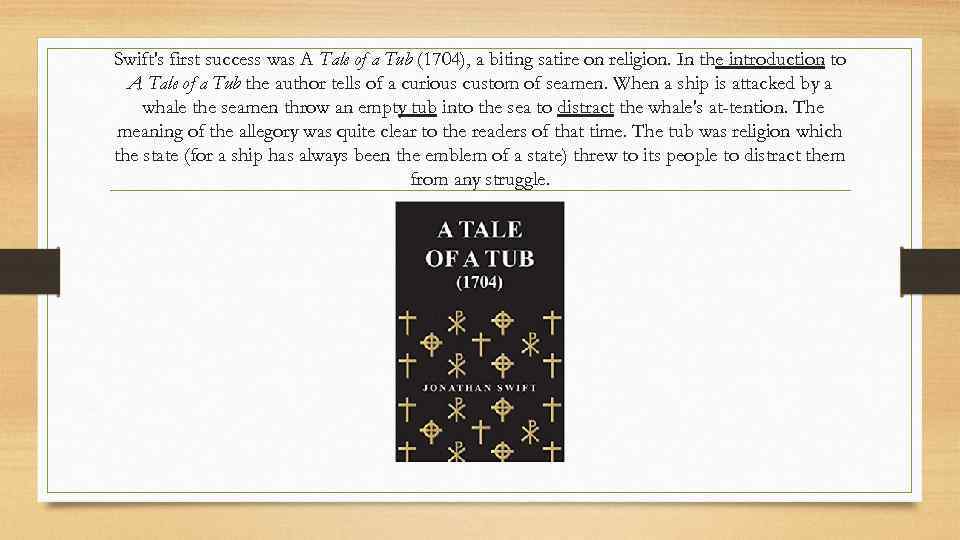 Swift's first success was A Tale of a Tub (1704), a biting satire on religion. In the introduction to A Tale of a Tub the author tells of a curious custom of seamen. When a ship is attacked by a whale the seamen throw an empty tub into the sea to distract the whale's at tention. The meaning of the allegory was quite clear to the readers of that time. The tub was religion which the state (for a ship has always been the emblem of a state) threw to its people to distract them from any struggle.
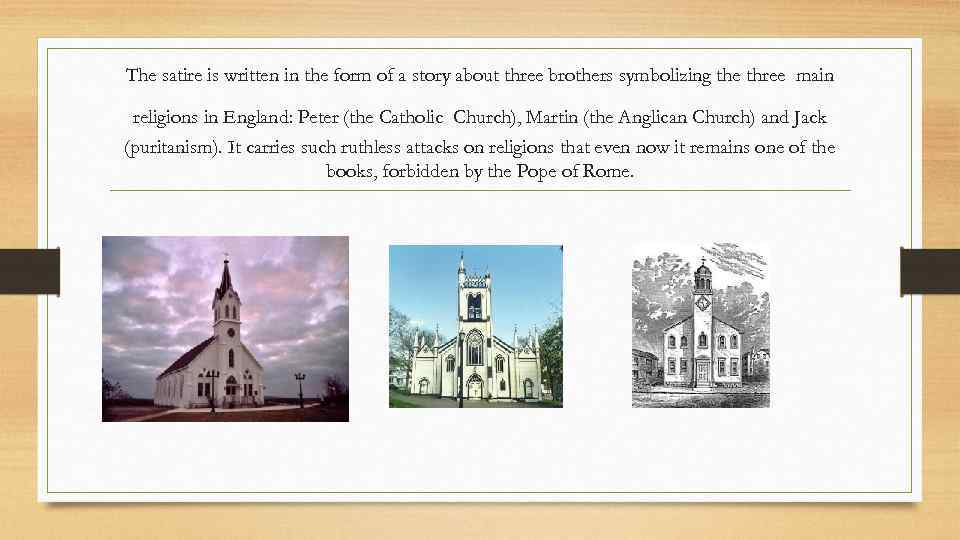 The satire is written in the form of a story about three brothers symbolizing the three main religions in England: Peter (the Catholic Church), Martin (the Anglican Church) and Jack (puritanism). It carries such ruthless attacks on religions that even now it remains one of the books, forbidden by the Pope of Rome.
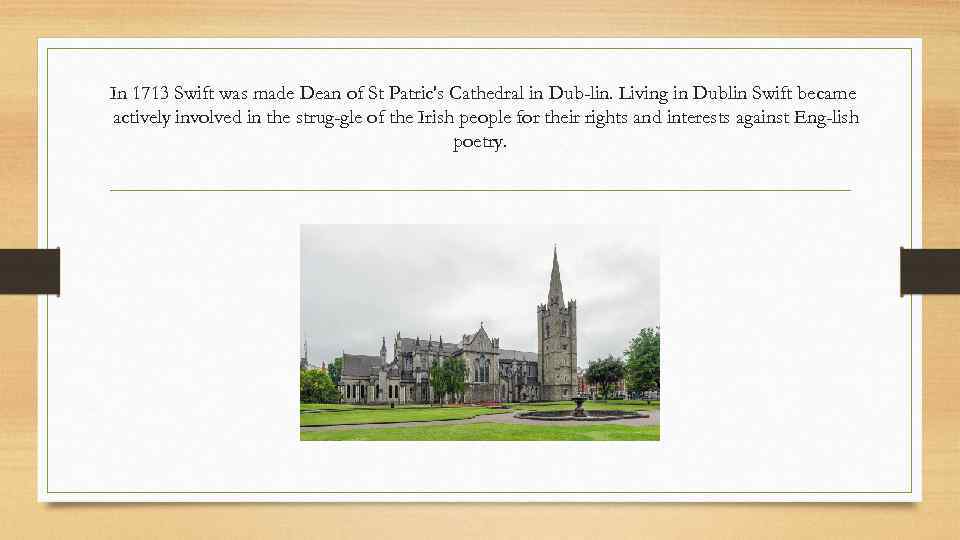 In 1713 Swift was made Dean of St Patric's Cathedral in Dub lin. Living in Dublin Swift became actively involved in the strug gle of the Irish people for their rights and interests against Eng lish poetry.
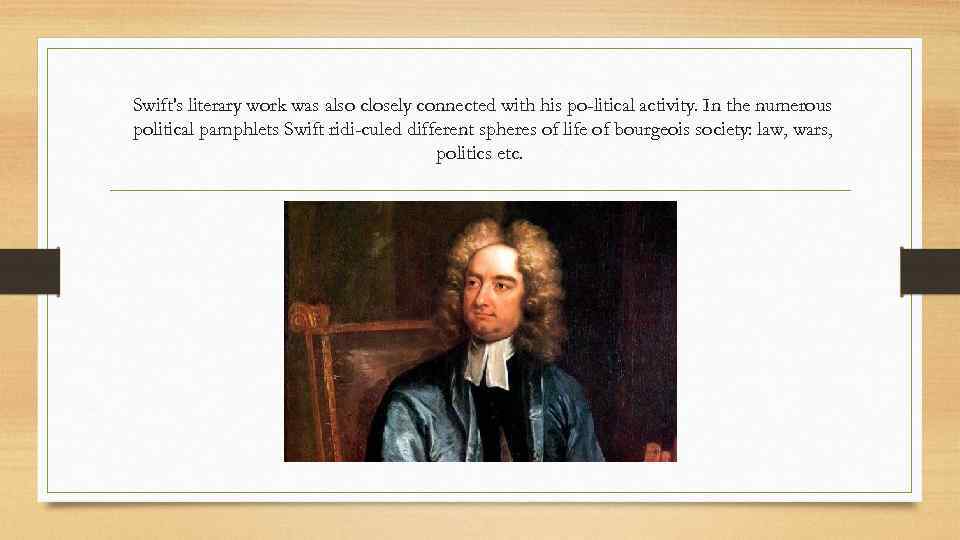 Swift's literary work was also closely connected with his po litical activity. In the numerous political pamphlets Swift ridi culed different spheres of life of bourgeois society: law, wars, politics etc.
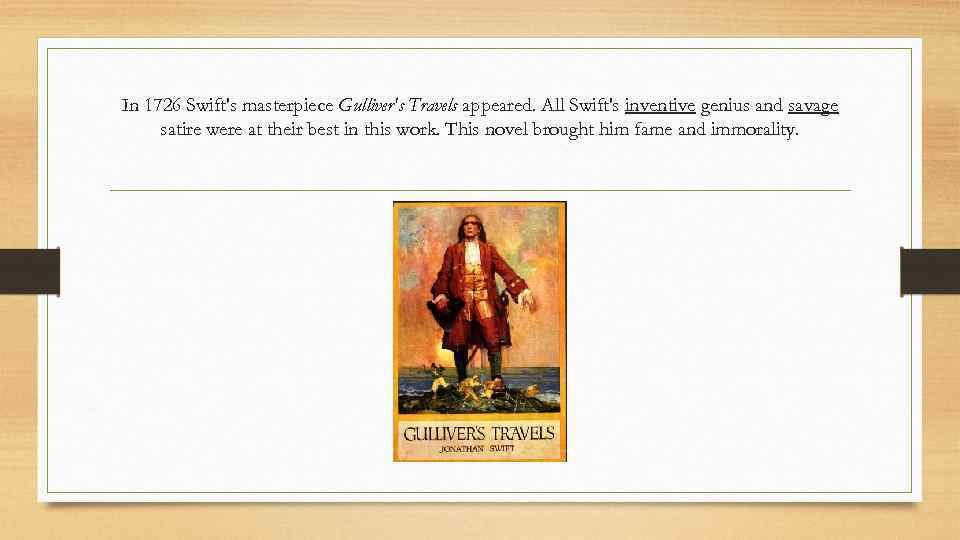 In 1726 Swift's masterpiece Gulliver's Travels appeared. All Swift's inventive genius and savage satire were at their best in this work. This novel brought him fame and immorality.
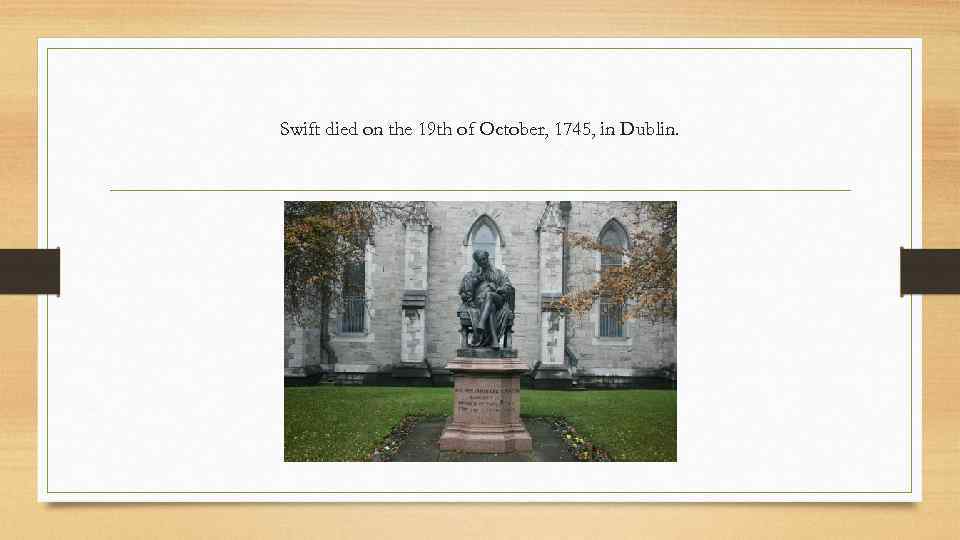 Swift died on the 19 th of October, 1745, in Dublin.
 Thanks for your attention.